
Introduction
Adhesives & glues are substances designed to hold two or more materials together by surface attachment that resists separation. In plastics manufacturing and downstream conversion, they are not merely joining agents but enabling materials that support packaging, construction, automotive assembly, electronics, woodworking, hygiene products, and medical devices. The term covers a broad family of natural and synthetic systems, including glue, paste, cement, pressure-sensitive adhesives, hot melts, epoxies, polyurethanes, acrylics, and contact adhesives.
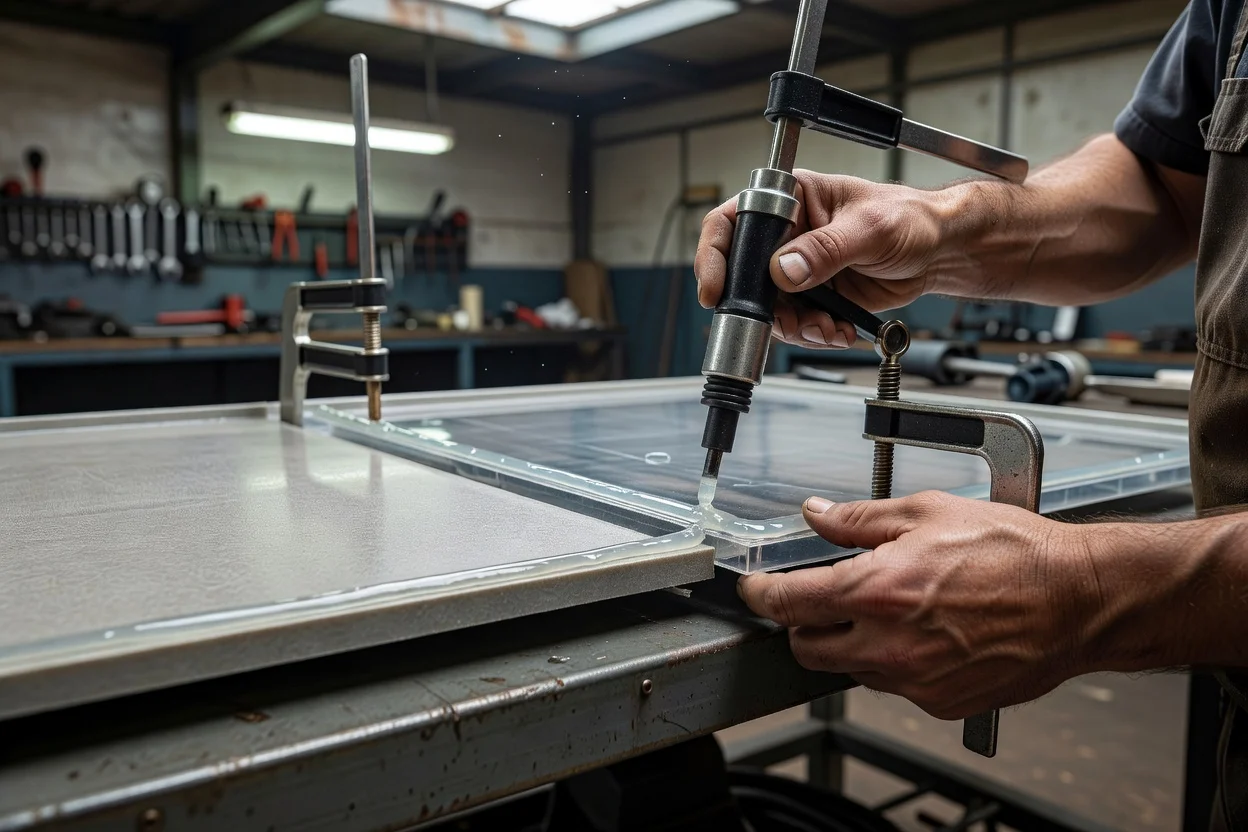
In industrial plastics contexts, adhesives matter because they help bond dissimilar substrates, bridge tolerances, seal joints, distribute stress, and support lightweight design where mechanical fasteners may be impractical. Their performance depends on both chemistry and application method, which is why adhesive systems are usually selected by substrate type, cure mechanism, temperature resistance, flexibility, and regulatory constraints rather than by a single universal standard. Recent research and commercial development have increasingly focused on bio-based, recyclable, switchable, and smart adhesive technologies, reflecting pressure to reduce volatile organic compounds, improve end-of-life separability, and align with circular-economy goals.
History and Development
Natural adhesives have long preceded modern polymer chemistry, with historical use of starches, animal glues, resins, and plant exudates in woodworking, bookbinding, and crafts. The industrial transformation came with synthetic resins and elastomers, which provided more consistent bond strength, water resistance, and process control than many natural systems. Over time, adhesive technology diversified into thermoplastic, thermosetting, reactive, and pressure-sensitive systems, each optimized for different conversion and use conditions.
Modern development has been shaped by three major trends. First, high-throughput manufacturing increased demand for rapid-setting hot melts and pressure-sensitive adhesives in packaging and labeling. Second, structural bonding in transport and construction encouraged tougher epoxies, acrylics, and polyurethanes that can replace or supplement rivets, screws, and welds. Third, sustainability pressures have accelerated research into reversible, bio-based, low-emission, and recyclable formulations, including soybean-protein systems, bio-based hot melts, and smart debond-on-demand concepts.
Chemical Structure and Key Properties
Adhesive performance arises from the interplay of adhesion and cohesion: adhesion is the attraction to the substrate, while cohesion is the internal strength of the adhesive layer itself. Bonding can occur through surface adsorption, chemical bonding, diffusion, or mechanical interlocking, and many commercial products combine several of these mechanisms.
Main adhesive families
| Family | Typical behavior | Representative uses |
|---|---|---|
| Hot melt | Thermoplastic, applied molten, sets on cooling | Packaging, bookbinding, assembly |
| Pressure-sensitive | Tacky at room temperature, bonds under light pressure | Tapes, labels, films, medical wearables |
| Epoxy | Thermosetting, high strength, chemical resistance | Structural bonding, electronics, composites |
| Polyurethane | Tough, flexible, moisture-resistant | Automotive, construction, flooring |
| Acrylic | Fast-curing, versatile, balanced durability | Industrial assembly, tapes, structural and non-structural bonding |
| Contact adhesive | Applied to both surfaces, immediate tack on contact | Laminates, flexible materials, footwear |
Key properties
- Viscosity and wetting determine whether the adhesive can spread over and penetrate the surface before curing.
- Cure profile controls open time, handling strength, and final bond development; systems may cure by cooling, solvent loss, moisture, oxidation, UV exposure, or chemical reaction.
- Modulus and flexibility determine whether the bond line resists peel, shear, vibration, or thermal cycling.
- Thermal and chemical resistance are especially important in automotive, electronics, and construction uses.
- Surface energy compatibility governs bonding to plastics, metals, glass, or porous substrates.
Technical limits and workarounds
- Poor oxygen and grease barrier performance → many common adhesive films and coatings do not provide sufficient barrier properties for demanding packaging → use multilayer laminates, barrier coatings, or metallized structures instead.
- Low surface energy before treatment → polyolefins and some fluorinated or waxy plastics bond poorly because the adhesive cannot wet the surface adequately → use corona, plasma, flame treatment, primers, or specialty low-surface-energy adhesive grades.
- Heat or solvent sensitivity → some thermoplastic or PSA systems soften or creep under elevated temperature or aggressive chemicals → use thermosets, tougher acrylics, epoxies, or crosslinked formulations.
Example formulations and mechanisms
- Hot-melt adhesives commonly use ethylene-vinyl acetate or polyolefin bases with tackifiers and waxes; the mechanism is physical solidification on cooling, which enables very fast packaging lines.
- Pressure-sensitive tapes often use acrylic or rubber-resin PSA systems at low coat weights; their tack comes from viscoelastic balance, which allows immediate bonding under light pressure while remaining removable in some grades.
Production Processes and Raw Feedstocks
Adhesives are manufactured by compounding base polymers or resins with tackifiers, plasticizers, fillers, rheology modifiers, curing agents, stabilizers, and sometimes flame retardants or conductive additives. The exact route depends on chemistry.
Common production routes
- Hot melt adhesives are produced by melting and blending thermoplastic base polymers with tackifiers and waxes, then pelletizing, block-forming, or converting into sticks, powders, or films.
- Water-based adhesives use polymer dispersions or emulsions, then cure primarily by water evaporation and film formation.
- Solvent-based adhesives rely on polymer dissolution in volatile solvents, followed by solvent evaporation and film build-up.
- Reactive adhesives such as epoxies and two-component polyurethanes cure by chemical reaction, forming crosslinked networks with high strength and resistance.
- Pressure-sensitive adhesives are formulated to maintain tack through a carefully balanced viscoelastic window, often through acrylic, rubber, silicone, or hybrid chemistries.
Feedstocks
The dominant industrial feedstocks are petrochemical derivatives, including olefin-, acrylate-, isocyanate-, and epoxy-based intermediates, along with natural and bio-based inputs such as starch, rosin, soy protein, cellulose derivatives, and castor-oil-derived components in selected formulations. In practice, raw-material choice is driven by performance, price, regulatory compliance, and end-use requirements more than by chemistry alone.
Applications and End-Use Markets
Adhesives are used across the plastics value chain, from packaging conversion to composite assembly and final-product finishing.
Major sectors
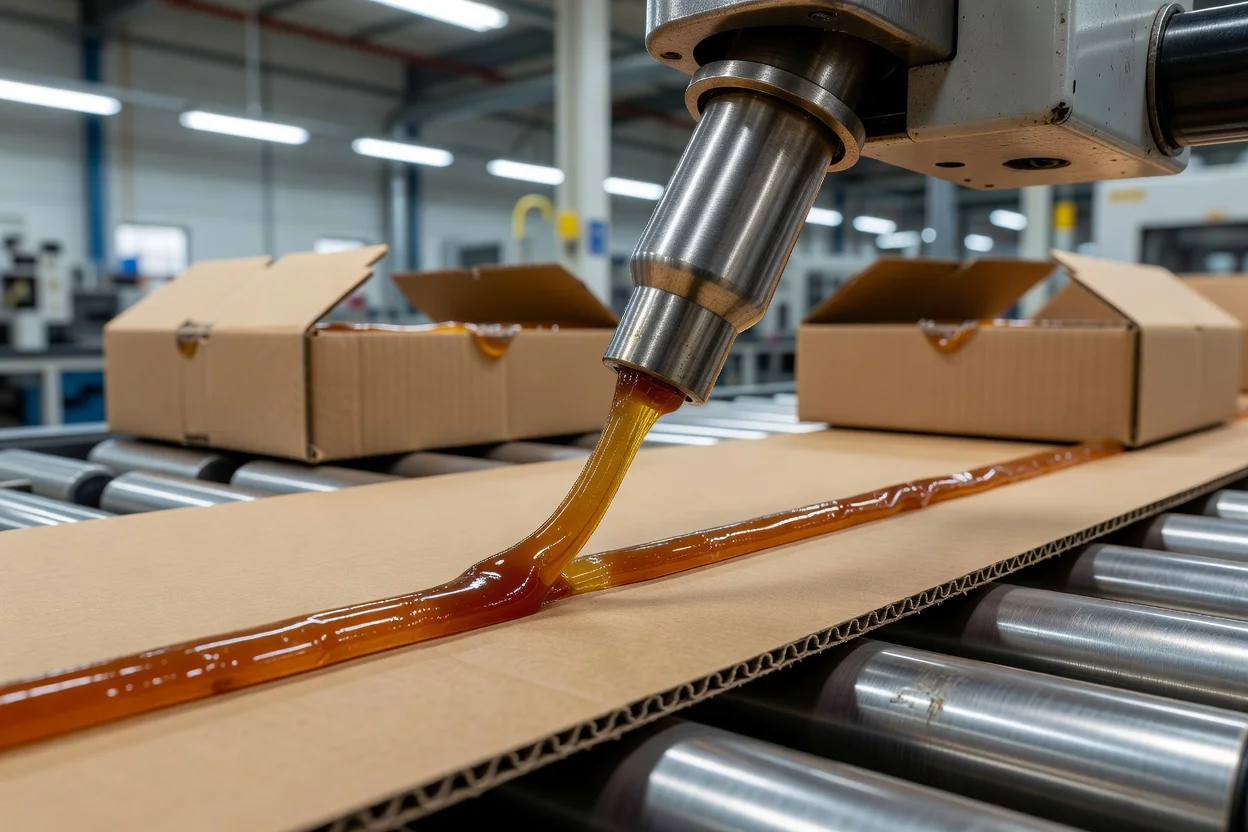
- Packaging: hot melts, water-based adhesives, and PSAs dominate carton sealing, case forming, labeling, laminating, and flexible packaging conversion.
- Construction: construction adhesives, contact cements, polyurethanes, and epoxies are used in flooring, panel bonding, insulation, sealants, and interior finishing.
- Automotive and transportation: structural acrylics, epoxies, polyurethanes, and PSAs support lightweight assembly, trim attachment, noise damping, and glazing.
- Electronics: epoxies, silicones, conductive adhesives, and specialty PSAs are used for encapsulation, component fixation, thermal management, and flexible circuitry.
- Woodworking and furniture: PVA-type water-based glues, urea-formaldehyde systems, polyurethanes, and hot melts are common in panels, edging, and cabinet assembly.
- Footwear and leather goods: contact adhesives and polyurethanes are widely used because they remain flexible after cure.
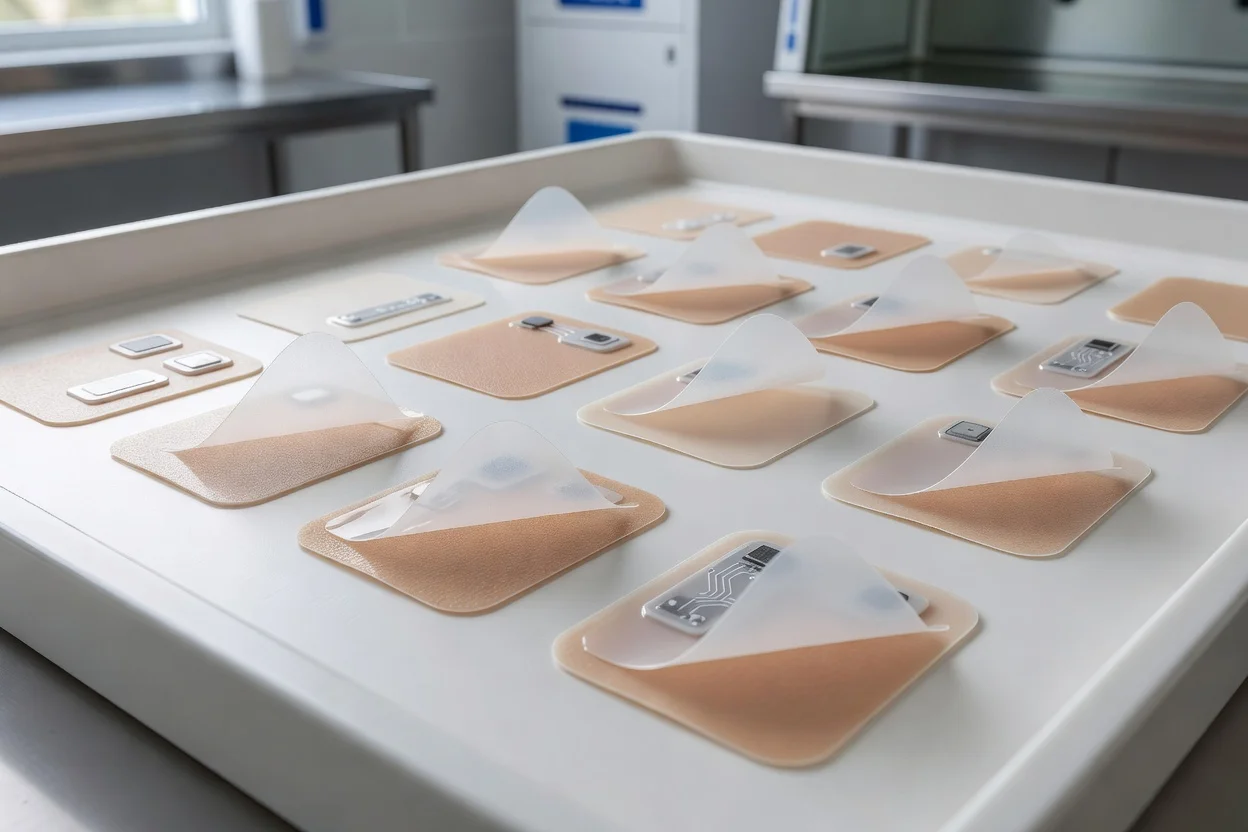
- Medical and hygiene: PSAs are used in tapes, dressings, wearable sensors, and disposable devices because they combine skin adhesion with controlled removability.
- Labels and tapes: acrylic and rubber PSAs are the core materials for self-adhesive labels, masking tapes, and industrial tapes.
Usual grade-to-process fit
| End use | Usual adhesive grade | Typical process |
|---|---|---|
| Carton sealing | Hot melt | High-speed automated application |
| Pressure labels | PSA | Roll coating, die-cut conversion |
| Laminate bonding | Contact adhesive or solventless reactive systems | Double-sided application or precision coat |
| Structural assembly | Epoxy or polyurethane | Two-part mixing, metering, cure |
| Flexible packaging | Water-based or hot melt | Gravure, slot die, or bead application |
| Wearable medical patches | Medical PSA | Clean-room coating and converting |
One poor-fit use
- Unprepared low-surface-energy plastics such as untreated polyethylene or polypropylene are a poor fit for many standard adhesives because wetting and interfacial bonding are weak → treatment or specialty primers are usually required.
Environmental and Sustainability Aspects
Adhesives have a mixed sustainability profile. They can reduce material use by enabling lightweight construction and replacing mechanical fasteners, but they can also complicate recycling when they create permanent, multi-material laminates or contaminate polymer streams.
Recyclability and circularity
- Pressure-sensitive labels and laminates can hinder mechanical recycling if adhesive residue remains on recovered plastics.
- Debond-on-demand and reversible adhesives are being developed to allow disassembly without substrate damage, which may improve repairability and recycling.
- Bio-based adhesives using soy protein, starch, or other renewable feedstocks are attracting interest in wood composites and packaging, although performance and durability vary by system.
Emissions and chemistry concerns
- Solvent-based systems may emit VOCs and face tightening regulatory scrutiny.
- Formaldehyde-based wood adhesives remain under pressure because of emissions concerns in composite wood products.
- Reactive systems can involve hazardous intermediates or challenging handling requirements, especially in two-component polyurethane and epoxy technologies.
Carbon footprint considerations
The carbon footprint depends strongly on feedstock origin, cure energy, solvent use, transportation, and the extent to which the adhesive enables lightweighting or substitution of more material-intensive joining methods. In many high-volume uses, the net footprint can be favorable if adhesives reduce part count, improve energy efficiency, or extend service life, but poor end-of-life separability can offset these gains.
Economic and Global Market Impact
Adhesives and glues are core industrial intermediates with broad demand across packaging, construction, consumer goods, transportation, and healthcare. Market performance is closely tied to GDP, housing activity, e-commerce packaging, automotive production, and electronics manufacturing.
The competitive landscape is shaped by large multinational chemical and specialty-material suppliers, along with regional formulators and converters. Major global participants commonly cited in the industry include Henkel, 3M, Sika, H.B. Fuller, Arkema, Bostik, Avery Dennison, and Dow, although the leading positions vary by segment and geography. The most important product segments by volume are typically packaging hot melts, PSAs, and construction adhesives, while the highest value often lies in structural, electronics, and medical formulations.
Current Challenges and Innovations
Current challenges
- Recycling compatibility remains difficult for multi-layer packaging and bonded composites.
- Regulatory pressure continues on VOCs, formaldehyde emissions, and some solvent systems.
- Low-surface-energy bonding still requires surface treatment or specialized chemistry.
- Thermal aging and creep can limit performance in demanding structural or outdoor applications.
Innovations
- Smart adhesives that respond to heat, light, moisture, electrical input, or chemical triggers are being developed for reversible assembly and repair.
- Nanofiller reinforcement using materials such as graphene oxide or carbon nanotubes is being studied to improve fracture toughness, barrier behavior, and resistance to environmental degradation.
- Bio-inspired dry adhesives and fibrillar microstructures are advancing for reusable gripping and specialized assembly tasks.
- Bio-based hot melts and recyclable polyurethane systems are emerging as promising routes toward lower-impact adhesive platforms.
Future Outlook
The adhesives sector is likely to move toward higher-performance, lower-emission, and more disassembly-friendly formulations. Packaging will remain the largest volume market, but value growth is expected to be strongest in electronics, medical devices, lightweight mobility, and advanced composites where precision, reliability, and regulatory compliance matter more than commodity price alone.
The most important strategic direction is the transition from adhesives as simple joining materials to engineered interface systems that support assembly, durability, repair, and end-of-life recovery. That shift is likely to favor chemistries that combine strong adhesion with controlled reversibility, renewable content, reduced solvent use, and compatibility with automated manufacturing.
Summary
Adhesives & glues are a broad class of bonding materials that range from simple water-based glues to advanced structural, pressure-sensitive, and reactive systems. They are indispensable in plastics processing and conversion because they enable joining, sealing, lamination, lightweight design, and high-speed manufacturing across packaging, construction, automotive, electronics, and medical applications. Their main technical trade-offs involve surface compatibility, barrier performance, emissions, heat resistance, and recyclability, while current innovation is focused on sustainable, reversible, and smart bonding technologies.
References
- •
Adhesive | Definition, Types, Uses, Materials, & Facts. (2025, November 19). Britannica. https://www.britannica.com/technology/adhesiveLink
- •
Adhesive. (2001, October 30). Wikipedia. https://en.wikipedia.org/wiki/AdhesiveLink
- •
Adhesive types and their applications. (2024, March 25). The Name That Sticks. https://thenamethatsticks.com/how-to-advice/a-simple-guide-to-all-adhesive-types-and-their-applications/Link
- •
Types of adhesive and their applications. (2025, February 12). Vocal. https://vocal.media/writers/types-of-adhesive-and-their-applicationsLink
- •
6 different types of adhesives. (2024, July 1). Doxu Chem. https://doxuchem.com/6-different-types-of-adhesives/Link
- •
Types of adhesives. (n.d.). UHU. https://www.uhu.com/en-en/glue-advice/adhesive-typesLink
- •
Types of adhesives explained. (2025, August 26). Toolstation. https://www.toolstation.com/help-and-advice/buying-guides/types-of-adhesivesLink
- •
A complete DIY guide to glues and adhesives. (2024, April 4). Brampton Technology. https://bramptontechnology.com/a-complete-diy-guide-to-glues-and-adhesives/Link
- •
Adhesives: Types of glue and their uses (a guide for students). (2025, January 4). Design Tech Guide. https://www.designtechguide.com/production/types-of-glue-and-their-usesLink
- •
Different types of adhesives and their industrial uses. (2026, May 18). LN T Sufin. https://lntsufin.com/blog/different-types-of-adhesives-a-complete-guide/Link
- •
Types of adhesives based on.... (2025, January 20). Elchemy. https://elchemy.com/blogs/chemical-market/exploring-the-types-of-adhesives-which-one-is-right-for-your-projectLink
- •
Adhesives and glues. (n.d.). Moodle2. https://moodle2.units.it/pluginfile.php/96533/mod_folder/content/0/Files%20ausiliari/Adhesives_aux_4.pdf?forcedownload=1Link
- •
Most common types of adhesives explained. (2024, December 1). Glue and Sticky. https://glueandsticky.info/types-of-adhesives/Link
- •
Types of glues and adhesives: A comprehensive guide. (2024, October 11). Hong Teck Hin. https://www.hongteckhin.com.sg/blogs/news/types-of-glues-and-adhesives-a-comprehensive-guideLink
- •
Feature research review | April 2024. (2024, February 24). Adhesives Mag. https://digitaledition.adhesivesmag.com/april-2024/feature-research-review/Link
- •
5 most common types of adhesives: Which one do you.... (2024, November 15). Albany County Fasteners. https://www.albanycountyfasteners.com/blog/common-adhesive-types-guide/Link
- •
Types of adhesives. (2013, December 19). Strouse. https://www.strouse.com/blog/types-of-adhesivesLink
- •
Types of glue and adhesives. (2023, September 7). The Home Depot. https://www.homedepot.com/c/ab/types-of-glue-and-adhesives/9ba683603be9fa5395fab901eed55df7Link
- •
What are the different types of adhesive &.... (2023, June 21). Kohesi Bond. https://www.kohesibond.com/what-are-the-different-types-of-adhesive-their-applications/Link
- •
How do adhesives and glues work? The science of sticking. (2007, October 18). Explain That Stuff. https://www.explainthatstuff.com/adhesives.htmlLink
- •
The breakthrough path of adhesive materials science in 2026. (2026, August 7). China Tensan. https://www.chinatensan.com/news/from-sticking-to-smart-sticking-the-breakthrough-path-of-adhesive-materials-science-in-2026.htmlLink
- •
The 7 different types of adhesive bonding materials. (2024, March 12). Strouse. https://www.strouse.com/blog/low-profile-adhesive-bonding-materialsLink
- •
Understanding and correctly using glues and adhesives. (2024, November 1). Dictum. https://www.dictum.com/en/blog/tips-tricks/understanding-and-correctly-using-glues-and-adhesives/Link
- •
Adhesives overview: Types and properties HSC. (2025, October 24). Studocu. https://www.studocu.com/en-au/document/moorebank-high-school/industrial-technology-timber/adhesives-overview-types-and-properties-hsc/143154726Link
- •
Adhesive materials science evolves to “smart bonding”: Breakthroughs in high-strength, recyclable polyurethane and bio-based hot melt adhesives. (2026, August 17). Troy Technical. https://troy-technical.com/2026/08/17/adhesive-materials-science-evolves-to-smart-bonding-breakthroughs-in-high-strength-recyclable-polyurethane-and-bio-based-hot-melt-adhesives/Link
- •
From fundamental concepts to recent developments in the.... (n.d.). Springer. https://link.springer.com/article/10.1007/s44245-023-00014-7Link
- •
Glue | Definition, Types, & Facts. (1998, July 20). Britannica. https://www.britannica.com/technology/glueLink
- •
What kind of glue? (n.d.). American Chemical Society. https://www.acs.org/education/celebrating-chemistry-editions/2020-ncw/glue-types.htmlLink
- •
Adhesives - latest research news and features. (2025, October 31). TechXplore. https://techxplore.com/tags/adhesives/Link
- •
The latest adhesive research: From smart functionality to.... (2026, April 14). Adhesives Mag. https://www.adhesivesmag.com/blogs/14-adhesives-blog/post/102358-the-latest-adhesive-research-from-smart-functionality-to-bioinspired-designLink
- •
Self-adaptive core-shell dry adhesive: A breakthrough for high-strength adhesion in non-parallel contact. (2025, April 23). EurekAlert. https://www.eurekalert.org/news-releases/1081431Link
- •
Sticking with chemistry. (n.d.). American Chemical Society. https://www.acs.org/education/celebrating-chemistry-editions/2020-ncw.htmlLink
- •
Advancements of nanoparticle-based adhesive materials. (n.d.). RSC Publishing. https://pubs.rsc.org/en/content/articlelanding/2026/mh/d6mh00235hLink
- •
Recent developments in adhesive technology: A review. (2011, August 2). Emerald Insight. https://www.emerald.com/insight/content/doi/10.1108/01445151111150532/full/htmlLink
- •
Overview of adhesives. (2019, May 1). ThomasNet. https://www.thomasnet.com/articles/adhesives-sealants/overview-of-adhesives/Link
- •
Which glues to choose. (n.d.). Ellsworth Adhesives. https://www.ellsworth.com/globalassets/literature-library/manufacturer/ellsworth-adhesives/ellsworth-adhesives-infographic-which-glues-to-choose.pdfLink
- •
Controlled dry adhesion of bio-inspired fibrillar polymers: Mechanics, strategies, and recent advances. (2025, April 2). PubMed. https://pubmed.ncbi.nlm.nih.gov/40271871/Link
- •
Chemix's water-based resin.... (2026, March 18). Chemix Tech. https://www.chemix-tech.com/blog/adhesives-types-glue-usesLink
- •
State-of-the-art in adhesive joint technology. (n.d.). ScienceDirect. https://www.sciencedirect.com/science/article/pii/S2238785425015881Link
- •
Recent advances in wet adhesives: Adhesion mechanism, design principle and applications. (n.d.). ScienceDirect. https://www.sciencedirect.com/science/article/abs/pii/S0079670021000356Link
- •
Strength in adhesion: A multi-mechanics review covering.... (2025, September 25). PMC. https://pmc.ncbi.nlm.nih.gov/articles/PMC12526568/Link
- •
Recent advancements in smart responsive tissue adhesives.... (2025, November 28). PMC. https://pmc.ncbi.nlm.nih.gov/articles/PMC12698552/Link
- •
Adhesivo controlable inspirado en el gecko. (2024, March 1). PMC. https://pmc.ncbi.nlm.nih.gov/articles/PMC10968063/Link
- •
Articles on adhesive technology. (2026, August 27). MasterBond. https://www.masterbond.com/articlesLink
- •
Advances in adhesives span multiple industries. (2025, May 19). Design News. https://www.designnews.com/materials/advances-in-adhesives-span-multiple-industriesLink
- •
Innovations in liquid adhesive technology: What's new in the market. (2025, February 22). Lanco Adhesives. https://www.lancoadhesives.com/post/innovations-in-liquid-adhesive-technology-what-s-new-in-the-marketLink
- •
Exploring the future: 2026-2030 trends in adhesive.... (2025, June 17). Heley Adhesive. https://heleyadhesive.com/2026-2030-trends-in-adhesive-technology/Link
- •
The evolution and future of adhesive bonding. (2024, August 12). Syensqo. https://www.syensqo.com/en/evolution-and-future-adhesive-bonding-comprehensive-overviewLink