
Introduction
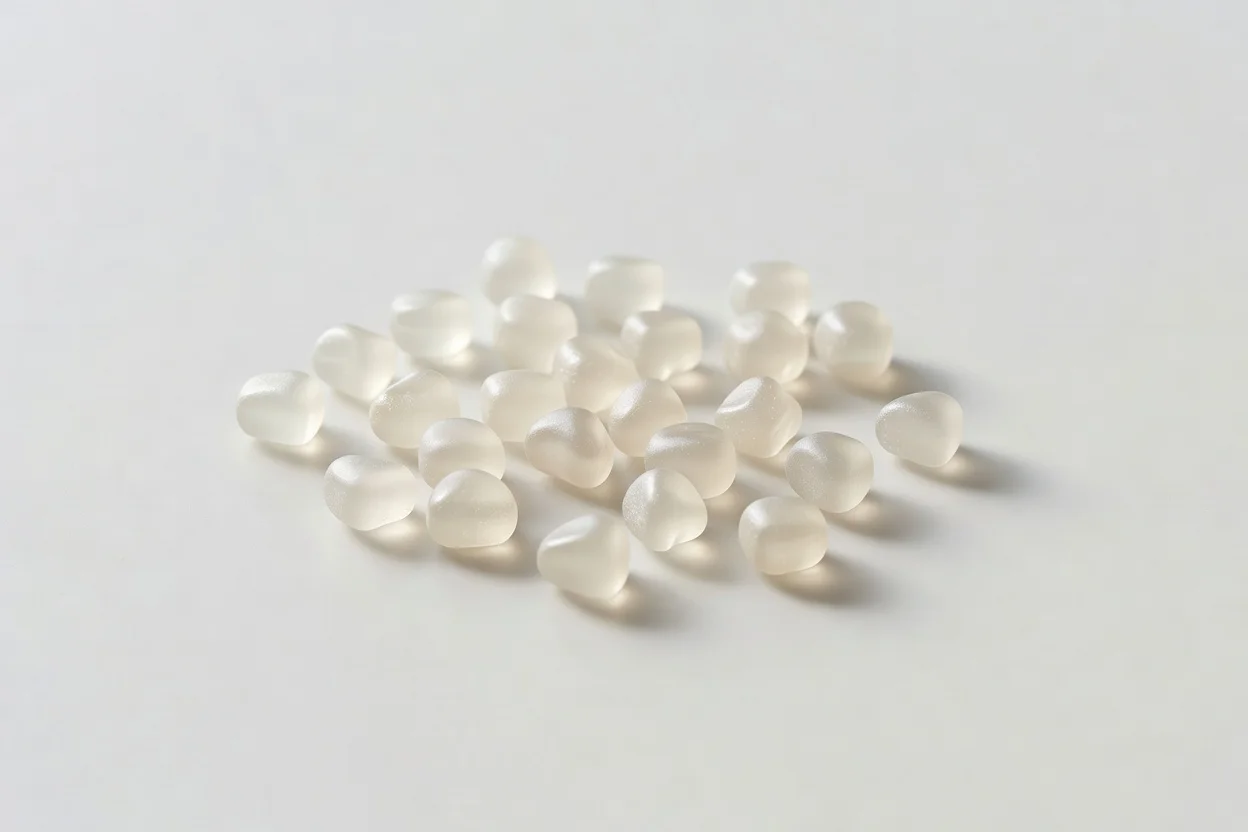
Bioplastics are a broad family of plastic materials that are biobased, biodegradable, or both, depending on the definition used by the source or standard. In industry practice, the term covers everything from renewable “drop-in” resins such as bio-based PE, PP, and PET to biodegradable materials such as PLA, PHA, PBS, and starch blends, which means that bioplastics are best understood as a category defined by feedstock origin and/or end-of-life behavior, rather than a single polymer family.
Their significance lies in their potential to reduce dependence on fossil feedstocks, lower life-cycle greenhouse-gas emissions in some applications, and expand the plastics industry’s circular-economy toolkit. At the same time, bioplastics are not a universal sustainability solution: performance limitations, higher costs, land-use competition, uncertain end-of-life pathways, and the risk of misleading “compostable” claims remain central concerns.
Commercial bioplastics are now used across packaging, food service, agriculture, consumer goods, textiles, 3D printing, and some medical applications, with PLA and starch-based materials dominating many short-life markets and bio-based drop-ins supporting compatibility with existing recycling systems. Leading producers and technology developers include NatureWorks in PLA, BASF and Novamont in biodegradable polyesters and starch-based systems, Braskem in bio-based polyolefins, and a growing group of Asian and European producers in PHA, PBS, cellulose derivatives, and bio-based intermediates.
History and Development
Early bioplastics emerged from attempts to use renewable agricultural resources and naturally occurring polymers as substitutes for petroleum-derived plastics. Starch, cellulose, and casein-based materials were among the earliest moldable plastics, but they were gradually displaced by lower-cost synthetic polymers with superior consistency and processability.
Modern bioplastics re-entered commercial relevance with advances in fermentation, catalytic conversion, polymer chemistry, and compounding technology. The industrialization of PLA from lactic acid and sugar feedstocks, the development of microbial PHAs, and the growth of bio-based “drop-in” polymers marked the transition from niche materials to a diversified commercial platform.
The current phase of development is shaped less by simple substitution and more by systems design. Producers now tailor bioplastic formulations for industrial composting, mechanical recycling compatibility, barrier performance, heat resistance, or reduced carbon footprint, depending on the use case.
Chemical Structure and Key Properties
Bioplastics are chemically diverse, so their properties vary widely by polymer family and formulation. Broadly, they include:
- Bio-based drop-ins: chemically similar to conventional polymers but made partly or fully from renewable feedstocks, such as bio-PE, bio-PP, and bio-PET.
- Bio-based and biodegradable polymers: such as PLA, PHA, and PBS.
- Fossil-based biodegradable polymers: such as PBAT, which are often blended with biobased components to improve flexibility and compostability.
Key property trends include the following:
| Material family | Typical strengths | Typical limitations | Common role |
|---|---|---|---|
| PLA | Clarity, stiffness, good printability, relatively high renewable content | Brittle unless modified; limited heat resistance without crystallization or nucleating aids | Rigid packaging, cups, trays, fibers, 3D printing |
| PHA | Biodegradability in more environments than many other bioplastics; useful in medical and compostable applications | Higher cost; processing sensitivity; narrower supply base | Packaging, agriculture, biomedical items |
| Starch blends | Low cost potential, compostability, good biodegradation profile in suitable formulations | Water sensitivity, variable mechanical performance | Bags, loose-fill, short-life packaging |
| Bio-PE / bio-PET | Familiar processing, strong compatibility with existing infrastructure | Not biodegradable; sustainability benefit depends on feedstock and recycling system | Bottles, caps, films, crates |
| Cellulose derivatives | Good film and coating performance, optical clarity in some grades | Moisture sensitivity; property tuning often needed | Wrappers, coatings, specialty films |
A useful way to understand the technical limits of bioplastics is through the relationship between the limitation, its cause, and the workaround:
- Poor heat resistance → caused by low glass-transition or insufficient crystallinity in some grades, especially PLA → workaround: nucleating agents, annealing, copolymerization, or blending.
- Brittleness → caused by high modulus and limited chain mobility in several neat biopolymers → workaround: plasticizers, impact modifiers, or blending with flexible polyesters.
- Moisture sensitivity → caused by hydrophilic chemistry in starch and cellulose-rich systems → workaround: hydrophobic coatings, multilayer structures, or compatibilized blends.
- Limited oxygen and aroma barrier in some packaging uses → caused by polymer structure and humidity effects → workaround: barrier coatings, metallization, or multilayer films.
- End-of-life ambiguity → caused by the difference between biobased, biodegradable, and compostable claims → workaround: clear labeling, certified compostability, and collection systems aligned with the intended disposal route.
For example, PLA is often compounded with approximately 5–20% plasticizer or impact modifier to reduce brittleness and improve processability, while starch blends may use glycerol or other plasticizers to increase flexibility by reducing intermolecular hydrogen bonding. In each case, the additive changes chain mobility and phase behavior rather than simply “strengthening” the polymer.
Production Processes and Raw Feedstocks
Bioplastics originate from several distinct production routes:
- Fermentation of sugars or starch-derived hydrolysates to make monomers such as lactic acid for PLA.
- Microbial fermentation to produce intracellular polyesters such as PHA.
- Chemical conversion of renewable intermediates into monomers or polymer precursors for bio-based PET, PE, PP, PA, and emerging polyesters.
- Direct processing of natural polymers such as starch and cellulose, usually through blending, derivatization, or compounding rather than simple melt processing.
Typical feedstocks include sugarcane, corn, cassava, wheat, potato starch, vegetable oils, lignocellulosic biomass, and increasingly waste-derived streams such as food waste and agricultural residues. The most advanced industrial systems increasingly aim to reduce competition with food supply chains by shifting toward residues, wastes, and non-food biomass.
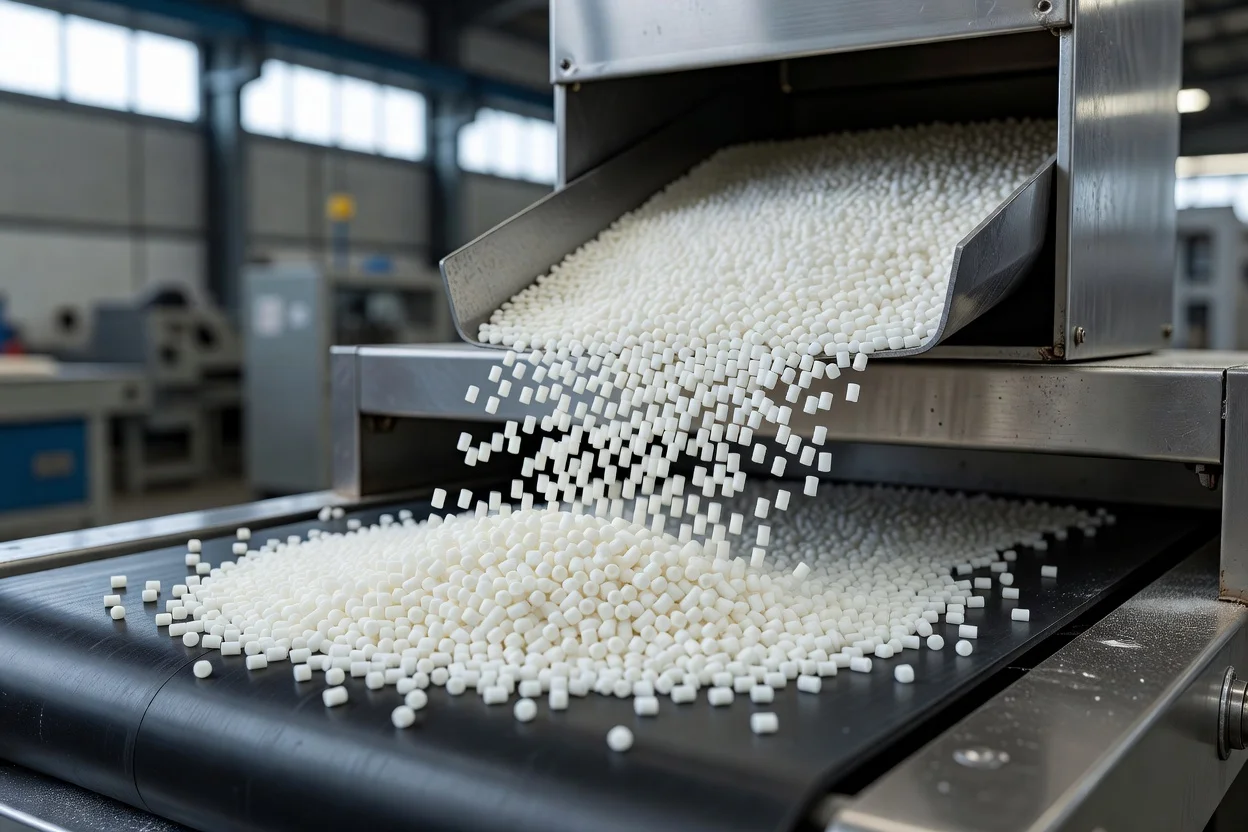
Production economics depend heavily on feedstock cost, yield, purification requirements, polymerization efficiency, and energy intensity. For PLA, fermentation, lactic acid purification, dehydration to lactide, and ring-opening polymerization are the key value-creation steps. For PHA, the biological synthesis step is central, and downstream recovery often dominates cost and environmental burden.
Applications and End-Use Markets
Bioplastics are used most extensively where short service life, light weight, and brand or regulatory pressure favor renewable or compostable materials.
Major applications include:
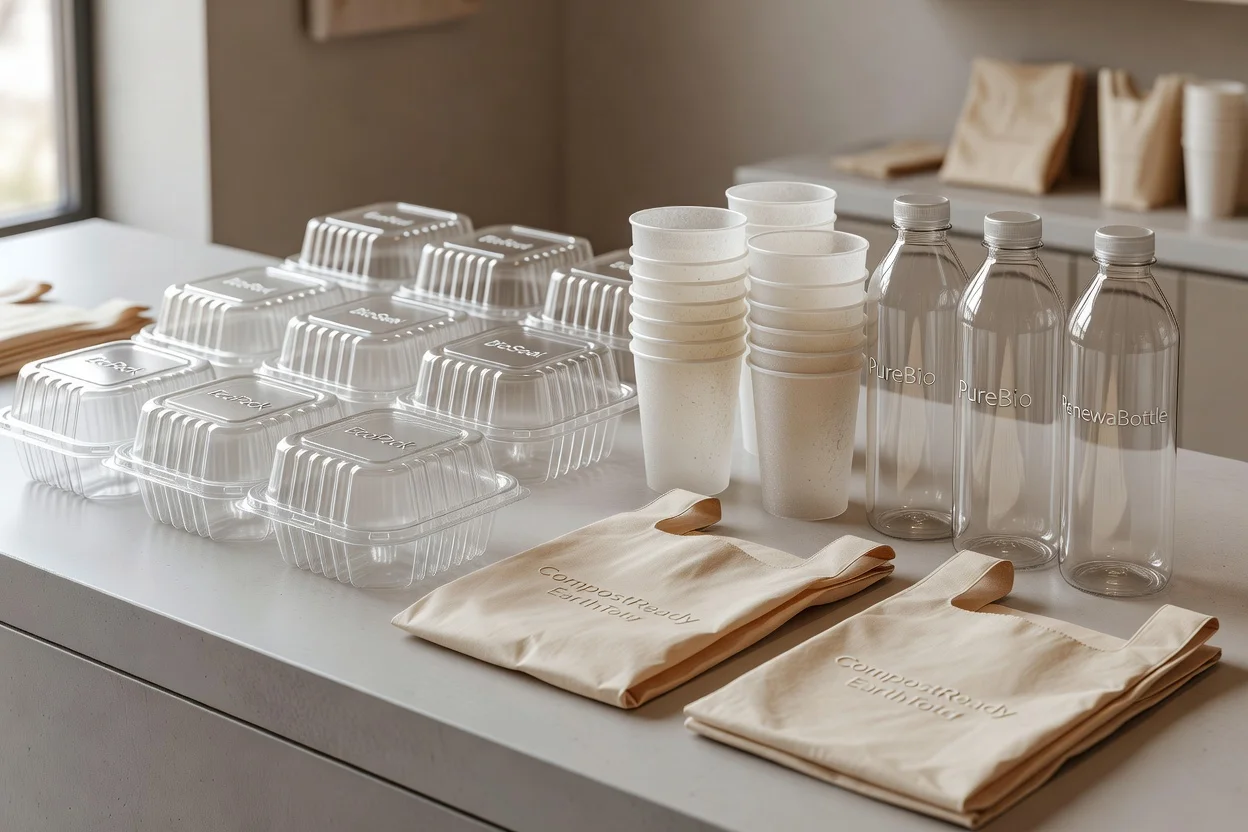
- Packaging: rigid food containers, cups, trays, clamshells, films, pouches, and compostable bags, typically using PLA, starch blends, PBAT blends, cellulose films, or bio-PET depending on barrier and heat requirements.
- Agriculture: mulch films, plant pots, seed trays, and controlled-degradation films, especially where recovery of thin films is difficult.
- Consumer goods: disposable cutlery, tableware, personal-care packaging, and some durable goods where aesthetics or renewable content matter.
- Textiles and fibers: PLA fibers and blends for nonwovens, apparel, and hygiene products.
- 3D printing: PLA is the dominant consumer-grade filament because of its ease of printing and low warpage.
- Medical and biomedical uses: selected PHA and PLA grades are used where biocompatibility or resorbability is valuable.
One poor-fit use is high-temperature engineering parts exposed to sustained heat and load. Neat PLA, for example, is usually a weak choice for under-hood automotive or hot-fill applications unless it is specially modified.
From a processing standpoint, the usual grade-process pairings are:
- Injection molding: PLA, bio-PET, selected PHA grades, and starch blends with proper thermal stabilization.
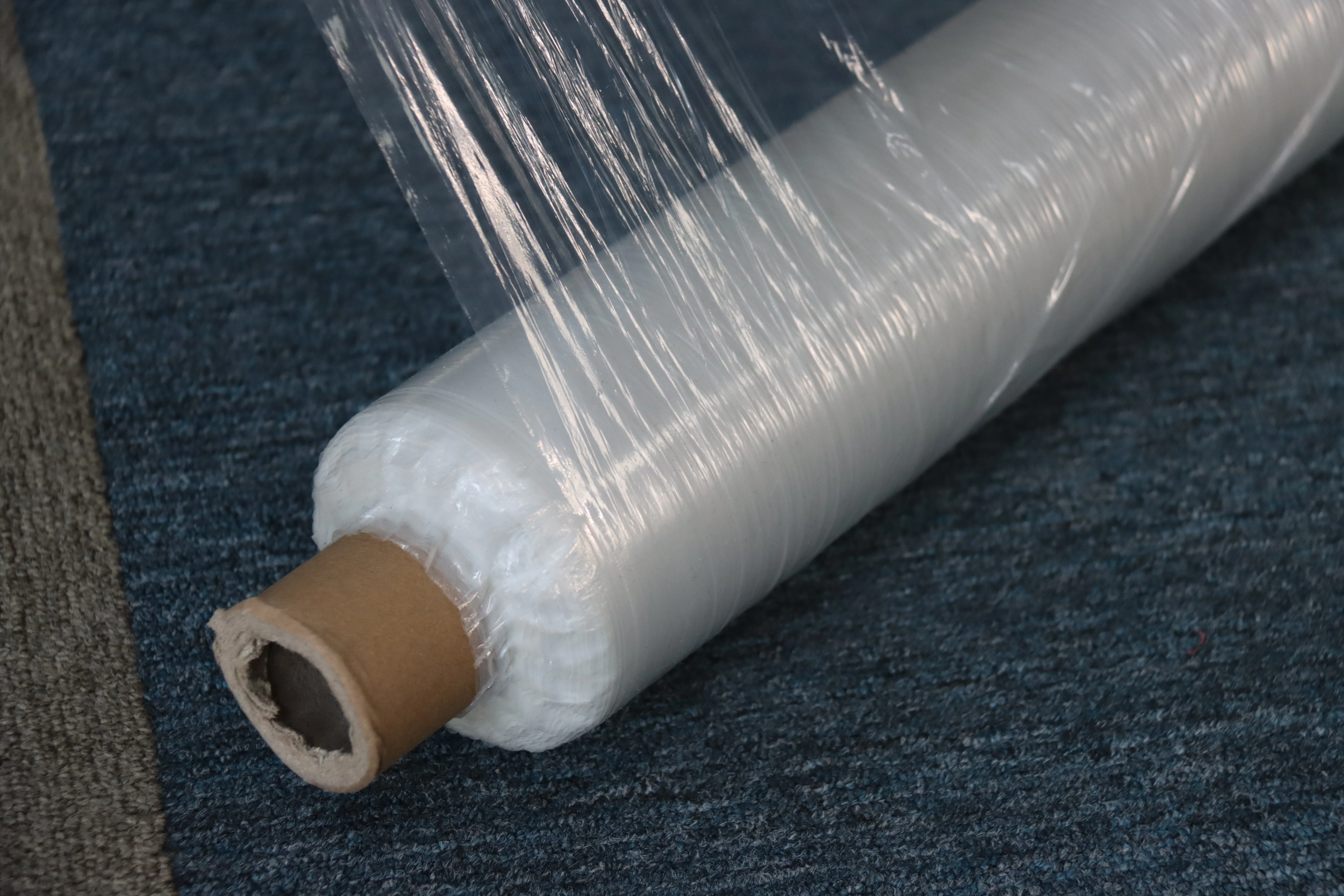
- Film extrusion: starch blends, PBAT/PLA blends, cellulose-based materials, and some bio-PE and bio-PET grades.
- Thermoforming: PLA sheets and bio-PET sheets for trays and containers.
- Fiber spinning: PLA and some bio-based polyesters.
- Blown film and carrier bags: starch-based and PBAT-containing compostable formulations.
- Bottle making: bio-PET is the most established drop-in solution; PLA is used in niche beverage or cold-fill contexts.
Environmental and Sustainability Aspects
The sustainability profile of bioplastics is case-specific, not uniform. Many bioplastics can reduce fossil resource use and may lower life-cycle greenhouse-gas emissions compared with conventional plastics, especially when made from renewable feedstocks or waste carbon.
At the same time, the environmental trade-offs are important:
- Land use and agriculture: crop-based feedstocks can compete with food production and may drive fertilizer, pesticide, and irrigation demand.
- Eutrophication and water impacts: some assessments find elevated risks from biomass cultivation and processing.
- End-of-life uncertainty: biodegradable does not automatically mean marine-degradable, home-compostable, or suitable for landfill conditions.
- Microplastic and leaching concerns: degradation can still generate fragments or release chemicals depending on material and conditions.
- Sorting and contamination: compostable materials can complicate recycling streams if collection and labeling are unclear.
Recyclability differs by family. Bio-PE and bio-PET are chemically compatible with existing PE and PET recycling streams, which makes them useful as lower-carbon replacements without changing downstream infrastructure. By contrast, compostable polymers such as PLA and starch blends are intended for controlled biological treatment, not conventional mechanical recycling, unless managed through dedicated systems.
Bio-based content and biodegradability are therefore distinct sustainability dimensions. A material can be bio-based but not biodegradable, biodegradable but fossil-based, or both.
Economic and Global Market Impact
The bioplastics market is shaped by four main economic drivers: feedstock prices, policy support, brand-owner commitments, and disposal infrastructure. Packaging remains the largest demand center because it provides a clear value proposition in lightweighting, renewable content, or certified compostability.
Global production is still small relative to conventional plastics, but it continues to expand as brand owners pursue lower-carbon materials and regulators tighten waste and labeling expectations. Industry sources consistently identify Europe, North America, China, and Southeast Asia as major centers for capacity development, feedstock conversion, and compounding.
Leading contributors include:
- NatureWorks: a major global PLA producer and one of the best-known commercial platforms for renewable polyesters.
- Braskem: an established producer of bio-based polyethylene, important for drop-in compatibility with existing PE markets.
- BASF and Novamont: significant in compostable formulations, starch-based systems, and biodegradable polyester development.
- Danimer Scientific, TotalEnergies Corbion, and several Asian fermentation-based producers: active in PHA and related biodegradable materials.
- Eastman, Toray, and other specialty polymer companies: relevant in bio-based or partly bio-based specialty polyesters and performance resins.
Cost remains a major barrier. Bioplastics often carry a premium over fossil-based polymers because of smaller plant scale, more complex processing, and feedstock volatility. However, value is increasingly created through carbon reduction claims, regulatory compliance, waste-reduction functions, and brand differentiation rather than through resin cost alone.
Current Challenges and Innovations
Current challenges concentrate on performance, economics, and system integration:
- Performance gaps: heat resistance, barrier performance, and moisture sensitivity still limit substitution in many applications.
- Infrastructure mismatch: compostable materials need certified collection and treatment systems; otherwise their environmental advantages are reduced.
- Terminology and labeling confusion: “biobased,” “biodegradable,” and “compostable” are often conflated in the market.
- Feedstock sustainability: first-generation crop feedstocks remain controversial because of land-use and food-vs-material debates.
- Lifecycle uncertainty: the end-of-life behavior of a bioplastic depends on thickness, formulation, environment, and waste-management route.
Innovation is advancing along several fronts:
- Waste-based feedstocks: food waste, agricultural residues, and lignocellulosic biomass are being explored to reduce land-use pressure.
- Advanced blends and compatibilizers: formulations that combine compostability with improved toughness and process stability.
- Barrier coatings and multilayer structures: to improve oxygen, aroma, and moisture resistance for food packaging.
- Bio-based performance polymers: including bio-based engineering plastics that preserve mechanical properties while reducing fossil input.
- Precision end-of-life design: polymers are increasingly engineered for controlled composting, recycling, or disassembly rather than generalized “eco-friendliness.”
Future Outlook
The future of bioplastics is likely to be segmented rather than universal. In packaging, growth is expected where bioplastics solve a concrete technical or regulatory problem, such as renewable content in beverage bottles, compostability for food-soiled serviceware, or lower-carbon films for selected applications.
Several longer-term trends are likely to define the sector:
- Greater use of waste and residue feedstocks to improve land-use efficiency and reduce fossil dependence.
- More bio-based drop-ins that preserve existing recycling infrastructure and reduce transition friction.
- Improved PHA economics if fermentation yields, recovery methods, and scale continue to improve.
- Tighter certification and labeling to reduce consumer confusion and improve waste segregation.
- Hybrid circular systems in which some bioplastics are designed for recycling and others for industrial composting, depending on use-case realism rather than ideology.
The most durable growth opportunities are likely to belong to materials that combine measurable carbon benefits, verified end-of-life pathways, and processing compatibility with existing manufacturing lines.
References
- •
European Bioplastics. (2025, June 12). Bioplastics. https://www.european-bioplastics.org/bioplastics/Link
- •
Bioplastic. (2005, August 29). In Wikipedia. https://en.wikipedia.org/wiki/BioplasticLink
- •
Degli Esposti, M., Sessa, L., & Avella, M. (2023, December 13). What are “bioplastics”? Defining renewability, biosynthesis, and biodegradability. Polymers, 15(24), 5174. https://pmc.ncbi.nlm.nih.gov/articles/PMC10747977/Link
- •
Bioplastic. (2026, July 29). In Encyclopædia Britannica. https://www.britannica.com/technology/bioplasticLink
- •
Tabone, M. (2017, December 13). The truth about bioplastics. State of the Planet. https://news.climate.columbia.edu/2017/12/13/the-truth-about-bioplastics/Link
- •
Atiwesh, G., Mikhael, A., Parrish, C. C., Banoub, J., & Le, T.-A. T. (2021, September 3). Environmental impact of bioplastic use: A review. Heliyon, 7(9), e07918. https://pmc.ncbi.nlm.nih.gov/articles/PMC8424513/Link
- •
Bioplastics and their impact on environment. (2022, November 4). Research & Reviews: Journal of Ecology and Environmental Sciences. https://www.rroij.com/open-access/bioplastics-and-their-impact-on-environment.php?aid=92109Link
- •
Environmental performance of bioplastics: Degradation pathways, chemical leaching, and life-cycle implications. (2026, March 3). Nature Reviews Earth & Environment. https://www.nature.com/articles/s44296-026-00096-wLink
- •
What are bioplastics? Definition, applications, advantages.... (2026, January 13). Formary. https://www.formary.de/en/blog/what-are-bioplasticsLink
- •
Comprehensive analysis of bioplastics: Life cycle assessment.... (2024, September 11). Polymers, 16(18), 2619. https://pmc.ncbi.nlm.nih.gov/articles/PMC11401513/Link
- •
Bioplastics: What they are and why they're not a perfect solution. (n.d.). CBC News. https://www.cbc.ca/news/science/bioplastics-backgrounder-1.5485009Link
- •
Rudin, A., & Choi, P. (2013). Bioplastics—An overview. ScienceDirect. https://www.sciencedirect.com/topics/agricultural-and-biological-sciences/bioplasticsLink
- •
The unintended side effects of bioplastics: Carbon, land, and water footprints. (2020, July 24). One Earth, 3(1), 45–59. https://www.cell.com/one-earth/fulltext/S2590-3322(20)30305-5Link
- •
Bioplastic. (2024, November 15). In Merriam-Webster. https://www.merriam-webster.com/dictionary/bioplasticLink
- •
Bioplastics. (2025, November 7). In Merriam-Webster. https://www.merriam-webster.com/dictionary/bioplasticsLink
- •
Bioplastics offer carbon-cutting advantages but are no panacea. (2021, March 23). Proceedings of the National Academy of Sciences, 118(14), e2103183118. https://www.pnas.org/doi/10.1073/pnas.2103183118Link
- •
Bioplastics: Overview, types, production and benefits. (n.d.). APR Composites. https://aprcomposites.com.au/materials-science/polymer-chemistry/bioplastics/Link
- •
Bioplastics—An overview. (2011, October 8). ScienceDirect. https://www.sciencedirect.com/topics/engineering/bioplasticsLink
- •
Review of types and applications of bioplastics. (n.d.). IARJSET. https://iarjset.com/wp-content/uploads/2020/07/IARJSET.2020.7607.pdfLink
- •
Bioplastics explained. (n.d.). Australian Bioplastics Association. https://bioplastics.org.au/bioplastics-explained/Link
- •
Types of bioplastic. (2025, January 31). PHA Sourcing. https://pha-sourcing.com/bioplastic-types/Link
- •
Bioplastics for food packaging: Environmental impact, trends.... (2022, October 5). Polymers, 14(21), 4563. https://pmc.ncbi.nlm.nih.gov/articles/PMC9563026/Link
- •
Key types of bioplastics and their applications. (2026, February 25). EVS Institute. https://evs.institute/environmental-biotechnology/key-types-of-bioplastics-applications/Link
- •
Bioplastics: Types, properties, sustainability, and applications. (2026, April 13). SpecialChem. https://www.specialchem.com/plastics/guide/bioplastics-selectionLink
- •
Bioplastics and biopolymers. (2022, January 30). Bioplastics News. https://bioplasticsnews.com/bioplastics/Link
- •
Environmental impact of bioplastic use: A review. (n.d.). ScienceDirect. https://www.sciencedirect.com/science/article/pii/S2405844021020211Link
- •
An investigation of the environmental implications.... (n.d.). Environmental Research. https://www.sciencedirect.com/science/article/abs/pii/S0013935123025112Link
- •
Bioplastics for a circular economy. (n.d.). Nature Reviews Materials. https://pmc.ncbi.nlm.nih.gov/articles/PMC8771173/pdf/41578_2021_Article_407.pdfLink
- •
The diverse uses of bioplastics. (2022, September 8). PBPC. https://pbpc.com/diverse-uses-of-bioplastics/Link
- •
Are bioplastics the solution to the plastic pollution problem? (2023, March 22). Polymers, 15(7), 1627. https://pmc.ncbi.nlm.nih.gov/articles/PMC10032476/Link
- •
Bioplastics for a circular economy. (2022, January 20). Nature Reviews Materials, 7, 117–137. https://www.nature.com/articles/s41578-021-00407-8Link
- •
Bioplastics & sustainability. (2026, August 5). Plastics Industry Association. https://www.plasticsindustry.org/bio-page/Link
- •
Bioplastics guide: PLA, PHA & starch-based types. (2026, February 2). Salesplastics. https://salesplastics.com/bioplastics/Link
- •
Demystifying 'compostable' and 'biodegradable' plastics. (2026, June 4). Beyond Plastics. https://www.beyondplastics.org/fact-sheets/bad-news-about-bioplasticsLink
- •
Innovations in applications and prospects of bioplastics.... (2021, November 29). Polymers, 13(24), 4391. https://pmc.ncbi.nlm.nih.gov/articles/PMC8629338/Link
- •
5 types of bioplastics: Starch, cellulose, protein, and more. (2024, September 27). Green Business Benchmark. https://www.greenbusinessbenchmark.com/archive/5-bioplastic-typesLink
- •
Impact of bioplastics on environment from its production to.... (n.d.). Process Safety and Environmental Protection. https://www.sciencedirect.com/science/article/pii/S0957582024006359Link
- •
An overview of biodegradable polymers and types.... (2024, November 12). IntechOpen. https://www.intechopen.com/chapters/1201338Link
- •
Vol.:(0123456789). (n.d.). Springer. https://link.springer.com/content/pdf/10.1007/s41748-021-00208-7.pdfLink
- •
European Bioplastics. (n.d.). What are bioplastics? https://docs.european-bioplastics.org/publications/fs/EuBP_FS_What_are_bioplastics.pdfLink
- •
What are bioplastics and how are they made? (2025, November 8). UKHI. https://ukhi.com/what-are-bioplastics-and-how-are-they-made/Link
- •
Can bioplastics always offer a truly sustainable alternative to.... (2024, April 3). Polymers, 16(8), 1052. https://pmc.ncbi.nlm.nih.gov/articles/PMC10990045/Link
- •
An insight on sources and biodegradation of bioplastics. (2023, May 31). Polymers, 15(12), 2629. https://pmc.ncbi.nlm.nih.gov/articles/PMC10230146/Link
- •
Environmental impacts of biodegradable microplastics. (2024, September 27). Nature Reviews Earth & Environment. https://www.nature.com/articles/s44286-024-00127-0Link
- •
Recent advances in bioplastics: Application and biodegradation. (2020, April 15). Polymers, 12(4), 920. https://pmc.ncbi.nlm.nih.gov/articles/PMC7240402/Link
- •
Bioplastic materials. (2026, February 10). European Bioplastics. https://www.european-bioplastics.org/bioplastics/materials/Link
- •
Environmental impact and sustainability of bioplastic production from food waste. (2024, June 28). Sustainability, 16(13), 5529. https://www.mdpi.com/2071-1050/16/13/5529Link
- •
Bioplastics. (2016, August 6). Wyss Institute. https://wyss.harvard.edu/technology/bioplastic/Link