
Introduction
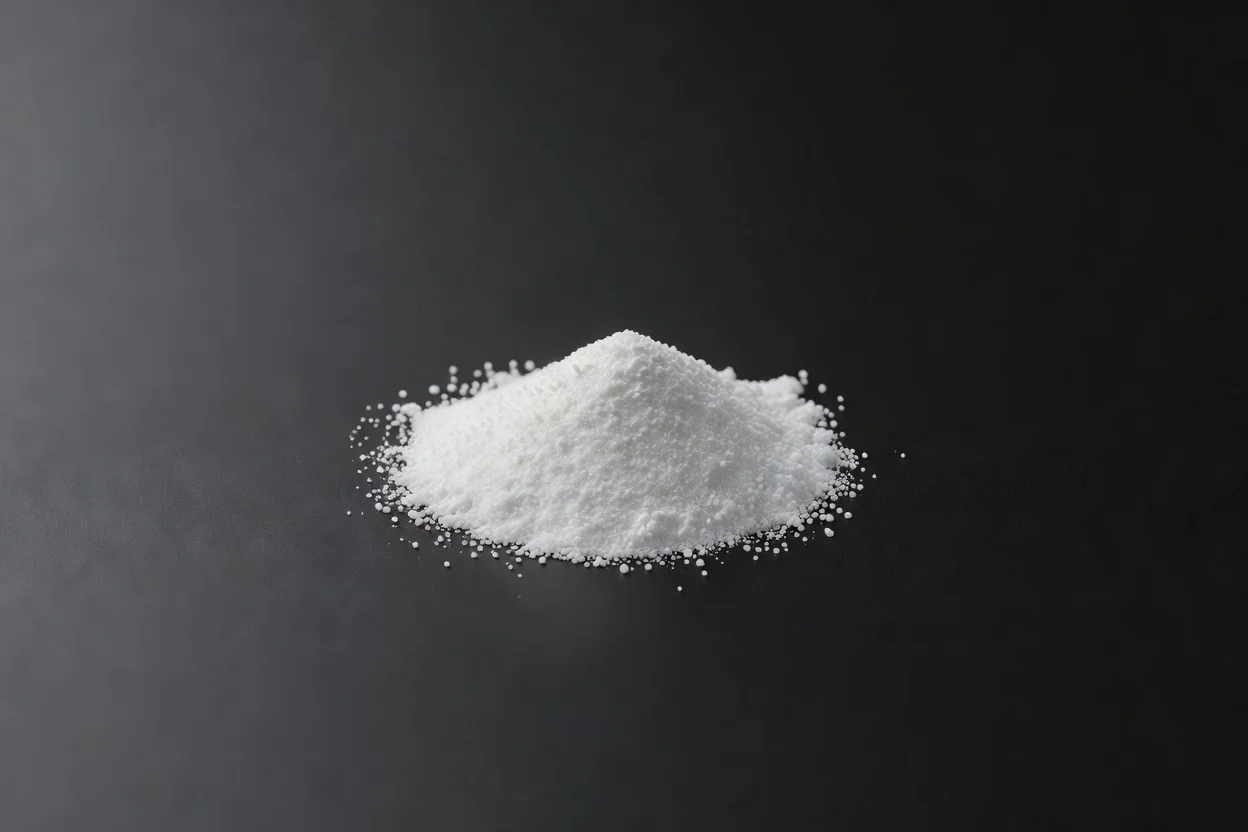
Antiblocking agents & dispersants are two major classes of plastic auxiliaries that solve different but equally important problems in polymer formulation and conversion. Antiblocking agents prevent adjacent plastic surfaces, especially films, from sticking together, while dispersants help solid particles such as pigments, fillers, or functional powders wet, separate, and remain evenly distributed in a polymer matrix or liquid formulation.
In plastics, antiblocking agents are most closely associated with polyethylene and polypropylene films, where they create microscopic surface asperities that reduce film-to-film contact and improve unwind, stacking, and conversion behavior. Dispersants, by contrast, are widely used in filled plastics, color masterbatches, coatings, inks, and related systems to reduce agglomeration, lower viscosity, and stabilize solids through anchoring and steric or electrostatic repulsion.
Although they operate by different mechanisms, both additive families are central to modern processing efficiency and product quality. They also sit at the intersection of performance and sustainability, because they can reduce material losses, improve downgauging, support high filler loading, and influence recyclability, optical clarity, and downstream reprocessing behavior.
History and Development
Antiblocking additives emerged as polymer film production expanded and processors encountered persistent issues of blocking during winding, storage, and transport. Early approaches included surface roughening or less controlled particulate additions, while modern commercial systems rely on well-engineered mineral and organic additives supplied as powders or masterbatches.
Dispersant technology has deeper roots in colloid science and coatings chemistry. Its modern development accelerated with pigment grinding, filled plastics, and waterborne formulations, where the need to wet particle surfaces, break up agglomerates, and prevent re-flocculation became economically critical. Over time, dispersants evolved from simple surfactants to more sophisticated polymeric and reactive architectures with tailored anchor groups and solvating chains.
The two fields have increasingly converged in specialty additives marketing, because some mineral-based antiblock products also contribute limited dispersing or filler functions, and some dispersion aids can influence surface slip, release, or flow behavior in plastics and coatings.
Chemical Structure and Key Properties
Antiblocking agents
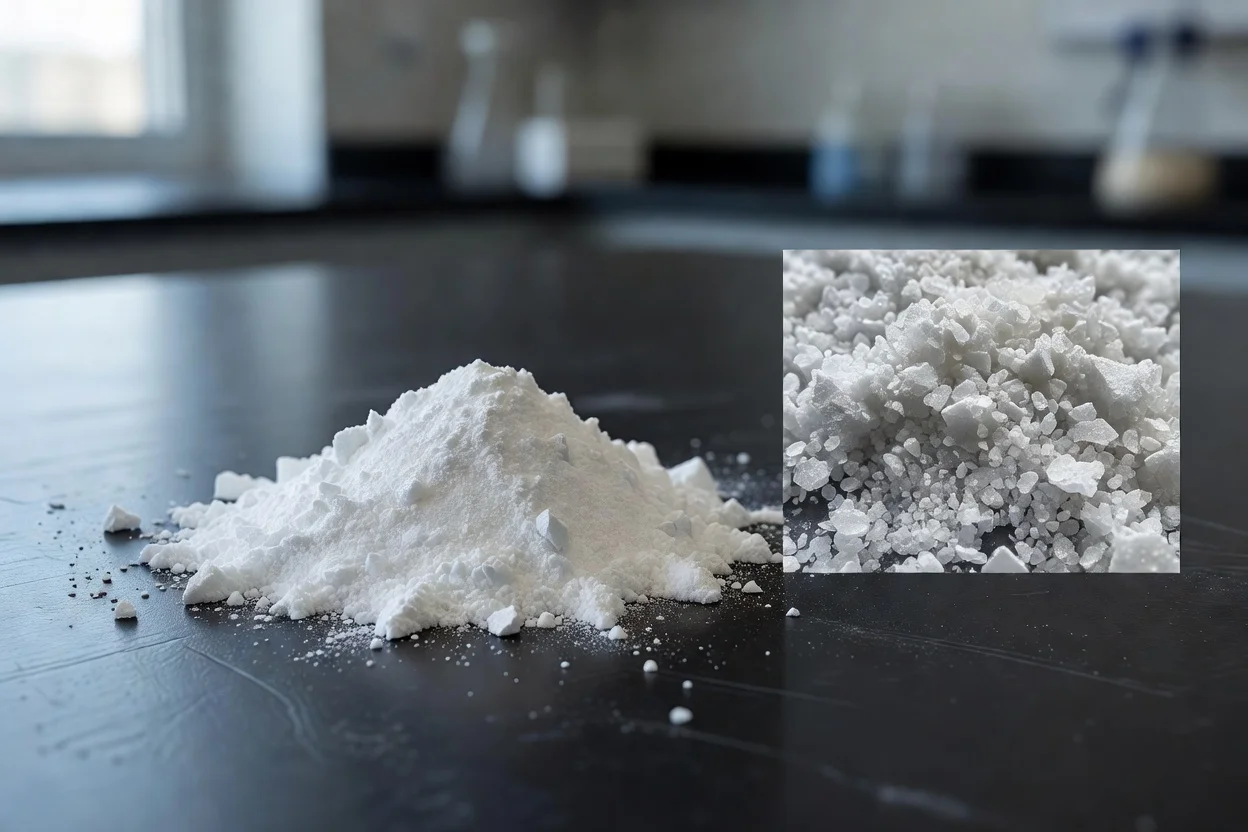
Antiblocking agents are usually finely divided inorganic particles or selected organic solids. Common examples include silica, diatomaceous earth, talc, calcium carbonate, kaolin, nepheline syenite, glass or ceramic microspheres, and in some cases waxy or polymeric materials such as polyethylene waxes or specialty amides.
Their core function is topographical: they protrude from the film surface and reduce the true contact area between adjacent layers. This lowers adhesion and helps films separate cleanly after winding, stacking, or bag conversion.
Key practical properties include:
- Particle size and size distribution, which strongly affect haze, gloss, and blocking performance.
- Hardness and shape, which influence how effectively asperities are formed at the film surface.
- Compatibility with the base resin and processing temperature, which affect dispersion and optical impact.
Dispersants
Dispersants are typically surface-active molecules or polymers with a dual-function structure: an anchor group binds to the particle surface, while a solvated chain or charged segment provides stabilization. In coatings and many liquid systems, the stabilization may be steric, electrostatic, or a combination of both.
Their core function is interfacial: they reduce particle-particle attraction and maintain a stable dispersion by preventing flocculation and re-agglomeration. In plastics, this improves the distribution of pigments, mineral fillers, flame retardants, and other powders, often enabling higher loading levels and more consistent mechanical properties.
Typical mechanisms include:
- Steric stabilization, where polymer chains create a repulsive entropic barrier when particles approach.
- Electrostatic stabilization, where adsorbed ionic species generate like-charge repulsion between particles.
- Wetting and de-airing, where the additive helps liquid penetrate particle agglomerates and replace trapped air.
Real limits and workarounds
- Limit: Antiblocking agents can increase haze or reduce gloss in transparent films → Cause: Particles protrude into the surface and scatter light → Workaround: Use lower dosages, smaller or more refractive-index-matched particles, or migrate to silica grades optimized for optical films.
- Limit: Dispersants can be incompatible with some polymer or binder systems → Cause: Poor anchor chemistry or excessive polarity mismatch reduces adsorption efficiency → Workaround: Select anchor groups matched to the particle chemistry and the host resin, or use reactive/hyperdispersant architectures.
- Limit: Overdosing dispersants can cause viscosity drift, foaming, or poor water resistance in some systems → Cause: Excess free additive remains unadsorbed in the continuous phase → Workaround: Dose to surface area and solids content rather than by simple formulation percent, and validate with rheology and stability testing.
Production Processes and Raw Feedstocks
Antiblocking agents are produced from mineral feedstocks such as quartz, diatomaceous earth, talc, kaolin, calcium carbonate, and nepheline syenite, followed by drying, milling, classification, and sometimes surface treatment or masterbatch compounding. For film applications, the additives are frequently incorporated directly into the resin or supplied as concentrates to improve dosing accuracy and dispersion.
Dispersants are made from petrochemical, oleochemical, or specialty polymer building blocks depending on the target system. Common chemistries include surfactants, polymeric dispersants, polyacrylates, phosphates, and amide- or ester-based molecules used in pigments, fillers, or masterbatches. Their performance depends not only on chemistry, but also on molecular weight, charge density, solvency, and anchor affinity for the solid surface.
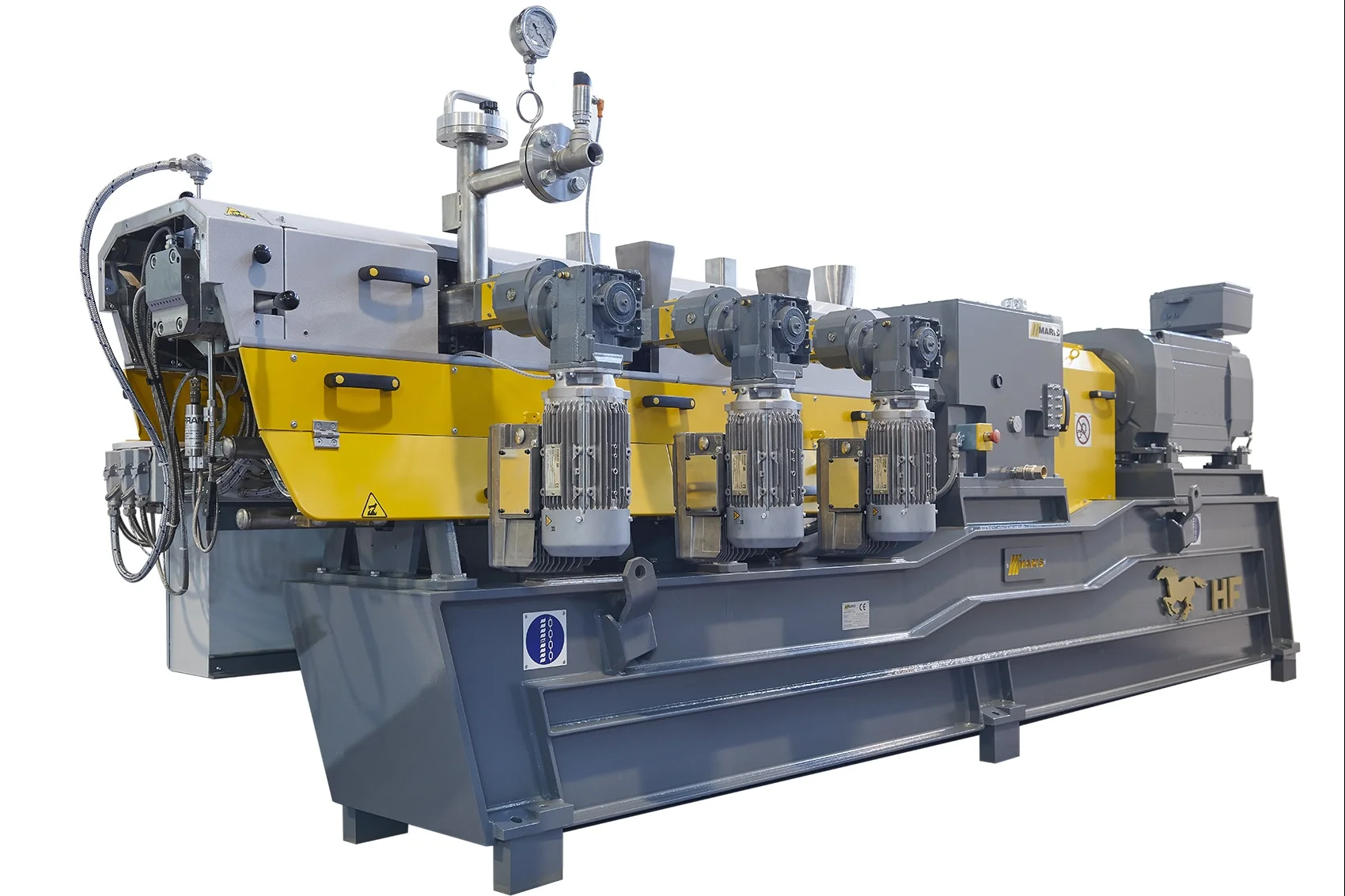
In plastics, dispersants are often added during compounding in high-intensity mixers, twin-screw extrusion, or masterbatch preparation. Their role is to improve wetting of powders by the polymer melt and to reduce the formation of agglomerates that can later become defect sites, weak points, or surface irregularities.
Applications and End-Use Markets
| End use | Typical additive role | Common grades or chemistries | Main processing benefit |
|---|---|---|---|
| Flexible packaging films | Antiblocking | Silica, talc, diatomaceous earth, calcium carbonate | Easier unwind, less blocking, better stacking |
| Shrink and stretch films | Antiblocking | Fine mineral antiblocks, sometimes slip/antiblock packages | Reduced film fusion during winding and storage |
| Agricultural films | Antiblocking | Mineral antiblocks, masterbatches | Better handling under heat and pressure |
| Printing inks and coatings | Dispersants | Polymeric and surfactant dispersants | Pigment wetting, lower viscosity, stability |
| Filled plastics and masterbatches | Dispersants | Anchor-chain polymeric dispersants, coupling/dispersing aids | Filler wetting, reduced agglomeration, improved property uniformity |
| Low-gloss or matt films | Antiblocking | Mineral particles with surface roughening effect | Controlled surface texture and reduced tack |
| Poor-fit use: highly transparent optical films | Antiblocking at high loadings | Mineral antiblocks | Optical haze and clarity loss can be unacceptable |
Antiblocking agents in films
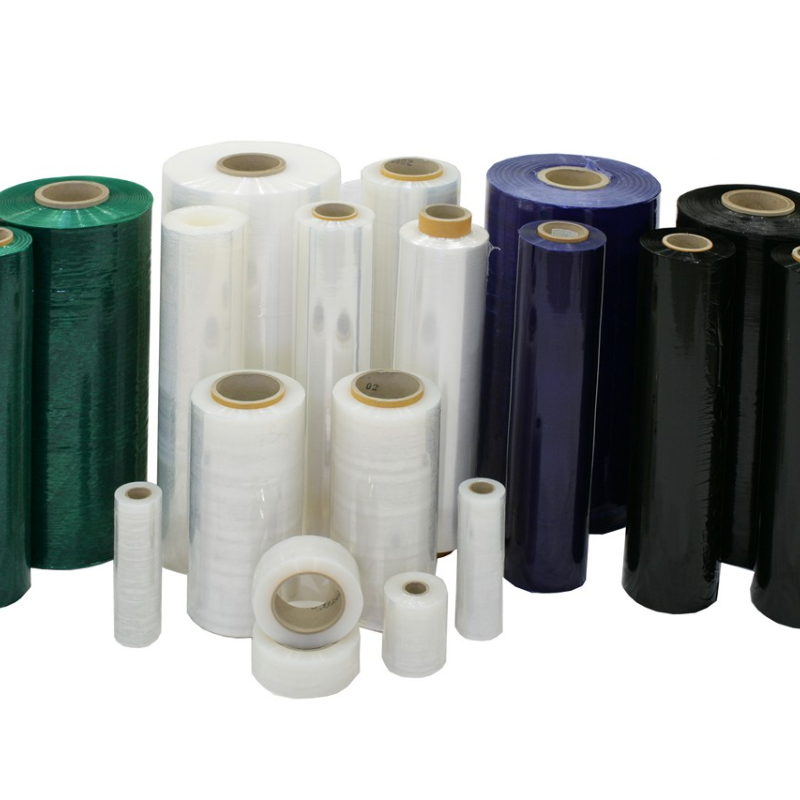
The dominant market for antiblocking agents is film production, especially polyolefin packaging films. These additives are used in food packaging, consumer bags, industrial liners, agricultural sheets, and shrink films, where they improve processing speed and handling by reducing film-to-film adhesion.
In many systems, antiblock performance is paired with slip additives, because one additive reduces contact area while the other lowers friction. This combination is common in high-speed film winding and converting lines.
Dispersants in plastics and adjacent industries
In plastics, dispersants are important for masterbatches, pigmented compounds, flame-retardant systems, filled thermoplastics, and color concentrates. In coatings and inks, they are essential for pigment dispersion, color strength, and storage stability.
Mechanistically, a well-designed dispersant can:
- improve wetting of pigment or filler surfaces,
- reduce milling time,
- raise achievable solids loading,
- prevent settling or hard flocculation,
- improve reproducibility between batches.
A practical example is calcium carbonate-filled compounds, where dispersants can help coat the particle surface and reduce van der Waals attraction, enabling a more uniform filler network and better mechanical consistency. Another common example is pigment dispersants in coatings, where adsorption to the pigment surface and steric stabilization improve color development and storage stability.
Environmental and Sustainability Aspects
The sustainability profile of antiblocking agents is mixed. On one hand, they can support thinner films, better machinability, and lower reject rates, all of which may reduce material consumption and energy use per packaged unit. On the other hand, mineral antiblocks can complicate mechanical recycling if they increase ash content, haze, or surface contamination, particularly in high-load or multi-layer structures.
Dispersants can also support sustainability by enabling higher filler loadings, lower pigment demand, and more efficient processing, which may reduce energy use and raw material intensity. In waterborne systems, they can help replace solvent-heavy formulations, though the environmental profile depends strongly on the full additive chemistry and the formulation context.
Biobased and lower-impact alternatives are increasingly discussed, including:
- biobased or partially biobased dispersants derived from renewable feedstocks,
- mineral antiblocks used in reduced dosages through optimized particle engineering,
- additive packages designed for improved recyclability and lower odor or extractables.
A major circularity challenge is that additives optimized for performance can alter sorting, reprocessing, or recycled-resin appearance. For this reason, additive selection is increasingly influenced by recyclability criteria, food-contact compliance, and the requirements of mono-material packaging design.
Economic and Global Market Impact
Commercial demand for antiblocking agents is closely linked to the global flexible packaging, agricultural film, and industrial film sectors. Demand for dispersants tracks broader growth in coatings, masterbatches, inks, and filled compounds.
Because antiblock products are often mineral-based, the supply chain depends on mining, beneficiation, and grinding capacity for silica, talc, kaolin, calcium carbonate, and related minerals. Dispersant supply is more chemistry-intensive and tied to specialty additive producers that serve coatings, plastics, and pigment markets.
Leading producers vary by chemistry and region, but the market is shaped by multinational specialty-chemical companies as well as regional mineral processors and masterbatch suppliers. Competitive advantage typically comes from particle engineering, dispersion efficiency, optical performance, and regulatory support rather than from cost alone.
Current Challenges and Innovations
Current development work is focused on balancing performance with clarity, recyclability, and processing robustness.
Key challenges include:
- controlling haze in transparent packaging films while still preventing blocking,
- ensuring stable dispersion of high-load fillers and pigments in increasingly demanding compounding systems,
- minimizing additive migration, odor, and food-contact concerns,
- improving additive compatibility with post-consumer recycled polymers.
Important innovation directions include:
- engineered mineral antiblocks with tighter particle size control and lower optical penalty,
- reactive and polymeric dispersants with stronger and more selective adsorption to particle surfaces,
- masterbatch optimization to improve additive distribution and dosing consistency,
- hybrid additive packages that combine antiblock, slip, and antistatic functions in a single formulation.
One practical formulation strategy is the use of approximately 0.05 to 0.5 percent finely divided silica in polyolefin films, where the particles generate micro-asperities and reduce blocking without overwhelming optical performance; actual levels vary widely by resin, thickness, and clarity target. A corresponding dispersant strategy in filled systems is to dose the additive to the total filler surface area rather than by a fixed weight percentage, because adsorption capacity scales with particle surface and chemistry.
Future Outlook
The future of antiblocking agents and dispersants will be shaped by three forces: high-performance packaging, circular-economy requirements, and additive precision. Antiblocking systems will likely become more application-specific, with more emphasis on low-haze transparent films, recyclable mono-material structures, and controlled surface engineering.
Dispersants are expected to become more molecularly tailored, with stronger use of computational formulation, surface analytics, and reactive chemistries that improve dispersion while reducing dosage and side effects. In plastics, this may support higher recycled-content formulations, more demanding color consistency, and better filler utilization in lightweight compounds.
For both additive families, the central strategic task is the same: deliver processing efficiency and performance while minimizing penalties to optics, recycling, health, and environmental footprint.
Summary
Antiblocking agents prevent adjacent plastic surfaces from sticking by creating micro-scale surface separation, while dispersants stabilize solid particles by improving wetting and reducing flocculation. Together, they are indispensable auxiliaries in film production, masterbatch compounding, coatings, and filled plastics, where they improve processability, quality, and consistency.
Their technical value is substantial, but so are the formulation trade-offs. Antiblocking agents can reduce clarity, and dispersants must be matched carefully to the particle and host system to avoid instability or side effects. The most important current trend is therefore not simply higher additive use, but better additive design: more selective, more efficient, and more compatible with recycling and low-carbon manufacturing.
References
- •
Anti-blocking agents for plastics. (2022, November 24).Link
- •
MINBLOC®. (2025, January 1).Link
- •
Choosing the right dispersing agent for coating systems. (2026, February 4).Link
- •
Dispersants 101: Why use a dispersant in paints & coatings. (2022, August 9).Link
- •
What is an antiblocking agent? Its benefits, side effects, and uses. (2024, August 21).Link
- •
Dispersants technology and benefits. (n.d.).Link
- •
Dispersing agent. (2023, December 25).Link
- •
Antiblock agents for polymers: Reduce blocking & improve film handling. (2025, June 19).Link
- •
Антиблокаторы и диспергаторы. (2025, November 2).Link
- •
Anti-blocking agents & dispersants. (2024, December 24).Link
- •
Dispersants for coatings: Selection & dosage guide (2026). (2026, June 12).Link
- •
Dispersing agents: Coatings. (2026, August 12).Link
- •
Antiblocking agents: Polymer stabilizer. (2025, December 19).Link
- •
Handbook of antiblocking, release, and slip additives. (n.d.).Link
- •
Reactive dispersant technology. (n.d.).Link
- •
Dispersing agents: How to select the right grade for plastics? (2025, June 24).Link
- •
Dispersant. (2007, November 6). In Wikipedia.Link
- •
Introduction to additives, Part 4: Dispersants. (2021, December 14).Link
- •
The role and working principle of dispersing agent. (2025, June 30).Link
- •
Definition & applications of antiblock in the plastic industry. (n.d.).Link
- •
Antiblocking agents. (2025, October 17).Link
- •
The overlooked power of dispersing agents. (2025, September 28).Link
- •
Commonly used additive in plastic film industry. (2024, June 25).Link
- •
Antiblocking agents: Masterbatches. (n.d.).Link
- •
Antiblock MBs: What are they and why are they used? (n.d.).Link
- •
Comprehensive guide to anti-blocking agents. (2025, July 29).Link
- •
Silica as antiblocking agent in plastic films. (n.d.).Link
- •
The effects of antiblocking agents on the performance of polyolefin films. (n.d.).Link
- •
What are the types of dispersants and what are they used for? (2025, June 7).Link
- •
Surfactant basics 4 (dispersants). (n.d.).Link
- •
Plastic additives. (n.d.).Link
- •
Product overview. (n.d.).Link
- •
Antiblocking and slip agents. (n.d.).Link
- •
The role of anti-stick additives (antiblock) in the plastic industry. (2024, January 31).Link
- •
Dispersing & wetting additives. (2025, June 30).Link
- •
Antiblock agents market size, share and statistics: 2034. (2024, September 27).Link
- •
A new concept for dispersing agents in aqueous coatings. (1999, August 1).Link
- •
Anti-block. (n.d.).Link
- •
Technical data sheet. (n.d.).Link
- •
Products. (2025, June 30).Link
- •
Antiblocking agents & dispersants, plastic products. (2026, August 24).Link
- •
11-30-5 ethylene bis-stearamide EBS powder plastic rubber dispersant. (n.d.).Link
- •
Antiblocking agent. (2022, April 27). In CAMEO.Link
- •
Antiblocking effect for plastic films. (2026, March 17).Link
- •
Adding to your life. (n.d.).Link
- •
Plastic antiblocking agents & dispersants. (2025, December 17).Link
- •
5. How do dispersants work? (2012, May 29).Link
- •
Antiblock additive market: Global market analysis report. (2025, August 6).Link