
Introduction
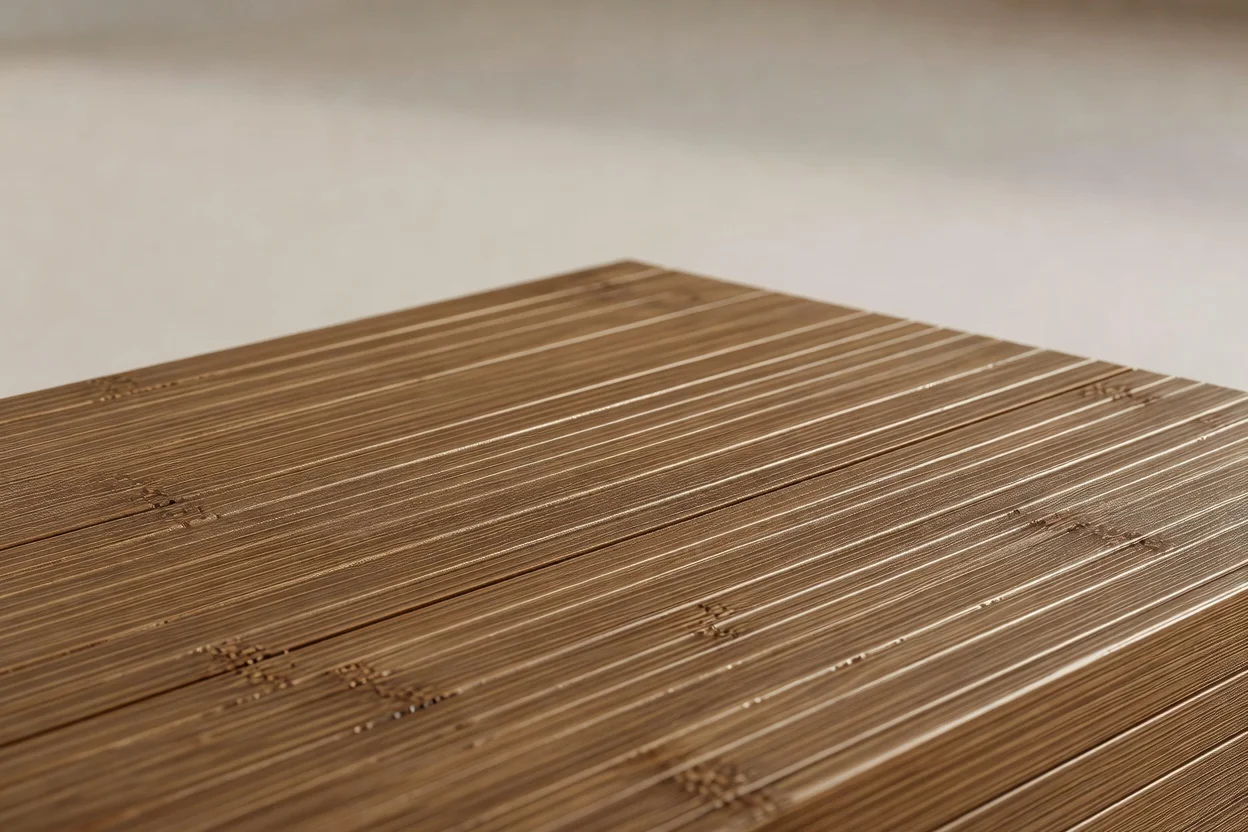
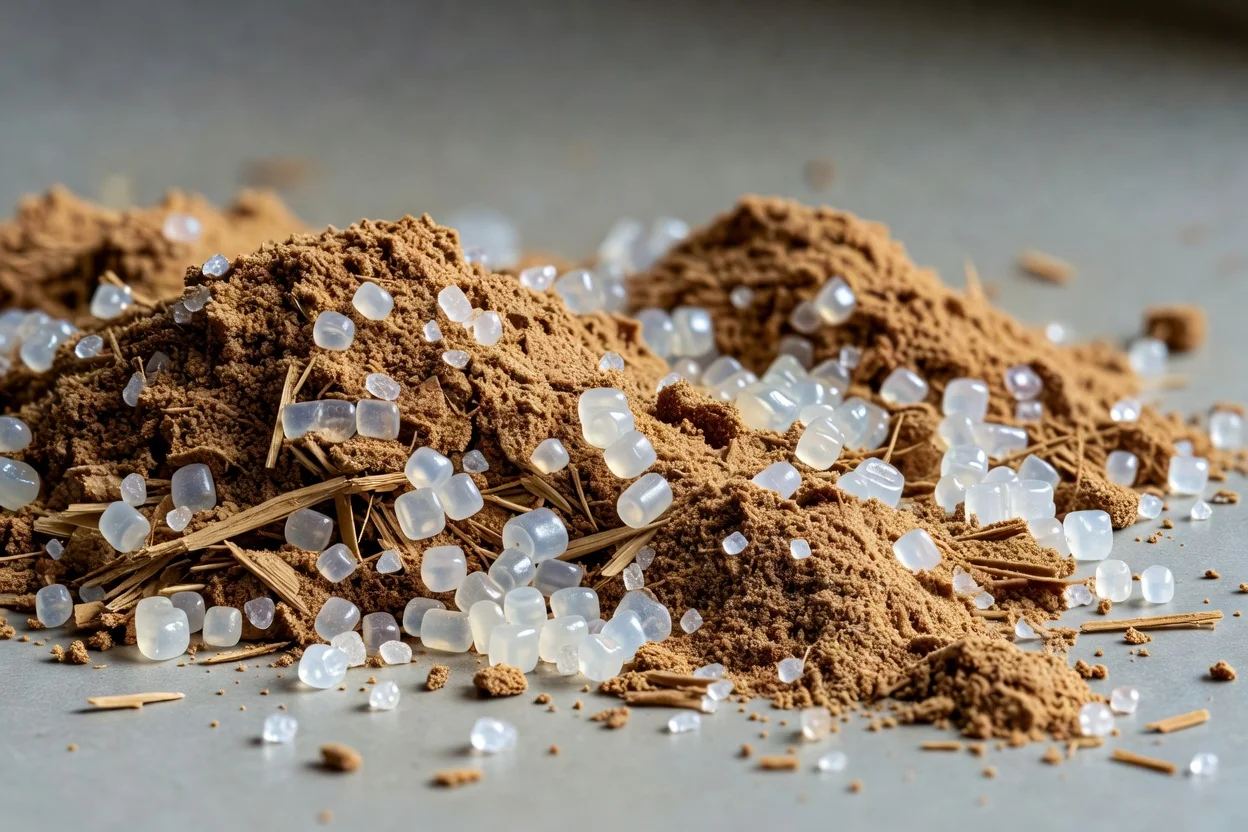
Bamboo plastic composites (BPC) are a class of bio-based composite materials made by combining bamboo-derived fibers, powder, or flour with a thermoplastic or, less commonly, a thermosetting polymer matrix, often with coupling agents, stabilizers, lubricants, and colorants to improve processing and performance. They are best understood as part of the broader family of natural-fiber-reinforced plastics, closely related to wood-plastic composites but distinguished by bamboo’s rapid renewability, high lignocellulosic content, and characteristic balance of stiffness, surface appearance, and dimensional stability.
BPC emerged from efforts to valorize bamboo processing residues and reduce reliance on virgin wood and fossil-derived plastics while preserving the manufacturability of conventional plastics such as extrusion, injection molding, compression molding, and profile forming. The material is now used in decking, cladding, flooring, furniture, pallets, panels, household goods, and selected transportation components, with ongoing research extending into higher-performance, lower-carbon, and more recyclable formulations.
At the same time, BPC occupies a complex sustainability position: it can reduce pressure on forests and improve use of agricultural or milling residues, but its recyclability, long-term weathering behavior, and end-of-life separation remain constrained by the intimate blending of biomass and polymer phases. Current innovation therefore focuses on better interfacial adhesion, improved durability, recycled or bio-based matrices, additive optimization, and more circular design strategies.
History and Development
Bamboo has long been used as a structural and craft material, but BPC as an industrial material is a relatively recent development that followed the commercialization of wood-plastic composites and the expansion of natural fiber composites in the late twentieth and early twenty-first centuries. As bamboo cultivation and processing generated large quantities of sawdust, shavings, pulp, and residue, manufacturers began converting these streams into composite feedstocks for thermoplastic processing.
Academic research accelerated as interest grew in replacing part of the polymer fraction with lignocellulosic reinforcement and in improving the properties of bamboo-filled plastics through better particle treatment, compatibilizers, nanofillers, and hybrid reinforcement strategies. More recent studies have emphasized higher-performance composite architectures, including interfacial engineering and nano-reinforcement, to overcome the weakness of natural-fiber/polymer adhesion and to widen the usable service envelope of BPC products.
Chemical Structure and Key Properties (Technical Overview)
BPC is not a single substance but a multiphase composite consisting of bamboo reinforcement embedded in a polymer matrix. The bamboo fraction typically contains cellulose, hemicellulose, lignin, and extractives, while the matrix is commonly PE, PP, PVC, PLA, PBS, or another thermoplastic selected for melt processing and service requirements.
Key property drivers include:
- Fiber content and geometry, which strongly influence stiffness, strength, and shrinkage behavior.
- Interfacial adhesion between bamboo and polymer, which governs stress transfer and moisture sensitivity.
- Additive package, including coupling agents, antioxidants, UV stabilizers, lubricants, pigments, and flame retardants, which shapes processing stability and outdoor durability.
- Moisture state of the bamboo feedstock, which affects melt processing, void formation, and aging performance.
Typical benefits include improved stiffness relative to neat polymer, attractive natural appearance, lower density than many mineral-filled plastics, and good machinability in profile and board products. However, BPC also has real limits:
- Moisture uptake and swelling → bamboo’s hydroxyl-rich structure attracts water and can weaken the interface → use drying, compatibilizers, surface acetylation, silane treatment, or hydrophobic matrices to reduce uptake.
- Weathering and UV aging → lignocellulosic components and polymer matrices degrade under sunlight and heat → use UV stabilizers, pigments, nano-oxides, and protective surface layers.
- Interfacial incompatibility → polar bamboo and nonpolar polyolefins bond poorly → use maleated coupling agents, plasma treatment, polydopamine-based layers, or hybrid reinforcements.
- Brittleness at high filler loading → excessive bamboo can reduce ductility and impact resistance → optimize filler content and particle size, and combine with impact modifiers or hybrid fibers.
A useful processing rule is that BPC generally becomes stiffer as bamboo loading rises, but processability and toughness often decline beyond an application-specific optimum.
Production Processes and Raw Feedstocks
BPC is usually produced from bamboo powder, flour, fibers, shavings, or residue, combined with thermoplastic resin pellets and functional additives. The most common industrial route is melt compounding followed by shaping, typically through extrusion, profile extrusion, compression molding, or injection molding.
A typical process sequence includes:
- Feedstock preparation Bamboo is cleaned, dried, milled, and sieved to a controlled particle size.
- Surface treatment or compatibilization Chemicals or coupling systems may be applied to improve bonding with the polymer matrix.
- Compounding Bamboo and polymer are blended in a twin-screw or similar mixer with additives.
- Forming The compound is extruded, injection molded, or compression molded into boards, profiles, tiles, or parts.
- Finishing Surface embossing, coating, or machining may be added for aesthetics and performance.
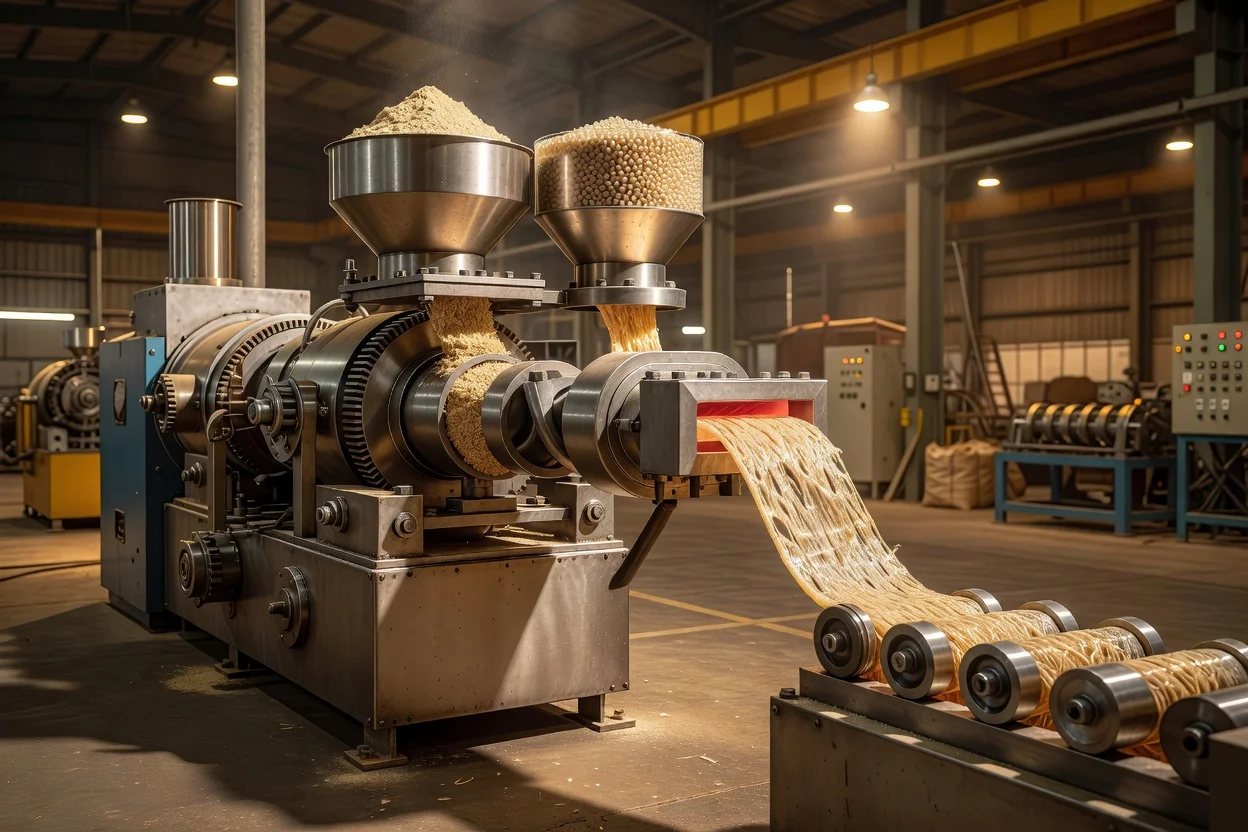
Common matrices include PE, PP, PVC, and increasingly biodegradable polymers such as PLA or PBS in some research and niche commercial uses. Recycled polymer content is also used in some products, aligning BPC with waste-value recovery and cost reduction strategies.
Applications and End-Use Markets
BPC is most successful where a wood-like appearance, moisture resistance, and moderate structural performance are desired at relatively low cost. Major application sectors include:
| Sector | Typical product forms | Usual material/process fit |
|---|---|---|
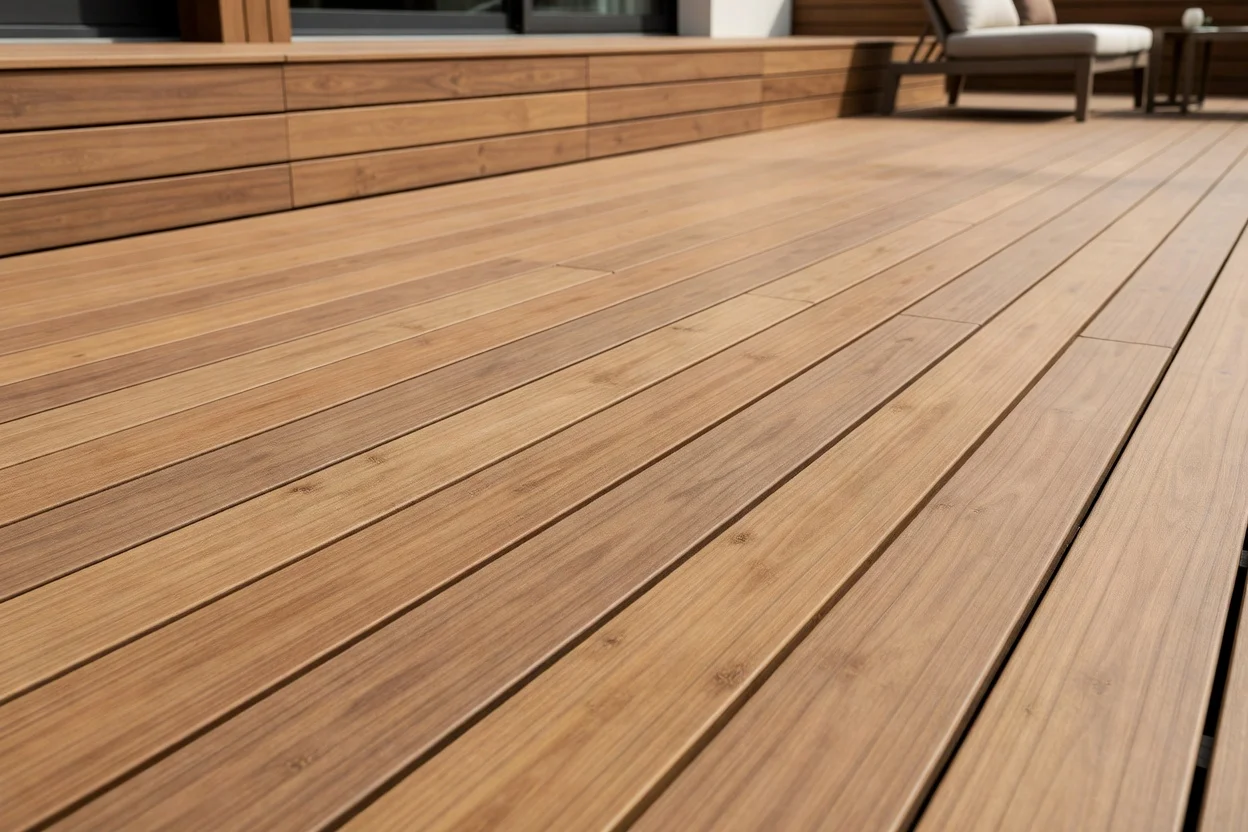
| Construction | Decking, cladding, fencing, wall panels, flooring, railing profiles | Extruded BPC boards and profiles; PE/PP/PVC matrices; outdoor-grade stabilizers |
| Furniture and home goods | Outdoor furniture, cabinets, flower pots, storage items | Injection molded or extruded products; moderate filler loading for surface quality and stiffness |
| Transportation | Trailer decking, pallets, interior panels | Higher-stiffness composites, often with PP or PE and improved impact resistance |
| Agriculture and logistics | Pallets, crates, barriers, packaging-like rigid parts | Dimensional stability and durability are prioritized |
| Consumer products | Bowls, organizers, toothbrush handles, decorative items | Injection molding and short-fiber grades |
| Engineering and research niches | Electrical insulation, additive manufacturing trials, porous carbon precursors | Specialty formulations and laboratory-scale variants |
A poor-fit use is high-impact, thin-wall precision parts requiring very high ductility and tight dimensional tolerances, because conventional BPC tends to be more moisture-sensitive and less impact-tolerant than engineering thermoplastics.
For outdoor decking and cladding, the combination of bamboo reinforcement with polyolefin or PVC matrices is particularly attractive because it provides a wood-like aesthetic with greater resistance to rot, splitting, and insect attack than untreated natural wood. In transportation, bamboo-reinforced polypropylene has been explored for trailer decking as a substitute for tropical hardwood products, reflecting a growing interest in functional replacement materials.
Environmental and Sustainability Aspects
BPC is often promoted as a lower-impact alternative to conventional plastics and some wood products because bamboo grows rapidly, can be harvested frequently, and can utilize residues that would otherwise be underused. When fossil-based polymer content is partly replaced by bamboo, the composite can reduce embodied carbon relative to some traditional materials, although outcomes depend strongly on matrix choice, transport distance, processing energy, and service life.
Sustainability strengths include:
- Residue valorization from bamboo milling and processing streams.
- Potentially lower carbon footprint than some cementitious or fully synthetic alternatives in selected applications.
- Reduced pressure on timber resources in outdoor board and profile markets.
- Compatibility with recycled polymers in some formulations.
Important limitations include:
- Composite separation difficulty at end of life, because bamboo and polymer are intimately bonded.
- Contamination and downcycling risk if products are mixed with other waste plastics or treated as mixed-material waste.
- Biodegradability is limited in many commercial grades when the matrix is PE, PP, or PVC; the bamboo fraction is renewable, but the product is not necessarily biodegradable.
- Additive trade-offs, since UV stabilizers, pigments, and coupling agents improve durability but may complicate recycling.
Bio-based matrices such as PLA and PBS have been studied as alternatives to petroleum-based resins, but these systems bring their own constraints, including heat resistance, hydrolysis sensitivity, and cost. A recurring research theme is that the most sustainable BPC is not simply the most bio-based one, but the one that balances service life, repairability, recycled content, and end-of-life recovery.
Economic and Global Market Impact
Commercial BPC is positioned between commodity plastics, wood-plastic composites, and traditional timber products. Its value proposition is strongest in markets that prize weather resistance, low maintenance, consistent appearance, and easy extrusion into boards and profiles.
The global market is fragmented, with production ranging from specialized regional manufacturers to larger compounders supplying decking and building-product channels. In practice, market leadership is often shaped less by a few dominant global polymer giants than by regional composite specialists that control formulation know-how, profile design, and distribution into construction and outdoor-furnishing markets.
The main economic drivers are:
- Low-cost bamboo residues in regions with established bamboo processing chains.
- Demand for low-maintenance outdoor materials in construction and landscaping.
- Growth of sustainable building products and circular-material branding.
- Ability to reuse recycled polymer streams in some grades, reducing resin cost pressure.
The main cost sensitivities are resin price volatility, drying and preprocessing energy, and the need for additive systems that preserve durability without undermining environmental claims.
Current Challenges and Innovations
The central technical challenge in BPC is the weak compatibility between bamboo’s hydrophilic fibers and hydrophobic thermoplastics. This leads to interfacial voids, reduced impact strength, and accelerated property loss under moisture and heat exposure.
Current innovation directions include:
- Interface engineering with polydopamine, acylated biopolymers, and other bio-inspired adhesion layers.
- Nano-reinforcement, including halloysite nanotubes, nano-SiO2, TiO2, and bamboo charcoal, to improve strength, aging resistance, or thermal behavior.
- Hybrid composites that combine bamboo with other fibers or fillers to tune stiffness and toughness.
- Bio-based lubricant and matrix systems for more sustainable formulations.
- Additive manufacturing and advanced shaping, which could open customized low-volume products using bamboo-rich feedstocks.
In industry terms, the most valuable innovation is often not maximum bamboo loading, but better interface design that allows moderate filler content to deliver durable, processable, and serviceable products.
Future Outlook
BPC is likely to remain strongest in exterior boards, panels, furniture, and other semi-structural markets where appearance, moisture resistance, and moderate stiffness matter most. Future growth will depend on whether the sector can improve durability and recyclability while maintaining the cost and processing advantages that made it commercially attractive in the first place.
Several trends are likely to shape the next phase of development:
- Higher-performance bio-composites with engineered interfaces and hybrid reinforcement.
- Greater use of recycled and bio-based polymers to reduce carbon intensity.
- Improved outdoor durability through UV-resistant and anti-aging formulations.
- Design for circularity, including easier disassembly, mono-material strategies where possible, and better waste sorting pathways.
- Broader adoption in digital fabrication and niche structural products, especially where bamboo waste streams are abundant.
The most credible future scenario is not full replacement of plastics, but a widening role for BPC as a hybrid material platform that combines renewable biomass with polymer processing efficiency for applications that can tolerate its present limitations.
Summary
BPC is a bamboo-reinforced polymer composite used mainly in construction, outdoor products, furniture, and selected transport components. Its appeal lies in the combination of bamboo’s renewability and texture with the durability and processability of plastics, while its main technical constraints are moisture sensitivity, interface weakness, and end-of-life complexity.
References
- •
Bamboo Plastic Composite (BPC) Products. (2026, February 22). BambooVision. https://www.bamboovision.com/bamboo-plastic-composite-bpc-productsLink
- •
Replacing plastic with bamboo: A review of the properties.... (2023, October 31). PMC. https://pmc.ncbi.nlm.nih.gov/articles/PMC10647463/Link
- •
Innovative bamboo-plastic composites interfacial compatibility.... (2024, November 1). PubMed. https://pubmed.ncbi.nlm.nih.gov/39209592/Link
- •
Bamboo plastic materials: A new type of composite material with many applications. (n.d.). ECHEMI.com. https://www.echemi.com/cms/539776.htmlLink
- •
Fabrication of high-performance bamboo–plastic composites.... (2020, May 11). PMC. https://pmc.ncbi.nlm.nih.gov/articles/PMC7248999/Link
- •
Characterization and research on mechanical properties of bamboo plastic composites. (2018, July 25). PMC. https://pmc.ncbi.nlm.nih.gov/articles/PMC6403658/Link
- •
Recycling bamboo waste via additive manufacturing. (n.d.). CumInCAD. https://papers.cumincad.org/data/works/att/ecaade2025_207.pdfLink
- •
Effects of the incorporation of nano-bamboo charcoal on the.... (n.d.). BioResources. https://bioresources.cnr.ncsu.edu/resources/effects-of-the-incorporation-of-nano-bamboo-charcoal-on-the-mechanical-properties-and-thermal-behavior-of-bamboo-plastic-composites/Link
- •
What is brominated polycarbonate? Uses, how it works & top.... (2025, October 5). LinkedIn. https://www.linkedin.com/pulse/what-brominated-polycarbonate-uses-6ds0eLink
- •
竹材加工廢料應用在生物可分解型塑膠複合材製備之研究 [Research on the application of bamboo processing waste in the preparation of biodegradable plastic composites]. (n.d.). National Chung Hsing University. https://for.nchu.edu.tw/en/uploads/file/thesis/87271194-51cb-4f7f-8957-340f9e5bfa9a.pdfLink
- •
An overview of the multifunctional research progress and sustainable development trends in bamboo-based composites. (n.d.). ScienceDirect. https://www.sciencedirect.com/science/article/abs/pii/S2214993725004336Link
- •
纳米SiO2@TiO2 增强竹塑复合材料制备及托盘应用性能仿真分析 [Preparation of nano-SiO₂@TiO₂ reinforced bamboo-plastic composites and simulation analysis of pallet application performance]. (n.d.). AEEISP. https://www.aeeisp.com/nygcxb/cn/article/pdf/preview/10.11975/j.issn.1002-6819.202406215.pdfLink
- •
Preparation of nano-SiO₂@TiO₂ reinforced bamboo.... (2024, October 30). SciOpen. https://www.sciopen.com/article/10.11975/j.issn.1002-6819.202406215Link
- •
Research on molding technologies of bamboo/plastic composite. (n.d.). Atlantis Press. https://www.atlantis-press.com/article/25839219.pdfLink
- •
Thermomechanical analysis of biomass plastic composite.... (n.d.). UI Scholar Hub. https://scholarhub.ui.ac.id/cgi/viewcontent.cgi?article=1680&context=mjtLink
- •
Biomass-derived porous carbon materials for.... (2020, April 1). SciOpen. https://www.sciopen.com/article/10.12103/j.issn.2096-2355.2020.02.006Link
- •
Fabrication of high-performance bamboo-plastic composites reinforced by natural halloysite nanotubes. (n.d.). PubMed. https://pubmed.ncbi.nlm.nih.gov/32403284/Link
- •
The applications of 9-([1,1'-biphenyl]-3-yl)-3-bromo-9H-carbazole. (2023, May 16). ECHEMI. https://topic.echemi.com/a/the-applications-of-9-1-1-biphenyl-3-yl-3-bromo-9h-carbazole_342815.htmlLink
- •
An examination of cutting-edge developments in bamboo.... (2023, February 2). IDEAS/RePEc. https://ideas.repec.org/a/eee/rensus/v188y2023ics1364032123006895.htmlLink
- •
Bamboo-fiber-reinforced thermoset and thermoplastic polymer composites: A review of properties, fabrication, and potential applications. (2022, March 29). PubMed. https://pubmed.ncbi.nlm.nih.gov/35406261/Link
- •
BPC vs WPC - Which one to choose for manufacturing.... (2024, August 6). RajBioplast. https://www.rajbioplast.com/post/bpc-vs-wpcLink
- •
PEER-REVIEW ARTICLE. (n.d.). Semantic Scholar. https://pdfs.semanticscholar.org/3a99/eb60f64586e94ac3100341646870b046f674.pdfLink
- •
Understanding bamboo plastic composite (BPC). (2025, June 29). We-Do-Bamboo. https://www.we-do-bamboo.com/post/empowering-kenya-through-bamboo-green-industry-innovationLink
- •
Boron carbide. (2004, October 23). Wikipedia. https://en.wikipedia.org/wiki/Boron_carbideLink
- •
Top 5 uses of brominated polycarbonate in 2025. (2025, October 24). LinkedIn. https://www.linkedin.com/pulse/brominated-polycarbonate-real-world-5-uses-youll-actually-vhazfLink
- •
Potential application of bamboo powder in PBS bamboo plastic composites. (2019, January 1). Journal of King Saud University - Science. https://jksus.org/potential-application-of-bamboo-powder-in-pbs-bamboo-plastic-composites/Link
- •
BambooVision and bamboo plastic composite (BPC). (2024, May 22). BambooVision. https://www.bamboovision.com/post/bamboovision-and-bamboo-plastic-composite-bpc-a-sustainable-futureLink
- •
Changes in physical properties and microstructure of bamboo–plastic composites with different bamboo powder/polybutylene succinate ratios, polypropylene, and polyethylene. (2024, March 4). MDPI. https://www.mdpi.com/1999-4907/15/3/478Link
- •
Bamboo-plastic composite flooring. (2026, July 15). B2B Wiki. https://b2bwiki.baidu.com/en/encyclopedic/bamboo-plastic-composite-flooringLink
- •
Development and characterization of a sustainable bio-polymer concrete with a low carbon footprint. (2023, January 26). MDPI. https://www.mdpi.com/2073-4360/15/3/628Link
- •
Bamboo fiber reinforced polypropylene composites for transportation applications. (2022, October 6). Frontiers. https://www.frontiersin.org/journals/materials/articles/10.3389/fmats.2022.967512/fullLink
- •
Innovative bamboo-plastic composites interfacial.... (n.d.). ScienceDirect. https://www.sciencedirect.com/science/article/abs/pii/S0141813024056083Link
- •
Development and characterization of a sustainable bio-polymer concrete with a low carbon footprint. (2023, January 26). PubMed. https://pubmed.ncbi.nlm.nih.gov/36771929/Link
- •
An examination of cutting-edge developments in bamboo-PLA composite research: A comprehensive review. (n.d.). ScienceDirect. https://www.sciencedirect.com/science/article/pii/S1364032123006895Link
- •
BPC-BBVS-Catalog.pdf. (2022, May 18). SlideShare. https://www.slideshare.net/slideshow/bpcbbvscatalogpdf/251802596?nway-content_model=ALink
- •
Boron carbide polymer composite: Advanced material.... (n.d.). Eureka. https://eureka.patsnap.com/materials/boron-carbide-polymer-compositeLink
- •
Polycarbonate (PC). (n.d.). BPF. https://www.bpf.co.uk/plastipedia/polymers/Polycarbonate.aspxLink
- •
BPC - Definition & Eigenschaften. (2024, April 26). HOLZwelten. https://blog.holzhandel-deutschland.de/bpc/Link
- •
Understanding the utility of BPC in the industry and BPC granule manufacturers. (2022, November 30). RajBioplast. https://www.rajbioplast.com/post/understanding-the-utility-of-bpc-in-the-industryLink
- •
Was ist BPC? - Merkmale und Eigenschaften. (n.d.). Ligna-Gard. https://ligna-gard.de/was-ist-bpc-eigenschaften/Link
- •
Polymer composite fabrication reinforced with bamboo fiber for.... (2021, December 14). PMC. https://pmc.ncbi.nlm.nih.gov/articles/PMC8707633/Link
- •
A sustainable and biodegradable building block: Review on mechanical properties of bamboo fibre reinforced PLA polymer composites and their emerging applications. (2022, December 20). PMC. https://pmc.ncbi.nlm.nih.gov/articles/PMC9763814/Link
- •
2017Jan17v2-MRSAdv-BPChydro-Vinicius3. (n.d.). arXiv. https://arxiv.org/pdf/1701.06337Link
- •
Opportunities and challenges of bamboo fiber composites in additive manufacturing: A comprehensive review. (2024, September 1). AIP Advances. https://pubs.aip.org/aip/adv/article/14/9/090702/3311593/Opportunities-and-challenges-of-bamboo-fiberLink
- •
PDF. (n.d.). BioResources. https://bioresources.cnr.ncsu.edu/wp-content/uploads/2018/01/BioRes_13_1_1661_Chen_ZQFW_Modif_Props_Bamboo_Plastic_Composites_Hydrotherm_Aging_13014.pdfLink
- •
Bamboo–polylactic acid (PLA) composite material for.... (2017, November 9). PMC. https://pmc.ncbi.nlm.nih.gov/articles/PMC5706233/Link
- •
Strategies for implementing a BPC in commercial.... (2024, January 30). BioProcess International. https://www.bioprocessintl.com/fill-finish/strategies-for-implementing-a-bpc-in-commercial-biologics-manufacturingLink
- •
Learn about polychlorinated biphenyls. (2026, April 16). EPA. https://www.epa.gov/pcbs/learn-about-polychlorinated-biphenylsLink
- •
Bisphenol A-based polycarbonates: Characterization of commercial samples. (n.d.). ScienceDirect. https://www.sciencedirect.com/science/article/abs/pii/S0142941801000630Link
- •
High-strength, multi-mode processable bamboo molecular bioplastic enabled by solvent-shaping regulation. (2025, October 7). Nature. https://www.nature.com/articles/s41467-025-63904-2Link
- •
Bamboo plastic, is it really eco friendly? (2019, August 7). PandaBode. http://pandabode.com/blog/index.php/2019/08/07/bamboo-plastic-is-it-really-eco-friendly/Link
- •
BPC 157 | 137525-51-0. (2026, February 27). ChemicalBook. https://www.chemicalbook.com/ChemicalProductProperty_EN_CB81343566.htmLink