

Introduction
Carbon nanotubes are one-dimensional carbon nanomaterials built from rolled graphitic sheets, typically classified as single-walled, double-walled, or multi-walled structures. They are valued in plastics and advanced materials because they combine very high aspect ratio with exceptional electrical, thermal, and mechanical performance, making them important conductive, reinforcing, and multifunctional additives in polymer compounds and composite systems.
First identified in 1991, carbon nanotubes quickly became a major topic in nanoscience because their nanoscale geometry and sp2-bonded carbon network produce properties that differ sharply from conventional carbon fillers such as carbon black or graphite. In the plastics value chain, CNTs occupy a special position: they are not bulk resins, but high-performance auxiliaries used at low loading to create conductivity, mechanical reinforcement, antistatic behavior, electromagnetic shielding, sensing functions, and thermal-management capability in otherwise insulating polymers.
Their commercial role has expanded from laboratory curiosity to industrial additive, especially in conductive plastics, batteries, coatings, structural composites, and flexible electronics, although cost, dispersion, purity, and occupational-safety concerns still constrain broader adoption. Ongoing development is focused on scalable synthesis, better functionalization, lower-dust masterbatches, and more circular production pathways, while sustainability debates continue to weigh performance gains against energy intensity and end-of-life challenges.
History and Development
Carbon nanotubes were first reported in 1991 by Sumio Iijima during arc-discharge experiments that produced multi-walled nanotubes. The early work established CNTs as a distinct carbon allotrope with a tubular nanostructure and exceptional properties.
Subsequent development moved along two parallel tracks:
- Scientific characterization, including chirality, diameter, wall number, defect density, and electronic behavior.
- Industrial processing, including scalable vapor-phase synthesis, purification, oxidation, functionalization, and incorporation into polymer masterbatches and dispersions.
Commercial interest grew rapidly once it became clear that CNTs could provide conductivity and reinforcement at very low concentrations, especially in thermoplastics, elastomers, coatings, and battery electrodes. More recent work has focused on flexible electronics, transparent conductive films, sensors, electromagnetic shielding, and next-generation energy-storage systems.
Chemical Structure and Key Properties
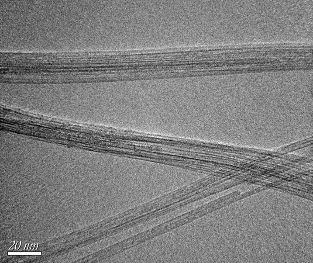
CNTs are seamless cylindrical nanostructures formed by rolling a graphene-like carbon sheet into a tube. Depending on the number of walls, they are classified as single-walled, double-walled, or multi-walled nanotubes.
Their structure gives rise to several defining properties:
- High aspect ratio, often above 1000, which is crucial for percolation in conductive polymer systems.
- High tensile strength and stiffness, associated with strong sp2 carbon bonding.
- High electrical conductivity, which can range from semiconducting to metallic behavior depending on chirality and structure.
- High thermal conductivity, making CNTs useful for heat-spreading and thermal-interface applications.
- Large specific surface area, which supports adsorption, sensing, and interfacial reinforcement.
Practical limits and workarounds
- Poor dispersion in polymers → strong van der Waals attraction and entanglement → use surface functionalization, surfactants, melt compounding, or masterbatches to improve distribution.
- Property variability → differences in chirality, wall number, defects, and impurities → use tighter synthesis control and post-purification for more consistent performance.
- Electrical performance threshold behavior → conductive networks require a percolation network rather than simple additive blending → optimize aspect ratio, dispersion, and loading level, often with hybrid fillers.
- Health and handling concerns → respirable nano-scale powders and dust exposure risk → use pelletized or masterbatched forms, closed handling, and industrial hygiene controls.
Typical property profile
| Property | Practical significance in plastics |
|---|---|
| Very high aspect ratio | Low loading can form conductive networks |
| High modulus and strength | Reinforcement in composites and coatings |
| Electrical conductivity | Antistatic, EMI shielding, sensing, and conductive plastics |
| Thermal conductivity | Heat dissipation and thermal management |
| Surface activity after functionalization | Better adhesion to polymers and matrices |
Production Processes and Raw Feedstocks
CNTs are produced mainly from carbon-containing feedstocks by high-temperature methods such as arc discharge, laser ablation, and chemical vapor deposition (CVD). Among these, CVD is widely used industrially because it offers better scalability and control over tube growth.
Typical production steps include:
- Catalyst preparation, commonly using transition metals such as iron, cobalt, or nickel on supports.
- Carbon feedstock decomposition, using hydrocarbons or related carbon sources.
- Tube growth, where carbon atoms assemble into cylindrical structures on catalyst surfaces.
- Purification, to reduce catalyst residues, amorphous carbon, and disordered carbon.
- Functionalization or compounding, to improve compatibility with resins and processing systems.
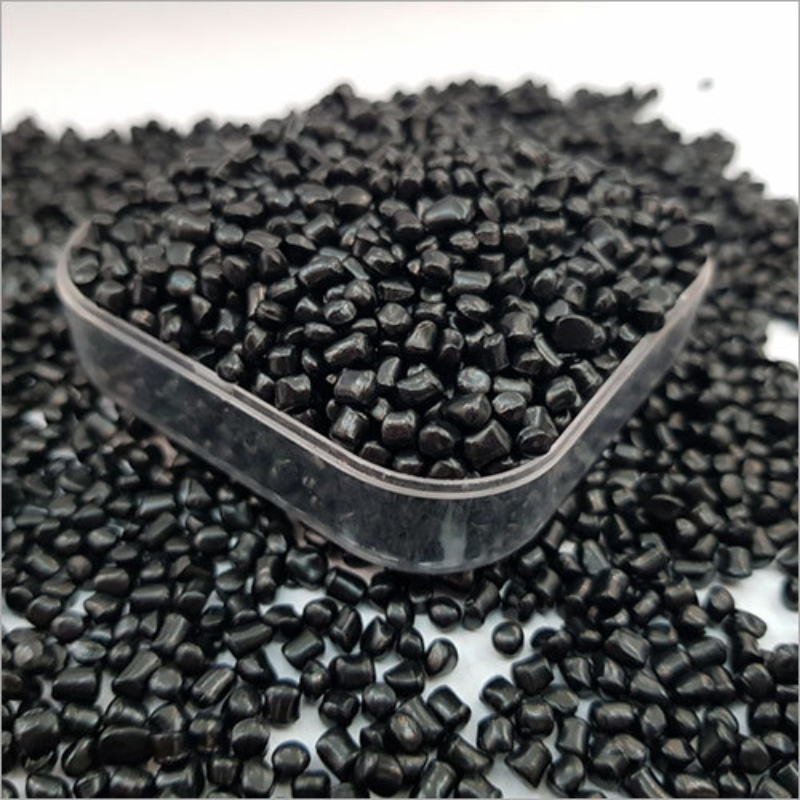
In plastics applications, CNTs are rarely used as loose powders alone. They are more commonly supplied as:
- Powders for specialty formulation
- Aqueous or solvent dispersions
- Polymer masterbatches
- Surface-functionalized grades designed for improved compatibility with specific matrices
A key processing issue is that CNTs are most effective when they are well dispersed but not overly damaged; excessive shear, harsh chemistry, or poor purification can reduce aspect ratio and lower performance.
Applications and End-Use Markets
CNTs are used across plastics and adjacent materials markets, but their strongest commercial position remains in conductive and multifunctional polymers.
| End-use area | Usual CNT role | Typical matrix or format |
|---|---|---|
| Conductive plastics | Antistatic and electrical conductivity | Thermoplastics, elastomers, coatings |
| EMI/RFI shielding | Formation of conductive networks | Housings, enclosures, electronics |
| Batteries and supercapacitors | Conductive additive and support scaffold | Electrode slurries and polymer-bound systems |
| Structural composites | Reinforcement and multifunctionality | Epoxy, thermoplastics, fibers |
| Flexible electronics | Transparent or stretchable conductive films | Polymer films and coatings |
| Sensors | Piezoresistive or chemiresistive signal response | Polymer nanocomposites |
| Thermal management | Heat spreading and dissipation | Interfaces, pads, films |
| Biomedical and filtration | Functional scaffolds and adsorptive materials | Specialty composites and membranes |
Major sector uses
- Electronics and flexible devices: CNTs enable conductive coatings, transparent electrodes, sensors, and flexible circuitry.
- Energy storage: CNTs improve electrode conductivity, mechanical integrity, and rate performance in batteries and supercapacitors.
- Composites: CNTs are widely used to strengthen polymers, reduce weight, and add electrical or thermal functions.
- Coatings and inks: CNTs support antistatic, conductive, and EMI-shielding formulations.
- Biomedical and filtration systems: Functionalized CNTs are studied for drug delivery, biosensing, and contaminant removal, though these uses are more regulated and application-specific.
One poor-fit use
- Conventional high-load structural replacement: CNTs are not generally a direct substitute for bulk fibers or mineral reinforcement in large structural parts because cost, dispersion control, and interfacial engineering often limit their economic efficiency compared with glass fiber, carbon black, talc, or conventional carbon fiber.
Example loading levels and mechanism
- 0.1 to 1.0 wt% CNT in a thermoplastic can often trigger antistatic or conductive behavior when dispersion is adequate, because interconnected nanotube pathways form near the percolation threshold.
- A few phr in elastomers or coatings can improve EMI shielding and mechanical durability, because the nanotube network carries current and helps arrest crack growth through load transfer across the polymer interface.
Environmental and Sustainability Aspects
CNT sustainability is mixed and depends heavily on production route, application lifetime, and end-of-life recovery.
Recyclability and circularity
- CNTs themselves are carbon-based and chemically stable, but once embedded in plastics they are difficult to separate from the host polymer.
- In mechanical recycling, CNTs can sometimes remain in the reprocessed polymer, but property retention depends on thermal history, shear damage, and contamination.
- In thermosets and heavily engineered composites, recovery is substantially more difficult, so end-of-life treatment often follows the fate of the entire composite rather than the nanotubes alone.
Bio-based alternatives
- Bio-based or naturally derived fillers, conductive carbons, and hybrid fillers can partially substitute for CNTs in some applications, especially where extreme conductivity or multifunctionality is not required.
- However, CNTs remain difficult to replace in high-performance applications that depend on their aspect ratio, low percolation threshold, and nanoscale network formation.
Carbon footprint
- CNT production is energy-intensive relative to conventional fillers, especially when purification and dispersion are included.
- Their footprint may still be justified in applications where they enable major lightweighting, lower power consumption, longer battery life, or reduced material use over the product’s service life.
- The strongest sustainability argument for CNTs is therefore functional efficiency per unit mass, not low embodied impact.
Safety and regulatory issues
- Nano-scale powders raise inhalation and workplace exposure concerns.
- The industry trend is toward encapsulated, pelletized, or masterbatched forms to reduce handling risk.
- Regulatory oversight and toxicology research continue to shape acceptable uses, especially in consumer, biomedical, and food-contact contexts.
Economic and Global Market Impact
CNT markets are shaped by the balance between performance benefits and price. The highest-volume demand comes from batteries, conductive plastics, coatings, and composites, while higher-margin specialty demand arises in flexible electronics, sensors, and biomedical research.
Market expansion has been supported by:
- Growth in electric vehicles and energy storage
- Demand for lightweight conductive materials
- Increasing use in EMI shielding for electronics
- Rising interest in printed and flexible electronics
Leading producers have included major carbon-materials and nanomaterials firms in North America, Europe, and East Asia, with strong manufacturing concentration in Asia and an active patent landscape around synthesis, purification, and masterbatch technology. Recent industry analyses also indicate continuing price pressure as capacity expands and as producers compete on consistency, purity, and application-specific formulations rather than on CNT count alone.
Current Challenges and Innovations
Key challenges remain concentrated in manufacturing consistency and real-world integration:
- Dispersion control: CNTs can agglomerate, reducing conductivity and reinforcement efficiency.
- Chirality and purity control: Electronic behavior varies with structure, and impurities can disrupt performance.
- Cost-performance balance: In many applications, carbon black or graphite remains cheaper and easier to process.
- Workplace handling: Fine powders require careful exposure management.
- Scale-up reproducibility: Laboratory performance does not always translate into industrial compound lines.
Current innovations include:
- Functionalized CNTs for better polymer compatibility and stronger interfacial bonding
- Low-dust masterbatches for safer and more consistent processing
- Hybrid filler systems combining CNTs with graphene, carbon black, metal flakes, or fibers
- Aligned CNT architectures for improved electrical and thermal pathways
- Printable CNT inks for flexible electronics and sensors
- Battery-grade CNT additives optimized for electrode conductivity and mechanical stability
Future Outlook
CNTs are likely to remain a premium additive rather than a universal commodity filler. Their future is strongest in applications where nanoscale network formation creates value that conventional fillers cannot match, especially in energy storage, flexible electronics, conductive plastics, and thermal-management materials.
The most important future trends are likely to be:
- Lower-cost, higher-consistency production
- More specialized masterbatches and dispersions
- Improved lifecycle assessment and safety data
- Broader use in electrification-related applications
- Hybrid materials that combine CNTs with other advanced fillers
If manufacturing control, occupational safety, and end-of-life design improve, CNTs may become more deeply embedded in the plastics industry as a multifunctional platform additive rather than a niche nanomaterial.
Summary
Carbon nanotubes are high-aspect-ratio carbon nanomaterials used primarily as conductive, reinforcing, and multifunctional auxiliaries in plastics and advanced materials. Their value comes from exceptional electrical, thermal, and mechanical properties, but their industrial use depends on controlling dispersion, purity, safety, and cost.
References
- •
Carbon nanotube - an overview. (2021, October 12). ScienceDirect. https://www.sciencedirect.com/topics/materials-science/carbon-nanotubeLink
- •
Carbon nanotube. (2001, April 10). Wikipedia. https://en.wikipedia.org/wiki/Carbon_nanotubeLink
- •
Carbon nanotube. (2016, August 5). Britannica. https://www.britannica.com/science/carbon-nanotubeLink
- •
Carbon nanotubes: Tiny technology, big possibilities. (2023, October 25). CAS. https://www.cas.org/resources/cas-insights/tiny-technology-big-possibilitiesLink
- •
Carbon nanotubes – what they are, how they are made, what they are used for. (n.d.). Nanowerk. https://www.nanowerk.com/nanotechnology/introduction/introduction_to_nanotechnology_22.phpLink
- •
Carbon nanotube uses: Top 10 CNT applications. (2024, January 17). MarketsandMarkets. https://www.marketsandmarkets.com/ResearchInsight/carbon-nanotube-uses.aspLink
- •
Carbon nanotubes. (n.d.). IEEE Technology Navigator. https://technav.ieee.org/topic/carbon-nanotubes/Link
- •
Advances and applications of carbon nanotubes. (2023, September 29). PMC. https://pmc.ncbi.nlm.nih.gov/articles/PMC10574115/Link
- •
Carbon nanotubes: Properties and applications. (2021, January 10). AZoNano. https://www.azonano.com/article.aspx?ArticleID=5625Link
- •
Carbon nanotubes: Applications in pharmacy and medicine. (2013, September 30). PMC. https://pmc.ncbi.nlm.nih.gov/articles/PMC3806157/Link
- •
Consumer applications of carbon nanotubes. (2022, January 26). AZoNano. https://www.azonano.com/article.aspx?ArticleID=5977Link
- •
Carbon nanotubes: Uses, structure and properties. (n.d.). Ossila. https://www.ossila.com/pages/what-are-carbon-nanotubesLink
- •
Different technical applications of carbon nanotubes. (2015, September 16). PMC. https://pmc.ncbi.nlm.nih.gov/articles/PMC4573081/Link
- •
Carbon nanotubes - overview of properties, classification, fabrication and synthesis. (2017, July 31). AZoNano. https://www.azonano.com/article.aspx?ArticleID=1199Link
- •
Recent insights and multifactorial applications of carbon nanotubes. (2021, November 30). PMC. https://pmc.ncbi.nlm.nih.gov/articles/PMC8708822/Link
- •
Carbon nanotubes – Part I: Introduction, production, areas of application. (n.d.). epub.oeaw. https://epub.oeaw.ac.at/0xc1aa5572%200x002aa3bf.pdfLink
- •
Emerging applications of carbon nanotubes. (2010, November 18). ACS Publications. https://pubs.acs.org/doi/10.1021/cm102406hLink
- •
Chapter 1: Carbon nanotubes. (2021, October 27). RSC Books. https://books.rsc.org/books/monograph/870/chapter/638121/Carbon-NanotubesLink
- •
Applications of carbon nanotubes. (2018, April 23). AZoNano. https://www.azonano.com/article.aspx?ArticleID=4842Link
- •
Carbon nanotubes-properties and applications: A review. (n.d.). SciSpace. https://scispace.com/pdf/carbon-nanotubes-properties-and-applications-a-review-45zyhrgpu7.pdfLink
- •
Carbon nanotube uses, from batteries to drug delivery. (2024, March 29). CAS. https://www.cas.org/resources/cas-insights/batteries-drug-delivery-emerging-applications-carbon-nanotubesLink
- •
Carbon nanotube. (2009, October 17). ScienceDirect. https://www.sciencedirect.com/topics/chemical-engineering/carbon-nanotubeLink
- •
Carbon nanotubes definition. (2021, November 23). BYJU'S. https://byjus.com/chemistry/carbon-nanotubes/Link
- •
Carbon nanotube - an overview. (n.d.). ScienceDirect. https://www.sciencedirect.com/topics/physics-and-astronomy/carbon-nanotubeLink
- •
A review on carbon nanotube: An overview of synthesis, properties, functionalization, characterization, and the application. (2021, June 19). ScienceDirect. https://www.sciencedirect.com/science/article/abs/pii/S0921510721000556Link
- •
Carbon nanotubes: Properties and application. (2004, January 15). ScienceDirect. https://www.sciencedirect.com/science/article/abs/pii/S0927796X03001268Link
- •
The applications of carbon nanotubes. (2024, August 9). Malvern Panalytical. https://www.malvernpanalytical.com/en/learn/knowledge-center/insights/the-applications-of-carbon-nanotubes?lang=deLink
- •
Carbon nanotube: An introduction. (n.d.). Inflibnet. https://ebooks.inflibnet.ac.in/msp09/chapter/carbon-nanotube-an-introduction/Link
- •
Synthesis, properties, and applications of carbon nanotubes. (n.d.). Semantic Scholar. https://pdfs.semanticscholar.org/0044/d1aa8be5b8f6a732933a766c9c6f42bd8e25.pdfLink
- •
What are carbon nanotubes and what are they used for. (2025, September 9). Canatu. https://canatu.com/company/canatu-news/what-are-carbon-nanotubes-and-what-are-they-used-for/Link
- •
Applications of carbon nanotubes in biotechnology and medicine. (2005, March 1). PMC. https://pmc.ncbi.nlm.nih.gov/articles/PMC2745127/Link
- •
Carbon nanotubes. (1998, January 1). Physics World. https://physicsworld.com/a/carbon-nanotubes/Link
- •
A critical review of the role of carbon nanotubes in the progress of neuroscience. (2022, April 7). PMC. https://pmc.ncbi.nlm.nih.gov/articles/PMC8989124/Link
- •
Carbon nanotubes: Structure, properties and applications in the electronics industry. (n.d.). ScienceDirect. https://www.sciencedirect.com/science/article/pii/S2590048X24001286Link
- •
Carbon nanotubes - present and future commercial applications. (n.d.). University of Cambridge. https://www.eng.cam.ac.uk/uploads/news/files/devolder13sciencereview.pdfLink
- •
Carbon nanotubes - miracle of materials science? (n.d.). NTRS. https://ntrs.nasa.gov/api/citations/20000086217/downloads/20000086217.pdfLink
- •
Applications of carbon nanotubes in the Internet of Things era. (2021, September 11). PMC. https://pmc.ncbi.nlm.nih.gov/articles/PMC8435483/Link
- •
Carbon nanotubes: Properties and applications. (2026, April 21). Cheap Tubes. https://www.cheaptubes.com/carbon-nanotubes-properties-and-applications/Link
- •
Applications of carbon nanotubes. (2013, May 30). SlideShare. https://www.slideshare.net/slideshow/applications-of-carbon-nanotubes/22183454Link
- •
An overview on carbon nanotubes. (n.d.). MedCrave. http://medcraveonline.com/MOJBB/MOJBB-03-00045.pdfLink
- •
Carbon nanotubes properties and applications. (2016, October 12). SlideShare. https://www.slideshare.net/slideshow/carbon-nanotubes-properties-and-applications/67073580Link
- •
Carbon nanotubes: A breakthrough in material science. (2024, August 14). MechNano. https://mechnano.com/carbon-nanotubes-a-breakthrough-in-material-science/Link
- •
An introduction to carbon nanotubes. (n.d.). DEU. https://mme.deu.edu.tr/wp-content/uploads/2017/10/anintroductiontocarbonnanotubes.pdfLink
- •
Carbon nanotubes: Properties, synthesis, purification, and medical applications. (2014, August 13). PMC. https://pmc.ncbi.nlm.nih.gov/articles/PMC4141964/Link
- •
A review on carbon nanotubes family of nanomaterials and their applications. (2024, February 13). PMC. https://pmc.ncbi.nlm.nih.gov/articles/PMC10905599/Link
- •
ELI5 what are carbon nanotubes good for? Like what can they be used for? (2021, September 8). Reddit. https://www.reddit.com/r/explainlikeimfive/comments/pjznun/eli5_what_are_carbon_nanotubes_good_for_like_what/Link