
Introduction
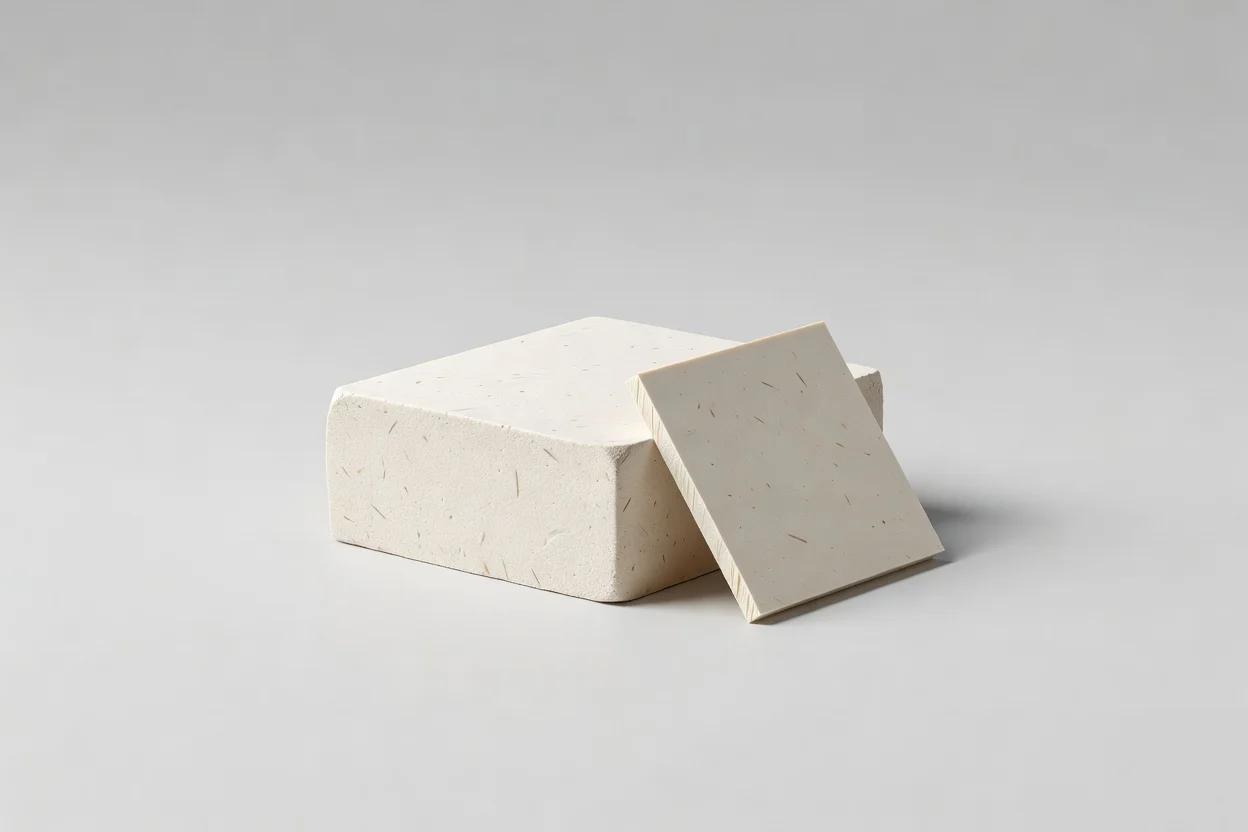
Bulk molding compound and sheet molding compound are closely related families of ready-to-mold, glass-fiber-reinforced thermoset composites used to make durable, dimensionally stable parts by compression molding, and in the case of BMC also injection and transfer molding. Both materials occupy an important position in the plastics value chain because they combine the processing efficiency of precompounded feedstocks with the performance of reinforced thermosets, making them especially useful where electrical insulation, heat resistance, corrosion resistance, and repeatable part quality matter.
BMC, also called dough molding compound, is typically supplied as a putty-like mass, log, or rope containing resin, chopped glass fibers, fillers, catalysts, and additives. SMC is typically supplied as a sheet, with longer glass fibers and a formulation optimized for compression molding of larger parts, especially where higher mechanical performance and better surface finish are required. In practical industry use, BMC is often chosen for compact, intricate components, while SMC is more common for larger semi-structural panels and body parts.
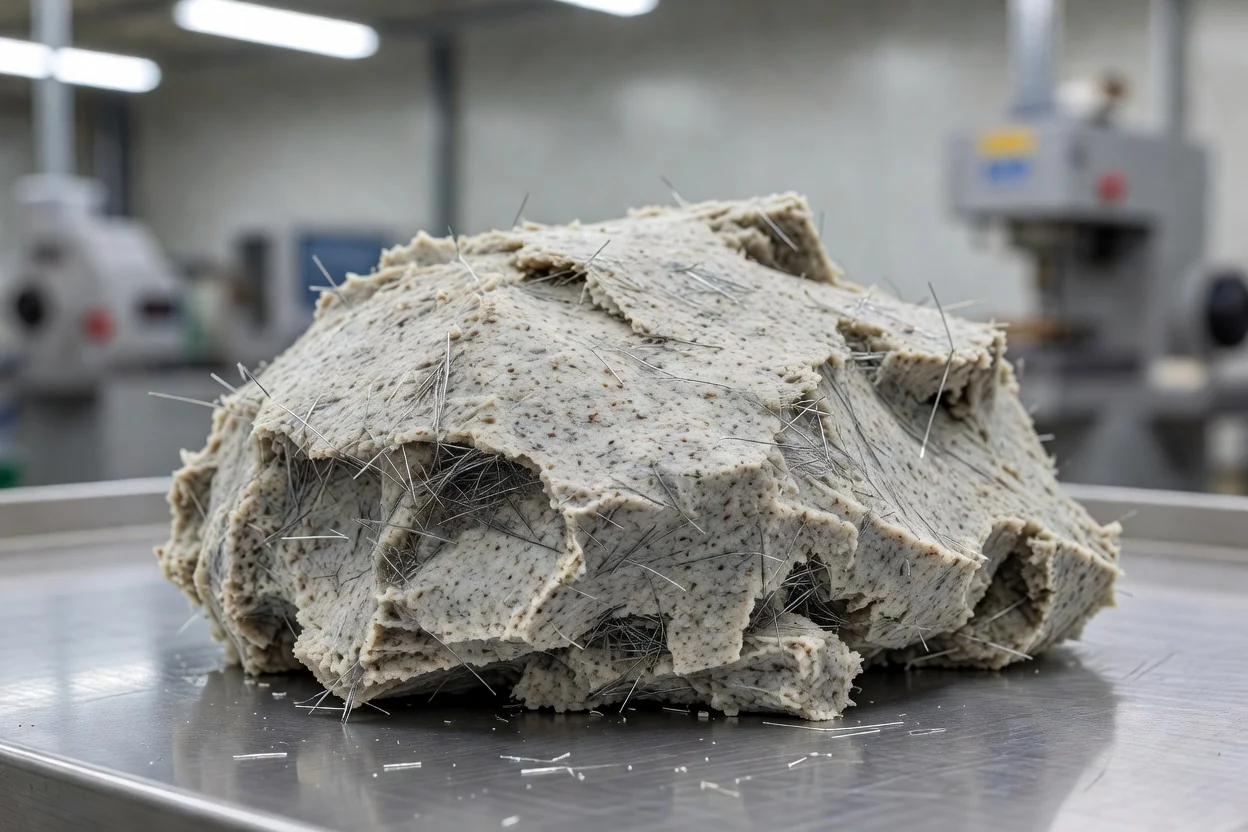
The two materials are usually based on thermoset resin systems such as unsaturated polyester, vinyl ester, or epoxy, with mineral fillers and short glass reinforcement providing stiffness, dimensional control, and cost balance. Their development reflects the broader evolution of fiber-reinforced plastics from hand lay-up and basic molding compounds toward highly engineered, factory-controlled feedstocks designed for high-throughput industrial molding.
Sustainability considerations are increasingly shaping this product category. Traditional BMC and SMC rely heavily on petrochemical resins and are not easily remelted after cure, which complicates mechanical recycling; at the same time, industry work has focused on bio-based resins, lower-styrene formulations, recycled fillers, and process improvements that reduce emissions and waste. Future growth is likely to come from electrification, lightweight transport, corrosion-resistant infrastructure, and improved formulations that strengthen both performance and circularity.
History and development
SMC and BMC emerged as industrially practical thermoset composite feedstocks when manufacturers sought faster, more consistent alternatives to hand-built fiberglass parts and conventional reinforced molding processes. Their rise was tied to the expansion of automotive, electrical, appliance, and industrial equipment markets that required molded parts with stable dimensions, better repeatability, and lower unit cost than many metal or labor-intensive composite alternatives.
A defining step in their development was the move toward standardized premixed formulations containing resin, reinforcement, filler, and processing aids, allowing parts to be molded from controlled feedstock rather than assembled from separate ingredients at the press. Over time, SMC became more strongly associated with larger exterior and structural parts, while BMC remained especially important for compact precision parts and electrical components.
More recent development has focused on low-profile and low-shrink formulations, improved surface quality, higher heat resistance, flame retardancy, and formulations tailored for electric vehicles, busbar supports, and other demanding electrical uses.
Chemical structure and key properties
BMC and SMC are not single polymers but formulated thermoset composites built from several functional ingredients. A typical formulation includes:
- A thermosetting resin matrix, most often unsaturated polyester, vinyl ester, or epoxy.
- Glass-fiber reinforcement, generally chopped shorter in BMC and longer in SMC.
- Mineral fillers such as calcium carbonate, clay, or mica to reduce cost, control shrinkage, and tune stiffness and rheology.
- Processing additives such as catalysts, release agents, thickeners, pigments, and stabilizers.
The performance profile follows from that structure. Glass fibers carry load, the cured thermoset matrix transfers stress and provides thermal and chemical resistance, and fillers improve dimensional stability while lowering material cost.
| Property | Typical significance |
|---|---|
| Dimensional stability | Low shrinkage and good repeatability after cure; important for electrical housings and precision parts. |
| Electrical insulation | High dielectric strength and arc resistance suit switchgear, insulators, and enclosures. |
| Heat resistance | Suitable for elevated-temperature service, especially in under-hood and electrical applications. |
| Corrosion resistance | Better than many metals in humid, salt, or chemically aggressive environments. |
| Moldability | BMC flows into intricate cavities; SMC supports larger parts with better structural performance. |
Two practical limits are especially important:
- Limit: Thermoset curing prevents remelting and reshaping → Cause: irreversible crosslinking during cure → Workaround: design for regrind use where possible, use closed-loop scrap recovery for uncured trim, or shift selected applications to recyclable thermoplastics when performance allows.
- Limit: Mechanical performance is generally lower in compact BMC than in fiber-longer SMC → Cause: shorter fiber length reduces load transfer efficiency → Workaround: increase fiber architecture quality, optimize orientation and charge placement, or choose SMC when structural demand is higher.
A useful rule of thumb in formulation engineering is that higher fiber length and better orientation improve strength, while higher filler loading improves cost control and shrinkage management but can reduce toughness. In BMC, glass reinforcement is commonly described as a minority fraction relative to the full compound, with short glass fibers typically ranging roughly from a few millimeters up to around 12.5 mm in many commercial systems.
Production processes and raw feedstocks
BMC is usually manufactured by premixing resin, fillers, initiator system, pigments, lubricants, and chopped glass fibers into a dough-like compound that can be cut into charges or delivered as logs. The process must balance wet-out of fibers against excessive fiber breakage, because the final part performance depends strongly on reinforcement length retention.
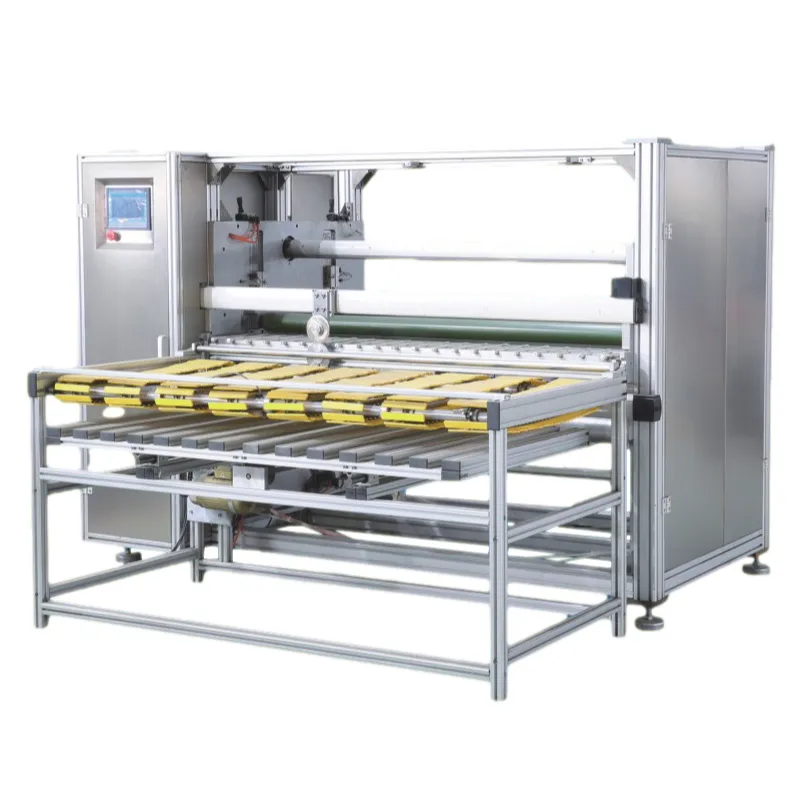
SMC is produced as a sheet, commonly by depositing resin paste and chopped glass onto a carrier film, then allowing controlled thickening before winding or stacking into sheet form for storage and molding. The sheet architecture makes handling easier for large-charge compression molding and supports more uniform part geometry in large panels.
Typical raw feedstocks include:
- Resins: unsaturated polyester is the most common, with vinyl ester and epoxy used where chemical resistance or performance requirements are higher.
- Reinforcement: alkali-resistant or standard E-glass chopped strands are the industry mainstay.
- Fillers: calcium carbonate is common for cost and rheology control; mica and clay are used when barrier, stiffness, or shrink control is important.
- Additives: initiators, thickeners, release agents, pigments, and flame-retardant packages tailor molding behavior and end-use properties.
A representative additive example is the use of mold-release agents at low levels to reduce sticking and improve demolding; these function by lowering interfacial adhesion at the mold surface, which can shorten cycle time and improve surface quality. Another example is thickening agents in SMC, which increase viscosity over time to make the sheet handleable while preserving the ability to flow under press heat and pressure during molding.
Applications and end-use markets
BMC and SMC are used across electrical, transportation, industrial, construction, and consumer markets, but the optimal grade and process differ by part geometry and performance target.
| End-use sector | Typical material choice | Typical process | Why it fits |
|---|---|---|---|
| Electrical enclosures, insulators, breakers, busbar supports | BMC | Compression or injection molding | High dielectric strength, arc resistance, precision molding. |
| Automotive body panels, hoods, deck lids, front-end modules | SMC | Compression molding | Large-area parts, stiffness, corrosion resistance, surface quality. |
| Truck, bus, rail panels and covers | SMC | Compression molding | Lightweight, durable, good paintability and corrosion resistance. |
| Appliance housings and industrial equipment covers | BMC and SMC | Compression or injection molding | Heat resistance, flame retardancy, dimensional control. |
| Bathroom, sanitary, and building components | SMC | Compression molding | Moisture resistance, surface finish, cost-effective large shapes. |
| Compact precision parts, lamp housings, terminal blocks | BMC | Injection or compression molding | Good flow into intricate cavities. |
BMC is especially suited to smaller, more intricate, electrically functional parts where the ability to flow into complex cavity shapes is valuable. SMC is better suited to larger body panels and semi-structural parts where longer fibers provide superior mechanical properties and better performance under impact or bending loads.
One relatively poor-fit use for these materials is highly transparent optical parts, because glass-filled thermoset compounds are inherently opaque and are not designed for optical clarity. In such cases, thermoplastics such as polycarbonate or acrylic are generally more appropriate.
Environmental and sustainability aspects
The main environmental challenge for BMC and SMC is that they are crosslinked thermosets, which means the cured material cannot be remelted and remolded in the way thermoplastics can. This limits straightforward mechanical recycling and makes end-of-life management more complex, especially for large composite structures.
At the same time, several sustainability pathways are being pursued:
- Bio-based resins: research has demonstrated SMC formulations derived from soybean oil and related bio-derived feedstocks, aiming to reduce fossil carbon intensity while maintaining processability and performance.
- Recycled mineral fillers: substitution of virgin mineral filler with recovered or lower-impact fillers can reduce embodied emissions and cost, although quality control is essential.
- Lower-emission formulations: reducing styrene emissions and improving process containment remain major industrial priorities in thermoset compounding.
- Design for durability: long service life in corrosive or electrically harsh environments can offset some lifecycle impacts by reducing replacement frequency.
A balanced assessment is necessary. The environmental profile of BMC and SMC is not favorable in end-of-life recyclability, but their durability, lightweighting potential relative to metal, and ability to consolidate parts can reduce use-phase emissions and manufacturing waste in some applications. For transport applications, especially, the benefit often comes from part integration and corrosion resistance rather than from simple material substitution alone.
Economic and global market impact
BMC and SMC are mature but strategically important markets because they serve cost-sensitive sectors that still demand high performance. Demand is linked to automotive production cycles, electrical infrastructure investment, appliance manufacturing, and construction activity, while electrification is creating new opportunities in battery covers, insulation parts, and power distribution hardware.
The market is also influenced by resin prices, glass-fiber supply, energy costs, and regulatory pressure on emissions and composite waste. According to recent industry discussions, major producers and compounders include global resin and composite specialists such as Polynt-Reichhold, IDI Composites, and several regional manufacturers active in automotive and electrical supply chains.
Competitive advantage increasingly depends on formulation know-how rather than raw scale alone. Suppliers that can deliver better surface finish, lower shrinkage, faster cure, improved flame resistance, and stable electrical properties are best positioned in premium applications.
Current challenges and innovations
Current technical challenges include:
- Improving surface quality for visible exterior parts without compromising flow or cycle time.
- Reducing shrinkage and warpage in thick or complex geometries.
- Maintaining fiber length and orientation during compounding and molding to maximize strength.
- Balancing flame retardancy, electrical performance, and sustainability in regulated applications.
- Managing end-of-life waste from thermoset composite products.
Innovation is advancing along several fronts:
- Low-profile formulations that reduce surface waviness and improve paintable finishes.
- Bio-based and partially bio-based resin systems to lower fossil-carbon dependence.
- Hybrid reinforcement strategies that combine glass with other fibers or fillers for better property balance.
- Automation in charge placement and molding to improve repeatability and reduce scrap.
- Application-specific grades for EVs and power systems, especially insulating housings and structural electrical components.
Future outlook
BMC and SMC are likely to remain relevant because they solve a persistent industrial problem: how to manufacture robust, electrically insulating, corrosion-resistant parts at scale with controlled cost and fast cycle times. Their strongest growth prospects are in electrification, transportation lightweighting, industrial electrics, and infrastructure components where thermoplastics or metals do not offer the same combined property set.
Future material development will probably concentrate on three directions: lower-carbon resin chemistry, improved recyclability or recoverability strategies, and higher-performance grades that can compete with metals in more demanding semi-structural roles. SMC is likely to continue moving toward larger visible and structural panels, while BMC will remain especially important for precision electrical and compact industrial parts.
Summary
BMC and SMC are thermoset composite feedstocks that combine resin, glass reinforcement, fillers, and additives into ready-to-mold materials optimized for compression molding, and in BMC’s case also injection and transfer molding. BMC is generally the more flowable, compact, and electrically oriented grade, while SMC is the larger-panel, higher-strength, longer-fiber counterpart. Their main strengths are dimensional stability, heat resistance, corrosion resistance, and electrical insulation, while their main drawback is limited recyclability after cure.
References
- •
No. 7 - Sheet molding compound. (2026, May 1). Plastics Technology. https://www.ptonline.com/articles/no-7---sheet-molding-compoundLink
- •
Bulk moulding compound. (2006, November 18). In Wikipedia. https://en.wikipedia.org/wiki/Bulk_moulding_compoundLink
- •
Bulk moulding compound - An overview. (n.d.). ScienceDirect. https://www.sciencedirect.com/topics/engineering/bulk-moulding-compoundLink
- •
BMC vs. SMC: Key differences. (2024, December 16). Hamlite. https://www.hamlite.com/what-is-bulk-molding-compound/Link
- •
Bulk Molding Compound. (2006, March 17). In Wikipedia. https://de.wikipedia.org/wiki/Bulk_Molding_CompoundLink
- •
What is bulk molding compound (BMC)? (2024, February 17). Composite Materials Hub. https://compositematerialshub.com/bulk-molding-compound/Link
- •
Bulk molding compound. (n.d.). Innovellix. https://innovellix.com/bulk-molding-compound/Link
- •
Bulk (dough) molding compounds (BMC/DMC). (2024, November 22). Wanplas. https://www.wanplas.com/industry-knowledge/plastic-materials/bulkdough-molding-compounds-bmc-dmc/Link
- •
What is sheet molding compound (SMC)? Composition & uses. (2025, October 9). DSW Mould. https://www.dswmould.com/what-is-sheet-molding-compound/Link
- •
Bulk molding compound: Topics by Science.gov. (n.d.). Science.gov. https://www.science.gov/topicpages/b/bulk+molding+compoundLink
- •
Composition and application of sheet molding compound. (2023). ZX-Hydraulic. https://www.zx-hydraulic.com/news/composition-and-application-of-sheet-molding-compound/Link
- •
What's the differences between BMC and SMC materials? (n.d.). FCST. https://www.fcst.com/What-s-The-Differences-Between-BMC-And-SMC-Materials-id49951166.htmlLink
- •
Bulk molding compound (BMC) material properties & applications. (2025, November 7). Davies Molding. https://daviesmolding.com/resources/engineering-specifications/plastic-materials/bulk-molding-compound/Link
- •
Sheet molding compounds - An overview. (n.d.). ScienceDirect. https://www.sciencedirect.com/topics/engineering/sheet-molding-compoundsLink
- •
Sheet moulding compound. (2006, November 18). In Wikipedia. https://en.wikipedia.org/wiki/Sheet_moulding_compoundLink
- •
BMC vs SMC injection molding: Complete comparison. (2026, May 10). TCH-Fiberglass. https://www.tch-fiberglass.com/bmc-vs-smc-injection-molding-comparison/Link
- •
40 CFR § 63.5935 - What definitions apply to this subpart? (n.d.). Cornell Law School. https://www.law.cornell.edu/cfr/text/40/63.5935Link
- •
BMC & SMC thermoset materials for electrical and industrial applications. (2026, January 6). SMCBMC. https://www.smcbmc.net/list_10/Link
- •
BMC (bulk moulding compound) formula&production. (2022, July 13). ZJMDC. https://www.zjmdc.com/IndustryNews/BMC-bulk-moulding-compound-formula-production.htmlLink
- •
Sheet molding compound, bulk molding compound. (n.d.). IDI Composites. https://www.idicomposites.com/smc-bmc-overview.phpLink
- •
[2025] What is sheet molding compound (SMC)? (2025, May 20). Hamlite. https://www.hamlite.com/what-is-sheet-molding-compound/Link
- •
Write about SMC and BMC. (2022, April 5). ZJMDC. https://www.zjmdc.com/Mould-Blog/smc-and-bmc.htmlLink
- •
Compounds BMC/SMC [PDF]. (n.d.). Polynt. https://www.polynt.com/wp-content/uploads/2019/04/Brochure-Polynt-Reichhold-Compounds-BMC-SMC.pdfLink
- •
SMC & BMC product features matrix [PDF]. (n.d.). IDI Composites. https://idicomposites.com/pdfs/smc-bmc-product-feat-matrix_old.pdfLink
- •
SMC: Old dog, new tricks. (2017, March 9). MFG Connected. https://www.mfgconnected.com/articles/smc-old-dog-new-tricksLink
- •
What is the difference between BMC material and SMC composite material. (2026, July 16). Rule Composite. https://www.rulecomposite.com/new_detail/What-is-the-difference-between-BMC-material-and-SMC-composite-material.htmlLink
- •
What is sheet molding compound (SMC)? (2026, March 24). UTI. https://www.uti.edu/blog/collision/sheet-molding-compoundLink
- •
15. SMC & BMC [Presentation]. (2025, June 9). Scribd. https://www.scribd.com/presentation/597991032/15-SMC-BMCLink
- •
What is sheet molding compound (SMC)? (2025, October 14). Chinyo Group. https://www.chinyogroup.com/what-is-sheet-molding-compound/Link
- •
Understanding BMC / SMC busbar insulator support. (2025, December 26). CNHaitan. https://www.cnhaitan.net/blog/understanding-bmc-smc-busbar-insulator-support-material-properties-and-performanceLink
- •
Advances in sheet molding compounds for automotive applications [PDF]. (n.d.). Mobt3ath. https://www.mobt3ath.com/uplode/book/book-30038.pdfLink
- •
Design manual SMC-BMC [PDF]. (2026, April 8). Scribd. https://www.scribd.com/document/1018649872/Design-Manual-SMC-BMCLink
- •
New sheet molding compound resins from soybean oil. I. Synthesis and characterization. (n.d.). ScienceDirect. https://www.sciencedirect.com/science/article/abs/pii/S0032386104010420Link
- •
SMC BMC [Document]. (2025, May 3). Scribd. https://www.scribd.com/document/391979227/smc-bmcLink
- •
Design for SMC [Document]. (2025, July 1). Scribd. https://www.scribd.com/doc/70560438/Design-for-SMCLink
- •
Sheet molding compound | Compression molding process. (2025, January 30). Romeo RIM. https://romeorim.com/smc/Link
- •
Sheet molding composites for automotive - OEM & Tier. (n.d.). 3M. https://www.3m.com/3M/en_US/oem-tier-us/applications/sheet-molded-composites/Link
- •
Bulk molding compounds | Materials engineering. (2024, June 28). Mar-Bal. https://mar-bal.com/language/en/capabilities-3/formulate/Link
- •
Sheet molding compounds - An overview. (2012, October 23). ScienceDirect. https://www.sciencedirect.com/topics/materials-science/sheet-molding-compoundsLink
- •
Applications for sheet molding compound (SMC). (2012, July 18). Google Patents. https://patents.google.com/patent/CN102729548A/enLink
- •
US8241739B2 - Sheet molding compounds (SMC), thick molding compounds (TMC) and bulk molding compounds (BMC) [Patent]. (2007, July 27). Google Patents. https://patents.google.com/patent/US8241739B2/enLink