
Introduction
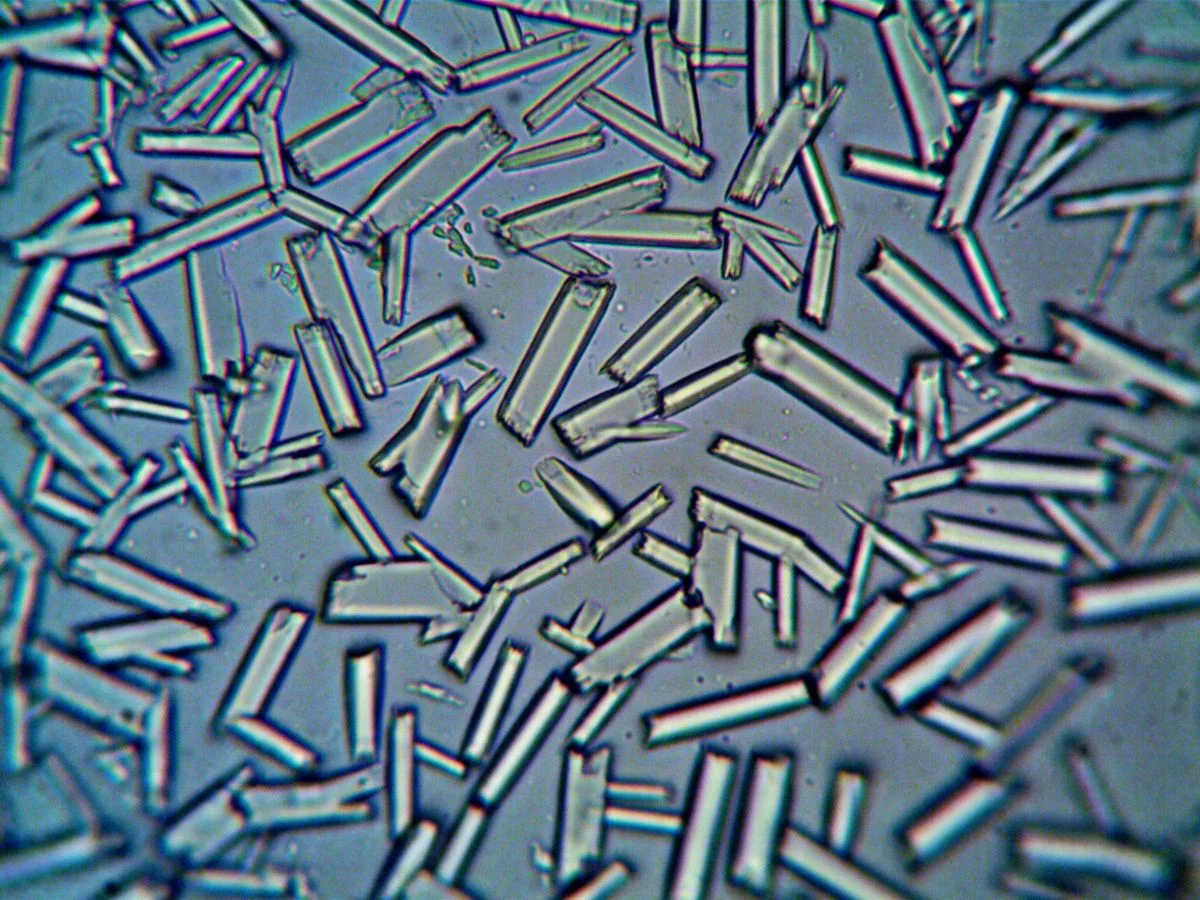
Initiators are chemical substances that start polymerization by generating reactive species such as free radicals or ions, enabling monomers to link into polymers and resins used across the plastics industry. In industrial plastics processing, they are especially important in free-radical, photopolymerization, redox, and ionic systems, where they control how quickly a reaction begins, how much heat is released, and in many cases the final molecular architecture of the polymer.
In plastics manufacturing, initiators are not the polymer itself but a critical enabling auxiliary. Their chemistry shapes the production of commodity polymers, specialty acrylics, adhesives, coatings, dental resins, and advanced block or graft copolymers. The most widely used commercial families are organic and inorganic peroxides, azo compounds, photoinitiators, and selected redox or ionic systems.
Their importance has grown alongside several trends: tighter control of polymer structure, lower-temperature and light-activated curing, waterborne and solvent-free processing, and efforts to reduce energy use and emissions in polymer production and coating lines. At the same time, initiator selection remains constrained by decomposition temperature, solubility, stability, by-product profile, and compatibility with monomers and process conditions.
History and Development
The modern industrial use of initiators grew from the development of free-radical polymerization in the twentieth century, especially after peroxides and azo compounds became established as practical radical sources. As polymer chemistry matured, initiators moved from simple radical generation toward more specialized roles in controlled radical polymerization, photopolymerization, and living or grafting systems.
A major development was the diversification of initiation modes. Thermal initiation became the main route for bulk, solution, and emulsion polymerization, while photoinitiation enabled rapid curing of coatings, inks, and 3D-printing resins. In parallel, redox systems expanded low-temperature emulsion processes, and ionic initiators became important in the synthesis of highly controlled specialty polymers.
Chemical Structure and Key Properties
Initiators are defined by their ability to form active species under specific conditions. For radical systems, that usually means weak bonds that cleave homolytically, such as the peroxide O-O bond or the azo N=N linkage. For ionic polymerization, the initiator or initiating system generates cationic or anionic species rather than radicals.
Main initiator families
| Family | Typical activation | Main use | Key features |
|---|---|---|---|
| Peroxides | Heat, sometimes redox | General radical polymerization | Broad commercial use; decomposition rate can be tuned by structure. |
| Azo compounds | Heat, sometimes light | Radical polymerization | Clean gas evolution in many systems; widely used for vinyl monomers. |
| Photoinitiators | UV or visible light | UV-curable coatings, inks, adhesives | Fast, spatially selective curing at lower temperatures. |
| Redox systems | Oxidant + reductant pair | Emulsion and low-temperature systems | Useful where heat must be minimized. |
| Ionic initiators | Chemical or catalytic activation | Specialty polymerizations | Enable precision architecture in selected monomers. |
Key properties and practical limits
- Decomposition temperature → cause → workaround: many thermal initiators decompose too slowly below their design window and too rapidly above it, because radical generation depends on bond cleavage kinetics → workaround: match the initiator half-life to reactor temperature or use blends with staged decomposition profiles.
- Solubility → cause → workaround: an initiator may be ineffective if it is poorly soluble in the monomer or medium → workaround: use a water-soluble initiator for emulsion systems or select a solvent-compatible grade for solution polymerization.
- Selectivity and residue control → cause → workaround: residual initiator fragments may affect odor, color, stability, or biocompatibility → workaround: use lower-dose systems, cleaner photoinitiators, or post-reaction purification where required.
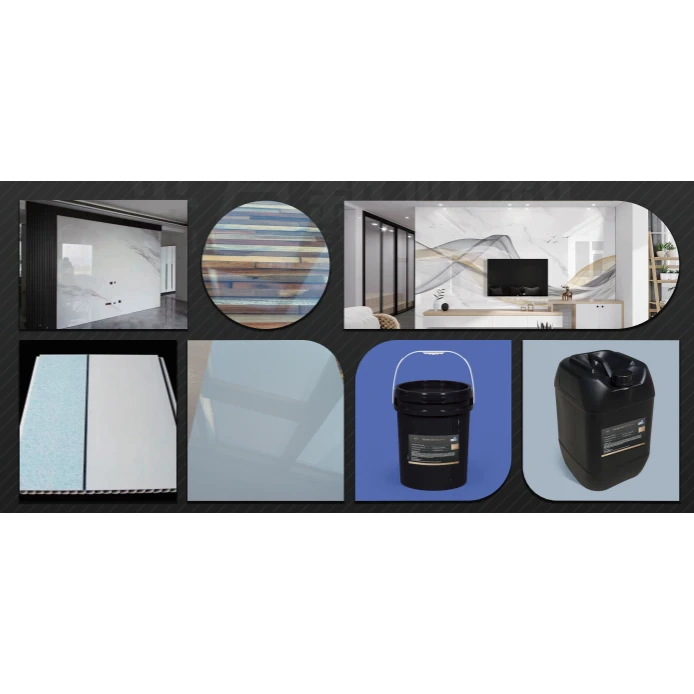
In practical terms, initiator concentration is usually low relative to monomer, but its effect is disproportionate. For example, benzoyl peroxide is widely used as a thermal initiator in radical systems, while potassium persulfate is common in aqueous emulsion polymerization because it is water-soluble. In UV-curable systems, photoinitiators such as acylphosphine oxide derivatives are favored when rapid surface and through-cure are needed.
Production Processes and Raw Feedstocks
Initiators themselves are manufactured through industrial organic and inorganic synthesis routes that depend on the class.
- Peroxides are produced by oxidation and acylation pathways that create peroxide linkages, followed by purification and stabilization for safe shipment and storage.
- Azo initiators are typically made through multi-step synthesis of diazene-containing compounds, often designed to decompose at specific temperatures.
- Photoinitiators are manufactured as specialized aromatic or organophosphorus compounds engineered to absorb defined wavelengths and generate radicals efficiently.
- Inorganic persulfates are produced through sulfate chemistry and are used as water-soluble radical sources in emulsion systems.
The raw-material basis is therefore broader than that of a conventional polymer grade. It includes petrochemical intermediates, inorganic salts, oxidants, and specialty aromatic feedstocks, with downstream purification playing a major role in final performance and safety.
Applications and End-Use Markets
Initiators are used wherever a polymerization or curing reaction must be started and controlled.
| End use | Typical initiator type | Usual process | Notes |
|---|---|---|---|
| Emulsion polymers | Persulfates, redox systems | Waterborne polymerization | Common in latexes, paints, and adhesives. |
| Bulk and solution resins | Peroxides, azo compounds | Thermal radical polymerization | Used for acrylics, styrenics, and specialty polymers. |
| UV-curable coatings and inks | Photoinitiators | UV or visible-light cure | Enables fast, low-heat processing. |
| Adhesives and sealants | Photoinitiators, peroxides, redox systems | UV cure or chemical cure | Used where speed and precise curing matter. |
| 3D-printing resins | Photoinitiators | Vat photopolymerization | Supports high-resolution layer curing. |
| Controlled polymer synthesis | Functional initiators | Living radical or graft polymerization | Used for block copolymers and advanced architectures. |
A typical poor-fit use is high-throughput ambient-light production in thick opaque systems: standard photoinitiators may be insufficient because light penetration is limited and cure depth falls off with opacity, requiring hybrid systems or alternative initiation routes.
Concrete examples include:
- Benzoyl peroxide in peroxide-initiated radical polymerization, where heat cleaves the peroxide bond to generate radicals that begin chain growth.
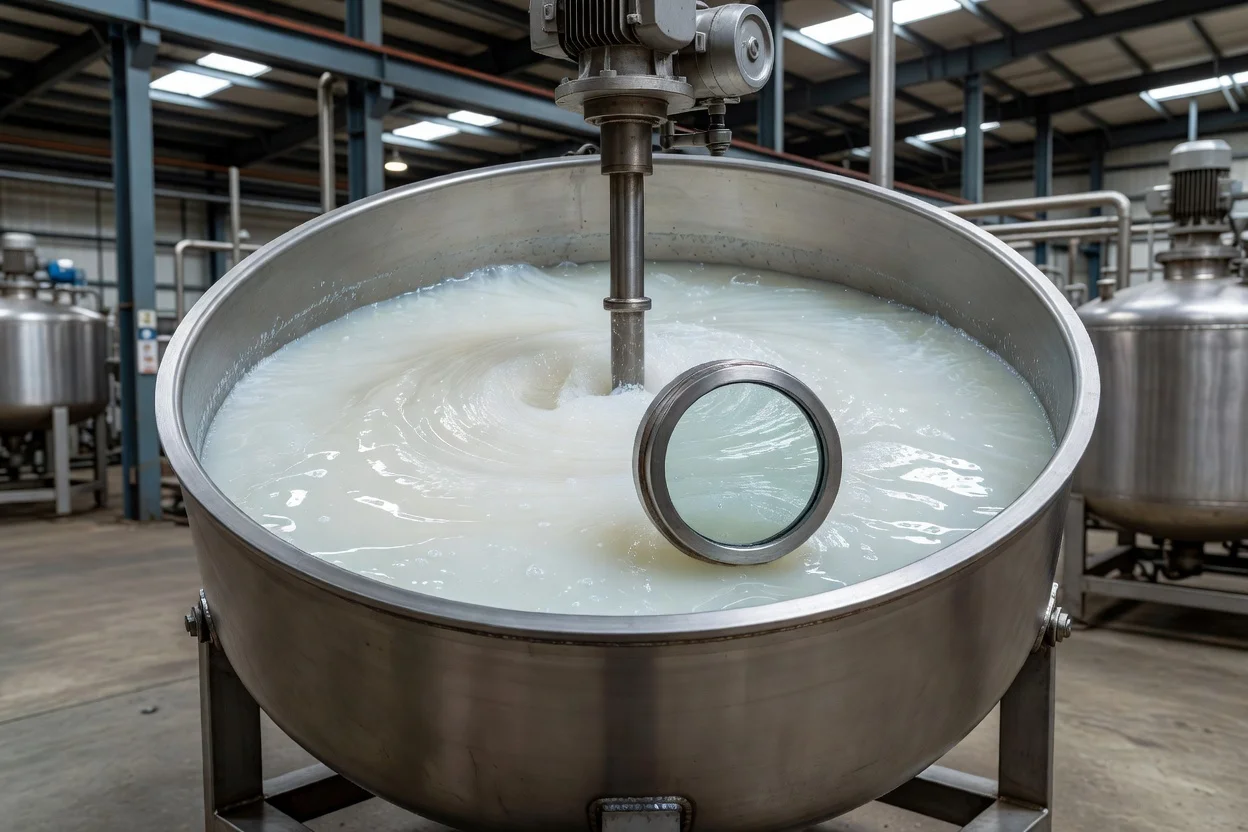
- Potassium persulfate in emulsion polymerization, where water-solubility allows radical generation in the aqueous phase before particle nucleation.
Environmental and Sustainability Aspects
Initiators influence sustainability primarily through process energy, solvent use, cure efficiency, and residue management rather than through large mass throughput. Light-activated systems can reduce thermal energy demand, while water-soluble redox systems can support aqueous processing that lowers volatile organic compound emissions.
At the same time, environmental concerns remain important:
- some initiators and their decomposition products can raise odor, color, or toxicity concerns;
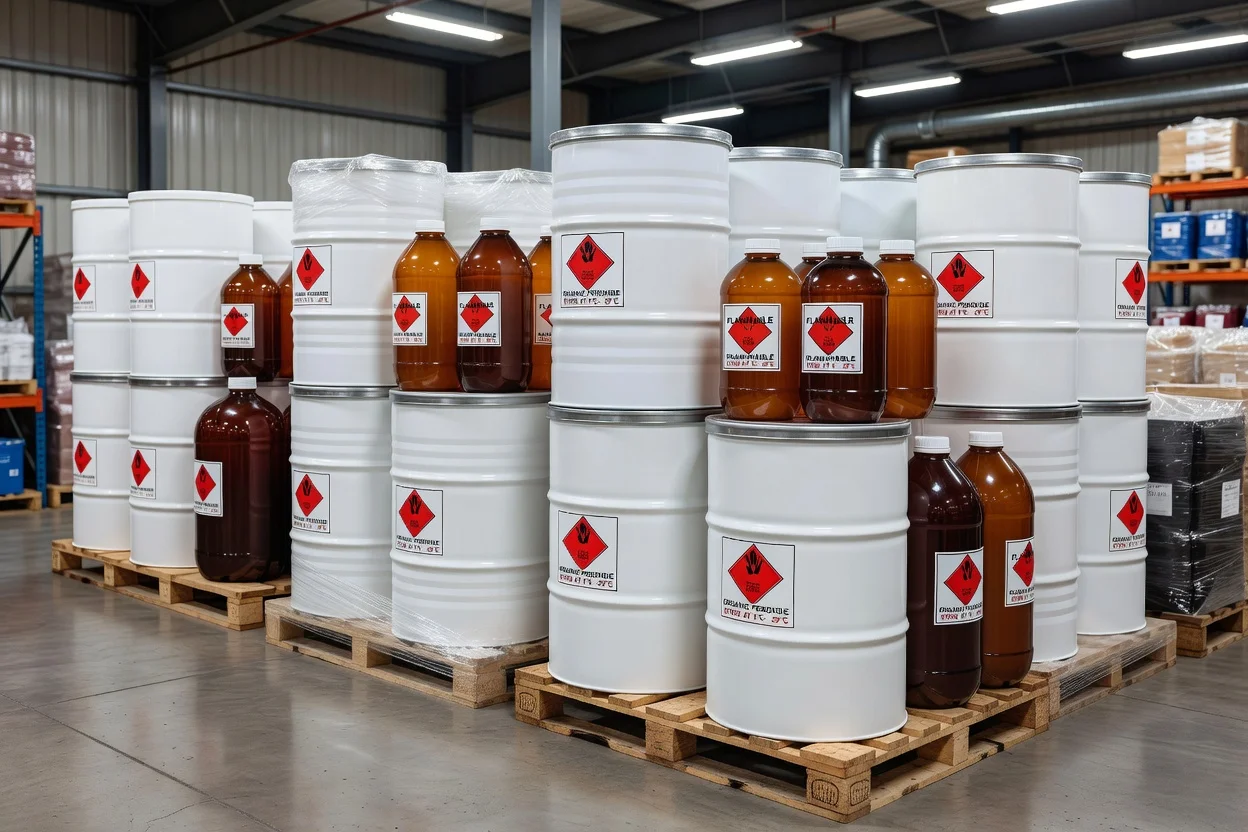
- storage and transport require careful hazard management because many initiators are thermally unstable or oxidizing;
- incomplete conversion can leave residual compounds in finished materials.
Sustainability trends include:
- lower-temperature initiator systems that reduce energy consumption;
- more selective photoinitiators that allow faster cure with less residual material;
- formulation work that supports solvent-free or waterborne processing;
- growing interest in initiator-compatible recycled and bio-based polymer feeds, especially where impurity tolerance is adequate.
Economic and Global Market Impact
The initiator market is tied to the larger polymer, coatings, adhesives, and radiation-curing industries rather than to a single resin family. Demand is strongest in regions with large production of emulsion polymers, acrylics, UV-curable materials, and specialty resins.
Commercial leadership is typically concentrated among global specialty chemical and polymer additive producers, including firms with broad peroxide, azo, and photoinitiator portfolios. Market structure is influenced by safety regulation, temperature-class logistics, and the need for reliable supply chains, since many initiators are treated as hazardous or temperature-sensitive intermediates.
Current Challenges and Innovations
Current technical challenges include:
- balancing decomposition rate with process temperature window;
- minimizing residuals and odor in finished polymers;
- improving cure depth in pigmented or filled systems;
- enhancing safety during transport and storage;
- reducing dependence on legacy initiators with less favorable hazard profiles.
Innovation is focused on:
- visible-light photoinitiators that work with lower-energy LEDs;
- macromolecular and functional initiators that build block, graft, or end-functional polymers with greater precision.
- dual-cure systems that combine thermal and photochemical initiation;
- water-compatible initiating systems for greener emulsion routes;
- initiator design for controlled radical polymerization, where initiation efficiency and chain-end fidelity are critical.
Future Outlook
Initiators will remain indispensable because nearly every major chain-growth or curing platform depends on controlled generation of active species. The strongest growth opportunities are likely to be in LED-curable coatings, electronics, medical materials, additive manufacturing, and precision polymer synthesis, where initiation control directly determines performance.
The broader direction of innovation is toward lower-energy, more selective, and more sustainable initiation systems that improve conversion while reducing emissions, residues, and processing risk. In practice, this means that future initiator development will be judged not only by how effectively it starts a polymerization, but also by how well it fits circular-economy, low-carbon, and high-purity manufacturing requirements.
Summary
Initiators are the starting point for many polymerization and curing processes in the plastics industry, converting monomers into polymers by generating radicals or ions. Their chemistry determines reaction speed, process temperature, cure quality, and the structure of the final material, making them central to both commodity plastics and specialty formulations.
References
- •
Initiation (chemistry). (n.d.). In Wikipedia. https://en.wikipedia.org/wiki/Initiation_(chemistry)Link
- •
Initiator. (n.d.). In Definitions.net. https://www.definitions.net/definition/initiatorLink
- •
Polymerization initiator. (n.d.). In ScienceDirect. https://www.sciencedirect.com/topics/chemistry/polymerization-initiatorLink
- •
Initiator. (2025, January 1). In Cambridge English Dictionary. https://dictionary.cambridge.org/us/dictionary/english/initiatorLink
- •
Initiator. (n.d.). In Vocabulary.com. https://www.vocabulary.com/dictionary/initiatorLink
- •
Initiator. (n.d.). In Dictionary.com. https://www.dictionary.com/browse/initiatorLink
- •
Initiators. (2026, January 8). In Merriam-Webster. https://www.merriam-webster.com/dictionary/initiatorsLink
- •
Polymerization initiators. (2022, August 4). BOC Sciences. https://polymer.bocsci.com/products/polymerization-initiators-4197.htmlLink
- •
Initiator. (2026, April 25). In Merriam-Webster. https://www.merriam-webster.com/dictionary/initiatorLink
- •
Theoretical basis, selection and use of initiators. (2024, July 2). Uychem Technology Center. https://www.uychem.com/info/theoretical-basis-selection-and-use-of-initia-97286794.htmlLink
- •
Choosing initiators (for anionic polymerization). (n.d.). MIT OpenCourseWare. https://ocw.mit.edu/courses/10-569-synthesis-of-polymers-fall-2006/e51ca6db1ae52f5f45c48906afe1bd22_lec20_10302006.pdfLink
- •
Initiation – Introduction of radical polymerization. (n.d.). eFan's Blog. http://chem-fan.com/?p=244Link
- •
Initiator type and concentration: A deep dive into polymerization. (n.d.). Flyriver. https://www.flyriver.com/g/initiator-type-and-concentrationLink
- •
Initiator development. (2026, January 1). ShangHai Wanna Polymer CO.,LTD. http://en.wannapolymer.com/news/list-cat-2262-p1.htmlLink
- •
Initiator. (n.d.). In Oxford Learner's Dictionaries. https://www.oxfordlearnersdictionaries.com/definition/english/initiatorLink
- •
Initiators, free-radical. (n.d.). In Kirk-Othmer Encyclopedia of Chemical Technology. http://softbeam.net:8080/txt/ko2008/article/freesanc.a01/current/freesanc.a01.pdfLink
- •
Polymer initiators. (2010, July 16). https://dokumen.pub/polymer-initiators-1nbsped-9781617614293-9781617613043.htmlLink
- •
Initiator. (n.d.). In Collins English Dictionary. https://www.collinsdictionary.com/us/dictionary/english/initiatorLink
- •
Initiator. (n.d.). In WordWeb Online. https://www.wordwebonline.com/en/INITIATORLink
- •
Chapter 8. (n.d.). Springer. https://link.springer.com/content/pdf/10.1007/978-3-642-38730-2_8.pdfLink
- •
Initiator. (2003, September 13). In Wikipedia. https://en.wikipedia.org/wiki/InitiatorLink
- •
Initiator. (2024, August 5). In Merriam-Webster Medical Dictionary. https://www.merriam-webster.com/medical/initiatorLink
- •
Initiators. (n.d.). Fiveable. https://fiveable.me/organic-chem/key-terms/initiatorsLink
- •
Initiator. (1998, July 20). In Britannica. https://www.britannica.com/science/initiator-polymerizationLink
- •
Free radical initiators. (2026, February 11). Sigma-Aldrich. https://www.sigmaaldrich.com/US/en/technical-documents/technical-article/materials-science-and-engineering/polymer-synthesis/free-radical-initiatorsLink
- •
Initiator (chemical). (n.d.). In ScienceDirect. https://www.sciencedirect.com/topics/materials-science/initiator-chemicalLink
- •
Initiators. (2025, November 11). In Merriam-Webster Thesaurus. https://www.merriam-webster.com/thesaurus/initiatorsLink
- •
Initiators. (2025, May 26). Merck Millipore. https://www.merckmillipore.com/DO/en/products/materials-science/biomedical-materials/polymerization-tools/initiatorsLink
- •
Radical polymerization. (2005, March 28). In Wikipedia. https://en.wikipedia.org/wiki/Radical_polymerizationLink
- •
Radical initiator. (2004, November 8). In Wikipedia. https://en.wikipedia.org/wiki/Radical_initiatorLink
- •
Azo polymerization initiators comprehensive catalog. (n.d.). Fujifilm Wako. https://labchem-wako.fujifilm.com/us/category/docs/azo%20initiators%20catalog.pdfLink
- •
Design of initiators for living radical polymerization of methyl methacrylate mediated by ruthenium(II) complex. (n.d.). ScienceDirect. https://www.sciencedirect.com/science/article/pii/S0040402097009721Link
- •
A critical assessment of the kinetics and mechanism of initiation of radical polymerization with commercially available dialkyldiazene initiators. (2019, January 19). ScienceDirect. https://www.sciencedirect.com/science/article/abs/pii/S0079670018300753Link
- •
The role of an initiator in tech, programming & communications. (2026, February 11). Lenovo. https://www.lenovo.com/us/en/glossary/initiator/index.htmlLink
- •
Initiator. (n.d.). In YourDictionary. https://www.yourdictionary.com/initiatorLink
- •
Initiator. (n.d.). MBA Skool. https://www.mbaskool.com/business-concepts/marketing-and-strategy-terms/7166-initiator.htmlLink
- •
Are there any general chemical rules for choosing initiators for a polymerization reaction? (n.d.). Chemistry Stack Exchange. https://chemistry.stackexchange.com/questions/666/are-there-any-general-chemical-rules-for-choosing-initiators-for-a-polymerizatioLink
- •
Radical initiator. (n.d.). In ScienceDirect. https://www.sciencedirect.com/topics/medicine-and-dentistry/radical-initiatorLink
- •
Initiator synonyms & antonyms. (n.d.). Thesaurus.com. https://www.thesaurus.com/browse/initiatorLink
- •
What is free radical polymerization? types, characteristics... (2022, January 12). Fujifilm Wako. https://specchem-wako.fujifilm.com/us/information/technical-info/radical-polymerizations/Link
- •
The stages of free radical polymerization. (2013, April 17). Penn State. https://courses.ems.psu.edu/matse202/book/export/html/538Link