
Introduction
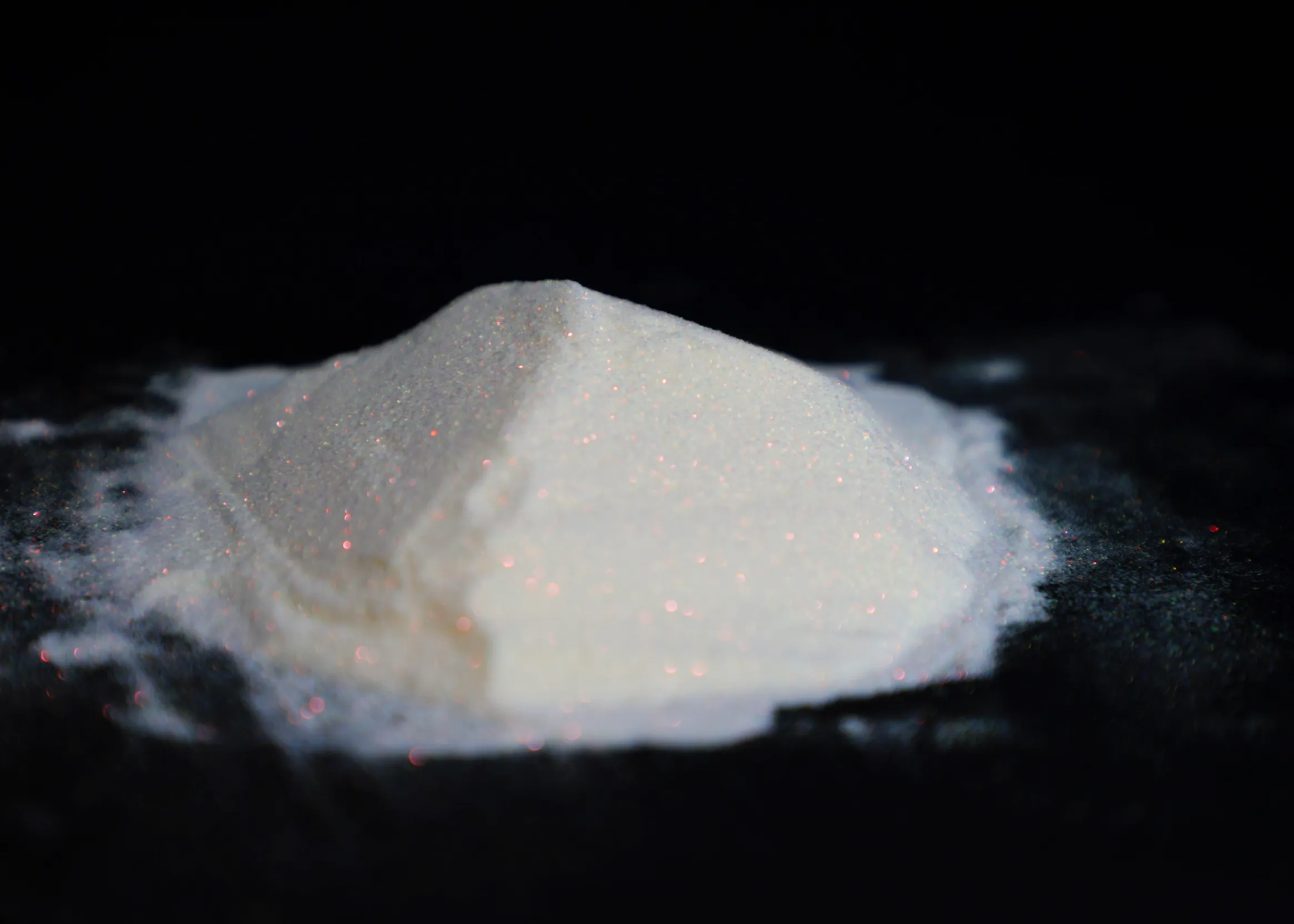
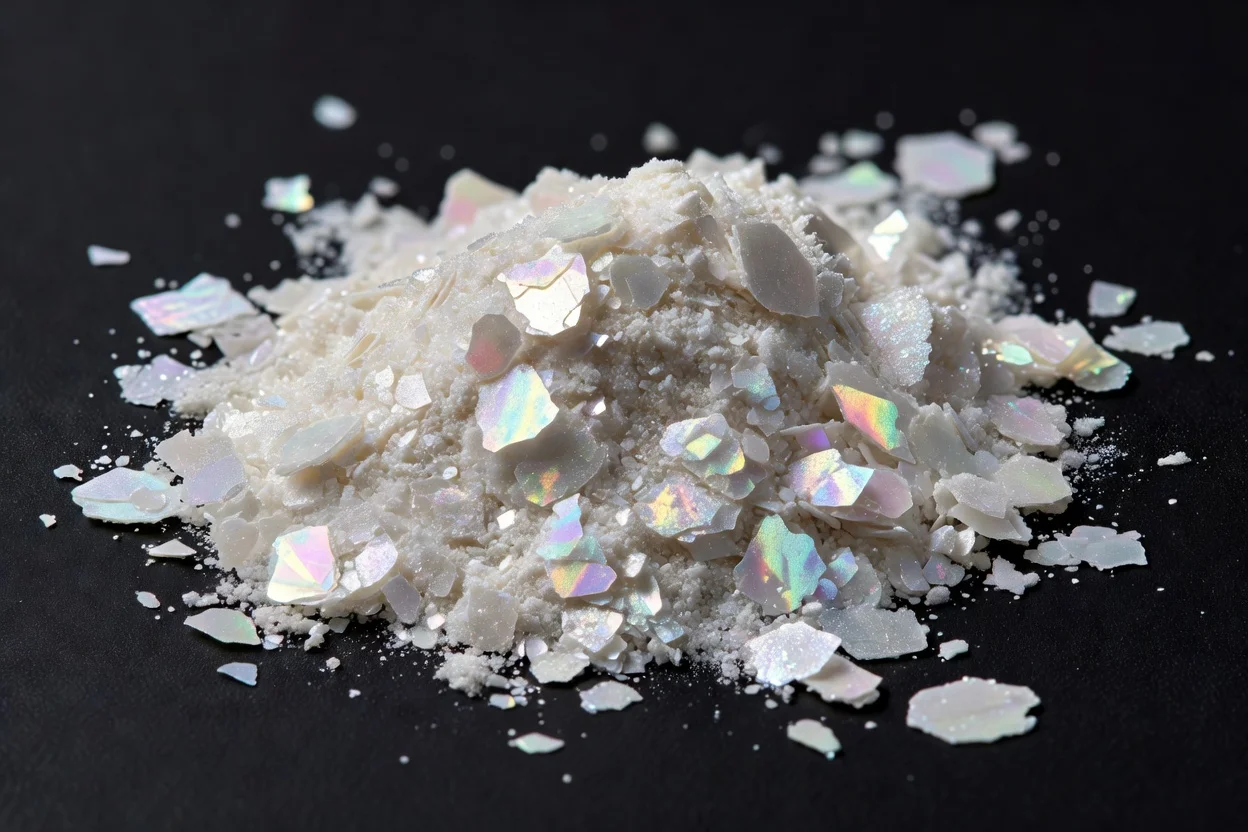
Effect pigments are specialty colorants designed to create optical effects such as metallic luster, pearlescence, shimmer, sparkle, color travel, and angle-dependent iridescence rather than simply providing a uniform body color. In plastics, they are used primarily as aesthetic and branding additives, but they can also influence surface perception, hiding power, and in some formulations the way a part is visually perceived under changing light.
Unlike conventional absorption pigments, effect pigments work mainly through reflection, refraction, interference, and sometimes diffraction of light. Their commercial importance extends across plastics, coatings, cosmetics, printing inks, and automotive finishes, with plastics being a major arena for premium packaging, consumer goods, toys, appliances, and decorative components.
The field includes several major families: metal effect pigments based on platelet-shaped aluminum or copper-zinc particles, and special effect pigments such as pearlescent and interference pigments, often built on mica, synthetic mica, glass, silica, or alumina substrates coated with high-refractive-index layers. The technology has evolved from natural mineral and metal platelets to highly engineered multilayer particles with tightly controlled size, thickness, refractive index, and surface treatment.
Sustainability has become a major issue in this category. Effect pigments can improve product differentiation and extend the perceived lifetime of durable goods, but they also raise questions about critical raw materials, multilayer particle recyclability, dispersibility in recycled plastics, and the environmental footprint of highly engineered coatings. Current innovation is focused on lower-impact substrates, improved dispersion in polymers, waterborne and solvent-free delivery forms, and compatibility with circular-economy material streams.
History and Development
Effect pigments originated from the use of natural minerals and metals to create decorative brilliance and iridescence. Early pearlescent effects were associated with natural mica and guanine-based materials, while metallic effects were obtained from finely divided metal flakes.
Industrial development accelerated in the twentieth century when pigment manufacturers began producing controlled platelet pigments with reproducible optical properties. The modern era brought synthetic mica, engineered oxide coatings, vacuum-deposited layers, and specialized particle morphologies that enabled reliable color travel, higher brightness, and improved weathering performance.
In plastics and automotive coatings, effect pigments became especially important as product differentiation shifted from purely functional performance toward emotional and premium visual appeal. More recently, the category has expanded beyond traditional metallic and pearlescent effects into holographic, luminescent, and optically variable pigments, many of which are used in security-related and premium-brand applications.
Chemical Structure and Key Properties
Effect pigments are usually platelet-shaped particles with a high aspect ratio, because flat geometry promotes directional reflection and alignment parallel to the substrate during processing. Their visual behavior depends on particle size, thickness, refractive index contrast, layer structure, and orientation in the host matrix.
| Pigment family | Typical structure | Optical effect | Common plastic uses |
|---|---|---|---|
| Metal effect pigments | Aluminum or alloy platelets | Bright metallic appearance, high hiding | Masterbatches, automotive trim, consumer goods |
| Pearlescent pigments | Mica or synthetic mica coated with oxides | Pearl sheen, soft luster | Packaging, cosmetics-related plastics, decorative parts |
| Interference pigments | Layered optical structures on platelets | Color shift, iridescence | Premium packaging, branded consumer products |
| Special optical pigments | Multilayer or optically variable systems | Holographic or angle-variable effects | Security and premium effects |
Two important limits are especially relevant in plastics:
- Limit → cause → workaround: Poor dispersion and flocculation → platelet pigments can agglomerate or orient unevenly during compounding and molding → use masterbatches, optimized screw design, surface-treated pigments, and controlled shear during extrusion.
- Limit → cause → workaround: Lower hiding power in many pearlescent systems → many effect pigments are semi-transparent and rely on optical layering rather than strong absorption → combine with complementary absorption pigments or design the part geometry, substrate color, and loading level to achieve the target appearance.
A further practical constraint is that metallic and pearlescent effects are highly process-sensitive: excessive shear, poor mold filling, or flow marks can disturb flake orientation and reduce visual uniformity.
Mechanism and formulation examples
- Example 1: A pearlescent plastic masterbatch may contain about 1% to 10% pigment in the final part depending on the desired effect; the optical effect arises because thin oxide layers on mica partially reflect and partially transmit light, producing interference colors.
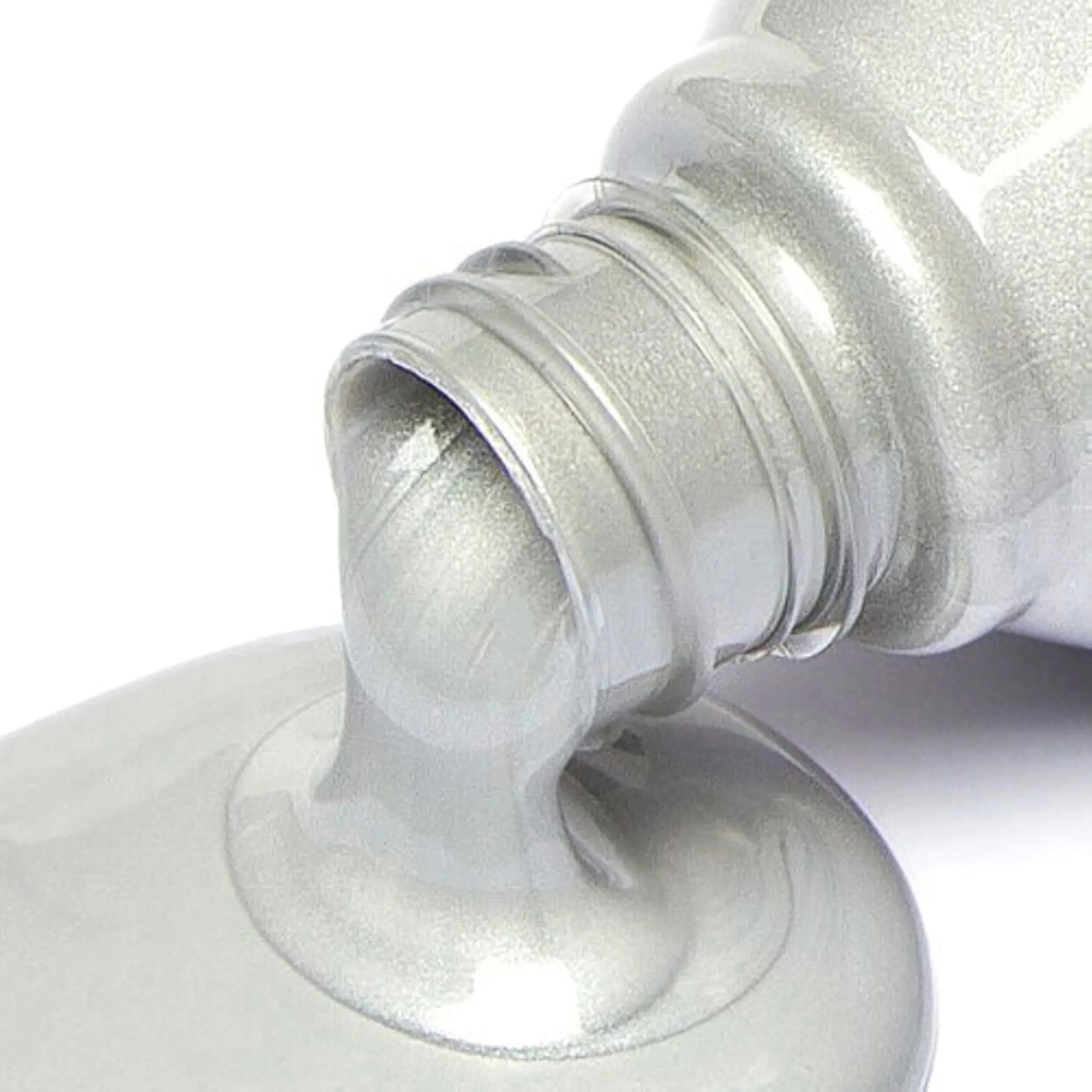
- Example 2: Aluminum effect pigments in plastics are often supplied in paste, powder, or granule form to improve handling and dispersion; the flat flakes behave like microscopic mirrors when aligned parallel to the surface.
Production Processes and Raw Feedstocks
Effect pigment production depends on the intended optical class.
- Metal effect pigments are commonly produced by milling or atomizing metals into platelet-like particles, then conditioning their surfaces to improve dispersibility and stability.
- Pearlescent pigments are typically made by coating mica or synthetic mica platelets with thin layers of titanium dioxide, iron oxides, or related oxides to create interference colors.
- Advanced optically variable pigments may use multilayer vacuum deposition, deposition onto silica or glass flakes, or other engineered optical stacks.
Key raw materials include:
- mica and synthetic mica
- aluminum, copper, zinc, and alloy metals
- titanium dioxide and iron oxides
- silica, alumina, and glass flakes
- binders, dispersants, and surface treatments for delivery forms
Manufacturers often offer pigments as powders, pastes, granules, or masterbatches, because delivery form strongly affects dosing accuracy, dust control, and downstream dispersion in plastics processing.
Applications and End-Use Markets
In plastics, effect pigments are mainly used where appearance is part of product value rather than pure function.
Major plastics applications
- Film and sheet: Used in premium packaging films, label stocks, and decorative sheets; the main objective is visual differentiation, sometimes with low-dose pearlescent effects.
- Bottles and containers: Used for personal care, household, beverage-adjacent, and luxury packaging to imitate pearl, metallic, or frosted looks.
- Injection-molded consumer goods: Used in appliance housings, cosmetic packaging, toys, and accessories where color travel or shimmer signals premium quality.
- Automotive interior and exterior trim: Used in interior panels, knobs, trim parts, and some exterior decorative components; optical depth and metallic styling are major drivers.
- Cable and technical compounds: Used more selectively, mainly for identification, branding, or decorative specialty items rather than bulk technical cable insulation.
- Printing inks and labels: Used for premium graphics, promotional packaging, and security effects.
- Rotomolding compounds: Used for decorative tanks, outdoor products, and specialty molded bodies where surface appearance matters.
- UHMWPE wear or medical parts: Generally a poor-fit application because demanding low-friction or medical-performance formulations prioritize tribology, purity, and mechanical consistency over decorative optics.
- Engineering plastics with premium surface finishes: Used where the polymer part substitutes for painted metal or coated substrates.

Fit and poor-fit uses
- Good fit: rigid packaging, cosmetic packaging, appliance trim, consumer electronics housings, and automotive interior parts.
- Poor fit: high-clarity optical parts, highly load-bearing structural parts, and applications where recycling simplicity is more important than surface effect, because platelet pigments may complicate color sorting and reprocessing.
Environmental and Sustainability Aspects
Effect pigments are not typically used in large mass fractions, but they can have an outsized effect on product design and lifecycle perception. In durable goods, they may reduce the perceived need for repainting or replacement by improving finish quality, which can support longer product use.
At the same time, several sustainability concerns remain:
- Recyclability: Colored recycled plastics can be harder to reprocess into high-value light shades when effect pigments are present, especially if mixed or poorly documented in the waste stream.
- Compatibility with recycling: Flake orientation, multilayer structures, and mixed pigment systems can complicate remelting and re-coloration of recyclates.
- Raw-material footprint: Metallic and oxide-coated pigments rely on mined or energy-intensive feedstocks such as aluminum, titanium dioxide, mica, and specialty glass or silica substrates.
- Microplastic perception: Although pigments are not themselves microplastics, their use in small decorative flakes can raise consumer concern in some markets, especially where particle retention or abrasion is visible.
Sustainability-oriented development includes:
- lower-dust, lower-loss delivery forms such as granules and masterbatches
- more efficient coatings with thinner functional layers
- improved compatibility with recycled polyolefins and engineering plastics
- substitution of problematic substrates with more abundant or lower-impact alternatives where performance allows
Bio-based alternatives are limited in this category because the optical effects depend on engineered particle geometry and refractive-index contrasts rather than on the polymer backbone itself. As a result, the main sustainability route is not direct bio-substitution but redesign of pigment substrates, coatings, and processing systems.
Economic and Global Market Impact
Effect pigments are a premium specialty segment rather than a commodity pigment class. Demand is driven by packaging differentiation, automotive styling, consumer branding, and the willingness of brand owners to pay for visual distinctiveness.
The strongest market pull historically has come from:
- automotive styling and OEM coatings
- cosmetics and personal care packaging
- luxury and premium consumer goods
- decorative plastics and printed graphics
Leading global suppliers include established specialty pigment companies such as Merck/Susonity, SCHLENK, and other multinational colorant producers active in effect-pigment technologies. Competition centers on optical performance, consistency, weatherability, application support, and delivery format rather than solely on price.
Current Challenges and Innovations
The sector is being shaped by several technical challenges:
- Processing sensitivity: orientation and shear history strongly affect appearance in injection molding, extrusion, and film processing.
- Color consistency: matching metallic or pearlescent tones across different substrates, wall thicknesses, and mold designs remains difficult.
- Recycling complexity: effect pigments can make recycled plastics harder to sort, recolor, and qualify for premium uses.
- Regulatory scrutiny: some legacy pigments or additives may face restrictions depending on composition, surface treatment, or end-use category.
Current innovations include:
- optically engineered multilayer pigments with improved chroma and viewing-angle response
- granulated and paste delivery forms to reduce dust and improve compounding
- surface treatments tailored for specific polymers such as polypropylene, PET, or engineering thermoplastics
- pigments designed for lower dosage at equivalent visual impact, reducing material intensity
Future Outlook
Effect pigments are likely to remain important wherever plastics are used as design surfaces rather than invisible structural materials. Demand should remain strong in premium packaging, automotive interiors, consumer electronics, and branded household goods, especially where companies seek metal-like or pearl-like finishes without using actual metal surfaces.
The most significant future opportunities are likely to lie in:
- recycling-compatible effect pigments for circular plastics systems
- lower-carbon substrate and coating routes
- high-performance pigments that deliver stronger effects at lower loading
- digital color matching and process control for molded and extruded parts
The category will probably continue to move from simple decoration toward integrated material design, where appearance, brand identity, recyclability, and processability are engineered together rather than treated separately.
Summary
Effect pigments are engineered platelet-based colorants that create optical effects through reflection, refraction, and interference rather than conventional absorption. In plastics, they are essential for premium appearance in packaging, consumer goods, automotive trim, and decorative molded parts, but they also create challenges in dispersion, processing consistency, and recycling. Their future will depend on balancing visual performance with circularity, lower-impact raw materials, and better compatibility with modern plastics processing.
References
- •
Essentials of Effect Pigments (infographic). (2016, October 13). https://www.ulprospector.com/knowledge/5348/pc-effect-pigments-infographic/Link
- •
Effect pigments. (n.d.). https://www.amixon.com/en/glossary/effect-pigmentsLink
- •
18. (n.d.). http://rs1.chemie.de/images/24069.pdfLink
- •
Effect Pigments vs. Traditional Pigments: Boost Beauty .... (2026, January 22). https://www.vivifybeautycare.com/blog/effect-pigments-vs-traditional-pigments/Link
- •
All About Effect Pigments. (2025, February 22). https://www.lauralongoniart.com/en/post/all-about-effect-pigmentsLink
- •
Schlenk April.indd. (n.d.). https://library.utia.cas.cz/separaty/2016/RO/filip-0458988.pdfLink
- •
Effect Pigments —Properties and How to Choose. (2024, November 25). https://pigment.tokyo/en/blogs/article/effect-pigments-propertiesLink
- •
Effect Pigments - for breathtaking metallic and. (2025, November 2). https://www.topepoxy.eu/en/effect-pigments/Link
- •
Metallic and Pearlescent Pigments for Powder Coatings. (2022, August 19). https://www.paint.org/coatingstech-magazine/articles/metallic-and-pearlescent-pigments-for-powder-coatings/Link
- •
Merck Effect Pigments in evereday life. (n.d.). https://www.procoat.it/moduli/157__S.%20Corrado.pdfLink
- •
[PDF] Optical Coatings for Special Effect Pigments. (n.d.). https://www.svc.org/clientuploads/directory/resource_library/04_079.pdfLink
- •
Understanding Effect Pigments and Their Game-Changing .... (2024, October 26). https://glowinking.com/understanding-effect-pigments-and-their-game-changing-role-in-paint-manufacturing/Link
- •
エフェクト顔料のさまざまな種類とは何ですか?. (2023, June 19). https://jp.pearlpigment.net/news/industry-news/what-are-the-different-types-of-effect-pigments.htmlLink
- •
The world of inorganic pigments. (n.d.). https://d-nb.info/1269755986/34Link
- •
Review Effect pigments—past, present and future. (2005, November 1). https://www.sciencedirect.com/science/article/abs/pii/S0300944005001608Link
- •
Chapter 21 Effect Pigment | PDF | Titanium Dioxide | Iron - Scribd. (2025, September 9). https://www.scribd.com/document/908998081/Chapter-21-Effect-PigmentLink
- •
Pigmente_Katalog_Oktober_2013_finalweb. (2025, May 20). https://www.scribd.com/document/471888440/Pigmente-Katalog-Oktober-2013-finalwebLink
- •
Pearlescent Pigments: History, Properties And Application .... (n.d.). https://iris.unitn.it/bitstream/11572/259130/1/encyclopedia202003.0004.voce%20enciclopedia%202.pdfLink
- •
Special effect pigments. (2021, May 1). https://ui.adsabs.harvard.edu/abs/2021PhSRv...7..196P/abstractLink
- •
How do effect pigments achieve their visual 'wow factor'?. (2025, January 1). https://cosmeticsbusiness.com/twinkle-twinkle-little-stars-how-do-effect-pigments-achieve-their-visual-wow-factor--168833Link
- •
The Art of Shine: Effect Pigments Transforming Industries. (n.d.). https://www.marketresearchintellect.com/blog/the-art-of-shine-effect-pigments-transforming-industries/Link
- •
Multifaceted Dimensions of Special Effect Pigments - NYSCC. (2025, January 15). https://nyscc.org/blog/multifaceted-dimensions-of-special-effect-pigments/Link
- •
Effect Pigments Provide Styling Choices for Car Makers. (2016, April 19). https://www.paint.org/coatingstech-magazine/articles/effect-pigments-provide-styling-choices-car-makers/Link
- •
Effect pigment preparation. (2016, April 14). https://patents.google.com/patent/WO2016168455A1/enLink
- •
Ready-to-Use Effect Paints. (2023, September 4). https://pigment.tokyo/en/blogs/article/rtu-effect-colorsLink
- •
Metal effect pigments - Wikipedia. (2026, May 12). https://en.wikipedia.org/wiki/Metal_effect_pigmentsLink
- •
Automotive Coatings: Creating Excitement with Effect Pigments. (2016, April 18). https://www.paint.org/coatingstech-magazine/articles/automotive-coatings-creating-excitement-effect-pigments/Link
- •
EP3421551A1 - Effect pigment - Google Patents. (2017, June 28). https://patents.google.com/patent/EP3421551A1/enLink
- •
Effect Pigments-Past, Present and Future | PDF - Scribd. (2025, November 7). https://www.scribd.com/document/776168885/Effect-pigments-past-present-and-futureLink
- •
Effect Pigments for Enhanced Aesthetics | ITOCHU CA. (2026, March 17). https://itochu-ca.com/product-groups/effect-pigment/Link
- •
Special Effect Pigments. (2007, July 25). https://patents.google.com/patent/US20100126562A1/enLink
- •
Effect Pigments. (2025, January 1). https://www.schlenk.com/markets-products/effect-pigmentsLink
- •
Types of Pigments and Their Uses in Paints and Coatings. (2024, November 8). https://ranbarr.com/types-of-pigments-and-their-uses-in-paints/Link
- •
Types of effect pigments Supplier. (2020, August 20). https://www.ispigment.com/blog/types-of-effect-pigments_bkLink
- •
Coatings Effect Pigments. (n.d.). https://www.susonity.com/US/en/products/effect-pigments/coatingsLink