
Introduction
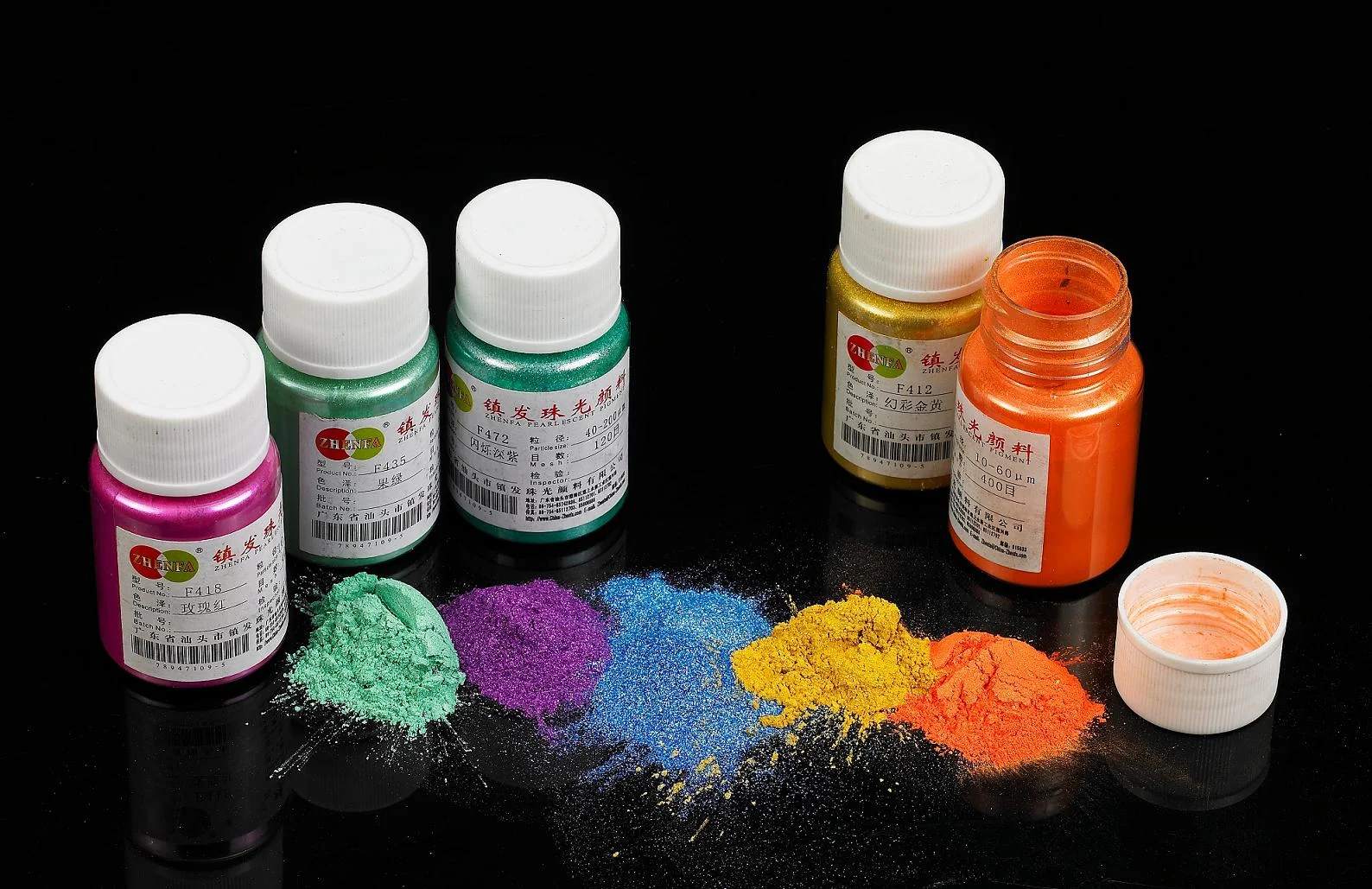
Pearlescent pigments are effect pigments engineered to produce a soft, lustrous, pearl-like appearance through light reflection and interference rather than simple light absorption. They are widely used in plastics, coatings, inks, cosmetics, and decorative materials because they can create brightness, depth, and angle-dependent visual effects that conventional color pigments cannot reproduce.
In the plastics industry, pearlescent pigments are valued as a high-impact aesthetic additive for molded parts, films, and packaging, especially where premium appearance is linked to brand differentiation. The main commercial families are mica-based pigments coated with metal oxides, particularly titanium dioxide and iron oxides, although newer product lines also use synthetic substrates such as alumina and silica to tune brilliance, color purity, and durability.
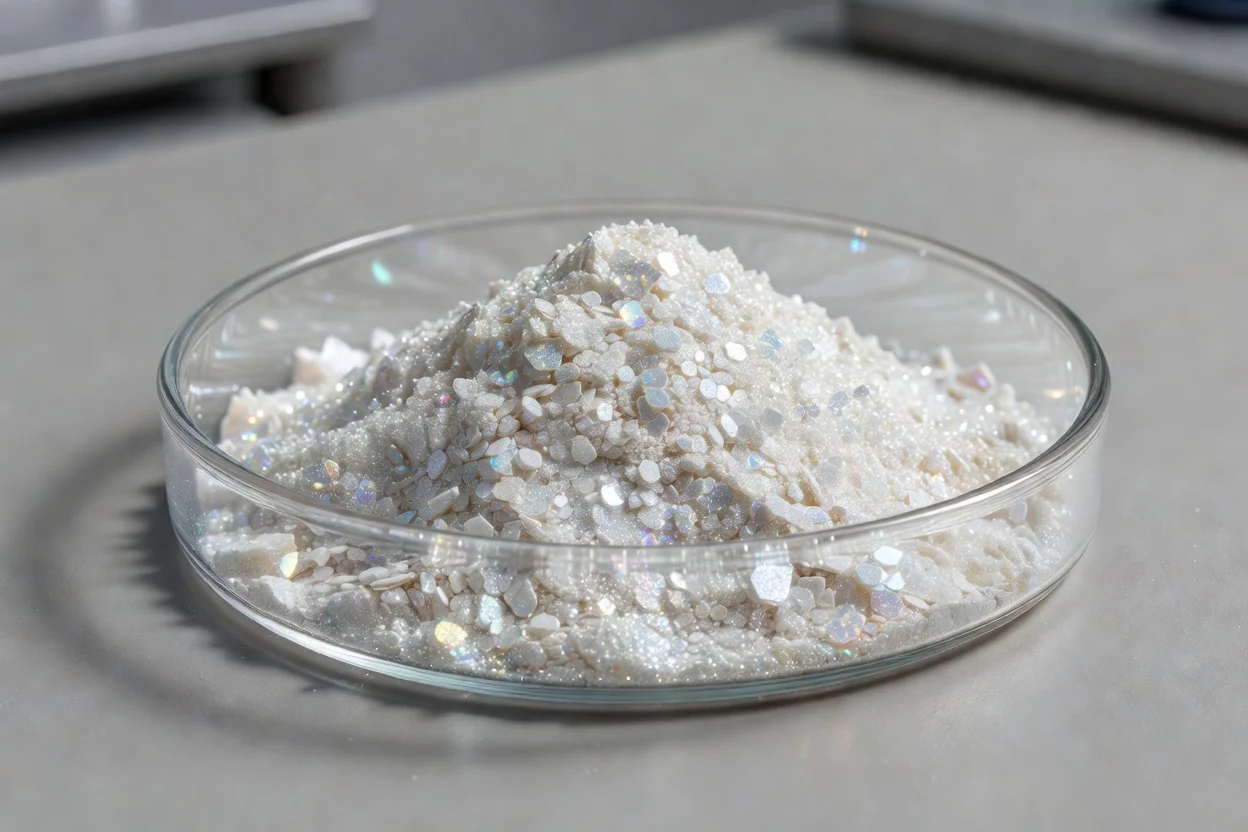
Their development reflects a broader evolution in effect pigments from natural mineral powders toward engineered multilayer structures with controlled optical thickness and particle geometry. At the same time, these pigments sit within current sustainability debates because they are mineral-based, often energy-intensive to manufacture, and can complicate recycling when used at high loading or in multilayer packaging, while also offering durable decorative effects that may extend product life and reduce the need for secondary decoration.
History and Development
Pearlescent appearance has long been associated with natural pearls, shells, and fish scales, but industrial pearlescent pigments emerged as synthetic substitutes for these natural optical effects. Early products were based on natural mica platelets, which were later coated with thin layers of metal oxides to reproduce the layered interference responsible for pearl-like luster.
The key technological advance was the recognition that thin, regular oxide layers on platelet substrates could create predictable optical interference across visible wavelengths. This made it possible to move from decorative novelty materials to controlled industrial pigments suitable for plastics processing, where thermal stability, reproducibility, and dispersibility are essential.
Over time, the product family expanded from simple white pearl effects to silver, gold, interference, and color-shift grades. More recent developments include synthetic substrates and multi-layer structures designed to improve brightness, reduce contamination, and broaden the range of attainable visual effects in demanding applications such as automotive plastics, premium packaging, and cosmetics.
Chemical Structure and Key Properties
Pearlescent pigments are usually platelet-shaped particles built from a substrate and one or more thin oxide layers. In the classic mica-based design, the mica provides a flat, reflective platform, while titanium dioxide or iron oxide layers create optical interference through differences in refractive index across the coating interfaces.
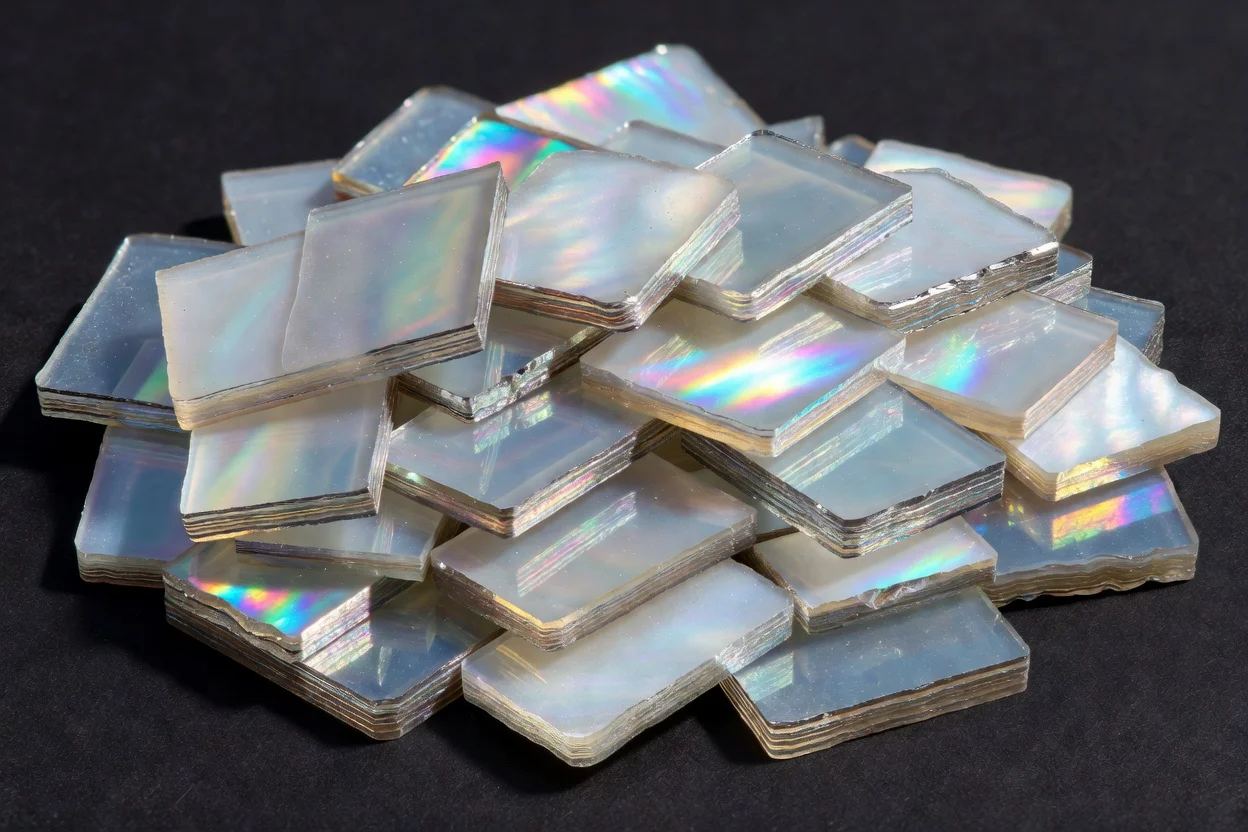
Their performance is determined less by dye-like molecular absorption than by particle architecture. Critical variables include platelet size, thickness of the coated layer, substrate smoothness, refractive-index contrast, and orientation in the final plastic matrix.
Key properties include:
- Luster and sheen from specular reflection on aligned platelets.
- Angle-dependent color or subtle color travel when optical thickness changes with viewing angle.
- Chemical inertness in many resin systems after calcination or heat treatment.
- Thermal stability sufficient for many plastic processing operations, depending on grade and binder system.
- Partial translucency, which allows underlying color to remain visible rather than being fully masked.
Important limitations include:
- Limited hiding power → the particles are translucent and rely on reflection/interference rather than high pigment coverage → the workaround is to use them over a darker base color, combine them with conventional pigments, or select higher-opacity effect packages.
- Dispersion sensitivity → platelet alignment and particle integrity strongly affect the optical effect → the workaround is low-shear mixing, suitable dispersing aids, and process conditions that avoid platelet breakage.
- Recycling complexity → decorative multilayer systems can interfere with sortation or remelt aesthetics → the workaround is design-for-recycling approaches, lower-loading formulations, and mono-material packaging strategies where possible.
Production Processes and Raw Feedstocks
The dominant raw feedstock is natural mica, chosen because of its lamellar structure and smooth cleavage planes. Other substrate materials include synthetic mica and flaky alumina, especially when tighter control over purity or optical consistency is needed.
A typical production route involves:
- Preparation and grading of the substrate, usually mica flakes.
- Surface cleaning and activation to improve coating adhesion.
- Hydrolysis or chemical deposition of a metal salt, commonly a titanium salt, onto the platelet surface.
- Conversion to a metal-oxide coating by filtration, washing, drying, and heat treatment or calcination.
- Optional secondary coating or post-treatment with iron oxides or other oxides to create gold, interference, or multicolor effects.
A representative formulation is often described as a mica-based substrate carrying titanium dioxide and/or iron oxide layers. In one common industrial description, titanium dioxide and mica are blended in a composition range that is broadly on the order of roughly 40 to 57 percent titanium dioxide and 43 to 60 percent mica, depending on the desired effect and grade.
Mechanistically, the oxide coating thickness is crucial: when it approximates a fraction of the visible wavelength, constructive and destructive interference produce the characteristic pearly brightness and color travel. Calcination stabilizes the layered structure and improves heat resistance, which is important for plastics processing.
Applications and End-Use Markets
Pearlescent pigments are used wherever visual differentiation, premium perception, or decorative depth is important. Their largest industrial outlets are coatings, plastics, cosmetics, printing inks, and specialty decorative materials.
| End-use sector | Typical role of pearlescent pigments | Usual grade or process fit | Notes |
|---|---|---|---|
| Plastics | Decorative surface effect in molded or extruded articles | Heat-stable mica/titania grades, low-dusting powders, masterbatch-compatible forms | Common in consumer goods, housings, caps, and premium packaging |
| Coatings | Metallic-like or pearl finishes with angle-dependent effects | Fine platelet grades with high dispersion quality | Widely used in automotive and industrial finishes |
| Printing inks | Luster and premium label/packaging effects | Fine, well-dispersed, printing-press-compatible grades | Used in luxury packaging and labels |
| Cosmetics | Shimmer, glow, and visual depth | High-purity, tightly controlled particle-size grades | Subject to stricter purity and safety specifications |
| Textiles | Surface sparkle and fashion effects | Surface-application or finishing grades | More decorative than structural |
| Ceramics and decorative materials | Surface ornamentation | Heat-stable grades | Used in tiles, tableware, and ornamentation |
In plastics, pearlescent pigments are commonly added to injection-molded consumer goods, appliance housings, automotive interior trim, cosmetic containers, toys, and packaging components. They are also used in film applications where a soft metallic or pearl effect is desired, provided the pigment grade is compatible with the extrusion process and orientation in the film is well controlled.
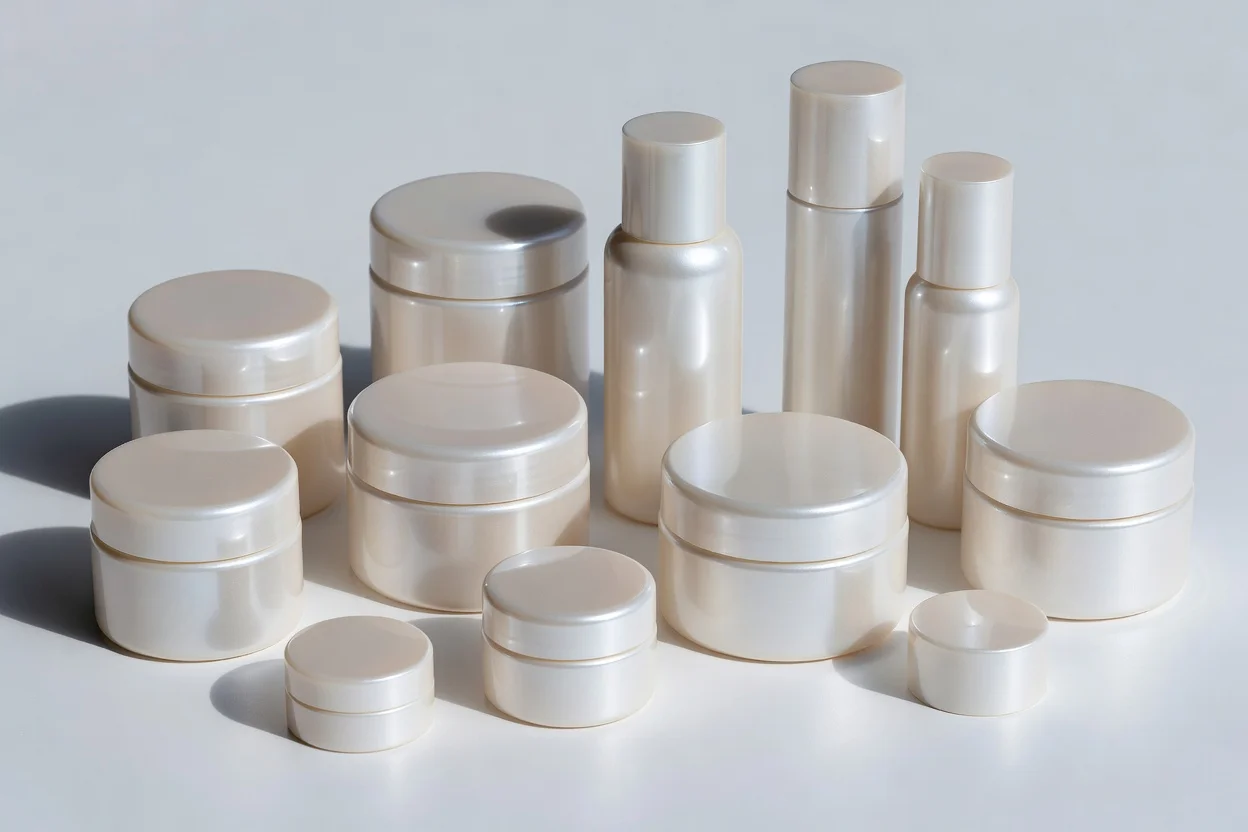
A strong fit exists in premium packaging and consumer electronics housings, where low-to-moderate pigment loadings can produce a luxury appearance without major changes to base resin properties. A weaker fit is highly transparent engineering parts, where the optical effect can be lost and the pigment may be visually unnecessary or interfere with clarity.
Common process matches include:
- Injection molding → thermally stable pearlescent masterbatch for housings, caps, and trims.
- Film extrusion → fine platelet grades for decorative films and packaging layers.
- Rotomolding and large hollow parts → selected grades where thermal history is manageable and surface appearance is important.
- Surface coatings on plastics → when maximum luster is required and the plastic substrate alone cannot deliver the effect.
Environmental and Sustainability Aspects
Pearlescent pigments are generally mineral-based and not inherently biodegradable. Their environmental profile therefore depends less on biogenic origin and more on mining, energy use, coating chemistry, particle losses, and end-of-life compatibility with polymer recycling streams.
Key sustainability issues include:
- Resource extraction → mica mining can carry social and environmental concerns depending on supply chain governance and traceability.
- Energy intensity → calcination and thermal stabilization add energy demand during manufacture.
- Recyclability impacts → high decorative loading can reduce the appeal of recyclate, especially in clear or light-colored applications.
- Material efficiency → the optical effect is often achieved at relatively low loadings, which can limit additive use compared with bulk coloration.
At the same time, pearlescent pigments can support longer product lifetimes by improving perceived value, scratch masking, and aesthetic durability in durable goods and packaging. In some applications, they may allow a visually premium effect at lower additive levels than metallic flake systems, though the life-cycle advantage depends on formulation, use phase, and recyclability design.
Bio-based alternatives are limited because the effect depends primarily on mineral platelet architecture and refractive-index engineering rather than on organic chemistry. The more realistic sustainability pathway is therefore not replacement by bio-based pearlescent pigments, but rather lower-impact mining, cleaner coating processes, reduced energy in calcination, safer particle handling, and compatibility with mechanical recycling and mono-material designs.
Economic and Global Market Impact
According to recent industry analyses, demand for pearlescent pigments is supported by premium packaging, automotive aesthetics, cosmetics, and decorative plastics. Market reports also indicate that automotive use remains especially influential because vehicle trims, interior components, and special-effect coatings are major consumers of high-value effect pigments.
The market is shaped by producers with expertise in mineral substrates, surface coating, and tight particle-size control. Major global supply is associated with specialized pigment manufacturers in Europe and Asia, with competition centered on optical performance, purity, processability, and regulatory compliance rather than commodity pricing alone. In practice, value is created through grade differentiation, not just through raw material cost.
The economics of the segment reflect a premium-additive model:
- Small additions can create high perceived value.
- Product differentiation is highly formulation-dependent.
- Supply chain consistency is crucial because small changes in platelet size or coating thickness visibly alter appearance.
Current Challenges and Innovations
The main technical challenge is balancing visual performance with processing robustness. Pearlescent pigments are highly sensitive to platelet damage, excessive shear, and poor dispersion, all of which can reduce brilliance or create streaking in plastics and coatings.
Other current challenges include:
- Regulatory pressure on mining traceability, dust control, and cosmetic purity.
- Recycling compatibility in multilayer packaging and decorated consumer goods.
- Color consistency across batches and between resin systems.
- Cost control for high-purity or synthetic-substrate grades.
Innovation is focused on several directions:
- Synthetic or engineered substrates such as flaky alumina for improved consistency and optical control.
- Surface activation methods, including plasma, ultrasonic, acid, alkali, or chemical etching pretreatments, to improve oxide adhesion and coating uniformity.
- Multicolor and multi-layer pigment architectures for broader visual effects.
- Better masterbatch integration and low-shear compounding strategies for plastics processors.
- Functionalized effect pigments that combine appearance with secondary properties, such as IR management or security marking, in specialized markets.
Typical formulation practice often uses low to moderate loadings, because only a small amount of platelet pigment is needed to change surface appearance. For example, a plastics compound may use a few tenths of a percent to a few percent depending on opacity target, base color, and part geometry, while coatings may use different dispersion levels to optimize flop, brightness, and hiding balance. The optical mechanism is controlled by platelet alignment rather than by bulk concentration alone.
Future Outlook
Pearlescent pigments are likely to remain important in premium plastics and decorative surface design because they provide a visual language associated with quality, luxury, and differentiation. Demand should continue to be supported by consumer electronics, personal care packaging, automotive interiors, and brand-driven packaging.
The most important future trends are:
- Lower-impact manufacturing and improved traceability of mineral feedstocks.
- More recyclable decorative systems for packaging and durable goods.
- Expanded use of synthetic substrates where optical consistency is critical.
- Better integration with digital color matching and simulation tools.
- Functional effect pigments that combine aesthetics with performance, especially in coatings and smart surfaces.
For plastics specifically, the long-term opportunity lies in designing pearl effects that are visually strong at low loading, stable during processing, and compatible with circular-economy goals. That combination is likely to define the next generation of premium effect pigments.
Summary
Pearlescent pigments are layered, platelet-shaped effect pigments that create pearl-like luster through controlled reflection and interference. In plastics, they are used primarily as premium decorative additives in molded parts, films, packaging, and consumer products.
Their value comes from optical architecture rather than conventional coloration, which also explains their limits: moderate hiding power, sensitivity to dispersion, and recycling challenges in some applications. Ongoing innovation in substrate design, surface activation, and lower-impact production is shaping a future in which pearlescent pigments remain a key specialty material in the plastics value chain.
References
- •
What Are Pearlescent Pigments & How Do They Work. (2022, February 8). Vanhornmetz. https://www.vanhornmetz.com/what-are-pearlescent-pigments/Link
- •
Pearlescent Pigments: History, Properties And Application.... (n.d.). IRIS. https://iris.unitn.it/bitstream/11572/259130/1/encyclopedia202003.0004.voce%20enciclopedia%202.pdfLink
- •
FAQ - PRITTY. (2026, August 17). Pritty. https://prittypearl.com/faq/Link
- •
Classification and Applications of Pearl Pigments. (2023, July 23). Intense Pigment. https://www.intensepigment.com/classification-and-applications-of-pearl-pigments/Link
- •
Pearlescent pigment. (2024, September 24). Nihon Koken Kogyo. https://nihonkoken.co.jp/en/pearlLink
- •
Pearlescent. (n.d.). PrintWiki. https://printwiki.org/PearlescentLink
- •
Pearlescent Pigments in Coatings – a Primer. (2018, August 1). PCI Magazine. https://www.pcimag.com/articles/105225-pearlescent-pigments-in-coatings-a-primerLink
- •
What Is Pearlescent Pigment | Complete Beginner Guide. (2026, April 25). Zhongtai Pearl. https://zhongtaipearl.com/what-is-pearlescent-pigment-complete-beginner-guide-for-buyers-and-manufacturers/Link
- •
Pearlescent pigments - Knowledge. (2025, January 3). Dyestuffs CN. https://www.dyestuffscn.com/info/pearlescent-pigments-102772443.htmlLink
- •
Understanding Pearlescent Colors and Their Shades (2022). (2022, August 12). Nova Color. https://novacolorpaint.com/blogs/nova-color/pearlescent-colors-and-their-shadesLink
- •
Pearlescent pigment production methods and production process.... (2024, June 27). Chemsky CN. https://www.chemsky-cn.com/news/view/12076.htmlLink
- •
Current Applications of Pearlescent Pigments in Various.... (2024, November 22). Pritty Pigments. https://www.prittypigments.com/news/event-/current-applications-of-pearlescent-pigments-in-various-industries.htmlLink
- •
5. Applications of pearlescent pigments. (2024, August 29). Guangdong Broyal New Material Technology. https://broyalpigment.com/applications-of-pearlescent-pigments/Link
- •
How to Get the Most out of Pearlescent Pigments. (1999, June 1). Plastics Technology. https://www.ptonline.com/articles/how-to-get-the-most-out-of-pearlescent-pigmentsLink
- •
What Are Pearlescent Pigments - LEIO. (2023, July 26). Leio Indu. https://leio-indu.com/es/what-are-pearlescent-pigments/Link
- •
Pearlescent Pigment Applications | Complete Industry Guide. (2026, April 24). Zhongtai Pearl. https://zhongtaipearl.com/pearlescent-pigment-applications-complete-industry-guide-for-global-buyers/Link
- •
How do Pearlescent Pigments work, and What are they? (2023, October 12). Neelikon. https://neelikon.com/how-do-pearlescent-pigments-work-and-what-are-they.phpLink
- •
Introduction-and-application-of-pearlescent-pigments_b6. (2020, August 20). Ispigment. https://www.ispigment.com/blog/introduction-and-application-of-pearlescent-pigments_b6Link
- •
Production method of pearlescent pigment. (2021, November 15). Dyestuffs CN. https://www.dyestuffscn.com/info/02-sectional-structure-of-pearlescent-pigments-63741255.htmlLink
- •
Manufacturing, processing and application of pearlescent.... (2025, February 12). Esongsz. http://www.esongsz.com/en/nd.jsp?id=18Link
- •
Pearlescent Pigment Manufacturing Report | PDF. (2025, June 7). Scribd. https://www.scribd.com/document/825470024/Project-Report-on-PEARLESCENT-PIGMENTLink
- •
Pearlescence. (2025, January 1). Cambridge Dictionary. https://dictionary.cambridge.org/us/dictionary/english/pearlescenceLink
- •
Pearlescent Effect Pigments in the Real World: 5 Uses You'll.... (2025, November 4). LinkedIn. https://www.linkedin.com/pulse/pearlescent-effect-pigments-real-world-5u00cLink
- •
The Advantages and Applications of Pearlescent Pigments in.... (2024, November 22). Pritty Pigments. https://www.prittypigments.com/news/event-/the-advantages-and-applications-of-pearlescent-pigments-in-cosmetics.htmlLink
- •
All About the Production of Pearlescent Pigments. (n.d.). Eyecandy Pigments. https://eyecandypigments.com/blogs/news/all-about-the-production-of-pearlescent-pigmentsLink
- •
The Difference Between Luminescent, Pearlescent, and Iridescent Paint. (2023, September 15). Jackson's Art Blog. https://www.jacksonsart.com/blog/2023/09/15/luminescent-pearlescent-and-iridescent-paint-whats-the-difference/Link
- •
How Pearl Pigments Are Produced. (2020, October 16). KP Pigments. https://kppigments.com/blogs/news/how-pearl-pigments-are-producedLink
- •
Secrets from a Pearlescent Pigment Engineer of 20 Years. (2025, November 4). Ispigment. https://www.ispigment.com/blog/beyond-the-shine-secrets-from-a-pearlescent-pigment-engineer-of-20-years_b169Link
- •
Metallic and Pearlescent Pigments for Powder Coatings. (2022, August 19). Paint.org. https://www.paint.org/coatingstech-magazine/articles/metallic-and-pearlescent-pigments-for-powder-coatings/Link
- •
US8153163B2 - Pearlescent pigment. (2011, June 28). Google Patents. https://patents.google.com/patent/US8153163B2/enLink
- •
Multi-colored lustrous pearlescent pigments. (2007, June 20). Google Patents. https://patents.google.com/patent/US7850775B2/enLink
- •
Pearlescent Pigment Market Research Report 2033 - Market Intelo. (2025, August 13). Market Intelo. https://marketintelo.com/report/pearlescent-pigment-marketLink
- •
Fabrication of Color Glass by Pearlescent Pigments and.... (2022, August 13). PMC. https://pmc.ncbi.nlm.nih.gov/articles/PMC9416251/Link
- •
What This Means For Industry.... (2026, March 17). LinkedIn. https://www.linkedin.com/pulse/why-pearlescent-pigment-continues-gain-attention-kingsresearch-ksw0fLink
- •
Multi-colored lustrous pearlescent pigments. (1995, September 12). Justia Patents. https://patents.justia.com/patent/7850775Link
- •
Introduction of Pearlescent Pigments and Methods.... (2024, August 22). Basparesh. http://basparesh.ippi.ac.ir/article_2020.html?lang=enLink
- •
Pearlescent pigment, process for producing the same, coating composition and multilayered coat. (n.d.). Google Patents. https://patents.google.com/patent/US20120269986A1/enLink
- •
Pearlescent pigment, process for producing the same,.... (2006, October 2). Google Patents. https://patents.google.com/patent/CA2624382A1/enLink
- •
Pearlescent pigment compositions and methods for making and using the same. (2007, December 14). Google Patents. https://patents.google.com/patent/WO2008076902A1/enLink
- •
Preparation method and application of pearlescent pigment. (2015, February 4). Google Patents. https://patents.google.com/patent/US20170022367A1/enLink
- •
Pearlescent Pigments | Encyclopedia MDPI. (2020, March 23). Encyclopedia.pub. https://encyclopedia.pub/entry/458Link
- •
Understanding The Process - Pigment Production. (2024, October 14). Leio Indu. https://leio-indu.com/the-secrets-of-pigment-production/Link