
Introduction
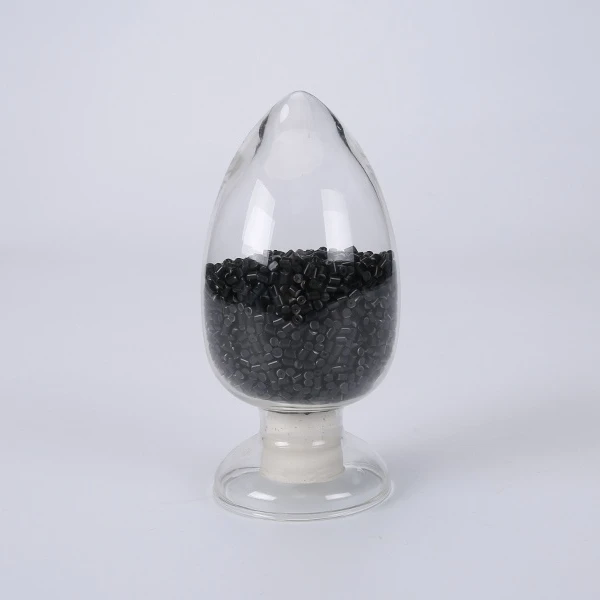
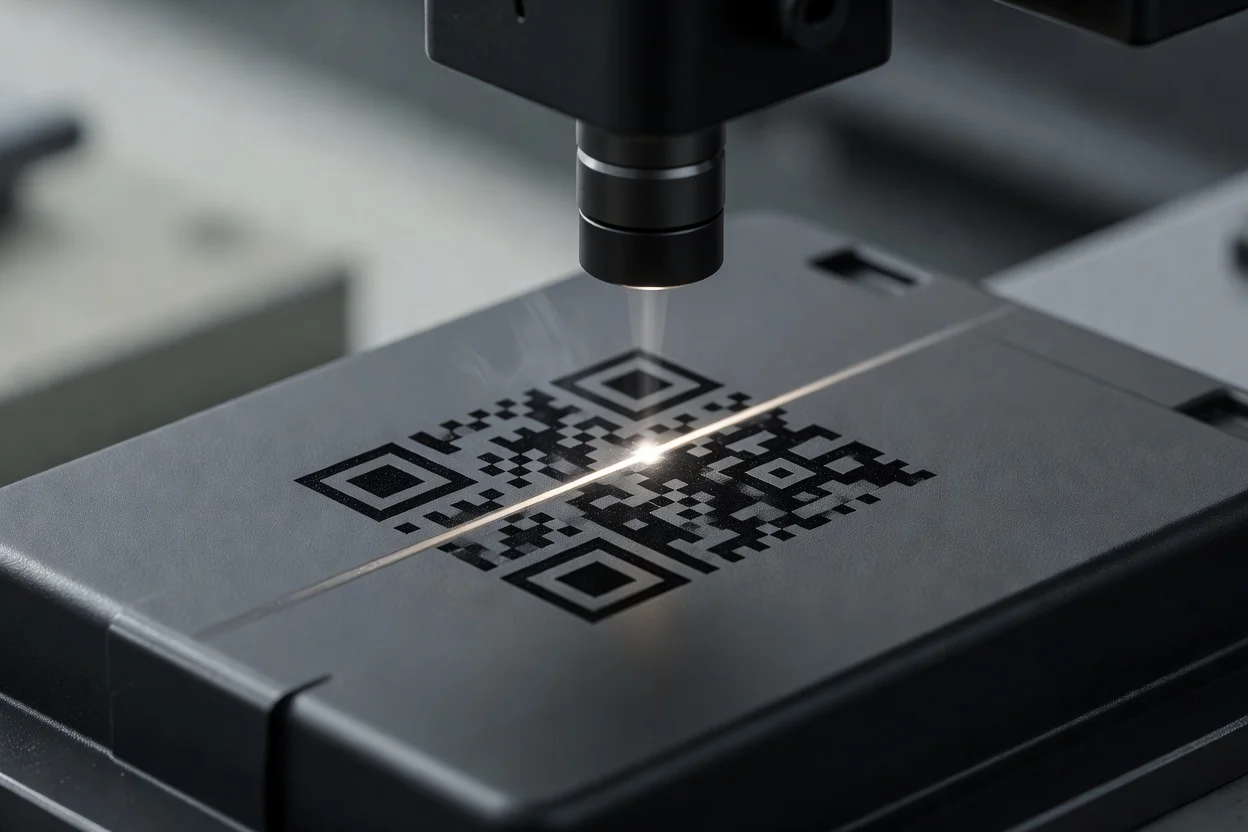
Laser marking masterbatch / additives are functional plastic auxiliaries designed to make thermoplastics respond predictably to laser radiation, producing permanent, high-contrast marks without inks, labels, or mechanical contact. They are used to enable identification, coding, decoration, traceability, anti-counterfeiting, and regulatory compliance across molded, extruded, and blow-molded plastic parts.
At a technical level, the additive system is formulated so that the polymer absorbs laser energy more efficiently at the chosen wavelength, converting that energy into localized heat or a controlled photothermal or photochemical reaction that changes color, creates foam, or carbonizes the surface in a narrow zone. Commercial products are usually supplied as masterbatch, precompounded granules, or powders, and may combine laser absorbers, pigments, dyes, fillers, flow aids, and scratch-resistant components to tune contrast and processing window.
These materials are not a single chemical class but a family of formulations optimized for different polymers, laser types, and end uses. Recent industry material shows systems designed for PP, PE, PET, PC, ABS, PVC, PA, PBT, TPU, and other resins, with compatibility across injection molding, extrusion, blow molding, and thermoforming. As sustainability pressures rise, laser marking is increasingly positioned as an ink-free and label-free alternative that can reduce consumables, support digital traceability, and, in some packaging designs, improve recyclability by avoiding adhesive labels and enabling direct coding.
History and development
Laser marking on plastics developed alongside industrial laser adoption in the late twentieth century, first as a niche solution for durable part identification and later as a mainstream functional decoration and traceability technology. Early formulations often relied on relatively simple absorbers and carbonization approaches, while later developments introduced more selective additives, foaming systems, improved pigment packages, and wavelength-specific masterbatches that expanded use to more polymers and more demanding visual requirements.
A notable trend has been the move from merely making a mark possible to engineering the appearance of the mark. Modern products can generate dark-on-light, light-on-dark, or even colored markings while preserving surface integrity and dimensional fidelity. This evolution has been driven by automotive serialization, medical device identification, electronics traceability, food and personal care packaging code printing, and anti-counterfeit requirements.
Chemical structure and key properties
Laser marking masterbatches are usually multi-component formulations rather than a single additive. Depending on the target effect, they may contain:
- Laser-absorbing pigments or absorbers that convert laser light to heat.
- Colorants or color-forming systems that intensify contrast after irradiation.
- Foaming agents that create a light, scattered mark by microcellular expansion.
- Carbonization promoters that produce dark marks through localized thermal degradation.
- Processing aids, dispersants, and sometimes anti-scratch additives to improve compound quality and mark durability.
The key performance variables are:
- Absorption matching: the formulation must respond to the laser wavelength, commonly near infrared systems around 1064 nm or CO2 systems depending on the polymer and additive package.
- Contrast development: the mark must be visually distinct on the chosen substrate color.
- Mark edge definition: additives must disperse uniformly to avoid haloing, blur, or inconsistent codes.
- Thermal window: the additive should promote marking before the base polymer deforms excessively.
Typical concentration is often low. Industry sources describe effective loadings around 0.2% to 0.5% for some products, while other systems use about 1% to 3% depending on polymer, laser type, and desired contrast. The mechanism is usually not “more additive is better”: too little gives weak contrast, while too much can degrade color stability, processing, or mechanical properties.
Important technical limits
- Poor markability in some polyolefins → the polymer is relatively transparent to common laser wavelengths and may not absorb enough energy → use a wavelength-matched laser additive masterbatch or switch to an optimized absorber/carbonization system.
- Weak contrast on heavily filled or pigmented compounds → fillers, glass, minerals, flame retardants, or regrind can scatter or dissipate energy → compensate with a stronger laser-specific additive package and revalidate the dose window.
- Surface damage or melting → excessive localized heating can deform the part → reduce additive loading, adjust laser parameters, or use a foaming/contrast system designed for the resin.
- Low color-change efficiency on incompatible substrates → the additive chemistry may not interact well with the polymer matrix → select a formulation certified for that resin family and process route.
Production processes and raw feedstocks
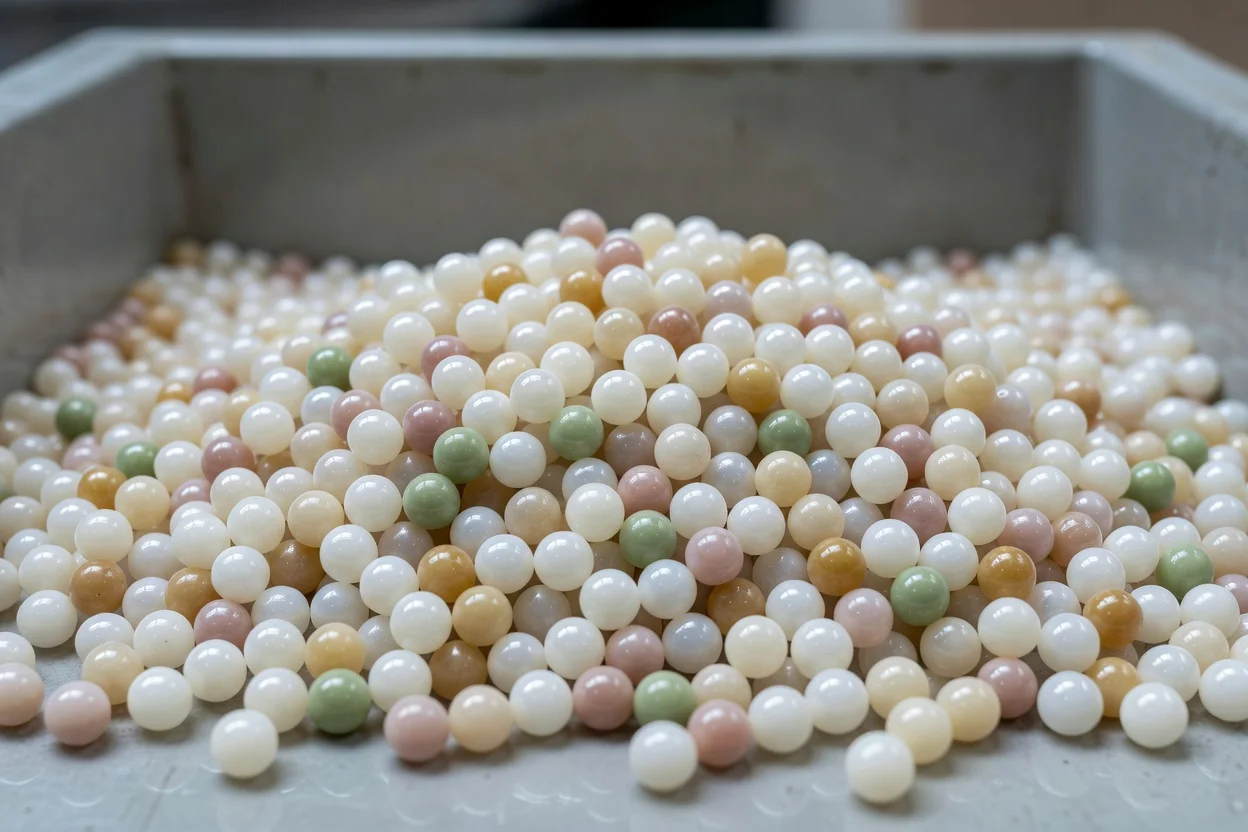
Laser marking additives are manufactured by compounding functional ingredients into a carrier resin, then pelletizing or milling the material into masterbatch or powder form. The manufacturing logic is similar to other masterbatches, but the quality demands for dispersion and thermal response are especially high because even small agglomerates can disrupt code legibility.
Typical raw material categories
- Laser absorbers: carbon-based systems, inorganic absorbers, and wavelength-specific specialty pigments.
- Color modifiers: pigments and dyes that help create the desired contrast, including white-marking and black-marking packages.
- Functional auxiliaries: flow aids, dispersants, and anti-scratch additives.
- Carrier resins: typically matched to the target base polymer family to ensure processing compatibility.
Processing routes
- Masterbatch incorporation during injection molding, extrusion, or blow molding.
- Precompounded granular feed for direct blending at the molding plant.
- Powder dosing for compounders or specialized lines where precise low-dose addition is needed.
The performance target is a narrow interaction zone at the part surface: the laser energy is concentrated enough to induce a visual change but not so high that it weakens the component or distorts dimensional accuracy.
Applications and end-use markets
Laser marking masterbatches are used where permanent identification is more valuable than decorative printing alone. The usual grade and process depend on the product geometry, resin family, and regulatory requirement.
| End-use sector | Typical plastics | Usual process | Common mark type | Typical grade focus |
|---|---|---|---|---|
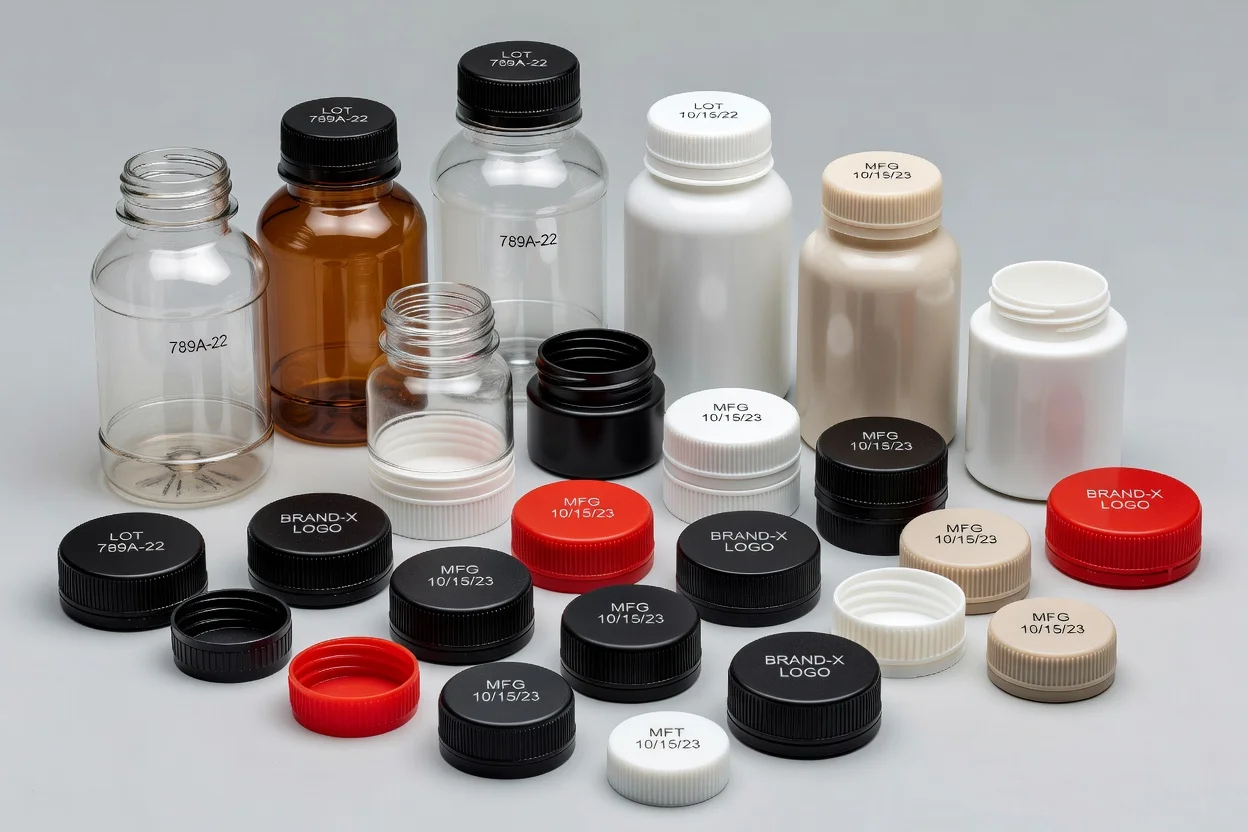
| Packaging | PET, PP, PE | Injection molding, ISBM, EBM, thermoforming | Lot codes, dates, logos, recycling marks | Food-contact conscious, high-contrast, low-dose |
| Caps and closures | PP, PE | Injection molding | Batch codes, branding, anti-counterfeit | Fast-marking, high throughput |
| Automotive | PP, ABS, PC, PA, PBT | Injection molding | Part numbers, safety codes, symbols | Heat- and chemical-resistant |
| Electrical and electronics | ABS, PC, PBT, PA | Injection molding | Serial numbers, QR codes, compliance marks | Fine-detail, high resolution |
| Cables and pipes | PE, PVC, PA | Extrusion | Traceability, length marks, ID codes | Extrusion-stable, abrasion-resistant |
| Medical and laboratory goods | PP, PC, ABS, PA | Injection molding | UDI, lot numbers, device IDs | Permanent, low extractables, high legibility |
| Agriculture and animal ID | PE, PP | Injection molding | Ear tags, safety seals, asset IDs | Weather-resistant, UV durable |
| Industrial goods | PA, PBT, TPU, ABS | Injection molding, extrusion | Branding, traceability, tamper evidence | High durability, consistent contrast |
According to current supplier literature, the technology is widely used for bottles, caps, closures, tubes, cables, pipes, electronic components, medical products, agricultural ID tags, and automotive parts.
A notable poor-fit use is highly transparent optical parts where visible appearance, haze control, and ultra-low defect levels dominate; in such cases, even small additive packages may interfere with optical performance or aesthetics, so the marking strategy must be carefully qualified.
Marking mechanisms and additive design
Laser marking in plastics is commonly achieved through several physical outcomes:
- Carbonization: the irradiated zone darkens through localized thermal decomposition.
- Foaming: microbubbles scatter light and produce a whitish or light-gray mark.
- Bleaching or color shift: selected pigments or dyes undergo a controlled change in optical state.
- Ablation or engraving: the laser removes a thin layer, often used in combination with additives.
Formulators often tailor the additive package to the intended visual result. For example, around 2% to 3% addition is cited by one industry source as often essential for strong contrast in some systems, while others operate at lower masterbatch inclusion depending on the carrier concentration and target resin. In another common approach, laser-specific carbon blacks or titanium dioxide-based systems are used to improve contrast, speed, and edge definition.
Environmental and sustainability aspects
Laser marking masterbatches offer several sustainability advantages relative to inks, labels, and solvent-based marking systems.
- No ink or solvent consumables are required at the point of marking.
- No label adhesive stream is created, which can simplify recycling in packaging applications.
- Permanent traceability supports part life management, anti-counterfeit systems, and circular-economy data capture.
- Direct coding can reduce logistics and warehouse complexity associated with preprinted inventory.
However, sustainability is not absolute. The additives themselves are petrochemical or mineral-derived industrial chemicals, and some packages may include pigments or functional components that must be assessed for regulatory compliance, extractables, and recyclate compatibility. In packaging, the sustainability case is strongest when the laser-marked design replaces multiple consumables or enables simpler mono-material structures rather than merely adding a new functional layer.
Recent market messaging also emphasizes heavy-metal-free and low-dose formulations, which reflect pressure to improve environmental and regulatory profiles while keeping performance high. For recycling, the value proposition is clearest when the mark is durable enough for sorting, product authentication, or digital product passport-style traceability, yet does not compromise polymer reprocessing quality.
Economic and global market impact
Laser marking additives are a niche but strategically important segment of the polymer additives market because they are tightly linked to high-value conversion industries. Demand is strongest where serialization, compliance, and anti-counterfeit requirements are expanding, especially in automotive, medical, electronics, and premium packaging.
The market is served by global masterbatch and additives suppliers such as Avient, Ampacet, SABIC-adjacent compounders, Gabriel-Chemie, Lifocolor, Finke, ROWA, Penn Color, and other regional specialists. Competitive differentiation typically depends on:
- Resin compatibility breadth
- Laser wavelength response
- Color and contrast consistency
- Low loading level
- Regulatory support for sensitive applications
- Process robustness across molding lines
Because performance depends heavily on the specific polymer, laser source, and part geometry, supplier qualification and line trials are often as important as nominal product data.
Current challenges and innovations
Current challenges
- Compatibility across resins remains uneven, particularly when moving from easy-to-mark engineering plastics to polyolefins and filled compounds.
- Process window sensitivity can be high; small changes in additive loading or laser settings may alter contrast sharply.
- Color and aesthetics constraints are significant in consumer packaging and electronics.
- Regulatory scrutiny continues to increase for additives used in medical, food-contact, and recycling-sensitive applications.
Innovations
- Laser-specific carbon blacks and titanium dioxide systems for sharper contrast and faster marking.
- Matrix-independent carbonization additives that improve response across different polymers.
- Foaming-based white marking for dark substrates and visually demanding applications.
- On-the-fly marking for high-speed production lines.
- Lower-dose masterbatch formats and powder systems that improve economics and dosing precision.
- Antimony-free or heavy-metal-free formulations in response to sustainability and regulatory pressures.
Future outlook
Laser marking masterbatch is likely to gain importance as manufacturers seek permanent part identification with lower consumable use and better data traceability across the product lifecycle. The most promising growth areas are packaging, medical devices, electric and electronic components, industrial logistics, and automotive parts that require serialization or counterfeit resistance.
Future formulations will likely be more application-specific, with tighter wavelength matching, better dispersion control, and stronger compatibility with recycled and bio-attributed polymer streams. The strongest innovation opportunity lies in additive systems that preserve mechanical and aesthetic properties while enabling reliable marking on difficult substrates and supporting circular-economy infrastructure such as sorting, authentication, and digital traceability.
Summary
Laser marking masterbatch / additives are functional compounds that enable permanent, high-contrast laser codes and graphics on plastics by controlling how polymer surfaces absorb and respond to laser energy. They are widely used in packaging, automotive, medical, electronics, cables, and industrial products, and their value comes from combining marking performance with process efficiency, traceability, and reduced consumable use.
References
- •
Sabreen. (2026, May 26). Laser marking masterbatch: Complete technical guide. https://sabreen.com/laser-marking-masterbatch-complete-technical-guide/Link
- •
Ampacet. (2009, July 31). Laser marking masterbatch. https://www.ampacet.com/masterbatch-products/ampacet-additives/laser-etch-masterbatch/Link
- •
Ampacet. (n.d.). Laser marking additives [PDF]. https://www.ampacet.com/wp-content/uploads/2017-Laser-Marking_072117.pdfLink
- •
Broadway Colours. (2025, December 17). Laser marking additives for plastics explained. https://broadwaycolours.com/what-are-laser-marking-additives/Link
- •
Hubron. (2021, September 9). Laser marking. http://88.208.232.154/laser-marking/Link
- •
Dome Materials. (2024, January 5). Plastic laser marking additives: A comprehensive guide. https://domematerials.com/plastic-laser-marking-additives-all-you-need-to-know/Link
- •
Avient. (n.d.). Laser marking additives. https://www.avient.com/products/polymer-additives/laser-marking-additivesLink
- •
Penn Color. (n.d.). Laser markers [PDF]. https://www.penncolor.com/wp-content/uploads/2025/06/Laser-Markers-Product-Sell-Sheet_JUNE-2025.pdfLink
- •
The Sabreen Group. (2025, June 13). Laser marking additives. https://sabreen.com/laser-marking-additives/Link
- •
Gabriel-Chemie. (n.d.). Laser additives. https://old.gabriel-chemie.com/en/laser-additivesLink
- •
Photonics Media. (n.d.). Plastics additives allow inkless marking. https://www.photonics.com/Articles/Plastics_Additives_Allow_Inkless_Marking/a54747Link
- •
Evonik. (n.d.). Polymers & lasers [PDF]. https://products.evonik.com/assets/34/95/Polymers_Lasers_EN_EN_243495.pdfLink
- •
Colloids. (2025, October 15). Automotive. https://colloids.com/products-and-solutions/additives/laser-marking-additives/Link
- •
Thinklaser. (2024, September 18). Laser marking of plastic components. https://thinklaser.com/casestudy/nozzle-2/Link
- •
Chroma Colors. (n.d.). ChroMark1 [PDF]. https://chromacolors.com/wp-content/uploads/2022/05/CHROMARK-Plastic-Laser-Marketing.pdfLink
- •
HeatSign. (2026, February 10). Enhance plastic marking with laser additives: A guide. https://www.heatsign.com/laser-marking-additives-for-plastics/Link
- •
Sabreen. (2026, March 23). CO2 vs fiber vs UV lasers for marking plastics. https://sabreen.com/decoding-laser-marking-on-plastics-a-guide-to-common-laser-types/Link
- •
Finke Colors. (2024, June 4). Masterbatches with laser additive for laser marking. https://finke-colors.eu/en/colorant/laser-marking/Link
- •
Dome Materials. (2026, August 21). Laser marking additives for plastics 2026: Laser technology trends driving green intelligent plastic manufacturing upgrades. https://domematerials.com/laser-marking-additives-for-plastics-2026-laser-technology-trends-driving-green-intelligent-plastic-manufacturing-upgrades/Link
- •
Dome. (2024, August 27). How to select the right laser marking additives for your project. https://lasermarkingadditives.com/select-the-right-laser-marking-additives/Link
- •
Dome. (2024, April 29). Laser activated additives. https://lasermarkingadditives.com/laser-marking-additive/Link
- •
Plastech. (2020, December 9). Masterbatches for optimised laser marking and improved laser transparency. https://www.plastech.biz/en/news/Masterbatches-for-optimised-laser-marking-and-improved-laser-16074Link
- •
Plastics Decorating. (2020, September 21). Formulating plastics for direct laser marking. https://plasticsdecorating.com/articles/2013/formulating-plastics-for-direct-laser-marking/Link
- •
Additives for Polymer. (2023, September 1). Nothing found. https://www.additivesforpolymer.com/project-category/laser-engraving/Link
- •
Dome Materials. (2025, April 10). Dome laser marking additive-China manufacturer-Laser additive masterbatch. https://domematerials.com/product/laser-marking-masterbatch-laser-marked-black-on-colored-polymer/Link
- •
The Sabreen Group. (2024, February 17). Plastics laser marking. https://sabreen.com/solutions/plastics-laser-marking/Link
- •
Lifocolor. (2024, September 8). Laser marking masterbatches for coloured plastics. https://www.lifocolor.de/en/news-events/lasermarking/Link
- •
Alibaba. (2026, January 8). DOME laser masterbatch laser marking additives for PP. https://www.alibaba.com/product-detail/DOME-Laser-Masterbatch-Laser-Marking-Additives_11000020577527.htmlLink
- •
Prime Plastics. (2022, February 7). Laser marking additives. https://www.primexplastics.com/laser-marketing-technology/Link
- •
Ensinger Plastics. (n.d.). Laser marking plastics. https://www.ensingerplastics.com/en-us/plastic-material-selection/laser-markingLink
- •
Godiplast. (2023, October 18). Masterbatches for laser marking. https://www.godiplast.de/en/laser-marking/Link
- •
Dzjy Additives. (2026, June 15). Laser marking masterbatch: Enhance your plastic parts. https://www.dzjyadditives.com/news/Laser-Marking-Masterbatch-Enhance-Your-Plastic-Parts-Dazhan-JiYuan-Guide.htmlLink
- •
LaserMarkTech. (2026, March 5). How to mark plastic without burning or melting. https://lasermarktech.com/laser-marking-plastics-guide-or-how-to-mark-plastic-without-burning-or-melting/Link
- •
Sonali Group. (n.d.). Sonali laser marking masterbatch for plastic products. https://sonaligroup.in/sonali-product-lm-singleLink
- •
Avient. (2016, December 23). Taking the guesswork out of laser marking. https://www.avient.com/resource-center/knowledge-base/article/taking-guesswork-out-laser-markingLink
- •
Rowa Masterbatch. (2018, May 3). Laser marking for thermoplastics. https://www.rowa-masterbatch.de/en/products/productsrowalid-mf-multifunctional-masterbatches.htmlLink
- •
Rongfeng Masterbatch. (2023, July 7). What is laser marking masterbatch. https://www.rongfengmasterbatch.com/news/what-is-laser-marking-masterbatch-69019298.htmlLink
- •
Dzjy Additives. (2026, June 12). High-quality laser marking masterbatch for colored plastics. https://www.dzjyadditives.com/news/High-Quality-Laser-Marking-Masterbatch-for-Colored-Plastics-Dazhan-JiYuan.htmlLink
- •
Google Patents. (2009, June 18). Master batch with function of plastic laser marking (Patent No. CN101927626B). https://patents.google.com/patent/CN101927626B/enLink