
Introduction
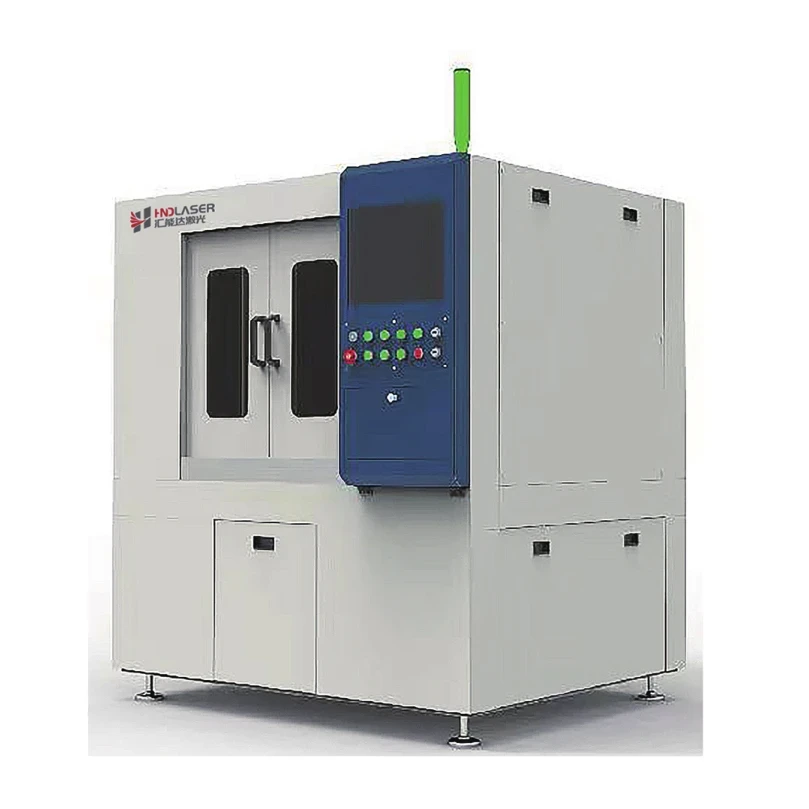
Cutting machines are a broad class of equipment used to separate, trim, slit, shear, punch, or shape materials into defined dimensions or contours, and the term spans both conventional mechanical systems and advanced CNC-controlled thermal, jet, and digital cutting platforms. In plastics processing, cutting machines are essential in converting sheet, film, profile, pipe, foam, textile-reinforced laminates, and molded or extruded products into saleable parts, while also supporting edge finishing, sample preparation, and recycling workflows; their evolution has closely followed advances in automation, tool materials, and process control.
Within the plastics industry, the category includes guillotine shears, rotary cutters, slitters, die-cutting machines, oscillating-knife cutters, laser cutters, waterjet systems, and CNC cutting tables, each selected according to material thickness, heat sensitivity, production volume, and required edge quality. The most significant recent developments have been the migration from manual cutting toward computerized positioning, the integration of vision systems and nesting software to reduce waste, and the use of closed-loop motion control to improve repeatability and throughput.
Sustainability has become a major design criterion: modern cutting machines are increasingly optimized for lower energy use, tighter kerf widths, reduced trim loss, cleaner scrap separation, and compatibility with circular-economy practices such as regrinding and mechanical recycling. Future progress is expected to center on higher levels of automation, adaptive tool control, better cutting of multilayer and recycled materials, and deeper integration with factory data systems for traceability and predictive maintenance.
History and Development
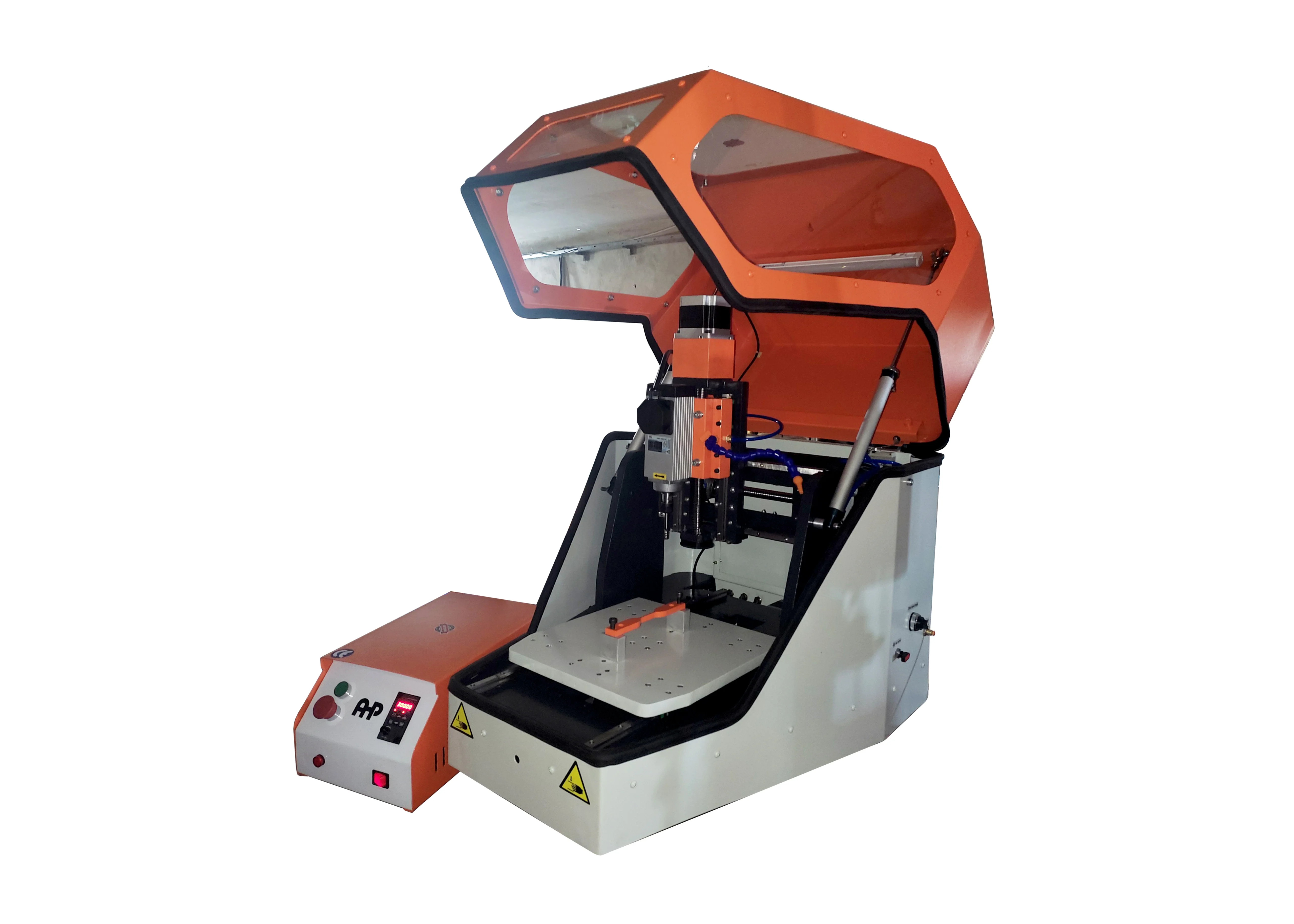
Early cutting equipment in plastics processing was derived from general metalworking and textile cutting practice, with material separation achieved by straight blades, rotating knives, and simple presses; these machines emphasized mechanical force rather than precision control. As thermoplastics proliferated after the mid-20th century, dedicated systems emerged for films, sheets, and extrusions, including slitters for continuous web processing and guillotine cutters for rigid sheet conversion.
A major milestone was the adoption of CNC control, which enabled programmable paths, repeatable part geometry, and automated nesting for sheet goods and flexible substrates. A second milestone was the commercialization of laser cutting, which offered high precision, narrow kerfs, and non-contact processing for selected polymer sheets and films, especially where tool wear or mechanical deformation was problematic. A third development was the rise of digital cutting tables with vision registration, vacuum hold-down, and software-driven tool heads, which are now widely used where short runs, rapid design changeover, or complex contours justify computer-controlled flexibility.
Technical Overview
Working principles
Cutting machines remove material by one of several mechanisms:
- Shear cutting: two blades create fracture by concentrating stress along a narrow line, as in guillotines, rotary knives, and some die-cutting systems.
- Mechanical chip removal: saws, mills, and routers separate material by progressive cutting, often used in rigid plastics, composites, and polymer-based panels.
- Thermal cutting: lasers and plasma systems locally melt, vaporize, or ablate material; in plastics, lasers are used selectively because heat can discolor, melt, or fume some polymers.
- Waterjet cutting: high-pressure water, sometimes with abrasive media, cuts without heat-affected zones, which is useful for heat-sensitive or layered materials.
- Die cutting: shaped dies apply pressure to cut, crease, perforate, or emboss repetitive geometries efficiently.
Typical performance ranges
For plastics-related production, typical operating ranges vary widely by machine class:
- Sheet shears and guillotines: suited to straight cuts in rigid PVC, PETG, acrylic, polycarbonate, and thermoplastic sheets; throughput is often measured in cycles per minute rather than continuous feed.
- Rotary slitters and web cutters: commonly used for film and foil conversion; line speeds can be very high in continuous roll-to-roll production, with multiple lanes cut simultaneously.
- CNC knife cutters: used for gasket sheet, foam, vinyl, and textile-reinforced polymer composites; cutting speeds depend on tool type, thickness, and path complexity, but automated systems are valued for repeatability and minimal setup.
- Laser cutters: typically provide the finest geometries and narrow kerf widths, but process windows are material-dependent and less forgiving for highly reflective, strongly thermally sensitive, or fume-generating plastics.
- Waterjet systems: preferred where no heat-affected zone is acceptable and thick composite laminates must be cut cleanly.
Quantitative benchmarks
Because “cutting machines” encompass many technologies, key engineering benchmarks are usually expressed by material class and process route rather than by a single universal specification. In plastics recycling and conversion lines, cutting-related auxiliary equipment may generate flake sizes of roughly 8–14 mm in many grinding and size-reduction applications, although exact size depends on screen geometry and rotor setup. In wet separation and dewatering stages often paired with cutting or shredding lines, centrifugal dewatering commonly reduces residual moisture to a low single-digit percentage in well-tuned systems, while actual values depend on polymer type, contamination, and downstream drying requirements.
For rotary and knife-based cutters, rotor speed, knife count, and feed rate govern edge quality and specific energy consumption; practical energy use can vary substantially from low specific-energy slitting operations to much higher-energy size reduction or thermal cutting tasks. In automated cutting cells, throughput is frequently optimized by balancing cutting speed against acceleration, tool wear, nesting efficiency, and scrap evacuation rather than by maximizing one parameter alone.
Types and Variations
| Type | Main principle | Strengths | Typical plastics use |
|---|---|---|---|
| Guillotine shear | Straight blade shearing | Clean straight cuts, simple maintenance | Rigid sheet, trim cut-off |
| Rotary cutter / slitter | Continuous rotating knife | High line speed, web processing | Film, foil, narrow strip slitting |
| Die cutter | Shaped die under pressure | High repeatability for identical parts | Labels, gaskets, packaging blanks |
| Oscillating-knife cutter | Rapid blade oscillation | Good for soft or layered materials | Foam, textiles, multilayer sheets |
| CNC router / knife table | Programmed tool path | Flexible geometry, fast changeover | Acrylic, PVC board, composites |
| Laser cutter | Focused beam and assist gas | Very fine detail, non-contact | Thin sheet, prototypes, decorative parts |
| Waterjet cutter | High-pressure water stream | No thermal damage | Heat-sensitive polymers, laminates |
Mechanical cutters remain dominant where speed, simplicity, and low capital cost matter most, while digital and thermal systems are selected when geometry complexity, changeover speed, or edge quality is more important.
Applications and Uses
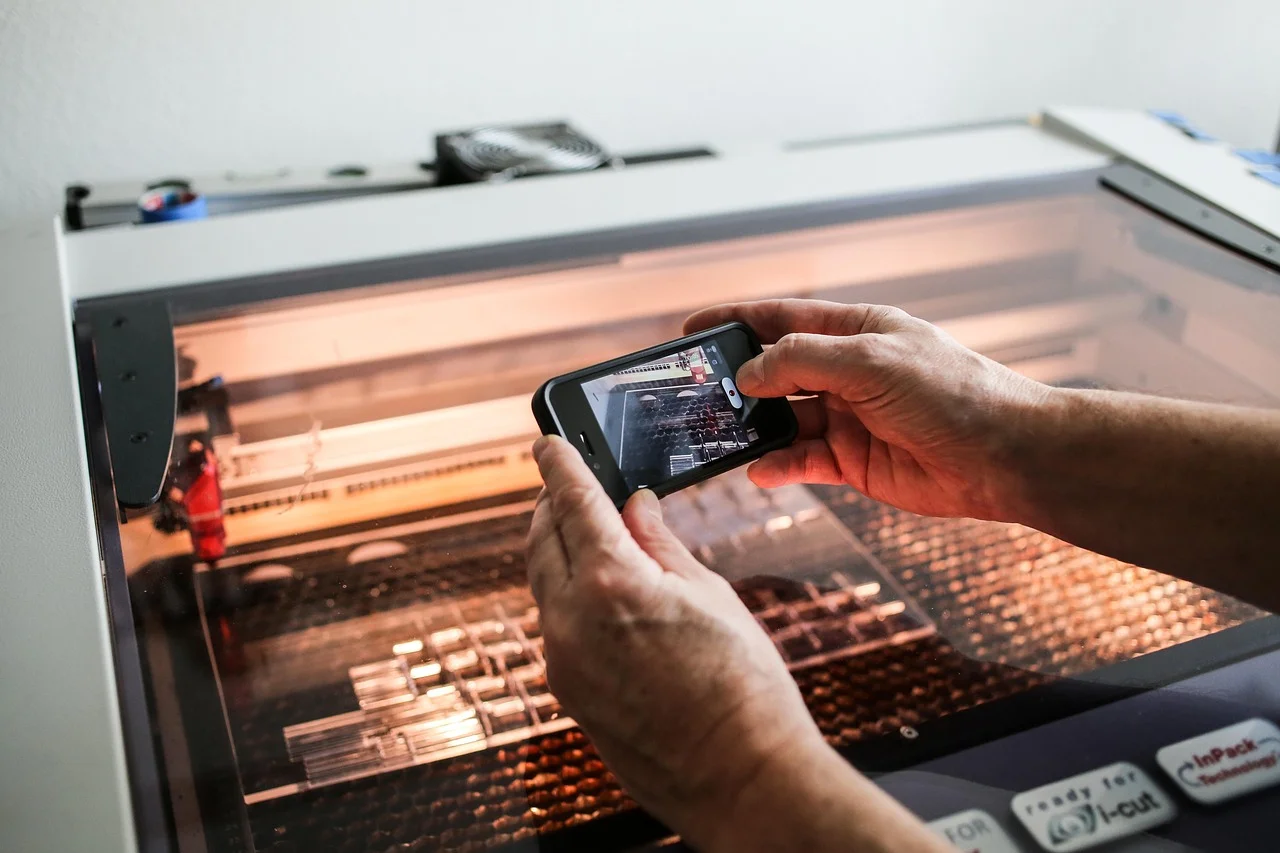
- Packaging: film slitting, pouch blank preparation, carton trimming, and die-cut openings for caps, closures, and labels are among the largest uses of cutting machines in plastics-related converting.
- Construction products: rigid PVC sheet, foam board, insulation panels, and profile trimming often rely on guillotines, saws, or CNC routers.
- Automotive and transportation: interior trim, gasket materials, acoustic foams, composite panels, and protective films are commonly cut on CNC knife tables or die-cut presses.
- Medical and hygiene products: precision cutting is used for film, nonwovens, and polymer laminates where dimensional consistency and cleanliness are critical.
- Signage and graphics: acrylic, vinyl, and adhesive films are frequently processed by plotter cutters, laser systems, and digital cutting tables.
- Recycling and reprocessing: size reduction and controlled cutting prepare scrap for washing, drying, and regranulation.
- Poor-fit use: thick, highly reflective, or heavily filled engineering plastics are often a poor match for some laser systems because of thermal degradation, fuming, or inconsistent absorption.
Technological Innovations and Automation
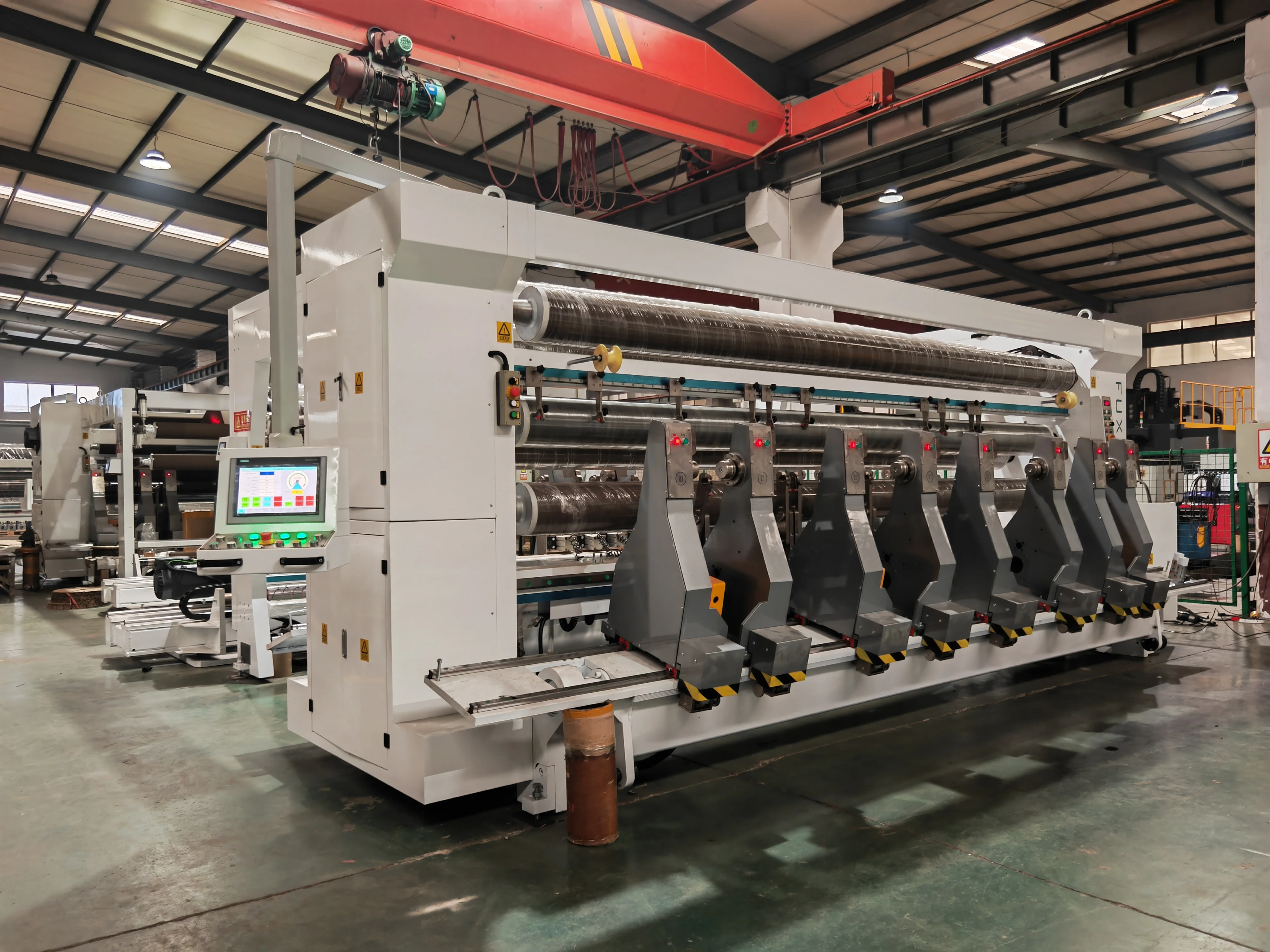
Modern cutting machines increasingly incorporate CNC motion control, vision registration, automatic knife-depth adjustment, vacuum beds, and software-based nesting to reduce operator intervention and material waste. In high-throughput environments, inline sensors monitor feed alignment, blade condition, and cut quality, allowing systems to compensate for material stretch, skew, or thickness variation.
Digital workflows now link CAD/CAM preparation directly to the cutting cell, which shortens setup time and supports short production runs and mass customization. For plastics converters, this is particularly valuable when product designs change frequently or when multiple grades of sheet and film must be processed on the same equipment.
Environmental and Sustainability Aspects
Cutting technology affects sustainability through yield, energy use, scrap generation, and recyclability. Machines with better nesting software and narrower kerfs reduce trim loss, which is especially important in high-value polymers such as engineering resins and multilayer laminates.
Heat-free or low-heat methods can improve downstream recyclability by avoiding thermal damage, especially for material destined for regrinding or remelting. At the same time, sustainability trade-offs exist: laser and waterjet systems can deliver cleaner cuts and less manual rework, but they may require higher capital investment and, depending on the application, greater energy or utility consumption than simpler mechanical cutters.
Economic and Global Market Impact
Cutting machines are a foundational segment of plastics processing because they sit between upstream polymer conversion and downstream packaging, assembly, or recycling. Demand is strongly influenced by packaging throughput, automotive lightweighting, medical disposables, e-commerce packaging, and recycled plastics capacity, all of which require flexible and reliable cutting equipment.
Global competition in the segment is shaped by machine builders specializing in sheet finishing, roll-to-roll converting, CNC knife systems, laser equipment, and recycling auxiliaries; regional strength often depends on integration expertise, service network quality, and the ability to automate around local labor constraints rather than on machine price alone.
Current Challenges and Innovations
- Material variability: recycled polymers, filled compounds, and multilayer structures cut less predictably than virgin monomaterials, increasing the importance of adaptive tool control.
- Edge quality versus speed: higher cutting speeds can increase burrs, melt edges, or dimensional error, especially in thermally sensitive plastics.
- Dust, fumes, and safety: cutting operations may generate particulate and volatile emissions that require extraction and filtration, particularly in laser and abrasive processes.
- Tool wear: blades, dies, and router bits must be maintained carefully to avoid poor edge finish and rising energy consumption.
- Labor and changeover pressure: manufacturers increasingly need systems that can switch quickly between jobs without sacrificing accuracy, which favors automated setup and digital recipe management.
Future Outlook
Future cutting machines are likely to combine adaptive sensing, self-correcting motion systems, and AI-assisted nesting to maximize yield and reduce operator dependence. In plastics, the most important technical direction is not simply faster cutting, but better compatibility with recycled feedstocks, multilayer materials, and low-waste production models.
Further growth is also expected in hybrid systems that combine cutting with inspection, labeling, and automated part sorting, enabling more tightly integrated converting and recycling lines. As processors demand higher efficiency and more frequent product changeovers, the most competitive machines will be those that deliver precision, low scrap, and robust process stability across a wide range of polymer forms.
References
- •
What is a cutting machine? Tool types explained. (2026, August 14). https://hometosight.com/what-is-a-cutting-machine/Link
- •
Cutting machine – Types, principle, working, operations. (n.d.). https://compraco.com.br/en/blogs/industria/maquina-de-corte-tipos-principio-funcionamento-operacoesLink
- •
Cutting machine. (2025, September 19). In Wikipedia. https://en.wikipedia.org/wiki/Cutting_machineLink
- •
Different types of cutting machine.pptx. (n.d.). https://www.slideshare.net/slideshow/different-types-of-cutting-machinepptx/255175047Link
- •
What are the different metal cutting machines and tools. (2024, June 6). https://www.techniwaterjet.com/types-of-metal-cutting-machines/Link
- •
Cutting machine guide: Types applications and precautions. (2023, September 17). https://www.aolcnc.com/news/cutting-machine-guide-types-applications-and-precautions/Link
- •
What are the different types of metal cutting machines? (2024, October 30). https://pmac.co.in/what-are-the-different-types-of-metal-cutting-machines/Link
- •
Different types of fabric cutting machine. (2025, May 2). https://www.scribd.com/document/385677919/Different-Types-of-Fabric-Cutting-MachineLink
- •
Cutting machines. (2026, February 10). https://www.scribd.com/document/701974066/cutting-machinesLink
- •
How does a die cutting machine work? Process guide. (2026, August 7). https://www.mtdpack.com/how-die-cutting-machine-works/Link
- •
How does a laser cutting machine work? (2025, December 10). https://www.gweikecloud.com/blogs/news/how-laser-cutting-works-guideLink
- •
Cutting types - Introduction to machining. (n.d.). https://www.keyence.com/ss/products/measure-sys/machining/cutting/type.jspLink
- •
Cutting machine. (2017, July 2). https://www.slideshare.net/slideshow/cutting-machine-77433487/77433487?nway-=Link
- •
Laser cutting machine working principle - How does it work? (2024, June 12). https://www.shen-chong.com/laser-cutting-machine-working-principle-how-does-it-work/Link
- •
Types of CNC machines: Which one to choose? (2024, November 6). https://www.rapiddirect.com/blog/12-types-of-cnc-machines/Link
- •
Metal cutting machines: Types, benefits, and selection. (2026, March 9). https://bfweurope.com/metal-cutting-machines-types-benefits/Link
- •
Pneumatic sheet metal cutting machine. (n.d.). https://www.rjwave.org/jaafr/papers/JAAFR2604213.pdfLink
- •
Cutting equipment: Essential guide to modern manufacturing. (2024, May 2). https://www.endlesswiresaw.com/essential-guide-of-cutting-equipment/Link
- •
What is a cutting machine and how does it work? (2026, March 21). https://www.dgm-global.com/blog/cutting-machine-and-how-it-works/Link
- •
Machines for cutting metal. (n.d.). https://www.rmtus.com/machines-for-cutting-metalLink
- •
शीट मेटल कटिंग मशीनें: कौन सी आपके लिए सबसे उपयुक्त है? (2024, August 19). https://www.krrass.com/sheet-metal-cutting-machines-types-and-selection-guide/Link
- •
Cutting machines. (n.d.). https://www.heidelberg.com/global/en/print_and_packaging/finishing/cutting/cutting___overview.jspLink
- •
How does a fabric cutting machine work? Complete guide. (2026, May 29). https://sewingworker.com/how-does-a-fabric-cutting-machine-work/Link
- •
Laser cutting machine - The ultimate beginner's guide. (2021, February 8). https://www.sltl.com/laser-cutting-machine-the-ultimate-beginners-guide/Link
- •
How does a laser cutting machine work? The melt-and-blow ... (2026, March 27). https://www.adhmt.com/how-does-a-laser-cutting-machine-work/Link
- •
Types of metal cutting machines compared. (2024, September 24). https://clnofsouthflorida.com/blog/types-of-metal-cutting-machines-comparedLink
- •
Shaper. (2003, July 13). In Wikipedia. https://en.wikipedia.org/wiki/ShaperLink
- •
Types of fabric cutting machines. (2025, September 4). https://www.scribd.com/document/474165826/CUTTING-MACHINELink
- •
Machinery and tools used in cutting. (n.d.). https://www.scribd.com/document/952469595/Machinery-and-Tools-Used-in-CuttingLink
- •
How CNC cutting machine works? (n.d.). https://www.jqlaser.com/how-cnc-cutting-machine-works/Link
- •
Choosing a paper cutting machine? Types, benefits, and ... (2025, April 7). https://www.paper-machines.com/blogs/blogs/choosing-paper-cutting-machine-types-benefits-tipsLink
- •
Cutting machines overview. (n.d.). https://www.lib.jmu.edu/makery/cutting-machines-overview/Link
- •
Laser cutting basics: What is it and how it works. (2026, August 19). https://www.atlascopco.com/en-in/compressors/wiki/compressed-air-articles/what-is-laser-cuttingLink
- •
Module-3 - Overview of cloth cutting machinery in apparel ... (2026, March 5). https://www.studocu.com/ph/document/xavier-university-ateneo-de-cagayan/education/module-3-machinery/117558768Link
- •
What is a smart cutting machine? (2026, June 2). https://bangzhengcutter.com/what-is-a-smart-cutting-machine/Link
- •
Cutting. (2025, April 28). https://www.scribd.com/presentation/471954541/cuttingLink
- •
What is a cutting machine? (2025, December 1). https://www.coolblue.be/en/advice/what-is-a-cutting-machine.htmlLink
- •
How to use a die cut machine. (2025, August 31). https://www.hookandloop.com/blog/how-to-use-a-die-cutLink
- •
Choosing the right cutting machine. (2024, March 18). https://guide.directindustry.com/choosing-the-right-cutting-machine/Link
- •
Cutting machine at the best price from verified sellers. (2026, August 22). https://www.justdial.com/india/Cutting-MachineLink
- •
A complete guide of die cutting machines. (2025, April 7). https://www.reddit.com/r/MachineDalal/comments/1jteiee/a_complete_guide_of_die_cutting_machines/Link
- •
Plasma cutting. (2004, November 24). In Wikipedia. https://en.wikipedia.org/wiki/Plasma_cuttingLink
- •
Automated cutting solutions from ... (2023, August 29). https://www.eastmancuts.com/automated-cutting/Link
- •
What is a die cutting machine & what is it used for? (2022, April 15). https://altenew.com/blogs/paper-crafting-inspiration-and-tips/what-is-a-die-cutting-machine-what-is-it-used-forLink
- •
Plotter cutter VS CNC digital cutter - Overview. (2023, August 11). https://www.sollex.com/blog/post/plotter-cutter-vs-cnc-digital-cutting-systemLink
- •
Everything you need to know about die cutting. (2023, March 29). https://www.crafterscompanion.com/blogs/inspiration/ultimate-guide-to-die-cutting-machinesLink
- •
The 3 best electronic cutting machines of 2026. (2026, March 5). https://www.nytimes.com/wirecutter/reviews/the-best-electronic-cutting-machines-from-cricut-and-silhouette/Link
- •
Our machines. (2026, March 5). https://www.hgg-group.com/machines/Link
- •
What is die cutting? Type, process & uses. (2023, April 5). https://www.maxcessintl.com/blog/what-is-die-cutting/Link
- •
A step-by-step die cutting guide for beginners (with tips!). (n.d.). https://www.tonic-studios.com/blogs/import-blog-tonic/what-is-die-cuttingLink