
Introduction
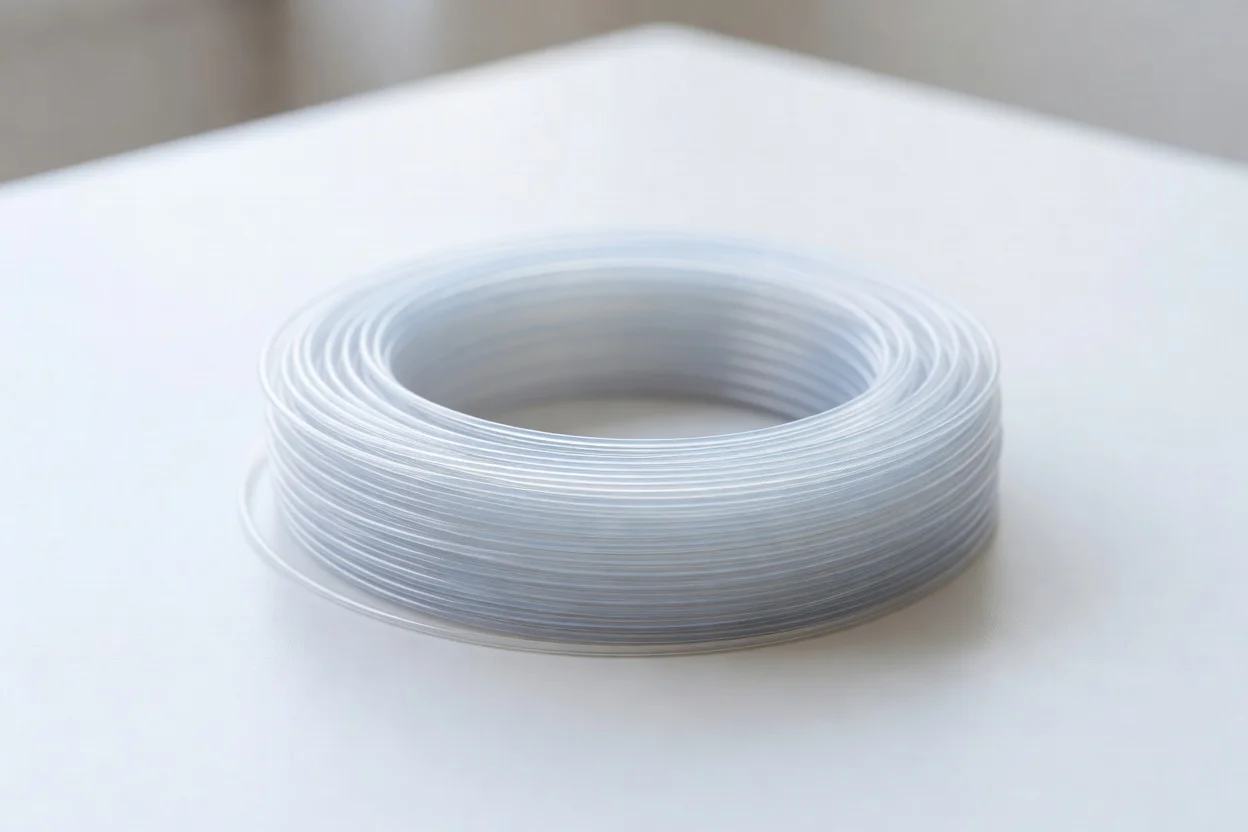
PETG—polyethylene terephthalate glycol-modified—is a glycol-modified polyester widely used as a transparent, tough, and readily formable thermoplastic in packaging, thermoformed sheet, signage, medical and protective products, and fused-filament 3D printing. It is best understood as a PET-derived copolyester whose glycol modification reduces crystallinity, improves processability, and enhances impact resistance and clarity relative to standard PET.
In the plastics value chain, PETG occupies a useful middle ground between rigid, highly clear polymers and more impact-tolerant but less transparent engineering plastics. Its commercial appeal comes from a combination of optical clarity, good chemical resistance, relatively low forming temperatures, and ease of fabrication, while its limitations include modest heat resistance and a narrower high-performance window than polycarbonate or specialized engineering resins. Current industry interest also reflects wider debates on recyclability, feedstock circularity, and the role of glycol-modified polyesters in sustainable packaging and additive manufacturing.
History and Development
PETG emerged from broader PET chemistry as manufacturers sought to tailor polyester crystallization and processing behavior by introducing glycol comonomers into the polymer backbone. The practical goal was to retain the advantageous clarity and chemical resistance associated with polyester materials while suppressing excessive crystallization that can make PET harder to thermoform into deep-drawn or highly detailed parts.
Commercially, PETG became especially important in sheet extrusion and thermoforming, where its low forming temperature and clarity supported display, retail, packaging, and protective applications. More recently, PETG gained additional visibility through FDM and FFF 3D printing, where its balance of printability, toughness, and dimensional stability made it a common alternative to PLA and ABS for functional prototypes and end-use parts.
Chemical Structure and Key Properties
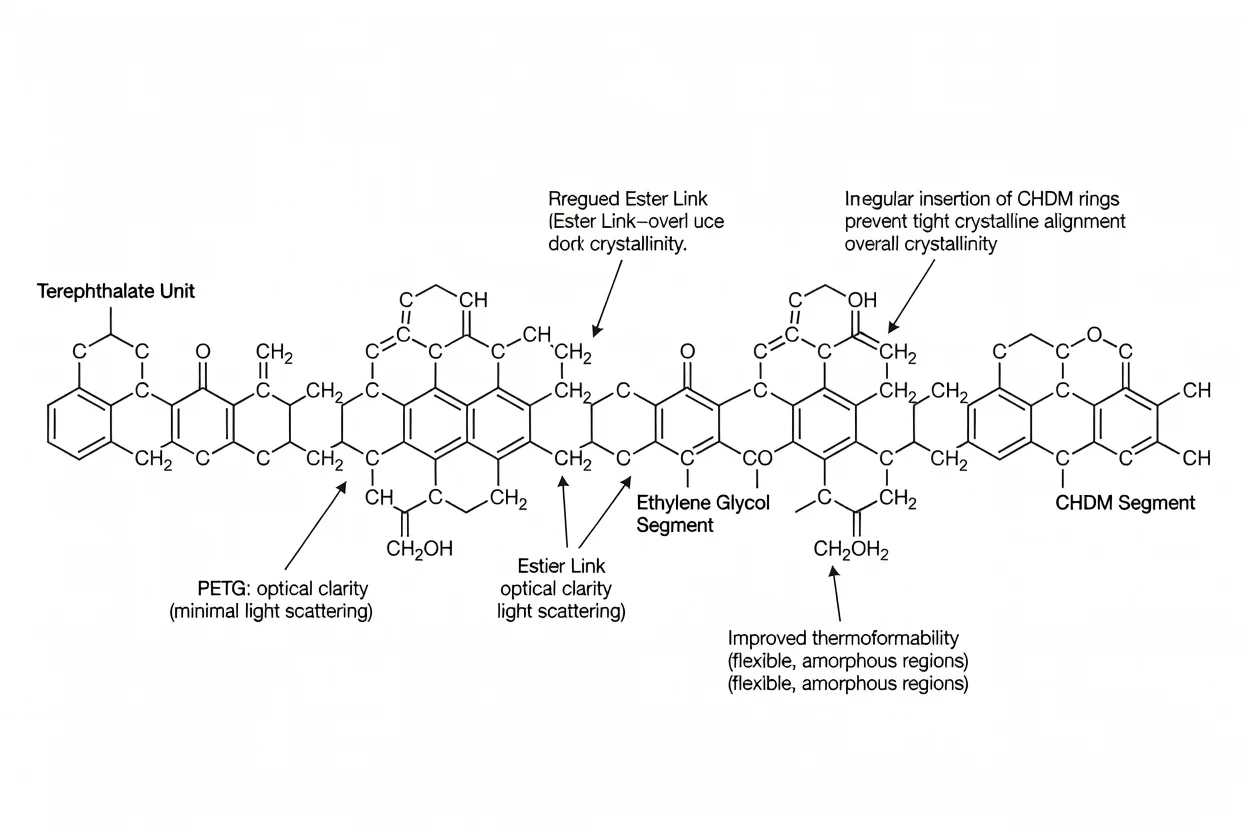
PETG is a glycol-modified copolyester based on PET chemistry, commonly involving comonomers such as cyclohexanedimethanol or related glycol modifiers that disrupt orderly chain packing and suppress crystallization. This structural change is the origin of most of its defining behavior: higher transparency, lower shrinkage, improved thermoforming, and better impact performance than unmodified PET in many sheet and fabricated-product uses.
| Property | Typical PETG Character | Practical Implication |
|---|---|---|
| Structure | Amorphous or low-crystallinity polyester | High clarity and predictable forming |
| Optical behavior | High transparency and low haze | Suitable for display and protective glazing |
| Impact resistance | Good to very good | Less brittle than acrylic |
| Chemical resistance | Good resistance to many acids and alkalis | Useful for packaging and industrial covers |
| Heat resistance | Moderate | Limits use in higher-temperature service |
| Formability | Excellent thermoforming and bending behavior | Deep draws and complex shapes are feasible |
A few important performance limits define where PETG fits best:
- Heat resistance is limited → the amorphous polyester matrix softens at relatively modest service temperatures → use is often kept below about 70–80°C in demanding applications, or higher-temperature service is avoided through design and grade selection.
- Surface hardness is moderate → the material is tougher than acrylic but not as hard as some alternatives → scratch-sensitive uses often require careful handling, coatings, or design protection.
- Solvent resistance is not universal → prolonged exposure to strong solvents can attack the polymer → cleaners, inks, and adhesives must be selected with care.
- In 3D printing, stringing and bridging can be problematic → PETG’s melt elasticity and adhesion can overextend during travel moves → slicer tuning, cooling control, and temperature optimization are common workarounds.
Two practical formulation/process examples illustrate its behavior:
- In thermoformed sheet, PETG often performs well at relatively low forming temperatures because glycol modification reduces crystallization during reheating, allowing deep draws with less whitening and less shrinkage than standard PET.
- In FDM printing, PETG typically processes around 230–240°C with a heated bed near 70–80°C; these settings help maintain interlayer adhesion while limiting warpage and improving part toughness.
Production Processes and Raw Feedstocks
PETG is produced through polyester polymerization routes similar to PET, using aromatic diacid or ester feedstocks together with glycol components, then introducing glycol modifiers to alter chain regularity and crystallization behavior. The specific chemistry varies by producer, but the functional result is the same: a modified polyester with lower crystallinity than conventional PET.
Key raw materials and process elements include:
- Terephthalate-based feedstocks such as terephthalic acid or dimethyl terephthalate, which provide the aromatic polyester backbone.
- Glycols such as ethylene glycol and, in many PETG systems, 1,4-cyclohexanedimethanol or other modifiers, which interrupt crystallization and influence toughness and processability.
- Melt polycondensation and copolymerization control, which determine molecular weight, intrinsic viscosity, and final forming behavior.
Process routes are closely linked to end use:
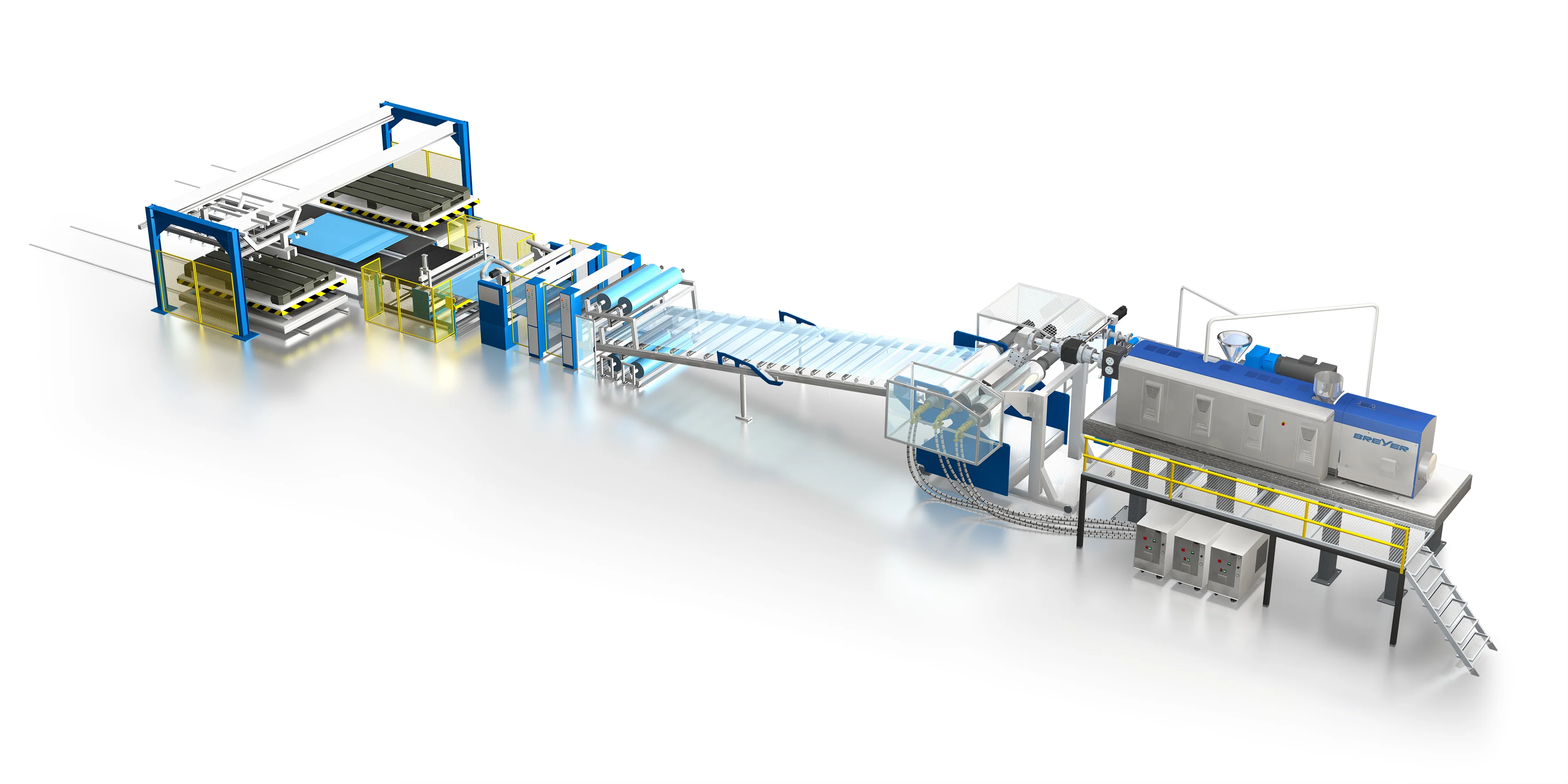
- Sheet extrusion is central for signage, guards, displays, and formed packaging.
- Thermoforming is a major downstream process because PETG reheats and draws well without the rapid crystallization that can complicate PET forming.
- Injection molding is used for certain clear housings, parts, and containers when dimensional consistency and clarity matter.
- Filament extrusion converts PETG into additive manufacturing feedstock for 3D printing applications.
Applications and End-Use Markets
PETG is used where clarity, toughness, and fabricability matter more than very high thermal resistance or extreme wear performance. Its most established markets are sheet-based fabrication, packaging, medical and protective products, retail display, and 3D printing.
| End-use sector | Typical PETG form or grade | Why PETG fits | Notes |
|---|---|---|---|
| Packaging | Sheet, tray, container, forming grade | Clear, food-contact capable, thermoformable | Common in thermoformed packaging and display packs |
| Retail and signage | Sheet grade | High clarity, easy cutting and bending | Used for displays, guards, and point-of-purchase parts |
| Medical and healthcare | Clear sheet and fabricated parts | Transparency and cleanability | Used for trays, device housings, and protective components |
| Protective glazing and machine guarding | Impact-resistant sheet | Tougher than acrylic | Favored where visibility and safety are both needed |
| 3D printing | Filament grade | Good printability and layer adhesion | Popular for functional prototypes and end-use parts |
| Industrial fabrication | Sheet and formed parts | Easy routing, die-cutting, and bonding | Useful for covers, housings, and fixtures |
Major application areas include:
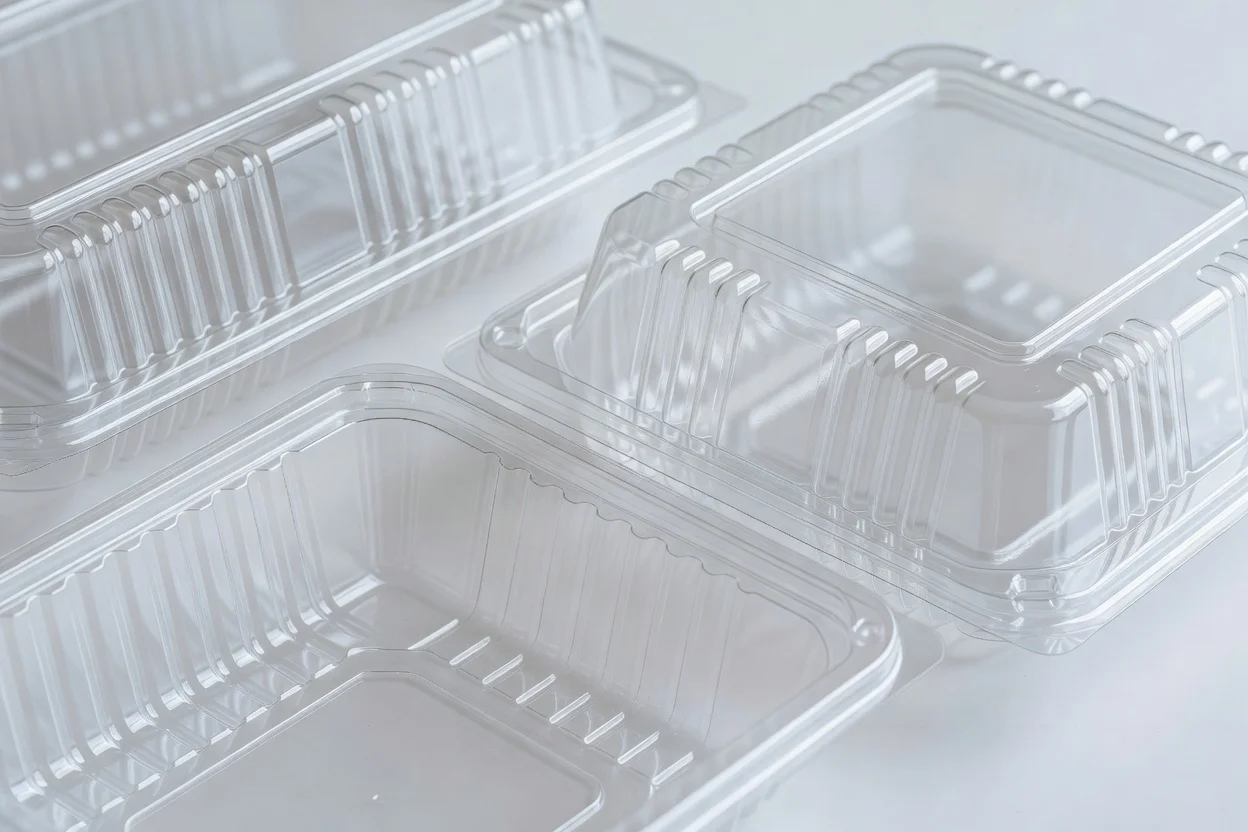
- Thermoformed packaging and food-contact containers, where clarity and formability are central.
- Retail displays, signage, and point-of-purchase fabrication, where PETG is valued for transparency, impact resistance, and easy cutting or polishing.
- Machine guards, protective screens, and security glazing, where the material offers a practical balance of visibility and toughness.
- Medical and healthcare products, including trays, housings, and some prosthetic or orthotic fabrication components where transparency supports inspection.
- 3D printing, especially for functional prototypes, brackets, fixtures, and consumer parts that require better toughness than PLA.
- A poor-fit use: PETG is generally not preferred for structural, high-load, or high-temperature engineering parts, because its service temperature and stiffness are lower than those of more specialized engineering plastics.
Environmental and Sustainability Aspects
PETG is generally regarded as recyclable in principle, but its real-world circularity depends on collection, sorting, and the compatibility of local recycling streams. Because it is a polyester, PETG can be confused with or mixed into PET recovery systems, yet glycol modification and application-specific additives can complicate sorting and remelting behavior compared with more standardized PET bottle streams.
Sustainability considerations include:
- Recyclability: PETG can be mechanically recycled, but closed-loop recovery is easier where material streams are clean and identifiable.
- Design-for-recycling: mono-material packaging and clear labeling improve the likelihood of recovery and reprocessing.
- Bio-based alternatives: bio-derived polyester pathways may reduce fossil feedstock dependence, but they do not automatically solve end-of-life challenges.
- Carbon footprint: emissions are driven by petrochemical feedstocks, energy use in polymerization, and downstream forming; the footprint can improve when recycled content or lower-carbon process energy is used.
In additive manufacturing, PETG is often treated as more durable and reusable than many hobby-grade alternatives, but waste still accumulates through failed prints, supports, and off-spec filament. In packaging, its value proposition is strongest when its clarity and thermoformability enable lightweight designs that replace heavier or less recyclable multi-material structures.
Economic and Global Market Impact
PETG is a niche product relative to commodity PET, polyethylene, and polypropylene, but it has a strong position in higher-value clear sheet, fabricated display, protective, and printer-filament markets. Its economics are shaped by polyester feedstock pricing, sheet and filament conversion capacity, and demand from packaging, retail fabrication, healthcare, and maker/manufacturing channels.
Commercially important producers and branded product families are associated with major polyester and specialty plastics suppliers, while the downstream market is fragmented across sheet extruders, fabricators, and filament brands. Because PETG is often sold as a processed sheet or filament rather than as a universal resin commodity, downstream fabrication capability strongly influences market penetration.
Current Challenges and Innovations
PETG faces a set of practical challenges that shape product development and processing:
- Heat-deflection limits constrain use in hot-fill, under-the-hood, or sterilization-intensive environments.
- Scratch sensitivity can reduce long-term appearance in display and glazing applications.
- Printing defects such as stringing or poor bridging require process optimization in additive manufacturing.
- Recycling complexity increases when PETG is mixed with other polyesters or when additives and surface treatments are present.
Innovation is focused on:
- Recycled-content PETG, including post-consumer and post-industrial feedstock integration.
- Bio-based polyester development, aimed at reducing fossil dependence while preserving clarity and toughness.
- UV-stabilized and flame-retardant grades, which expand use in outdoor, electrical, and public-facing applications.
- Process-optimized filament formulations, which improve layer bonding, reduce stringing, and broaden the printable window for additive manufacturing.
- Surface-modified sheets and coatings, which can improve scratch resistance and weathering.
A useful formulation example is flame-retardant PETG grades used for certain electrical or display applications, where additives are designed to interrupt combustion chemistry or reduce heat release while retaining clarity and formability. Another common strategy is the use of UV stabilizers in outdoor sheet grades to slow photooxidative degradation and preserve appearance over time.
Future Outlook
PETG is likely to remain important wherever transparent thermoplastic performance must be balanced against fabrication ease and moderate cost. Demand should stay strongest in sheet-based applications, protective products, and 3D printing, while growth will depend increasingly on recyclability, recycled content, and product differentiation through stabilization or functional additives.
The most promising directions are likely to be:
- higher recycled-content PETG formulations
- better sorting and recycling compatibility
- lower-carbon polyester feedstocks
- improved scratch- and weather-resistance packages
- more consistent additive-manufacturing grades
As downstream users continue to favor lighter, clearer, and more easily fabricated plastics, PETG should retain a practical role in the broader polyester family, especially where standard PET is too crystalline for the intended forming process and where engineering plastics would be unnecessarily costly or difficult to process.
Summary
PETG is a glycol-modified polyester that combines clarity, toughness, and excellent formability with moderate heat resistance and good chemical resistance. Its structure suppresses crystallinity, making it especially valuable in thermoformed sheet, protective glazing, packaging, medical fabrication, and 3D printing, while sustainability progress will depend on recycled content, better collection, and design-for-recycling strategies.
References
- •
What is PETG? (Everything you need to know). (n.d.). TWI. https://www.twi-global.com/technical-knowledge/faqs/what-is-petgLink
- •
PETG plastic: Properties, uses & advantages [2025 update]. (2022, February 3). Laird Plastics. https://lairdplastics.com/resources/petg-plastic-properties-uses-amp-advantages-2025-update/Link
- •
PETG 3D printing filament: Materials, properties, and uses. (2022, September 19). Xometry. https://www.xometry.com/resources/3d-printing/petg-3d-printing-filament/Link
- •
Polyethylene terephthalate. (2003, August 10). In Wikipedia. https://en.wikipedia.org/wiki/Polyethylene_terephthalateLink
- •
Polyethylene terephthalate glycol material. (n.d.). Patsnap Eureka. https://eureka.patsnap.com/materials/petg-composition-processingLink
- •
Polyethylene terephthalate glycol (PETG) for 3D printing. (n.d.). Patsnap Eureka. https://eureka.patsnap.com/materials/petg-3d-printing-analysisLink
- •
What is PETG? Properties, printing settings & practical uses. (2026, March 19). Creality. https://www.creality.com/blog/what-is-petg-filamentLink
- •
What is PETG? Filament properties, settings & uses. (2026, May 30). Stack Sheriff. https://stacksheriff.com/3d-printing/petg/Link
- •
What is PETG – Explore properties, benefits & industrial applications. (2026, February 2). WeProFab. https://www.weprofab.com/what-is-petg/Link
- •
Decoding PETG: Structure, properties and innovations. (2025, July 4). Eureka Blog. https://eureka.patsnap.com/blog/material-tech-resources/petg-material-overview/Link
- •
All about PETG plastic: Everything you need to know. (2024, October 21). Eureka Blog. https://eureka.patsnap.com/blog/material-tech-resources/what-is-petg-plastic/Link
- •
Polyethylene terephthalate glycol transparent polymer. (n.d.). Patsnap Eureka. https://eureka.patsnap.com/materials/petg-transparent-polymerLink
- •
Ready Plastics | Modern infrastructure for your supply chain. (2026, May 8). Ready Plastics. https://www.readyplastics.com/resources/materials/petg/applicationsLink
- •
PETG – The fabricator's material of choice. (2025, September 3). Simply Plastics. https://www.simplyplastics.com/na/ideas-and-advice/petg-the-fabricators-material-of-choiceLink
- •
Polyethylene terephthalate glycol resin: Comprehensive analysis. (n.d.). Patsnap Eureka. https://eureka.patsnap.com/materials/petg-resin-propertiesLink
- •
Material properties of thermoplastic PETG. (2019, February 27). Dielectric Manufacturing. https://dielectricmfg.com/resources/knowledge-base/petg/Link
- •
Polyethylene terephthalate glycol (PETG) 3D printing filament. (n.d.). Patsnap Eureka. https://eureka.patsnap.com/materials/petg-3d-printing-filamentLink
- •
What is PETG plastic used for? Learn about PETG properties, uses and benefits. (n.d.). Regal Plastics. https://www.regal-plastics.com/blog/what-is-petg-plastic-used-for/Link
- •
3D printing filament PETG: 2026 buyer's guide. (2026, August 18). Sigma Filament. https://sigmafilament.com/3d-printing-filament-petg/Link
- •
PETG. (2025, March 24). Profplastic. https://www.profplastic.com/en/materials/petg/Link
- •
Application cases. (2024, October 21). Eureka Blog. https://eureka.patsnap.com/blog/what-is-petg-plastic/Link
- •
PETG plastic & properties | Chemical resistance. (2025, January 30). Curbell Plastics. https://www.curbellplastics.com/materials/plastics/petg/Link
- •
3D printing with PETG. (2021, April 12). NinjaTek. https://ninjatek.com/learn/3d-printing-materials/petg/Link
- •
PETG. (2026, January 8). Prusa Knowledge Base. https://help.prusa3d.com/article/petg_2059Link
- •
PETG vs. PET: What's the difference and why it matters. (2025, June 17). Impact Plastics. https://blog.impactplastics.co/blog/petg-vs.-pet-whats-the-difference-and-why-it-mattersLink
- •
Polyethylene terephthalate glycol (PETG) filament review. (2024, September 9). JuggerBot 3D. https://juggerbot3d.com/petg-filament-review/Link
- •
Benefits of PETG filament in.... (2024, October 31). Snapmaker. https://www.snapmaker.com/blog/what-is-petg-filament/Link
- •
Mechanical response of polyethylene terephthalate glycol.... (2021, March 2). NIH. https://pmc.ncbi.nlm.nih.gov/articles/PMC7958137/Link
- •
The development of sustainable polyethylene terephthalate glycol.... (2024, February 27). NIH. https://pmc.ncbi.nlm.nih.gov/articles/PMC10935412/Link
- •
Evaluation of mechanical properties of 3D printed PETG.... (n.d.). ScienceDirect. https://www.sciencedirect.com/science/article/pii/S2667022424000355Link