

Introduction
Machine vision systems are automated imaging systems that capture, process, and interpret visual information so industrial equipment can inspect products, measure dimensions, identify parts, verify assembly, and guide robots in real time. In plastics processing, they are especially valuable because high line speeds, transparent or reflective materials, tight cosmetic tolerances, and variable part geometry make manual inspection incomplete and sampling-based quality control less reliable.
A typical machine vision system combines cameras, lighting, optics, processing hardware, and software to convert images into pass/fail decisions, measurements, classifications, or robot coordinates. In plastics manufacturing, the technology is used across injection molding, extrusion, thermoforming, blow molding, and recycling lines for tasks such as surface-defect detection, presence-absence checks, label inspection, dimensional gauging, and code reading.
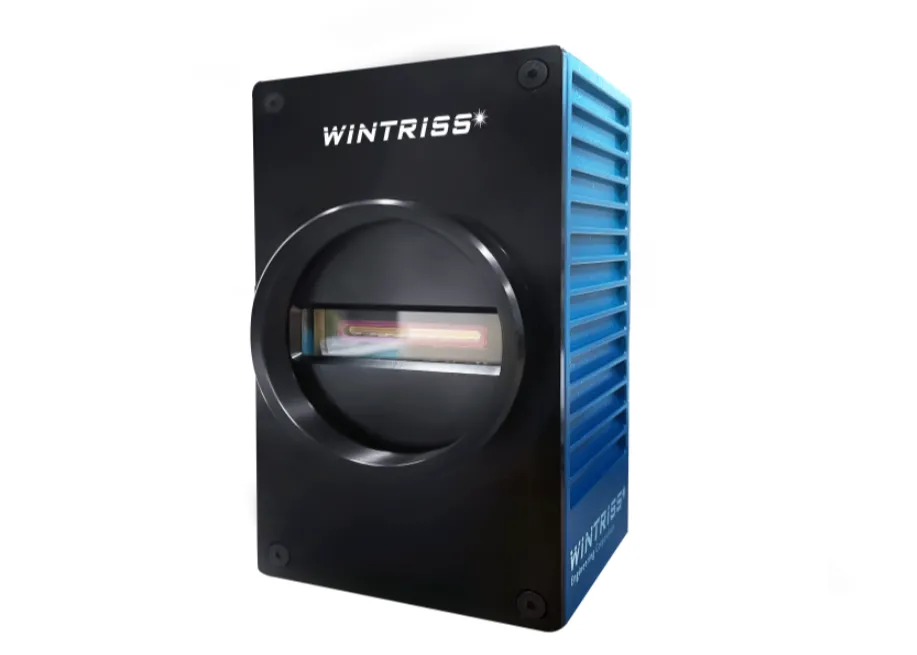
The field developed from early industrial automated optical inspection toward modern systems that integrate higher-resolution sensors, 2D and 3D imaging, and increasingly AI-based image analysis. Current systems are also being shaped by sustainability pressures, since inline inspection can reduce scrap, prevent rework, and improve the quality of recycled-content products, but they also add capital cost, lighting complexity, and integration requirements.
History and Development
Industrial machine vision emerged in the late 20th century, first gaining traction in electronics, semiconductors, and automotive manufacturing before spreading into broader factory automation. The core idea was to replace human visual inspection with controlled imaging and software-based decision-making on the production line.
Several milestones define its evolution:
- 1990s industrial adoption: Machine vision began to move from laboratory and niche inspection use into high-volume industrial automation, especially automated optical inspection.
- Standardized shop-floor integration: Industrial communication and interoperability efforts helped formalize machine vision as a shop-floor data source rather than a stand-alone camera station.
- AI and deep learning integration: Modern systems increasingly use machine learning and deep learning to improve defect classification, especially where rule-based inspection struggles with variation in texture, color, or surface appearance.
In plastics processing, this evolution has been particularly important because many defects are subtle, intermittent, or tied to process drift, making full-line optical inspection more effective than periodic sampling.
Technical Overview
A machine vision system typically operates through five functional stages: illumination, image capture, image processing, analysis, and output/interface. The part must usually be presented in a stable position and lighting state so the software can isolate features from the background and make a reliable decision.
Core components
- Lighting: Ring lights, backlights, coaxial lighting, dome lighting, structured light, and strobed illumination are selected to create contrast on shiny, dark, transparent, textured, or curved plastic surfaces.
- Optics and lenses: Resolution, field of view, working distance, and distortion control determine whether the system can inspect a molded part, film web, or pellet stream accurately.
- Cameras and sensors: Area-scan cameras are common for discrete parts, while line-scan systems are often used on continuous webs, profiles, or moving sheet.
- Processing unit: Industrial PCs, smart cameras, or embedded vision controllers execute image analysis and communicate with PLCs, robots, or reject mechanisms.
- Software: Algorithms may perform edge detection, template matching, OCR, defect segmentation, measurement, or AI-based classification.
Typical performance ranges in plastics applications
- Throughput: Systems can inspect from a few dozen parts per minute on precision molding cells to very high-speed web or packaging lines running continuously at industrial line speeds.
- Dimensional inspection: Non-contact gauging is commonly used for hole position, flash, short-shot detection, gate vestige, wall completeness, and bottle or cap geometry.
- Surface-defect inspection: Systems detect scratches, sinks, black specks, contamination, burn marks, weld-line anomalies, void-related appearance issues, and print defects on molded or extruded products.
- Code inspection: OCR and barcode reading support traceability on packaging, preforms, closures, and finished goods.
- 3D vision: Structured light or stereo systems add depth information for locating deformed parts, stacked items, or irregular surfaces.
Quantitative inspection notes
- Residual moisture after centrifugal dewatering: In plastics recycling and wash lines, centrifugally dewatered flake often leaves the dryer at roughly the low-single-digit percent range, depending on polymer, flake size, and equipment configuration; this is one reason downstream thermal drying remains common in bottle-to-bottle and engineering-plastics recycling. The exact residual moisture is process-specific and typically verified by inline or laboratory methods rather than by vision alone.
- Flake size: Recycled plastic flakes commonly fall in the approximate 10–12 mm range for PET bottle regrind, though screening and granulation can produce narrower distributions for specific reuse targets.
- Rotor speeds in granulation-linked inspection lines: When vision is paired with cutting or size verification in recycling or regrind handling, upstream granulators may operate at several hundred to several thousand rpm depending on design, but vision inspection itself is normally line-speed based rather than rotor-speed based.
- Specific energy consumption: Vision systems are usually a minor electrical load compared with heaters, drives, or compressors, but high-intensity lighting, industrial PCs, and air ejection hardware can still matter in aggregate, especially on large multi-station inspection lines.
Types and Variations
| Type | Main use | Strengths | Limitations |
|---|---|---|---|
| 2D machine vision | Presence/absence, print, color, surface, and measurement checks | Mature, fast, cost-effective | Limited depth information |
| 3D machine vision | Height, volume, deformation, and surface topology | Better for warped or irregular parts | Higher cost and integration complexity |
| Smart cameras | Compact inspection at a single station | Easy deployment, lower footprint | Less flexible for complex multi-stage analytics |
| PC-based systems | High-complexity inspection and data handling | Highest flexibility and compute capacity | Greater engineering effort |
| Line-scan systems | Webs, films, sheets, continuous profiles | Excellent for continuous products | Requires synchronized motion and lighting |
| Deep-learning vision systems | Complex defects and classification | Better tolerance to variation | Requires training data and validation |
In plastics processing, the most common configurations are 2D systems for molded parts and packaging, and line-scan or 3D systems for films, sheets, labels, profiles, and irregular recycled-feedstock streams.
Applications and Uses in Plastics Processing
Machine vision systems are deployed wherever plastics processors need consistent inspection at speed, especially when product quality depends on cosmetics, geometry, seal integrity, or traceability.
- Injection molding: Checks for short shots, flash, warpage, sink marks, contamination, missing inserts, gate issues, and assembly completeness.
- Extrusion: Inspects profile dimensions, surface blemishes, gels, melt fracture, color consistency, and print registration on pipe, sheet, film, and cable jacketing.
- Blow molding: Verifies bottle neck geometry, wall symmetry, parison-related defects, paneling, and label placement.
- Thermoforming: Detects incomplete forming, trimming defects, dimensional deviations, and part deformation.
- Packaging and labeling: Reads lot codes, verifies labels, checks cap and seal placement, and confirms package orientation.
- Plastics recycling: Sorts material streams by color, polymer family, or contamination level, and can assist with quality control of flake, regranulate, and pellets.
- Robotic handling: Provides part location and orientation data for pick-and-place, assembly, and sorting cells.
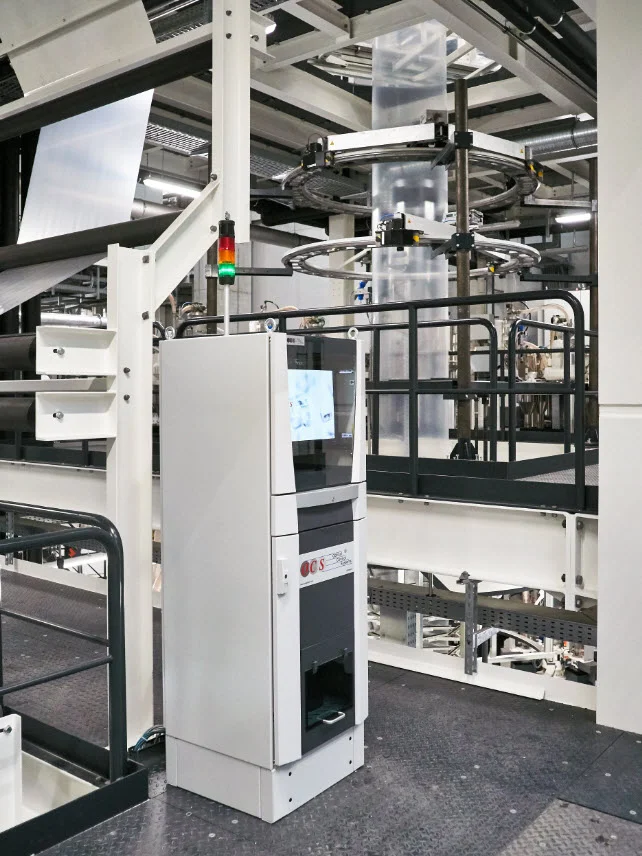
One poor-fit use is highly variable transparent film inspection without controlled illumination: the material’s low contrast and reflectivity can make defect detection unreliable unless the optical setup is carefully engineered.
Typical Defects and Inspection Targets
In plastics, machine vision is often configured to detect:
- Surface contamination
- Black specks and gels
- Scratches and scuffs
- Short shots and incomplete fill
- Flash and trimming defects
- Warping and deformation
- Dimensional drift
- Label misplacement
- Wrong-color or wrong-variant parts
- Missing components in assembled goods
These inspections help reduce customer complaints, downstream assembly failures, and scrap from off-spec production.
Technological Innovations and Automation
Modern systems increasingly combine classical image processing with machine learning and deep learning to improve robustness under variable lighting, texture, and part appearance. This is especially useful in plastics because surfaces may be glossy, matte, translucent, colored, textured, or recycled, all of which complicate rule-based inspection.
Key innovations include:
- AI-assisted defect classification: Reduces false rejects when defect appearance varies from part to part.
- 3D metrology: Improves measurement of warped molded parts, trimmed edges, and uneven surfaces.
- Inline closed-loop control: Vision data can trigger reject stations, robot corrections, mold adjustments, or process alarms in real time.
- Edge computing: Smart cameras and embedded processors reduce latency and simplify machine integration.
- Traceability integration: Vision systems increasingly link with MES, ERP, and serialization workflows for production records and recalls.
Environmental and Sustainability Aspects
Machine vision supports sustainability mainly by improving first-pass yield, reducing scrap, and enabling earlier detection of process drift. In plastics processing, this can lower the amount of defective material sent to regrind, rework, or disposal, which is important for both cost and circular-economy goals.
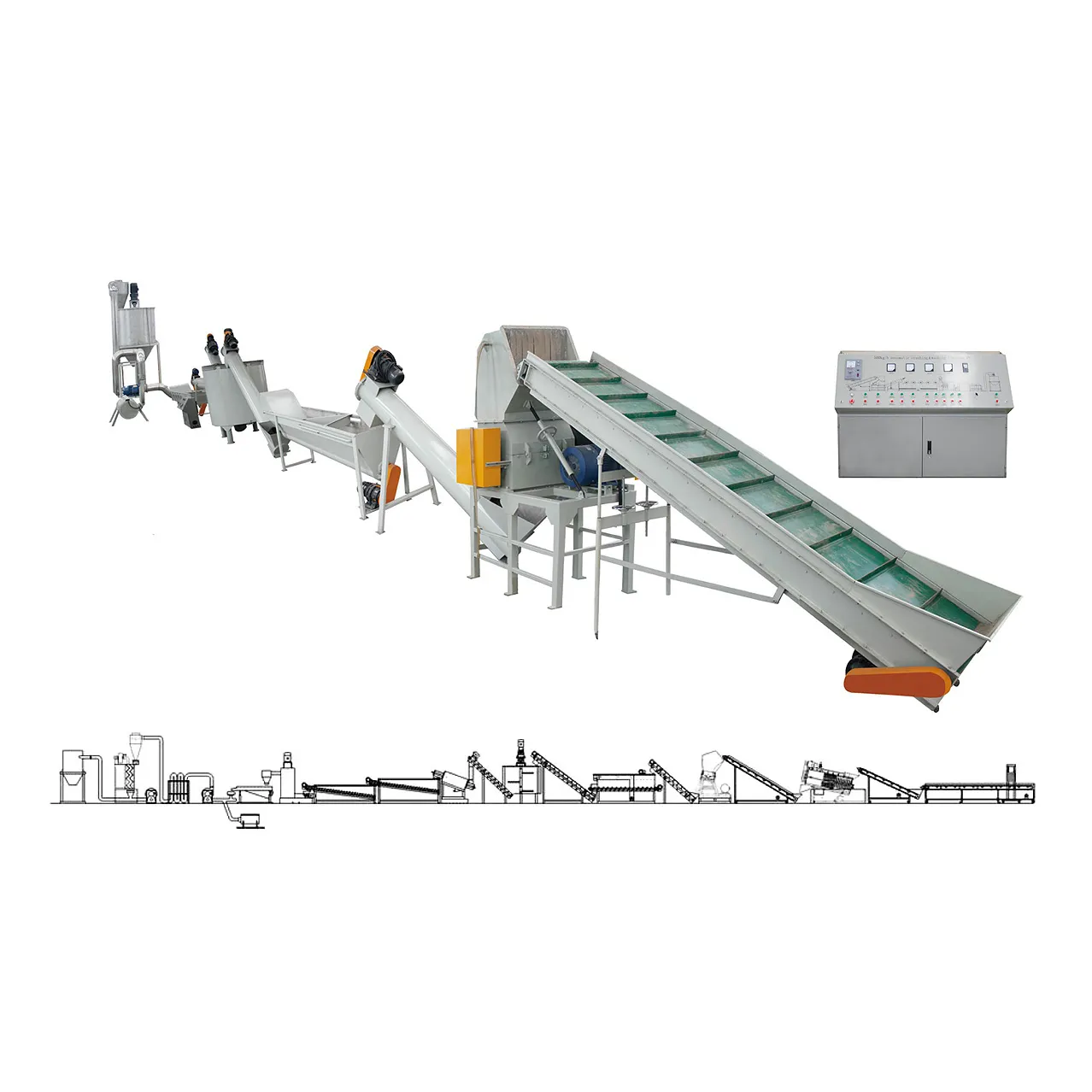
It also helps processors handle higher shares of recycled content by compensating for the greater variability often found in post-consumer or post-industrial feedstocks. At the same time, vision systems themselves require cameras, lighting, controllers, and maintenance, so their net environmental benefit depends on whether defect reduction outweighs the added equipment footprint and power use.
Economic and Global Market Impact
Machine vision has become a core enabling technology in automated manufacturing, with broad adoption across automotive, electronics, packaging, and plastics processing. In plastics, its value is tied less to the inspection hardware alone than to its ability to protect downstream assembly, reduce warranty risk, and support high-throughput lines that cannot rely on human visual checks.
The market is shaped by several economic forces:
- Labor scarcity and rising labor cost, which increase demand for automated inspection.
- Quality and traceability requirements, especially in regulated packaging, medical, and automotive supply chains.
- Scrap reduction economics, where a small reduction in reject rate can justify system cost on high-volume lines.
- Integration cost, which can be substantial when lighting, mechanical fixturing, PLC communication, and validation are included.
Current Challenges and Innovations
Despite strong advantages, machine vision systems face several engineering challenges in plastics processing:
- Reflective and transparent materials can defeat standard lighting geometries.
- Part variation from mold wear, color changes, recycled content, or process drift can create false rejects.
- Validation complexity increases when AI models are used in quality-critical applications.
- Environmental contamination such as dust, steam, oil mist, and water droplets can reduce image quality.
- Changeover demands require systems to adapt quickly across part families and SKUs.
Current innovation focuses on better sensor fusion, easier setup, faster model training, and more robust lighting strategies for difficult surfaces.
Future Outlook
The next phase of machine vision in plastics is likely to emphasize adaptive inspection, 3D perception, and tighter integration with process control. As processors pursue greater automation and higher recycled-content use, vision systems will increasingly serve not only as quality gates but also as process sensors that help stabilize production.
Future systems are expected to become more compact, more software-defined, and more capable of handling low-contrast, high-variation plastic products with less manual tuning. The most important competitive advantage will likely be the ability to convert image data into stable, actionable manufacturing decisions at line speed.
References
- •
Machine vision. (2003, January 21). In Wikipedia.Link
- •
Machine Vision 101. (n.d.). Teledyne Vision Solutions.Link
- •
Machine Vision Systems: How They Work, Types, and Uses. (2026, June 22). Overview.ai.Link
- •
Applications of Machine Vision Systems Across Industries. (2026, July 31). Peak Technologies.Link
- •
Introduction to Machine Vision. (n.d.). Assembly Magazine.Link
- •
Machine Vision: Overview and Applications. (2023, April 27). Cincoze.Link
- •
Machine Vision System: 10 Powerful Industry Applications. (2026, April 7). IIQ Education.Link
- •
Use Cases of Machine Vision: Quality Control and Beyond. (2024, March 20). Emergent Vision Technologies.Link
- •
How machine vision works? (2026, January 22). Opsio.Link
- •
What Is Machine Vision? Definition, How It Works, and Use Cases. (2026, February 17). Teachfloor.Link
- •
What is Machine Vision. (2025, July 23). GeeksforGeeks.Link
- •
What Is Machine Vision? Systems, Components & Uses. (2026, July 27). Peko Precision.Link
- •
Machine Vision: A Beginner's Guide. (2024, March 20). Cobalt IS.Link
- •
What Is Machine Vision? (2025, May 15). Intel.Link
- •
What Are the Main Applications and Use Cases of Machine Vision System Industries. (2025, August 7). UnitX Labs.Link
- •
What Is Machine Vision? (2025, January 1). Zebra Technologies.Link
- •
Machine Vision Applications and Examples. (2021, November 17). EAM Inc.Link
- •
Machine Vision Applications: 12 Real Uses in Manufacturing. (2026, June 22). Overview.ai.Link
- •
Machine Vision Systems: Basics and Industrial Applications. (n.d.). Opto Engineering.Link
- •
Machine Vision Working and Its Applications | A Quick Guide. (2024, August 29). XenonStack.Link
- •
Machine Vision Systems: Components, AI Integration. (2026, June 5). Wevolver.Link
- •
Machine Vision Systems Explained | Types & Applications. (2026, March 9). Averroes AI.Link
- •
Measure objects. (2025, February 13). Roboflow.Link
- •
50 Real-World Applications of Machine Vision in Manufacturing. (n.d.). Intelgic.Link
- •
What Is Machine Vision & How Does It Work? (2026, April 27). Novanta.Link
- •
21 Examples of Computer Vision Applications Across Industries. (2025, January 3). Coursera.Link
- •
Applications of Industrial Machine Vision. (2023, March 16). Industrial Internet Consortium.Link
- •
4.1 Introduction to Machine Vision systems. (n.d.). OPC Foundation.Link
- •
Introduction to Machine Vision. (2024, March 20). Emergent Vision Technologies.Link
- •
10 Computer Vision Applications for 2025. (2025, May 29). DigitalOcean.Link
- •
Machine Vision Applications | Industrial Image Processing. (2023, September 5). Industrial Vision.Link
- •
4.1 Introduction to Machine Vision systems. (n.d.). OPC Foundation.Link
- •
Computer Vision Applications. (2024, December 1). Viso.ai.Link
- •
Machine Vision. (n.d.). KEYENCE America.Link
- •
Machine Vision in Industrial Automation Environments. (2026, June 1). Cisco.Link
- •
Machinve Vision Systems: Industry Insights & Cost Implications. (2025, January 31). Photoneo.Link
- •
What Is Machine Vision? (2023, December 14). Built In.Link
- •
Top 7 upcoming machine vision applications. (2023, January 25). IoT Analytics.Link
- •
Machine Vision. (2021, October 12). Omron Automation.Link
- •
20 Applications of Machine Vision in Manufacturing. (2025, July 8). ElementaryML.Link