
Introduction
Presses are machine tools that apply controlled force to form, cut, join, compact, or test materials, and in plastics processing they are most closely associated with compression molding, lamination, press-fit assembly, and laboratory material testing. In the broadest industrial sense, presses are built in mechanical, hydraulic, servo, and pneumatic forms, with hydraulic and mechanical systems representing the two major traditional categories.
Within the plastics industry, presses are used for both thermoset and thermoplastic processing, especially where heat, pressure, and dwell time must be controlled precisely to consolidate material in a mold, bond layers, or shape reinforced composites. Their evolution has been shaped by improvements in drive systems, frame rigidity, control accuracy, and automation, while current development priorities focus on energy efficiency, process repeatability, safety, and compatibility with circular-economy manufacturing.
History and Development
Early presses were manually operated devices used for squeezing, shaping, and extracting material, including traditional wine, cider, and printing presses; over time, industrialization transformed the press into a general-purpose machine tool for forming and compression operations.
A major milestone was the rise of power presses in metalworking and manufacturing, where mechanical drive systems enabled high production rates for stamping and forming, while hydraulic systems provided steady force over the full stroke for deep drawing, molding, and heavy-duty compression.
A later development was the emergence of servo presses, which combine programmable motion with high positional accuracy and improved energy management, allowing manufacturers to tailor force, speed, and dwell profile more precisely than conventional mechanical or hydraulic systems.
Key Characteristics and Technical Overview
A press is defined by the way it generates and controls force, the stiffness of its frame, the motion of its slide or platen, and the tooling installed between the platens. In plastics processing, the most important performance variables are tonnage, stroke length, platen size, closing speed, temperature capability, pressure uniformity, and dwell time.
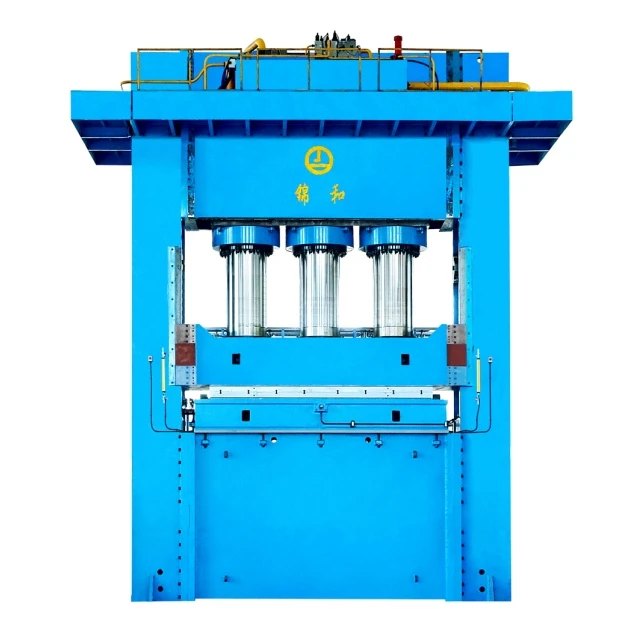
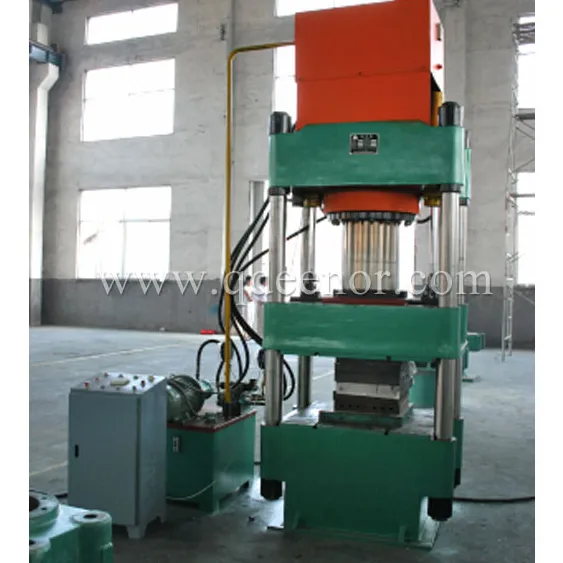
Hydraulic presses generate force through pressurized fluid acting on cylinders, which makes them well suited to long dwell times, uniform pressure application, and high-force operations such as compression molding and molding of composite parts. Mechanical presses rely on flywheels, cranks, eccentrics, or toggle mechanisms and are generally favored when high cycle rates and repeatability matter more than long-force dwell control.
Typical technical characteristics in plastics-related press systems include the following:
- Tonnage range: from small bench presses of a few tonnes to industrial systems exceeding several thousand tonnes, depending on part size and mold area.
- Platen temperature control: heated platens are commonly used in compression molding and lamination to maintain cure or melt conditions.
- Pressure profile: hydraulic presses can maintain near-constant pressure throughout a cure cycle, while mechanical presses produce a force peak that depends on crank position and transmission geometry.
- Cycle time: mechanical presses usually provide shorter cycles for repetitive forming, whereas hydraulic presses are slower but more flexible in motion control.
- Energy behavior: servo-hydraulic and servo-driven presses can reduce idle power demand compared with continuously running conventional hydraulic systems, especially in intermittent-duty production.
For material preparation and recycling workflows connected to press systems, auxiliary material-conditioning equipment often produces flakes in the typical 6–12 mm range, and centrifugal dewatering stages commonly reduce residual moisture to roughly 1–3% before downstream pressing, drying, or molding steps. In industrial recycling lines, throughputs may range from a few hundred kilograms per hour in compact systems to several tonnes per hour in large lines, depending on feedstock and separation requirements. These values vary widely by plant design and are presented here as practical industry ranges rather than fixed specifications.
Types and Variations
Presses used in plastics and related manufacturing can be grouped by drive system, frame design, and process function.
| Type | Main principle | Typical plastics-related use |
|---|---|---|
| Hydraulic press | Fluid-driven force with long dwell capability | Compression molding, laminating, composite consolidation, testing |
| Mechanical press | Flywheel/crank/toggle force transmission | High-speed forming, trimming, blanking of associated metal inserts and tooling components |
| Servo press | Programmable motion and force control | Precision forming, repeatable molding cycles, energy-optimized production |
| Pneumatic press | Compressed-air actuation | Light-duty assembly, small parts pressing, laboratory tasks |
Frame and geometry variants include C-frame, straight-side, gap-frame, double-column, and multi-station configurations, each trading off access, rigidity, footprint, and load distribution. High-rigidity straight-side frames are preferred for large molds and high loads, while C-frame presses are compact and accessible but less rigid under asymmetric loading.
By motion and action, presses may be single-action, double-action, or triple-action, especially where forming depth and material flow must be controlled in stages. In plastics applications, the most relevant distinction is often whether the press provides stable compression over time or rapid repetitive cycling.
Applications and Uses
In the plastics sector, presses are used wherever controlled pressure complements heat and tooling geometry. Major applications include compression molding of thermoset compounds, lamination of polymer films and composites, press-fit assembly of components, powder compacting for selected polymer formulations, and laboratory testing of molded samples.
- Automotive: consolidation of composite panels, interior structural parts, bushings, inserts, and bonded assemblies.
- Electrical and electronics: molding of insulating parts, connector bodies, encapsulated components, and precision assemblies.
- Consumer goods: molded handles, appliance parts, decorative laminates, and compressed composite items.
- Aerospace and transportation: high-performance composites and structural laminates where uniform pressure and cure control are critical.
- Laboratories and quality control: tensile, compression, and sample-preparation work using test presses.
A poor-fit use for standard industrial presses is thin-wall, very high-volume packaging production, where injection molding or extrusion generally offers better productivity and material efficiency than compression-style pressing. That said, presses still play a niche role in packaging for laminates, closures, and specialty inserts.
Technological Innovations and Automation
Modern press systems increasingly incorporate servo drives, closed-loop force control, recipe management, and machine connectivity for quality monitoring and traceability. These features improve part consistency and allow faster setup changes, especially in plants running multiple materials or mold families.
Automation is particularly important in plastics lines that couple presses with robotic loading, automated mold handling, temperature control units, and in-line inspection. In composite and compression-molding operations, automation reduces cycle variation and operator exposure to heat and pinch hazards, although it adds integration complexity and maintenance requirements.
Environmental and Sustainability Aspects
Presses can support sustainability goals when they improve material utilization, reduce scrap, and enable the use of recycled or bio-based feedstocks. In compression molding and lamination, controlled pressure can help achieve target properties with minimal overpacking, while press-based consolidation is valuable in composite recycling and the reprocessing of sheet, mat, and powder-based materials.
Energy performance is a growing concern. Conventional hydraulic systems may consume significant power in stand-by operation, whereas servo-controlled and demand-driven systems can lower electricity use by matching power delivery more closely to the process load. Sustainability performance also depends on mold temperature control, thermal insulation, tooling design, and scrap recovery from start-up or trim operations.
Economic and Global Market Impact
Presses remain a foundational capital asset in plastics manufacturing because they support products that require high part quality, layered construction, or composite reinforcement. Their economic value lies in part consistency, lower manual labor intensity, and the ability to process high-performance materials that are difficult to form by simpler means.
Globally, demand is influenced by automotive lightweighting, electrical insulation needs, industrial automation, and growth in composite applications. Competitive pressure has pushed manufacturers toward higher rigidity, faster setup, better data collection, and lower lifetime energy cost, rather than force capacity alone.
Current Challenges and Innovations
The main engineering challenges are balancing force, precision, speed, energy use, and tooling life. A press that is optimized for throughput may not provide the dwell stability needed for composite cure control, while a press optimized for accuracy may be slower or more expensive to operate.
Current innovation trends include:
- Hybrid press architectures that combine hydraulic force with servo-controlled motion.
- Digital monitoring for force-displacement curves, fault detection, and preventive maintenance.
- Improved platen temperature uniformity for demanding thermoplastic and thermoset cycles.
- Safety systems that better protect operators during mold loading and unloading.
- Integration with recycling and reclaimed-material processing, especially in lamination and compression-based product lines.
Future Outlook
The future of presses in plastics processing will likely be defined by greater electromechanical efficiency, tighter process control, and wider use in composite manufacturing and recycled-material applications. As plants pursue lower carbon intensity and more traceable production, press systems that can document force, temperature, and cycle history will become more attractive.
Presses will remain especially important where the material must be consolidated rather than simply injected or extruded, making them strategically relevant for thermoset parts, reinforced composites, specialty laminates, and precision assembly operations. Their role is unlikely to diminish; instead, it is expected to shift toward more intelligent, energy-aware, and highly integrated production cells.
References
- •
Presses. (2022, April 1). University of Michigan. https://encyclopedia.che.engin.umich.edu/presses/Link
- •
Presses. (n.d.). Merriam-Webster. https://www.merriam-webster.com/dictionary/pressesLink
- •
Press. (n.d.). Merriam-Webster. https://www.merriam-webster.com/dictionary/pressLink
- •
Type of presses. (2016, June 30). Engineers Gallery. https://www.engineersgallery.com/type-of-presses/Link
- •
Presses: Types and main differences. (n.d.). Matricerias del Centro. https://matriceriasdelcentro.com/en/presses-types-and-main-differences-2/Link
- •
Classification and types of press [PowerPoint slides]. (2016, April 6). SlideShare. https://www.slideshare.net/slideshow/classification-and-types-of-press/60557246Link
- •
Understanding the different styles of presses. (2026, July 17). Southern Fabricating Sales. https://www.southernfabsales.com/blog/understanding-the-different-styles-of-pressesLink
- •
Machine press. (2004, May 10). Wikipedia. https://en.wikipedia.org/wiki/Machine_pressLink
- •
Press. (n.d.). Britannica Dictionary. https://www.britannica.com/dictionary/pressLink
- •
Presses. (2013, January 1). The Free Dictionary. https://en.thefreedictionary.com/pressesLink
- •
Press. (n.d.). Collins English Dictionary. https://www.collinsdictionary.com/us/dictionary/english/pressLink
- •
Unit 3 press and press tools [PDF]. (n.d.). Indus University. https://coursecontent.indusuni.ac.in/wp-content/uploads/sites/8/2020/03/PT_UNIT3.pdfLink
- •
Press. (n.d.). Oxford Learner's Dictionaries. https://www.oxfordlearnersdictionaries.com/us/definition/american_english/press_1Link
- •
Overview of press types by G+K. (2024, September 27). G+K. https://g-k-u.de/Types-of-pressesLink
- •
What types of press equipment are common? (2022, December 26). Atonm. https://www.atonm.com/en/article-detail-116.htmlLink
- •
Press. (n.d.). Wiktionary. https://en.wiktionary.org/wiki/pressLink
- •
Using presses in manufacturing and the laboratory. (2023, November 17). Carver. https://carverpress.com/using-presses-in-manufacturing-and-the-laboratory/Link
- •
Types of industrial presses: Complete guide. (2026, May 13). Gester. https://gestermachinery.com/en/blog/types-of-industrial-presses-complete-guide-n137Link
- •
Press. (n.d.). Vocabulary.com. https://www.vocabulary.com/dictionary/pressLink
- •
Different types of machine presses. (2019, December 14). XPECT Solutions. https://www.xpect-solutions.com/2019/12/14/different-types-of-machine-presses/Link
- •
Classified by power source. (2025, October 10). Prima Press. https://www.prima-press.com/types-of-press-machines/Link
- •
Stamping 101: Anatomy of a mechanical stamping press. (n.d.). The Fabricator. https://www.thefabricator.com/thefabricator/article/bending/stamping-101-anatomy-of-a-mechanical-stamping-pressLink
- •
Types of press machines: Why matching power curves to ... (2026, March 23). ADHMT. https://www.adhmt.com/types-of-press-machines/Link
- •
The different types of industrial press systems. (2020, December 15). HyperCyl. https://www.hypercyl.com/blog/the-different-types-of-industrial-press-systems/Link
- •
Press applications. (2026, August 20). Air-Hydraulics. https://www.airhydraulics.com/industrial-press-application/Link
- •
Press, pressing, pressed, presses. (n.d.). WordWeb. https://www.wordwebonline.com/en/PRESSLink
- •
Press. (n.d.). Webster's 1828 Dictionary. https://webstersdictionary1828.com/Dictionary/pressLink
- •
How a tool press machine works and its applications. (2025, December 5). EngineerFix. https://engineerfix.com/how-a-tool-press-machine-works-and-its-applications/Link
- •
Applications of power presses. (2024, May 4). Birson Forgings. https://www.birsonforgings.com/post/applications-of-power-pressesLink
- •
5 types of industrial assembly press machines. (2018, January 17). Keller Technology. https://www.kellertechnology.com/blog/what-are-5-common-types-of-industrial-assembly-press-machines/Link
- •
What are the primary functions of a hydraulic press? (2026, August 25). Kintek Solution. https://kinteksolution.com/faqs/what-are-the-primary-functions-of-a-hydraulic-pressLink
- •
Press. (2024, October 15). Britannica. https://www.britannica.com/technology/press-machine-toolLink
- •
Press definition. (n.d.). YourDictionary. https://www.yourdictionary.com/pressLink
- •
What type of press do you need for your workshop? (2020, May 12). Dake. https://blog.dakecorp.com/en-us/what-type-of-press-do-you-need-for-your-workshopLink
- •
How do presses work and what are they for? (2023, November 20). Transformados Metálicos Toral. https://transformadosmetalicostoral.com/en/how-presses-work-and-what-they-are-for/Link
- •
Presses definition. (n.d.). YourDictionary. https://www.yourdictionary.com/pressesLink
- •
Press. (2025, January 1). Wordsmyth Children's Dictionary. https://kids.wordsmyth.net/we/?level=2&rid=32632Link
- •
Types, applications and benefits of power presses. (2026, May 14). IQS Directory. https://www.iqsdirectory.com/articles/hydraulic-press/power-press.htmlLink
- •
Hydraulic press uses and benefits. (2022, June 30). Workshop Press. https://www.workshoppress.co.uk/2022/06/30/hydraulic-press-uses/Link
- •
What is a press? (2021, October 2). Liberty Machine Works. https://libertymachineworks.com/blog/136-what-is-a-pressLink
- •
Printing press. (2001, October 14). Wikipedia. https://en.wikipedia.org/wiki/Printing_pressLink
- •
Press. (n.d.). Dictionary.com. https://www.dictionary.com/browse/pressLink
- •
Hydraulic press. (2004, November 20). Wikipedia. https://en.wikipedia.org/wiki/Hydraulic_pressLink
- •
Press. (2025, January 1). Cambridge Dictionary. https://dictionary.cambridge.org/us/dictionary/english/pressLink
- •
Key uses of a hydraulic press. (2022, April 6). XRF Scientific. https://www.xrfscientific.com/key-uses-hydraulic-press/Link
- •
ELI5: What is a hydraulic press actually used for? (n.d.). Reddit. https://www.reddit.com/r/explainlikeimfive/comments/8s7zsb/eli5_what_is_a_hydraulic_press_actually_used_for/Link
- •
The press. (2024, August 5). Merriam-Webster. https://www.merriam-webster.com/dictionary/the%20pressLink
- •
Types of hydraulic presses and how they work. (2021, January 12). Grainger. https://www.grainger.com/know-how/equipment/kh-video-types-hydraulic-pressesLink
- •
10 advantages of using a hydraulic press. (2020, March 6). Dake. https://blog.dakecorp.com/en-us/10-advantages-of-using-a-hydraulic-pressLink
- •
Types of press tools. (2012, January 4). Wikipedia. https://en.wikipedia.org/wiki/Types_of_press_toolsLink
- •
How does a hydraulic press work? (2022, October 14). Redline Stands. https://www.redlinestands.com/blog/how-does-a-hydraulic-press-work/Link