
Introduction
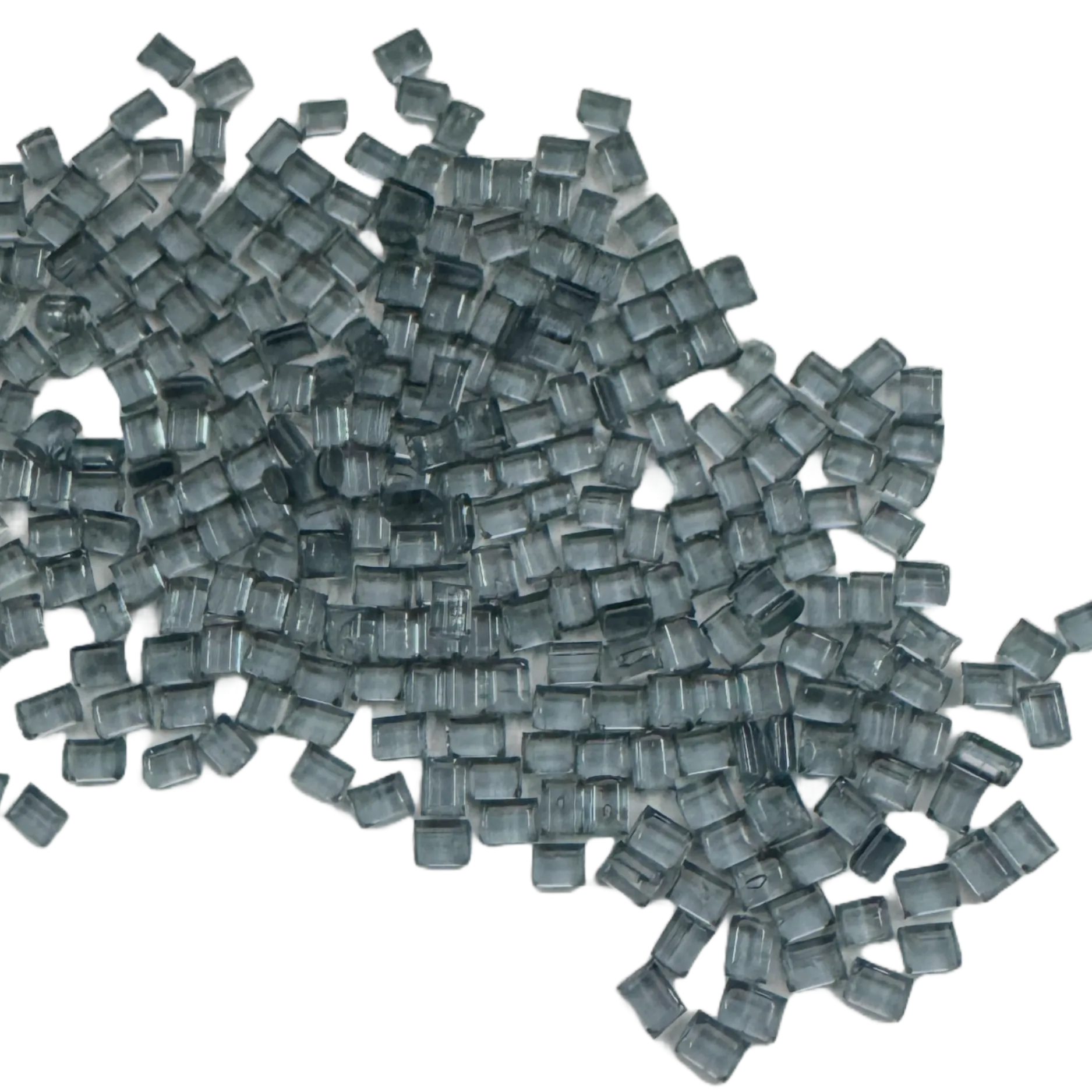
Recycled polycarbonate (rPC) is a high-performance engineering thermoplastic made by reprocessing post-consumer or post-industrial polycarbonate waste into reusable resin, pellets, sheets, or compounds. It is valued because it can retain much of the transparency, impact strength, dimensional stability, and heat resistance associated with virgin polycarbonate while lowering demand for fossil feedstocks and reducing waste.
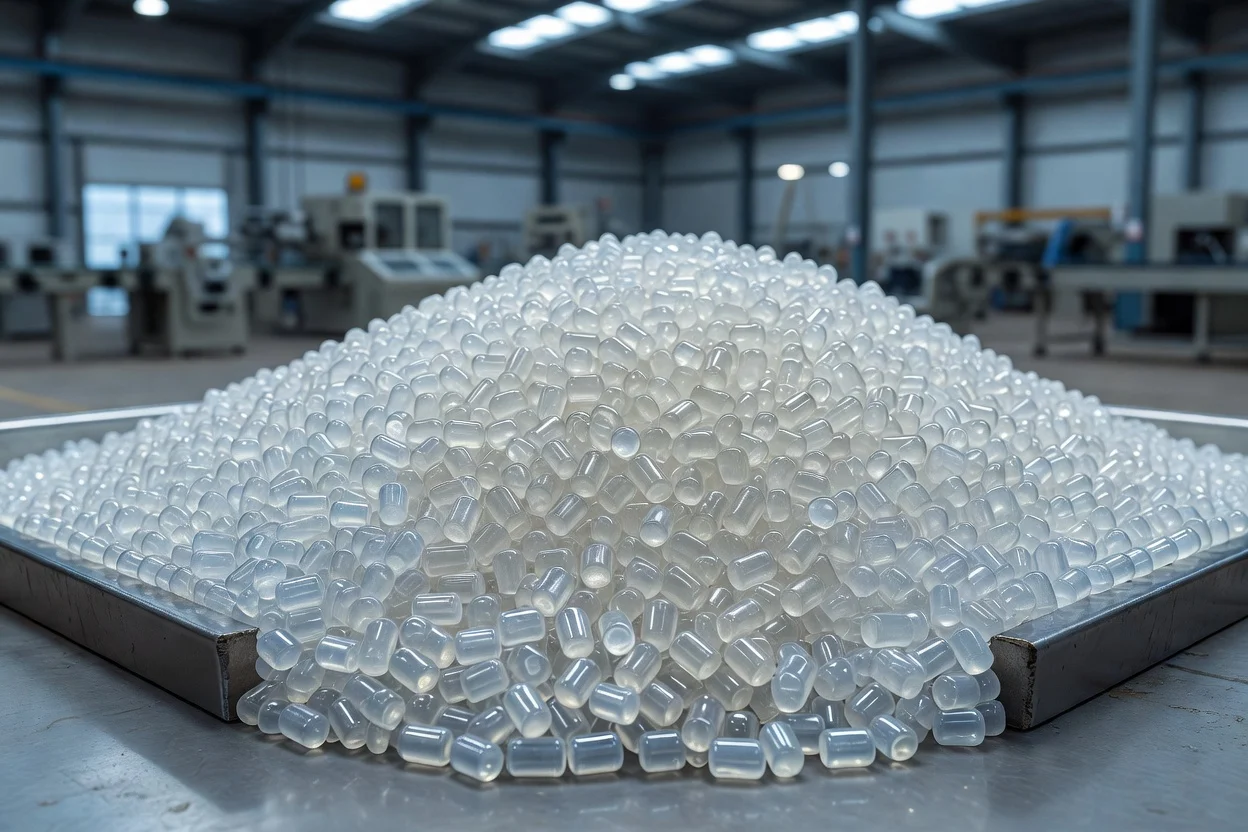
In practice, rPC sits at the intersection of materials engineering and circular-economy strategy: it is used where a high-value appearance or demanding mechanical performance is still required, especially in automotive, electronics, construction, and some medical and consumer applications. The material exists in multiple forms, including mechanically recycled grades, chemically recycled grades, opaque or colored compounds, and blended or reinforced formulations that improve processability, color, flame resistance, or weathering performance.
The development of rPC reflects a broader shift in plastics toward closed-loop material recovery, chemical purification, and certification systems such as recycled-content and mass-balance schemes. Its future will be shaped by collection quality, contamination control, regulatory pressure on recycled content, and continuing innovation in decolorization, dissolution-precipitation recycling, and additive packages that restore near-virgin performance.
History and Development
Polycarbonate was commercialized as a high-performance, transparent thermoplastic for applications that demanded a combination of toughness and optical clarity. Recycled polycarbonate emerged later as end-of-life collection systems for electronics, automotive parts, and durable goods improved, creating feedstock streams suitable for reprocessing.
Early rPC production relied mainly on mechanical recycling: sorting, washing, shredding, remelting, and pelletizing. This route was and remains attractive for relatively clean, well-sorted PC scrap, but it can suffer from color drift, molecular-weight loss, and property variability after repeated thermal history. To address these limitations, more advanced processes were developed, including solvent-based purification, dissolution-precipitation, activated-carbon treatment, and end-capping approaches that restore color and improve molecular-weight distribution.
Recent examples indicate that major chemical companies and compounders have invested in higher-quality recycled PC suited to demanding end uses such as electronic housings, headlamps, optical components, and other applications where appearance and reliability matter. This reflects a broader movement from “downcycled” recovered plastics toward engineered recyclates designed to compete with virgin material in premium markets.
Chemical Structure and Key Properties
Polycarbonate is an amorphous engineering polymer known for its rigid aromatic backbone and carbonate linkages, which together produce toughness, transparency, and thermal stability. Recycled polycarbonate generally preserves this fundamental structure, although chain scission, oxidative discoloration, residual additives, and contamination can alter performance if the recycling process is poorly controlled.
Key properties commonly associated with rPC include:
- High impact resistance, making it suitable for protective parts and load-bearing housings.
- Optical clarity in carefully purified transparent grades.
- Dimensional stability over a wide service temperature range.
- High glass-transition temperature, often cited around 147°C for polycarbonate-based materials.
- Density around 1.2 g/cm³.
Typical limitations and workarounds are:
| Limitation | Cause | Workaround |
|---|---|---|
| Color/yellowing | Thermal aging, oxidation, and mixed waste streams | Decontamination, activated carbon treatment, solvent purification, and stabilizer packages |
| Property drift | Molecular-weight reduction during repeated melt processing | Tight feedstock sorting, blending with virgin resin, and controlled reprocessing conditions |
| Lower surface-quality consistency | Residual pigments, fillers, or incompatible polymers | Filtration, better sorting, compatibilizers, and application-specific compounding |
Where needed, small additive packages are used to restore performance. For example, phosphite antioxidants are commonly used at low loading levels in polycarbonate blends to reduce oxidative degradation during melt processing, while UV stabilizers help preserve appearance and mechanical integrity in outdoor or light-exposed parts. In some grades, a virgin-PC cap layer or blend strategy is used to improve surface finish and weatherability while retaining a recycled core.
Production Processes and Raw Feedstocks
rPC is produced from several feedstock streams:
- Post-consumer recycled (PCR) PC from discarded electronics, appliance parts, automotive components, and other durable goods.
- Post-industrial recycled (PIR) PC from factory scrap, runners, off-cuts, and rejected parts.
- Mixed recovered PC fractions that require more intensive sorting and purification.
Main production routes include:
- Mechanical recycling, where the waste is sorted, cleaned, shredded, remelted, and pelletized into recyclate.
- Solvent-based or dissolution-precipitation recycling, which can restore better color and narrower molecular-weight distribution by removing impurities and degraded fractions.
- Hybrid compounding, where recycled resin is blended with virgin PC or reinforced with glass fiber, impact modifiers, or flame-retardant packages to meet application requirements.
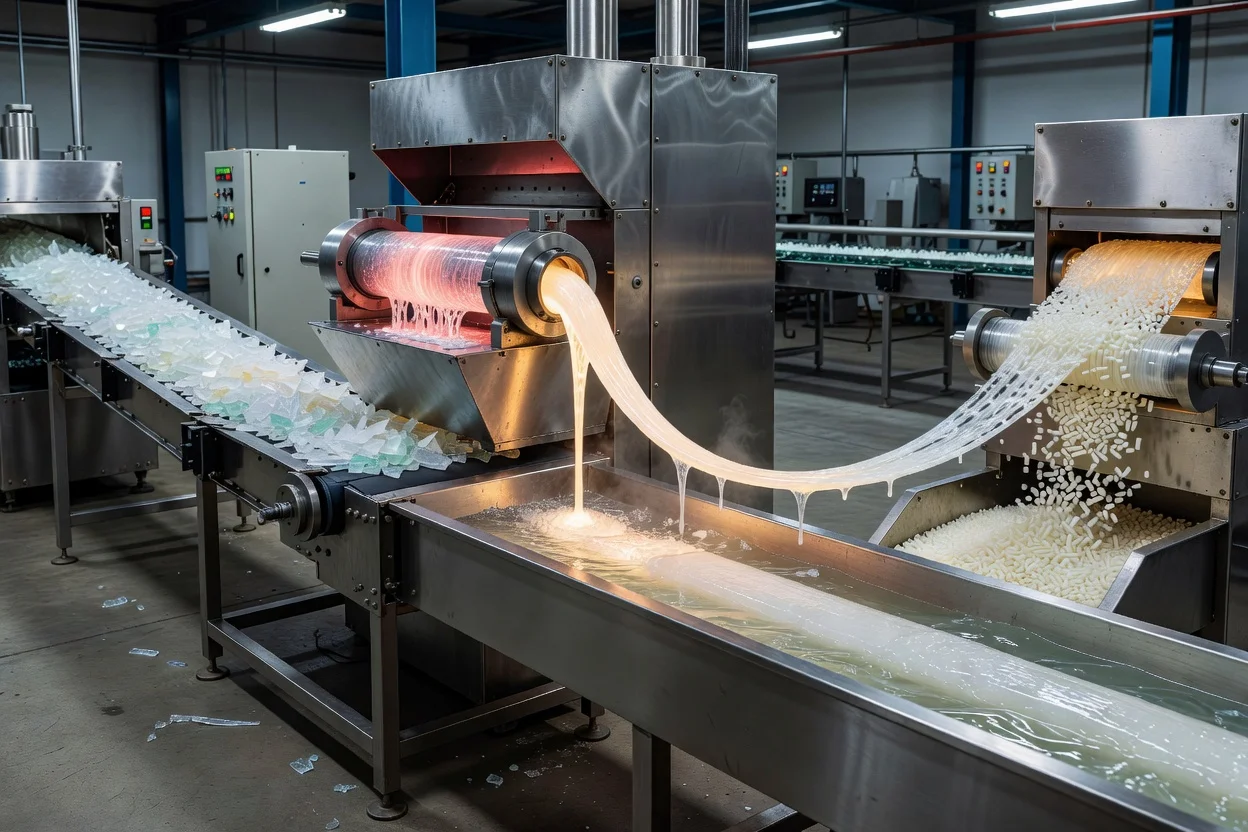
In industrial practice, the quality of the input stream is decisive. Clear, single-polymer PC waste is much easier to upgrade into high-value rPC than contaminated mixed plastics. This is why take-back systems, closed-loop electronics recovery, and controlled industrial scrap streams are important enablers of premium recycled PC.
Applications and End-Use Markets
rPC is used where a combination of toughness, stiffness, heat resistance, and appearance is needed. The main end-use sectors are:
- Automotive
- Typical uses: interior trim, glazing-related components, headlamp-related parts, protective panels, and light covers.
- Typical grades/processes: injection molding grades, sheet grades, and compounded blends with improved surface quality or weatherability.

- Electronics and electrical
- Typical uses: laptop housings, copier and printer parts, chargers, switches, connector housings, and device shells.
- Typical grades/processes: injection molding grades, flame-retardant compounds, and high-clarity formulations.
- Construction and building products
- Typical uses: glazing, façade panels, greenhouse panels, roofing sheets, protective barriers, and thermoformed panels.
- Typical grades/processes: sheet extrusion, co-extruded sheet with virgin top layers, and UV-stabilized outdoor grades.
- Medical and healthcare
- Typical uses: selected sterilizable housings, device components, and non-implantable parts where regulatory and cleanliness requirements can be met.
- Typical grades/processes: gamma-sterilizable compounds with tightly controlled additives and traceability.
- Consumer goods
- Typical uses: protective covers, housings, transparent or translucent parts, and durable household items.
- Typical grades/processes: injection molded parts and sheet-formed products.
- Poor-fit use
- rPC is generally a poor fit for highly critical optical lenses or applications that require perfect long-term color stability without any blending or surface protection, because recycled feedstock variability and residual discoloration can be difficult to eliminate completely.
A useful distinction is that rPC is not only a “replacement plastic” but also a performance recyclate: it is chosen when recycled content must still meet engineering-grade requirements rather than just low-cost commodity specifications.
Environmental and Sustainability Aspects
The environmental case for rPC rests on avoided virgin resin production, reduced waste, and improved circularity when recovered material re-enters high-value applications. Compared with virgin PC, recycled grades generally offer lower embodied carbon when collection, sorting, and reprocessing are efficient, though the exact benefit depends strongly on transport distances, contamination levels, energy mix, and process yield.
Important sustainability dimensions include:
- Recyclability: Polycarbonate is recyclable, and rPC can itself be recycled again if the formulation and contamination profile permit it.
- Bio-based alternatives: Bio-based polycarbonate routes exist in principle, but they do not by themselves solve end-of-life recovery; rPC addresses the circularity side of the equation more directly.
- Carbon footprint: Recycled-content strategies can reduce Scope 3 emissions for brand owners, especially in electronics, automotive, and building products where material mass and volumes are significant.
At the same time, sustainability claims require careful interpretation. Mechanical recycling preserves polymer value when streams are clean, but it can be undermined by downcycling if quality falls too far for premium uses. Chemical recycling can improve quality recovery, but it usually demands more energy and capital, so its climate advantage depends on process efficiency and energy sourcing. As a result, the highest-value model is often a combination of good product design, effective collection, high-purity sorting, and targeted use of recycling chemistry only where mechanical routes are insufficient.
Economic and Global Market Impact
According to recent industry analyses, the global rPC market is growing as recycled-content mandates, corporate decarbonization goals, and material-cost volatility increase demand for qualified recyclates. Market reports cited in the search results suggest growth from the mid-hundreds of millions of U.S. dollars to well over one billion dollars by the early 2030s, with a mid-single-digit to low-double-digit CAGR depending on scope and methodology.
Demand is strongest where rPC can displace virgin resin without sacrificing performance:
- automotive interiors and exterior-adjacent parts,
- consumer electronics housings,
- construction sheets and panels,
- selected industrial and medical housings.
The main economic drivers are:
- recycled-content procurement targets,
- carbon reporting and brand commitments,
- regulatory pressure on packaging and electronics recovery,
- the premium that customers will pay for certified circular materials.
Supply-side economics remain challenging because high-quality PC waste is less abundant than commodity plastic waste, and because purification, testing, and certification add cost. This has encouraged vertical integration, long-term feedstock contracts, and investments by major resin and compounds suppliers in advanced recycling infrastructure.
Current Challenges and Innovations
The central challenge for rPC is quality consistency. Mixed feedstock, polymer aging, color contamination, and additive carryover can limit direct substitution for virgin material.
Current innovations include:
- Dissolution-precipitation recycling to improve color, purity, and molecular-weight control.
- Phenol end-capping and related stabilization strategies to suppress yellowing and preserve impact performance.
- Activated-carbon purification for clearer molded articles.
- Co-extruded structures with recycled cores and virgin surface layers for improved appearance and UV resistance.
- Flame-retardant and reinforced compounds for electronics and industrial housings.
One notable technical direction is the design of rPC grades for demanding regulated sectors. For example, gamma-sterilizable rPC targets medical and healthcare applications, while flame-retardant rPC compounds address electronics enclosures where safety standards cannot be relaxed.
Future Outlook
The outlook for rPC is favorable, but its growth will depend less on polymer chemistry than on system design: collection, sorting, certification, and end-market acceptance. The most promising opportunities lie in premium closed-loop applications where polycarbonate scrap is returned to similar or adjacent uses with minimal quality loss.
Likely future trends include:
- more chemically purified high-clarity rPC,
- expanded use in electronics and automotive interiors,
- increased recycled-content requirements from brand owners and regulators,
- greater use of traceable certification schemes such as ISCC PLUS and similar standards.
- improved additive systems for UV stability, flame resistance, and long-term color retention.
A realistic long-term scenario is that rPC becomes an established engineering resin platform rather than a niche sustainability material. In that model, recycled content is not only an environmental attribute but also a commercial specification tied to performance, traceability, and supply-chain resilience.
Summary
rPC is a recycled engineering plastic that preserves many of the defining advantages of polycarbonate while reducing virgin material demand and supporting circular-economy goals. Its strongest markets are those that can tolerate, or actively manage, feedstock variability through purification, compounding, or layered structures.
Its success will depend on continuing progress in high-purity recovery, advanced stabilization, and market systems that reward recycled content without compromising performance.
References
- •
Applications of virgin material. (2012, December 11). AZoM. https://www.azom.com/article.aspx?ArticleID=7963Link
- •
Recycled PC – Properties, Applications, and Benefits. (n.d.). Ambiomaterials. https://www.ambiomaterials.com/en/materials/rpcLink
- •
Recycled polycarbonate: A practical guide to sustainable plastic solutions. (2026, January 5). CBRHK Global. https://cbrhkglobal.com/recycled-polycarbonate-a-practical-guide-to-sustainable-plastic-solutions/Link
- •
Independent ISO-compliant study confirms environmental benefits of IFCO RPCs in Japan. (2026, February 18). IFCO. https://www.ifco.com/blog/iso-compliant-ifco-rpc-japan/Link
- •
New study shows corrugated packaging outperforms reusable plastic containers. (n.d.). Fibre Box Association. https://www.fibrebox.org/assets/2025/10/CPA_2025_Comparative_LCA_Release.pdfLink
- •
The ABCs of RPCs. (n.d.). Food Logistics. https://www.foodlogistics.com/sustainability/packaging/article/10316323/the-abcs-of-rpcsLink
- •
Recyceltes PC – Eigenschaften, Anwendungen und Vorteile. (n.d.). Ambiomaterials. https://www.ambiomaterials.com/de/materialen/rpcLink
- •
Mechanical properties and applications of recycled polycarbonate in 3D printing. (2019, May 20). PubMed. https://pubmed.ncbi.nlm.nih.gov/31137505/Link
- •
The benefits of reusable transport packaging. (2023, December 13). RP Europe. https://rpeurope.eu/2023/12/13/the-benefits-of-reusable-transport-packaging/Link
- •
Recycled polycarbonate and polycarbonate/acrylonitrile butadiene styrene blends. (2023, December 9). ScienceDirect. https://www.sciencedirect.com/science/article/abs/pii/S2214993723001653Link
- •
The environmental reality of RPCs vs. corrugated packaging. (2025, December 1). Packaging Dive. https://www.packagingdive.com/spons/the-environmental-reality-of-rpcs-vs-corrugated-packaging-what-the-data-r/806261/Link
- •
Recycled polycarbonate market 2026. (n.d.). 24ChemicalResearch. https://www.24chemicalresearch.com/reports/286755/global-recycled-polycarbonate-forecast-marketLink
- •
Four in five businesses say being ethical and sustainable is important: Here’s how RPCs can boost your efforts. (2019, March 14). IFCO Systems. https://www.ifco.com/sustainability-efforts/Link
- •
A plastic material for the circular economy: Recycling technologies. (n.d.). About Polycarbonate. https://www.aboutpolycarbonate.com/wp-content/uploads/2024/06/Polycarbonate_Circularity-1.pdfLink
- •
IFCO reusable packaging cuts CO2 emissions by 62% compared to single-use packaging, confirms independent life cycle assessment. (2024, November 8). Perishable News. https://perishablenews.com/produce/ifco-reusable-packaging-cuts-co2-emissions-by-62-compared-to-single-use-packaging-confirms-independent-life-cycle-assessment/Link
- •
Study confirms RPCs most sustainable. (2025, August 6). Reusables.org. https://reusables.org/inner-loop-library/industry-news/study-confirms-rpcs-most-sustainable/Link
- •
Recycled polycarbonate market: Industry transformation. (2026, August 18). LinkedIn. https://www.linkedin.com/pulse/recycled-polycarbonate-market-industry-transformation-ds6pfLink
- •
Recycled polycarbonate: Advanced recovery. (2026, March 24). Eureka. https://eureka.patsnap.com/materials/recycled-polycarbonate-recoveryLink
- •
A 2016 sustainability review. (n.d.). Brambles. https://www.brambles.com/Content/cms/sustainability-2016/BRL179_S30_Sustainability_Review.pdfLink
- •
Reduce your environmental impact by using IFCO RPCs. (2024, April 15). IFCO. https://www.ifco.com/ifco-rpc-benefits/environmental-impact/Link
- •
Recycled polycarbonate RCP for professionals. (2022, July 21). Polimertecnic. https://www.polimertecnic.com/en/rpc-polycarbonate-recycled/Link
- •
Study proves ‘green’ credentials of plastic crates. (2020, December 30). Reusables.org. https://reusables.org/study-proves-green-credentials-of-plastic-crates/Link
- •
Recycled polycarbonate market size & share 2025–2032. (2026, January 27). 360iResearch. https://www.360iresearch.com/library/intelligence/recycled-polycarbonateLink
- •
LCA boundary. (2026, April 21). Scribd. https://www.scribd.com/document/1011529625/LCA-BOUNDARYLink
- •
再生ポリカーボネートとは?環境に優しい高性能プラスチックを. (2025, October 25). Note. https://note.com/yaandyu0423/n/n9982305432b2Link
- •
New electronic components made of used polycarbonate. (2024, August 2). Covestro. https://www.covestro.com/press/new-electronic-components-made-of-used-polycarbonate/Link
- •
How many trees will we save using plastic crates? (2022, January 4). Wellpack. https://wellpack.org/how-many-trees-will-we-save-using-plastic-crates/Link
- •
IFCO presents sustainability certificate to retailers and growers for the fourth consecutive year. (2021, January 27). Perishable News. https://www.perishablenews.com/produce/ifco-presents-sustainability-certificate-to-retailers-and-growers-for-the-fourth-consecutive-year/Link
- •
Reusable transport packing for your business. (2024, October 16). RP Europe. https://rpeurope.eu/2024/10/16/reusable-transport-packing-for-your-business/Link
- •
Switching to reusable plastic crates (RPCs): An overview. (2023, March 24). Tosca. https://www.toscaltd.com/blog/rpc-crates-101-get-to-know-the-sustainability-powerhouse-that-makes-food-move/Link
- •
Recycled polycarbonate modified plastic pellets for sustainable SMT connector housings. (2026, August 15). Techmartse. https://www.techmartse.com/recycled-polycarbonate-modified-plastic-pellets-sustainable-smt-connector-housings/Link
- •
RCP en polycarbonate recyclé pour les professionnels. (2022, December 20). Polimertecnic. https://www.polimertecnic.com/fr/polycarbonate-recycle-rcp/Link
- •
JETIR research journal. (n.d.). JETIR. https://www.jetir.org/papers/JETIR2305300.pdfLink
- •
Upcycling polycarbonate: Trapezoidal and corrugated sheets from waste. (2023, March 6). ArchDaily. https://www.archdaily.com/997035/upcycling-polycarbonate-trapezoidal-and-corrugated-sheets-from-wasteLink
- •
Recycled polycarbonate market size, share, trends & forecast [2034]. (2025, March 10). Verified Market Reports. https://www.verifiedmarketreports.com/product/recycled-polycarbonate-market/Link
- •
再生RPC的前生、今世和来生. (2023, May 31). Pynmtech. http://www.pynmtech.com/news/189.htmlLink
- •
Arla Plast RPC™ is a range of opaque coloured. (n.d.). MAPlast. https://www.maplast.se/static/files/17/rpctm.pdfLink
- •
Polycarbonate (PC) recycling. (2026, August 21). WasteTrade. https://www.wastetrade.com/resources/plastics/polycarbonate-pcLink
- •
Post-consumer recycled polycarbonate. (2026, June 8). Topcentral. https://www.topcentral.net/sustalinability-page/412.htmlLink
- •
ESG initiatives. (2026, June 19). RPC. https://www.rpc.net/esg-initiatives/Link
- •
Medical rPC gamma sterilizable compliance. (2026, June 7). Geotopcentral. https://www.geotopcentral.com/medical-rpc-gamma-sterilizable-compliance/Link
- •
PCR r-PC - Polycarbonate. (n.d.). Sinox Polymers. https://www.sinox-polymers.com/en/plastic-recycled-pellets-pcr-pc-polycarbonate.htmlLink
- •
rPC consumer electronics flame retardant. (2026, June 7). Geotopcentral. https://www.geotopcentral.com/rpc-consumer-electronics-flame-retardant/Link
- •
Recycled polycarbonate pellets. (2026, February 6). Zanbond Group. https://www.zanpolymer.com/pcr-material/recycled-polycarbonate-pellets/Link
- •
Medical device plastics: Gamma-sterilizable rPC, impact resistance, and regulatory compliance. (2026, June 1). Geotopcentral. https://www.geotopcentral.com/b6_medical_rpc_gamma_sterilizable_compliance/Link
- •
RPC. (n.d.). Pycycling. https://www.pycycling.com/product-list/rpcLink
- •
Environment. (n.d.). RPC Legal. https://www.rpclegal.com/about-us/responsible-business/environment/Link
- •
Benefits of green infrastructure. (2025, December 9). U.S. Environmental Protection Agency. https://www.epa.gov/green-infrastructure/benefits-green-infrastructureLink
- •
Forces shaping the future of recycled polycarbonate market. (2025, April 28). LinkedIn. https://www.linkedin.com/pulse/forces-shaping-future-recycled-polycarbonate-market-qsdtfLink
- •
What is recycled polycarbonate. (2023, September 4). Agood. https://www.agood.com/blogs/our-materials/recycled-polycarbonateLink
- •
Polycarbonate (PC). (n.d.). British Plastics Federation. https://www.bpf.co.uk/plastipedia/polymers/Polycarbonate.aspxLink