
Introduction
In plastics processing, parts & components refers to the individual items, subassemblies, and functional modules that make up a machine, an automation cell, or an auxiliary system. In practice, the term is used broadly and sometimes interchangeably, but a useful engineering distinction is that parts are the smaller physical elements used in manufacture or repair, while components are the functional units that contribute to a machine’s operation. In the plastics machinery sector, this category is fundamental because machine performance, uptime, safety, and product quality depend heavily on the reliability and specification of these constituent elements.
The topic spans everything from wear parts such as screws, barrels, seals, heaters, screens, and cutter blades to higher-level components such as drives, control cabinets, hydraulic power units, extruder gearboxes, vacuum pumps, and robotic end-of-arm tooling. Standardization is especially important in plastics machinery because many machines operate continuously under high thermal, mechanical, and chemical stress, making spare-part availability and interchangeability central to maintenance strategy. Recent industry trends have also increased the importance of digital part identification, predictive maintenance, and supply-chain resilience, while sustainability pressures have pushed manufacturers toward longer-life components, remanufacturing, and easier disassembly.
History and Development
The evolution of plastics machinery parts and components has closely followed the development of polymer processing itself. Early injection molding and extrusion systems relied on comparatively simple mechanical assemblies, but as throughput, temperature control, and product tolerances tightened, machine builders increasingly adopted specialized wear-resistant and precision-machined parts to improve repeatability and service life.
Several milestones shaped the modern segment:
- The rise of interchangeable standardized parts enabled faster maintenance and broader machine compatibility, reducing downtime and simplifying procurement.
- The spread of electronic control systems transformed plastics machinery from predominantly mechanical equipment into integrated mechatronic systems with sensors, drives, relays, PLCs, and servo actuators.
- The adoption of component engineering and structured bill-of-materials management improved qualification, traceability, and reuse of qualified parts across product lines.
In more recent decades, the industry has moved toward digitally networked components, condition monitoring, and remote diagnostics. This has made the distinction between a mechanical part and an intelligent component less rigid, because modern sensors, inverters, and control modules often perform a direct operational role rather than merely supporting the machine structure.
Key Characteristics and Technical Overview
Plastics machinery parts and components can be grouped by function, operating environment, and replaceability. The most common technical categories are mechanical, thermal, hydraulic, pneumatic, electrical/electronic, and wear-intensive processing elements.
Functional categories
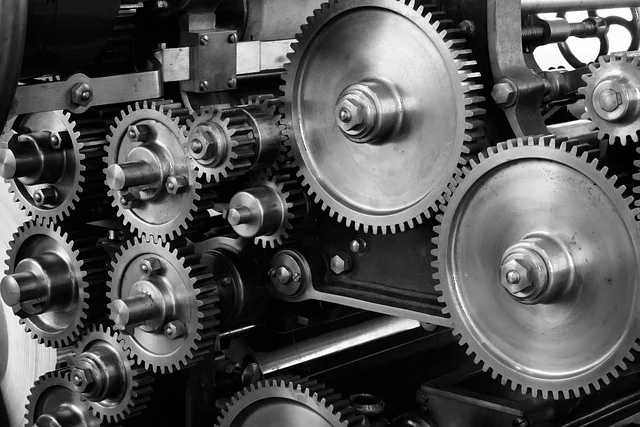
- Mechanical parts: shafts, bearings, gears, couplings, fasteners, housings, guide rails, and frames, which transmit force, support motion, and maintain alignment.
- Thermal components: heater bands, cartridges, thermocouples, insulating elements, and cooling devices, which regulate melt temperature and thermal stability.
- Hydraulic and pneumatic components: pumps, valves, cylinders, hoses, seals, accumulators, and filters, which provide force, clamping, actuation, or material transport.
- Electrical and electronic components: motors, servo drives, PLCs, relays, sensors, encoders, circuit boards, connectors, and power supplies, which control motion, logic, and feedback.
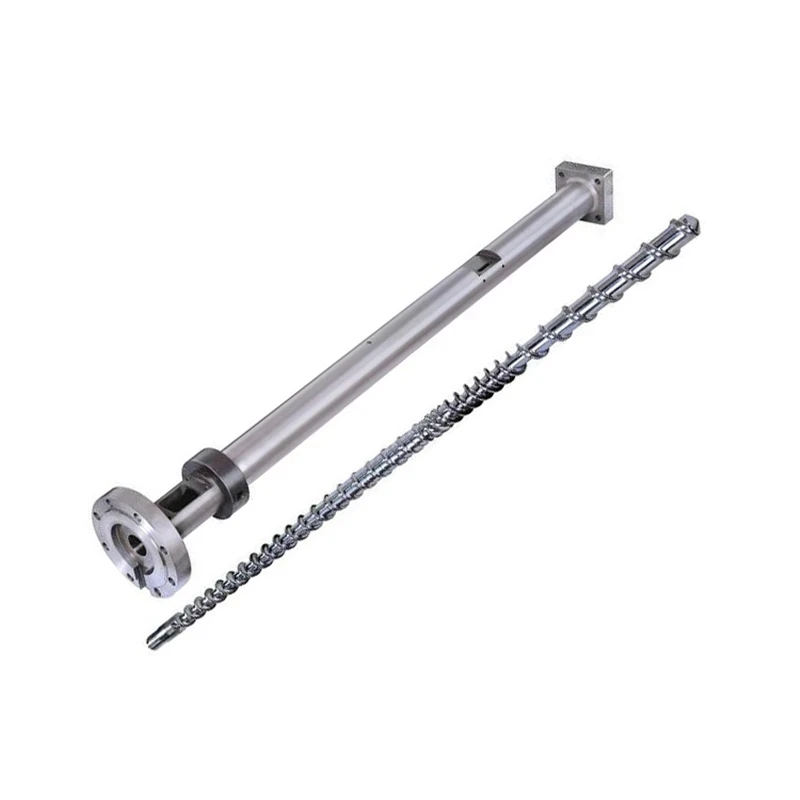
- Process-wear parts: screws, barrels, nozzles, cutters, knives, screen packs, die lips, melt pumps, and granulator rotors, which are exposed to abrasion, corrosion, heat, and cyclic loading.
Performance and specification benchmarks
Technical requirements vary by machine class, but several general benchmarks are common across plastics processing:
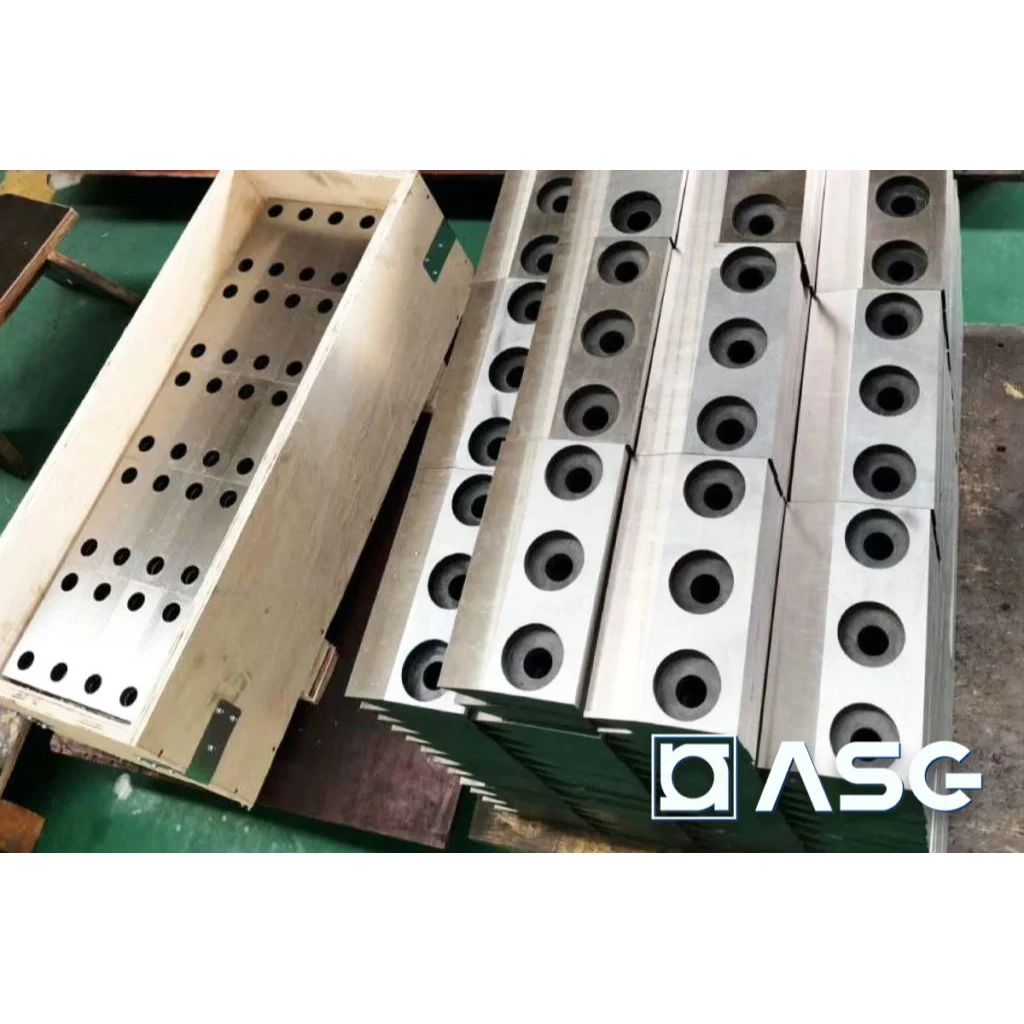
- Granulator and cutter systems commonly produce flakes or regrind in the approximate range of 6–12 mm for standard recycling or reuse applications; rotor speed depends on design, often ranging from low-speed torque systems to high-speed units operating in the low-thousands of rpm.
- Centrifugal dewatering systems used in washing and recycling lines often reduce residual moisture to roughly 1–3%, depending on feedstock, perforation size, residence time, and downstream drying.
- Extruder and recycling line throughputs may range from tens of kg/h for laboratory or small-scale systems to several t/h for industrial lines, with some wash and reclamation systems operating at higher capacities depending on material and contamination level.
- Specific energy consumption varies widely by process and feedstock, but modern efficient lines increasingly target lower energy per kilogram of output through servo drives, optimized thermal control, and reduced idle losses.
These figures are indicative rather than universal, because performance depends on polymer type, contamination, machine geometry, moisture content, and intended product quality. In precision parts, tight dimensional control and material consistency are as important as raw capacity, especially for screws, barrels, dies, and wear inserts that determine melt quality and machine uptime.
Engineering considerations
The design of parts and components in plastics machinery is shaped by several constraints:
- Wear resistance is essential for components exposed to abrasive fillers, glass fiber, recycled flake, or corrosive additives.
- Thermal stability matters in hot zones such as barrels, nozzles, heaters, and molds.
- Dimensional accuracy is critical for processing stability, sealing, and melt control.
- Serviceability affects downtime, inventory planning, and repair costs.
- Compatibility with control systems and safety interlocks is necessary in modern automated plants.
Types and Variations
A plastics machinery plant typically relies on a layered parts structure that ranges from tiny fasteners to complete assemblies.
| Category | Examples | Typical role |
|---|---|---|
| Consumable parts | Filters, heater bands, blades, seals, screens | Replaced regularly due to wear or fouling |
| Wear parts | Screws, barrels, knife edges, die lips, bearings | Degrade under friction, heat, or abrasion |
| Structural parts | Frames, panels, guards, mounting plates | Provide stability and machine geometry |
| Motion parts | Shafts, couplings, gears, chains, belts | Transmit torque or motion |
| Control components | PLCs, drives, sensors, HMIs, relays | Manage machine logic and feedback |
| Process assemblies | Extruder screws, clamping units, hydraulic power packs, granulator rotor assemblies | Deliver core machine function |
In operational terms, many suppliers also distinguish between OEM parts, aftermarket parts, and remanufactured parts. OEM parts are specified by the original machine builder, aftermarket parts are produced by third parties, and remanufactured parts are restored to meet functional requirements at lower cost or with shorter lead times. This distinction is particularly important for older injection molding machines, extruders, grinders, and auxiliary systems where original documentation may be incomplete but downtime remains costly.
Applications and Uses
Parts and components are present in every plastics processing stage, but their configuration differs by machine class.
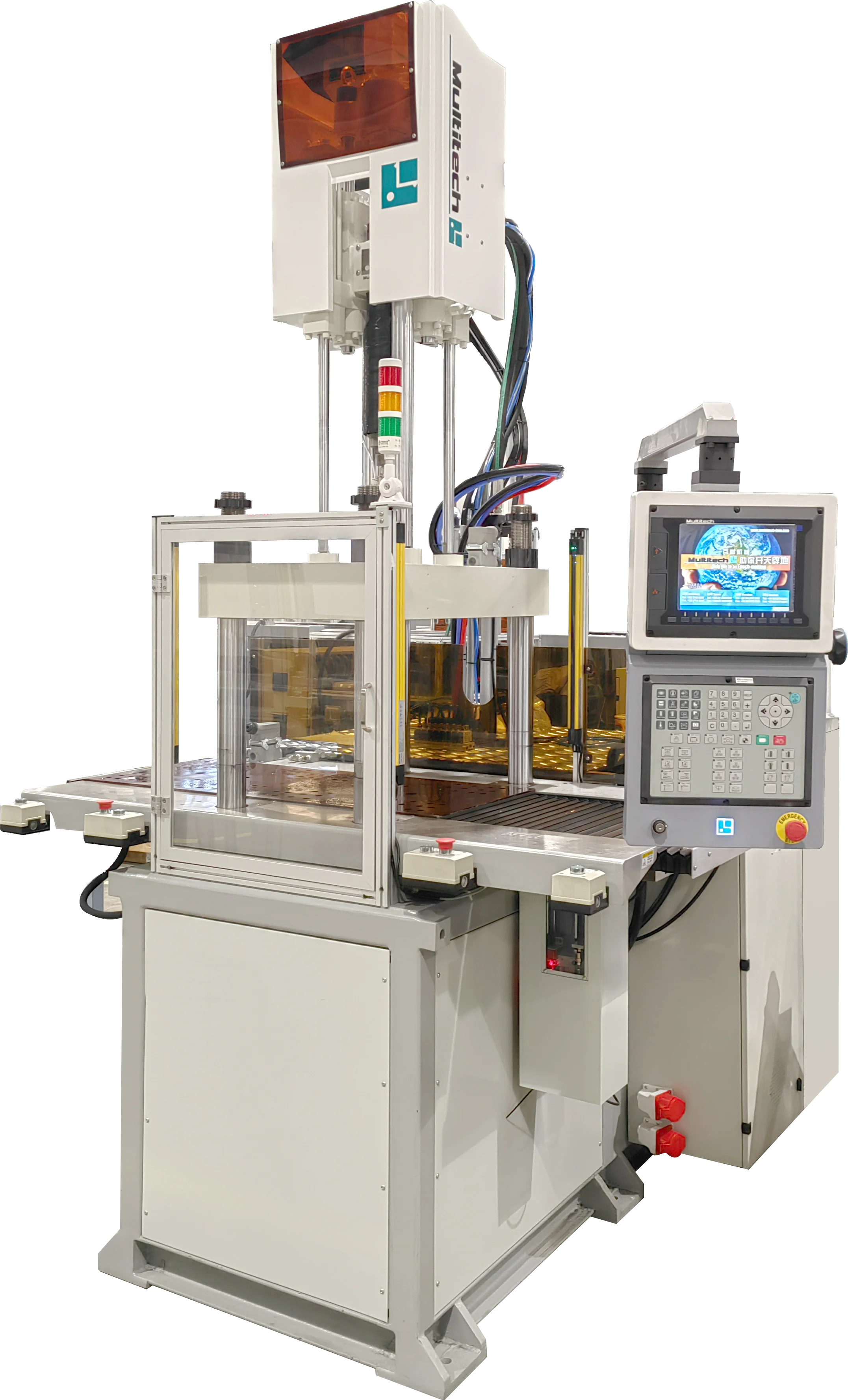
- Injection molding relies on screws, barrels, hot runners, molds, clamp assemblies, ejector systems, sensors, and servo or hydraulic drives. Precision in these components strongly affects cycle time, shot consistency, and part quality.
- Extrusion depends on screws, barrels, gearboxes, heaters, die heads, screens, pullers, and downstream cooling or cutting systems. Wear-resistant melt-contact parts are especially important in filled or recycled compounds.
- Blow molding uses parisons or preforms, clamping systems, mold halves, air valves, and trimming components, with strong emphasis on sealing and temperature control.
- Thermoforming requires heating banks, vacuum systems, clamps, chain drives, tooling, and trimming knives.
- Recycling and compounding lines depend on shredders, granulators, wash tanks, flotation units, dewatering systems, dryers, filters, screens, and pelletizing assemblies.
A poor-fit use for many standard parts is highly corrosive or strongly filled processing without material adaptation. For example, a general-purpose steel screw or knife assembly is often unsuitable for abrasive glass-fiber compounds or contaminated post-consumer recyclate unless upgraded with hardened, coated, or alloyed materials. In such cases, premature wear can offset the cost advantage of standardization.
Technological Innovations and Automation
The parts-and-components segment has become more technologically sophisticated as plastics factories adopt automation and digital monitoring. Key developments include:
- Smart components with embedded sensors for temperature, vibration, current, or position monitoring.
- Servo-driven subsystems that improve energy efficiency and repeatability compared with conventional hydraulic or constant-speed arrangements.
- Predictive maintenance tools that analyze component condition to schedule replacement before failure.
- Digital twins and asset databases that link each part number to service history, specification data, and supplier qualification.
Automation has also changed spare-parts management. Standardized part families reduce stocking complexity, while digitally traceable components improve service continuity and help manufacturers verify provenance, especially for critical items such as safety relays, sensors, and precision wear parts. At the same time, greater electronic integration increases the risk that a single obsolete control module can become a bottleneck if lifecycle planning is weak.
Environmental and Sustainability Aspects
Sustainability considerations in parts and components now influence design, procurement, and maintenance. Three themes are especially important:
- Extended service life through wear-resistant materials, improved lubrication, better sealing, and thermal management.
- Waste reduction through repairable assemblies, remanufacturing, and standardized replacement parts.
- Circular-economy compatibility through disassembly-friendly design and components that support recycling or refurbishing.
In plastics recycling lines, the parts segment has a direct environmental role because blade geometry, screen condition, moisture control, and drive efficiency affect the yield and quality of reclaimed material. Well-designed components reduce energy losses, contamination, and reject rates, while poor maintenance can increase scrap and power consumption. The environmental case for high-quality parts is therefore not limited to durability; it also extends to process efficiency and material recovery.
Economic and Global Market Impact
Parts and components represent a major share of lifecycle cost in plastics machinery, often exceeding the initial purchase price over the full operating life of the equipment. Spares planning, lead-time management, and supplier qualification are therefore strategic rather than purely technical issues.
The global market is shaped by several structural factors:
- Installed base size: large fleets of aging machines create recurring demand for replacement parts.
- Regional manufacturing strength: machine builders and precision suppliers with strong local service networks tend to perform well in aftermarket support.
- Supply-chain volatility: disruptions in castings, electronics, bearings, and motors can halt entire production lines.
- Customization pressure: specialized applications require tailored parts that cannot always be sourced from standard catalogs.
For processors, the economic value of a reliable parts strategy lies in minimizing downtime, reducing emergency freight, stabilizing output quality, and extending machine life. For suppliers, the segment rewards traceability, rapid fulfillment, engineering support, and compatibility with legacy equipment.
Current Challenges and Innovations
The most persistent challenges in the parts-and-components segment are:
- Counterfeit and low-quality substitutes, which can compromise safety and performance.
- Obsolescence, especially in electronics and control systems.
- Inventory complexity, as manufacturers balance service levels against working capital.
- Material selection trade-offs, particularly between cost, wear resistance, and recyclability.
- Data fragmentation, where part numbers, revision states, and documentation are not synchronized across ERP, MES, and service systems.
Innovation is addressing these issues through improved traceability, additive manufacturing for low-volume spares, modular control platforms, and more durable surface treatments for highly loaded parts. In many plants, the most valuable advancement is not a radical new machine, but a more maintainable and better-documented component architecture that lowers total cost of ownership.
Future Outlook
The future of plastics machinery parts and components is likely to be defined by modularity, digital traceability, energy efficiency, and serviceability. Component families will increasingly be designed for rapid replacement and software compatibility, while machine builders will use data from operating fleets to refine material choices, lubrication regimes, and predictive maintenance intervals.
Three trends are especially likely to expand:
- More intelligent spare parts, with built-in sensing and usage logging.
- Greater use of remanufactured and refurbished assemblies, especially where sustainability and cost pressures are high.
- Closer alignment between machine design and circular manufacturing, including easier disassembly and better support for recycled feedstocks.
As plastics processors face stricter efficiency, quality, and environmental requirements, the competitive advantage of machine builders and suppliers will increasingly depend on the quality of the smallest elements in the system: the parts and components that determine whether a machine runs reliably, efficiently, and safely.
References
- •
Components vs. Parts - What's the Difference? (n.d.). This vs. That. https://thisvsthat.io/components-vs-partsLink
- •
What is the difference between a part and a component? (2022, December 9). Parts-CNC. https://www.parts-cnc.com/news/what-is-the-difference-between-a-part-and-a-component-129657.htmlLink
- •
Component vs. Part - What's the Difference? (n.d.). This vs. That. https://thisvsthat.io/component-vs-partLink
- •
Part (item or component) definition. (2026, June 25). Arena Solutions. https://www.arenasolutions.com/resources/glossary/part/Link
- •
Difference between part and component. (n.d.). TheMechBook. https://themechbook.com/difference-between-part-and-component/Link
- •
Part vs. Component — What's the difference? (2024, March 1). Ask Difference. https://www.askdifference.com/part-vs-component/Link
- •
The difference between components and parts. (2019, June 18). PHP.cn. https://www.php.cn/faq/423195.htmlLink
- •
Difference between component and part. (2024, January 1). SteadyRun. https://www.steadyrun.com/difference-between-component-and-partLink
- •
Partsとcompornents、部品と部分品の違いについて教えてください。 (2009, September 20). Goo 知恵袋. https://oshiete.goo.ne.jp/qa/5305345.htmlLink
- •
Component (part) definition. (2025, December 2). Arena Solutions. https://www.arenasolutions.com/resources/glossary/component/Link
- •
Complete guide to car parts classification. (2026, January 30). MR.FAST. https://mrfastauto.com/complete-guide-to-car-parts-classification/Link
- •
The building blocks of complex systems: Types of parts. (n.d.). Bailey Harris. https://logs.baileyharris.com/Download_PDFS/u52FC1/246948/Parts.pdfLink
- •
Parts: Overview, definition, and example. (2025, April 9). Cobrief. https://www.cobrief.app/resources/legal-glossary/parts-overview-definition-and-exampleLink
- •
Electronic parts by type. (n.d.). ASAP Semiconductor. https://www.asapsemi.com/electronic/part-types/Link
- •
Handling of components. (n.d.). ZELL Group. https://en.zell-group.com/wiki/bauteileLink
- •
COMPONENT | definition in the Cambridge English Dictionary. (2026, September 2). Cambridge Dictionary. https://dictionary.cambridge.org/us/dictionary/english/componentLink
- •
List of auto parts. (2005, October 18). Wikipedia. https://en.wikipedia.org/wiki/List_of_auto_partsLink
- •
COMPONENT definition & meaning. (2026, September 4). Merriam-Webster. https://www.merriam-webster.com/dictionary/componentLink
- •
What is an auto part? Types, functions & buying guide. (2026, March 30). NB-NH. https://www.nb-nh.com/news/industry-news/what-is-an-auto-part-types-functions-buying-guide.htmlLink
- •
Associated parts and components definition. (2025, July 7). Law Insider. https://www.lawinsider.com/dictionary/associated-parts-and-componentsLink
- •
Types of electronic components & their functions. (2026, June 19). GlobX. https://globx.eu/blog/components-guide/types-of-electronic-componentsLink
- •
Component types. (2025, December 8). Microchip USA. https://www.microchipusa.com/articles/component-typesLink
- •
Components: Overview, definition, and example. (2025, April 10). Cobrief. https://www.cobrief.app/resources/legal-glossary/components-overview-definition-and-example/Link
- •
The critical role of C parts for appliance and consumer products industry. (2024, June 5). Gexpro Services. https://gexproservices.com/blog/critical-role-of-c-parts-for-appliance-and-consumer-products-industry/Link
- •
COMPONENT definition & meaning. (n.d.). Dictionary.com. https://www.dictionary.com/browse/componentLink
- •
Best autoparts: Composition, classification, and industrial applications. (2026, February 20). Alibaba. https://www.alibaba.com/product-insights/best-autoparts.htmlLink
- •
Why using "component part" to talk about a component or a part. (2019, January 8). English Language Learners Stack Exchange. https://ell.stackexchange.com/questions/192225/why-using-component-part-to-talk-about-a-component-or-a-partLink
- •
A guide to types and uses of mechanical parts. (2025, March 19). TOPSALES. https://www.topsales1st.com/news/a-guide-to-types-and-uses-of-mechanical-parts/Link
- •
Production parts: The essence of industrial CNC manufacturing. (2024, May 27). CNC24. https://www.cnc24.com/manufacturing-process/production-parts/Link
- •
Complete guide to industrial machine parts and modern manufacturing. (2026, June 29). TOPSALES. https://www.topsales1st.com/news/complete-guide-industrial-machine-parts-modern-manufacturing/Link
- •
What is component engineering? Definition & benefits. (2026, May 14). Aras. https://aras.com/en/glossary/component-engineeringLink
- •
Top 4 benefits of consistent component parts. (2015, July 17). FTI Inc. http://ftiinc.org/top-4-benefits-of-consistent-component-parts/Link
- •
Inside the component factory: How standard parts are designed and manufactured. (2024, March 26). Made in Britain. https://www.madeinbritain.org/news/inside-the-component-factory-how-standard-parts-are-designed-and-manufactured-mar-24Link
- •
Standard parts for industry. (2025, June 28). MISUMI. https://uk.misumi-ec.com/en/techblog/product-info/standard-parts-and-their-importance-for-industry/Link
- •
What are auto parts? Key notes when buying auto parts. (2024, April 18). THACO Industries. https://thacoindustries.com/en/what-is-auto-parts/Link
- •
6 types of common machine components. (2023, May 10). Choong Ngai Engineering. https://www.choongngaiengineering.com/6-types-of-common-machine-componentsLink
- •
Parts vs components (in automotive industry). (2010, August 26). WordReference Forums. https://forum.wordreference.com/threads/parts-vs-components-in-automotive-industry.1900096/Link
- •
Basic electronic components. (2022, October 20). Sierra Circuits. https://www.protoexpress.com/kb/basic-components-overview/Link
- •
Manufacturing components explained. (2022, October 20). Production Resources. https://prodres.com/manufacturing-guide/getting-started/input-documentation/components/Link
- •
Precision machined components reliability and performance. (2025, September 12). Global Precision. https://www.globalprecision.in/blog/components-for-reliability-and-performance/Link
- •
Define components. (2024, May 6). University of Arkansas Pressbooks. https://uark.pressbooks.pub/mechanicaldesign/chapter/define-components/Link
- •
Importance of reliable mechanical components. (2024, November 11). Procurement Partners International. https://procurementpartnersintl.com/importance-of-reliable-mechanical-components/Link
- •
A guide to metal components & assemblies. (2020, October 13). Metal Works. https://www.metalworkshp.com/resources/metal-components-assemblies/Link
- •
Parts inventory. (2026, January 10). Cubework. https://www.cubework.com/glossary/parts-inventoryLink
- •
Understanding different types of automotive parts. (2024, November 11). LinkedIn. https://www.linkedin.com/pulse/understanding-different-types-automotive-parts-from-oem-mihir-mohan-xn30cLink
- •
The overwhelming need for spare parts management. (2020, August 13). DXP Enterprises. https://www.dxpe.com/benefits-need-spare-parts-management-plan/Link
- •
Car components 101: What are their functions? (2026, March 27). Universal Technical Institute. https://www.uti.edu/blog/automotive/car-componentsLink
- •
Essential guide to effective spare parts management. (2024, October 4). Tractian. https://tractian.com/en/blog/spare-parts-managementLink
- •
What is a component? (2024, July 16). TechTarget. https://www.techtarget.com/whatis/definition/componentLink
- •
The critical role of a component supplier in modern manufacturing. (2025, July 16). LVD Electronic. https://www.lvdelectronic.com/the-critical-role-of-a-component-supplier-in-modern-manufacturingLink
- •
Get quote. (2025, May 2). NBYichou. https://www.nbyichou.com/news/manufacturing-machine-parts-your-ultimate-guide-to-high-quality-components.htmlLink
- •
What is the difference between A, B, and C-parts? (2025, October 28). Component Solutions Group. https://www.componentsolutionsgroup.com/blog/difference-between-a-b-and-c-parts/Link
- •
Ultimate guide to parts manufacturing: What you need to know. (2025, August 28). Mayco International. https://maycointernational.com/ultimate-guide-to-parts-manufacturing-what-you-need-to-know/Link
- •
A detailed guide to vehicle components manufacturing. (n.d.). Zetwerk. https://www.zetwerk.com/resources/knowledge-base/miscellaneous/a-comprehensive-guide-to-vehicle-components-manufacturing/Link
- •
How do companies use part and model numbers to keep track of the products they produce and components they need? (2023, April 4). Reddit. https://www.reddit.com/r/AskEngineers/comments/12b76hh/how_do_companies_use_part_and_model_numbers_to/Link