
Introduction
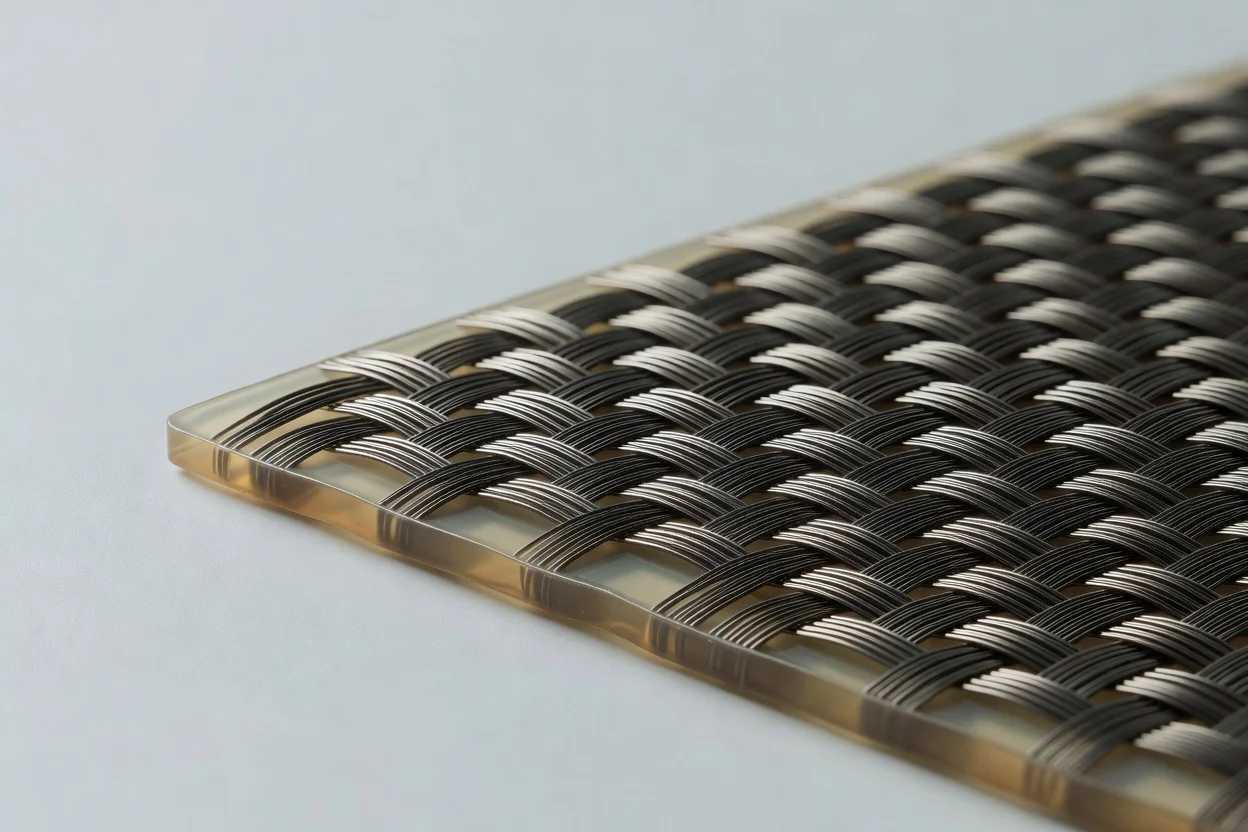
Continuous fiber reinforced thermoplastics are high-performance composite materials in which continuous fibers, such as carbon, glass, or aramid, are embedded in a thermoplastic matrix to create lightweight structures with high stiffness, strength, and impact resistance. They are widely used as tapes, laminates, sheets, and intermediate preforms, and they are valued not only for mechanical performance but also for shorter cycle times, part consolidation potential, repairability, and the recyclability advantages associated with thermoplastic matrices.
In the plastics value chain, continuous fiber reinforced thermoplastics occupy the advanced-composites segment between raw polymer resins and structural end-use parts. Their development reflects a broader shift from purely weight-reduction strategies toward integrated performance design, where material choice, forming method, joining strategy, and end-of-life management are considered together. The technology has expanded from aerospace and defense into automotive, transportation, industrial equipment, construction, sporting goods, and emerging additive manufacturing platforms.

History and Development
Continuous fiber reinforced thermoplastics evolved from earlier fiber-reinforced plastics that used thermoset matrices, which provided strong structural performance but were slower to process and more difficult to recycle. Thermoplastic matrices later gained interest because they could be reheated, reshaped, welded, and more readily reclaimed at end of life, even though their high melt viscosity made complete fiber impregnation technically difficult.
Industrial adoption accelerated as suppliers developed more reliable unidirectional tapes, organo-sheets, and laminate formats that improved impregnation quality and enabled thermoforming and overmolding. More recently, continuous-fiber additive manufacturing has broadened the technology’s design space, although printing-related voids, interlayer adhesion problems, and certification barriers still limit large-scale use.
Chemical Structure and Key Properties
Continuous fiber reinforced thermoplastics are not a single polymer but a composite architecture consisting of a thermoplastic matrix and a continuous reinforcing phase. The matrix materials commonly include polypropylene, polyamide, polycarbonate, PBT, PPS, PEI, PAEK, and PEEK, while reinforcement typically comes from carbon fiber, glass fiber, aramid fiber, or hybrid combinations.
Their performance comes from load transfer: the matrix binds and protects the fibers, while the continuous fibers carry most of the mechanical load along their alignment direction. This creates very high specific stiffness and strength, along with good fatigue resistance, toughness, and corrosion resistance.
A few important technical limits are well established:
- Limited through-thickness and transverse strength → fibers are highly directional and the matrix is much weaker than the reinforcement → workaround: multi-axial laminates, off-axis layups, stitching, tailored ply stacking, or hybrid architectures.
- Processing-sensitive impregnation quality → thermoplastic melts are viscous and can leave voids or incomplete wet-out → workaround: optimized tape consolidation, in-situ impregnation, heated compaction, and carefully controlled pressure/temperature cycles.
- Poor fit for high-temperature service in commodity matrices → many thermoplastics soften well below aerospace or engine hot-zone temperatures → workaround: use high-performance matrices such as PPS, PEI, PAEK, or PEEK, or shift the part to a cooler zone.
- Weak mechanical performance in some 3D-printed builds → layer interfaces and voids reduce strength relative to conventionally consolidated parts → workaround: improved toolpath control, void reduction, better strand quality, and post-consolidation.
For carbon-fiber systems, the matrix often determines whether the material is suitable for ambient structural parts or for higher-temperature applications. For glass-fiber systems, the balance shifts toward lower cost, corrosion resistance, and electrical insulation, which makes them attractive for construction, marine, and industrial uses.
Production Processes and Raw Feedstocks
Production begins with fiber manufacture and resin preparation, followed by impregnation and consolidation into intermediate forms such as tapes, sheets, or semi-finished laminates.
The main production route is:
- Continuous fiber production and surface treatment
- Thermoplastic resin selection and compounding
- Fiber impregnation by melt, film-stacking, powder, or solution-assisted methods
- Consolidation into tapes, organo-sheets, or laminates
- Secondary forming by thermoforming, stamping, welding, or overmolding
The choice of matrix strongly affects processability. Commodity thermoplastics such as PP and PA are commonly used where cost and throughput matter, while PPS, PEI, PAEK, and PEEK are selected where thermal stability, chemical resistance, or flame performance are more important. In addition to virgin resins, recycled thermoplastics and, in some cases, recycled fibers are being explored to lower cost and improve circularity, although property retention remains uneven across recycling routes.
Typical process examples include:
- Unidirectional tape: continuous fibers aligned in one direction and fully impregnated with thermoplastic resin, used for high stiffness and directional load bearing.
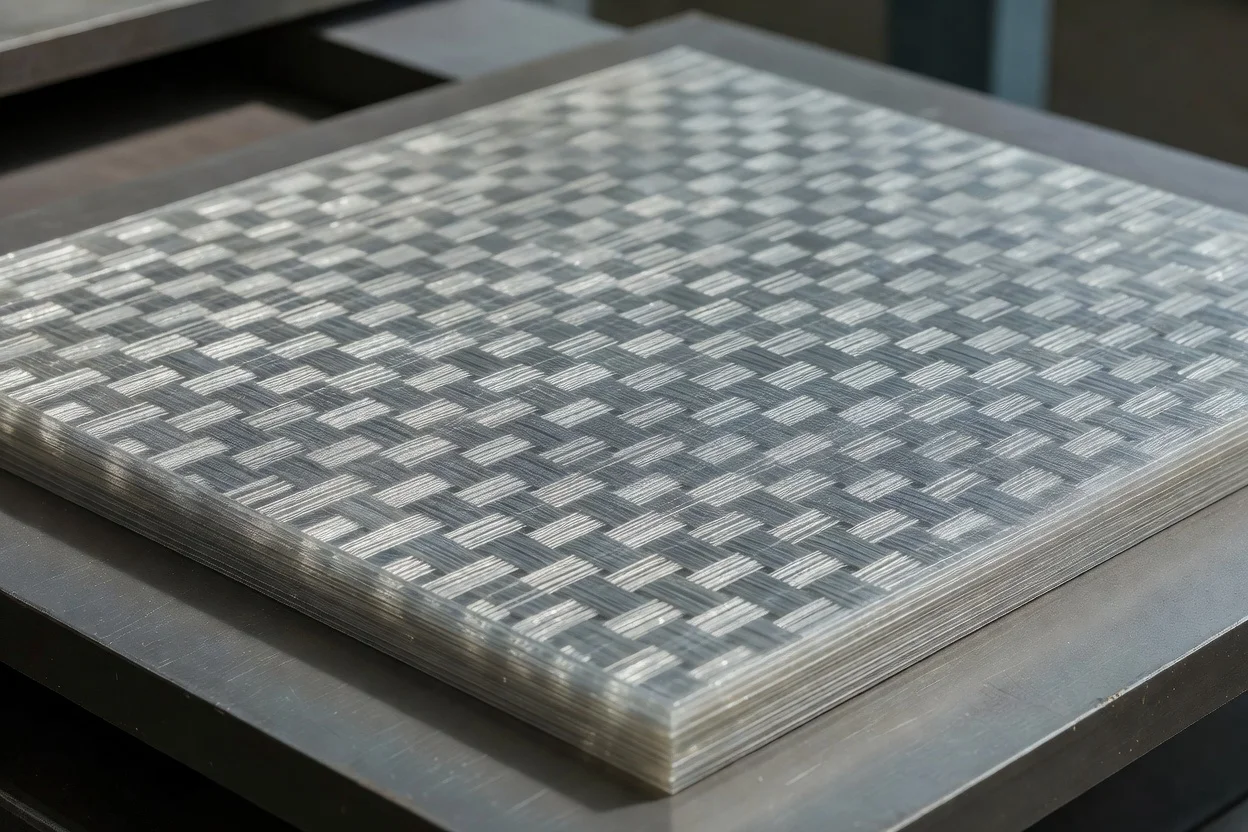
- Organo-sheet / laminate: multiple tapes stacked at selected angles such as 0/90 or 45/45 to improve balanced properties.
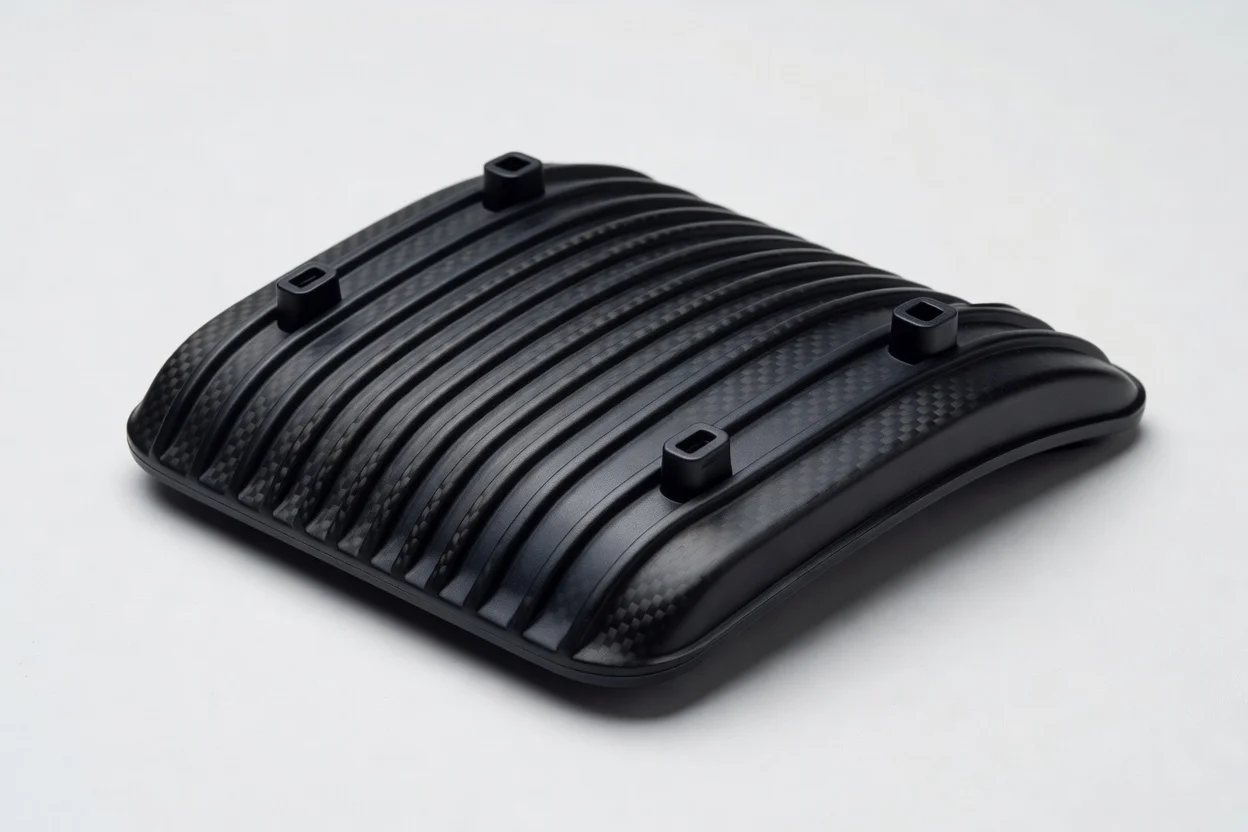
- Hybrid overmolding: a continuous-fiber insert is formed first, then injection molded features are added to integrate ribs, clips, bosses, or fastening points.
- Continuous-fiber additive manufacturing: fiber and matrix are deposited together, promising tooling-free customization but still constrained by speed and quality control.
Applications and End-Use Markets
Continuous fiber reinforced thermoplastics are selected where lightweighting must be combined with structural performance, impact resistance, or corrosion resistance.
| Sector | Typical products | Common material/form | Why it is used |
|---|---|---|---|
| Automotive | Underbody shields, seat structures, pedal boxes, door modules, battery enclosures, brackets | PP-, PA-, or PPS-based tapes and laminates, often overmolded | Weight reduction, crash performance, part consolidation |
| Aerospace | Floor panels, brackets, interior structures, pressure-related components | High-performance matrices such as PEEK, PEI, PPS | High specific strength, fatigue resistance, lower mass |
| Transportation | Truck floors, railcar panels, air cargo containers | Laminates and sandwich panels | Durability, stiffness, reduced maintenance |
| Construction | Reinforced panels, window lineals, pipe reinforcement, sandwich panels | Glass-fiber thermoplastic sheets and laminates | Corrosion resistance, dimensional stability, easier handling |
| Marine | Decking, bulkheads, doors, hull reinforcement | Glass-fiber or hybrid laminates | Moisture and corrosion resistance |
| Sports and consumer goods | Bicycles, ski poles, snowboard components, protective gear | Carbon or aramid hybrid laminates | High stiffness-to-weight ratio and impact tolerance |
| Defense and security | Ballistic panels, armor inserts, vehicle protection | Aramid- or carbon-based systems | Energy absorption and impact resistance |
One poor-fit use is high-temperature primary engine-zone structures when commodity thermoplastics are used, because matrix softening and long-term thermal aging can limit structural retention. In such cases, higher-performance matrices or alternative composites are usually required.
Automotive has been one of the most visible growth areas because continuous-fiber thermoplastics can reduce component mass while supporting crash-relevant load paths and combining multiple parts into one molded assembly. Aerospace adoption is more selective, but the incentive is strong because weight reduction has immediate fuel and emissions benefits. Construction and industrial markets, especially those exposed to moisture or chemicals, value corrosion resistance and rapid installation more than absolute peak strength.
Environmental and Sustainability Aspects
Continuous fiber reinforced thermoplastics are often viewed as more circular than thermoset composites because the thermoplastic matrix can be reheated, reshaped, welded, and in some cases mechanically recycled. Their high strength-to-weight ratio can also reduce vehicle mass and energy demand during use, which may offset part of the upstream footprint in transport applications.
At the same time, sustainability claims must be interpreted carefully. The environmental profile depends on fiber type, resin choice, processing energy, scrap rate, and end-of-life route. Carbon fiber systems generally carry a higher embodied footprint and cost than glass-fiber systems, while high-performance matrices can be energy-intensive and expensive.
Key sustainability pathways include:
- Thermoplastic recyclability: regrinding, remelting, and reprocessing are possible, although mechanical property retention may fall with each cycle.
- Design for disassembly: welding and repair are easier with thermoplastics than with many thermosets.
- Recycled feedstocks: recycled PP, PA, PET, and recovered fibers can reduce virgin material demand, but quality control is essential.
- Bio-based options: bio-based thermoplastic matrices and partially bio-derived feedstocks are under investigation, though high-performance bio-based continuous-fiber systems remain limited in scale and qualification.
A practical limitation is that continuous-fiber composite recycling is more complex than recycling a neat thermoplastic, because fiber length, orientation, and matrix-fiber adhesion must be preserved to maintain useful performance.
Economic and Global Market Impact
The economic appeal of continuous fiber reinforced thermoplastics comes from the combination of structural performance and manufacturing efficiency. Compared with thermoset composites, thermoplastic systems can offer shorter cycle times, indefinite shelf life for preforms, easier joining, and better compatibility with high-volume production.
That said, the market remains constrained by raw material cost, impregnation complexity, and qualification burden for safety-critical parts. These factors favor applications where weight savings, assembly reduction, or corrosion resistance justify higher material costs.
Leading suppliers and technology developers in this field include advanced composites producers such as Avient and other industrial composite specialists active in tapes, laminates, and hybrid forming systems. Demand growth is strongest in automotive lightweighting, aerospace interiors and secondary structures, industrial panels, and high-value sporting goods.
Current Challenges and Innovations
The main technical challenges are process control, anisotropic design, and cost-performance balance. Because properties depend strongly on fiber orientation and consolidation quality, engineers must coordinate material architecture with forming conditions and structural design.
Current innovation themes include:
- Improved impregnation technologies to reduce voids and raise consolidation quality.
- Hybrid materials combining carbon, glass, aramid, basalt, or recycled fibers to tune cost and performance.
- Overmolding and part integration to replace fasteners and reduce assembly steps.
- Additive manufacturing for complex, low-volume, or customized components, despite ongoing issues with voids and interlayer bonding.
- Higher-temperature thermoplastic matrices that expand the usable service envelope in aerospace, energy, and under-hood automotive applications.
In additive manufacturing, the promise is especially strong for customized tooling-free production, but current research still reports weaknesses such as interlayer adhesion problems, air voids, nozzle clogging, and inconsistent track placement. Those limitations are the main reason continuous-fiber printing is advancing first in prototyping, specialized tooling, and premium niche parts rather than in fully commoditized mass production.
Future Outlook
Continuous fiber reinforced thermoplastics are likely to expand where industry needs lighter structures, shorter production cycles, and better circularity than traditional thermoset composites can provide. Their strongest future opportunities lie in electric vehicles, hydrogen and pressure-related systems, aerospace secondary structures, infrastructure panels, and digitally manufactured custom parts.
The next phase of development will probably be defined by:
- broader use of recyclable high-performance matrices,
- better automated layup and consolidation,
- more reliable quality assurance for structural certification,
- greater use of recycled and bio-based feedstocks,
- and increased integration with additive and hybrid manufacturing.
Summary
Continuous fiber reinforced thermoplastics are structural composites built from continuous reinforcing fibers and thermoplastic matrices, combining high specific strength and stiffness with impact resistance, weldability, and recyclability. They are already established in transportation, aerospace, construction, marine, defense, and sports applications, and they are gaining ground where lightweighting and manufacturing efficiency are strategic priorities. Their future growth will depend on solving impregnation, cost, certification, and end-of-life challenges while advancing higher-performance matrices, recycled content, and automated processing.
References
- •
Continuous fiber reinforced thermoplastic composites. (2023, February 7). https://www.avient.com/resource-center/knowledge-base/article/continuous-fiber-reinforced-thermoplastic-compositesLink
- •
Forming methods and applications. (2000, August 31). https://colormatrix.com/idea/forming-methods-and-applicationsLink
- •
Applications of continuous fiber reinforced thermoplastic. (2025, September 8). https://topologroup.com/applications-of-continuous-fiber-reinforced-thermoplastic/Link
- •
Continuous fiber reinforced thermoplastic. (2013, February 27). In Wikipedia. https://en.wikipedia.org/wiki/Continuous_fiber_reinforced_thermoplasticLink
- •
3D printing continuous fiber reinforced polymers. (2025, June 9). PMC. https://pmc.ncbi.nlm.nih.gov/articles/PMC12196871/Link
- •
Polystrand™ continuous fiber tapes & laminates. (n.d.). Avient. https://www.avient.com/products/advanced-composites/continuous-fiber-composite-tape-laminates-and-barstock/polystrand-continuous-fiber-tapes-laminatesLink
- •
Continuous fiber reinforced. (2026, July 21). https://reformcomposites.com/cfrtp/Link
- •
Research status of and prospects for 3D printing. (2023, September 4). PMC. https://pmc.ncbi.nlm.nih.gov/articles/PMC10490110/Link
- •
Continuous fiber reinforced thermoplastic composites. (2026, April 16). https://www.cbextrusion.com/why-continuous-fiber-is-redefining-what-thermoplastic-composites-can-do/Link
- •
What is continuous fiber reinforced thermoplastic. (2025, October 27). https://jotaintl.com/what-is-continuous-fiber-reinforced-thermoplastic-composites/Link
- •
A facile molding method of continuous fiber-reinforced. (2022, February 26). PMC. https://pmc.ncbi.nlm.nih.gov/articles/PMC8912515/Link
- •
Application of continuous fiber reinforced thermoplastic. (2024, April 30). https://cfrtpanels.com/application-of-continuous-fiber-reinforced-thermoplastic-composites-in-automotive-parts/Link
- •
Carbon fiber reinforced thermoplastics: From materials to. (2025, April 22). PMC. https://pmc.ncbi.nlm.nih.gov/articles/PMC12243730/Link
- •
熱可塑性CFRP の素材および加工技術開発. (n.d.). https://www.jstage.jst.go.jp/article/jjspe/81/6/81_503/_pdfLink
- •
Continuous fiber reinforced thermoplastic composites. (n.d.). https://www.reportprime.com/continuous-fiber-reinforced-thermoplastic-composites-r138Link
- •
Manufacturing and characterization of continuous fiber. (n.d.). ScienceDirect. https://www.sciencedirect.com/science/article/abs/pii/S135983682033643XLink
- •
Continuous fiber reinforced thermoplastic composite sheets. (2024, April 30). https://cfrtpanels.com/continuous-fiber-reinforced-thermoplastic-composite-sheets/Link
- •
Additive manufacturing of continuous fiber-reinforced polymer. (2024, June 7). PMC. https://pmc.ncbi.nlm.nih.gov/articles/PMC11207325/Link
- •
Continuous fiber reinforced thermoplastic composites. (2026, May 27). https://topolocfrt.com/continuous-fiber-reinforced-thermoplastic-composites/Link
- •
Characterization method for continuous fiber reinforced thermoplastic strands. (2021, March 6). Sage Journals. https://journals.sagepub.com/doi/10.1177/0892705719838590Link
- •
A continuous fiber-reinforced additive manufacturing. (2020, July 8). PMC. https://pmc.ncbi.nlm.nih.gov/articles/PMC7412385/Link
- •
A review of long fibre-reinforced thermoplastic or long fibre. (n.d.). Purdue University. https://engineering.purdue.edu/SMARTLab/publications/2019_IMR_%20a%20review%20of%20long%20fiber-reinforced%20thermoplastics%20for%20LFT%20composites%20.pdfLink
- •
The technology of continuous fibre-reinforced polymers: A review on extrusion additive manufacturing methods. (n.d.). Springer. https://link.springer.com/article/10.1007/s00170-021-06837-6Link
- •
Thermoplastic composite manufacturing cost analysis. (n.d.). Wiley. https://onlinelibrary.wiley.com/doi/abs/10.1002/9781118097298.weoc253Link
- •
Review of mechanical properties of and optimisation methods for continuous fibre-reinforced thermoplastic parts manufactured by fused deposition modelling. (n.d.). Springer. https://link.springer.com/article/10.1007/s40964-021-00187-1Link
- •
A review on the recycling of continuous-fiber-reinforced. (n.d.). IRIS. https://iris.unitn.it/retrieve/e3835199-4e9a-72ef-e053-3705fe0ad821/266-Pegoretti-Recycling-continuous-fiber-reinforced%20thermoplastics_AIEPR-2021.pdfLink
- •
Continuous fiber-reinforced material. (2022, August 19). Arris Composites. https://arriscomposites.com/materials/Link
- •
Continuous fiber reinforced high performance. (2025, July 23). https://www.cowinextrusion.com/continuous-fiber-reinforced-high-performance-thermoplastic-resin-based-composites/Link
- •
High-speed forming of continuous fiber reinforced thermoplastics. (n.d.). Springer. https://link.springer.com/article/10.1007/s10443-020-09794-7Link
- •
Different production processes for thermoplastic composite materials. (2023, January 3). PMC. https://pmc.ncbi.nlm.nih.gov/articles/PMC9824504/Link
- •
Additive manufacturing of continuous fibre reinforced. (2022, June 21). Scipedia. https://www.scipedia.com/public/Caminero_et_al_2022aLink
- •
3D-printed continuous fiber composites: An overview of. (2025, December 16). SciePublish. https://www.sciepublish.com/article/pii/801Link
- •
What's up with continuous fiber additive manufacturing? (2026, August 17). Addcomposites. https://www.addcomposites.com/post/more-freedom-for-research-activities-with-continuous-fiber-placementLink
- •
Various FDM mechanisms used in the fabrication of. (n.d.). MDPI. https://www.mdpi.com/2073-4360/16/6/831Link
- •
Simulating continuous fiber-reinforced composites in 3D printing. (2024, October 21). Addcomposites. https://www.addcomposites.com/post/simulating-continuous-fiber-reinforced-composites-in-3d-printingLink
- •
Continuous fiber-reinforced thermoplastic (CFRTP) composites market. (2025, November 6). FactMR. https://www.factmr.com/report/continuous-fiber-reinforced-thermoplastic-cfrtp-composites-marketLink