
Introduction
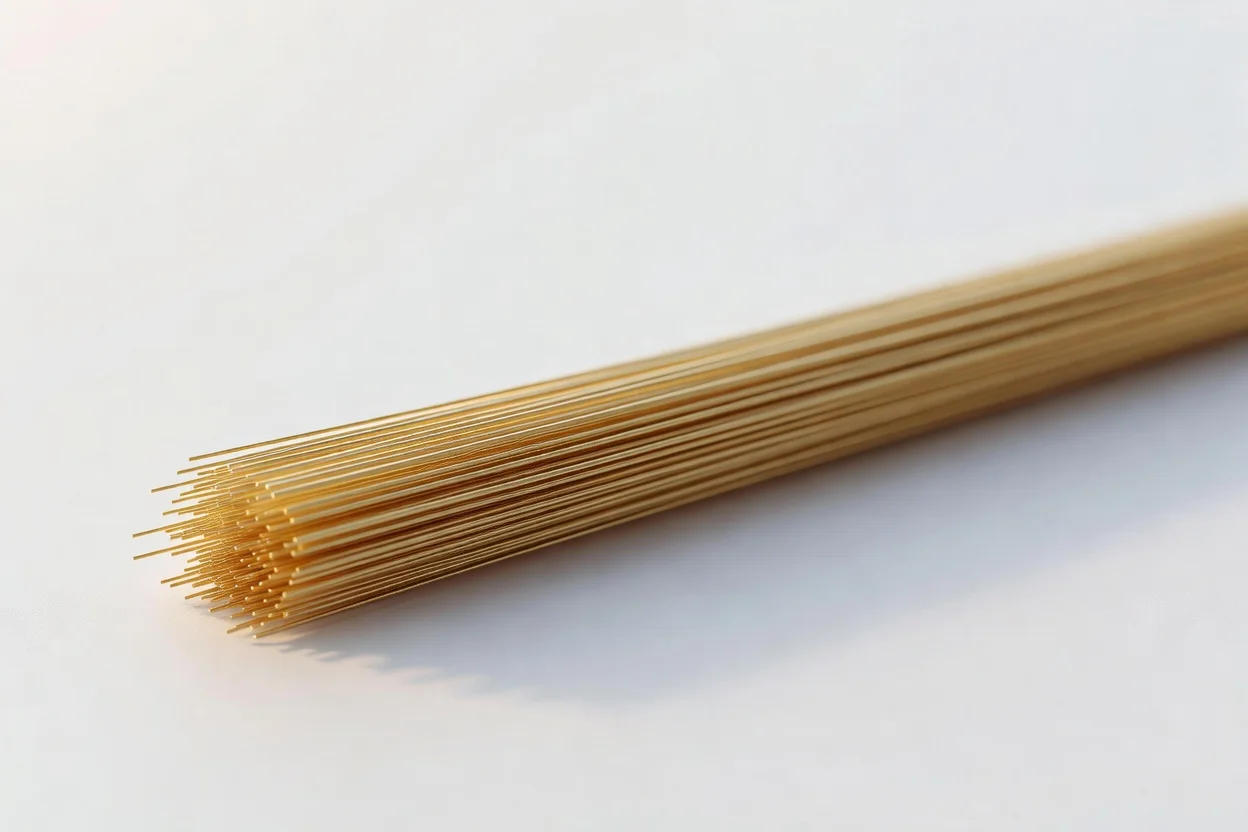
Aramid fibers are a family of high-performance synthetic fibers based on aromatic polyamides, defined in regulatory usage as manufactured fibers in which at least 85% of the amide linkages are attached directly to two aromatic rings. They are valued for their exceptional combination of low density, high tensile strength, high modulus, thermal stability, flame resistance, and good impact and abrasion resistance, which makes them important in protective apparel, composites, friction materials, and reinforcement products.
The aramid family is usually divided into para-aramid and meta-aramid fibers, with para-aramids such as Kevlar and Twaron optimized for high strength and stiffness, while meta-aramids such as Nomex are used primarily for thermal and flame-resistant protection. Their industrial role has expanded from aerospace and military uses into transportation, industrial safety, cables, tires, marine systems, and civil engineering composites, while sustainability discussions increasingly focus on recyclability, fiber recovery, and the challenge of producing high-performance fibers with lower environmental impact.
History and Development
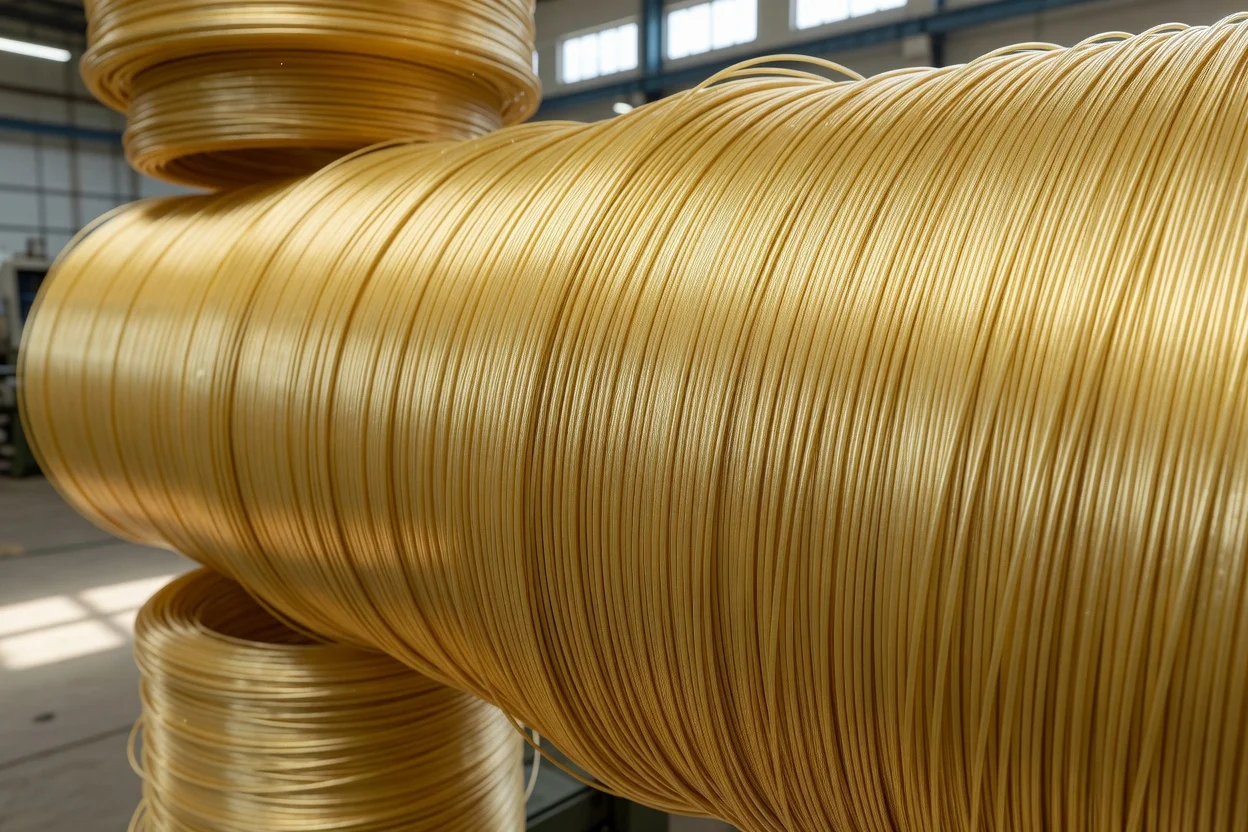
Aramid fibers emerged as part of the broader development of aromatic polyamides, which sought to combine the chemical robustness of polyamides with the stiffness of aromatic backbones. Commercial adoption accelerated after high-strength para-aramid fibers were introduced for ballistic and industrial reinforcement applications, followed by meta-aramids for flame-resistant textiles and thermal insulation.
Their growth was supported by demand for materials that could replace asbestos in friction and sealing products and substitute for heavier metals in weight-sensitive structures. Over time, the technology spread into composite processing, technical textiles, and specialty reinforcement formats including yarns, fabrics, pulp, and chopped fibers.
Chemical Structure and Key Properties
Aramids are aromatic polyamides, meaning the polymer backbone contains amide groups linked to aromatic rings, producing a rigid chain structure with limited rotational freedom. This rigidity is central to their high tensile performance and thermal resistance, especially in para-aramids where chains can align strongly during spinning.
| Property | Typical significance |
|---|---|
| Low density | Enables very high specific strength and light-weighting in composites and protection systems. |
| High tensile strength | Supports ballistic, rope, cable, and reinforcement uses. |
| High modulus | Improves dimensional stability and load-bearing behavior in composites. |
| Thermal stability | Allows continuous use in elevated-temperature environments. |
| Flame resistance | Makes meta-aramids especially suitable for protective clothing. |
Important real-world limits include:
- Poor compression performance → the fiber resists tension far better than compressive loading, largely because of its morphology and weak interfacial bonding in many resin systems → use in composites is often combined with hybrid layups, structural design that favors tensile loading, or surface treatments and compatibilizers to improve resin adhesion.
- UV sensitivity → prolonged exposure to ultraviolet radiation can degrade properties and discolor the fibers → protective coatings, pigmentation, and encapsulation in laminates or textile structures are used to reduce exposure.
- Difficult bonding to matrices → low surface reactivity can limit adhesion in some composites → plasma treatment, fiber sizing, or resin formulation adjustments are commonly used.
Typical performance ranges reported in technical literature show para-aramid tensile strengths in the multi-gigapascal range and moduli well above common engineering fibers, while meta-aramids trade lower strength for better thermal comfort and flame protection.
Production Processes and Raw Feedstocks
Aramid fibers are produced by polymerizing aromatic diamines with aromatic diacid chlorides or related precursors to form rigid-chain polyamides, followed by solution spinning because the polymers are generally not melt-processable. Para-aramid is typically produced by dry-jet wet spinning, which helps align liquid-crystal-like polymer chains and yields high crystallinity and high modulus. Meta-aramid is commonly produced by wet spinning from a chemical solution.
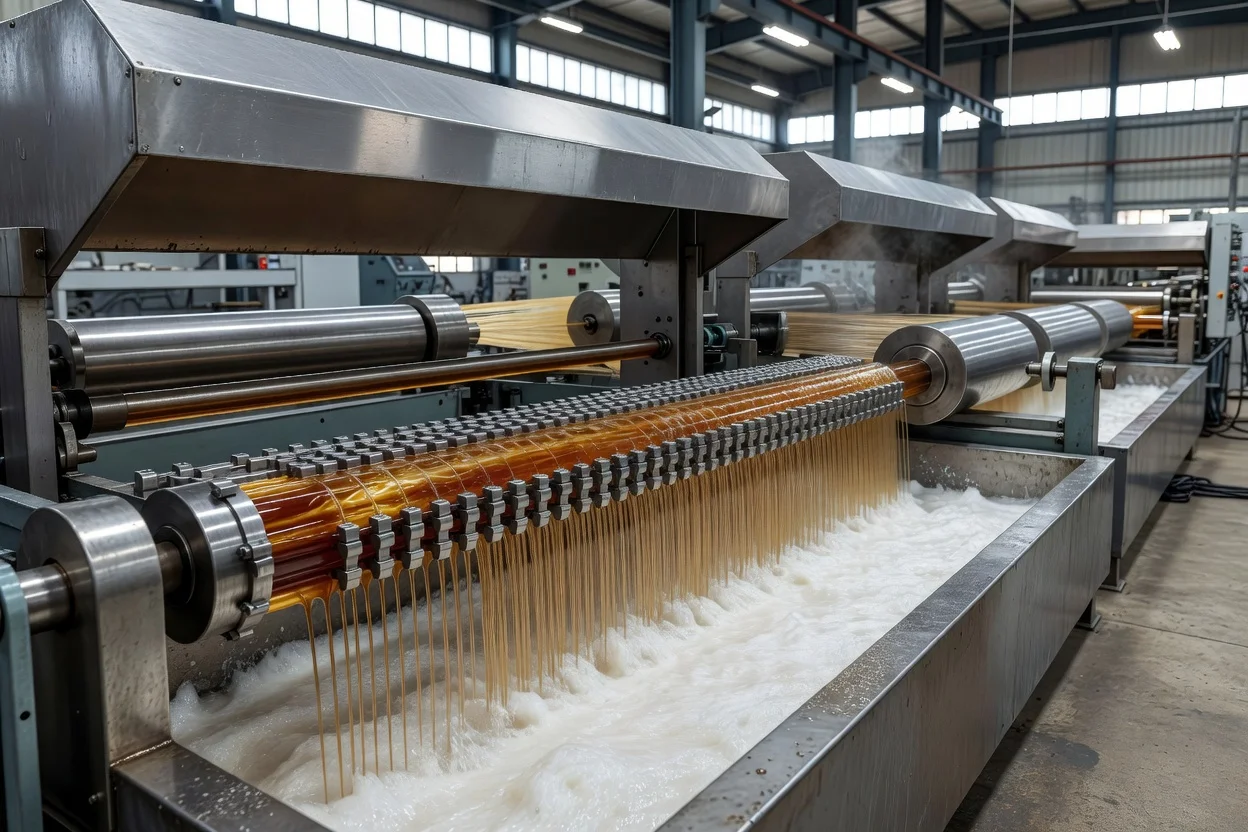
The main feedstocks are aromatic petrochemicals and specialty intermediates, so production depends on a sophisticated upstream chemical chain rather than bulk polymer extrusion. Manufacturing quality is strongly influenced by polymer molecular weight, chain orientation, solvent management, coagulation conditions, and heat treatment.
Leading global names associated with aramid production and commercialization include DuPont through Kevlar and Nomex, Teijin Aramid through Twaron and related products, and other specialty fiber producers serving defense, industrial, and flame-resistant textile markets. These firms have historically shaped the market through process know-how, brand recognition, and application development.
Applications and End-Use Markets
Aramid fibers are used where a high strength-to-weight ratio or heat/flame resistance is more important than cost parity with conventional fibers. Their use is usually optimized by selecting the right aramid type and processing form.
| End-use sector | Typical aramid type | Common format | Usual role |
|---|---|---|---|
| Ballistic protection | Para-aramid | Woven fabric, UD laminates | Body armor, helmets, shields. |
| Flame-resistant clothing | Meta-aramid | Yarn, fabric, blends | Firefighting and industrial protective garments. |
| Aerospace and defense composites | Para-aramid | Fabric, prepreg, laminate | Lightweight reinforcement and impact resistance. |
| Tires, belts, hoses, cables | Para-aramid | Cord, yarn, pulp | Dimensional stability and reinforcement. |
| Friction and sealing materials | Para-aramid pulp | Pulp, chopped fiber | Brake pads, clutch facings, gaskets. |
| Marine and industrial ropes | Para-aramid | Rope, cable | Lightweight high-strength load bearing. |
| Civil engineering reinforcement | Para-aramid | Fabric, bars, wraps | Concrete strengthening and retrofitting. |
| Consumer sports goods | Para-aramid | Fabric, composite reinforcement | Rackets, skis, bicycles, sails. |
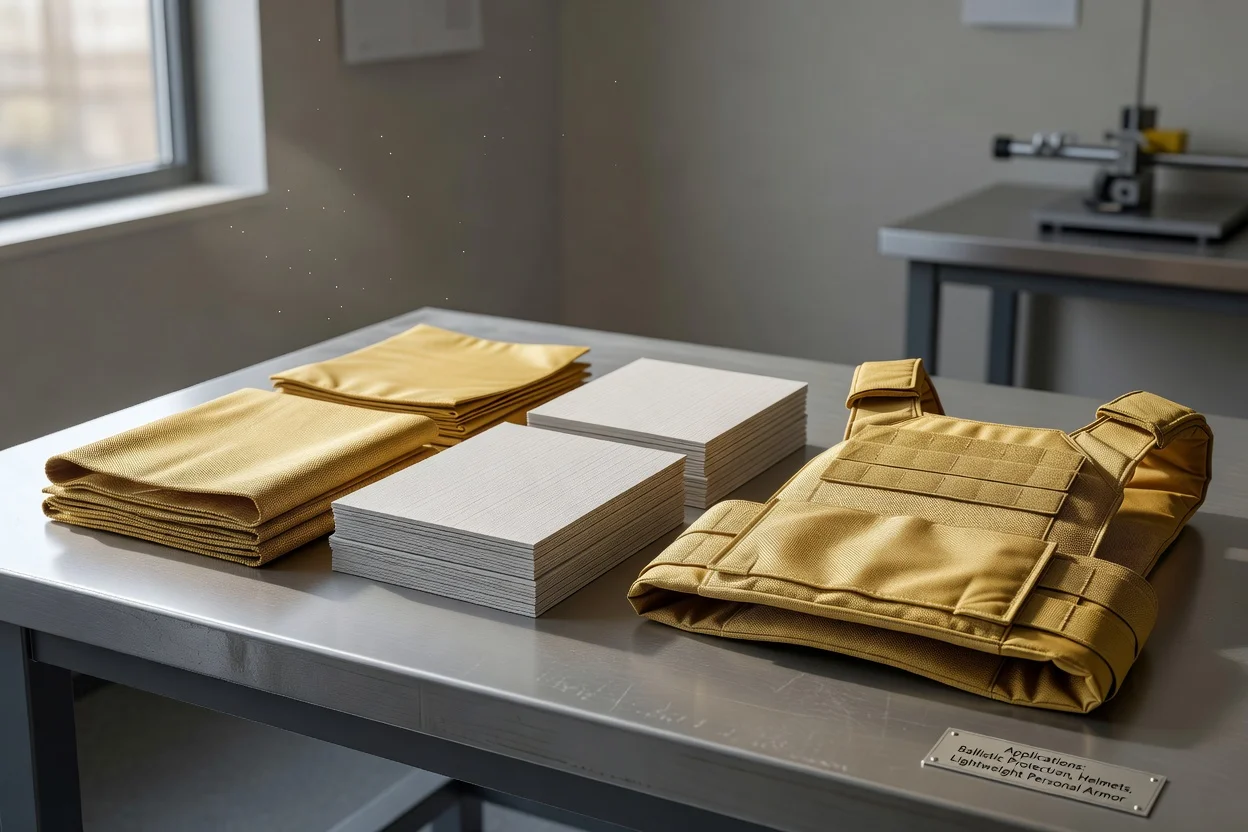
A poor-fit use is high-compression structural components, because aramids are excellent in tension but less favorable where compressive buckling, through-thickness stiffness, or strong matrix adhesion dominate performance.
A useful formulation example is aramid pulp in friction materials, often used at low-to-moderate loading as a reinforcement network that helps distribute stress and improve wear resistance in brake linings and clutch facings. Another example is surface-treated para-aramid fabric in resin composites, where sizing or plasma treatment improves interfacial bonding and reduces delamination risk.
Environmental and Sustainability Aspects
Aramid fibers are durable and long-lived, which is an advantage in safety-critical products but a challenge for end-of-life management. Their durability reduces replacement frequency in service, yet the same stability makes recycling and fiber recovery more difficult than for many commodity plastics and fibers.
Sustainability discussions focus on several pathways:
- Mechanical recycling and downcycling of production scrap and post-industrial waste into fillers, pulp, or lower-grade reinforcement.
- Fiber recovery from composites, which remains technically difficult because aramids are often embedded in thermoset matrices.
- Bio-based or lower-carbon intermediates, still limited by the need for high-performance aromatic structures and solvent-intensive spinning routes.
- Circular design, including easier-to-separate laminates, longer service life, and repairable composite architectures.
Compared with metallic reinforcements, aramids can reduce vehicle, aircraft, and equipment weight, which may lower operational energy use over the life of the product. However, the production route is chemically intensive, so the overall carbon footprint depends heavily on plant efficiency, solvent recovery, energy source, and product lifetime.
Economic and Global Market Impact
Aramid fibers occupy a premium niche in the global plastics and composites value chain, where performance rather than tonnage drives market value. Demand is shaped by defense procurement, industrial safety regulations, aerospace weight-reduction strategies, and infrastructure rehabilitation projects.
The market is concentrated among a relatively small number of producers with proprietary spinning technologies and strong intellectual property positions. This concentration supports quality control and application engineering but also limits price competition and creates supply sensitivity in critical sectors such as ballistic protection and flame-resistant clothing.
According to recent industry analyses, aramid demand remains supported by protective equipment, transportation reinforcement, and composite substitution for heavier materials, while growth is tempered by high cost and limited substitutability in some end uses. As a result, aramid fibers are often purchased not as generic commodities but as specification-driven engineering materials.
Current Challenges and Innovations
Current challenges include:
- High cost relative to glass, nylon, polyester, and many carbon-fiber alternatives in some applications.
- Interface control in composites, especially where adhesion and compression performance are limiting factors.
- End-of-life complexity in thermoset composites and multi-material protective products.
- UV durability and aging, particularly in exposed applications.
Innovation is focused on:
- Nanofibrillated aramid derivatives and aramid nanofibers for membranes, filtration, separators, and multifunctional composites.
- Hybrid composites combining aramid with carbon, glass, or thermoplastic matrices to balance impact resistance, stiffness, and cost.
- Improved spinning and surface treatment to enhance modulus, strength consistency, and resin adhesion.
- Application-specific grades, especially for firefighting, electric mobility, and lighter armor systems.
Future Outlook
Aramid fibers are likely to retain their role as a critical high-performance reinforcement where lightweight protection and thermal resilience are non-negotiable. Growth prospects are strongest in personal protection, industrial safety, aerospace interiors and structures, brake and clutch systems, and civil engineering strengthening.
Future development will probably center on three themes: better sustainability through solvent recovery and recycling, improved composite integration through surface engineering, and broader use of hybrid architectures that reduce cost while preserving performance. In practice, the material’s future will depend on whether producers can combine aramid’s proven performance advantages with more circular manufacturing and end-of-life pathways.
Summary
Aramid fibers are aromatic polyamide fibers engineered for exceptional strength, thermal resistance, and low weight. Para-aramids dominate ballistic and structural reinforcement uses, while meta-aramids dominate flame-resistant textiles and thermal protection. Their commercial importance is strongest in high-value technical applications, where their unique property balance justifies the cost, but their environmental profile and recycling complexity remain central issues for the next phase of development.
References
- •
Aramid. (2003, July 18). Wikipedia. https://en.wikipedia.org/wiki/AramidLink
- •
Aramid fiber. (2000, January 1). Fibermax. https://www.fibermax.eu/aramid-fiber.htmlLink
- •
Aramid fiber - An overview. (n.d.). ScienceDirect. https://www.sciencedirect.com/topics/materials-science/aramid-fiberLink
- •
What is aramid fiber? (2024, March 5). iPITAKA. https://www.ipitaka.com/blogs/news/what-is-aramid-fiberLink
- •
Applications - Aramid fiber. (2024, July 18). Aramid.eu. https://aramid.eu/applications/Link
- •
Aramid fiber: Advanced structural properties, synthesis.... (n.d.). Eureka PatSnap. https://eureka.patsnap.com/materials/aramid-fiber-propertiesLink
- •
Aramid fibers explained: Properties, types & industrial applications. (2024, July 18). Shenghe Tech. https://shenghetech.com/info-detail/aramid-fibers-explained-properties,-types-industrial-applicationsLink
- •
Aramid fibre. (n.d.). Final Materials. https://www.final-materials.com/gb/21-aramid-fibreLink
- •
Aramid fibers: Types, properties, manufacturing process.... (2020, December 25). Textile Learner. https://textilelearner.net/aramid-fibers-types-properties-manufacturing-process-and-applications/Link
- •
What is aramid fiber? Why it matters in modern composites. (2025, September 5). Jota Machinery. https://www.jotamachinery.com/academy/advanced-composite-materials/what-is-aramid-fiber/Link
- •
Exploring the advanced chemistry of aramid fibers. (2024, June 24). Body Armor News. https://bodyarmornews.com/aramid_chemistry/Link
- •
What are the application fields of aramid fiber? (2023, July 8). Shenghe Tech. https://shenghetech.com/info-detail/what-are-the-application-fields-of-aramid-fiberLink
- •
What is aramid fiber? What are the scope of application? (n.d.). Medium. https://medium.com/@trueland1589/what-is-aramid-fiber-what-are-the-scope-of-application-37de0e3af9acLink
- •
Aramids explained - Why they're used in flame resistant fabrics. (2022, September 22). TenCate Fabrics. https://us.tencatefabrics.com/blog/aramids-explainedLink
- •
Aramid fibre (Kevlar / Twaron) – Properties and applications. (2002, May 2). AZoM. https://www.azom.com/article.aspx?ArticleID=1384Link
- •
Aramid fiber - An overview. (n.d.). ScienceDirect. https://www.sciencedirect.com/topics/engineering/aramid-fiberLink
- •
Aramid fiber: The basics. (2026, May 18). CompositesWorld. https://www.compositesworld.com/articles/aramid-fiber-the-basicsLink
- •
Aramid's wide uses. (2024, August 9). Aramid.eu. https://aramid.eu/applications-aramid-fibers/Link
- •
Aramid fibers [PDF]. (2015, May 11). SlideShare. https://www.slideshare.net/slideshow/aramid-fibers-47983957/47983957Link
- •
What are aramid fiber? Exploring their structures, properties and uses. (2016, December 1). iPITAKA. https://www.ipitaka.com/blogs/news/what-are-aramid-fibersLink
- •
Aramid fiber. (2022, January 1). Cameo. https://cameo.mfa.org/wiki/Aramid_fiberLink
- •
Applications of aramid fibers in the composite materials industry. (2024, November 28). Hipfiber. https://hipfiber.com/applications-of-aramid-fibers-composite-materials-industry/Link
- •
Aramid fiber - An overview. (n.d.). ScienceDirect. https://www.sciencedirect.com/topics/physics-and-astronomy/aramid-fiberLink
- •
All you need to know about aramid fiber (1). (2024, June 7). Hipfiber. https://hipfiber.com/all-you-need-to-know-about-aramid-fiber-1/Link
- •
Aramid fiber textile material: Comprehensive analysis of.... (n.d.). Eureka PatSnap. https://eureka.patsnap.com/materials/aramid-fiber-textileLink
- •
Applications of aramid fiber-reinforced polymer composites.... (2026, April 30). PMC. https://pmc.ncbi.nlm.nih.gov/articles/PMC13165349/Link
- •
Aramid. (2003, July 18). Wikipedia. https://en.wikipedia.org/?title=Para-aramidLink
- •
Characteristics of p-aramid fibers in friction and sealing materials. (n.d.). Sage Journals. https://journals.sagepub.com/doi/pdf/10.1177/152808370003000205Link
- •
Application of aramid nanofibers in nanocomposites. (2021, September 11). PMC. https://pmc.ncbi.nlm.nih.gov/articles/PMC8466914/Link