

Introduction
Polyaryletherketone (PAEK) is a family of high-performance, semi-crystalline thermoplastics defined by aromatic rings linked through ether and ketone groups in the polymer backbone. The family is best known through its commercial flagship, polyetheretherketone (PEEK), but also includes PEK, PEKK, PEEKK, and PEKEKK, among other related structures. PAEKs are valued for their unusual combination of high temperature capability, chemical resistance, mechanical strength, low smoke generation, and suitability for demanding engineering environments.
PAEKs emerged from high-temperature polymer research in the 1970s and reached commercial maturity through developments by ICI, which introduced PEK and then PEEK into the market in the 1980s. Since then, the family has expanded into a platform material for aerospace, medical devices, electronics, energy, and industrial wear components, especially where metal replacement and long-term dimensional stability are important.
The family is not a single polymer but a structural class: changing the ratio and sequence of ether to ketone linkages alters crystallinity, melting point, processability, and stiffness while preserving the overall high-performance character. This tunability is one reason PAEKs remain strategically important in advanced manufacturing, including additive manufacturing and high-value fiber-reinforced composites.
Sustainability is a more complex question. PAEKs are durable and long-lived, which can reduce replacement frequency in service, but they are also energy-intensive, high-cost materials with limited mass-market recyclability infrastructure. Current innovation is therefore focused on lower-emission synthesis, improved processing efficiency, recycling of manufacturing scrap, and design-for-repair or reuse in high-value sectors.
History and Development
PAEK chemistry was developed as part of broader efforts to create polymers that could retain properties at temperatures far beyond conventional engineering plastics. Early work in the 1970s produced laboratory-scale materials, but commercialization required process optimization and the development of more practical synthesis routes.
ICI is widely credited with the first successful commercialization of PEK in 1982 and PEEK in 1987. These milestones established PAEK as a serious industrial family rather than a laboratory curiosity. Subsequent decades brought new grades and copolymers, especially PEKK and related variants, each tuned for different combinations of melt behavior, crystallization rate, and end-use performance.
The material’s development accelerated further as industries sought lighter substitutes for metals, particularly in aerospace, oil and gas, electronics, and medicine. More recently, the rise of additive manufacturing has created new opportunities for PAEK because complex parts can be produced with less tooling, while retaining the high-temperature and mechanical advantages that make the material attractive in the first place.
Chemical Structure and Key Properties
PAEK polymers are built from rigid aromatic rings linked by ether and ketone groups, creating a stiff backbone with high thermal and mechanical stability. The molecular rigidity restricts chain mobility, which raises glass transition temperature, improves creep resistance, and contributes to the family’s high service temperature.
A useful way to understand the family is to treat the ether links as flexibility elements and the ketone links as stiffness elements. More ether content generally improves melt processability and toughness, while more ketone content tends to raise crystallinity, stiffness, and thermal resistance.
Typical property ranges reported for commercial PAEKs include a glass transition temperature around 132 to 187 °C, melting points roughly in the 330 to 390 °C range, and continuous operating temperatures up to about 250 °C for unloaded materials. Some sources also report short-term operation at substantially higher temperatures under limited load.
| Property | Typical PAEK behavior |
|---|---|
| Structure | Aromatic backbone with ether and ketone linkages |
| Crystallinity | Semi-crystalline |
| Glass transition | About 132 to 187 °C |
| Melting point | About 330 to 390 °C |
| Continuous use temperature | Up to about 250 °C in suitable conditions |
| Key strengths | Heat resistance, chemical resistance, wear resistance, flame resistance, dimensional stability |
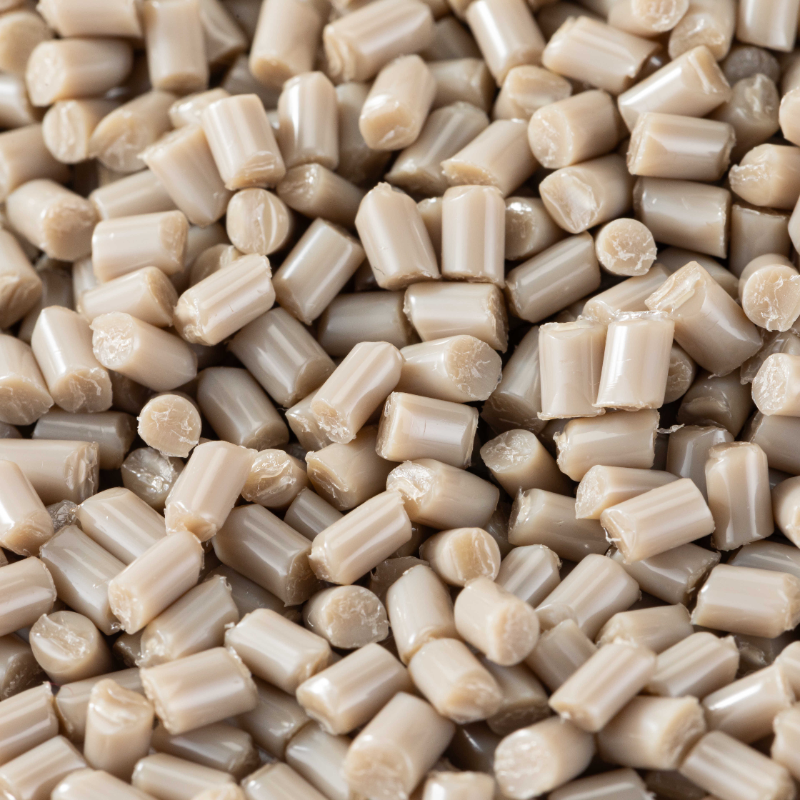
PAEKs have several important performance limits:
- Poor oxygen and grease barrier → the aromatic thermoplastic structure does not provide the tight barrier performance needed for packaging films → workaround: use multilayer structures or select barrier-specific materials instead.
- Low surface energy before treatment → the polymer surface is difficult to bond, print, or coat directly → workaround: plasma, corona, flame, or chemical surface treatment is used to improve adhesion.
- Very high melt-processing temperature → processing often requires specialized equipment and tight thermal control → workaround: use high-temperature extrusion, injection molding, or additive platforms designed for PAEK processing.
- High raw-material cost → the material is more expensive than most engineering plastics → workaround: reserve it for applications where lifetime performance or weight reduction offsets the initial cost.
Production Processes and Raw Feedstocks
PAEKs are typically produced through step-growth polymerization routes, often involving aromatic monomers and activated dihalide or related electrophilic units. Industrial routes vary by grade, but nucleophilic aromatic substitution chemistry is commonly associated with this family.
The feedstock chain generally includes:
- Aromatic monomers
- Ether-forming and ketone-containing building blocks
- Solvents and salts for polymerization control
- Post-polymerization purification and pelletizing steps
Process design strongly influences final properties. Molecular weight, monomer ratio, and sequence distribution affect crystallization rate, melting point, and the balance between toughness and stiffness. This is especially important for PEKK and related copolymers, where relatively small structural changes can make the polymer either easier or harder to process.
Commercial production remains concentrated in a small number of specialized producers because the chemistry is demanding, capital intensive, and tied to high-performance end markets. PEEK is the best-known and most widely sold member of the family, while PEKK and other variants serve niche segments requiring different thermal and processing profiles.
Applications and End-Use Markets
PAEKs are used where conventional engineering plastics are pushed beyond their limits. Their best-fit applications tend to combine high temperature, chemical exposure, wear, electrical insulation, or weight-sensitive structural demand.
| End-use sector | Typical grade or form | Why PAEK is used |
|---|---|---|
| Aerospace | Carbon-fiber-reinforced PEEK or PEKK, films, composites | Weight reduction, fatigue resistance, fire performance |
| Medical | Unfilled or fiber-reinforced PEEK/PEKK, implants, instruments | Biocompatibility, sterilization resistance, radiolucency |
| Electronics | Precision molded parts, films, insulating components | Dielectric performance, thermal stability |
| Oil and gas | Seals, bearings, valve parts, compressor rings | Chemical resistance, wear resistance |
| Automotive and transport | Composites, under-hood and structural parts | Heat and corrosion resistance, lightweighting |
| Industrial machinery | Wear pads, bushings, bearings | Low friction, durability |
| Additive manufacturing | Filament and powder grades | Complex geometries and customization |
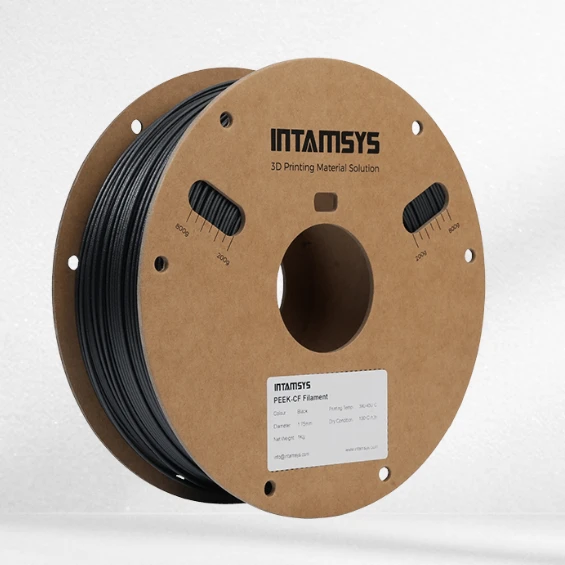
In medical applications, PAEK is especially associated with implantable and non-implantable devices because the material combines sterilizability, toughness, and favorable biological performance. In aerospace, carbon-fiber-reinforced grades are attractive because they can deliver metal-like structural performance at much lower weight. In electronics, PAEK is used in high-temperature insulating and structural parts where flame resistance and dielectric performance matter.
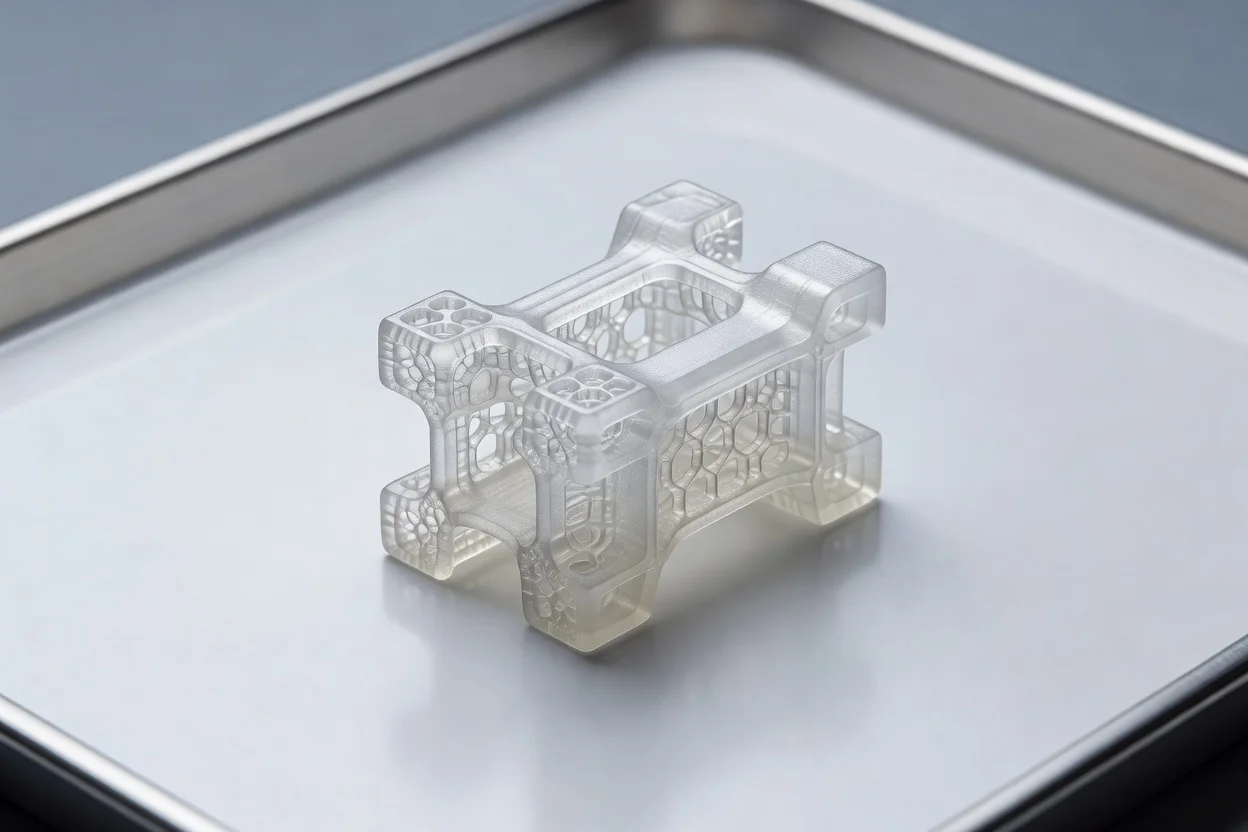
One poor-fit use is commodity packaging. Despite its strength, PAEK is not suited to low-cost, high-volume packaging because its cost, processing temperature, and barrier profile do not align with that market.
Environmental and Sustainability Aspects
PAEK sustainability must be assessed by application rather than by material type alone. The key advantage is durability: parts can last a very long time in service, which may reduce replacement frequency, maintenance, and material consumption over the product lifecycle.
At the same time, the material has clear environmental challenges:
- High synthesis and processing energy demand
- Limited recycling infrastructure outside industrial scrap loops
- High cost that discourages broad adoption in disposable or short-life goods
- Dependence on specialized monomers and controlled manufacturing chains
Mechanical recycling is feasible for clean manufacturing scrap and some end-of-life streams, but the economics are difficult because collection volumes are low and the material is usually used in high-value, highly engineered parts rather than bulk applications. In practice, recycling efforts are most credible where parts are traceable, pure, and concentrated in industrial or aerospace supply chains.
Bio-based PAEK alternatives remain an area of research rather than a large commercial reality. The main near-term sustainability gains are more likely to come from:
- Higher process efficiency
- Reuse of machining scrap
- Better part design for longer service life
- Lower-emission upstream synthesis
- Additive manufacturing that reduces waste during production
For many applications, especially aerospace and medical devices, the sustainability argument is therefore functional longevity rather than simple material substitution.
Economic and Global Market Impact
PAEK is a premium niche in the global plastics market. Its value per kilogram is high, but its tonnage is small compared with commodity polymers because it serves specialized applications where failure is costly and performance is critical.
The market is shaped by:
- Concentrated production among a few specialized suppliers
- High qualification barriers in aerospace, medical, and electronics
- Strong linkage to demand for lightweighting and high-temperature performance
- Exposure to cyclical industrial sectors such as aerospace and energy
PEEK remains the dominant commercial grade and is the most widely recognized PAEK resin. PEKK has gained attention because its crystallization and processing behavior can be tailored more flexibly for additive manufacturing and high-end composites. Other family members remain more specialized and are less visible commercially.
Current Challenges and Innovations
The central technical challenge for PAEK is balancing processability with ultimate performance. More crystalline or more rigid grades often deliver superior heat resistance and stiffness, but they can be harder to melt-process, crystallize more slowly or unpredictably, and require tighter manufacturing control.
Current innovation themes include:
- Additive manufacturing: enabling intricate, lightweight components and patient-specific medical parts.
- Fiber reinforcement: especially carbon fiber, which greatly raises modulus and dimensional stability.
- Crosslinking and hybrid architectures: aiming to preserve high-temperature mechanical performance above traditional limits.
- Surface engineering: improving adhesion, tribology, and integration with other materials.
- Tailored copolymers: adjusting ether-to-ketone ratios to tune melt behavior and crystallization.
One particularly important trend is the use of PAEK in 3D printing, where the material’s high service temperature and biocompatibility create opportunities in aerospace, medical, and tooling applications. However, additive manufacturing also highlights a weakness: printed PAEK parts can show anisotropy if processing conditions are not carefully controlled.
Future Outlook
PAEK is likely to remain a strategic material family rather than a mass-market polymer class. Its future will depend on whether manufacturers can justify premium cost through lower part weight, longer life, reduced maintenance, or higher function density.
The most promising growth areas are expected to be:
- Aerospace composites and interior components
- Medical implants and surgical devices
- Semiconductor and electronics hardware
- Oil, gas, and chemical process equipment
- High-value additive manufacturing
Future progress will probably come less from radical changes in chemistry than from refinement of processing, recycling, and application design. If producers can reduce environmental intensity while preserving the family’s defining thermal and mechanical advantages, PAEK will retain its position as one of the most important high-performance thermoplastic platforms in the plastics industry.
Summary
PAEK is a family of semi-crystalline, high-performance aromatic thermoplastics distinguished by ether and ketone-linked backbones, high temperature resistance, chemical durability, and strong mechanical performance. Its commercial importance is driven primarily by PEEK and PEKK, with applications concentrated in aerospace, medical, electronics, energy, and industrial wear systems.
Its main value lies in enabling lightweight, durable, and high-reliability parts where standard plastics are inadequate. Its main constraints are high cost, demanding processing, limited barrier performance, and sustainability challenges associated with energy-intensive production.
References
- •
Polyaryletherketone. (2009, September 2). In Wikipedia. https://en.wikipedia.org/wiki/PolyaryletherketoneLink
- •
Polyaryletherketone (PAEK). (2022, January 24). Drake Plastics. https://drakeplastics.com/ultra-high-performance-plastic-materials-solutions-for-your-most-demanding-applications/polyaryletherketone-paek/Link
- •
Description of Poly(aryl-ether-ketone) Materials (PAEKs ... - PMC. (2023, May 2). https://pmc.ncbi.nlm.nih.gov/articles/PMC10180673/Link
- •
Polyaryletherketones (PAEKs): An overview, innovations, and .... (2018, February 9). UL Prospector. https://ulprospector.ul.com/knowledge/5912/pe-paek-polyaryletherketones-overview/Link
- •
A sneak peek toward polyaryletherketone (PAEK) polymer. (2022, November 3). https://pmc.ncbi.nlm.nih.gov/articles/PMC9720088/Link
- •
PAEK.pdf. (2025, July 10). Scribd. https://www.scribd.com/document/408800891/PAEK-pdfLink
- •
PEEK (polyetheretherketone) vs PAEK .... (2026, July 29). Victrex. https://www.victrex.com/en/blog/2021/peek-or-paekLink
- •
PEEK vs PEKK vs PEEKK: Comparing top-grade PAEK .... (2025, May 23). PEEK China. https://www.peekchina.com/blog/paek-peek-pekk-peekk.htmlLink
- •
PAEK - Knowledge and references | Taylor & Francis. (2019, September 1). Taylor & Francis. https://taylorandfrancis.com/knowledge/Engineering_and_technology/Chemical_engineering/PAEK/Link
- •
Polyaryletherketone (PAEK). (n.d.). UL Prospector. https://www.ulprospector.com/plastics/en/generics/29Link
- •
Polyaryletherketones PAEK. (1995, February 10). Techniques de l'Ingénieur. https://www.techniques-ingenieur.fr/en/resources/article/ti100/polyaryletherketones-paek-a3395/v1Link
- •
Recent advances on high-performance polyaryletherketone .... (2022, December 12). PubMed. https://pubmed.ncbi.nlm.nih.gov/35385149/Link
- •
Polyether ether ketone. (2003, June 24). In Wikipedia. https://en.wikipedia.org/wiki/Polyether_ether_ketoneLink
- •
Polyaryletherketone high performance polymer. (n.d.). PatSnap Eureka. https://eureka.patsnap.com/materials/paek-high-performance-polymerLink
- •
Recent advances in PEEK for biomedical applications - PMC - NIH. (2025, July 17). https://pmc.ncbi.nlm.nih.gov/articles/PMC12300588/Link
- •
What is polyaryletherketone (PAEK)? A comprehensive overview. (2025, February 27). PatSnap Eureka. https://eureka.patsnap.com/blog/material-tech-resources/what-is-polyaryletherketone/Link
- •
What is poly-ether-ether-ketone (PEEK) polymer? Properties .... (2019, September 24). Victrex. https://www.victrex.com/en/blog/2017/a-closer-peek-at-peekLink
- •
Polyaryletherketones: Properties and applications in .... (n.d.). ScienceDirect. https://www.sciencedirect.com/science/article/pii/S2949723X23000673Link
- •
Polyaryletherketone: Comprehensive analysis of molecular .... (n.d.). PatSnap Eureka. https://eureka.patsnap.com/materials/polyaryletherketone-analysisLink
- •
Polyetherketones. (2022, May 11). In Wikipedia. https://en.wikipedia.org/wiki/PolyetherketonesLink
- •
Poly(aryl ether ketone) (PAEK) with both high gel content .... (2024, December 26). ACS Publications. https://pubs.acs.org/doi/10.1021/acsapm.4c02726Link
- •
Polyaryletherketone chemical resistant polymer. (n.d.). PatSnap Eureka. https://eureka.patsnap.com/materials/paek-chemical-resistantLink
- •
Adaptable polyaryletherketones (PAEKs) with competing .... (2024, January 5). https://pmc.ncbi.nlm.nih.gov/articles/PMC10770073/Link
- •
Polyaryletherketone high temperature polymer. (n.d.). PatSnap Eureka. https://eureka.patsnap.com/materials/paek-high-temp-polymerLink
- •
Polyaryletherketone (PAEK) market size, share, forecast, .... (2026, July 27). Fortune Business Insights. https://www.fortunebusinessinsights.com/polyaryletherketone-paek-market-102941Link
- •
PAEK testing – Polyaryletherketones and PEEK materials. (n.d.). Smithers. https://www.smithers.com/industries/materials/polymer/polymer-chemical-characterization/paek-testing-peek-materialsLink