
Introduction
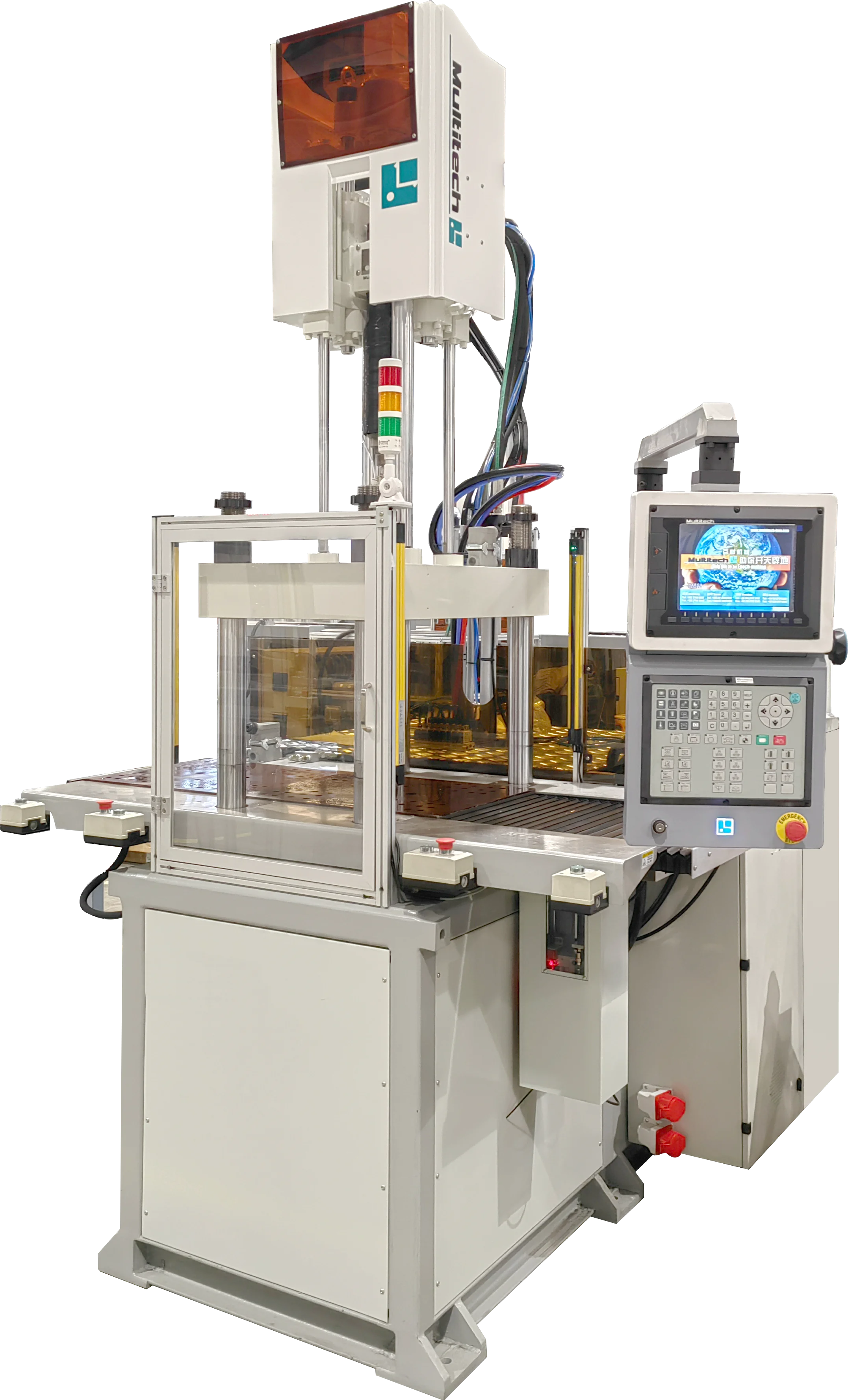
Injection molding machines for rubber are specialized presses designed to process uncured elastomer compounds into finished parts by forcing preheated material into a closed mold where heat and pressure complete vulcanization. They are widely used for precision seals, O-rings, grommets, vibration-isolation parts, medical stoppers, and other components that require tight dimensional control and consistent curing behavior.
Unlike conventional plastic injection molding machines, rubber presses are engineered around the rheology and curing kinetics of thermoset elastomers and many silicone grades. The process typically combines a screw or plunger plasticizing stage, a heated injection barrel, a high-force clamping unit, and a temperature-controlled mold system, with vertical and horizontal machine layouts available for different part geometries and automation strategies.
The segment has evolved from early compression and transfer molding toward more automated, repeatable injection systems, driven by demand for higher productivity, lower flash, better part-to-part consistency, and compatibility with demanding sectors such as automotive, electrical, medical, and industrial sealing. Current development trends include energy-efficient hydraulics and electric drive components, closed-loop process control, multi-cavity tooling, and integrated de-flashing or robotic handling systems.
History and Development
Rubber injection molding developed as a response to the limitations of compression molding, especially long cycle times, higher flash generation, and greater labor intensity. As injection technology matured, manufacturers adapted the concept from plastics to elastomers by adding heated barrels, controlled pre-plasticizing, and cure-aware mold temperature management.
A major technical milestone was the adoption of reciprocating-screw and screw-and-ram injection units, which improved compound homogenization and dosing consistency before injection. Industrial descriptions of modern rubber presses commonly emphasize the screw-driven pre-plasticizing stage, followed by hydraulic injection into a heated mold cavity.
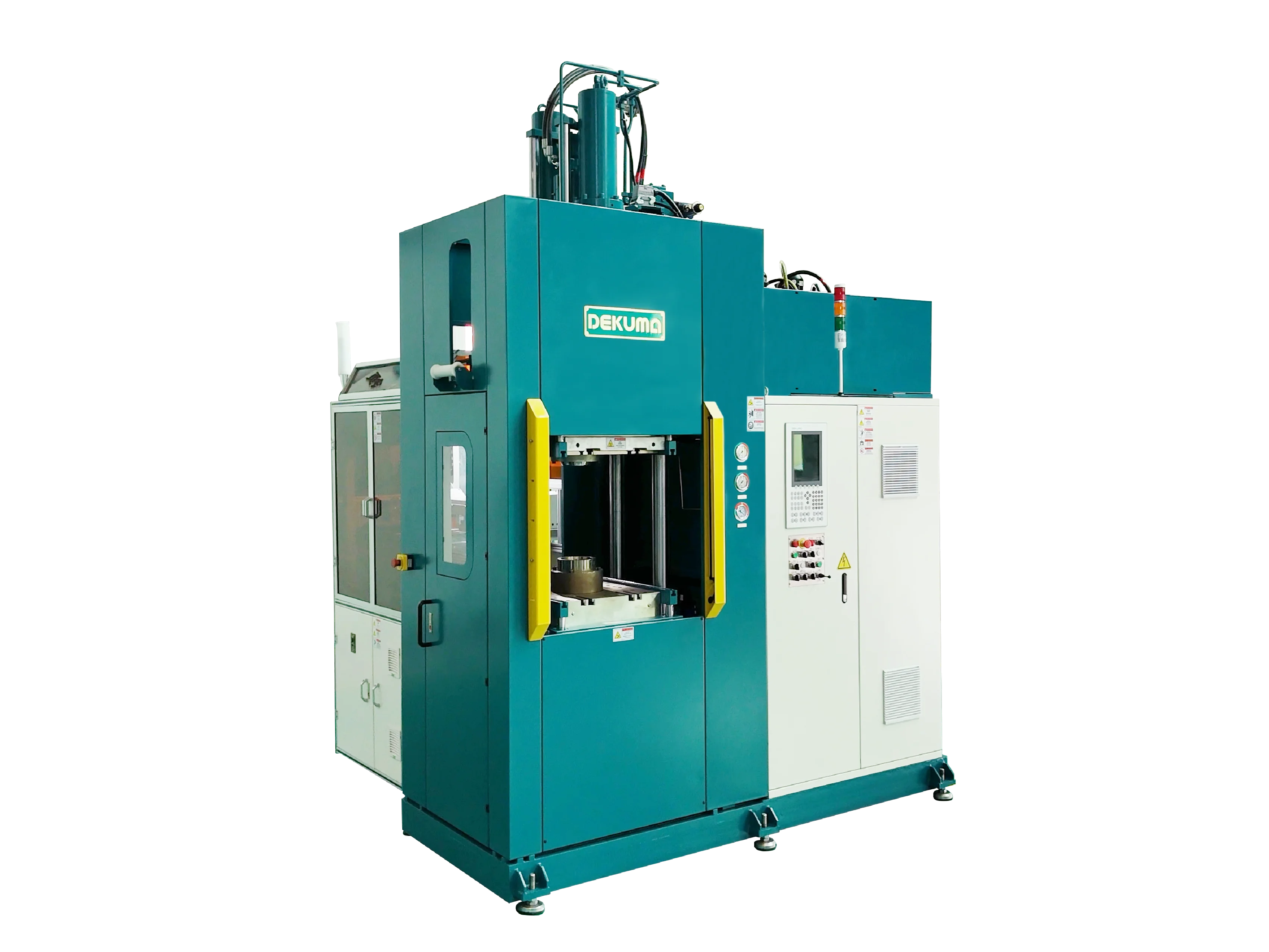
Another milestone was the spread of dedicated rubber press platforms rather than modified plastic machines, with manufacturers such as ENGEL, DESMA, REP, DEKUMA, and others offering models and series intended specifically for elastomers and thermosets. This specialization improved temperature stability, clamp behavior, operator ergonomics, and tool integration.
More recent development has centered on automation and process monitoring, including servo-hydraulic systems, intelligent weight or shot monitoring, vertical machine variants for insert molding, and integrated handling for de-flashing or part removal.
Key Characteristics and Technical Overview
Rubber injection molding machines are designed to keep uncured compound workable long enough for filling, while ensuring the mold remains hot enough to complete cure efficiently. The core machine sections are the injection unit, clamping unit, hydraulic power system, heating/cooling circuits, and control system.
Working principle
- Rubber compound is fed into a heated barrel, often from strip stock, pellets, or preforms.
- A screw or ram plasticizes and meters the material into the injection chamber.
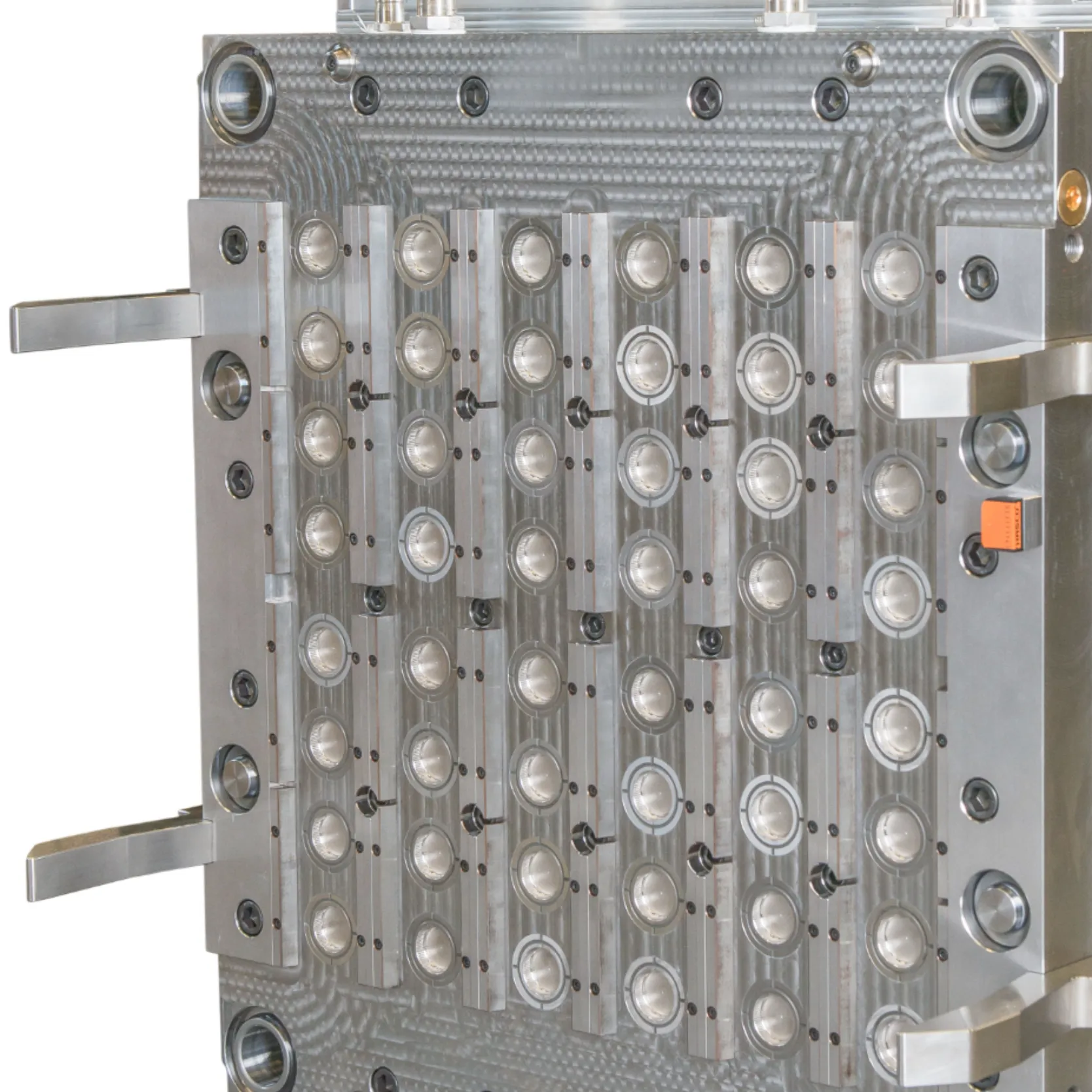
- The mold closes under high clamp force, and the machine injects the compound into the cavity through a gate or runner system.
- Heat and pressure maintain the mold at cure temperature until vulcanization is complete.
- The mold opens and the part is ejected, often followed by flash trimming or post-curing depending on compound and specification.
Typical technical ranges
Because designs vary by part size and compound, published machine specifications differ widely, but common operating envelopes include:
- Plasticizing temperature: about 175°C to 230°C for many rubber compounds in industrial guides.
- Injection pressure: generally high enough to fill thin sections and multi-cavity tools; machine classes are commonly specified by clamp force rather than pressure alone.
- Clamp force: from smaller presses for precision seals to large presses above 5,000 kN for larger or heavily cored parts.
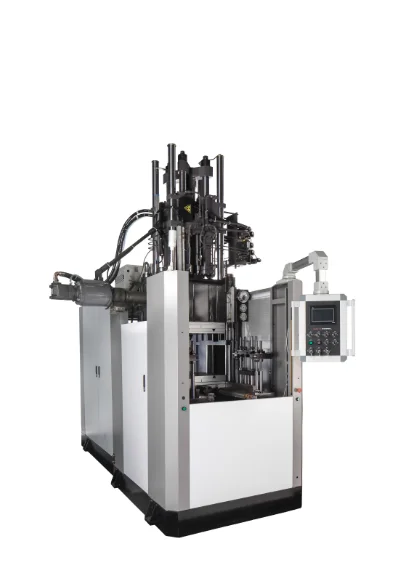
- Machine orientation: vertical machines are often used for insert molding, larger sealing articles, and ergonomic loading; horizontal machines are used where automatic feeding and compact cell layout are preferred.
Material feed formats
Rubber presses may accept:
- Strip-fed uncured compound
- Preformed blanks
- Pellets in some configurations
- Liquid silicone rubber in dedicated LSR systems
Part and process quality indicators
In industrial rubber processing, quality is strongly affected by flow length, cavity venting, mold temperature uniformity, and cure time. Injection molding is valued because it can improve dimensional repeatability, reduce flash, and support complex geometries with inserts or undercuts.
Practical quantitative benchmarks
Published process descriptions and industry practice indicate that:
- Rubber parts are often ejected before final handling and may undergo cryogenic de-flashing if flash control requirements are strict.
- Centrifugal or mechanical dewatering is not a core step of rubber molding itself; however, where rubber processing includes aqueous cleaning or wash-down stages, residual moisture targets are typically kept very low before downstream handling. For molded parts, the more relevant benchmark is often flash level rather than moisture content.
- Throughput can range from small precision-part output to high-volume cell production; machine manufacturers market units from compact presses to large-capacity systems, and some suppliers cite capacities on the order of hundreds of tons per day for installed production lines rather than a single press rating.
Types and Variations
| Type | Main characteristics | Typical uses |
|---|---|---|
| Vertical rubber injection molding machines | Good for insert loading, larger molds, gravity-assisted part handling, ergonomic tooling access | Electrical insulators, seals, engine mounts, composite parts, insert-molded components |
| Horizontal rubber injection molding machines | Better suited to automated feeding, compact cells, and some smaller part geometries | O-rings, grommets, small seals, molded rubber goods |
| Hydraulic rubber injection presses | Common in the industry; robust clamp force and proven thermal control | General-purpose elastomer molding, large production cells |
| Servo-hydraulic and energy-optimized presses | Reduced energy use compared with conventional hydraulic designs; finer motion control | High-volume precision production and automated lines |
| LSR-dedicated machines | Specialized for low-viscosity liquid silicone rubber and metering accuracy | Medical, baby-care, and high-precision silicone parts |
| Special-purpose presses | Customized for insert molding, multi-shot processes, or part families | Composite insulators, seals, gaskets, and niche elastomer products |
Applications and Uses
Rubber injection molding machines are used wherever elastomeric parts must combine elastic recovery, chemical resistance, thermal endurance, and repeatable geometry.
- Automotive: seals, weatherstrips, engine mounts, grommets, bushings, vibration dampers, and fluid-system gaskets.
- Medical and pharmaceutical: stoppers, valves, diaphragms, seals, and silicone components requiring stable dimensions and clean processing.
- Electrical and electronics: connector seals, cable grommets, insulating boots, keypad mats, and EMI-related sealing elements.
- Plumbing and HVAC: valve seats, O-rings, couplings, flush-valve parts, and weather-resistant seals.
- Industrial equipment: dampers, rollers, diaphragms, machine mounts, and pump or valve components.
- Poor-fit use: large, low-precision rubber parts with very simple geometry are often better served by compression molding because injection tooling and press complexity may not be economically justified.
Materials and Compound Compatibility
Rubber injection molding machines are used with a broad set of elastomers, including:
- Natural rubber
- Nitrile rubber (NBR)
- EPDM
- Neoprene
- FKM / Viton-type fluoroelastomers
- Silicone rubber
- Liquid silicone rubber (LSR)
Material choice is governed by the balance of heat resistance, oil resistance, weathering, biocompatibility, and compression set. For example, EPDM is widely selected for weather sealing, while silicone is favored for high-temperature and medical uses.
Technological Innovations and Automation
Modern rubber injection machines increasingly incorporate closed-loop control, servo-hydraulic actuation, and process monitoring to reduce variation in shot weight, cure state, and clamp behavior.
Common automation features include:
- Automatic feeding of preforms or strip stock
- Robotic part removal
- Vision-assisted inspection
- Mold-temperature zoning
- Shot monitoring and alarms
- Integrated flash-removal workflows
Machine builders also emphasize ergonomic and resource-saving layouts. Vertical platforms from established elastomer specialists are often positioned for efficient loading and high repeatability, especially in insert-molding applications.
Environmental and Sustainability Aspects
Rubber injection molding can support sustainability goals by reducing flash, lowering scrap, and improving first-pass yield compared with older methods.
Key sustainability benefits include:
- Reduced material loss through precise dosing and cavity filling
- Lower labor intensity through automation
- Better energy efficiency in servo-driven or optimized hydraulic systems
- Potential compatibility with recycling-oriented plant practices, especially in downstream sorting and reclaim workflows
At the same time, rubber molding remains energy-intensive because cure requires heat, clamping force, and controlled thermal cycles. Sustainability performance therefore depends heavily on machine efficiency, mold design, and cycle optimization rather than on the process alone.
Economic and Global Market Impact
Rubber injection molding machines occupy a specialized but strategically important part of the plastics and elastomers machinery market. Demand is closely tied to industries that rely on sealing, vibration control, and precision elastomer components, especially automotive and industrial manufacturing.
The global market favors suppliers with expertise in:
- Machine thermal control
- Tooling integration
- Vertical press ergonomics
- Elastomer-specific automation
- Regulatory-compatible systems for medical and electrical end uses
Competitive differentiation is often based less on raw press tonnage than on process reliability, tooling compatibility, cycle stability, and application engineering support.
Current Challenges and Innovations
Several technical challenges continue to shape development:
- Cure control: undercure can weaken parts, while overcure can degrade properties.
- Flash management: thin sealing parts remain sensitive to tooling wear and clamp stability.
- Material variability: compound batch differences affect flow and cure behavior.
- Tool heating balance: uniform temperature is essential for dimensional consistency.
- Insert handling: vertical systems improve access but can complicate automation integration.
Innovation is focused on:
- More accurate dosing systems
- Better thermal zoning and mold sensing
- Reduced-energy drive systems
- In-cell trimming and inspection
- Support for complex multi-material or insert-molded elastomer parts
Future Outlook
The next phase of development is likely to emphasize digitally monitored curing, energy-efficient servo systems, and greater integration with automated manufacturing cells.
Growth opportunities are strongest in:
- Automotive sealing and NVH components
- Medical and pharmaceutical silicone parts
- Electrical protection and insulation
- Industrial sealing systems for fluid handling and machinery
Future machine platforms are likely to deliver tighter data capture, faster changeovers, and improved compatibility with advanced elastomers, including high-performance silicones and specialty fluoroelastomers. Vertical machines will remain important for insert work and large-part ergonomics, while horizontal systems will continue to serve compact, high-repeatability production cells.
Summary
Injection molding machines for rubber are purpose-built elastomer presses that combine heated plasticizing, high-force clamping, and controlled vulcanization to produce precise rubber parts at scale. Their importance lies in the intersection of process speed, dimensional control, and material performance, with ongoing innovation centered on automation, energy efficiency, and tighter cure control.
References
- •
The special machine for rubber injection molding - ENGEL. (2022, August 22).Link
- •
Rubber Injection Moulding Machines. (2025, July 15).Link
- •
Rubber Injection Molding machine Manufacturer – Tasu. (n.d.).Link
- •
New – Rubber Injection Molding. (2019, October 1).Link
- •
Vertical Rubber Injection Molding Machine. (2023, March 8).Link
- •
Vertical Machines - Klöckner DESMA Elastomertechnik GmbH. (2024, June 28).Link
- •
Rubber Injection Molding - Poly-Tek. (2020, November 1).Link
- •
News - What is a rubber injection molding machine? (2024, January 1).Link
- •
Practical-Guide-to-Rubber-Injection-Moulding. (2025, April 29).Link
- •
Rubber Injection Molding: Process, Types & Uses [2026 Guide]. (2026, April 15).Link
- •
Top-rated Rubber Injection Molding Machines & Solutions. (2026, August 25).Link
- •
Rubber Injection Molding Machine. (2016, December 5).Link
- •
Special Series - Klöckner DESMA Elastomertechnik GmbH. (2024, June 28).Link
- •
Injection Molding Machine-Product-TUNG YU HYDRAULIC MACHINERY CO., LTD. (n.d.).Link
- •
Rubber Injection Molding Process: How it Works, Types, and Key Defects. (2026, April 30).Link
- •
Elastomer/Rubber and Thermoset Injection Molding - ENGEL. (2022, August 22).Link
- •
Rubber Injection Molding Process: Step By Step Guide - MachMaster. (2025, September 26).Link
- •
Rubber Injection Moulding Machine - Vertical Injection Machine | DEKUMA. (n.d.).Link
- •
So you want to be a rubber injection molding expert. (2015, July 23).Link
- •
Rubber Injection Molding Machines & Devices - Dekuma. (2025, September 18).Link
- •
Injection Molding. (2024, July 13).Link
- •
New Rubber Injection Molding Machines Expand .... (2023, February 6).Link
- •
Rubber Injection Molding | ARDL. (2021, September 23).Link
- •
Injection molding machine for elastomer/rubber processing. (2022, August 22).Link
- •
Understanding the Rubber Injection Molding Process. (2023, April 11).Link
- •
Rubber Injection Molding Machine | HWAYI Machinery. (n.d.).Link
- •
Rubber Injection Molding Press Specifications. (n.d.).Link
- •
What Is the Injection Molding Process for Molded Rubber .... (2023, April 11).Link
- •
Rubber Injection Molding at Lake Erie Rubber. (2024, December 4).Link
- •
Home - Klöckner DESMA Elastomertechnik .... (2026, March 23).Link
- •
Rubber Molding Overview. (2025, December 10).Link
- •
Rubber Injection Moulding Machine. (2026, January 1).Link
- •
Rubber Injection Molding Guidelines. (2025, September 18).Link
- •
A Detailed Guide to Rubber Injection Molding - Ezra Made. (2026, January 23).Link
- •
Materials for Injection Molding. (2024, December 4).Link
- •
Rubber Injection Molding. (2026, March 23).Link
- •
Working in Injection Molding. (2023, January 23).Link
- •
Injection Molding - The Rubber Group. (2025, April 17).Link
- •
Rubber Injection Molding Manufacturer | Custom Molded Parts. (2026, March 9).Link
- •
Injection moulding. (2003, September 23).Link
- •
How does an injection molding machine work with animation. (2023, September 30).Link
- •
What are the common applications of injection molding and .... (n.d.).Link
- •
What is plastic injection molding and how does it work? (2023, December 11).Link