
Introduction
Wollastonite fiber is a naturally occurring calcium silicate mineral used in plastics and other industrial materials as a functional filler and reinforcing mineral. It is valued for its needle-like morphology, low thermal expansion, good whiteness, low moisture absorption, and relatively high stiffness, which make it useful in compounds where dimensional stability, surface quality, and moderate reinforcement are important.
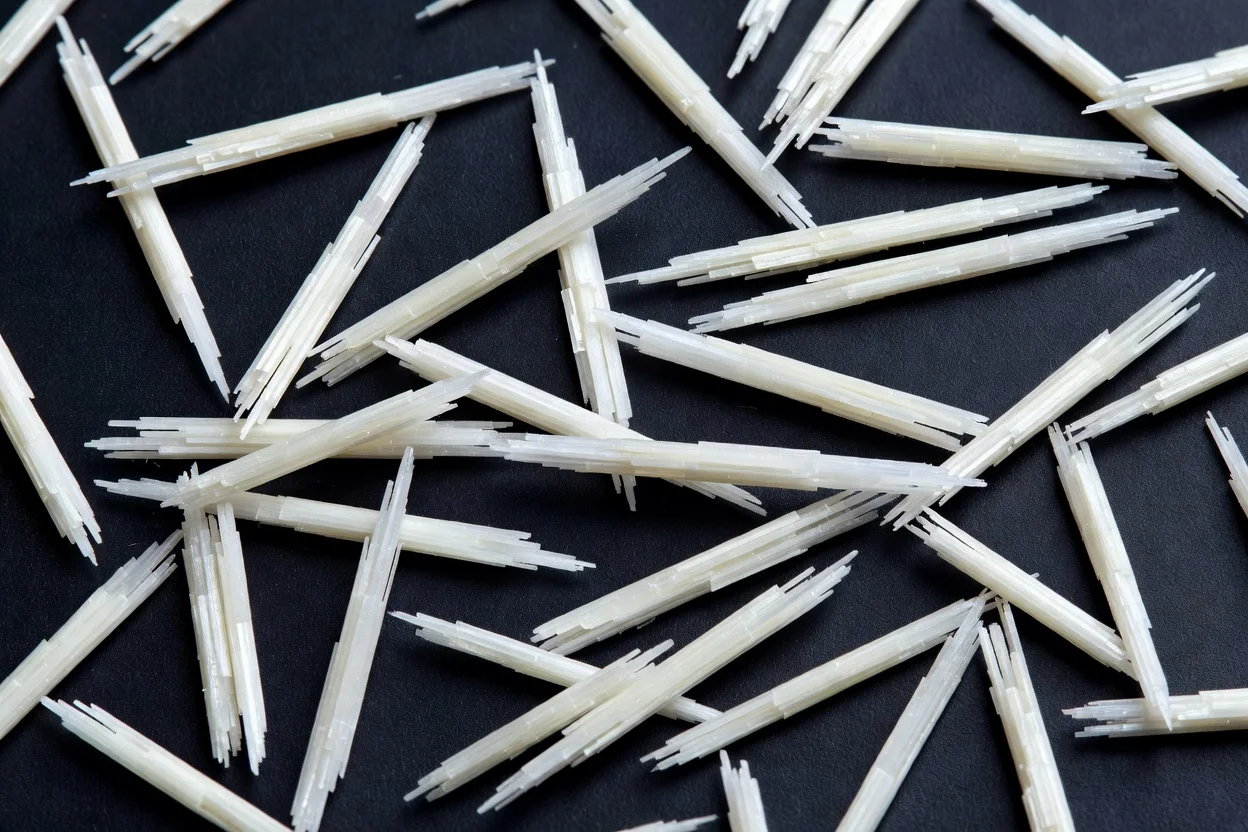
In plastics, wollastonite fiber occupies a position between inert extenders such as talc and stronger but more expensive fibrous reinforcements such as glass fiber. It is commonly used in thermoplastics and thermosets to improve tensile and flexural properties, reduce shrinkage and warpage, and increase heat resistance, while also lowering formulation cost in some systems. Its broader industrial role spans ceramics, friction materials, coatings, construction products, metallurgy, and asbestos-substitution applications.
The material is typically offered in multiple grades, ranging from lower-aspect-ratio grinding grades to higher-aspect-ratio fiber grades. This distinction matters because fiber grades are selected when reinforcement is the priority, while fine or lower-aspect-ratio grades are more suitable where flow, opacity, or mineral-filler economics dominate. Sustainability discussions around wollastonite focus on its ability to replace some higher-impact or higher-toxicity materials, especially asbestos, but also on the need to consider quarrying, processing energy, and end-of-life recyclability in filled plastics.
History and Development
Wollastonite has long been used as an industrial mineral, initially in ceramics and as a source of calcium and silica in high-temperature formulations. Its use expanded significantly when industry recognized that its acicular crystal habit could provide reinforcing benefits in polymers, cementitious systems, and friction materials.
A major historical driver was asbestos substitution. Wollastonite was adopted in insulating boards, panels, roofing products, paints, plastics, and brake or clutch formulations as a safer alternative in applications where fibrous morphology and thermal stability were desired. Later, polymer compounding increasingly adopted wollastonite as a lower-cost mineral reinforcement for engineering plastics, especially in polypropylene, polyamide, and related systems.
More recent development has focused on surface treatment, ultrafine grinding, and synthetic or hydrothermal production routes to improve aspect ratio, dispersion, and performance consistency. These advances have widened its use in high-value compounds and in hybrid systems with glass fiber, cellulose, or other reinforcements.
Chemical Structure and Key Properties
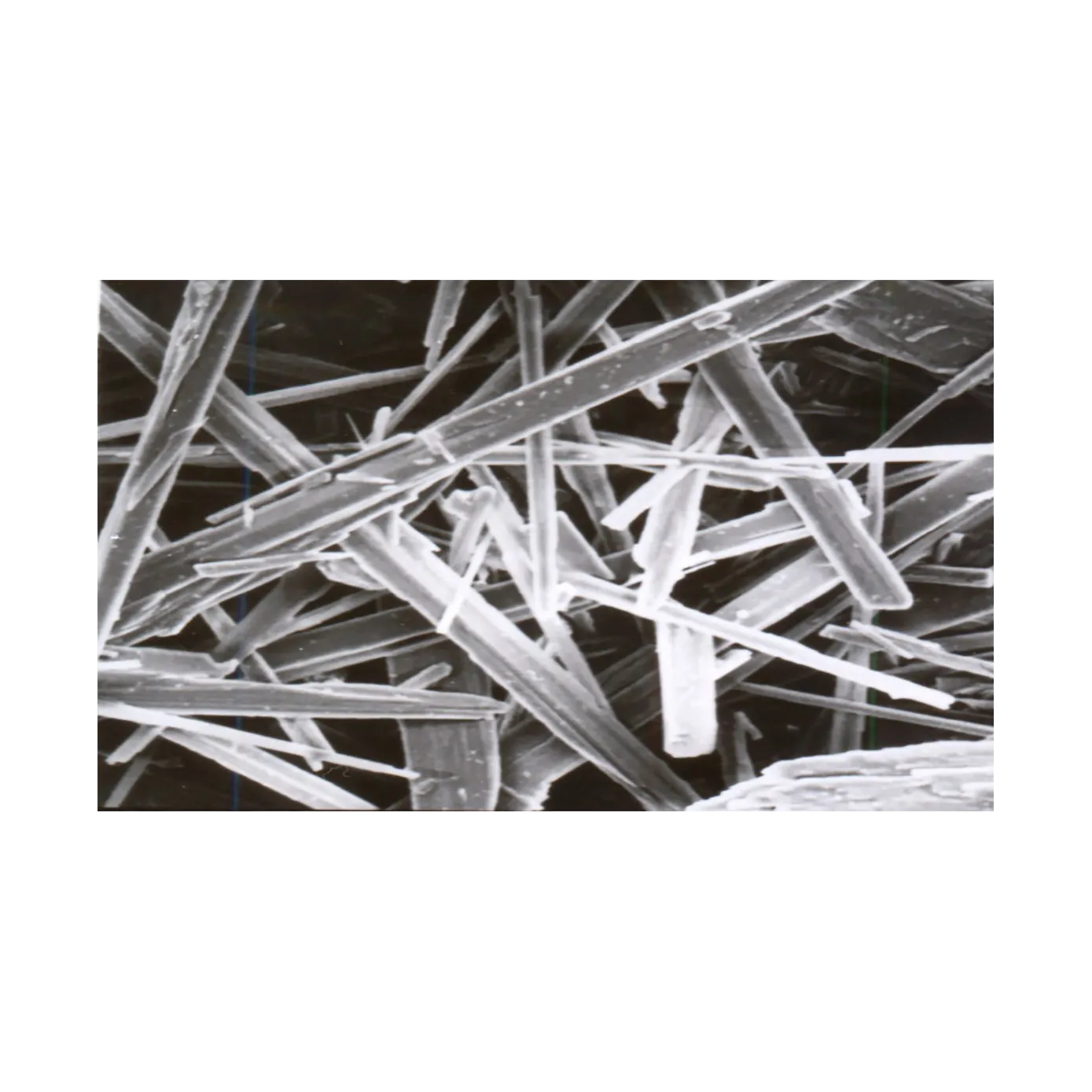
Wollastonite is a calcium silicate mineral with a chain-silicate crystal structure and a characteristic needle-like or acicular habit. This morphology is central to its function in plastics, because elongated particles can transfer stress more effectively than equiaxed mineral fillers when they are well dispersed and aligned to some degree during processing.
Key technical characteristics
| Property | Typical value or feature | Practical significance |
|---|---|---|
| Appearance | White to off-white | Helps in light-colored compounds and coatings |
| Morphology | Acicular, fiber-like | Provides reinforcement potential |
| Density | About 2.8 to 2.9 g/cm3 | Lower than many mineral fillers, but higher than polymers |
| Aspect ratio | Roughly 3 to 20 depending on grade | Higher ratio generally improves reinforcement |
| pH | About 9 to 10 in aqueous suspension | Can affect compatibility and surface chemistry |
| Water solubility | Very low, about 0.0095 g/100 ml in neutral water | Supports moisture resistance and stability |
| Thermal behavior | High heat resistance; melting point around 1540 C | Useful in elevated-temperature processing and service |
| CTE | Very low, around 6.5 × 10^-6 /C | Helps reduce warpage and thermal distortion |
Main advantages in plastics
- Dimensional stability: The low thermal expansion of wollastonite helps reduce shrinkage, warpage, and distortion in molded parts.
- Mechanical reinforcement: Its acicular form can improve tensile and flexural properties, especially at moderate loadings and in well-dispersed systems.
- Surface and appearance control: White color and mineral character can improve opacity and maintain a cleaner aesthetic than darker fillers in some formulations.
- Low moisture absorption: This supports better long-term stability in humid environments and can reduce water-related property loss.
Real limits and workarounds
- Limit: modest reinforcement compared with glass fiber → cause: lower intrinsic stiffness and shorter effective aspect ratio in processed grades → workaround: use surface-treated grades, increase loading carefully, or combine with glass fiber in hybrid compounds.
- Limit: abrasion on processing equipment can rise in highly mineral-filled compounds → cause: inorganic hardness and particle shape → workaround: optimize particle size distribution, screw design, and coupling agent package.
- Limit: strong reinforcement depends on good wetting and dispersion → cause: mineral surfaces may not bond strongly to nonpolar polymers → workaround: use maleic-anhydride-grafted compatibilizers or surface-treated wollastonite.
Production Processes and Raw Feedstocks
Natural wollastonite is obtained by mining, crushing, purification, and classification of suitable deposits. The ore is then milled and separated to produce grades with controlled particle size, aspect ratio, and purity for industrial use.
Natural production route
Typical steps include:
- extraction from the deposit
- crushing and grinding
- magnetic separation to remove garnet and other magnetic impurities
- air classification and micronization to obtain commercial concentrates
Synthetic and engineered routes
Synthetic wollastonite can also be produced by high-temperature solid-state reaction or hydrothermal methods from calcium- and silica-bearing feedstocks. These routes are used when tighter compositional control, tailored morphology, or nano- to microfibrous products are needed.
Feedstock considerations
- Natural feedstocks typically include wollastonite-bearing ores with gangue minerals that must be removed.
- Synthetic routes often use quicklime, silica, calcium hydroxide, quartz, or related precursors.
- Hydrothermal and green synthesis methods are being studied to improve aspect ratio and reduce processing severity.
In plastics compounding, the industrial supply chain usually emphasizes particle engineering rather than chemistry: the final performance depends heavily on fiber length distribution, surface treatment, and dispersion quality during extrusion or injection molding.
Applications and End-Use Markets
Wollastonite fiber is used mainly where a mineral filler must do more than simply reduce resin cost. It is selected when the formulation needs better stiffness, lower warpage, or improved thermal dimensional stability.
Plastics and polymer compounds
| Polymer or process | Usual role of wollastonite fiber | Typical benefit |
|---|---|---|
| Polypropylene | Reinforcing filler in injection molding, extrusion, and hollow products | Higher stiffness, better heat resistance, lower shrinkage |
| Polyamide | Reinforcement and dimensional stabilizer | Better tensile/flexural properties and thermal stability |
| Thermosets | Functional filler in composite formulations | Improved mechanical properties and sometimes lower cost |
| Hybrid composites | Used with glass fiber or cellulose fiber | Balanced stiffness, impact, and cost |
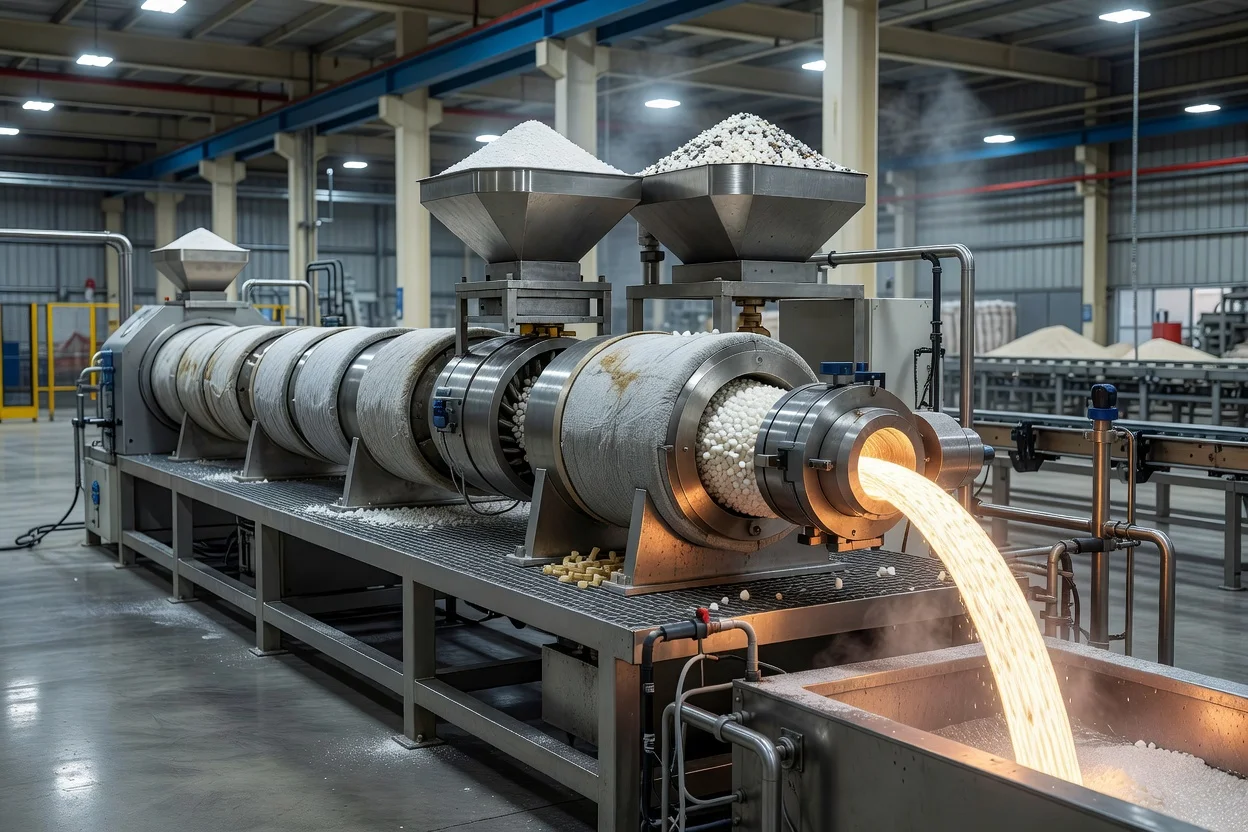
A practical example is polypropylene compounds containing wollastonite plus a compatibilizer such as PP-g-MA. In one study, PP and wollastonite were melt-compounded in a twin-screw extruder, showing the importance of processing temperature and interfacial adhesion for final properties. A second example is polypropylene systems where about 30 phr wollastonite combined with 10 phr glass fiber improved tensile, flexural, impact, and heat-deflection performance relative to unfilled resin.

Other industrial sectors
- Ceramics and glass: Wollastonite acts as a source of CaO and SiO2 and as a fluxing or body-modifying mineral.
- Construction materials: It is used in cement, fiber-cement products, boards, and some insulating or fire-resistant building materials.
- Friction materials: It functions as an asbestos substitute in brake and clutch formulations and can improve wear behavior in non-asbestos organic composites.
- Coatings, adhesives, sealants, and paints: Powder grades are used to improve toughness, weather resistance, and moisture resistance.
- Agriculture and soil conditioning: Some products are marketed for soil improvement and nutrient-related functions, though this is a smaller market than plastics or construction.
One poor-fit use
Wollastonite fiber is generally a poor fit for applications requiring very high elastic recovery or very high impact toughness without additional reinforcement, because it is a mineral filler rather than a true ductile fiber and does not by itself provide the extensibility of polymeric reinforcements. In such cases, glass fiber, impact modifiers, or elastomeric tougheners are usually more effective.
Environmental and Sustainability Aspects
Wollastonite is often presented as a more benign alternative to asbestos in historically fibrous applications, and the literature consistently notes its lower toxicity and non-asbestos character. Its low moisture uptake and chemical inertness also help extend product life in some uses, which can indirectly reduce material consumption over time.
Recyclability and circularity
- In thermoplastics, wollastonite-filled compounds can often be mechanically recycled, but repeated processing may shorten fibers and reduce reinforcement efficiency.
- The filler does not melt, so it remains in the recycled stream as an inert mineral phase, which can be beneficial for stiffness but may complicate property retention across multiple cycles.
- In high-loading compounds, recyclability depends strongly on formulation design, compatibilizers, and the intended recycling loop.
Carbon and resource considerations
- Natural wollastonite requires quarrying, crushing, and classification, which carry energy and land-use impacts.
- Synthetic routes may provide better purity or morphology control but can require high temperatures or hydrothermal energy input.
- The net climate value depends on substitution effects: if wollastonite allows a lighter, thinner, or more durable part, the material may offset some upstream impacts.
Bio-based and recycled alternatives
Wollastonite is not bio-based, but it is often compared with talc, calcium carbonate, glass fiber, and bio-based fillers. In hybrid systems, it can complement recycled polymers or bio-based matrices by improving stiffness and thermal stability without the high density or processing penalty of some alternatives.
Economic and Global Market Impact
Wollastonite has a niche but stable market because it serves multiple industries and can be sold in several grades tailored to performance and price. Demand is supported by plastics, construction, friction materials, ceramics, and coatings.
The most commercially important factors are:
- deposit quality and impurity profile
- aspect ratio control
- whiteness and brightness
- surface treatment options
- logistics and proximity to compounding hubs
According to supplier and industry descriptions, major producing or processing activity is associated with regions that have high-quality deposits and established mineral-processing infrastructure. Market competition is strongest against talc, kaolin, calcium carbonate, mica, and glass fiber, with wollastonite favored when a combination of reinforcement and low thermal expansion is required.
Current Challenges and Innovations
Challenges
- Achieving consistent aspect ratio after grinding and compounding remains difficult, especially in high-shear processes.
- Interfacial adhesion in nonpolar polymers can be limited without coupling agents or surface treatment.
- Performance can vary widely between natural deposits because impurity content and crystal morphology are deposit-specific.
- Over-reliance on filler loading can reduce toughness if formulation balance is not maintained.
Innovations
- Surface-treated grades are increasingly used to improve dispersion and resin-fiber adhesion.
- Hybrid reinforcement with glass fiber, cellulose fiber, or other mineral phases is being used to balance stiffness, impact, and cost.
- Nano- and microfibrous synthesis is under development for higher surface area and more tailored reinforcement.
- Green synthesis and waste-derived routes are being explored to reduce dependence on mined feedstocks and improve circularity.
Where formulation performance is critical, the main innovation frontier is not the mineral itself but the interface: coupling chemistry, particle architecture, and compounding conditions determine whether wollastonite behaves as a modest extender or a meaningful reinforcement.
Future Outlook
Wollastonite fiber is likely to retain a strong role in filled plastics where cost, stiffness, low warpage, and thermal stability must be balanced. Its future in polymers will probably expand most in automotive interior and under-the-hood parts, electrical housings, appliance components, and dimensional-stable molded articles, particularly where mineral fillers can substitute for part of the glass-fiber content.
Future growth will depend on:
- better surface modification for stronger polymer bonding
- tighter control of aspect ratio and particle size
- lower-carbon and waste-derived production routes
- broader adoption in hybrid composites and recycled-plastic systems
A likely strategic direction is not replacement of all other fillers, but more selective use where wollastonite’s combination of acicular morphology, low thermal expansion, and white mineral character provides a better total formulation balance than talc, calcium carbonate, or short glass fiber.
Summary
Wollastonite fiber is a versatile calcium silicate mineral filler that plays an important role in plastics as a reinforcing and dimension-stabilizing additive. Its acicular shape, low thermal expansion, low moisture absorption, and heat resistance make it especially useful in polypropylene, polyamide, hybrid composites, and other filled systems.
Its industrial value extends beyond plastics into ceramics, construction, friction materials, coatings, and asbestos-substitution products. The main technical challenge is to convert natural mineral morphology into reliable composite performance through good grading, dispersion, and interfacial treatment.
References
- •
News - Jiangxi Kete Fine Powder Co, Ltd. (n.d.). Jiangxi Kete. http://www.jxkte.com/news2_en.htmlLink
- •
Properties and main uses of wollastonite fiber. (2022, September 28). http://srghs.com/nd.jsp?id=10Link
- •
Product Introduction-Hubei Fengjiashan Wollastonite Fiber Co. (n.d.). http://www.hbfjsgx.com/English/about.asp?classid=459Link
- •
Effects of Wollastonite Fiber and Styrene–Butadiene Latex on the properties of oil well cement. (2022, August 7). PMC. https://pmc.ncbi.nlm.nih.gov/articles/PMC9370052/Link
- •
Uses of Research Aggregate. (2018, March 28). Canadian Wollastonite. https://canadianwollastonite.com/research/research-aggregate-uses/Link
- •
Wollastonite. (n.d.). Kinsei Matec. https://www.kinseimatec.co.jp/en/?page_id=728Link
- •
Wollastonite. (n.d.). Smith College. https://www.science.smith.edu/geosciences/petrology/petrography/wollastonite/wollastonite.htmlLink
- •
Wollastonite. (2016). Fibertec. https://www.fibertecinc.com/wollastoniteLink
- •
Application and consumption of Wollastonite. (2024, March 15). Kmeris. https://kmeris.com/news/70.htmlLink
- •
What is Wollastonite fiber? Application of wollastonite fiber in production. (2021, March 25). Vinascg. https://vinascg.com/en/what-is-wollastonite-fiber-application-of-wollastonite-fiber-in-production/Link
- •
Leading Wollastonite Fiber Supplier. (n.d.). Ascent Petrochem. https://www.ascent-petrochem.com/products/inorganic-chemicals/wollastonite-fiber-cas-13983-17-0.htmlLink
- •
Gentler Than Fiberglass, Yet Tougher Than Talc: Unlocking The “hidden ... (2026, May 23). LinkedIn. https://www.linkedin.com/pulse/gentler-than-fiberglass-yet-tougher-talc-unlocking-hidden-sandy-xu-1miycLink
- •
Wollastonite fiber là gì? Ứng dụng của wollastonite fiber trong sản xuất. (2021, March 25). Vinascg. https://vinascg.com/wollastonite-fiber-la-gi-ung-dung-cua-wollastonite-fiber-trong-san-xuat/Link
- •
Wollastonite Fiber. (2024, September 18). Alfa Chemistry. https://fiber.alfa-chemistry.com/wollastonite-fiber.htmlLink
- •
Mechanical properties of micro and sub-micron wollastonite fibers in cementitious composites. (n.d.). ScienceDirect. https://www.sciencedirect.com/science/article/abs/pii/S095006181500238XLink
- •
Evaluation of the Performance of Different Types of Fibrous ... (n.d.). Semantic Scholar. https://pdfs.semanticscholar.org/eb4b/be9e7815da6c0442691ff15cb5ea640e5b93.pdfLink
- •
Applications of Polyamide/Cellulose Fiber/Wollastonite ... (n.d.). USDA Forest Service. https://research.fs.usda.gov/download/treesearch/22149.pdfLink
- •
Industrial Applications - Canadian Wollastonite. (2018, February 20). Canadian Wollastonite. https://canadianwollastonite.com/applications/industrial-applications/Link
- •
Wollastonite. (2004, August 3). Wikipedia. https://en.wikipedia.org/wiki/WollastoniteLink
- •
hybrid-effect-of-wollastonite-fiber-and-carbon- ... (n.d.). SciSpace. https://scispace.com/pdf/hybrid-effect-of-wollastonite-fiber-and-carbon-fiber-on-the-34l324x941.pdfLink
- •
Application and development direction of wollastonite. (2021, December 3). ALPA Powder. https://www.alpapowder.com/114733/Link
- •
Influence of wollastonite shape and amount on tribo-performance of non-asbestos organic brake friction composites. (2017, September 15). ScienceDirect. https://www.sciencedirect.com/science/article/abs/pii/S0043164817302405Link
- •
Mechanical properties of micro and sub-micron wollastonite fibers in cementitious composites. (2009, March 15). EPA. https://hero.epa.gov/hero/index.cfm/reference/details/reference_id/3032584Link
- •
Preparation method of superfine wollastonite fiber. (2019, December 12). Google Patents. https://patents.google.com/patent/CN110937794A/enLink
- •
Wollastonite–A Versatile Industrial Mineral. (n.d.). USGS. https://pubs.usgs.gov/fs/fs-0002-01/fs-0002-01.pdfLink
- •
Wollastonite : Functional Benefits Across Industries. (2025, July 23). Patsnap. https://eureka.patsnap.com/blog/material-tech-resources/wollastonite-applications-properties/Link
- •
Is wollastonite capable of improving the properties of wood ... (n.d.). BioResources. https://bioresources.cnr.ncsu.edu/resources/is-wollastonite-capable-of-improving-the-properties-of-wood-fiber-cement-composite/Link
- •
Wollastonite nano-fiber and its preparing method and use. (2004, October 15). Google Patents. https://patents.google.com/patent/CN1621344A/enLink
- •
Process for producing a wollastonite containing polyester and products and articles produced therefrom. (2005, August 9). Google Patents. https://patents.google.com/patent/US20060036012A1/enLink
- •
Wollastonite | Bisley & Company Pty Ltd | Supplier & ... (2024, August 15). Bisley. https://bisley.biz/products/wollastonite/Link
- •
Wollastonite - Amanda. (2022, January 1). Amanda Ceramic Material. https://www.amandaceramicmaterial.com/wollastonite.htmlLink
- •
"Use Of Wollastonite In Fiber Cement Roofing Sheets Production To. (2012, June 18). QuickCompany. https://www.quickcompany.in/patents/use-of-wollastonite-in-fiber-cement-roofing-sheets-production-to-improve-filtrationLink
- •
Wollastonite - an overview | ScienceDirect Topics. (n.d.). ScienceDirect. https://www.sciencedirect.com/topics/chemistry/wollastoniteLink
- •
Utilization of industrial waste materials for the preparation of ... (2024, September 18). NIH. https://pmc.ncbi.nlm.nih.gov/articles/PMC11411072/Link
- •
Effect of the Filler Modification on the Thermal and Mechanical ... (2023, July 8). NIH. https://pmc.ncbi.nlm.nih.gov/articles/PMC10383438/Link
- •
Process for the production of synthetic wollastonite and ... (1995, February 28). Google Patents. https://patents.google.com/patent/US3926647A/enLink
- •
Synthesis of wollastonite. (n.d.). ScienceDirect. https://www.sciencedirect.com/science/article/abs/pii/0272884289900187Link
- •
Green hydrothermal synthesis of high aspect ratio wollastonite nanofibers: Effects of reaction medium, temperature and time. (n.d.). ScienceDirect. https://www.sciencedirect.com/science/article/abs/pii/S0272884220316710Link
- •
Refractory Materials and Products Based on Natural Wollastonite for Making Ceramic Accessories to be Used in Aluminium Industry | Scientific.Net. (2025, January 1). Scientific.Net. https://www.scientific.net/AST.45.2272Link
- •
SYNTHESIS REPORT ~ FOR PUBLICATION. (n.d.). CORDIS. https://cordis.europa.eu/docs/projects/files/BRE/BRE20134/26839401-6_en.pdfLink
- •
Optimization of Thermal and Mechanical Properties ... (2022, February 25). NIH. https://pmc.ncbi.nlm.nih.gov/articles/PMC8912407/Link
- •
Hybrid Composites: Combining Cellulose Fibers and Wollastonite Mineral Fibers into a Nylon 6 Matrix. (n.d.). FPL. https://www.fpl.fs.usda.gov/documnts/pdf2003/jacob03a.pdfLink
- •
Utilization of industrial waste materials for the preparation of wollastonite by temperature-induced forming technique. (2024, September 18). Nature. https://www.nature.com/articles/s41598-024-71243-3Link
- •
Reinforcement of ceramic bodies with wollastonite. (1998, April 27). Google Patents. https://patents.google.com/patent/WO1998049119A1/enLink
- •
A Review on the Role of Wollastonite Biomaterial in Bone ... (2022, December 13). NIH. https://pmc.ncbi.nlm.nih.gov/articles/PMC9767726/Link
- •
Wollastonite. (n.d.). Digitalfire. https://digitalfire.com/material/wollastoniteLink
- •
High-quality wollastonite. (n.d.). HPF Minerals. https://www.hpfminerals.com/en/product-overview/wollastoniteLink