
Introduction
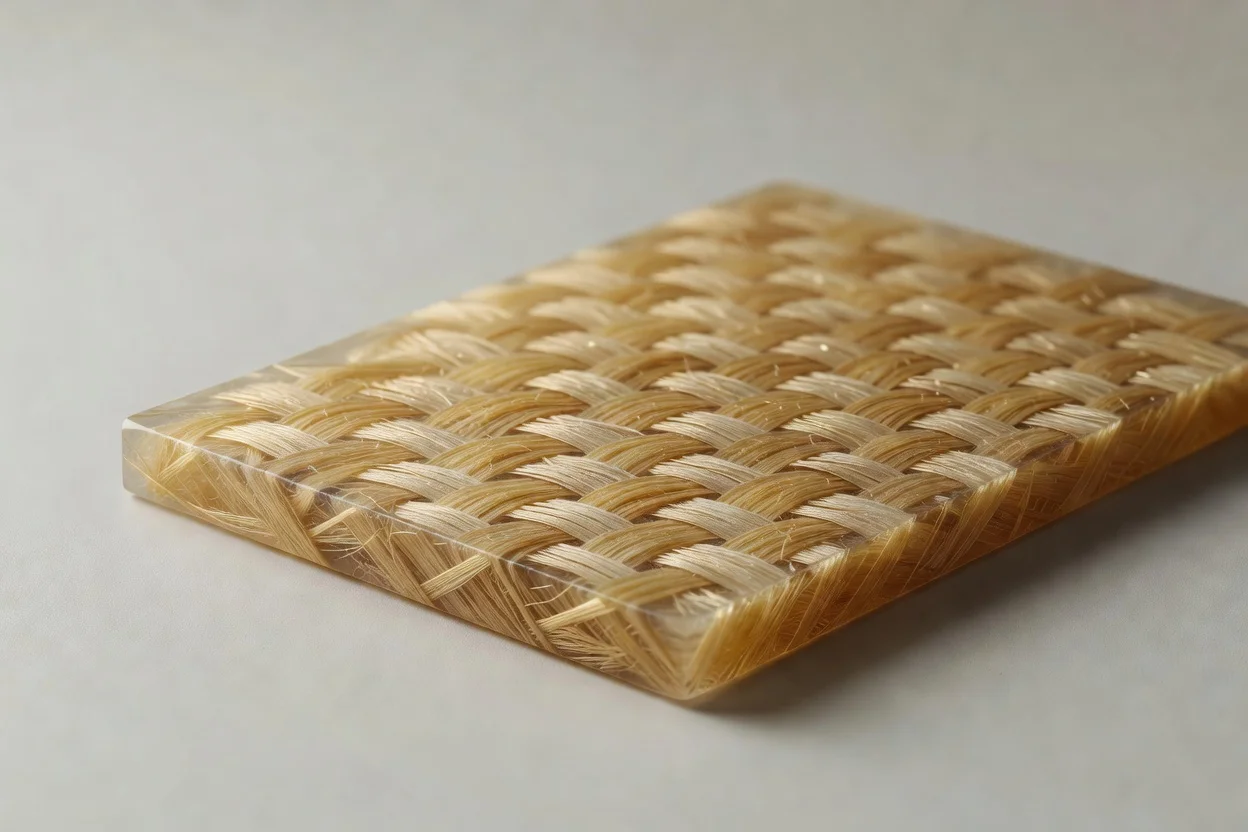
Natural fiber reinforced composites are composite materials in which a polymer or other matrix is strengthened with fibers derived from plants, animals, or, in some classifications, mineral-based natural sources. They are widely viewed as lower-density, lower-carbon alternatives to glass-fiber composites, with advantages in renewability, specific strength, acoustic and thermal insulation, and reduced tool wear during processing. Their industrial relevance has expanded from interior automotive trim and building products into furniture, consumer goods, marine and transport panels, and selected structural or semi-structural applications, although moisture sensitivity and variability in fiber quality continue to limit broader use in demanding environments.
The field developed from early interest in low-cost lignocellulosic reinforcements such as jute, flax, hemp, sisal, kenaf, coir, and oil palm fibers, combined with thermoset and thermoplastic matrices. Recent work has emphasized hybridization, surface treatments, coupling agents, bio-based resins, and improved processing routes to address the core weaknesses of natural fibers while retaining their sustainability benefits. At the same time, market adoption is increasingly shaped by carbon-footprint reduction targets, circular-economy strategies, and the need to balance environmental claims against durability, end-of-life constraints, and feedstock consistency.
History and Development
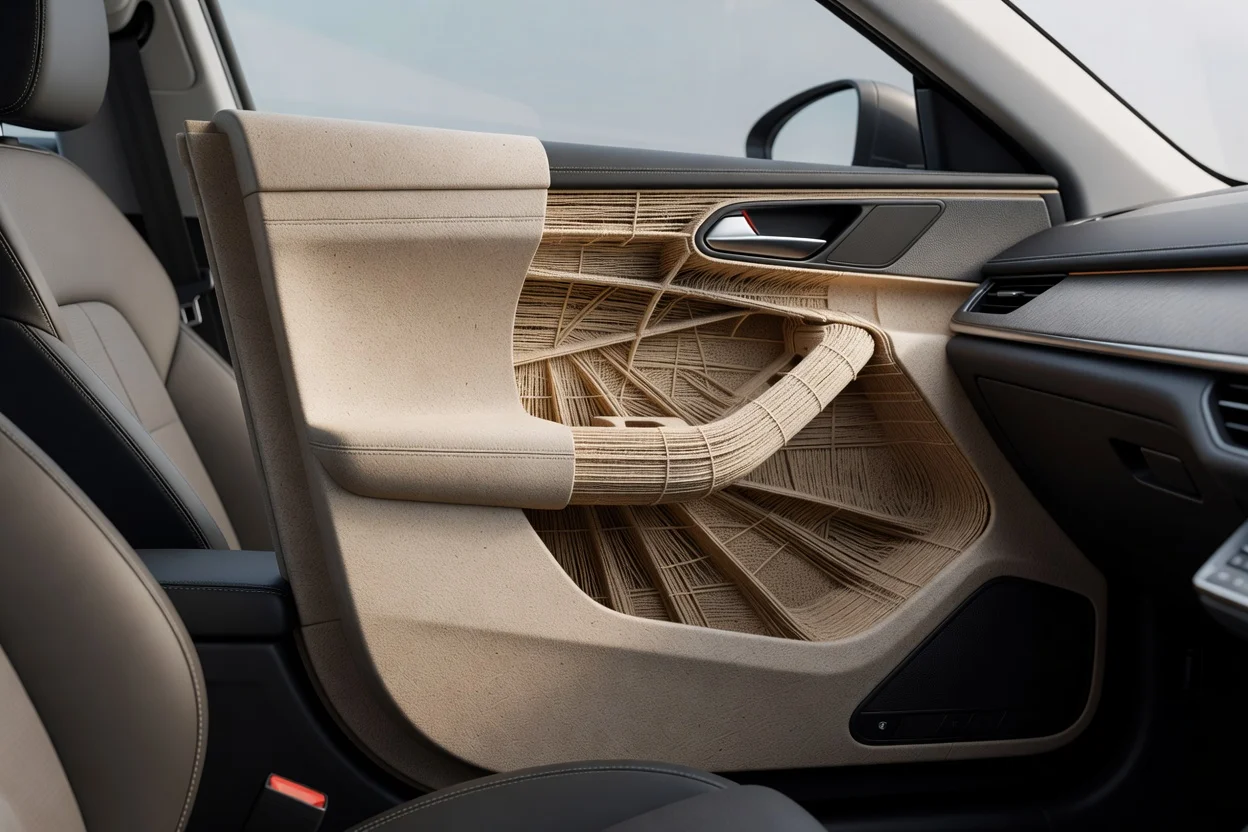
Natural-fiber composites emerged as an engineering alternative when manufacturers sought lighter, cheaper, and less abrasive reinforcements than glass fiber. Early commercialization focused on non-structural parts where moderate mechanical properties were sufficient, such as automotive door panels, rear parcel shelves, insulation layers, and furniture components.
Subsequent development was driven by several converging trends:
- Rising concern over petroleum-based materials and lifecycle emissions.
- Increased availability of agricultural by-products and bast fibers as industrial feedstocks.
- Advances in surface modification and compatibilization that improved fiber–matrix adhesion.
- Strong interest in lightweighting for transport, where reducing mass can improve energy efficiency.
More recent research has extended the concept to sandwich structures, hybrid composites, prefabricated construction elements, and biomedical or acoustic uses, though these remain more niche than automotive or building products.
Chemical Structure and Key Properties
Natural fibers are typically lignocellulosic materials composed mainly of cellulose, hemicellulose, lignin, pectin, waxes, and moisture. Cellulose provides much of the tensile reinforcement because of its ordered polymer chains and microfibrillar structure, while hemicellulose and lignin influence flexibility, moisture uptake, and thermal behavior.
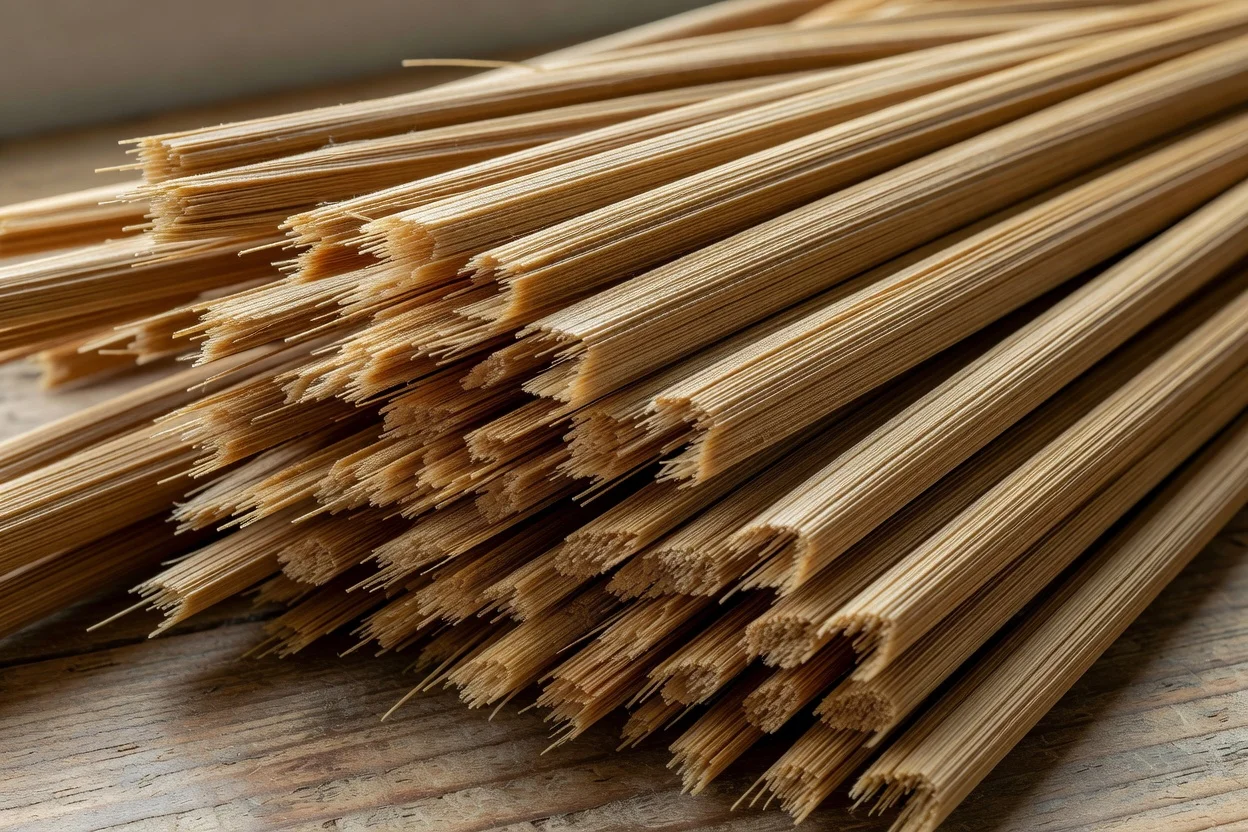
In composite form, the matrix transfers load and protects the fibers, while the fibers provide stiffness and strength. Common matrices include polypropylene, polyethylene, polyester, epoxy, phenolic resins, and increasingly bio-based or recycled polymers.
Key characteristics include:
| Property | Typical significance |
|---|---|
| Low density | Enables weight reduction and high specific strength. |
| High specific stiffness | Useful where weight-normalized performance matters more than absolute strength. |
| Good acoustic and thermal insulation | Supports interior, panel, and building applications. |
| Lower abrasiveness than glass fiber | Reduces tooling wear and can simplify machining. |
| Moisture sensitivity | Limits dimensional stability and long-term durability. |
| Thermal limitation | Restricts processing temperature and high-heat service use. |
Important real limits include:
- High moisture absorption → hydrophilic fiber chemistry and porous microstructure → surface treatments, alkali treatment, silane coupling agents, or compatibilizers such as maleated polyolefins.
- Poor interfacial adhesion with hydrophobic polymers → incompatible surface functional groups → coupling agents, plasma/corona treatment, or hybrid fiber architectures.
- Restricted thermal stability → lignocellulosic degradation at elevated temperatures → low-temperature thermoplastics, shorter residence times, or thermoset systems processed below fiber-degradation thresholds.
- Impact performance often below glass-fiber composites → brittle fiber fracture and weaker interfaces → hybridization with glass, basalt, or tougher matrices.
Typical treatment and formulation examples include:
- Alkali treatment at modest concentrations is commonly used to remove surface impurities and increase roughness, improving wetting and mechanical interlocking at the interface.
- Maleated polypropylene is widely used in polyolefin-based systems because the anhydride functionality improves adhesion between the nonpolar matrix and polar fiber surface.
Production Processes and Raw Feedstocks
Natural-fiber composite production begins with feedstock selection, which may include cultivated fibers, agricultural residues, or forest-based materials. Common reinforcements include flax, hemp, jute, sisal, kenaf, coir, bamboo, banana fiber, rice straw, and bagasse-derived fibers.
Major process steps include:
- Fiber extraction, cleaning, drying, and sizing.
- Surface modification or compatibilizer addition.
- Compounding with the matrix by extrusion, mixing, or resin impregnation.
- Consolidation by compression molding, injection molding, resin transfer, hand lay-up, vacuum infusion, or thermopressing.
- Finishing operations such as trimming, machining, or lamination.
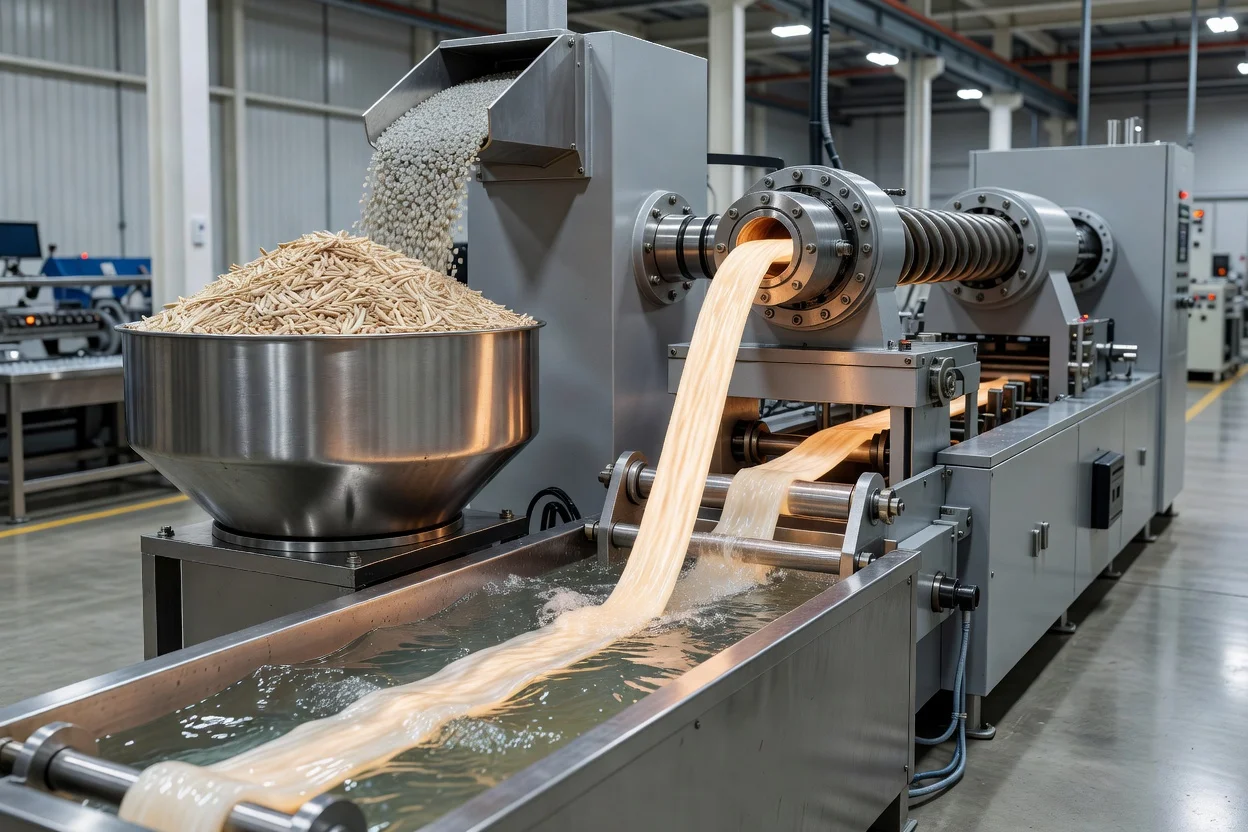
Thermoplastic natural-fiber composites are especially suited to high-throughput processes such as extrusion and injection molding, while thermoset systems are often used where higher heat resistance or better dimensional stability is needed. Processing quality is highly dependent on moisture control, fiber dispersion, fiber length retention, and the thermal history of the material.
Leading producers of natural-fiber composites are less centralized than those for commodity polymers, because supply chains are regional and fiber availability is tied to agriculture and local manufacturing. Industrial leadership is therefore typically shared among compounders, automotive suppliers, and specialty biocomposite developers rather than dominated by a few monolithic resin producers. The most influential contributors tend to be firms with integrated capabilities in fiber preparation, compounding, and end-part manufacturing, especially in Europe and Asia where automotive and construction demand is strongest.
Applications and End-Use Markets
Natural-fiber composites are used most extensively where lightweighting, appearance, acoustics, and sustainability matter more than extreme structural performance.
| End-use sector | Common fibers | Typical matrix/process | Usual role |
|---|---|---|---|
| Automotive interiors | Flax, hemp, kenaf, jute | Polypropylene or polyester, compression molding or injection molding | Door panels, parcel shelves, trims, seat backs. |
| Construction | Hemp, flax, jute, coir, straw | Thermosets, biopolymers, cementitious hybrids | Panels, boards, ceiling elements, insulation, partition materials. |
| Furniture and consumer goods | Jute, sisal, bamboo | Thermoplastics or phenolic resins | Chairs, tabletops, housings, decorative parts. |
| Transport and mobility | Flax, hemp, jute | Thermoplastics or hybrid laminates | Interior panels, train components, lightweight shells. |
| Packaging and low-load products | Coir, agricultural fibers | Biopolymers or paper-like matrices | Trays, protective packaging, molded inserts. |
| Acoustic and thermal products | Wool, coir, straw, mixed natural fibers | Thermoset or loose-fill systems | Insulation panels and damping layers. |
One poor-fit use is high-impact, moisture-exposed structural service such as exterior load-bearing parts in harsh climates, where water uptake, swelling, interface degradation, and long-term property loss remain problematic.
Structural applications are growing cautiously. Some reviews report successful use in semi-structural panels, sandwich cores, and prefabricated modular elements, but these require conservative design margins and robust durability qualification.
Environmental and Sustainability Aspects
Natural-fiber composites are often promoted as more sustainable than glass-fiber composites because the fibers are renewable, potentially biodegradable, and typically require less processing energy. Several reviews also note lower tool wear and lower health burden during machining compared with conventional mineral fibers.
However, sustainability is not automatic. The environmental profile depends on:
- Fiber cultivation practices, land use, fertilizer demand, and transport distance.
- Whether the matrix is fossil-based, bio-based, or recycled.
- Additives, surface treatments, and energy intensity of processing.
- End-of-life route, including reuse, recycling, energy recovery, or composting.
Important trade-offs include:
- Biodegradability vs durability: materials that degrade more readily may be less suitable for long service lives.
- Lower embodied energy vs more complex formulations: coupling agents and treatments can improve performance but add cost and chemical complexity.
- Recyclability limitations: thermoplastic systems are more recyclable than thermosets, but fiber damage during reprocessing can reduce performance.
Bio-based resin systems and natural-resin biocomposites are gaining attention because they can reduce reliance on petrochemical feedstocks, although industrial scale-up remains limited by cost, curing behavior, and moisture resistance.
Economic and Global Market Impact
Economic adoption is driven primarily by the balance between performance, cost, and sustainability claims. Natural fibers are often attractive because they are relatively abundant, can be lower-cost than high-performance synthetic reinforcements, and can reduce part weight and processing energy.
Market demand is strongest in:
- Automotive interiors and transport trim.
- Building products and insulation.
- Furniture and consumer goods.
- Regionally available agricultural-value-added industries.
Recent industry analyses consistently frame natural-fiber composites as a growth segment within biocomposites, but one constrained by quality variability, supply-chain fragmentation, and qualification hurdles in regulated sectors. Their competitiveness improves when design priorities include aesthetic appeal, lower mass, lower noise transmission, and lower carbon intensity rather than maximum strength or moisture resistance.
Current Challenges and Innovations
The main technical bottlenecks remain moisture uptake, thermal limits, interfacial weakness, property variability, and long-term durability.
Key innovation directions include:
- Surface engineering: alkali, silane, acetylation, plasma, and enzymatic treatments to improve interface quality.
- Compatibilized thermoplastics: especially polyolefin systems using coupling agents to raise impact and tensile performance.
- Hybrid composites: blending natural fibers with glass, basalt, or nanofillers to recover impact and fatigue resistance.
- Bio-based matrices: to improve overall sustainability credentials.
- Improved fiber grading and digital process control: to reduce batch-to-batch variability and enable more reliable design allowables.
- Sandwich and panel architectures: to exploit low density and insulation rather than maximize through-thickness strength.
A practical formulation example is a flax- or kenaf-reinforced polypropylene interior panel using a maleated polypropylene compatibilizer, where the compatibilizer improves wetting and load transfer at the fiber–matrix boundary. Another common strategy is a hybrid laminate in which natural fibers provide stiffness and low weight while a tougher synthetic layer improves impact resistance.
Future Outlook
The most likely growth path for natural fiber reinforced composites is not as a universal replacement for glass fiber, but as a portfolio material for applications where environmental performance, mass reduction, and moderate mechanical requirements align. Their strongest future positions are likely to be in vehicle interiors, building envelopes, acoustics, lightweight panels, and hybrid systems that combine renewable reinforcement with durable matrices.
Further progress will depend on:
- Better standardization of fiber quality and design data.
- More durable surface treatments and moisture barriers.
- Expanded use of recycled and bio-based matrices.
- End-of-life routes that support disassembly, mechanical recycling, or controlled energy recovery.
- Clearer lifecycle assessment methods to distinguish genuine sustainability gains from marketing claims.
Summary
Natural fiber reinforced composites combine renewable fibers with polymer matrices to deliver lightweight, lower-abrasion, and often lower-carbon materials suited to interiors, panels, insulation, furniture, and selected semi-structural uses. Their chief weaknesses are moisture sensitivity, thermal limits, and variability, which are being addressed through compatibilizers, surface treatments, hybridization, and bio-based resin systems.
References
- •
A Review on Natural Fiber Reinforced Polymer Composites. (2022, September 5). https://pmc.ncbi.nlm.nih.gov/articles/PMC9460194/Link
- •
Hossein Abdollahiparsa, Ali Shahmirzaloo, Patrick Teuffel, Rijk Blok. (2023, December 14). A review of recent developments in structural applications of natural fiber-Reinforced composites (NFRCs). https://journals.sagepub.com/doi/10.1177/26349833221147540Link
- •
A Review on Natural Fiber Reinforced Polymer Composite. (n.d.). https://onlinelibrary.wiley.com/doi/10.1155/2015/243947Link
- •
Natural fiber–reinforced composites: A review on material, manufacturing, and machinability. (n.d.). https://sci-hub.se/downloads/2019-07-26/e9/[email protected]Link
- •
Natural Fibers: Applications. (2019, October 24). IntechOpen. https://www.intechopen.com/chapters/69714Link
- •
Natural Fiber Reinforced Composite Material for Product. (2021, June 9). https://pmc.ncbi.nlm.nih.gov/articles/PMC8228744/Link
- •
A Comprehensive Review of Sustainability in Natural-Fiber-Reinforced Polymers. (2024, January 31). https://www.mdpi.com/2071-1050/16/3/1223Link
- •
A review on engineering biocomposites and natural fiber-reinforced. (n.d.). https://pdfs.semanticscholar.org/6c96/9dd9569df2c9bea0d6df59bedd8784e5fab2.pdfLink
- •
Natural fiber-reinforced composites in engineering. (n.d.). Springer Nature. https://link.springer.com/article/10.1007/s42452-025-07266-wLink
- •
What are Natural Fiber Composites? Basics Applications. (2026, August 17). https://www.addcomposites.com/post/what-are-natural-fiber-composites-basics-applications-and-future-potentialsLink
- •
Natural Fiber‐Reinforced, Natural Resin‐Based. (2026, January 1). https://onlinelibrary.wiley.com/doi/10.1155/amse/1139054Link
- •
State of the Art: Natural fibre-reinforced composites in advanced development and their physical/chemical/mechanical properties. (n.d.). https://opus.lib.uts.edu.au/bitstream/10453/183100/2/1-s2.0-S1872204024000604-main.pdfLink
- •
Natural fiber reinforced composites. (n.d.). ePrints Soton. https://eprints.soton.ac.uk/488038/1/1_s2.0_S2590123021000645_main.pdfLink
- •
Different Natural Fiber Reinforced Composites and Its Potential Industrial and Domestic Applications: A Review. (n.d.). https://link.springer.com/chapter/10.1007/978-981-16-8899-7_4Link
- •
Product Development of Natural Fibre-Composites for Various. (2022, February 25). https://pmc.ncbi.nlm.nih.gov/articles/PMC8912451/Link
- •
Industrial applications of natural fibre-reinforced polymer composites. (2019, May 4). https://www.tandfonline.com/doi/full/10.1080/19397038.2018.1538267Link
- •
A comprehensive review of natural fiber reinforced composite and their modern application. (n.d.). https://www.sciencedirect.com/science/article/abs/pii/S2214785323018175Link
- •
Natural-fibre composites: an overview. (n.d.). https://www.jeccomposites.com/news/spotted-by-jec/natural-fibre-composites-an-overview/?news_type=business,process-manufacturing,product-technologyLink
- •
Natural Fiber Reinforced Plastic Composites. (2021, March 26). https://www.greendotbioplastics.com/materials/natural-fiber-reinforced-composites/Link
- •
A Comprehensive Review of Natural Fibers: Bio-Based. (2025, February 20). https://www.techscience.com/jrm/v13n2/59536/htmlLink
- •
Potential of Natural Fiber Reinforced Polymer Composites in. (2021, January 28). https://pmc.ncbi.nlm.nih.gov/articles/PMC7865634/Link
- •
Critical Review of Natural Fiber Reinforced Hybrid Composites. (2021, October 13). https://pmc.ncbi.nlm.nih.gov/articles/PMC8537548/Link
- •
An overview on natural fiber reinforced composites for structural and. (n.d.). https://www.sciencedirect.com/science/article/abs/pii/S221478532038144XLink
- •
Natural Fiber-Reinforced Composites in Precast Modular Construction: A Critical Review of Structural Viability and Durability Considerations for High-Rise Applications. (2026, February 19). https://www.tandfonline.com/doi/full/10.1080/15440478.2026.2629567Link
- •
Prajapati, H., Tevatia, A. & Dixit, A. (n.d.). Advances in Natural-Fiber-Reinforced Composites: A Topical Review. https://link.springer.com/article/10.1007/s11029-022-10033-2Link
- •
A review on applications of natural Fiber-Reinforced composites. (n.d.). https://www.sciencedirect.com/science/article/pii/S2214785321059289Link
- •
A review on the limitations of natural fibres and natural. (2022, May 7). https://pmc.ncbi.nlm.nih.gov/articles/PMC9077356/Link
- •
Progress Report on Natural Fiber Reinforced Composites. (n.d.). https://onlinelibrary.wiley.com/doi/10.1002/mame.201300008Link
- •
Mechanical performance of natural fiber reinforced polymer. (n.d.). https://link.springer.com/article/10.1007/s43939-026-00673-9Link
- •
Mechanical performance of natural fiber reinforced polymer. (2026, May 19). https://link.springer.com/article/10.1007/s43939-026-00673-9Link
- •
A comprehensive review of natural fiber composites: Applications, processing techniques and properties. (n.d.). https://www.sciencedirect.com/science/article/pii/S2214785321058041Link
- •
Natural Fibre Composite - an overview. (n.d.). https://www.sciencedirect.com/topics/engineering/natural-fibre-compositeLink
- •
A Review of the Impact Performance of Natural Fiber Thermoplastic Composites. (2018, September 27). https://www.frontiersin.org/journals/materials/articles/10.3389/fmats.2018.00060/fullLink
- •
Natural Fibre Composites and Their Mechanical Behaviour. (2023, February 26). https://pmc.ncbi.nlm.nih.gov/articles/PMC10007430/Link
- •
A comprehensive review of natural fibers and their composites. (n.d.). https://www.sciencedirect.com/science/article/pii/S2590123023003985Link
- •
Natural Fiber Composite - an overview. (n.d.). https://www.sciencedirect.com/topics/materials-science/natural-fiber-compositeLink
- •
Advantages of natural fiber composites for biomedical applications. (2024, January 3). https://link.springer.com/article/10.1007/s42247-023-00620-xLink
- •
Applications of Natural Fiber-Reinforced Polymer Composites. (2023, November 30). https://encyclopedia.pub/entry/52211Link
- •
Pros and Cons of Natural Fiber-Reinforced Plastics in Automotive. (2024, June 27). https://www.plasticsengineering.org/2024/06/pros-and-cons-of-natural-fiber-reinforced-plastics-in-automotive-005417/Link
- •
Natural Fiber Composites: Sustainable Solutions. (2024, January 31). https://www.azom.com/article.aspx?ArticleID=23352Link
- •
Pros & Cons Of Natural Fibres | Fibre Manufacturing. (2021, September 30). https://goonveanfibres.com/news-insights/news/natural-fibres-the-pros-cons/Link