
Introduction
Polysulfone is a family of high-performance, amorphous engineering thermoplastics valued for their high heat resistance, dimensional stability, hydrolytic stability, electrical insulation, and transparency. In industry, the abbreviations PSU and PSF are often used interchangeably for polysulfone, although naming and grade conventions can vary by supplier and region.
Polysulfone sits in the broader polyarylsulfone class alongside related materials such as PESU and PPSU, and it is widely used where repeated sterilization, hot water or steam exposure, and long service life are required. Its commercial significance spans medical and laboratory devices, filtration membranes, food-contact equipment, electrical components, and high-temperature fluid-handling parts.
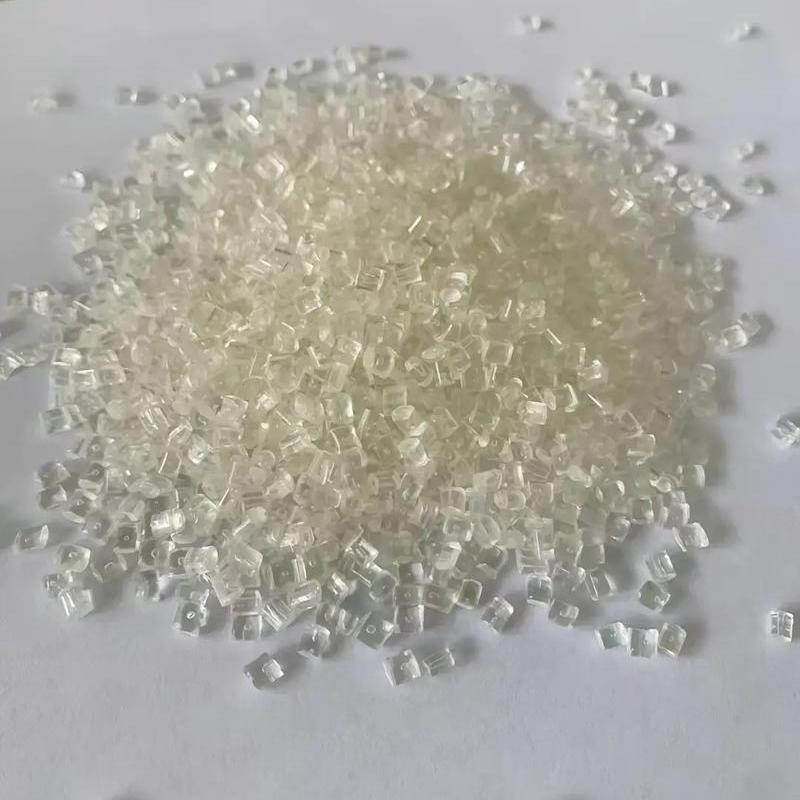
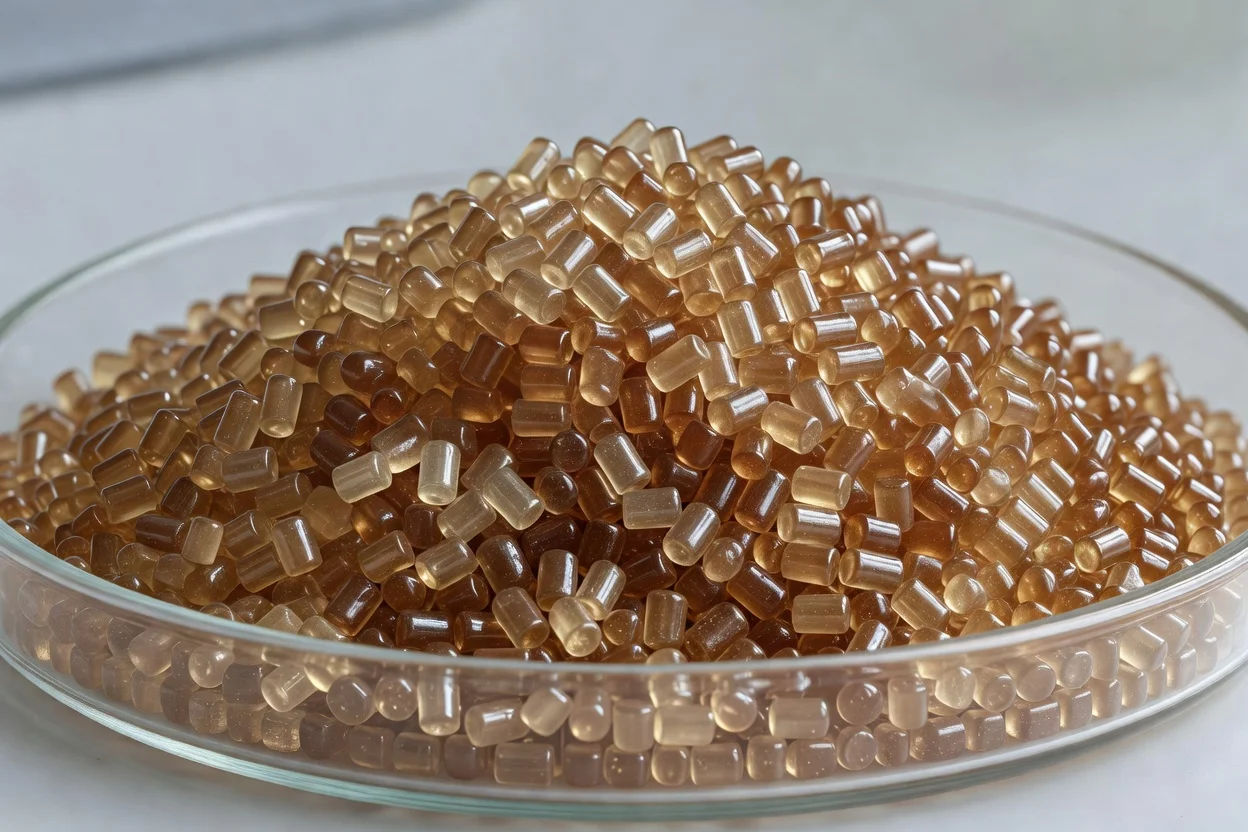
The material is typically supplied as an amber, transparent or translucent resin and is known for maintaining useful mechanical properties across a broad temperature range, with long-term use commonly reported around 160°C and short-term exposure up to about 190°C in supplier literature. At the same time, polysulfone is not a universal substitute for all engineering plastics: its performance is limited by sensitivity to certain polar organic solvents and by stress cracking in some environments.
From a sustainability perspective, polysulfone is both enabling and challenging. It supports durable, reusable, sterilizable products that can reduce replacement frequency, but it remains a fossil-derived specialty polymer whose end-of-life options are constrained by collection, sorting, and contamination issues. Current innovation is therefore focused on membrane efficiency, recyclability, process optimization, and the development of lower-footprint or circular feedstock pathways.
History and Development
Polysulfones emerged as part of the postwar expansion of high-temperature thermoplastics, when industry needed materials that could replace metals, glass, and lower-performance plastics in harsh service environments. Their development was closely linked to advances in aromatic polymer chemistry and the commercialization of melt-processible high-performance resins.
As production technology matured, polysulfone became established in sectors that demanded a combination of transparency, sterilizability, and thermal endurance. Medical and laboratory ware were among the most visible early applications, followed by electrical parts, hot-water systems, and membrane separation technologies.
The material family later broadened into multiple commercial variants, with PSU often treated as the baseline polysulfone resin and related polyarylsulfones positioned for higher heat resistance or improved impact performance. This differentiation allowed processors to match the resin more precisely to sterilization regime, load-bearing requirement, and regulatory environment.
Chemical Structure and Key Properties
Polysulfone is an aromatic thermoplastic containing sulfone linkages in a rigid polymer backbone, which contributes to its high glass-transition temperature, stiffness, and resistance to many aqueous chemicals. The aromatic structure also limits chain mobility, giving the resin its characteristic combination of toughness and dimensional stability at elevated temperatures.
| Property | Typical behavior |
|---|---|
| Appearance | Amber, transparent to translucent |
| Morphology | Amorphous |
| Density | About 1.24–1.28 g/cm3 |
| Glass transition temperature | Commonly reported around 185–230°C, depending on grade and source |
| Continuous use temperature | Roughly 140–160°C in supplier literature |
| Key strengths | Heat resistance, hydrolytic stability, rigidity, transparency, electrical insulation |
| Key weaknesses | Sensitivity to some polar organic solvents; stress cracking in certain conditions |
Supplier and technical sources consistently describe polysulfone as retaining strength and stiffness over a wide temperature band, with excellent resistance to hot water, steam, dilute acids, alkalis, salts, and many detergent solutions. It also shows good electrical properties and low ionic impurity levels, which support use in electrical and medical environments.
Several practical limitations matter in design:
- Limit: poor resistance to some polar organic solvents → Cause: attack by ketones, chlorinated hydrocarbons, and aromatic hydrocarbons can occur → Workaround: select alternative polymers, use solvent-resistant blends, or isolate the part from direct solvent contact.
- Limit: notch sensitivity or stress cracking in some geometries → Cause: rigid aromatic backbone and residual stresses can reduce crack tolerance → Workaround: improve part design, reduce sharp corners, optimize molding conditions, and avoid aggressive chemical environments.
- Limit: lower barrier performance than specialty barrier polymers → Cause: polysulfone is chosen for heat and durability rather than gas-barrier excellence → Workaround: use coatings, laminates, or barrier multilayers when oxygen or aroma retention is critical.
Production Processes and Raw Feedstocks
Polysulfone is produced through step-growth polymerization of aromatic monomers that create the sulfone-containing backbone. In industrial practice, production depends on high-purity feedstocks, controlled stoichiometry, and rigorous removal of salts and residual monomers to meet performance requirements for medical, electrical, and food-contact uses.
Key feedstock and process characteristics include:
- Aromatic monomers and sulfone-forming intermediates are selected to deliver the desired thermal and mechanical profile.
- Solvent-based or solution polymerization routes are used in many commercial processes because they facilitate molecular-weight control and purification.
- The final resin is typically compounded, pelletized, and dried carefully before melt processing because moisture management is important for maintaining properties and processing stability.
Major producers and technology holders in this space include large multinational engineering-plastics suppliers such as BASF, which markets polyarylsulfone families and has strong brand recognition in high-performance resins. Specialty processors and regional suppliers also play an important role, particularly for medical, filtration, and custom-formulation grades.
Applications and End-Use Markets
Polysulfone is used where a material must combine heat resistance, rigidity, sterilization durability, and transparency. Its best-fit applications are highly selective, but in those niches it often replaces metal, glass, or less robust plastics.
| End-use sector | Typical grade/process | Why polysulfone fits |
|---|---|---|
| Medical devices | Injection-molded PSU, tubing, housings, trays | Repeated autoclave sterilization, transparency, biocompatibility in approved grades |
| Laboratory ware | Molded PSU parts | Chemical resistance, dimensional stability, clarity |
| Water treatment and separations | Membranes, membrane supports, housings | Thermal and chemical stability, fouling resistance in membrane architectures |
| Food and beverage | Reusable containers, dispensers, hot-liquid components | Heat resistance and regulatory-grade options |
| Electrical and electronic | Connectors, insulating parts, coil forms | Dielectric stability, flame resistance, low ionic contamination |
| Industrial fluid handling | Valves, pump components, pipe fittings | Hot water, steam, and chemical exposure tolerance |
| Aerospace and transportation | Interior and technical parts | Low smoke and stable properties at elevated temperature |
| A poor-fit use | Strong solvent service | Susceptibility to ketones and some chlorinated/aromatic solvents makes it unsuitable without protection |
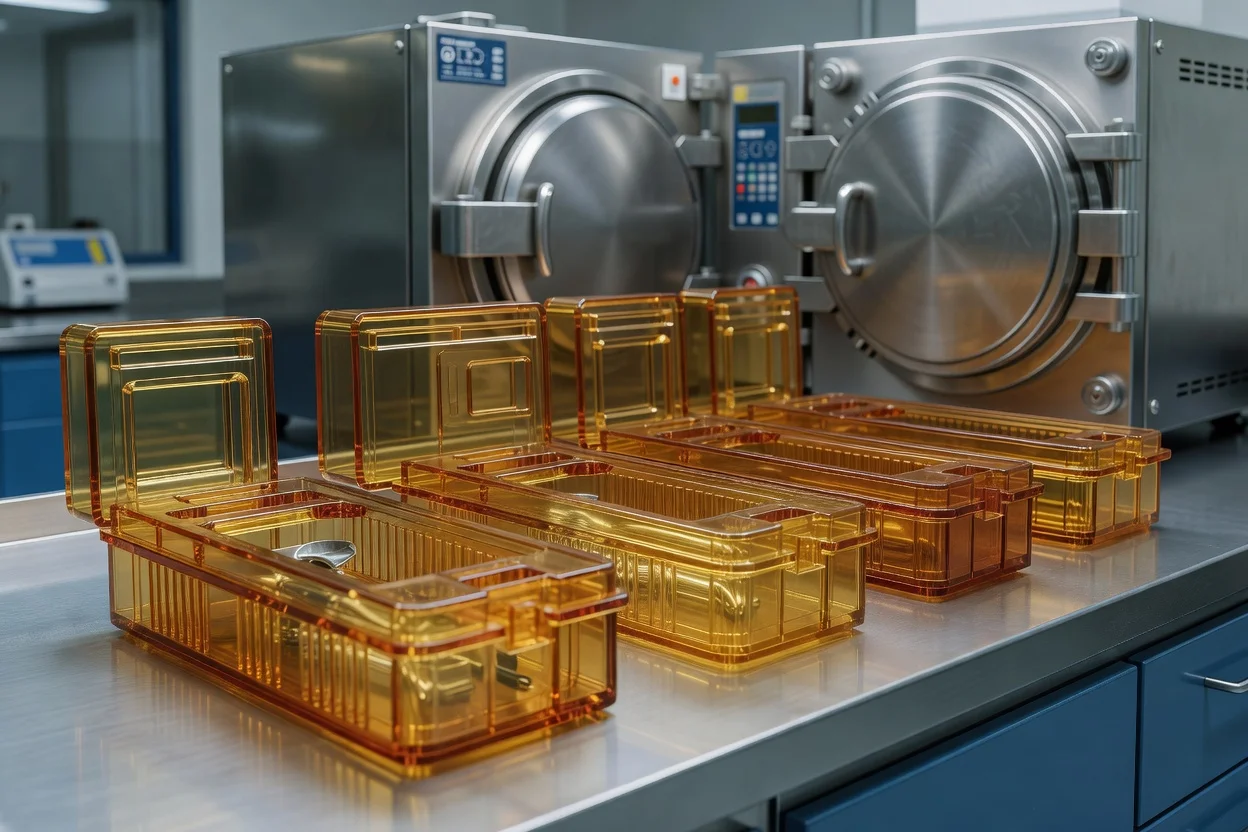
In medical applications, polysulfone is used for surgical instruments, sterilization trays, diagnostic equipment, blood-contact and filtration components, and reusable housings that must survive repeated steam sterilization. In filtration, polysulfone is a major membrane polymer for ultrafiltration and related separation systems used in municipal water treatment, bioprocessing, food processing, and industrial wastewater pretreatment.
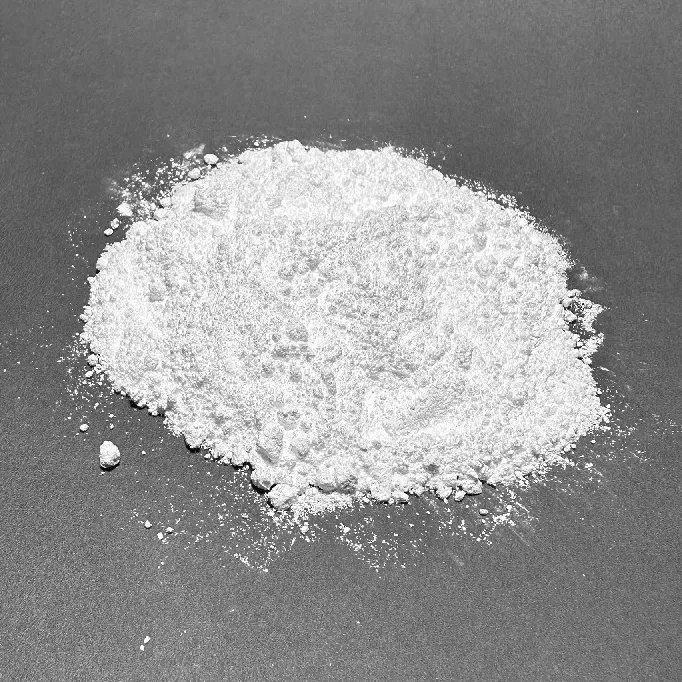
In electrical and electronic markets, the resin is used for connectors, insulators, coil forms, and housings where heat resistance and dimensional stability matter more than low cost. In hot-water and steam environments, it serves as an alternative to glass and stainless steel in certain foodservice and laboratory components.
Environmental and Sustainability Aspects
Polysulfone is not a mass commodity plastic; it is a specialty durable polymer whose sustainability profile must be judged by use phase as well as end of life. Its long service life, sterilization durability, and dimensional stability can reduce replacement rates and material consumption in demanding applications.
At the same time, several sustainability constraints remain:
- It is typically derived from fossil-based aromatic feedstocks.
- Its high performance comes with higher material cost and energy intensity than commodity resins.
- Mechanical recycling is possible in principle, but in practice it is limited by contamination, additives, color, medical residues, and the need to preserve properties.
- Chemical recycling pathways are not yet widely commercialized for polysulfone at scale.
For membranes and medical devices, the sustainability discussion is especially complex. In water treatment, polysulfone membranes enable filtration processes that support reuse, purification, and resource recovery. However, spent membrane modules and medical components are often difficult to recycle because of fouling, sterilization history, and multi-material construction.
Bio-based alternatives are not yet common for polysulfone itself, but the broader trend in high-performance polymers is toward lower-carbon monomers, process intensification, and design-for-recovery approaches. In practice, this means improving resin efficiency, extending service life, and designing parts that can be more easily disassembled or recycled.
Economic and Global Market Impact
Polysulfone occupies a premium niche in the engineering plastics market, where price is justified by performance rather than volume. Demand is shaped by medical device production, membrane manufacturing, laboratory infrastructure, and high-temperature industrial equipment.
Market dynamics are influenced by several factors:
- Growth in single-use and reusable medical systems.
- Expansion of water treatment and bioprocessing membrane capacity.
- Demand for sterilizable components in food, diagnostics, and life sciences.
- Substitution pressure from lower-cost polymers where performance requirements are less demanding.
Large producers with strong positions in polyarylsulfones influence availability, formulation support, and qualification pathways, particularly in regulated industries. Meanwhile, regional distributors and compounders often determine supply responsiveness for custom grades and small-batch technical parts.
Because polysulfone is often specified into certified applications, switching costs can be high. Once a grade is qualified for a medical, food-contact, or filtration use, buyers may remain locked into a narrow supplier set, which reinforces the importance of long-term technical support and consistent resin quality.
Current Challenges and Innovations
The main technical challenge is that polysulfone must compete against both lower-cost engineering plastics and higher-performing members of its own family. Designers often compare PSU with PESU and PPSU when sterilization temperature, impact resistance, or long-term creep behavior become critical.
Current innovation directions include:
- Membrane engineering: improving flux, fouling resistance, and selectivity in ultrafiltration and related systems.
- Compounding: adding stabilizers, fillers, or reinforcing fibers to tune stiffness, creep resistance, or processability.
- Processing optimization: minimizing thermal history and residual stress during injection molding or extrusion.
- Medical qualification: developing grades that satisfy stricter biocompatibility and sterilization requirements.
- Circularity initiatives: increasing resin recovery from cleaner industrial streams and designing parts for easier separation.
Where space constraints allow, two practical formulation examples are common in the wider polyarylsulfone ecosystem:
- Glass fiber reinforcement, typically around 10–30 percent in structural grades, is used to raise stiffness and reduce creep in load-bearing components; the mechanism is simple load transfer from matrix to fiber.
- Processing additives or internal lubricants at low loadings, often below 1 percent, may be used to improve mold release or surface finish; the mechanism is reduced melt-friction and improved flow consistency.
These approaches must be balanced carefully, because excessive additive loading can reduce transparency, sterilization resistance, or regulatory acceptability.
Future Outlook
Polysulfone is likely to remain a strategic specialty polymer in high-value sectors rather than a broadly consumed commodity resin. Its strongest future prospects are in sterilizable medical hardware, membrane separations, hot-fluid systems, and electrical parts that require stability under harsh operating conditions.
Several trends are especially important:
- Growth in water reuse and advanced filtration.
- Continued demand for durable medical and laboratory equipment.
- Material substitution away from metals where weight, transparency, or processability matter.
- Increased pressure for lower-carbon, more circular specialty polymers.
The most plausible long-term trajectory is not replacement by a single alternative, but more selective use: polysulfone will be chosen where its unique combination of transparency, thermal resistance, and hydrolytic stability creates measurable value. Innovation will likely focus on smarter grades, improved manufacturability, and more credible end-of-life pathways rather than on broad market expansion into cost-sensitive commodity applications.
Summary
Polysulfone is a high-performance amorphous thermoplastic defined by heat resistance, hydrolytic stability, dimensional precision, and transparency. It is most valuable in medical, filtration, electrical, and hot-fluid applications, where repeated sterilization and long-term reliability justify its premium position.
Its limitations are equally important: it is not ideal for strong solvent exposure, and its sustainability profile depends heavily on durability, recovery, and system design. As a result, polysulfone remains a technically critical but highly specialized material in the global plastics value chain.
References
- •
Polysulfone PSU/PSF-Nanjing Shousu Special Engineering Plastics. (n.d.). https://www.njsspeek.com/en/index.php/technology/clxq/9.htmlLink
- •
A Comprehensive Comparison of PSU, PPSU and PSF. (2025, September 17). https://www.honyplastic.com/news/comprehensive-comparison-of-psu-ppsu-and-psf-333216.htmlLink
- •
PSF Request for Quotation. (n.d.). https://www.chembk.com/en/chem/PSFLink
- •
Recent Developments in Polysulfone Studies. (2026, February 1). https://onlinelibrary.wiley.com/doi/full/10.1002/pol.20250762Link
- •
PSU/PSF (Polysulfone) injection molding process - Knowledge. (2023, September 22). https://www.plasticomould.com/info/psu-psf-polysulfone-injection-molding-proces-87302305.htmlLink
- •
Take BASF as an example to talk about the performance, processing .... (2018, July 25). https://www.zhongleiscience.com/en/news_detail-2-21.htmlLink
- •
Poly(oxy-1,4-phenylenesulfonyl-1,4-phenyleneoxy-1,4-phenylene(1-methylethylidene)-1,4-phenylene) Request for Quotation. (2024, January 2). https://www.chembk.com/en/chem/Poly(oxy-1,4-phenylenesulfonyl-1,4-phenyleneoxy-1,4-phenylene(1-methylethylidene)-1,4-phenylene)Link
- •
Recent Developments in Polysulfone Studies. (2026, February 1). https://onlinelibrary.wiley.com/doi/10.1002/pol.20250762Link
- •
[PDF] Polysulfone (PSU) - Technical Data Sheet - Plastim Ltd. (n.d.). https://plastim.co.uk/wp-content/uploads/2019/07/Polysulfone-PSU-Technical-Data-Sheet.pdfLink
- •
Best Polyimide (PI) Material In All Forms In China - UVTECO. (2024, December 24). https://uvteco.com/plastic-material/polysulfone-psu-psfLink
- •
[PDF] POLYSULFONE (PSU) - Eagle Performance Plastics. (n.d.). https://eagle-plastics.com/wp-content/uploads/2019/10/PSU.pdfLink
- •
POLYSULFONE (PSU). (2023, September 13). https://sterlingplasticsinc.com/product/polysulfone-psu/Link
- •
PSU/PSF (Polysulfon) spuitgietproces - Kennis. (2023, September 22). http://nl.injectmould.com/info/psu-psf-polysulfone-injection-molding-proces-87493630.htmlLink
- •
Polysulfone. (2005, November 22). https://en.wikipedia.org/wiki/PolysulfoneLink
- •
"Polysulfones". In: Encyclopedia of Polymer Science and Technology. (n.d.). http://nguyen.hong.hai.free.fr/EBOOKS/SCIENCE%20AND%20ENGINEERING/MECANIQUE/MATERIAUX/COMPOSITES/Encyclopedia%20of%20Polymer%20Science%20and%20Technology/Vol.04/Polysulfones.pdfLink
- •
fournisseur de solutions technologiques, technologie de production chimique, fournisseur de services à guichet unique, service d'ingénierie. (2025, February 28). https://www.slchemtek.com/fr/polysulfone-the-star-performer-in-advanced-engineering-plasticsLink
- •
Polysulfone. (2025, September 16). https://www.sciencedirect.com/topics/engineering/polysulfoneLink
- •
ポリスルホン. (2013, March 6). https://plastics-material.com/psf-2/Link
- •
dostawca rozwiązań technologicznych, technologia produkcji chemicznej, kompleksowy dostawca usług, usługi inżynieryjne. (2025, February 28). https://www.slchemtek.com/pl/polysulfone-the-star-performer-in-advanced-engineering-plasticsLink
- •
Polysulfone Tubing Versatility Based on Resistance. (2024, June 17). https://www.pbsplastics.com/polysulfone-tubing-versatility-based-on-resistance/Link
- •
[PDF] Polysulfones and their applications Athipatla V. (n.d.). https://jhss.scholasticahq.com/article/82138-polysulfones-and-their-applications/attachment/168827.pdfLink
- •
Polysulfone Membranes: Here, There and Everywhere - PMC. (2026, January 5). https://pmc.ncbi.nlm.nih.gov/articles/PMC12843741/Link
- •
Guide to Polysulfone (PSU) Resin for Tough Applications. (2025, August 18). https://www.aprios.com/insights/high-performance-polysulfone-psu-resin-for-tough-applicationsLink
- •
Polysulfone – Wikipedia. (2013, June 7). https://de.wikipedia.org/wiki/PolysulfoneLink
- •
[PDF] Polyarylsulfones (PSU, PESU, PPSU) | BASF. (n.d.). https://download.basf.com/p1/8a8081c57fd4b609017fd6645ed93dab/en/Polyarylsulfones_%252528PSU%25252C_PESU%25252C_PPSU%252529Link
- •
Polysulfone Ultrafiltration Membrane: Advanced Engineering .... (n.d.). https://eureka.patsnap.com/materials/polysulfone-ultrafiltration-membraneLink
- •
Polysulfone - an overview | ScienceDirect Topics. (n.d.). https://www.sciencedirect.com/topics/chemical-engineering/polysulfoneLink
- •
PSU - Polysulfone Plastic, Properties & Uses. (2025, February 3). https://www.curbellplastics.com/materials/plastics/psu/Link
- •
General Purpose Polysulfone: Comprehensive Analysis Of .... (n.d.). https://eureka.patsnap.com/materials/general-purpose-polysulfoneLink
- •
Polysulfone (PSF) Labware. (n.d.). https://www.thermofisher.com/us/en/home/life-science/lab-plasticware-supplies/plastic-material-selection/polysulfone-psf-labware.htmlLink