
Introduction
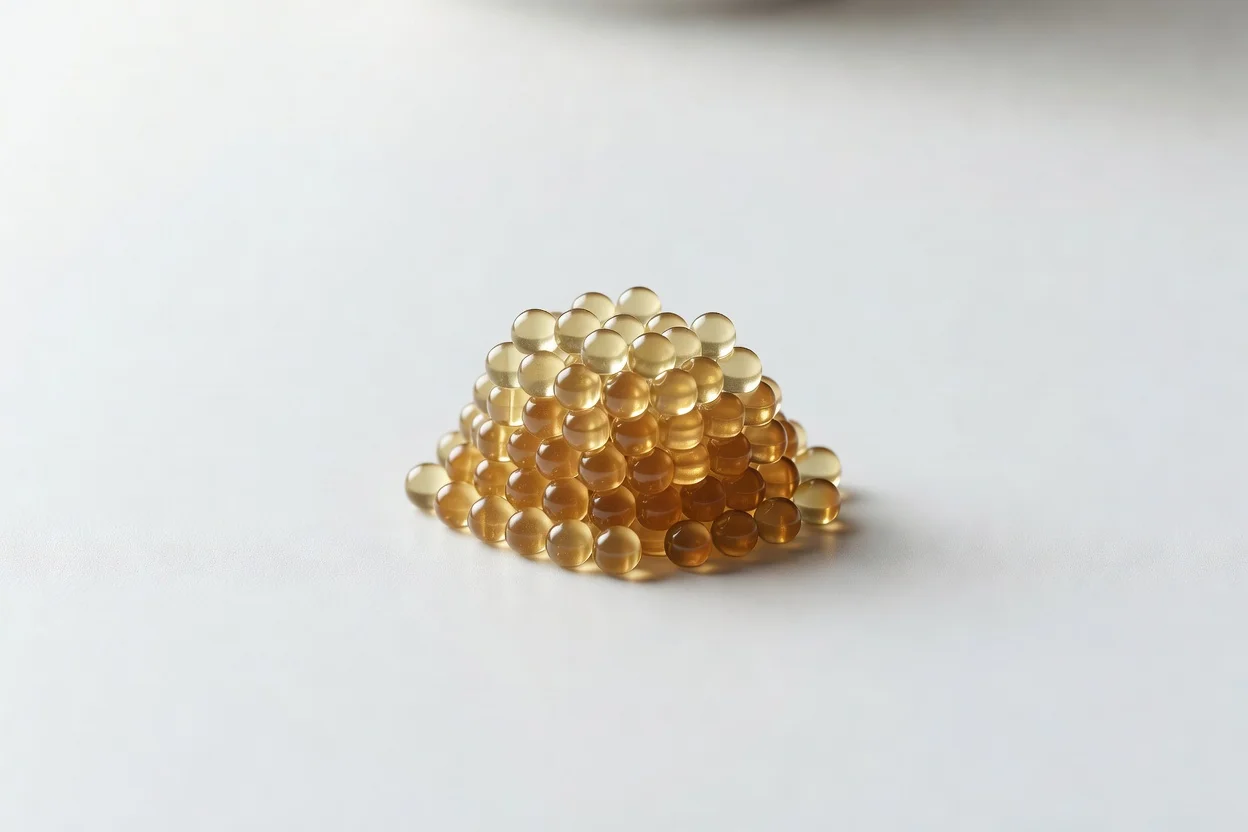
Polyphenylsulfone (PPSU), also called polyphenylene sulfone in some industry usage, is a high-performance, amorphous thermoplastic in the polysulfone family, valued for its unusually strong combination of heat resistance, toughness, hydrolytic stability, and chemical resistance. It is used where repeated steam sterilization, hot-water exposure, dimensional stability, and long service life are critical, especially in medical, plumbing, food-contact, aerospace, and electrical applications.
Within the broader polysulfone family, PPSU is generally considered the most impact-resistant and hydrolysis-resistant of the common commercial grades, outperforming PSU and often competing with PEI in demanding high-temperature uses while offering a different balance of toughness and chemical durability. Its future is closely tied to reusable healthcare systems, lead-free and lightweight metal replacement, membrane technology, and circularity strategies for high-value engineering plastics.
History and development
PPSU emerged as part of the broader development of aromatic sulfone polymers, which were designed to deliver high thermal performance and flame resistance without the brittleness associated with many earlier heat-resistant plastics. Commercial adoption accelerated as processors and end users sought materials that could survive autoclaving, aggressive cleaning agents, and repeated thermal cycling without cracking or embrittlement.
As a result, PPSU found an early and durable niche in reusable medical devices and hot-water system components, where its combination of transparency, toughness, and sterilization resistance offered a practical alternative to metal and to less durable thermoplastics. Over time, expanded product families, including injection-molding grades, extrusion grades, and reinforced variants, broadened its use across technical markets.
Chemical structure and key properties
PPSU is an amorphous aromatic polysulfone built around phenylene rings linked by sulfone groups, a structure that gives it a rigid backbone, strong intermolecular cohesion, and high thermal stability. Its amorphous morphology is important because it avoids a sharp melting point and helps preserve transparency and dimensional consistency across processing and service conditions.
Core property profile
| Property | Typical significance |
|---|---|
| High glass transition temperature | Supports continuous use at elevated temperature |
| High impact strength | Resists cracking under shock and repeated loading |
| Excellent hydrolysis resistance | Suitable for repeated steam sterilization and hot water exposure |
| Good chemical resistance | Tolerates many cleaning agents, disinfectants, acids, and bases |
| Low moisture absorption | Helps maintain tolerances and electrical performance |
| Inherent flame resistance | Valuable in transport and electrical uses |
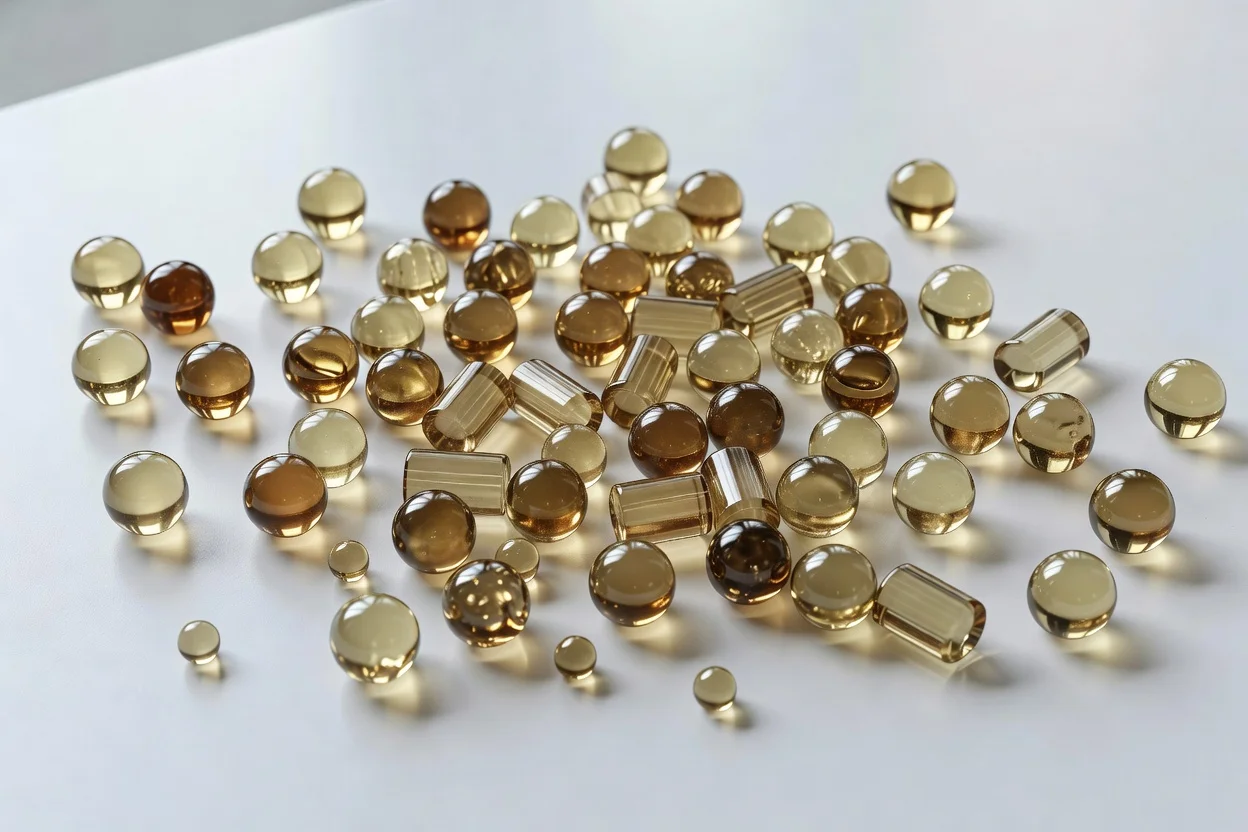
Reported technical data for common grades show a density around 1.29 g/cm3 and tensile yield strengths typically near 70 MPa, with elastic modulus values around 2.3 to 3.4 GPa depending on grade and test method. Published data also indicate heat deflection temperatures in the vicinity of 198 to 207°C under standard loading, underscoring PPSU’s role as a high-heat engineering polymer.
Practical limits and workarounds
- Poor O2 and grease barrier performance → caused by its inherent polymer structure and amorphous nature → workaround: use barrier coatings, multilayer structures, or select barrier polymers for packaging-related duties.
- Low surface energy before treatment → caused by the chemically stable, relatively nonpolar surface → workaround: plasma, corona, flame, or primer pretreatments to improve adhesion and printing.
- High cost relative to commodity engineering plastics → caused by synthesis complexity and lower production volumes → workaround: design for reuse, part consolidation, sterilization durability, and long service life rather than single-use economics.
Production processes and raw feedstocks
PPSU is produced through specialty polymerization routes from aromatic monomers and sulfone-containing intermediates, typically via condensation chemistry carried out under tightly controlled conditions to achieve the desired molecular weight and purity. The exact commercial process differs by producer, but the industrial logic is similar: build a rigid aromatic backbone, introduce sulfone functionality, and manage chain growth to balance toughness, melt behavior, and processability.
Key upstream inputs are petrochemical-derived aromatic feedstocks, specialized sulfonated or sulfone-bearing intermediates, and solvents and reagents used in step-growth polymerization. Because PPSU is a high-value specialty resin, product consistency, low residual monomer content, and color control are often as important as bulk throughput.
Leading producers and supply position
Commercial PPSU supply is concentrated among a limited number of specialty polymer producers and compounders, with Solvay’s Radel among the best-known global PPSU brands and Chang Chun Plastic also widely recognized in the market through branded supply chains and distribution networks. Other material suppliers and processors provide unfilled, reinforced, and custom-formulated grades for medical, industrial, and membrane applications.
Applications and end-use markets
PPSU is selected when a part must combine heat resistance, impact strength, and sterilization durability better than many competing high-performance thermoplastics. Its best-fit markets are those where lifetime performance matters more than initial resin cost.
Major end-use sectors
| Sector | Typical grades and processing | Why PPSU is used |
|---|---|---|
| Medical and healthcare | Injection-molded unfilled grades; trays, housings, instrument handles | Repeated steam sterilization, transparency, toughness |
| Plumbing and fluid handling | Injection-molded fittings, manifolds, valves | Hot-water resistance, dimensional stability, chemical durability |
| Food and beverage equipment | Molded contact parts, sterilizable components | Heat and cleaning-agent resistance |
| Aerospace and transport interiors | Molded structural and interior parts | Flame resistance, low smoke, heat stability |
| Electrical and electronics | Insulators, connector housings, switch components | Dielectric performance, flame resistance, heat endurance |
| Membranes and separation | Films, hollow fibers, support layers | Chemical and thermal stability in filtration and separation systems |
Concrete application examples
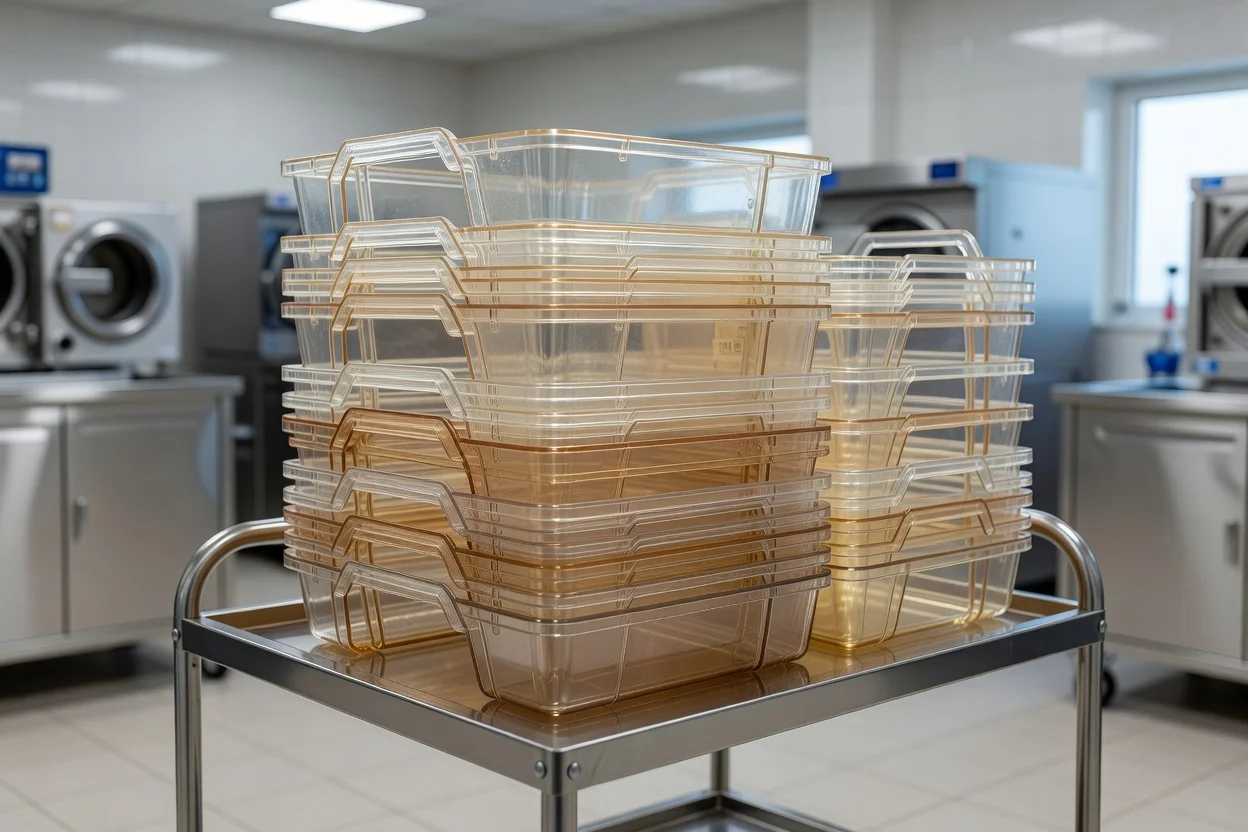
- Reusable surgical trays and sterilizable medical housings often use unfilled PPSU because the resin can tolerate repeated autoclaving better than many other transparent engineering plastics.
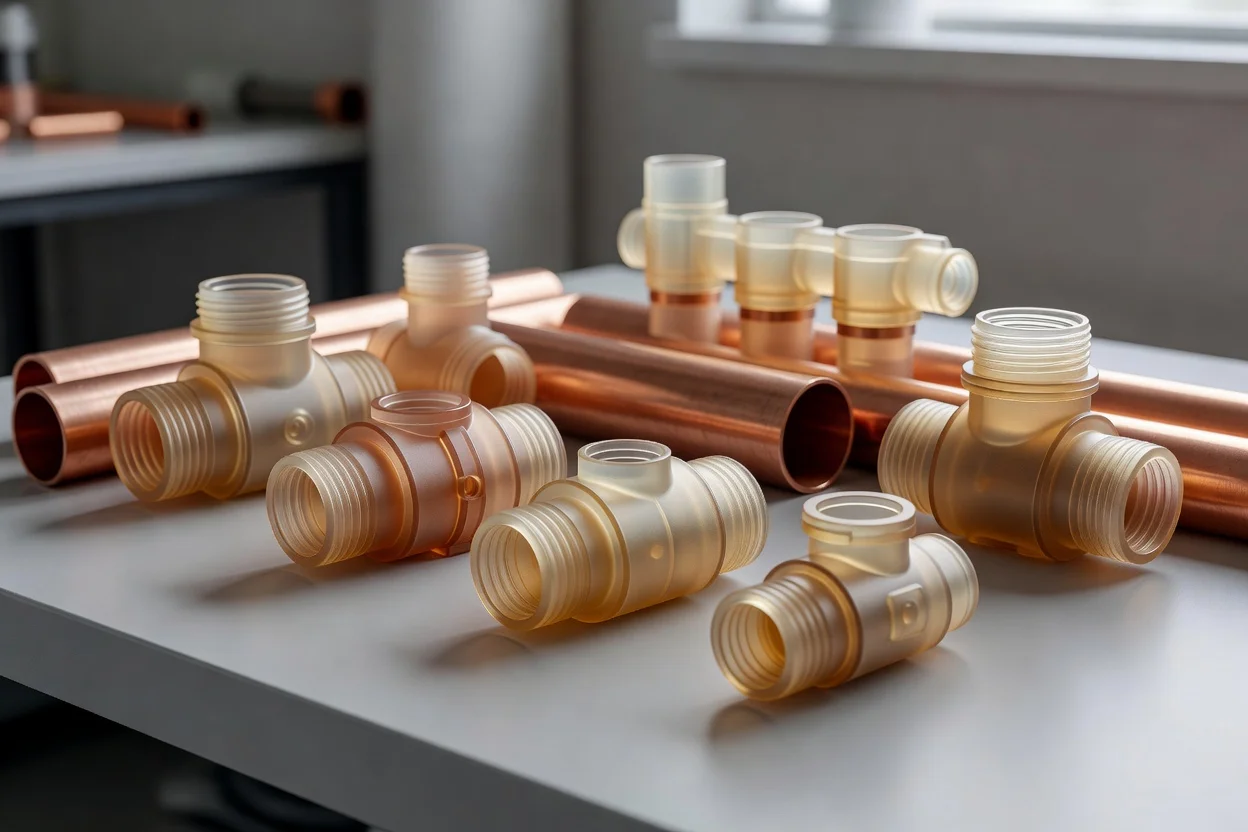
- Hot-water plumbing fittings and manifolds commonly use injection-molded PPSU because it resists hydrolysis and stress cracking under long-term thermal and chemical exposure.
- Membrane substrates and hollow fibers use PPSU or sulfonated PPSU derivatives when thermal and chemical stability are needed in ultrafiltration and related separations.
One poor-fit use
- High-barrier food packaging is a poor fit for PPSU because the resin is not chosen for gas or grease barrier performance; its value lies in durability, not packaging barrier function.
Environmental and sustainability aspects
PPSU is not a commodity plastic, so its sustainability profile is usually assessed by service life, reuse potential, and part durability, rather than by low resin mass alone. In reusable medical and sterilizable applications, one long-lived PPSU component can displace many disposable items or more frequent replacements, which can improve lifecycle performance despite the resin’s specialty nature.
Recyclability and circularity
Mechanically, PPSU is thermoplastic and therefore recyclable in principle, but practical recycling is constrained by collection logistics, contamination, mixed-material assemblies, and the relatively small scale of PPSU waste streams compared with commodity plastics. For this reason, circularity strategies usually emphasize design for disassembly, regrind control in manufacturing, and closed-loop recovery within high-value industrial or medical supply chains.
Bio-based and lower-carbon options
There are no widely established bio-based PPSU routes in mainstream commercial use, so most current supply remains petrochemical-derived. Low-carbon improvements therefore tend to come from process efficiency, solvent recovery, renewable electricity, higher-yield synthesis, and extending component life rather than from straightforward feedstock substitution.
Regulatory and safety context
PPSU is widely used in regulated medical and food-contact environments, but end-use approval depends on the exact formulation, additives, and jurisdiction. Processing aids, pigments, and reinforcing systems must therefore be selected carefully to preserve compliance as well as performance.
Economic and global market impact
PPSU occupies a high-value niche rather than a high-tonnage commodity segment, so market dynamics are driven by performance specifications, qualification cycles, and supply reliability more than by spot-volume swings. Demand is strongest where sterilization resistance, hot-water durability, and premium mechanical performance justify the resin cost.
The material’s economic role is most visible in healthcare and fluid systems, where a small mass of polymer can carry high functional value. In these markets, PPSU competes not only with PSU and PES, but also with PEI, PEEK in some extreme cases, metal alloys, and specialty fluoropolymers, depending on temperature, chemical exposure, and regulatory constraints.
Current challenges and innovations
Current challenges
- Cost pressure remains the most persistent barrier to broader adoption.
- Processing sensitivity requires controlled drying and careful thermal management to avoid degradation and visual defects.
- Competition from substitutes is intense in each target market, especially where lower-cost thermoplastics or metals can meet the minimum specification.
- Recycling infrastructure for specialty engineering plastics remains limited.
Innovations
- Reinforced PPSU grades are being used to raise stiffness and dimensional stability where the base resin’s toughness is retained but greater structural performance is needed.
- Membrane engineering is expanding PPSU’s role in ultrafiltration and advanced separations through sulfonation, pore-structure control, and blend modification.
- Surface modification and adhesion systems are improving printability, coating performance, and bonding to reduce assembly complexity.
- Medical design optimization is increasing the use of PPSU in reusable platforms that justify the resin’s premium through sterilization longevity.
A practical formulation example is the use of glass fiber reinforcement at roughly 30 to 40 wt.% in structural grades, which can raise stiffness substantially while preserving much of the base polymer’s thermal and chemical robustness. Another common approach is pigment and additive packages at low loading levels, used to control color, UV response, or processing behavior without undermining sterilization performance.
Future outlook
PPSU is likely to remain a strategic specialty polymer rather than a mass-market resin. Its strongest future opportunities lie in reusable healthcare, hot-water plumbing, aerospace interiors, membrane systems, and high-reliability electrical components, where durability and compliance can outweigh cost disadvantages.
The most important growth themes are likely to be:
- longer-life medical systems and reusable device platforms
- substitution for metal in selected hot-fluid components
- higher-performance membrane and separation architectures
- lightweight, flame-resistant transport interiors
- process improvements that lower embodied carbon and improve yield
As sustainability pressure increases, PPSU’s competitive position will depend less on resin price alone and more on whether it can demonstrate superior lifecycle value through reuse, reduced replacement frequency, and efficient end-of-life recovery.
Summary
PPSU is a high-performance, amorphous sulfone polymer distinguished by exceptional toughness, hydrolytic stability, heat resistance, and chemical durability. It is most valuable in sterilizable, hot-water, and demanding technical applications, where its premium cost is offset by long service life and performance reliability.
References
- •
Kern. (n.d.). Polyphenylsulfone (PPSU). https://www.kern.de/de/technical-datasheet/polyphenylsulfone-ppsu?n=2461_2Link
- •
MakeItFrom.com. (2020, May 30). Electrical properties. https://www.makeitfrom.com/material-properties/Polyphenylsulfone-PPSULink
- •
Ensinger. (n.d.). PPSU plastic. https://www.ensingerplastics.com/en/thermoplastic-materials/ppsu-plasticLink
- •
Wikipedia contributors. (2006, November 15). Polyphenylenesulfone. In Wikipedia. https://en.wikipedia.org/wiki/PolyphenylenesulfoneLink
- •
Ensinger. (n.d.). TECHNICAL DATA SHEET PPSU [PDF]. https://portalimages.blob.core.windows.net/products/pdfs/0fhasjls_Polyphenylensulfone(PPSU)DataSheet.pdfLink
- •
Tuntun Plastic. (n.d.). PPSU material: Properties & data sheet of polyphenylsulfone (PPSU). https://www.tuntunplastic.com/product/ppsu-material.htmlLink
- •
British Plastics Federation. (n.d.). Polyphenylsulfone (PPSU). https://www.bpf.co.uk/plastipedia/polymers/polyphenylsulfone-ppsu.aspxLink
- •
Eagle Performance Plastics. (n.d.). POLYPHENYLSULFONE (PPSU) [PDF]. https://eagle-plastics.com/wp-content/uploads/2019/10/PPSU.pdfLink
- •
IEMAI3D. (n.d.). IEMAI3D - PPSU technical data sheet (TDS) [PDF]. https://www.iemai3d.com/wp-content/uploads/2020/12/PPSU_TDS.pdfLink
- •
Ensinger. (n.d.). PPSU - updated [PDF]. https://www.ensinger-pc.com/wp-content/uploads/2023/12/PPSU-updated.pdfLink
- •
Patsnap Eureka. (n.d.). Polyphenylsulfone industrial applications: Comprehensive analysis. https://eureka.patsnap.com/materials/ppsu-industrial-applicationsLink
- •
Patsnap Eureka. (n.d.). Polyphenylsulfone engineering plastic: Advanced material. https://eureka.patsnap.com/materials/ppsu-engineering-plasticLink
- •
Patsnap Eureka. (n.d.). Polyphenylsulfone aerospace material: Advanced engineering. https://eureka.patsnap.com/materials/ppsu-aerospace-materialLink
- •
Tuntun Plastic. (2024, August 31). What are the applications of PPSU? https://www.tuntunplastic.com/news/what-are-the-applications-of-ppsu.htmlLink
- •
Wikipedia contributors. (2005, November 22). Polysulfone. In Wikipedia. https://en.wikipedia.org/wiki/PolysulfoneLink
- •
Aprios. (2025, August 4). Polyphenylsulfone (PPSU): High performance for tough uses. https://www.aprios.com/insights/polyphenylsulfone-ppsu-the-go-to-resin-for-tough-applicationsLink
- •
Patsnap Eureka. (n.d.). Polyphenylsulfone heat resistant properties and advanced. https://eureka.patsnap.com/materials/ppsu-heat-resistant-propertiesLink
- •
Patsnap Eureka. (n.d.). Polyphenylsulfone high heat polymer: Comprehensive analysis of. https://eureka.patsnap.com/materials/ppsu-high-heat-polymerLink
- •
GCNOV. (n.d.). PPSU (polyphenylsulfone) material guide. https://gcnov.com/ppsu-polyphenylsulfone-material-guide/Link
- •
PMC. (2022, September 14). Investigation of the properties of polyphenylene sulfone blends. https://pmc.ncbi.nlm.nih.gov/articles/PMC9506146/Link
- •
Aixihardware. (n.d.). Application and characteristics of PPS PPSU materials. https://www.aixihardware.com/application-and-characteristics-of-pps-ppsu-materials/Link
- •
TER Plastics Polymer Group. (2013). PPSU (polyphenylensulfon). https://www.terplastics.com/de/produkte/technische-kunststoffe/hochleistungskunststoffe-hpp-ppsu-polyphenylensulfon.phpLink
- •
Patsnap Eureka. (n.d.). Polyphenylsulfone injection molding grade: Advanced material. https://eureka.patsnap.com/materials/ppsu-injection-molding-gradeLink
- •
Patsnap Eureka. (n.d.). Polyphenylsulfone high stiffness: Advanced engineering. https://eureka.patsnap.com/materials/ppsu-high-stiffness-solutionsLink
- •
Prusa Research. (2026, January 8). PPSU (polyphenylsulfone). https://help.prusa3d.com/article/ppsu-polyphenylsulfone_789273Link
- •
EuroPlas. (2023, December 13). Polyphenylsulfone (PPSU): What is it? https://europlas.com.vn/en-US/blog-1/polyphenylsulfone-ppsu-what-is-itLink
- •
Beska Mold. (2025, September 26). PPSU material guide – properties, applications & processing. https://www.beskamold.com/what-is-ppsu-material/Link
- •
Curbell Plastics. (2025, February 6). Radel material & PPSU plastic properties. https://www.curbellplastics.com/materials/plastics/ppsu/Link
- •
Holm & Holm A/S. (n.d.). PPSU - polyphenylene sulfone. https://holm-holm.com/shop/272-ppsu---polyphenylene-sulfone/Link
- •
Thermtest. (2015, August 25). Polyphenyl sulfone (PPSU) & polyphenylene sulfide (PPS). https://thermtest.com/testing-5-polyphenyl-sulfone-ppsu-polyphenylene-sulfide-ppsLink
- •
Junhua. (2025, August 7). PPSU (polyphenylsulfone). https://www.junhuapeek.com/product/ppsu/Link
- •
NMPA. (n.d.). PPSU [PDF]. https://qxzc.nmpa.gov.cn/upload/ba/1642216691822.pdfLink
- •
Patsnap Eureka. (n.d.). Polyphenylsulfone resin: Comprehensive analysis of properties, synthesis, and advanced engineering applications. https://eureka.patsnap.com/materials/polyphenylsulfone-resinLink
- •
PMC. (2022, February 21). Recent advancements in polyphenylsulfone membrane modification. https://pmc.ncbi.nlm.nih.gov/articles/PMC8876851/Link
- •
ScienceDirect. (2016, September 2). Rheology and phase inversion behavior of polyphenylenesulfone. https://www.sciencedirect.com/science/article/abs/pii/S003238611630550XLink
- •
Polymer-Forum. (n.d.). PPSU (polyphenylene sulfone). https://www.polymer-forum.de/en/produkte/technische-kunststoffe/hochleistungskunststoffe-hpp-ppsu-polyphenylensulfon.phpLink
- •
UL Prospector. (n.d.). Polysulfone (PSU): PPSU. https://www.ulprospector.com/plastics/en/generics/44/classifications/162Link
- •
Google Patents. (2020, August 24). Polyphenylene sulfone. https://patents.google.com/patent/KR20230083274A/enLink
- •
PMC. (n.d.). Effect of solvent and monomer ratio on the properties of polyphenylene sulphone. https://pmc.ncbi.nlm.nih.gov/articles/PMC10221887/pdf/polymers-15-02279.pdfLink
- •
PMC. (2020, June 25). Preparation and characterization of polyphenylsulfone (PPSU). https://pmc.ncbi.nlm.nih.gov/articles/PMC7345145/Link
- •
Polymerwerkstatt. (n.d.). Polysulfones - PSU, PESU, PPSU. http://polymerwerkstatt.com/en/news/polysulfones-psu-pesu-ppsu/Link
- •
MDPI. (2024, December 29). Increasing the permeability of polyphenylene sulfone hollow fiber. https://www.mdpi.com/2073-4360/17/1/53Link
- •
AZoM. (2004, January 6). Polyphenylsulphone - supplier data by Goodfellow. https://www.azom.com/article.aspx?ArticleID=2260Link