
Introduction
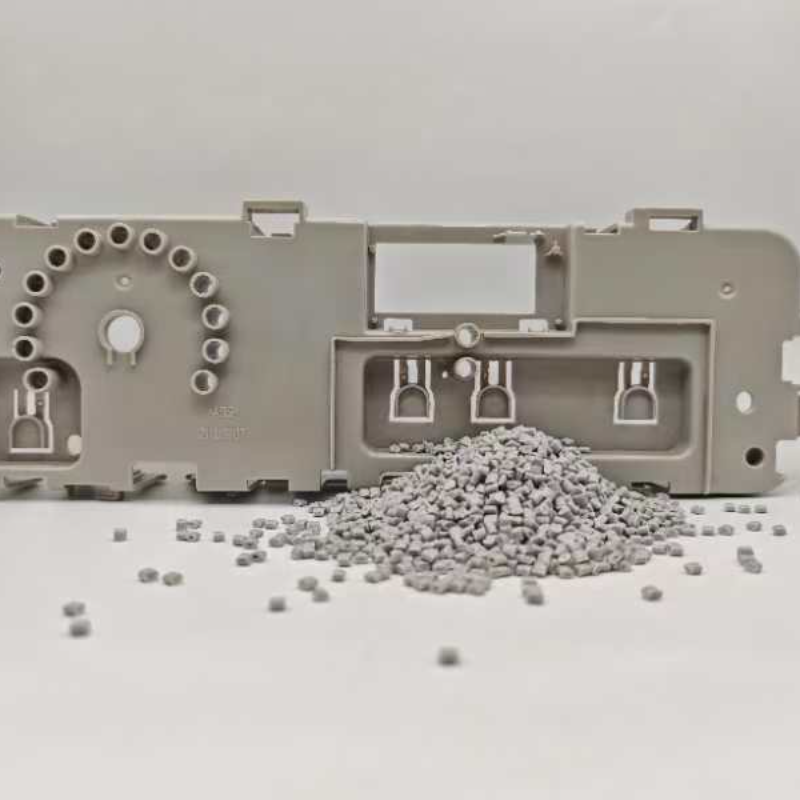
MPPO / MPPE refers to modified polyphenylene oxide or modified polyphenylene ether, a family of engineering thermoplastics based on polyphenylene ether resin that is usually blended or alloyed with other polymers to improve processability, impact strength, and cost-performance balance. In industry practice, the terms are often used interchangeably, although PPE is the more generic chemical family name and PPO is widely used as a commercial and historical synonym.
Pure polyphenylene ether is valued for high heat resistance, excellent electrical insulation, low water absorption, and dimensional stability, but it is rarely used alone because of its difficult melt processing and limited impact/processability profile. As a result, most commercial products are modified systems such as PPO/PS, PPO/PA, or PPO/PP blends, which broaden the material’s use in electronics, automotive components, appliance housings, and fluid-handling parts.
From a materials-science perspective, MPPO/MPPE occupies a strategic position between commodity plastics and high-end specialty resins: it is not as heat-resistant as the most advanced high-performance polymers, but it offers an unusually useful combination of electrical performance, low moisture uptake, and molding stability. Sustainability discussion around the material is increasingly tied to lightweighting, long service life, recyclability of blends, and the possibility of bio-based or recycled feedstocks, while technical work continues on lowering melt viscosity, improving flame-retardant systems, and enhancing thermal conductivity for electronics.
History and Development
Polyphenylene ether emerged as an important engineering resin because its aromatic backbone provides thermal and dimensional stability unusual among thermoplastics. Its commercial adoption expanded when formulators learned that blending with polystyrene, polyamide, or other resins could dramatically improve flow, toughness, and moldability while preserving much of the intrinsic heat and electrical performance.
The market therefore evolved from unmodified PPO/PPE toward modified PPO/PPE grades, which became the practical industrial standard. This is why many product datasheets and market discussions use MPPO or MPPE to mean the actual sold material rather than the neat polymer.
A major development trend has been the rise of application-specific compounds for connectors, trays, electrical enclosures, water-contact parts, and PCB-related substrates. More recent research has focused on functional composites and high-frequency dielectric materials, reflecting demand from electric vehicles, renewable energy, and advanced electronics.
Chemical Structure and Key Properties
Polyphenylene ether is an aromatic thermoplastic built around a rigid phenylene-ether backbone, which is the source of its high glass-transition temperature, stiffness, and low moisture uptake. The same rigid structure also contributes to poor melt flow in the unmodified resin, so commercial materials are commonly modified with impact modifiers, styrenics, polyamides, or glass fiber.
Key property profile
| Property class | Typical behavior |
|---|---|
| Heat resistance | High heat distortion temperature and good continuous-use performance |
| Electrical performance | Very good insulation and low dielectric loss |
| Moisture behavior | Very low water absorption and good hydrolysis resistance |
| Dimensional stability | Low shrinkage and low creep |
| Mechanical behavior | Good rigidity; impact can be tailored by blending |
| Processing | Better in modified grades than in neat PPO/PPE |
Typical datasheets for modified PPO show high heat distortion temperatures, low shrinkage, and useful impact strength, with one example reporting a heat deflection temperature of 174 C, notched Izod impact of 22 kgf.cm/cm, and low molding shrinkage for a commercial MPPO grade. Other references note that modified PPO blends can deliver heat distortion temperatures above 100 C and, in some grades, up to around 195 C.
Real limitations and practical workarounds
- Poor melt flow → caused by the rigid aromatic backbone and high melt viscosity → workaround: blend with PS, PA, PP, or use reactive/compounded grades to improve processability.
- Lower toughness in neat form → caused by stiffness-dominated molecular architecture → workaround: impact modification, rubber-toughening, or alloying with tougher partner polymers.
- Sensitivity to certain solvents and hydrocarbons → caused by polymer-solvent interaction with aromatic systems → workaround: select solvent-resistant blends, use barrier design, or substitute alternative engineering plastics where chemical exposure is severe.
- Electrically strong, but not always thermally conductive enough for hot electronics → caused by intrinsic low thermal conductivity of polymers → workaround: add ceramic or oxide fillers to build thermal management grades.
Production Processes and Raw Feedstocks
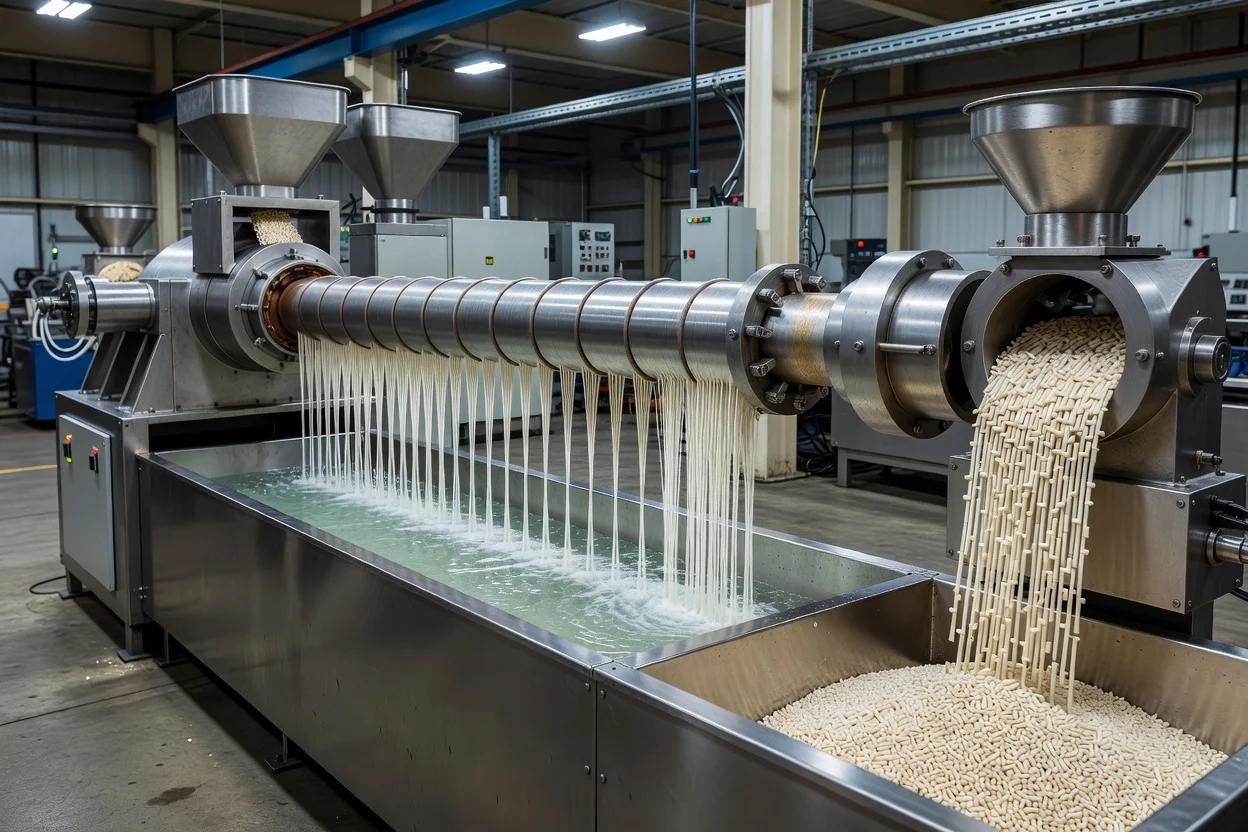
Commercial MPPO/MPPE begins with polyphenylene ether resin, then proceeds through compounding and pelletization with one or more partner polymers and additives. The base polymer is typically produced from aromatic feedstocks and then converted into compounded materials with stabilizers, flame retardants, glass fiber, mineral fillers, or antistatic and conductive packages depending on the target application.
Main production route
- Polymer formation
- Aromatic monomers are converted into PPE/PPO resin through controlled polymerization chemistry.
- Compounding
- The resin is blended with styrenics, polyamides, polypropylenes, or functional additives to create market-grade MPPO/MPPE.
- Property tuning
- Glass fiber improves stiffness and heat resistance.
- Flame-retardant systems support electrical and electronics use.
- Specialty fillers can improve thermal conductivity or dielectric behavior.
- Pelletization and molding
- The compounded resin is supplied for injection molding, extrusion, and in some cases sheet or laminate production.
Formulation examples
- PPO/PS blend: improves flow and moldability while preserving dimensional stability; widely used in housings and electrical parts.
- PPO/PA blend: used when higher toughness and better chemical resistance are needed, especially in automotive and electrical applications.
- PPO with ceramic filler: used in thermal management compounds where heat dissipation is a design priority.
Applications and End-Use Markets
MPPO/MPPE is most successful where electrical insulation, heat resistance, low moisture absorption, and dimensional stability must be combined in one material. Its market is concentrated in molded technical parts rather than bulk commodity uses.
Major application sectors
- Electronics and electrical
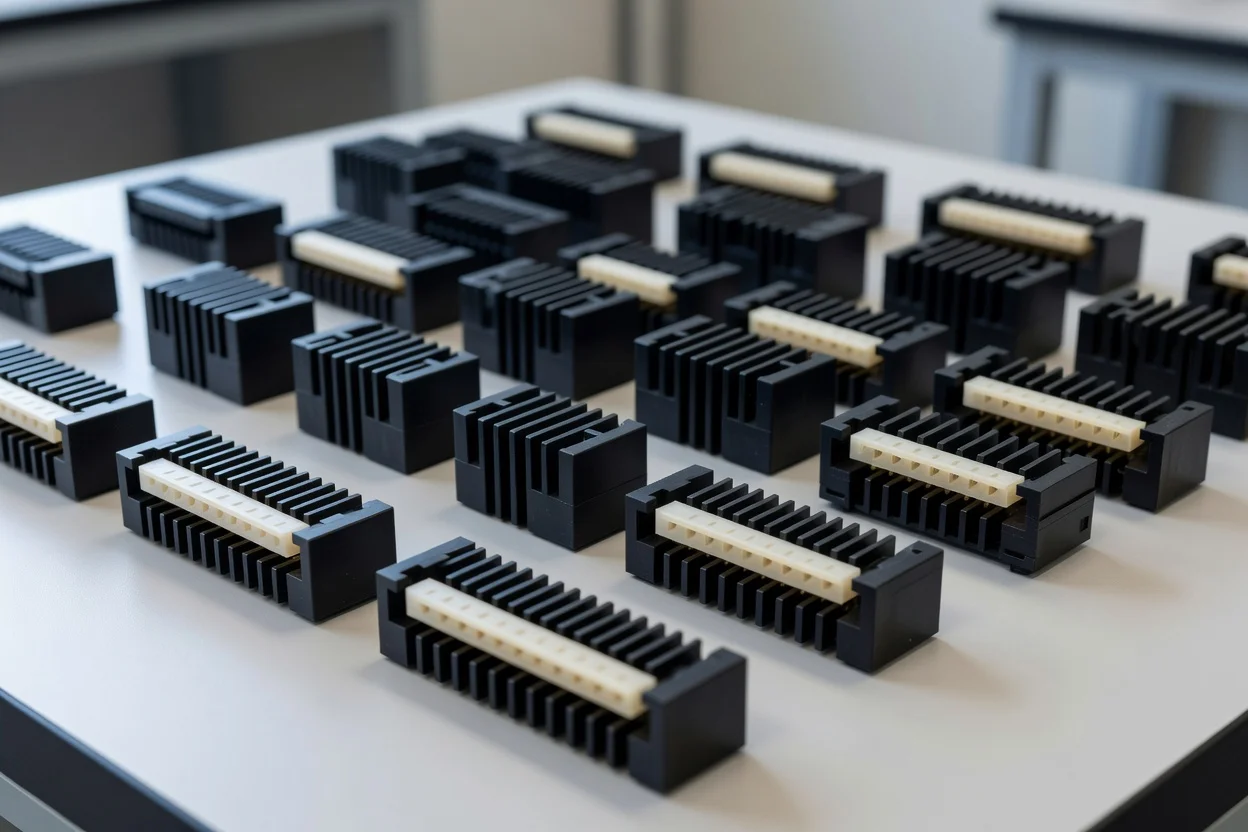
- Connectors, switchgear parts, relay housings, circuit breakers, instrument housings, coil bobbins, trays, and high-precision insulating parts.
- Usual grade: flame-retardant, high-flow modified PPO/PPE compounds, often with glass fiber or mineral reinforcement.
- Automotive and e-mobility
- Under-hood electrical parts, sensor housings, connector bodies, battery-adjacent components, and lightweight structural electrical parts.
- Usual grade: impact-modified and/or glass-reinforced MPPO/MPPE, often flame-retarded.
- Appliances and consumer goods
- TV back covers, display-related parts, appliance housings, pump and water-contact parts, and components exposed to humid environments.
- Usual grade: general-purpose modified PPO/PPE with good surface finish and dimensional stability.
- Fluid handling and water systems
- Water meter bodies, pump housings, impellers, valve parts, and fittings requiring hydrolytic stability.
- Usual grade: hydrolysis-resistant compounds, sometimes with FDA or NSF-qualified formulations.
- Industrial and office equipment
- Printer bases, cartridges, machine frames, and parts exposed to repeated heat cycles and chemical cleaners.
- Usual grade: stiffer, creep-resistant MPPO/MPPE compounds.
- PCB and high-frequency materials
- Copper-clad laminates and dielectric structures for high-speed and high-frequency electronics.
- Usual grade: specialized low-dielectric-loss blends and composite formulations.
- Less suitable use
- Highly solvent-exposed parts are a poor fit because modified PPO/PPE can be vulnerable to certain hydrocarbon solvents and aromatic/halogenated chemicals.
Notable performance fit
A commercial MPPO datasheet reports a specific gravity of 1.24, tensile strength of 9.5 kgf/mm2, flexural modulus of 740 kgf/mm2, notched Izod impact of 22 kgf.cm/cm, and heat deflection temperature of 174 C, illustrating why the resin is chosen for stiff, heat-stable molded parts.
Environmental and Sustainability Aspects
MPPO/MPPE is not a mass-volume polymer, but its sustainability profile matters because it is widely used in durable electrical, automotive, and water-system components where long service life can reduce replacement frequency. In these applications, material efficiency and lightweighting can lower lifecycle impacts even when the resin itself is more energy-intensive than commodity plastics.
Recyclability and circularity
- Modified PPO/PPE blends can be mechanically recycled in controlled industrial streams, but real-world recycling is complicated by multi-polymer formulations, glass fiber, flame retardants, and contamination from electronics or end-of-life vehicles.
- The material is often embedded in durable assemblies, which limits collection and disassembly efficiency.
- Design-for-recycling strategies increasingly emphasize fewer additives, better labeling, and more consistent alloy families.
Bio-based and lower-carbon pathways
- Direct bio-based equivalents are limited, but the industry is exploring lower-carbon aromatic feedstocks, recycled polymer inputs, and chemistry that reduces process energy intensity.
- For some uses, the best sustainability gain comes not from the resin itself but from extending component life, improving part integration, and reducing failure rates.
Environmental trade-offs
- Strength: low water uptake, durability, and electrical reliability can support long-lived components.
- Weakness: compounded systems are harder to recycle than single-polymer materials.
- Opportunity: replacing heavier metal parts in selected electrical and fluid applications can reduce mass and sometimes lower use-phase energy.
Economic and Global Market Impact
According to recent industry analyses, MPPO/MPPE demand is supported by electronics miniaturization, EV electrification, high-speed connectivity, and continued need for dimensional stability in molded components. Growth is also linked to the substitution of metal in certain housings and the need for halogen-free or low-smoke electrical materials.
Market position
The global market is characterized by a relatively small number of resin platforms and a larger number of compounders and application specialists. Major commercial positions are associated with established engineering-plastics suppliers and compound brands rather than with a broad commodity-style producer base.
Leading global producers and suppliers
- SABIC / Noryl heritage: one of the best-known commercial families in modified PPO/PPE, historically central to the market’s development.
- LG Chem / Lumiloy: a recognized compound product line in mPPE materials.
- Asahi Kasei and other compound developers: active in explaining and supplying modified PPE families for electrical and industrial use.
- Regional compounders in Asia: important in tray, electronics, and appliance supply chains, especially where customization and local molding support are decisive.
Pricing and value drivers
- Performance specification is more important than resin tonnage.
- Flame retardancy, dielectric performance, and heat distortion targets can significantly affect formulation cost.
- High-volume electronics and automotive platforms reward consistent supply, low shrinkage, and molding reproducibility.
Current Challenges and Innovations
Current technical work is focused on overcoming the intrinsic limits of PPE-based systems while preserving their core strengths. The main innovation areas are:
- Lower melt viscosity
- Grafting, molecular architecture design, and compatibilization are being used to improve processing.
- Thermal management
- Ceramic and oxide-filler composites are improving heat conduction for electronics; one recent composite study reported thermal conductivity of 1.49 W/(m·K), more than five times that of pure MPPO resin.
- Low-dielectric materials
- Demand from high-frequency communications and PCB applications is driving low-loss formulations.
- Flame retardancy with better sustainability
- Formulators aim to reduce halogenated systems while maintaining UL performance targets.
- Super-toughened grades
- Patented and research-based materials seek to extend impact strength without sacrificing heat resistance.
Innovation opportunity examples
- In connectors and circuit housings, the best commercial opportunity is a compound that combines low dielectric loss, flame retardancy, and dimensional stability.
- In water-contact parts, the key opportunity is durability under hot-water cycling and low creep.
- In EV components, the priority is a balance of electrical insulation, heat aging resistance, and lighter weight.
Future Outlook
MPPO/MPPE is likely to remain a high-value specialty material rather than a high-volume one. Its strongest future position is in electrical and electronic systems, EV platforms, thermal-management parts, and precision molded components where the combination of insulation, stability, and heat resistance is difficult to replace.
The most important technical direction is property integration: combining better thermal conductivity, lower dielectric loss, stronger flame retardancy, and improved processability in the same compound. On the business side, growth will depend on compound innovation, stable feedstock economics, and the ability to offer tailored grades for high-spec applications across Asia, Europe, and North America.
Summary
MPPO/MPPE is the commercially modified form of polyphenylene ether, valued for heat resistance, electrical insulation, low moisture uptake, and dimensional stability, but rarely used neat because of processing limits. Its market relevance comes from compound design: blending, reinforcement, and functional additives convert a difficult-to-process polymer into a versatile engineering material for electronics, automotive, appliance, and fluid-handling applications.
Its future will be shaped by lower-loss electronics, EV electrification, thermal-management needs, and more circular compound design, while sustainability progress will depend on recyclability improvements, reduced formulation complexity, and lower-carbon production pathways.
References
- •
Material Technical Data Sheet. (2025, November 10). ITW ECPS. https://www.itwecps.com/pdf/jedec-trays.pdfLink
- •
一文读懂改性聚苯醚(PPO) [One article to understand modified polyphenylene ether (PPO)]. (n.d.). JL PPO. http://www.jlppo.com/m/knowledgeshow.php?id=979Link
- •
Introduction to MPPE insulation materials. (2025, September 7). 3F Electronics. https://www.3f-electronics.com/info/introduction-to-mppe-insulation-materials-103122255.htmlLink
- •
Characteristics, applications and injection molding processing of PPO/MPPE. (2021, December 13). Gud Mould. https://gudmould.wordpress.com/2021/12/13/characteristics-applications-and-injection-molding-processing-of-ppo-mppe/Link
- •
多图解读聚苯醚(PPO/PPE)的应用 [Multiple pictures to interpret the application of polyphenylene ether (PPO/PPE)]. (2023, July 18). JL PPO. http://www.jlppo.com/knowledgeshow.php?id=989Link
- •
多图解读聚苯醚(PPO/PPE)的应用 [Multiple pictures to interpret the application of polyphenylene ether (PPO/PPE)]. (n.d.). 广东俊龙新材料科技有限公司. http://www.jlppo.com/m/knowledgeshow.php?id=989Link
- •
Interface engineering of Al2O3@Si/polyphenylene oxide composite for high thermal conductivity and low dielectric properties. (2023, May 16). SSRN. https://papers.ssrn.com/sol3/papers.cfm?abstract_id=4449960Link
- •
聚苯醚和改性聚苯醚(PPO PPE)概述 [Overview of polyphenylene ether and modified polyphenylene ether (PPO PPE)]. (n.d.). PPO ZJ. http://www.ppozj.com/newsshow.php?id=913Link
- •
Natural fiber-reinforced PPO material (water valve impeller). (2023, August 1). JL PPO. http://www.jlppo.com/en/productshow.php?id=453Link
- •
Enhancing thermal conductivity and dielectric properties of Al2O3@Si/polyphenylene oxide composites by surface functionalization. (2024, March 1). Materials Today Communications. https://www.sciencedirect.com/science/article/abs/pii/S2352492824001132Link
- •
Apa itu bahan PPO [What is PPO material]. (2020, June 8). Xiamen Keyuan Plastic. https://id.ky-plastics.com/info/what-is-ppo-material-47802217.htmlLink
- •
Noryl 수지의 물성 및 특징 (MPPO; Modified PPO, 노릴) [Properties and characteristics of Noryl resin (MPPO; Modified PPO, Noryl)]. (n.d.). Naver Blog. https://blog.naver.com/hard/220962291092Link
- •
What are modified polyphenylene ethers (modified PPE resins)? (2023, July 12). Asahi Kasei. https://www.asahi-kasei-plastics.com/en/column/08/Link
- •
Polyphenylene oxide - Modified - PPO 30% glass fibre reinforced. (2001, August 31). AZoM. https://www.azom.com/article.aspx?ArticleID=781Link
- •
Polyoxyphénylène modifié mPPO [Modified polyoxyphenylene mPPO]. (n.d.). INRS. https://www.inrs.fr/dam/plastiques/PolymerePlastiques/PLASTIQUES_polymere_55-1.pdfLink
- •
วัสดุ PPO คืออะไร [What is PPO material]. (2020, June 8). Xiamen Keyuan Plastic. https://th.ky-plastics.com/info/what-is-ppo-material-47801974.htmlLink
- •
mPPO. (2024, April 1). KUTENO. https://www.kuteno.de/en/products/mppo/Link
- •
Polyphenylene oxide PPO. (n.d.). British Plastics Federation. https://www.bpf.co.uk/plastipedia/polymers/PPO.aspxLink
- •
Recent progress in modification of polyphenylene oxide for functional materials. (2024, February 27). PMC. https://pmc.ncbi.nlm.nih.gov/articles/PMC10933738/Link
- •
NORYL™ PPO/PPE. (2023, February 15). Benia New Material. https://www.boenmat.com/en/PPO/PPE/Link
- •
Proprietary engineering resins as additives to polypropylene. (n.d.). TAPPI. https://www.tappi.org/content/enewsletters/eplace/2006/09-3mckay.pdfLink
- •
MPPE/SEBS composites with low dielectric loss for high-frequency applications. (2020, August 20). PMC. https://pmc.ncbi.nlm.nih.gov/articles/PMC7564947/Link
- •
m-PPE modified: Properties, uses & cost guide. (2026, June 10). Propprose. https://propprose.com/materials/m-ppe-modified-polyphenylene-ether/Link
- •
Super-toughening modified MPPO (modified polyphenylene oxide) material and its preparation method. (2012, November 29). Google Patents. https://patents.google.com/patent/CN103849131A/enLink
- •
Products. (2023, January 1). NJYSPHARMA. http://en.njyspharma.com/prdt/24.htmlLink
- •
変性ポリフェニレンエーテル [Modified polyphenylene ether]. (n.d.). Plastics Material. https://plastics-material.com/m-ppe/Link
- •
mPPO. (n.d.). BGFECOMATERIALS. https://www.bgfecomaterials.com/en/product/materials/mppoLink
- •
Modified polyphenylene ether (mPPE) – A global market overview. (2024, January 23). LinkedIn. https://www.linkedin.com/pulse/modified-polyphenylene-ether-mppe-global-market-overview-uue7cLink
- •
Global modified polyphenylene ether (MPPE) market 2024-2030. (2024, September 11). Mobility Foresights. https://mobilityforesights.com/product/modified-polyphenylene-ether-mppe-market/Link
- •
Modified polyphenylene ether: Properties, applications, and manufacturing insights. (2024, November 1). NBINNO. https://www.nbinno.com/engineering-plastics/modified-polyphenylene-ether-properties-applications-manufacturing-onLink
- •
Polyphenylene oxide (PPO) modified - Properties and applications. (2024, June 4). AZoM. https://www.azom.com/article.aspx?ArticleID=1999Link
- •
Polyphenylene ether (PPE): Key benefits and applications. (2025, November 3). Aprios. https://www.aprios.com/insights/polyphenylene-ether-ppe-the-go-to-resin-for-mechanical-reliabilityLink
- •
Exploring barriers in modified polyphenylene ether (MPPE). (2024, July 4). Data Insights Market. https://www.datainsightsmarket.com/reports/modified-polyphenylene-ether-mppe-1121512Link
- •
Flame retardant MPPE resin compositions. (2013, May 15). Google Patents. https://patents.google.com/patent/EP0334946A4/enLink
- •
MPPO (modified polyphenylene oxide) composite material and preparation method thereof. (2016, August 26). Google Patents. https://patents.google.com/patent/CN106366616A/enLink
- •
Modification approaches of polyphenylene oxide. (2023, May 21). PMC. https://pmc.ncbi.nlm.nih.gov/articles/PMC10222292/Link
- •
(MPPO / MPPE) Modified polyphenylene oxide. (2025, December 25). China Plas Online. https://www.chinaplasonline.com/eMarketplace/AllExhibitors/eng/?Products=323&SProds=323Link
- •
Modified polyphenylene oxide (PPO). (2022, September 29). RTP Company. https://www.rtpcompany.com/products/product-guide/modified-polyphenylene-oxide-ppo/Link