
Introduction
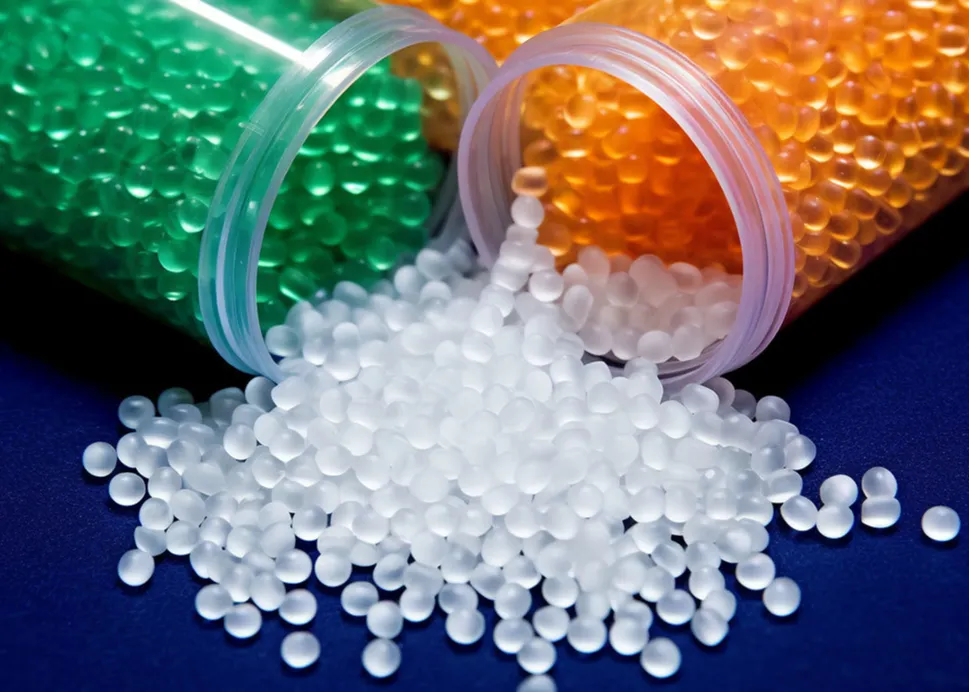
Thermoplastic vulcanizate (TPV) is a class of thermoplastic elastomer in which a rubber phase is dynamically vulcanized and dispersed inside a thermoplastic matrix, producing a material that behaves like rubber in service but can be processed like a plastic. TPVs are most commonly based on polypropylene and EPDM rubber, although other thermoplastic and elastomer combinations are also used to tailor heat resistance, oil resistance, softness, and long-term compression performance.
TPV occupies an important position in the plastics and elastomers value chain because it bridges the historical gap between thermoset rubber and thermoplastic processing. The material is widely used in seals, gaskets, hoses, cable jacketing, bellows, trims, and automotive weatherstripping, and it is increasingly discussed as a more recyclable substitute for conventional vulcanized rubber in applications where melt processing and regrind reuse matter.
From a materials-science perspective, TPV is defined less by a single chemistry than by a characteristic morphology: a crosslinked elastomeric phase forms fine particles within a continuous thermoplastic phase after dynamic vulcanization under high shear. That microstructure is the source of its combination of elasticity, resilience, and thermoplastic reprocessability.
History and Development
TPV technology emerged from efforts to create rubber-like materials that could be injection molded and extruded more efficiently than thermoset rubber. The central innovation was dynamic vulcanization, in which the elastomer is crosslinked during melt blending rather than cured into a permanent shape after forming.
Early commercial development focused on EPDM/PP systems, because polypropylene provides a processable continuous phase while EPDM offers weatherability, ozone resistance, and elasticity. This combination became a reference architecture for TPV and remains one of the most commercially important formulations.
Over time, TPVs expanded beyond simple EPDM/PP blends. Industry and academic literature now describe TPVs based on different elastomers and thermoplastics, including systems designed for higher oil resistance, better heat resistance, or improved wear performance, as well as specialty TPVs intended for medical, cable, and high-performance industrial uses.
Chemical Structure and Key Properties
TPVs are biphasic polymer systems: a crosslinked rubber phase is dispersed in a thermoplastic matrix, typically at the micron scale, with morphology and properties controlled by the degree of crosslinking, phase ratio, particle size, and compatibilization.
Typical structural features
- Continuous thermoplastic phase: provides melt flow, shape retention after cooling, and recyclability.
- Dispersed crosslinked rubber phase: provides elastic recovery, softness, and compression set resistance.
- Interfacial control: compatibilizers and processing conditions influence particle size and adhesion, which strongly affect tensile properties and fatigue resistance.
Key property profile
TPVs are valued for a balance of:
- Elastic recovery
- Compression set resistance
- Weatherability
- Melt processability
- Reprocessability
- Good surface feel and sealing performance
Reported property ranges vary widely with formulation, but published analyses commonly describe Shore A hardness values from roughly 45 to 95, tensile strength in the single-digit to low tens of MPa, and elongation at break often above 300% in optimized grades.
| Property | Typical TPV behavior | Practical significance |
|---|---|---|
| Elastic recovery | High | Suitable for seals and repeated flexing |
| Compression set | Low to moderate | Maintains sealing force over time |
| Melt processability | Good | Enables extrusion and injection molding |
| Weathering resistance | Good in many grades | Supports outdoor and automotive use |
| Oil resistance | Formulation-dependent | Can be improved, but not universal |
| Heat resistance | Moderate to good | Limits use in very high-temperature service |
Real limits and workarounds
- Poor oxygen and grease barrier → caused by the inherently non-barrier polyolefin-rich morphology in many TPVs → workaround: use multilayer structures, barrier coatings, or select alternative barrier polymers for packaging-like service.
- Low surface energy before treatment → caused by the polyolefin continuous phase, which limits paint adhesion, ink wetting, and adhesive bonding → workaround: apply corona/plasma treatment, primers, or mechanical fastening rather than relying on direct bonding.
- Moderate upper-temperature ceiling → caused by softening of the thermoplastic matrix and formulation dependence of the rubber phase → workaround: choose higher-temperature TPV chemistries or switch to more heat-resistant elastomer systems for prolonged hot service.
Example formulation logic
- EPDM/PP TPV: EPDM provides ozone and weather resistance; polypropylene provides processability. Dynamic vulcanization crosslinks the EPDM phase so the material retains rubber-like elasticity while still melting and flowing during processing.
- Typical additive package: stabilizers, fillers, plasticizers, and compatibilizers are commonly included, with one review noting that TPV formulations generally contain an elastomer phase, a thermoplastic phase, a crosslinking agent, inorganic fillers, plasticizers, stabilizers, and compatibilizing agents. Fillers often increase stiffness and dimensional stability, while stabilizers slow oxidation and heat aging.
Production Processes and Raw Feedstocks
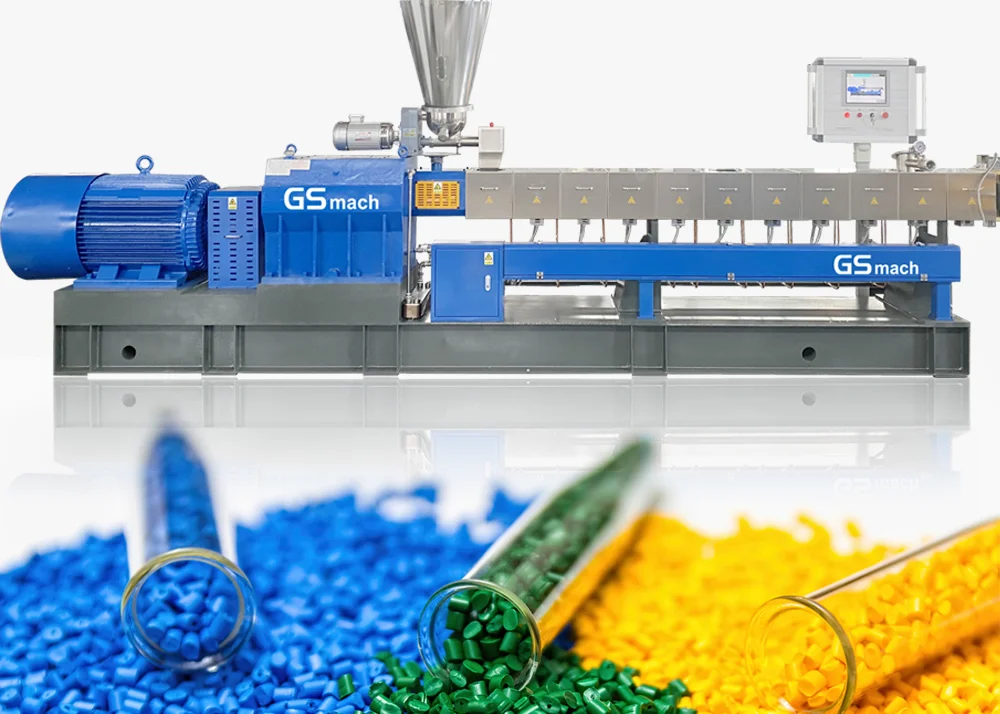
The dominant production route is dynamic vulcanization. In a typical process, the thermoplastic and rubber are melt blended in an extruder or internal mixer, and the curing agent is added while intense shear disperses the phases and crosslinks the rubber simultaneously.
Common feedstocks
- Polypropylene: most common thermoplastic matrix in mainstream TPV grades.
- EPDM rubber: most common elastomeric phase for weatherable TPVs.
- Crosslinking agents: used to cure the dispersed elastomer during melt mixing.
- Fillers and modifiers: calcium carbonate, talc, oils, stabilizers, and compatibilizers to tune cost and performance.
Process sequence
- Premix thermoplastic and elastomer.
- Melt blend under high shear.
- Introduce curing chemistry during mixing.
- Allow the elastomer phase to crosslink while the thermoplastic remains continuous.
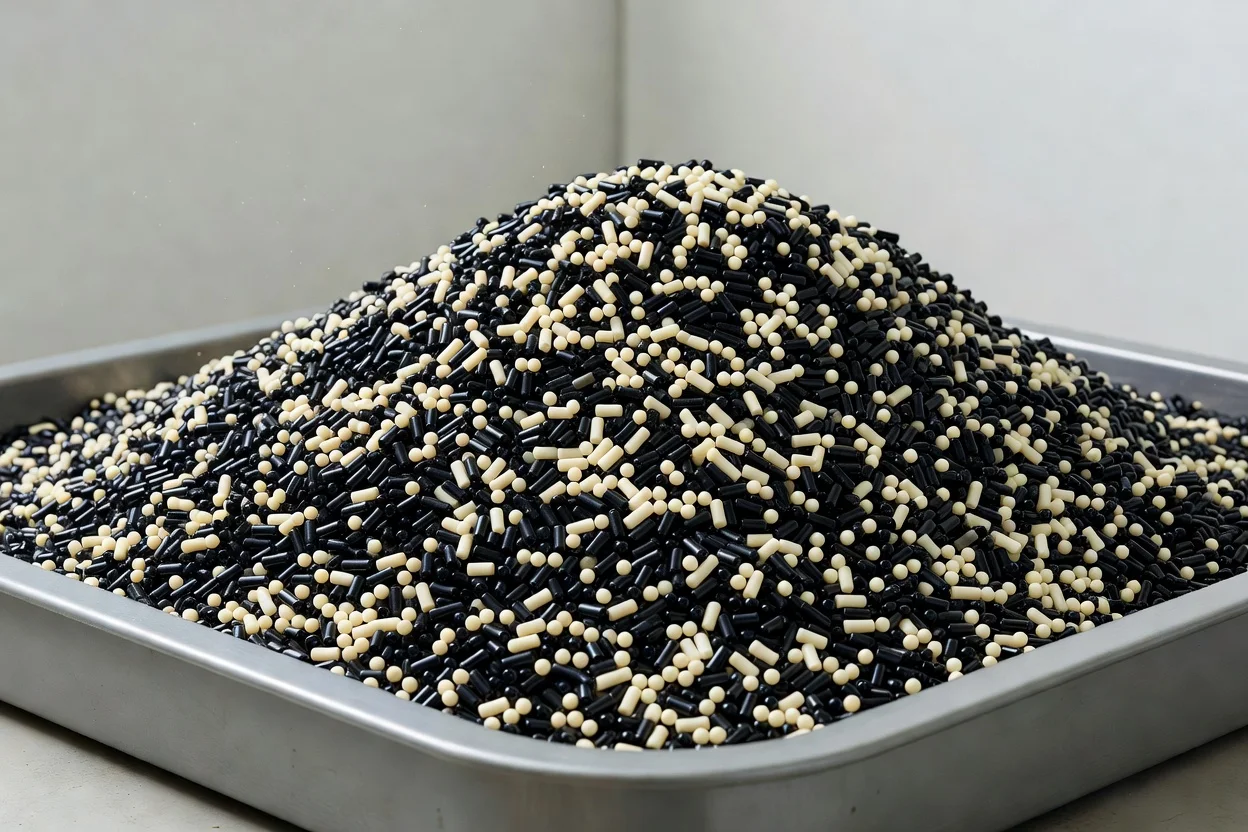
- Pelletize compound for extrusion, injection molding, or other conversion.
This process creates the hallmark TPV morphology in which crosslinked rubber particles are finely dispersed in a thermoplastic matrix, often with particle sizes in the micron range.
Applications and End-Use Markets
TPV is selected when designers need rubber-like sealing, flexibility, and recovery with thermoplastic manufacturing efficiency.
Major end-use sectors
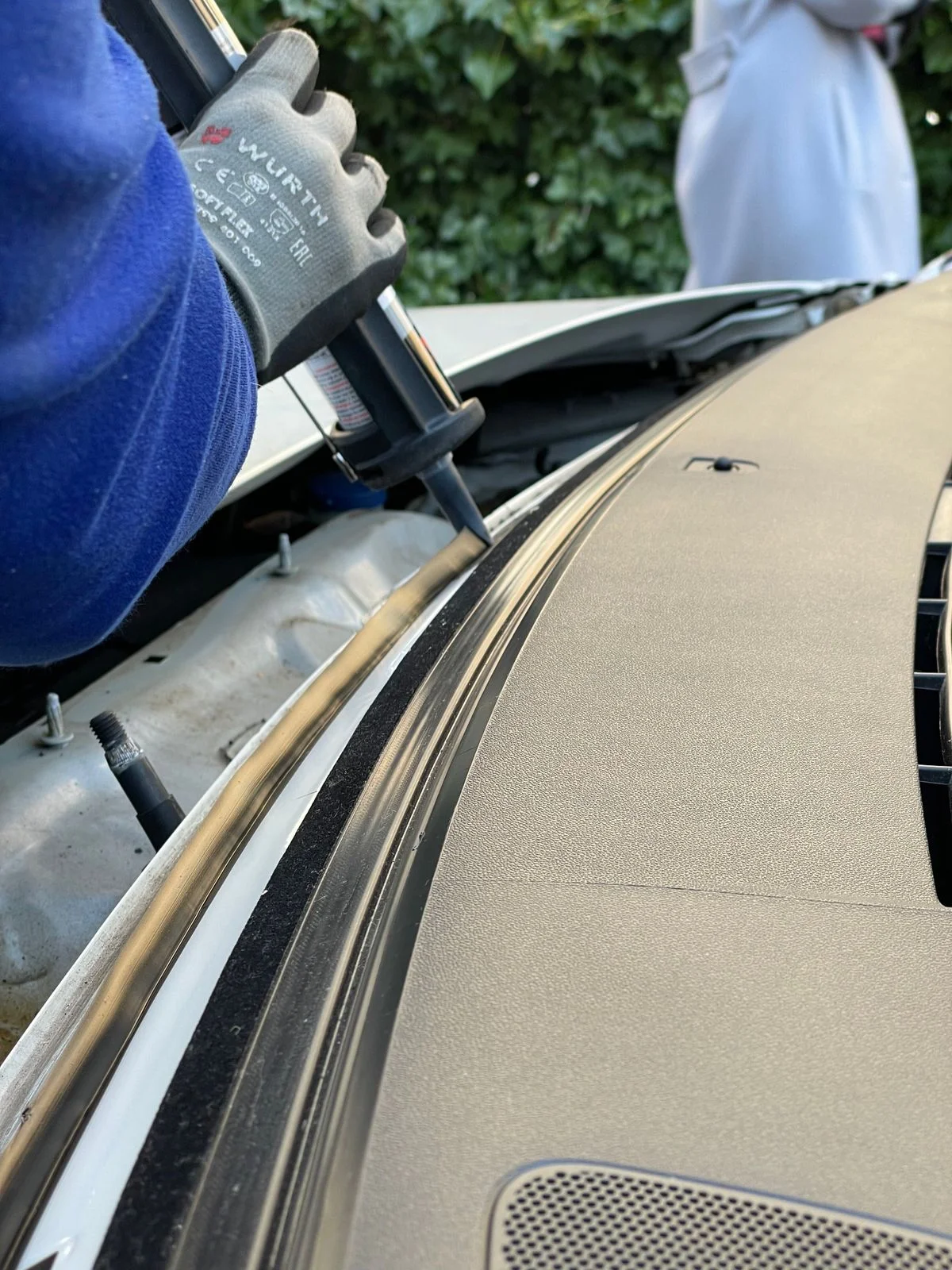
- Automotive: weather seals, glass run channels, door and trunk seals, hood seals, air ducts, gaskets, boots, and trim parts are among the most established uses.
- Industrial: hoses, tubing, connectors, bellows, vibration-damping components, and flexible couplings.
- Electrical and electronics: cable jacketing, insulation, protective sheaths, and flexible housings.
- Construction and building: glazing seals, expansion joints, profiles, and weatherstrips.
- Medical and consumer: tubing, grips, soft-touch parts, and device housings, subject to grade-specific regulatory and biocompatibility requirements.
Grade and process matching
- Extrusion grades: seals, profiles, weatherstrips, cable jackets, and hose covers.
- Injection molding grades: gaskets, plugs, grips, housings, and complex small parts.
- Blow molding or thermoforming grades: selected hollow or formed components, depending on formulation and melt strength.
One poor-fit use
- High-barrier packaging is generally a poor fit for mainstream TPV because the material is not designed to provide strong oxygen or grease barrier performance.
TPV is often positioned as a thermoplastic alternative to EPDM rubber for parts that must maintain elastic recovery under repeated compression or environmental exposure while still enabling fast cycle times and recycling of scrap.
Environmental and Sustainability Aspects
TPV is frequently described as more circular than conventional thermoset rubber because it can be remelted and reprocessed, reducing manufacturing scrap and enabling regrind use in some applications.
Sustainability advantages
- Reprocessable: unlike fully vulcanized rubber, TPV can be re-melted and converted again.
- Potential scrap reduction: process waste can often be reincorporated more easily than in thermoset rubber systems.
- Lightweighting: in automotive and industrial products, TPV may enable part consolidation and lower mass versus multi-component assemblies.
Sustainability trade-offs
- Polyolefin dependence: many TPVs rely on fossil-derived polypropylene and hydrocarbon elastomers.
- Complex recycling streams: despite thermoplastic reprocessability, real-world recycling is limited by contamination, additives, fillers, and product design.
- Performance versus circularity tension: higher crosslink density can improve elastic performance but reduce melt reprocessability and complicate end-of-life recovery.
Bio-based and “greener” directions
Research has explored non-petroleum-based TPVs, including silicone-rubber-based and other novel systems, with applications proposed for packaging, biomedical devices, and 3D printing. Academic literature also frames TPVs as “green” polymers in the sense that they can replace unrecyclable thermoset rubbers in selected use cases.
Economic and Global Market Impact
TPVs have grown into a significant subcategory of thermoplastic elastomers because they address a large installed base of rubber parts that are vulnerable to manufacturing inefficiency or poor recyclability.
Recent industry analyses identify automotive as the largest end-use segment, with seals, gaskets, air-management parts, and weatherstrips dominating demand. Industrial fluid handling, consumer goods, medical, and electrical applications also contribute to market growth.
Competitive positioning
- Versus EPDM thermoset rubber: TPV offers faster processing and easier scrap reuse.
- Versus TPEs such as TPU or SBC systems: TPV often offers superior weatherability and compression-set performance in sealing uses, though TPU may outperform in abrasion resistance and some mechanical regimes.
- Versus soft PVC: TPV can avoid certain plasticizer-related concerns and may offer improved elastic recovery in demanding sealing applications.
Leading TPV supply is concentrated among major thermoplastic elastomer and compound producers, including global TPE specialists and diversified polymer companies that offer automotive and industrial grades.
Current Challenges and Innovations
Current technical development is focused on pushing TPV beyond its established niche in seals and weatherstripping.
Main challenges
- Heat resistance limits in demanding under-the-hood or continuous high-temperature service.
- Bonding and surface finishing issues due to low surface energy.
- Barrier performance limitations for fluid containment or protective packaging.
- Recycling complexity in mixed-material end-of-life streams.
Active innovation areas
- New elastomer matrices: formulations beyond EPDM/PP to improve oil resistance, wear resistance, or thermal stability.
- Morphology control: finer particle dispersion and improved interfacial adhesion to raise strength and fatigue resistance.
- High-wear TPVs: recent studies focus on improving abrasion and anti-slip performance for industrial and consumer parts.
- Bio-based and specialty TPVs: research continues on non-fossil feedstocks and application-specific grades.
Future Outlook
TPV is likely to remain strategically important where designers need elastic function, high-volume processing, and reduced dependence on thermoset rubber. Its strongest future opportunities lie in automotive sealing, cable protection, industrial fluid handling, and parts consolidation, particularly where recyclability and production efficiency are valued alongside performance.
The most consequential technical trends are likely to be:
- More specialized formulations for heat, oil, and wear resistance
- Improved circularity through design-for-recycling and better post-industrial reuse
- Broader substitution for EPDM and some soft rubber components
- Growth in medical, electronics, and mobility applications that require flexible, clean, and processable elastomeric parts.
Summary
TPV is a dynamically vulcanized thermoplastic elastomer that combines the processability of thermoplastics with the elastic recovery of rubber. Its importance comes from the unique microstructure created during dynamic vulcanization, which enables fast manufacturing, reprocessability, and strong performance in seals, hoses, cable jackets, and automotive weather components.
Its main strengths are elasticity, compression-set resistance, weatherability, and thermoplastic efficiency, while its main limitations are barrier performance, surface bonding, and heat resistance in the most demanding conditions.
References
- •
Processing. (n.d.). NextGen Comp LLC. https://nextgencompllc.com/materials/tpv/Link
- •
Thermoplastic vulcanizates. (2007, September 30). Wikipedia. https://en.wikipedia.org/wiki/Thermoplastic_vulcanizatesLink
- •
Thermoplastic vulcanizate (TPV). (n.d.). Formerra. https://www.formerra.com/products/chemistries/thermoplastic-vulcanizate-tpvLink
- •
TPV. (n.d.). Sun-plas. https://www.sun-plas.com/en/tpv/Link
- •
Thermoplastic vulcanizate. (2024). TPE-SP. https://en.tpe-sp.com/Solution-Details/1861978145343098880.htmlLink
- •
What are TPV? (2025, May 26). KRAIBURG TPE. https://www.kraiburg-tpe.com/en/what-are-tpv-thermoplastic-vulcanizatesLink
- •
What is thermoplastic vulcanizate (TPV) - Properties & specifications. (n.d.). Ascent SBR. https://www.ascent-sbr.com/knowledge/information/what-is-thermoplastic-vulcanizate-tpv-products-properties-structure-specifications-hs-code-molecular-property-formula-specific-density-flakes-solid-powder-pearls-liquidcrystal-liter-solution-material-molecular-property-formula-specific-density-safe-hazarous-harmful-chemical-raw-materials.htmlLink
- •
Thermoplastic vulcanizates (TPV) - Material wizard. (n.d.). Material Wizard. https://materialwizard.com.ua/en/tep/tpv/Link
- •
Thermoplastic vulcanizate: Comprehensive analysis of ... (n.d.). PatSnap Eureka. https://eureka.patsnap.com/materials/thermoplastic-vulcanizate-tpvLink
- •
What is TPV. (n.d.). Hexpol TPE. https://www.hexpol.com/tpe/resources/tpe-academy/what-is-tpe/what-is-tpv/Link
- •
Preparation and properties of novel thermoplastic vulcanizate ... (2017, December 9). PMC. https://pmc.ncbi.nlm.nih.gov/articles/PMC6418593/Link
- •
Thermoplastic vulcanizates with an integration of high wear ... (2024, August 4). NIH. https://pmc.ncbi.nlm.nih.gov/articles/PMC11314681/Link
- •
Automotive materials | Thermoplastic vulcanizate (TPV). (2022, May 9). Echo Supply. https://www.echosupply.com/blog/automotive-materials-thermoplastic-vulcanizate-tpv/Link
- •
What is thermoplastic vulcanizate (TPV)? (n.d.). Phon Tech. https://www.phon-tech.com.tw/faq/detail/18/What+is+Thermoplastic+Vulcanizate+(TPV)Link
- •
TPV Elastron V. (2026, August 6). Elastron. https://elastron.com/products/tpv-elastron-v/Link
- •
Thermoplastic vulcanizate polymer: Comprehensive analysis of ... (n.d.). PatSnap Eureka. https://eureka.patsnap.com/materials/thermoplastic-vulcanizate-polymerLink
- •
Thermoplastic vulcanizate (TPV) resin pellets - Nexeo plastics. (n.d.). Nexeo Plastics. https://www.nexeoplastics.com/types/tpv-thermoplastic-vulcanizate/Link
- •
Thermoplastic vulcanizate thermoplastic elastomer - PatSnap Eureka. (n.d.). PatSnap Eureka. https://eureka.patsnap.com/materials/tpv-thermoplastic-elastomerLink
- •
Thermoplastic vulcanizate: Advanced material engineering for ... (n.d.). PatSnap Eureka. https://eureka.patsnap.com/materials/thermoplastic-vulcanizateLink
- •
Thermoplastic vulcanizate rubber thermoplastic alloy. (n.d.). PatSnap Eureka. https://eureka.patsnap.com/materials/tpv-rubber-alloy-analysisLink
- •
TPV: A new insight on the rubber morphology and mechanic/elastic properties. (n.d.). HAL. https://hal.science/hal-03082704/file/polymers-12-02315-v2.pdfLink
- •
Dynamically vulcanized thermoplastic elastomers based on 4-methyl-1-pentene polymers. (2022, May 9). ScienceDirect. https://www.sciencedirect.com/science/article/abs/pii/S0032386121010466Link
- •
What is TPV? (2025, January 21). LinkedIn. https://www.linkedin.com/pulse/what-tpv-steve-chan-cbiacLink
- •
Methods of making thermoplastic vulcanizates (TPV). (2018, June 29). Google Patents. https://patents.google.com/patent/WO2019045870A1/enLink
- •
Thermoplastic vulcanizate resin: Comprehensive analysis of ... (n.d.). PatSnap Eureka. https://eureka.patsnap.com/materials/thermoplastic-vulcanizate-resinLink
- •
New understanding of morphology evolution of thermoplastic ... (2014, November 26). ACS Publications. https://pubs.acs.org/doi/10.1021/sc500391gLink
- •
Thermoplastic vulcanizate compositions. (2019, March 29). Justia Patents. https://patents.justia.com/patent/20210040300Link
- •
Thermoplastic vulcanizates comprising propylene-based elastomers and methods for making the same. (n.d.). Google Patents. https://patents.google.com/patent/WO2016190981A1/enLink
- •
Green thermoplastic vulcanizates based on silicone rubber and ... (2021, February 2). PMC. https://pmc.ncbi.nlm.nih.gov/articles/PMC7893803/Link
- •
Thermoplastic vulcanizate composition and method of making same. (2003, March 21). Google Patents. https://patents.google.com/patent/WO2003082971A2/enLink
- •
Progress in polymer science. (2018, April 20). ScienceDirect. https://www.sciencedirect.com/science/article/abs/pii/S0079670017301247Link
- •
Automotive applications of thermoplastic vulcanizates. (n.d.). Wiley Online Library. https://onlinelibrary.wiley.com/doi/full/10.1002/app.49181Link
- •
Thermoplastic vulcanizates (TPV) market - 2036 - Fact.MR. (2026, April 6). Fact.MR. https://www.factmr.com/report/thermoplastic-vulcanizates-tpv-marketLink
- •
Thermoplastic vulcanizates in medical applications. (2024, January 12). MDDI Online. https://www.mddionline.com/business/thermoplastic-vulcanizates-in-medical-applicationsLink
- •
Thermoplastic vulcanizates market size, share, analysis, ... (2026, August 10). Fortune Business Insights. https://www.fortunebusinessinsights.com/thermoplastic-vulcanizates-market-109693Link