
Introduction
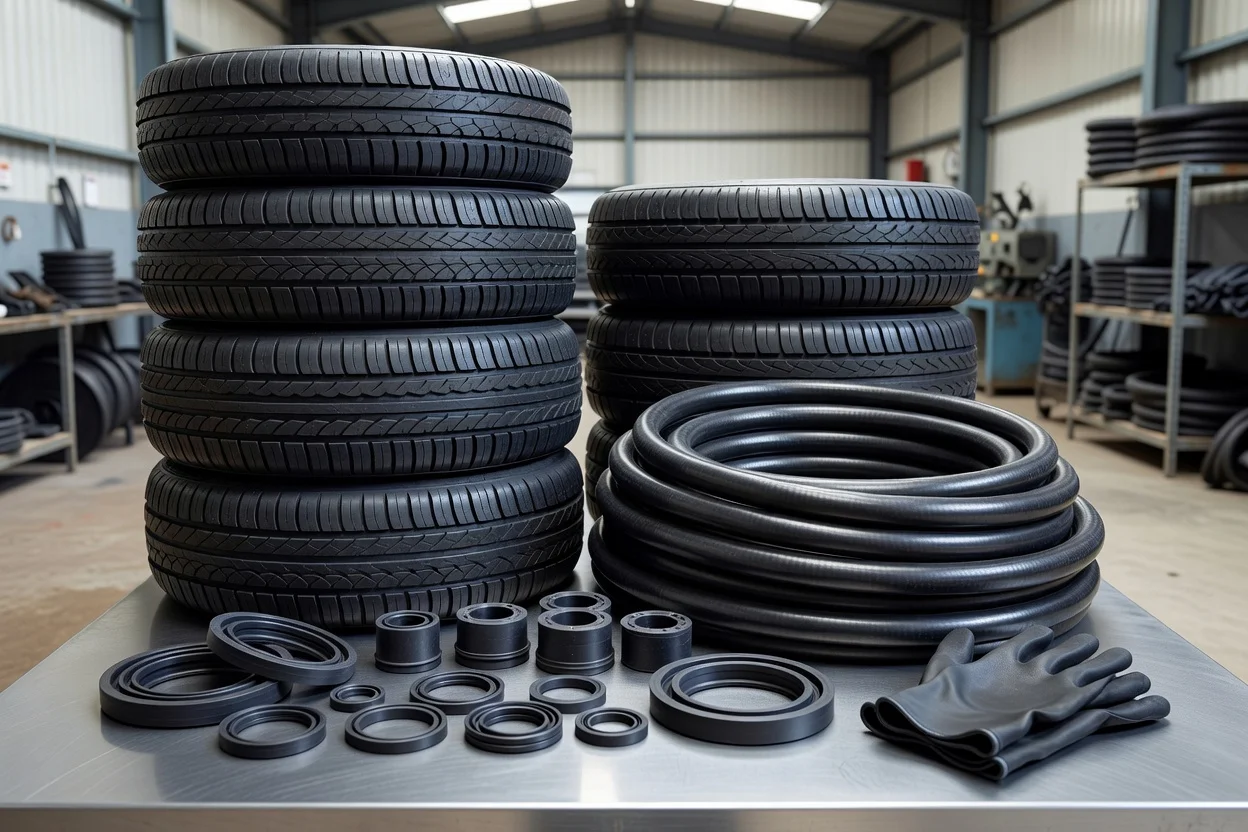
Rubbers are a broad class of highly elastic polymeric materials used to make tires, seals, hoses, vibration isolators, gloves, cable insulation, footwear, and countless other products that require flexibility, resilience, and recovery after deformation. In plastics and elastomers manufacturing, the term covers both natural rubber from plant latex and a wide family of synthetic rubbers engineered from petrochemical feedstocks to deliver targeted properties such as abrasion resistance, oil resistance, low gas permeability, or heat stability.
Rubber is one of the most commercially important materials in the polymer industry because its performance can be tuned extensively through compounding, filler reinforcement, and vulcanization, the cross-linking step that converts a tacky polymer into a durable elastic network. The sector spans commodity elastomers used in tires and general-purpose goods, and specialty grades such as nitrile, EPDM, butyl, chloroprene, silicone, and fluoroelastomers used in demanding automotive, industrial, medical, and electrical applications.
Historically, natural rubber was the original industrial elastomer, while synthetic rubbers became strategically important in the 20th century, especially for tires and wartime supply security. Today, the industry is also shaped by sustainability pressures: land-use and traceability concerns in natural rubber supply chains, fossil-based carbon intensity in synthetic rubber production, and growing interest in recycling, reclaimed rubber, bio-based monomers, and circular tire technologies.
History and Development
Natural rubber was first used in preindustrial and early industrial applications after latex from tropical trees became known in global trade. Its transformation into a practical engineering material depended on vulcanization, which improved toughness, heat resistance, and dimensional stability, enabling wider use in tires, belts, waterproof goods, and industrial components.
Synthetic rubber expanded rapidly in the 20th century as manufacturers sought alternatives with more reliable supply and tailored performance. Styrene-butadiene rubber became especially important for tires, while butyl rubber, nitrile rubber, EPDM, and silicone rubber opened major markets in sealing, fluid handling, electrical, and heat-resistant applications. This diversification created a modern elastomer industry in which “rubber” is no longer a single material but a large family of compounds and formulations.
Chemical Structure and Key Properties
Rubbers are distinguished from rigid plastics by their low glass-transition behavior and ability to undergo large reversible strain, a property arising from long, flexible polymer chains and a lightly cross-linked network after curing. Natural rubber is essentially a polymer of isoprene, while synthetic rubbers are built from different monomer combinations that shift performance toward abrasion resistance, gas barrier, oil resistance, or weathering stability.
Typical rubber compounds are not pure polymers. They usually contain:
- Polymers or base elastomers such as natural rubber, SBR, NBR, EPDM, or silicone.
- Reinforcing fillers such as carbon black or silica to raise tensile strength, wear resistance, and fatigue life.
- Plasticizers, antioxidants, curatives, and processing aids to tune viscosity, aging resistance, and cure behavior.
Key technical properties include:
- Elastic recovery after deformation, essential for seals, tires, and vibration mounts.
- Abrasion resistance, especially strong in natural rubber and SBR-based compounds.
- Weathering and ozone resistance, strong in EPDM and some specialty rubbers.
- Chemical and oil resistance, strong in nitrile and fluoroelastomers.
- Gas barrier performance, especially strong in butyl rubber.
Real limits are important to understand:
- Poor oxygen and grease barrier → many common rubbers allow gas or hydrocarbon permeation too readily for barrier packaging or long-term containment → use butyl rubber, multilayer laminates, or barrier coatings instead.
- Low surface energy before treatment → many rubber surfaces bond, print, or paint poorly because they are chemically nonpolar → use plasma, corona, primers, or adhesion promoters to improve wettability and interfacial bonding.
- Heat and oxidative aging → unsaturated rubbers degrade under heat, ozone, and oxygen exposure → use stabilizers, hydrogenated or saturated elastomers, or more weatherable formulations such as EPDM, silicone, or HNBR.
Common rubber families and their typical strengths
| Rubber family | Main strengths | Typical weak points | Common uses |
|---|---|---|---|
| Natural rubber | High resilience, tensile strength, fatigue resistance | Poor oil and ozone resistance | Tires, vibration parts, heavy-duty goods |
| SBR | Cost-effective abrasion resistance | Lower tear strength and aging resistance than some specialty rubbers | Tires, belts, rollers |
| NBR | Oil and fuel resistance | Poor ozone and weathering without protection | Hoses, seals, gloves |
| EPDM | Excellent weathering, ozone, and water resistance | Poor resistance to oils and fuels | Roofing, automotive seals, hoses |
| Butyl rubber | Low gas permeability | Limited rebound compared with NR | Inner liners, stoppers, sealants |
| Silicone rubber | Wide temperature range, flexibility | Lower tear strength, higher cost | Medical, electrical, seals |
| Fluoroelastomers | Outstanding chemical and heat resistance | Expensive | Aerospace, chemical processing |
Production Processes and Raw Feedstocks
Natural rubber is produced from latex harvested from rubber trees, then coagulated, washed, dried, and processed into sheets, crepe, or technically specified rubber grades. Its supply chain is agricultural and geographically concentrated in tropical producing regions, which makes it sensitive to climate, disease, and land-use pressures.
Synthetic rubber is manufactured from petrochemical intermediates through polymerization or copolymerization routes. Common industrial feedstocks include butadiene, styrene, isobutylene, isoprene, acrylonitrile, ethylene, propylene, chloroprene, and silicone precursors. The resulting polymers are then compounded with fillers, oils, curatives, and additives before mixing, shaping, and curing.
Major processing steps include:
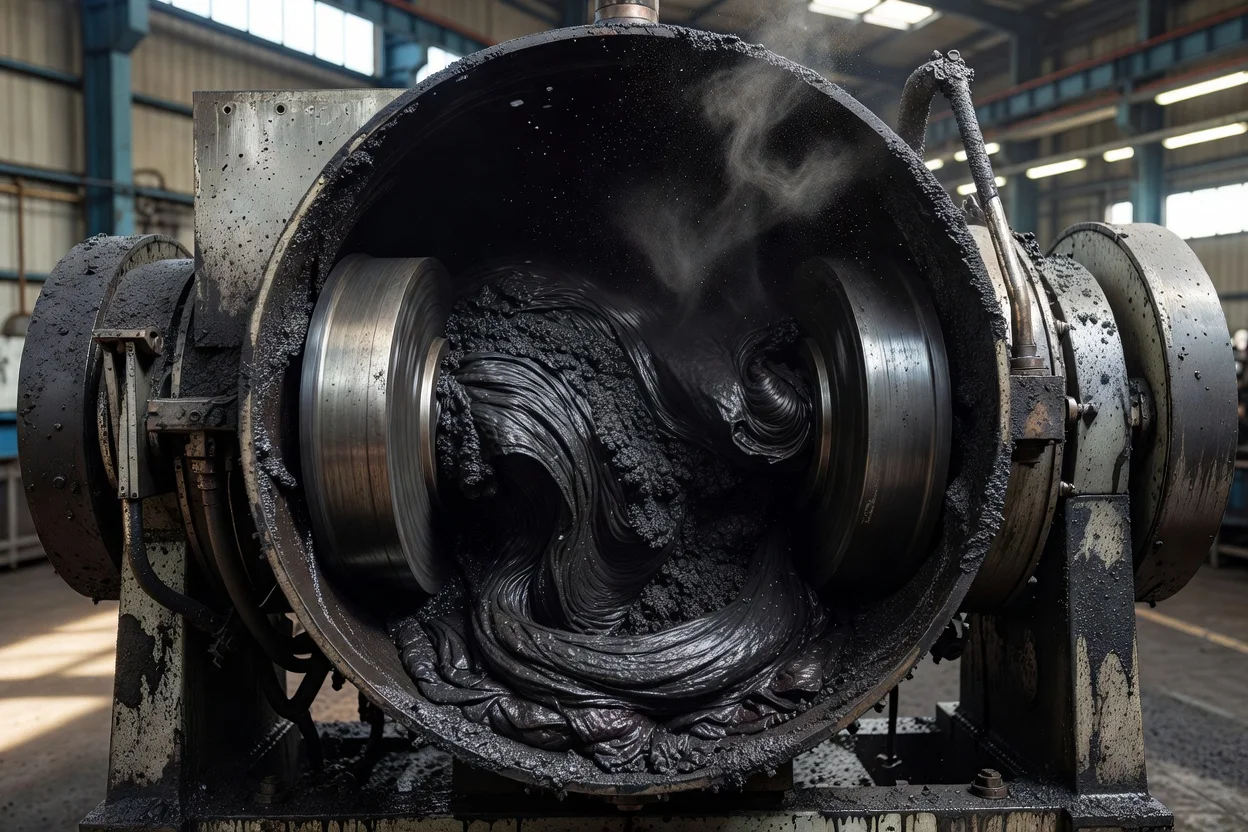
- Mastication and mixing, where the elastomer is softened and blended with additives.
- Forming, including extrusion, calendaring, injection molding, compression molding, and dipping.
- Vulcanization or curing, which builds the cross-linked network that gives the finished article its elastic performance.
A typical formulation example is a tire tread compound based on SBR and BR, reinforced with carbon black or silica at high loading levels to improve wear and traction; the filler creates a stronger network and increases hysteresis, which affects grip and rolling resistance. Another example is a butyl-based bottle stopper or inner liner formulation, where low gas permeability is the key mechanism for sealing and long-term retention of volatile contents.
Applications and End-Use Markets
Rubbers serve nearly every major industrial sector, with grade selection driven by the dominant service condition rather than by price alone.
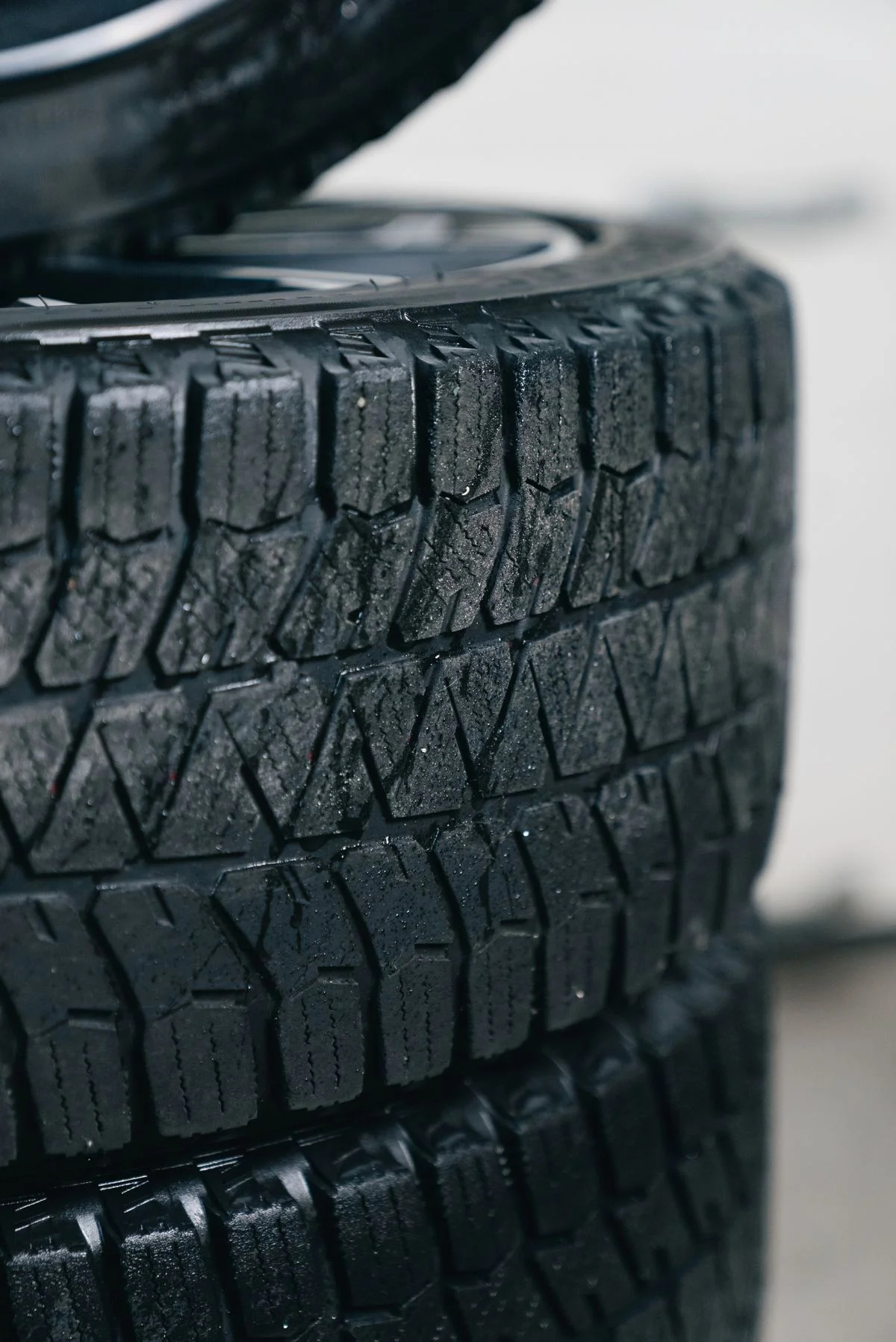
- Automotive and transportation: Tires are the largest and most recognizable market, with natural rubber, SBR, and BR widely used in tread and carcass-related compounds; EPDM, NBR, and butyl are common in seals, hoses, belts, and weatherstrips.
- Industrial machinery: Gaskets, conveyor belts, rollers, mounts, diaphragms, and anti-vibration parts typically use natural rubber, SBR, NBR, or EPDM depending on abrasion, oil, or weathering requirements.
- Construction: Roofing membranes, waterproofing systems, acoustic mats, expansion joints, and sealants frequently use EPDM, butyl, and reclaimed rubber formulations.
- Electrical and electronics: Cable insulation, sleeves, plugs, and protective components often require EPDM, silicone, or specialty elastomers for dielectric strength and heat resistance.
- Healthcare and consumer goods: Gloves, tubing, stoppers, catheters, footwear, mats, and sports products rely on natural rubber, nitrile, and silicone grades, depending on flexibility, chemical compatibility, and regulatory needs.
One poor-fit use is high-barrier food packaging in monolayer form, because most rubbers are too permeable to gases and oils for that function; multilayer structures or alternative barrier polymers are generally more suitable.
Environmental and Sustainability Aspects
Rubbers raise distinct sustainability issues across both natural and synthetic supply chains. Natural rubber is renewable in principle, but plantations can be associated with biodiversity loss, land-use change, and smallholder livelihood vulnerabilities if sourcing is poorly governed. Synthetic rubbers reduce dependence on agriculture but remain strongly linked to fossil feedstocks and energy-intensive processing.
Recycling is technically and commercially important but challenging because cross-linked vulcanized rubber cannot be remelted like thermoplastics. Current routes include:
- Mechanical recycling into crumb rubber for mats, modified asphalt, flooring, and lower-performance products.
- Devulcanization, which attempts to break sulfur cross-links while retaining polymer chain integrity for reuse in new compounds.
- Pyrolysis and chemical recovery, especially for end-of-life tires, where oil, gas, steel, and carbonaceous residues can be recovered, though product quality and economics remain variable.
Bio-based and circular alternatives are growing, including bio-based isoprene, bio-sourced feedstocks for synthetic elastomers, reclaimed rubber, and more recyclable compound designs. Carbon-footprint reduction is increasingly tied to lightweighting, lower rolling resistance tires, renewable electricity in compounding plants, and improved yield in natural rubber farming and synthetic monomer production.
Economic and Global Market Impact
Rubbers are strategically important because they sit at the intersection of transportation, infrastructure, manufacturing, and healthcare. Tires account for the dominant share of elastomer demand in many markets, making automotive production cycles and replacement demand critical to consumption patterns.
Global supply is concentrated among a relatively small number of leading producers and processors. For natural rubber, Southeast Asia remains central to production, while major synthetic rubber output is associated with large chemical and tire industries in Asia, Europe, and North America. Market conditions are influenced by feedstock prices, logistics, regulatory change, and the performance demands of low-emission vehicles, which alter tire compound specifications and rolling-resistance targets.
Current Challenges and Innovations
Current technical and commercial challenges include:
- Raw material volatility, especially in butadiene, styrene, and natural rubber supply.
- Performance versus sustainability trade-offs, particularly in tires, where grip, wear, rolling resistance, and durability must be balanced.
- End-of-life recovery, since vulcanized networks are difficult to reverse economically at scale.
Innovation is concentrated in several areas:
- Silica-reinforced low-rolling-resistance tire compounds, which can reduce energy loss while preserving traction.
- Advanced devulcanization and solvent-based purification, aimed at higher-value rubber reuse.
- Bio-derived monomers and feedstocks, intended to reduce cradle-to-gate emissions.
- Design-for-recycling compounding, where additive packages and cross-linking systems are selected to improve recoverability.
- Functional elastomers, including HNBR, fluoroelastomers, and silicone grades for electrification, hydrogen, and high-temperature systems.
Future Outlook
Rubbers are expected to remain indispensable because no single material matches their combination of elasticity, damping, sealing, wear resistance, and customizable chemistry across so many applications. The most important future shifts will likely come from lower-carbon feedstocks, improved circularity for tires and industrial elastomers, and more specialized compounds for electric vehicles, medical devices, and high-reliability industrial systems.
The sector’s long-term competitiveness will depend on whether rubber manufacturers can reduce emissions and waste without sacrificing the mechanical performance that makes rubbers uniquely valuable in the plastics and elastomers ecosystem.
Summary
Rubbers are a diverse family of elastic materials spanning natural and synthetic grades, with performance shaped by polymer chemistry, compounding, and vulcanization. They are essential in tires, seals, hoses, insulation, construction membranes, and medical goods, but they also face persistent challenges in recyclability, fossil dependence, and environmental stewardship.
References
- •
Cambridge Dictionary. (2026). RUBBER | definition in the Cambridge English Dictionary. https://dictionary.cambridge.org/us/dictionary/english/rubberLink
- •
Cambridge Dictionary. (2025). Rubbers. https://dictionary.cambridge.org/dictionary/english/rubbersLink
- •
Inpart. (2024, March 7). 22 different types of rubber. https://inpart24.com/en/resources/article/59/22-different-types-of-rubberLink
- •
Rubber and Seal. (2025, August 16). What is rubber best used for? Key applications & benefits. https://www.rubberandseal.com/what-is-rubber-best-used-for/Link
- •
BYJU'S. (2022, August 8). Uses of rubber. https://byjus.com/chemistry/uses-of-rubber/Link
- •
VSRP. (2021, March 26). The different types of rubber explained. https://vsrp.com.au/the-different-types-of-rubber-explained/Link
- •
Vista Motion. (2026, March 24). Rubber types: A complete guide. https://vista-motion.com/rubber-types-a-complete-guide/Link
- •
Elastec JSC. (2025, August 28). Applications of rubber in everyday life and their importance. https://elastecjsc.com/en/news/applications-of-rubber-in-everyday-life/Link
- •
Rubbermill. (2022, December 12). Different kinds of rubber. https://rubbermill.com/different-kinds-of-rubber/Link
- •
Eonrub. (2025, April 15). Rubber: In daily life. https://eonrub.com/how-rubber-is-used-in-daily-life/Link
- •
Collins. (n.d.). RUBBER definition in American English. https://www.collinsdictionary.com/us/dictionary/english/rubberLink
- •
Rubbercal. (2025, November 11). The many uses of rubber: 49 things made of rubber. https://rubbercal.com/uses-of-rubberLink
- •
Plas-Fab. (2026, July 7). 61 uses of rubber: How to choose the right rubber product for.... https://plas-fab.com/61-uses-of-rubber/Link
- •
Elastostar. (2025, January 13). Types of rubber: Natural, synthetic, properties & uses. https://elastostar.com/what-are-the-different-types-of-rubber/Link
- •
Merriam-Webster. (2026, August 26). RUBBER definition & meaning. https://www.merriam-webster.com/dictionary/rubberLink
- •
Britannica. (2025, July 1). Rubber definition & meaning. https://www.britannica.com/dictionary/rubberLink
- •
Collegedunia. (2023, October 31). Uses of rubber: Properties and applications. https://collegedunia.com/exams/uses-of-rubber-chemistry-articleid-6689Link
- •
Scribd. (2022, December 12). Introduction to rubber uses & types. https://www.scribd.com/doc/221006657/RubberLink
- •
Elastostar. (2025, February 5). Comparing different types of rubbers: Properties & uses. https://elastostar.com/comparing-different-types-of-rubbers/Link
- •
WordWeb. (n.d.). Rubber, rubbers, rubbering, rubbered—WordWeb dictionary definition. https://www.wordwebonline.com/en/RUBBERLink
- •
Elastec JSC. (2025, July 12). What is rubber? Properties, types, and applications. https://elastecjsc.com/en/news/what-is-rubber/Link
- •
AV Industrial Products. (n.d.). Different types of rubber: A complete guide. https://www.avindustrialproducts.co.uk/blog/different-types-of-rubber-a-complete-guideLink
- •
Vocabulary.com. (n.d.). Rubber—Definition, meaning & synonyms. https://www.vocabulary.com/dictionary/rubberLink
- •
GLD Rubber. (2024, September 20). Exploring the most popular rubber products: Essential uses and applications. https://www.gldrubber.com/exploring-the-most-popular-rubber-products-essential-uses-and-applications/Link
- •
SPP Industrial Rubber. (2024, August 2). Types of rubber. https://www.spprubberparts.com/en/types-of-rubber/Link
- •
Jackwin Safety. (2026, January 19). Uses of rubber in daily life and list of 30 rubber products. https://jackwinsafety.com/uses-of-rubber/Link
- •
GMT Rubber. (2022, October 3). Guide to the different types of rubber. https://www.gmtrubber.com/different-types-of-rubber/Link
- •
Etymonline. (n.d.). Rubbers—Etymology, origin & meaning. https://www.etymonline.com/word/rubbersLink
- •
Martins Rubber. (2020, January 27). Different types of rubber. https://www.martins-rubber.co.uk/blog/what-are-the-different-types-of-rubber/Link
- •
Sciencing. (2018, April 23). Things made from rubber. https://www.sciencing.com/things-made-rubber-6744912/Link
- •
Elastec JSC. (2025, August 26). 11 most important industrial applications of rubber. https://elastecjsc.com/en/news/industrial-applications-of-rubber/Link
- •
Wiktionary. (n.d.). Rubber. https://en.wiktionary.org/wiki/rubberLink
- •
Vedantu. (2025, September 4). Uses of rubber in everyday life: Chemistry explained. https://www.vedantu.com/chemistry/uses-of-rubberLink
- •
Airboss Rubber Solutions. (2025, July 15). Natural rubber. https://airbossrubbersolutions.com/rubber-101-understanding-different-types-of-rubber-rubber-compounds/Link
- •
Rubberxperts. (2025, January 2). Rubber types: Classifications, properties, manufacturing.... https://rubberxperts.com/rubber-types/Link
- •
Rubbercal. (2025, February 5). What is rubber used for: 10 common uses. https://rubbercal.com/what-is-rubber-used-forLink
- •
Redco. (n.d.). Essential uses of rubber products. https://www.redco1.com/resources/news/essential-uses-of-rubber-productsLink
- •
Elastostar. (2025, October 29). Top 7 types of rubber: Best options for every industry. https://elastostar.com/what-are-the-top-7-types-of-rubber-which-is-the-best/Link
- •
Dictionary.com. (n.d.). RUBBER definition & meaning. https://www.dictionary.com/browse/rubberLink
- •
Rubbercal. (2024, March 5). The different types of rubber sheets. https://rubbercal.com/types-of-rubber-sheetsLink
- •
PEFC. (n.d.). Rubber in the world. https://rubber.pefc.org/supporting-smallholders/rubber-in-the-worldLink
- •
Oxford Learner's Dictionaries. (n.d.). Rubber noun—Definition, pictures, pronunciation and usage notes. https://www.oxfordlearnersdictionaries.com/us/definition/english/rubber_1Link
- •
Walker Rubber. (n.d.). What is rubber? Is rubber a plastic? https://www.walker-rubber.co.uk/knowledge-hub/what-is-rubber-361Link
- •
Wordsmyth. (2025, January 1). Definition of RUBBER. https://kids.wordsmyth.net/we/?rid=35926Link
- •
English Stack Exchange. (2012, July 16). Is there a different understanding of "rubber" in British and American English? https://english.stackexchange.com/questions/74744/is-there-a-different-understanding-of-rubber-in-british-and-american-englishLink
- •
TRP. (2021, November 11). What are the top 5 rubber materials and their applications? https://trp.co.uk/blog/what-are-the-top-5-rubber-materials-and-their-applications/Link
- •
Airboss. (2022, January 3). How rubber is made for industrial uses. https://airboss.com/how-rubber-is-made-for-industrial-uses/Link