
Introduction
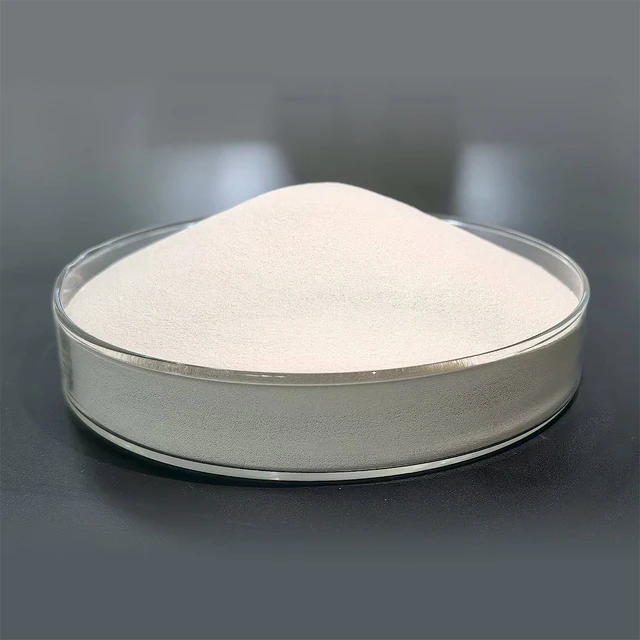
Kaolin is a soft, white industrial clay composed chiefly of kaolinite, a hydrated aluminosilicate mineral that is valued in plastics and many other industries for its whiteness, low abrasiveness, chemical inertness, and fine particle morphology. In the plastics value chain, it is used primarily as a functional filler, extender, and, in engineered forms, as a performance modifier that can improve stiffness, dimensional stability, processing behavior, and surface appearance.
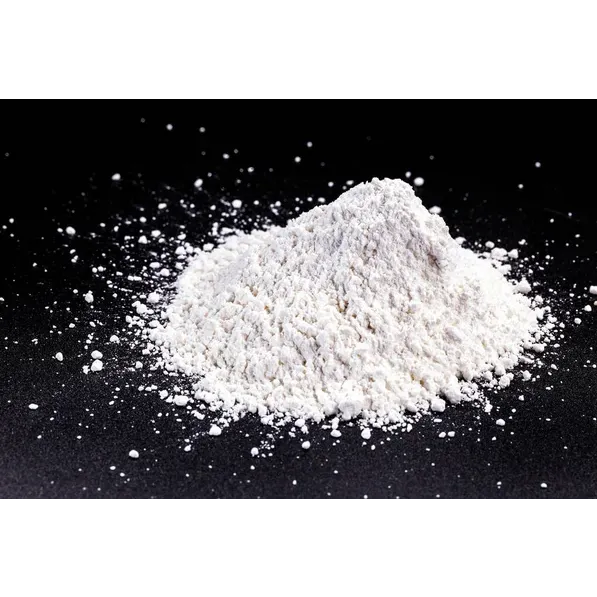
Although kaolin is best known historically from ceramics and paper, it also plays an important role in rubber, paints, coatings, adhesives, sealants, pharmaceuticals, cosmetics, and some plastic compounds, where its plate-like particles and controllable purity make it a versatile auxiliary material rather than a single-purpose additive. Its industrial significance has expanded from a traditional mineral commodity into a more engineered material, with wet processing, calcination, surface treatment, and classification allowing different grades for paper, polymer, refractory, and specialty applications.
Kaolin’s importance in plastics lies not only in cost reduction but also in property tuning: by increasing modulus and heat resistance, reducing shrinkage, and modifying rheology, it can help formulators balance performance and economics in commodity and semi-engineering polymers. At the same time, kaolin is not a universal solution; like other mineral fillers, its benefits come with trade-offs in impact strength, dispersion demands, and added mass, while sustainability debates increasingly focus on mining impacts, beneficiation energy use, and the role of mineral fillers in circular polymer design.
History and Development
Kaolin takes its common name from the Chinese locality of Gaoling, reflecting the long history of its use in porcelain and fine ceramics. Traditional use in China established kaolin as a signature material for whiteware because of its whiteness, refractoriness, and plasticity when mixed with other clays and mineral ingredients.
Industrial kaolin mining and refining developed much further in Europe and North America, especially as paper coating, sanitaryware, and industrial filler markets grew. Over time, the material moved from a largely craft-oriented ceramic feedstock into a globally traded industrial mineral, with modern production organized around selective mining, washing, magnetic separation, classification, bleaching, and, for some grades, calcination or surface modification.
In plastics, kaolin’s role expanded as polymer compounding matured. Early use was mainly as a low-cost extender, but contemporary formulations often use carefully selected particle-size distributions and surface-treated grades to control stiffness, surface finish, dielectric behavior, and processing stability.
Chemical Structure and Key Properties
Kaolin is dominated by kaolinite, a 1:1 layered silicate clay built from alternating silica and alumina sheets. This structure explains several of its practical properties: low swelling, moderate specific surface area, platelet-like geometry, chemical inertness over a broad pH range, and good opacity or hiding power when finely dispersed.
| Property | Practical meaning for plastics and auxiliaries |
|---|---|
| White color and high brightness | Useful where light-colored compounds or good surface appearance are needed. |
| Plate-like particle shape | Helps reinforce stiffness and affects rheology and orientation in processing. |
| Chemically inert surface | Limits unwanted side reactions in many formulations. |
| Soft, non-abrasive character | Reduces equipment wear relative to harder mineral fillers. |
| Thermal stability | Allows use in heat-exposed applications and after calcination. |
Two practical limits are especially important in plastics:
- Lower impact toughness → rigid mineral loading can reduce strain-at-break and impact resistance in many polymers → use lower loading, combine with impact modifiers, or select finer/surface-treated grades.
- Dispersion sensitivity → agglomeration can create weak points, rough surfaces, or inconsistent rheology → use proper surface treatment, high-shear compounding, and grade-specific particle classification.
For plastics formulators, kaolin is also notable because it is usually more than a simple inert powder: surface chemistry can be engineered to improve compatibility with polymer matrices, particularly in systems where wetting and dispersion are critical.
Production Processes and Raw Feedstocks
Kaolin forms through the weathering or hydrothermal alteration of feldspar-rich rocks such as granite, producing deposits that are typically shallow and therefore often mined by open-pit methods. The mining process commonly includes excavation, slurry formation or dry extraction, and transport to a beneficiation plant.
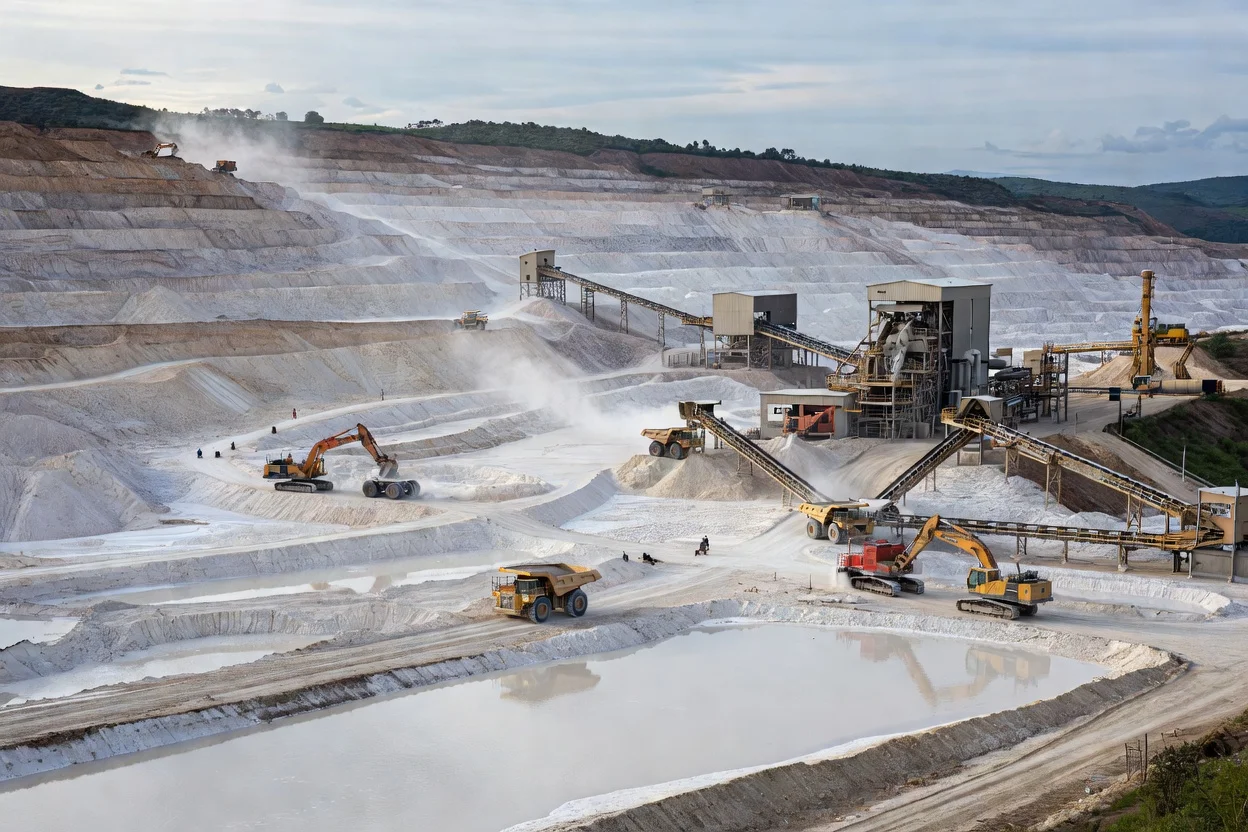
Processing routes are usually divided into:
- Wet processing: ore is blunged into water, screened, fractionated, de-sanded, and purified by centrifugation, magnetic separation, and sometimes bleaching; this route is often used for paper-coating and high-purity grades.
- Dry processing: ore is crushed, dried, pulverized, and classified; this route is often used for lower-cost filler grades in rubber, plastics, and construction materials.
- Calcination: heating removes hydroxyl groups and changes brightness, porosity, and surface area; calcined kaolin is widely used where opacity, reinforcement, or thermal performance are required.
In plastics, the raw feedstock is usually not the mined ore itself but a processed kaolin grade with tightly controlled particle size, brightness, moisture, and impurity profile. The exact requirements depend on whether the material is intended for rigid PVC, polyethylene compounds, polyolefin masterbatch, thermoset resins, cable compounds, or sealants.
Applications and End-Use Markets
Kaolin is used across a broad range of markets, but its function changes significantly by sector. In plastics and related materials, it is most often a filler, extender, or performance additive rather than a primary structural ingredient.
| End use | Typical kaolin role | Usual processing context |
|---|---|---|
| Polyolefin and PVC compounds | Filler, stiffness modifier, cost reducer | Twin-screw compounding, masterbatch, extrusion, injection molding |
| Wire and cable | Filler and insulation helper in selected formulations | Extrusion of cable jackets and filled compounds |
| Adhesives and sealants | Rheology control, reinforcement, anti-sag behavior | High-shear mixing and paste formulation |
| Coatings and inks | Extender, opacity aid, surface control | Water-based and solvent-based systems |
| Rubber | Filler and processing aid | Mixing on internal mixers and mills |
| Paper | Filler and coating pigment | Slurry-based coating and paper-machine applications |
| Ceramics and refractories | Major raw mineral body component | Fired whitewares, sanitaryware, refractories |
In plastics, kaolin is valued for several mechanisms:
- It can increase stiffness and heat distortion resistance by replacing part of the polymer matrix with rigid mineral particles.
- It can reduce cost per unit volume while preserving acceptable appearance and processing behavior in non-critical applications.
- It can improve dimensional stability by lowering shrinkage and warpage in molded or extruded parts.
- In some systems, it can modify rheology and reduce sag or settling in pastes, coatings, and sealants.
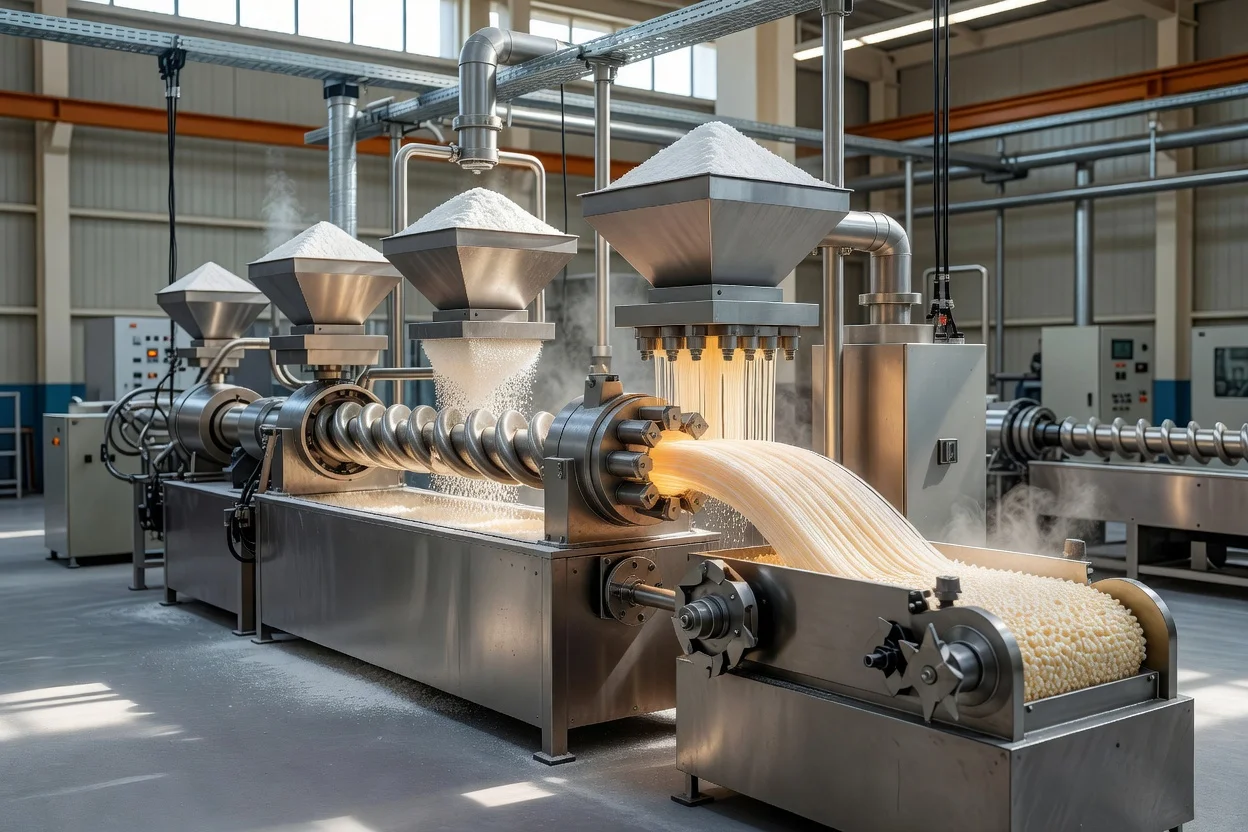
Concrete formulation examples include:
- PVC cable compounds often use mineral fillers in the 10 to 40 percent range by mass, where kaolin can contribute stiffness and extrusion stability; the practical mechanism is restricted chain mobility plus particle packing.
- Polypropylene or polyethylene masterbatches may use kaolin as a filler or carrier modifier at moderate loadings, where fine dispersion helps control cost and stiffness without excessively damaging processability.
A poor-fit use is high-impact transparent packaging, because kaolin’s particulate nature tends to reduce clarity and can lower impact performance unless the formulation is specifically engineered around those limitations.
Environmental and Sustainability Aspects
Kaolin is a naturally occurring mineral, so it is not fossil-based in the way that most polymer feedstocks are; however, its sustainability profile is still shaped by mining, beneficiation, transport, and disposal considerations.
Key environmental considerations include:
- Mining footprint: open-pit extraction can disturb land and requires site rehabilitation.
- Water and energy use: wet beneficiation can be resource-intensive, especially for high-purity grades.
- Dust and particulate control: dry processing demands strong air-quality management.
- End-of-life impact: kaolin-filled plastics are still plastics; mineral loading does not by itself solve polymer waste challenges.
On the positive side, kaolin can support circular design indirectly by enabling downgauging, improving stiffness, or replacing a portion of higher-cost specialty polymers in some applications. In addition, some kaolin products are explored as components in more advanced circular and low-carbon materials, including engineered fillers and precursor routes for value-added minerals such as high-purity alumina.
Compared with many synthetic auxiliaries, kaolin is often viewed as relatively stable and non-toxic in industrial use, but safe handling still requires control of airborne dust, especially in dry powder operations.
Economic and Global Market Impact
Kaolin remains a major industrial mineral commodity with globally distributed production and a market anchored in paper, ceramics, and specialty fillers. Recent industry sources indicate that global production has been on the order of tens of millions of tonnes annually, with the United States, the United Kingdom, Brazil, China, and Australia among the notable producing regions.
The United States, especially Georgia, is widely recognized as a leading producer and processor of high-quality kaolin, supported by long-established deposits and industrial infrastructure. Brazil and China are also important global suppliers, while Australia has attracted attention for substantial deposits and development potential.
For plastics manufacturers, kaolin’s economic appeal is strongest when it can deliver a balanced package of:
- lower formulation cost,
- acceptable mechanical performance,
- reliable processing,
- and consistent supply quality.
This makes it especially relevant in price-sensitive compounding markets, where kaolin competes with calcium carbonate, talc, wollastonite, and synthetic fillers depending on application requirements.
Current Challenges and Innovations
The main challenges for kaolin in plastics are not conceptual but technical:
- Dispersion control remains central, because poor wetting or agglomeration undermines performance.
- Property trade-offs are unavoidable, especially where higher filler levels reduce toughness.
- Quality variability between deposits can affect brightness, particle shape, and impurity profile.
- Sustainability pressure is increasing, especially around mining and processing footprints.
Innovation is therefore concentrated in engineered grades and hybrid formulations:
- Calcined kaolin is used to improve opacity, heat resistance, and reinforcement in selected systems.
- Surface-treated kaolin can improve compatibility with hydrophobic polymers by reducing interfacial mismatch.
- Nanoscale or ultrafine kaolin is studied for stronger reinforcement at lower loading, although scale-up and dispersion remain demanding.
- Functionalized kaolin is being explored for catalysts, specialty composites, and advanced barrier or rheology applications.
A useful formulation principle is that kaolin is most effective when the particle geometry, surface chemistry, and loading level are matched to the host polymer and the processing method. In other words, kaolin performance is less about the mineral alone than about how thoroughly it is engineered into the system.
Future Outlook
Kaolin is likely to remain a core industrial mineral because it occupies a stable position between commodity filler and engineered performance additive. In plastics, its most promising future lies in higher-value applications where carefully controlled particle morphology and surface treatment can deliver measurable performance gains rather than simple cost reduction.
Several trends are likely to shape demand:
- greater use in engineered compounds for cable, automotive interiors, and dimensional-stability-sensitive parts;
- expanded use in surface-modified and calcined grades;
- continued substitution pressure from competing fillers where cost or performance advantages are superior;
- and closer integration with sustainability goals through lighter-weight formulations and lower-carbon supply chains.
Longer term, kaolin may also benefit from adjacent growth in advanced minerals, including precursor pathways to higher-value materials for batteries, catalysts, and electronic applications, although these remain more specialized than its core filler markets.
Summary
Kaolin is a white, plate-like clay mineral centered on kaolinite and used widely as a filler, extender, and functional mineral in paper, ceramics, rubber, coatings, and plastics. In plastics, it is valued for stiffness, whiteness, dimensional stability, and cost efficiency, but its usefulness depends on careful grade selection, dispersion, and formulation design.
Its industrial future is likely to be shaped by engineered grades, sustainability pressure, and the continuing need for mineral auxiliaries that help balance cost, performance, and processability across the plastics value chain.
References
- •
Kaolin — Wikipédia. (2003, December 3). https://fr.wikipedia.org/wiki/KaolinLink
- •
Définition de KAOLIN. (n.d.). https://www.cnrtl.fr/definition/kaolinLink
- •
Kaolin | Uses, Benefits, and Safety Precautions. (1998, July 20). https://www.britannica.com/science/kaolinLink
- •
Kaolins: their properties and uses. (1997). Philosophical Transactions of the Royal Society of London. Series A, Mathematical and Physical Sciences. https://royalsocietypublishing.org/doi/10.1098/rsta.1984.0037Link
- •
Définitions : kaolin - Dictionnaire de français Larousse. (n.d.). https://www.larousse.fr/dictionnaires/francais/kaolin/45344Link
- •
KAOLIN Definition & Meaning - Merriam-Webster. (2026, April 27). https://www.merriam-webster.com/dictionary/kaolinLink
- •
Kaolin: A complete analysis of its characteristics, processing equipment and applications | A key raw material for improving the performance of papermaking, ceramics and refractory materialsKaolin. (2025, March 19). https://www.raymondmill.net/kaolin-2025-3-19/Link
- •
What is kaolin? (n.d.). https://ima-europe.eu/wp-content/uploads/2020/06/Kaolin_An-WEB-2011.pdfLink
- •
KAOLIN Definition & Meaning - Dictionary.com. (n.d.). https://www.dictionary.com/browse/kaolinLink
- •
Kaolin - Definition, Meaning & Synonyms - Vocabulary.com. (n.d.). https://www.vocabulary.com/dictionary/kaolinLink
- •
kaolin noun - Definition, pictures, pronunciation and usage notes. (n.d.). https://www.oxfordlearnersdictionaries.com/definition/english/kaolinLink
- •
kaolin - Définitions, synonymes, prononciation, exemples. (2024, November 26). https://dictionnaire.lerobert.com/definition/kaolinLink
- •
Kaolin - MFA Cameo - Museum of Fine Arts Boston. (2025, March 12). https://cameo.mfa.org/wiki/KaolinLink
- •
kaolin. (2025, January 1). https://dictionary.cambridge.org/dictionary/english/kaolinLink
- •
Kaolin 101. (n.d.). https://www.kamin.com/resources/blog/kaolin-101Link
- •
Kaolin: Health Benefits, Side Effects, Uses, Dose & Precautions. (2021, June 11). https://www.rxlist.com/supplements/kaolin.htmLink
- •
Kaolin Uses, Benefits & Dosage. (2026, July 19). https://www.drugs.com/npp/kaolin.htmlLink
- •
KAOLIN | 1332-58-7. (2025, July 31). https://amp.chemicalbook.com/ChemicalProductProperty_EN_CB6300504.htmLink
- •
kaolin - Wiktionary, the free dictionary. (2026, January 20). https://en.wiktionary.org/wiki/kaolinLink
- •
Kaolin | Al2H4O9Si2 | CID 92024769 - PubChem - NIH. (n.d.). https://pubchem.ncbi.nlm.nih.gov/compound/KaolinLink
- •
kaolin | Dictionnaire de l'Académie française | 9e édition. (n.d.). https://www.dictionnaire-academie.fr/article/A9K0034Link
- •
Kaolin: Properties and Processing Methods | PDF - Scribd. (2026, January 22). https://www.scribd.com/document/827181777/KaolinLink
- •
KAOLIN definition and meaning | Collins English Dictionary. (n.d.). https://www.collinsdictionary.com/dictionary/english/kaolinLink
- •
THE TECHNOLOGY OF KAOLIN MINING, BENEFICIATION AND INDUSTRIAL APPLICATION (17457.en). (n.d.). https://downloads.unido.org/ot/48/20/4820269/15001-20000_17457.pdfLink
- •
What is Kaolin. (n.d.). https://kabca.org/what-is-kaolin.phpLink
- •
Kaolin | Al2H4O9Si2 | CID 92024769 - PubChem. (n.d.). https://pubchem.ncbi.nlm.nih.gov/compound/92024769Link
- •
IMA Europe | Kaolin. (n.d.). https://ima-europe.eu/about-industrial-minerals/kaolin/Link
- •
All Steps in Kaolin Production - Mining and Processing Explained. (2023, June 20). https://www.yukami.co.id/mining-and-processing-steps-in-kaolin-production/amp/Link
- •
Harnessing Kaolin Uses For Multiple Applications - TLD Vietnam. (2024, October 16). https://tldvietnam.com/kaolin-uses-for-multiple-applicationsLink
- •
Kaolin - an overview | ScienceDirect Topics. (n.d.). https://www.sciencedirect.com/topics/chemical-engineering/kaolinLink
- •
Kaolin Mining and Processing - 911Metallurgist. (2019, October 20). https://www.911metallurgist.com/blog/kaolin-mining-processing/Link
- •
Kaolin: processing, properties and applications - ScienceDirect.com. (n.d.). https://www.sciencedirect.com/science/article/pii/016913179190001PLink
- •
Argile blanche (Kaolin) : bienfaits et utilisations - Compagnie des Sens. (2026, July 30). https://www.compagnie-des-sens.fr/argile-blanche-kaolin/Link
- •
Kaolin Clay: How It's Mined and Refined - Xinhai. (n.d.). https://www.xinhaimining.com/newo/kaolin-clay-how-it-is-mined-and-refined.htmlLink
- •
Kaolin – Wikipedia. (2004, February 24). https://de.wikipedia.org/wiki/KaolinLink
- •
Kaolin — définition - Vetofish. (2026, July 29). https://www.vetofish.com/definition/kaolin/Link
- •
Understanding kaolin clay - Tellus Holdings. (2024, October 16). https://tellus.com.au/understanding-kaolin-clay/Link
- •
Industrial Clays Case Study. (n.d.). https://www.iied.org/sites/default/files/pdfs/migrate/G00556.pdfLink
- •
Kaolin | Imerys. (n.d.). https://www.imerys.com/fr/mineraux/kaolinLink
- •
Kaolin | Energy & Miningwww.energymining.sa.gov.au › minerals-and-mining › mineral-commodities. (2022, March 11). https://www.energymining.sa.gov.au/industry/minerals-and-mining/mineral-commodities/kaolinLink
- •
Kaolin. (n.d.). https://digitalfire.com/material/kaolinLink
- •
Kaolin Mining Process Explained. (2025, March 8). https://www.miningpedia.cn/mining/what-is-mining-process-of-kaolin.htmlLink
- •
Development of kaolin production, reserves and processing in .... (n.d.). https://yadda.icm.edu.pl/baztech/element/bwmeta1.element.baztech-13ada4fe-78ef-463c-9077-614e83cb033d/c/07_stary_pticen_development_of_kaolin_2017_3.pdfLink
- •
The Versatile Uses of Kaolin Clay Across Industries - CB Minerals. (2025, March 26). https://cbminerals.com/the-versatile-uses-of-kaolin-clay-across-industries/Link
- •
kaolin: Topics by Science.gov. (2018, June 6). https://www.science.gov/topicpages/k/kaolinLink
- •
How is Kaolin Clay Mined and Processed? - The Sharad Group. (2024, September 13). https://thesharadgroup.com/how-is-kaolin-clay-mined-and-processed/Link
- •
Mining and Processing Kaolin - Elements Magazine. (2023, October 12). http://www.elementsmagazine.org/mining-and-processing-kaolin/Link
- •
KAOLIN. (n.d.). https://www.resources.nsw.gov.au/sites/default/files/2022-11/kaolin.pdfLink
- •
Kaolin - New Georgia Encyclopedia. (2021, August 31). https://www.georgiaencyclopedia.org/articles/business-economy/kaolin/Link
- •
market-and-producers-of-kaolin-gm_22oct.docx - Portal Gov.br. (n.d.). https://www.gov.br/mre/pt-br/consulado-nova-york/secom/avisos-1/avisos-arquivos/market-and-producers-of-kaolin-gm_22oct.docxLink
- •
Australia's Kaolin Deposits: Global Demand and Production. (2026, May 10). https://www.linkedin.com/posts/alfenwick_projects-intergroup-mining-igm-activity-7459347678288826368-wRMLLink
- •
Kaolin Capital of the World - City of Sandersville. (n.d.). https://www.sandersvillega.org/kaolincapitaloftheworld.cfmLink
- •
Kaolin | Imerys. (2025, May 26). https://www.imerys.com/minerals/kaolinLink