
Introduction
Poly(propylene carbonate) (PPC) is the best-known carbon dioxide-based biodegradable plastic, produced by copolymerizing carbon dioxide with propylene oxide to form an aliphatic polycarbonate. It is notable for combining a waste-gas feedstock with biodegradable end-of-life behavior, making it one of the most studied CO2-derived polymers for packaging, agriculture, coatings, and selected biomedical uses.
PPC occupies a distinctive position in the plastics landscape: it is neither a conventional fossil polymer nor a simple “drop-in” replacement, but a specialty material whose value lies in its carbon utilization, transparency, flexibility, and good oxygen barrier performance. At the same time, its adoption has been constrained by thermal softness, limited heat resistance, and processing challenges, which is why much of the current development work focuses on copolymerization, blending, catalytic control, and composite reinforcement.
From a sustainability perspective, PPC is significant because a large fraction of its mass can originate from captured CO2, and it can biodegrade under suitable composting or environmental conditions. However, environmental benefit depends strongly on the full life cycle, including epoxide sourcing, catalyst system, processing energy, and end-of-life infrastructure.
History and Development
Research on CO2-based polycarbonates emerged from broader efforts to valorize carbon dioxide as an industrial feedstock rather than a waste gas. PPC became the flagship material in this field because the alternating copolymerization of carbon dioxide and propylene oxide offered a direct route to a commercially relevant polymer with useful film-forming properties and biodegradability.
Early work showed that catalyst design was decisive for obtaining high selectivity and sufficient molecular weight. Later development shifted toward more productive and controllable catalyst systems, including zinc-based, rare-earth, and organocatalytic approaches, as well as techniques for chain transfer and block/copolymer engineering.
As research advanced, PPC moved from laboratory curiosity toward application-oriented material development. Studies and reviews increasingly framed it as a “soft” biopolymer for packaging films, agricultural films, blends with PLA or cellulose derivatives, medical materials, and polyol intermediates for polyurethane systems.
Chemical Structure and Key Properties
PPC is an aliphatic polycarbonate formed by alternating carbonate linkages in the polymer backbone. This structure gives it a combination of polarity, transparency, and biodegradability that differs from polyolefins and conventional bisphenol-based polycarbonate.
Its most frequently cited practical properties include:
- Transparency and good optical clarity.
- Flexibility and relatively low modulus compared with rigid packaging plastics.
- Good oxygen barrier performance, which is useful in certain packaging structures.
- Biodegradability in composting, soil, water, and some enzymatic contexts, with degradation behavior depending on molecular weight, morphology, and formulation.
- A moderate glass transition temperature, which makes it soft at relatively low temperatures and limits hot-fill or high-heat service.
Important limitations include:
- Low heat resistance → chain mobility and a relatively low glass transition temperature → use in blends, crosslinking, or reinforcement with higher-Tg polymers and fillers.
- Poor water and hydrolytic stability under some conditions → carbonate linkages are susceptible to hydrolysis and degradation → careful storage, formulation control, and barrier multilayer design.
- Limited mechanical stiffness for many structural uses → amorphous, soft backbone → blending with PLA, cellulose acetate, fibers, or nanofillers.
- Processing window sensitivity → thermal degradation and melt instability at elevated temperatures → lower-temperature extrusion/injection processing and catalyst/post-polymerization control.
For carbon dioxide-based biodegradable plastics in general, PPC is the benchmark material, but the broader class now includes other CO2-derived polycarbonates and polycarbonate-containing copolymers designed to improve heat resistance, recyclability, or end-of-life performance.
Production Processes and Raw Feedstocks
PPC is produced primarily by ring-opening copolymerization of propylene oxide with carbon dioxide. In the ideal alternating process, each epoxide insertion is followed by CO2 insertion, yielding a regular carbonate backbone rather than ether-rich side products.
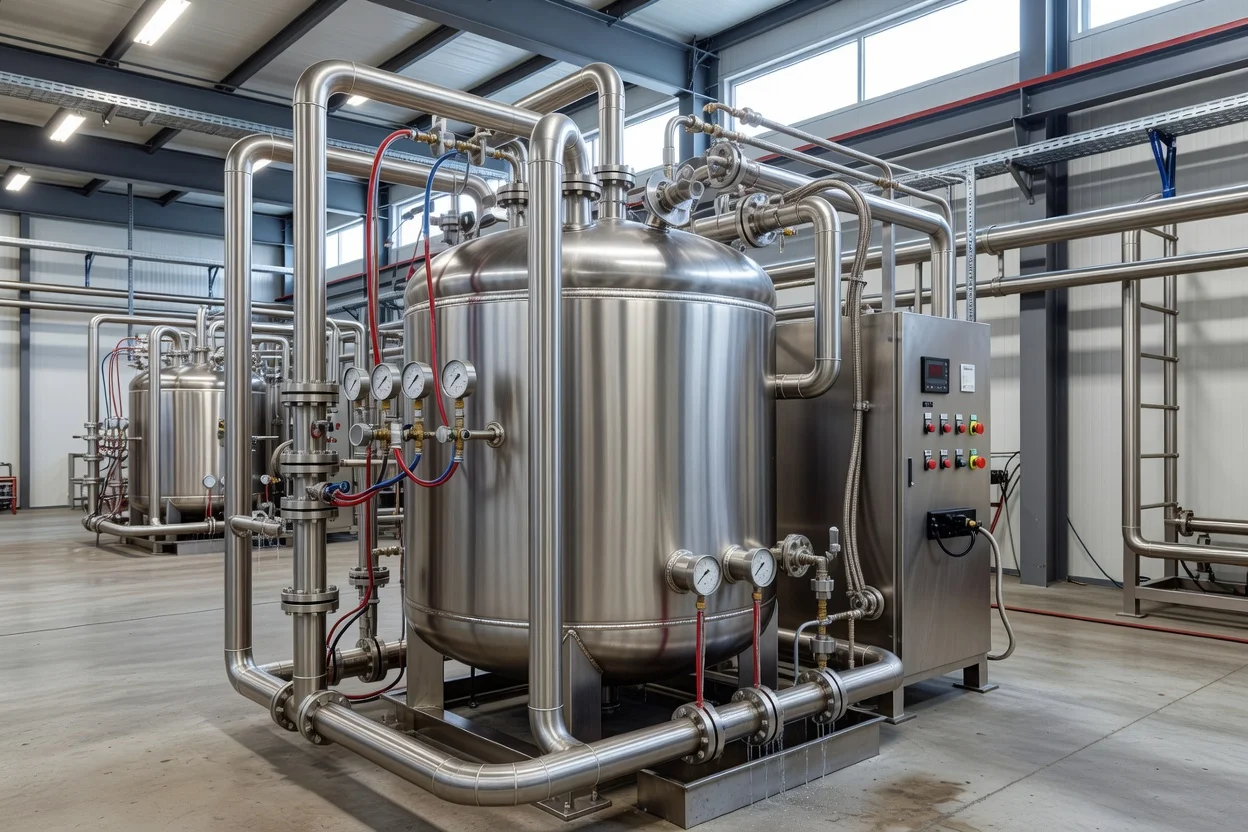
The main production elements are:
- Raw feedstocks: carbon dioxide and propylene oxide.
- Catalysts: zinc-based systems, rare-earth catalysts, and newer organocatalysts or bifunctional catalysts aimed at higher selectivity and lower impurity formation.
- Process conditions: typically controlled temperature and pressure, with ongoing efforts to reduce severity and improve productivity.
The key industrial and research logic is straightforward: CO2 acts as a C1 building block, while propylene oxide supplies the hydrocarbon backbone and reactive epoxide ring. In practice, catalyst choice strongly affects molecular weight, carbonate content, branching, and the presence of cyclic carbonate by-products.
Concrete formulation examples illustrate the direction of the field:
- PPC/PLA blends are used to improve flexibility and reduce brittleness of PLA-based films, while PPC contributes softness and compatibility in selected formulations.
- PPC-cellulose acetate transparent bioplastics have been reported to combine optical clarity with improved processability for film-oriented uses.
Applications and End-Use Markets
PPC is a specialty biodegradable plastic, so its market is concentrated in applications where its softness, clarity, and compostability outweigh its thermal limitations.
| End-use sector | Typical PPC role | Usual processing or grade fit | Notes |
|---|---|---|---|
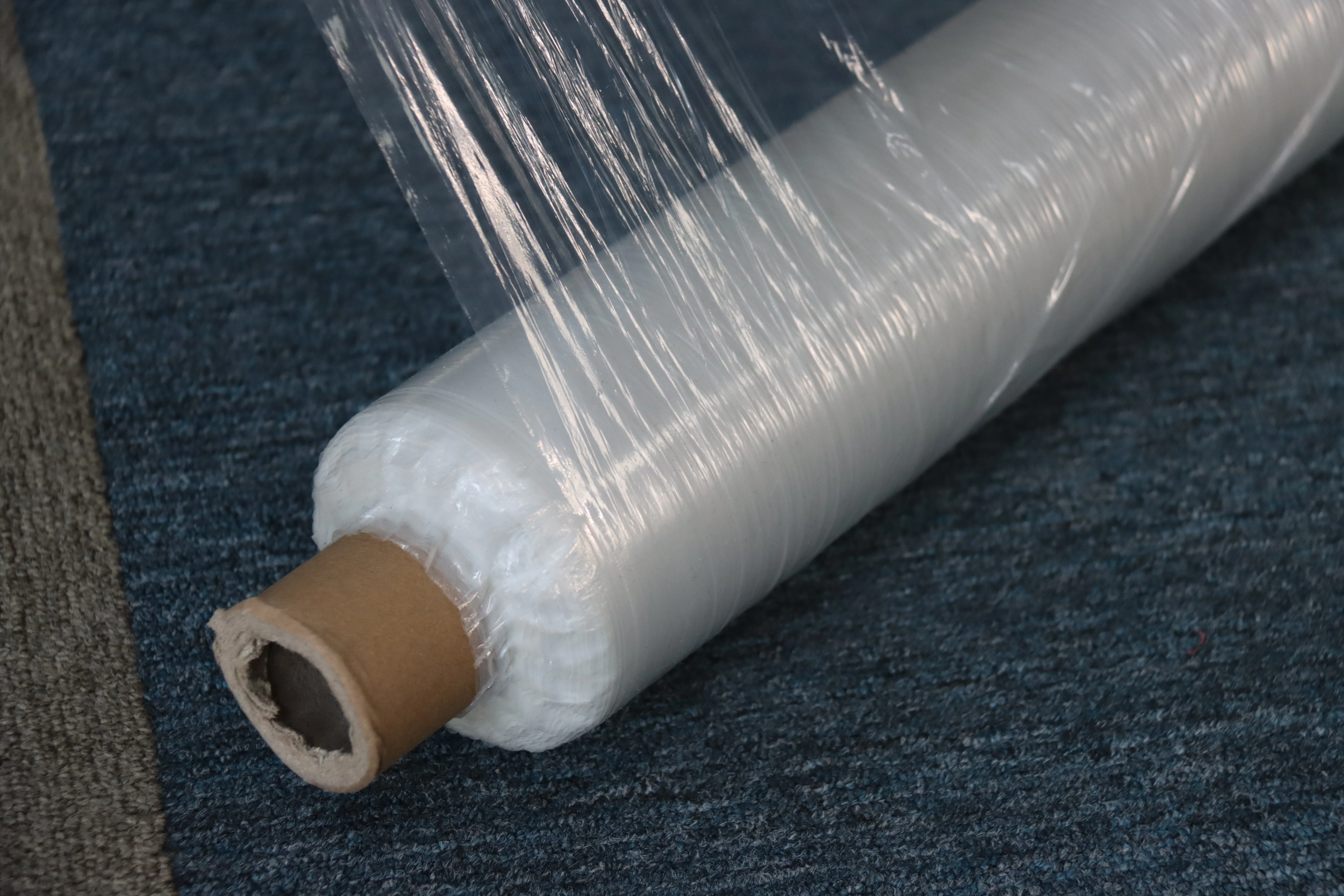
| Packaging films | Flexible, transparent film component | Blends, cast film, multilayer structures | Strong use case because of oxygen barrier and compostability. |
| Agricultural films | Mulch film and related field-use films | Film grade, often blended | Fits short-life outdoor uses where recovery is difficult. |
| Medical and hygiene | Tubes, disposable articles, selected biomedical materials | Medical-grade formulations, often modified | Biocompatibility and biodegradation are attractive, but qualification is demanding. |
| Consumer goods | Bags, wraps, disposable items | Thin-gauge film or molded items | Marketed where biodegradation is a differentiator. |
| Polyurethane intermediates | Polycarbonate polyols and soft segment precursors | Reactive intermediates rather than finished plastic | This is a major value-added route for CO2-derived chemistry. |
| Coatings and composites | Binder, toughening component, matrix modifier | Compounds and filled formulations | Used to broaden performance window. |
A poor-fit use is high-temperature engineering parts. PPC is not suitable for sustained heat exposure or dimensional stability demands comparable to engineering thermoplastics because its low thermal resistance and softness limit structural performance.
Industry and academic reviews consistently identify packaging and agriculture as the most realistic near-term markets, while medical, automotive, and construction uses remain more selective and formulation-dependent.
Environmental and Sustainability Aspects
PPC’s sustainability case rests on three features: CO2 utilization, biodegradability, and potential integration into a circular materials strategy.
Key points include:
- Carbon utilization: carbon dioxide becomes a feedstock, which can lower reliance on petrochemical carbon inputs.
- Biodegradability: PPC can mineralize under composting or environmental conditions, although the rate depends on thickness, crystallinity, and additives.
- Potential low-carbon benefit: life-cycle studies indicate mitigation potential, but outcomes vary depending on process energy, monomer source, and disposal route.
At the same time, PPC is not automatically “carbon negative” or universally compostable in practice. Environmental performance depends on whether the propylene oxide is fossil-derived or bio-based, whether production uses low-carbon energy, and whether the end-of-life system actually routes the material into composting or controlled biodegradation rather than littered release.
Recyclability is also receiving increasing attention. Recent work on CO2-based polycarbonates has explored chemical recycling, depolymerization, and closed-loop monomer recovery, showing that some architectures can be designed for both biodegradation and recoverability.
Economic and Global Market Impact
PPC remains a niche but strategically important polymer rather than a commodity resin. Its market relevance comes less from bulk tonnage and more from its role as a platform material for CO2 utilization and sustainable specialty packaging.
The economics are shaped by several factors:
- Feedstock balance: CO2 is inexpensive and abundant, but propylene oxide remains the major cost and supply determinant.
- Catalyst cost and performance: high-selectivity catalysts are critical for industrial viability.
- Competing biodegradable polymers: PLA, PBAT, starch blends, and other compostable materials compete in packaging and film markets.
- Specification-driven demand: customers often require certified compostability, consistent melt behavior, and blend compatibility, which increases formulation complexity.
Leading producers and technology holders in the broader CO2-based polymer space have included catalyst developers, process licensors, and specialty polymer companies rather than only large commodity resin producers. Novomer’s technology was widely cited for CO2 copolymerization into PPC-like products and polyols, while other companies and research groups have focused on bio-based or hybrid polycarbonate alternatives.
Current Challenges and Innovations
The central technical challenge for PPC is the classic trade-off between sustainability and performance: the material is attractive environmentally, but its base polymer properties are not yet broad enough for many mainstream plastics uses.
Current innovation directions include:
- Copolymer design: combining CO2-derived units with other monomers to raise heat resistance or tune degradation.
- Blending: using PLA, cellulose acetate, or other biodegradable polymers to improve processability and film performance.
- Catalyst engineering: developing more active, selective, and lower-toxicity catalytic systems.
- Crosslinking and network formation: improving dimensional stability for more demanding uses.
- Chemical recycling routes: enabling monomer recovery or controlled depolymerization for circularity.
A representative functional strategy is the use of about 1–5 wt% compatibilizer or reactive modifier in blends, or small additive loadings of nanofillers to improve stiffness and barrier performance. Mechanistically, these additives reduce phase separation, restrict chain mobility, or create tortuous diffusion pathways for gases and moisture. Such formulations are often essential because the neat polymer is too soft for many commercial applications.
Future Outlook
PPC is likely to remain a specialty sustainable polymer rather than a universal substitute for polyethylene or polypropylene. Its future is strongest in applications where biodegradability, optical clarity, and moderate barrier performance are more valuable than heat resistance.
The most plausible development paths are:
- Film and packaging systems with controlled compostability and improved multilayer performance.
- Blend platforms that pair PPC with PLA, cellulose derivatives, or other biopolymers.
- CO2-derived polycarbonate families with better thermal stability and recyclable architectures.
- Polyol and polyurethane markets, where PPC may function as a high-value intermediate rather than a finished plastic.
Over the longer term, the significance of PPC may extend beyond the material itself. It serves as a model for how carbon dioxide can be converted into functional polymer feedstocks, linking carbon management, polymer chemistry, and circular materials design in a single value chain.
Summary
PPC is the signature CO2-based biodegradable plastic, valued for its transparency, flexibility, oxygen barrier properties, and potential role in carbon utilization.
Its strongest commercial prospects are in films, blends, agriculture, and specialty intermediates, while its main weaknesses are low heat resistance, softness, and formulation sensitivity.
As catalyst science, blending technology, and circular end-of-life strategies improve, PPC is likely to remain one of the most important reference materials in the broader field of sustainable plastics and CO2-derived polymer chemistry.
References
- •
Environmental impacts and mitigation potentials of CO₂-based biodegradable plastic based on life cycle assessment – A case study of poly(propylene carbonate). (n.d.).Link
- •
CO₂ derived biodegradable polycarbonates: Synthesis, modification and applications. (2019, October 1).Link
- •
Highlights in Science, Engineering and Technology. (n.d.).Link
- •
Research and application of polypropylene carbonate. (2022, May 26).Link
- •
Harnessing CO₂ for the development of biodegradable polymers: A review of. (n.d.).Link
- •
Harnessing CO₂ for the development of biodegradable polymers: A review of innovations in green chemistry. (2025, February 18).Link
- •
CO₂ derived biodegradable polycarbonates: Synthesis, modification and applications. (n.d.).Link
- •
Carbon dioxide-based copolymers: Environmental benefits of PPC, an industrially viable catalyst. (2010, November 5).Link
- •
Polypropylene carbonate biodegradable film: Advanced material. (n.d.).Link
- •
PPC (polypropylene carbonate). (n.d.).Link
- •
Synthesis of sustainable green bio-polycarbonates from bio-based. (2025, November 25).Link
- •
Recent advances of “soft” bio-polycarbonate plastics from carbon dioxide and renewable bio-feedstocks via straightforward and innovative routes. (n.d.).Link
- •
Poly(propylene carbonate)-based biodegradable and. (2024, March 2).Link
- •
PPCP plastic materials | CO₂-based sustainable polymer. (2025, August 11).Link
- •
Polypropylene carbonate environmentally friendly plastic. (n.d.).Link
- •
The advent of recyclable CO₂-based polycarbonates. (2023, March 14).Link
- •
Carbon dioxide upgrading to biodegradable plastics. (2025, January 27).Link
- •
Transparent bioplastic derived from CO₂-based polymer. (2020, September 21).Link
- •
Ultra-productive upcycling CO₂ into polycarbonate polyols via borinane-based bifunctional organocatalysts. (2023, January 23).Link
- •
Pure - University of Birmingham. (n.d.).Link
- •
Researchers developing BPA-free polycarbonate from limonene. (2017, July 18).Link
- •
Polypropylene carbonate CO₂-based polymer - PatSnap Eureka. (n.d.).Link
- •
Current challenges and perspectives in CO₂-based polymers. (2023, February 28).Link
- •
How does CO₂-based plastic PPC-P contribute to the dual. (2025, April 22).Link
- •
Research article. (n.d.).Link
- •
am0c12789 1..11. (n.d.).Link
- •
Access to biorenewable and CO₂-based polycarbonates from exovinylene cyclic carbonates. (2021, January 14).Link
- •
CO₂-based polycarbonates from biobased cyclic terpenes with end-of-life usage potential. (2024, September 18).Link
- •
CO₂-based polycarbonates from biobased cyclic terpenes. (2024, September 18).Link
- •
Route towards sustainability CO₂-derived bio-based polycarbonate. (2025, January 1).Link
- •
A renewable and compostable polymer for reducing consumption of non-degradable plastics. (2016, November 15).Link
- •
Biodegradable polycarbonates. (n.d.).Link
- •
CO₂-based biodegradable plastics and their precursor production. (2026, May 5).Link
- •
Biobased synthesis and biodegradability of CO₂-based polycarbonates. (n.d.).Link
- •
Synthesis of a series of biodegradable poly(butylene carbonate-co. (2020, July 20).Link
- •
Polypropylene carbonate as a sustainable material: Synthesis. (n.d.).Link
- •
Synthesis and properties of CO₂-based plastics: Environmentally-friendly, energy-saving and biomedical polymeric materials. (n.d.).Link
- •
Akron polymer professor using CO₂ to make plastics more biodegradable. (n.d.).Link
- •
Carbon dioxide-based biodegradable polycarbonate macrodiols: Synthesis, structure, and performance. (2025, December 5).Link
- •
Greenhouse gas reduction potential of novel CO₂-derived polylactic-co-glycolic acid (PLGA) plastics. (n.d.).Link
- •
Novel biodegradable cast film from carbon dioxide based copolymer and poly(lactic acid). (n.d.).Link
- •
Polypropylene carbonate: Synthesis, properties, and advanced. (n.d.).Link
- •
Recycling carbon dioxide to make plastics. (2013, May 20).Link
- •
The use of CO₂ in the production of bioplastics for an even greener chemistry. (2021, October 13).Link
- •
Based biodegradable plastics and their precursor production using. (2026, May 5).Link
- •
A new biodegradable CO₂-based poly(ester-co-carbonate): Molecular chain building up with crosslinkable domain. (n.d.).Link
- •
A sustainable approach for the synthesis of recyclable. (2022, April 22).Link
- •
Carbon dioxide copolymers: Emerging sustainable materials for. (2021, March 9).Link
- •
Journal of applied polymer science. (2014, November 5).Link
- •
CO₂ & waste-derived bioplastics: Pioneering sustainable. (2024, November 22).Link
- •
Team uses carbon dioxide to make green bioplastics. (2022, October 11).Link
- •
Scientists make plastic from sugar and carbon dioxide. (2018, July 25).Link
- •
Bioplastics for a circular economy. (2022, January 20).Link
- •
Polymer: Bio-based/degradables. (n.d.).Link
- •
How to develop sustainable polycarbonate alternatives? (n.d.).Link