
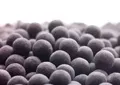
Introduction
Catalysts & accelerators are essential enabling materials in plastics manufacture because they control reaction rate, selectivity, cure behavior, and ultimately the structure and performance of the final polymer or resin. In the plastics industry, catalyst most often refers to a substance that speeds a reaction without being consumed, while accelerator usually refers either to a promoter that increases catalyst activity or, in rubber and thermoset chemistry, a compound that speeds curing or crosslinking.
In practice, these materials are used across polymerization, polycondensation, curing, vulcanization, crosslinking, and surface-functionalization systems. Their importance extends from commodity plastics such as polyethylene and polypropylene to engineering plastics, thermosets, adhesives, sealants, and elastomers, where small changes in catalyst or accelerator chemistry can strongly affect molecular weight, branching, tacticity, cure speed, residual monomer content, and product consistency.
The topic also has major sustainability relevance. Catalyst choice influences energy demand, reactor efficiency, by-product formation, and the feasibility of lower-carbon routes such as high-selectivity polymerization, chemical recycling, and bio-based monomer production. At the same time, accelerator systems can improve processing speed and cure efficiency, but they may introduce regulatory, toxicity, or end-of-life challenges depending on the chemistry involved.
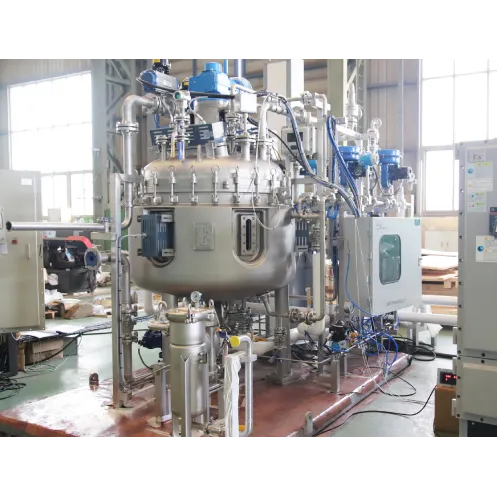
History and Development
Catalysis is one of the foundational concepts of industrial chemistry, and its role in polymers expanded rapidly as synthetic plastics moved from laboratory curiosity to mass production. Early polymer and resin technologies relied on relatively simple acid, base, and peroxide systems, while later decades brought coordination catalysts, organometallic complexes, and highly engineered heterogeneous catalyst platforms that enabled much tighter control over polymer microstructure and productivity.
In plastics, catalyst development has been closely tied to process innovation. Advances in Ziegler-Natta, metallocene, and other single-site catalyst families made it possible to tailor polyethylene and polypropylene with improved control over molecular weight distribution, comonomer incorporation, and stereoregularity. These innovations helped diversify plastics grades and expand the range of films, pipes, fibers, molded parts, and specialty compounds that could be manufactured economically.
Accelerator chemistry developed along a somewhat different path, especially in rubber compounding, thermoset curing, and adhesive technologies. Here, the engineering goal is usually not polymer chain growth but faster, more controllable network formation. Accelerator systems were therefore optimized for cure latency, scorch safety, processing window, and final crosslink density rather than for monomer conversion alone.
Chemical Structure and Key Properties
Catalysts and accelerators are not a single material class but a functional category spanning acids, bases, metal complexes, solid surfaces, enzymes, peroxides, amines, organometallic compounds, sulfur cure accelerators, and proprietary multi-component systems.
Their key function is kinetic control. Catalysts lower activation energy by offering an alternative reaction pathway, which increases reaction rate without changing the overall equilibrium position of the reaction. Accelerators, in the industrial plastics sense, often work by increasing catalyst activity, generating reactive intermediates, or speeding cure chemistry in a resin or elastomer system.
Core performance attributes
| Attribute | Industrial significance |
|---|---|
| Activity | Determines how quickly conversion or cure begins |
| Selectivity | Controls by-products, branching, stereochemistry, and molecular weight distribution |
| Latency | Important for storage stability and processing safety |
| Thermal stability | Governs usable temperature window |
| Compatibility | Affects solubility, dispersion, and catalyst poisoning resistance |
| Residue profile | Influences color, odor, corrosion, and recyclability |
Real technical limits and workarounds
- Poor selectivity → causes broad molecular weight distribution or unwanted side reactions → workaround: use single-site or tuned heterogeneous catalysts with controlled ligand or support chemistry.
- Catalyst poisoning → trace impurities such as sulfur, water, oxygen, or polar contaminants deactivate active sites → workaround: feed purification, scavengers, and robust catalyst/support designs.
- Scorch or premature cure in accelerators → causes processing instability in rubbers, thermosets, and adhesives → workaround: delayed-action accelerator packages, staged addition, or temperature-controlled cure schedules.
- Residue sensitivity → metal or amine residues can affect color, odor, or downstream reuse → workaround: low-residue formulations, deashing, or recyclable catalyst systems.
For plastics-grade polymers, catalysts are often designed for one of three broad modes: homogeneous solution catalysis, heterogeneous surface catalysis, or hybrid systems that combine soluble initiation with solid support or scavenging functions.
Production Processes and Raw Feedstocks
Catalysts and accelerators are produced through specialized chemical synthesis rather than bulk polymerization. The process route depends on the active chemistry:
- Metal-based catalysts are often prepared by reacting purified metal salts or organometallic precursors with ligands, co-catalysts, or supports.
- Supported heterogeneous catalysts are manufactured by depositing active metals, oxides, acids, or organometallic species onto silica, alumina, zeolites, carbon, or other carriers.
- Polymerization catalysts are formulated as proprietary systems optimized for activity, morphology control, and impurity tolerance.
- Accelerators for vulcanization or curing are typically fine chemicals made by multi-step organic synthesis and blended into masterbatches, powders, or dispersions.
Raw feedstocks commonly include purified hydrocarbons, transition metals, mineral supports, sulfur- and nitrogen-containing organics, amines, phosphines, and peroxides, depending on the end use.
In polymer production, catalysts are integrated directly into reactor systems for processes such as gas-phase, slurry, bulk, and solution polymerization. In thermosets and elastomers, accelerators are usually compounded with resins, hardeners, and fillers before molding, extrusion, calendaring, or vulcanization.
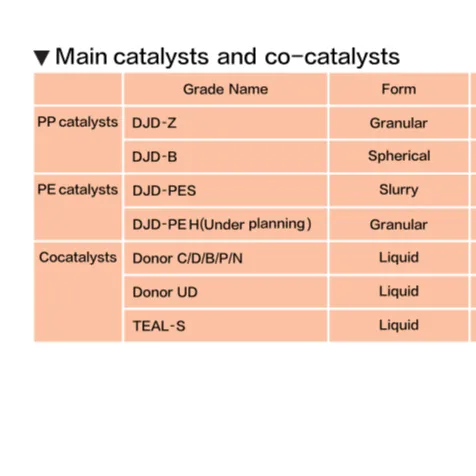
Applications and End-Use Markets
Catalysts and accelerators are used across the plastics value chain, but the exact grade and process depend on the chemistry being enabled.
| End use | Typical catalyst/accelerator role | Usual processing context |
|---|---|---|
| Polyethylene and polypropylene | Polymerization catalyst controls chain growth and microstructure | Gas-phase, slurry, bulk, or solution polymerization |
| PVC and specialty resins | Initiation or stabilization chemistry in selected systems | Suspension, emulsion, or formulation processing |
| Polyester and polyamide intermediates | Esterification or condensation catalysts | Melt or solution polycondensation |
| Thermoset composites | Cure catalysts and accelerators control network formation | Lamination, infusion, casting, compression molding |
| Adhesives and sealants | Catalysts/accelerators tune cure speed and pot life | One- and two-component reactive systems |
| Rubber products | Vulcanization accelerators speed sulfur crosslinking | Tires, belts, hoses, seals |
| Foams and coatings | Catalysts influence blowing, gelling, and surface cure | Polyurethane and specialty coating lines |
Major application sectors
- Polyolefins: Catalysts are central to polyethylene and polypropylene production, where they determine productivity, branching, comonomer response, isotacticity or other stereochemical features, and final property balance.
- Thermosets and adhesives: Accelerators and catalysts control pot life, open time, cure speed, and final network structure in epoxy, polyurethane, unsaturated polyester, silicone, and related systems.
- Elastomers: In rubber compounding, accelerators are especially important in sulfur vulcanization, where they help establish crosslinks at economically useful speeds while managing scorch safety.
- Polyester and condensation polymers: Catalysts are used to drive esterification and polycondensation to commercially viable conversion and molecular weight.
- Recycling and depolymerization: Catalysts are increasingly relevant in chemical recycling, where selectivity and impurity tolerance determine whether polymers can be converted back into monomers or useful intermediates.
A poor-fit use is any application requiring long-term direct food-contact or very low-residue purity when the catalyst system leaves problematic trace metals, odors, or color bodies; in such cases, alternative catalyst families or additional purification steps are typically required.
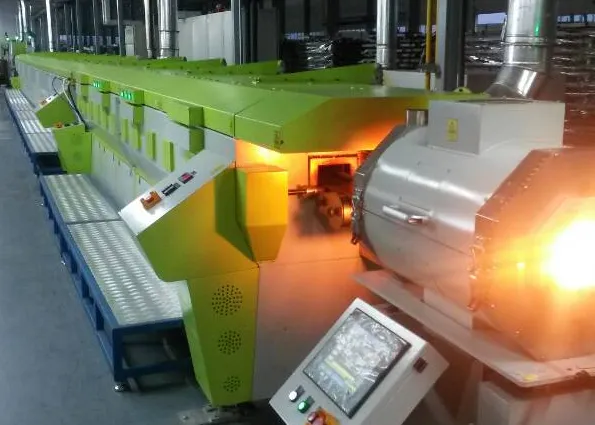
Environmental and Sustainability Aspects
Catalysts and accelerators have a dual environmental profile: they can reduce emissions and energy use by making processes more efficient, but some systems also introduce toxicity, persistence, or end-of-life complications.
Recyclability and circularity
Catalyst choice can materially affect whether a polymer is easier to recycle mechanically or chemically. High-selectivity polymerization can reduce unwanted impurities and improve recyclate quality, while catalyst residues and additives can complicate sorting, purification, and reprocessing.
Bio-based alternatives
Bio-based monomers and polymers still require catalysts in many cases, especially for fermentation-derived intermediates, esterification, and polycondensation. The sustainability benefit therefore depends not only on feedstock origin but also on the catalyst’s selectivity, lifetime, and recovery efficiency.
Carbon footprint
Catalysts can lower carbon footprint by enabling:
- lower reaction temperatures or pressures,
- shorter cycle times,
- fewer off-spec batches,
- improved atom efficiency,
- reduced solvent and purification demand.
At the same time, metal-intensive catalyst systems can carry upstream mining and refining burdens, and accelerator packages for curing can include chemistries that require careful occupational and environmental management.
Economic and Global Market Impact
Catalysts and accelerators are high-value, low-volume inputs with disproportionate influence on the economics of plastics production. Small changes in catalyst productivity can have large effects on plant output, resin quality, and margin, because reaction rate, catalyst lifetime, and purification cost all affect unit economics.
The market is shaped by:
- the scale of polyolefin production,
- growth in engineering plastics and thermosets,
- demand for higher-performance adhesives and composites,
- recycling and depolymerization technologies,
- regulatory pressure on hazardous chemistries.
Leading global players are typically integrated chemical companies and specialist catalyst suppliers serving polymerization, refining, rubber, and adhesive markets. The most competitive segments are often those where proprietary catalyst architecture, support engineering, and process know-how are tightly linked.
Current Challenges and Innovations
Current development efforts focus on making catalyst and accelerator systems more selective, more durable, and more compatible with circular manufacturing.
Key challenges
- Deactivation and poisoning in real-world feedstocks containing impurities.
- Residue management for food-contact, medical, and high-clarity applications.
- Trade-offs between speed and process safety in cure and vulcanization systems.
- Regulatory scrutiny of some metal compounds, amines, and sulfur-containing accelerators.
- Catalyst recovery in recycling and solvent-intensive routes.
Main innovations
- Single-site and advanced supported catalysts for tighter polymer property control.
- Recyclable and immobilized catalyst systems to reduce contamination and recovery cost.
- Latent accelerator packages that preserve processing window while increasing cure speed on demand.
- Catalysts for chemical recycling that improve depolymerization selectivity and tolerance to mixed waste streams.
- Data-driven catalyst discovery using high-throughput screening and computational design.
Future Outlook
Catalysts and accelerators are likely to become even more strategic as plastics producers pursue lower-carbon, higher-circularity, and higher-performance materials. The strongest growth opportunities are expected in:
- advanced polyolefin catalysts for tailored packaging and durable goods,
- cure systems for lightweight composites and electrification-related materials,
- recycling catalysts for depolymerization and upcycling,
- bio-based polymer pathways that need efficient, selective conversion chemistry.
The long-term direction of the field is toward greater selectivity, lower residue, improved recoverability, and reduced environmental burden. In plastics manufacturing, the next generation of catalysts and accelerators will be judged not only by reaction speed, but also by how effectively they support efficiency, circularity, and regulatory compliance across the entire value chain.
Summary
Catalysts & accelerators are enabling materials that govern reaction rate, cure behavior, polymer structure, and process efficiency in plastics and elastomers. Their technical importance is matched by their strategic role in sustainability, where better catalyst design can reduce energy use, improve recyclability, and support lower-carbon feedstocks, while poorly chosen systems can create residue, toxicity, or end-of-life challenges.
References
- •
Accelerator vs catalyst - What's the difference? (2020, January 19). WikiDiff. https://wikidiff.com/catalyst/acceleratorLink
- •
Types of catalysis. (2023, August 16). ScienceInfo. https://scienceinfo.com/catalyst-and-catalysis-types/Link
- •
Catalysts and initiators selection guide. (n.d.). GlobalSpec. https://www.globalspec.com/learnmore/materials_chemicals_adhesives/chemicals_raw_materials/catalysts_initiatorsLink
- •
Catalyst vs. accelerator - Difference between catalyst and accelerator explained. (n.d.). DifferenceBee. https://differencebee.com/catalyst-and-accelerator/Link
- •
Catalysis. (n.d.). KAWA. https://kawa.ac.ug/kawa-eLearning/content/chemistry/wikislice-chemistry-en/files/articles/Catalyst.htmLink
- •
Accelerator and catalyst: Learn the difference between these synonyms with RedKiwi. (n.d.). RedKiwi. https://redkiwiapp.com/en/english-guide/synonyms/accelerator-catalystLink
- •
17.6: Catalysts and catalysis. (2016, February 26). Chemistry LibreTexts. https://chem.libretexts.org/Bookshelves/General_Chemistry/Chem1_(Lower)/17:_Chemical_Kinetics_and_Dynamics/17.06:_Catalysts_and_CatalysisLink
- •
What is the difference between an initiator and a catalyst? (2022, September 4). ScienceOxygen. https://scienceoxygen.com/what-is-the-difference-between-an-initiator-and-a-catalyst/Link
- •
Catalysts - Rates of reaction - Edexcel. (2023, February 20). BBC Bitesize. https://www.bbc.co.uk/bitesize/guides/zcyjcj6/revision/5Link
- •
Catalysts - Definition, types, features and examples. (2025, May 29). Allen. https://allen.in/jee/chemistry/catalystLink
- •
Catalysis and its role in accelerating chemical reactions. (n.d.). Walsh Medical Media. https://www.walshmedicalmedia.com/open-access/catalysis-and-its-role-in-accelerating-chemical-reactions.pdfLink
- •
Tipos de catalizadores (artículo). (2025, June 13). Khan Academy. https://es.khanacademy.org/science/ap-chemistry/kinetics-ap/arrhenius-equation-mechanisms-ap/a/types-of-catalystsLink
- •
14.7: Catalysis. (2015, February 6). Chemistry LibreTexts. https://chem.libretexts.org/Bookshelves/General_Chemistry/Map:_Chemistry_-_The_Central_Science_(Brown_et_al.)/14:_Chemical_Kinetics/14.07:_CatalysisLink
- •
DOE explains...catalysts. (2021, April 13). Energy.gov. https://www.energy.gov/science/doe-explainscatalystsLink
- •
Rodzaje katalizatorów (artykuł). (n.d.). Khan Academy. https://pl.khanacademy.org/science/ap-chemistry/kinetics-ap/arrhenius-equation-mechanisms-ap/a/types-of-catalystsLink
- •
Catalysts (video). (n.d.). Khan Academy. https://www.khanacademy.org/science/chemistry/chem-kinetics/arrhenius-equation/v/catalystsLink
- •
Катализатор. (2005, July 9). Wikipedia. https://ru.wikipedia.org/wiki/%D0%9A%D0%B0%D1%82%D0%B0%D0%BB%D0%B8%D0%B7%D0%B0%D1%82%D0%BE%D1%80Link
- •
Effect of catalysts. (n.d.). University of Texas. https://ch302.cm.utexas.edu/kinetics/catalysts/catalysts-all.phpLink
- •
Catalysis.doc. (2025, July 7). Scribd. https://www.scribd.com/document/386329482/Catalysis-docLink
- •
Glavne kategorije katalizovalcev. (2020, December 25). Pingxiang Super Packing Mall. https://si.pm-chem.com/news/main-categories-of-catalysts-41120799.htmlLink
- •
Існує багато типів каталізаторів, які вони? (2023, October 19). Aminecatalyst. https://ua.aminecatalyst.com/info/there-are-many-types-of-catalysts-what-are-th-88076779.htmlLink
- •
Chem - The catalyst effect explained: How it accelerates reactions. (2025, March 3). Studocu. https://www.studocu.com/en-us/document/fairmont-preparatory-academy/chemistry/chem-chem/119708269?origin=related-documentLink
- •
What is the difference between catalyst and accelerant? (2024, June 27). WikiDiff. https://wikidiff.com/catalyst/accelerantLink
- •
Catalyst (chemistry). (2023, March 6). EBSCO. https://www.ebsco.com/research-starters/chemistry/catalyst-chemistryLink
- •
Types of catalysts (article). (2025, June 10). Khan Academy. https://www.khanacademy.org/science/chemistry/chem-kinetics/arrhenius-equation/a/types-of-catalystsLink
- •
Catalysts (video). (n.d.). Khan Academy. https://www.khanacademy.org/science/hs-chemistry/x2613d8165d88df5e:reaction-rates-and-equilibrium/x2613d8165d88df5e:catalysts/v/catalysts_hsLink
- •
Highlights. (n.d.). Delve Química. https://www.delvequimica.com.br/en/main-types-of-catalysts.phpLink
- •
Catalyzer y accelerator: Conoce la diferencia entre estos sinónimos de RedKiwi. (n.d.). RedKiwi. https://redkiwiapp.com/es/english-guide/synonyms/catalyzer-acceleratorLink
- •
催化劑. (2004, February 29). Wikipedia. https://zh.wikipedia.org/zh-hant/%E5%82%AC%E5%8C%96%E5%89%82Link
- •
18.7: Catalysts. (2016, June 27). Chemistry LibreTexts. https://chem.libretexts.org/Bookshelves/Introductory_Chemistry/Introductory_Chemistry_(CK-12)/18:_Kinetics/18.07:_CatalystsLink
- •
Types of catalysts (video). (2025, July 17). Khan Academy. https://www.khanacademy.org/science/ap-chemistry-beta/x2eef969c74e0d802:kinetics/x2eef969c74e0d802:catalysis/v/types-of-catalystsLink
- •
Catalyst and auxiliary. (n.d.). ChemicalBook. https://www.chemicalbook.com/ProductCatalog_EN/22.htmLink
- •
Catalyst in English dictionary. (n.d.). Glosbe. https://en.glosbe.com/en/en/catalystLink
- •
催化剂. (2004, February 29). Wikipedia. https://zh.wikipedia.org/zh-hans/%E5%82%AC%E5%8C%96%E5%89%82Link
- •
Accelerant. (2005, March 6). Wikipedia. https://en.wikipedia.org/wiki/AccelerantLink
- •
Accelerator - Definition, meaning & synonyms. (n.d.). Vocabulary.com. https://www.vocabulary.com/dictionary/acceleratorLink
- •
What's the difference between accelerator and catalyst? (n.d.). CompareWords. https://comparewords.com/accelerator/catalystLink
- •
Catalysts / accelerators / initiators in adhesives and sealants. (2025, June 26). SpecialChem. https://www.specialchem.com/adhesives/pf-catalysts-accelerators-initiatorsLink
- •
Catalysis. (2001, July 27). Wikipedia. https://en.wikipedia.org/wiki/CatalysisLink
- •
उत्प्रेरक. (n.d.). Amarkosh. https://xn--3rc7bwa7a5hpa.xn--2scrj9c/en/dictionary/hindi/%E0%A4%89%E0%A4%A4%E0%A5%8D%E0%A4%AA%E0%A5%8D%E0%A4%B0%E0%A5%87%E0%A4%B0%E0%A4%95/Link
- •
Catalyst definition & meaning. (n.d.). Better Words Online. https://www.betterwordsonline.com/dictionary/catalystLink
- •
Understanding the power of catalysis. (2023, September 1). CAS. https://www.cas.org/resources/cas-insights/understanding-power-catalysisLink
- •
Social catalysts. (n.d.). Unicist Social & Economic Laboratory. https://www.unicist.net/economics/social-catalysts/Link
- •
Difference between founder catalyst and accelerator. (n.d.). Techstars. https://help.techstars.com/support/solutions/articles/4000219176-what-s-the-difference-between-a-techstars-accelerator-and-the-founder-catalyst-program-Link
- •
Catalysts of startup success: How accelerators drive entrepreneurial finance. (2024, January 18). GoingVC. https://www.goingvc.com/post/catalysts-of-startup-success-how-accelerators-drive-entrepreneurial-financeLink
- •
Catalysis. (n.d.). PNNL. https://www.pnnl.gov/explainer-articles/catalysisLink
- •
Accelerator and catalyst are synonyms. (2025, February 19). Thesaurus.plus. https://thesaurus.plus/related/accelerator/catalystLink
- •
Catalysis: The accelerator. (2013, March 13). Nature. https://www.nature.com/articles/495S10aLink
- •
Select accelerators for rubbers. (2025, July 18). SpecialChem. https://www.specialchem.com/adhesives/guide/accelerators-for-rubbers-selection-guideLink
- •
Synonyms of catalyst. (2017, January 24). Infoplease. https://www.infoplease.com/thesaurus/catalystLink
- •
ACCELERATOR definition & meaning. (n.d.). Dictionary.com. https://www.dictionary.com/browse/acceleratorLink
- •
How catalysts enhance chemical reaction efficiency. (2026, January 14). Capital Resin. https://capitalresin.com/how-catalysts-enhance-chemical-reaction-efficiency/Link
- •
Chemistry and catalysis. (2026, August 28). SLAC National Accelerator Laboratory. https://www6.slac.stanford.edu/topics/chemistry-and-catalysisLink
- •
Eli5 why or how catalysts speed up chemical reactions. (2024, February 27). Reddit. https://www.reddit.com/r/explainlikeimfive/comments/1b1er3h/eli5_why_or_how_catalysts_speed_up_chemical/Link