
Introduction
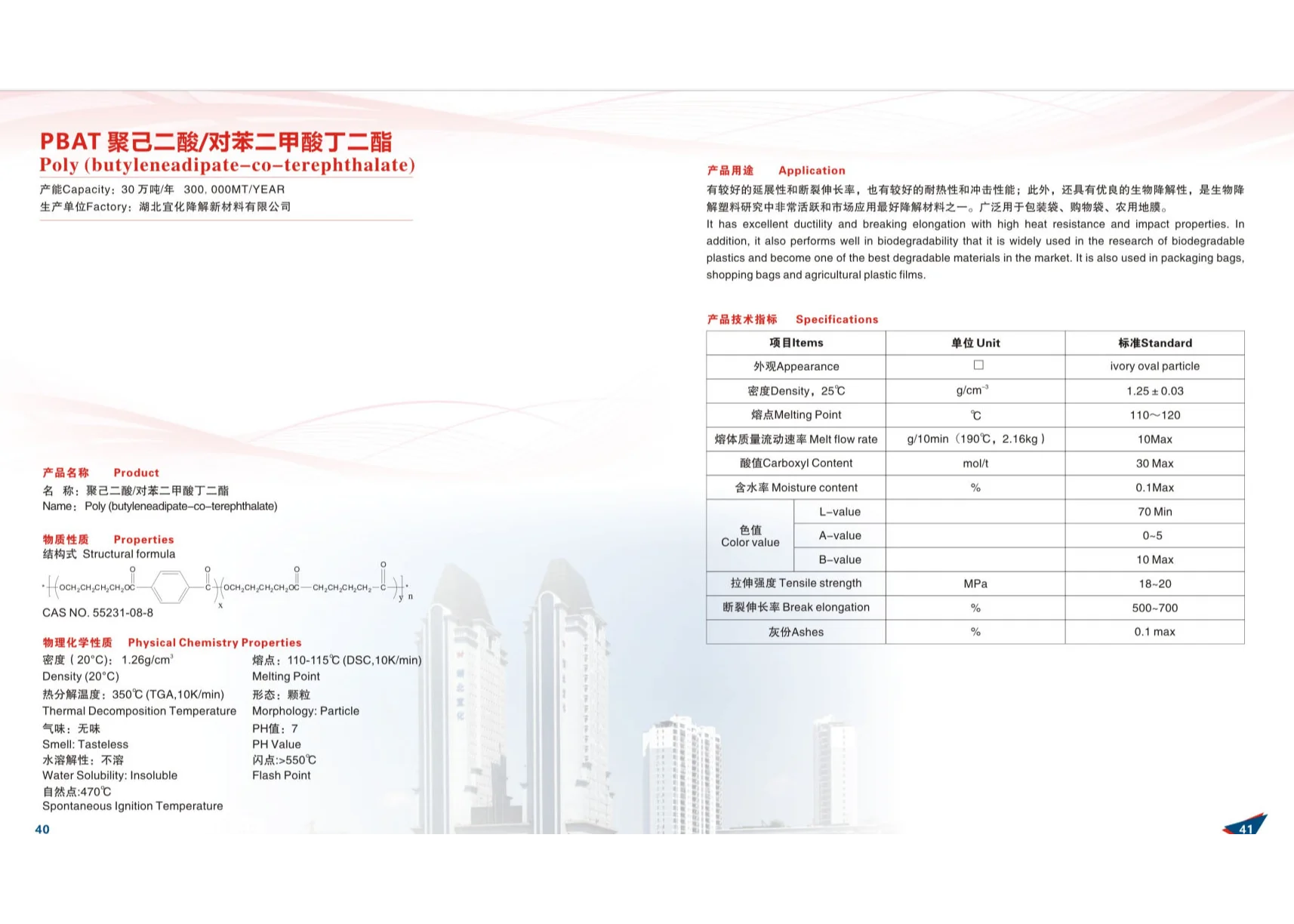
PBAT (polybutylene adipate terephthalate, more precisely poly(butylene adipate-co-terephthalate)) is a biodegradable, flexible copolyester widely used in compostable films, bags, and blended packaging materials. It is valued in the plastics industry because it combines LDPE-like toughness and processability with biodegradability under controlled composting conditions, making it a major material in the transition from conventional flexible plastics to compostable alternatives.
PBAT is typically produced from 1,4-butanediol, adipic acid, and terephthalic acid or dimethyl terephthalate through a polycondensation process, and its properties can be tuned by adjusting the balance between the flexible adipate segments and the more rigid terephthalate segments. In commercial practice, PBAT is often used as a toughening and flexibility component in blends with polylactic acid (PLA) or starch-based materials, where it helps overcome brittleness and improves film performance.
Historically, PBAT emerged as part of the broader development of aliphatic-aromatic biodegradable polyesters designed to bridge the gap between performance and end-of-life requirements. Its industrial relevance has increased sharply in packaging and agricultural mulch films, and recent research has focused on improving strength, barrier performance, and chemical recycling pathways while reducing reliance on fossil-derived feedstocks.
At the same time, PBAT sits at the center of sustainability debates. It is biodegradable, but usually not a substitute for conventional plastics in all environments; its preferred disposal route is composting, and its climate and circularity benefits depend strongly on feedstock choice, process energy, and collection infrastructure. Future development is therefore focused on bio-based monomers, lower-carbon synthesis routes, and closed-loop systems that can recover monomers or integrate PBAT into broader circular economy models.
History and Development
PBAT was developed as part of the evolution of biodegradable polyester chemistry, where materials were engineered to retain useful mechanical properties while enabling biological breakdown under composting conditions. Its design reflects a deliberate compromise: aromatic terephthalate units increase strength and thermal resistance, while aliphatic adipate units increase flexibility and biodegradation rate.
Commercial uptake accelerated as compostable packaging, food-service ware, and agricultural films gained regulatory and market support. PBAT became especially important as a blend partner for PLA and starch, because those polymers often exhibit brittleness or difficult processing behavior on their own. Recent literature describes PBAT as one of the most widely produced biodegradable polymers globally, underscoring its transition from specialty material to industrial commodity in selected end-use segments.
Chemical Structure and Key Properties (Technical Overview)
PBAT is a random copolyester built from alternating ester linkages derived from adipic acid and terephthalic acid with 1,4-butanediol. Its hybrid structure gives it a balance of softness, toughness, and thermal stability that is unusual among biodegradable polymers.
| Property | Typical character |
|---|---|
| Polymer type | Biodegradable aliphatic-aromatic copolyester |
| Main monomers | 1,4-butanediol, adipic acid, terephthalic acid |
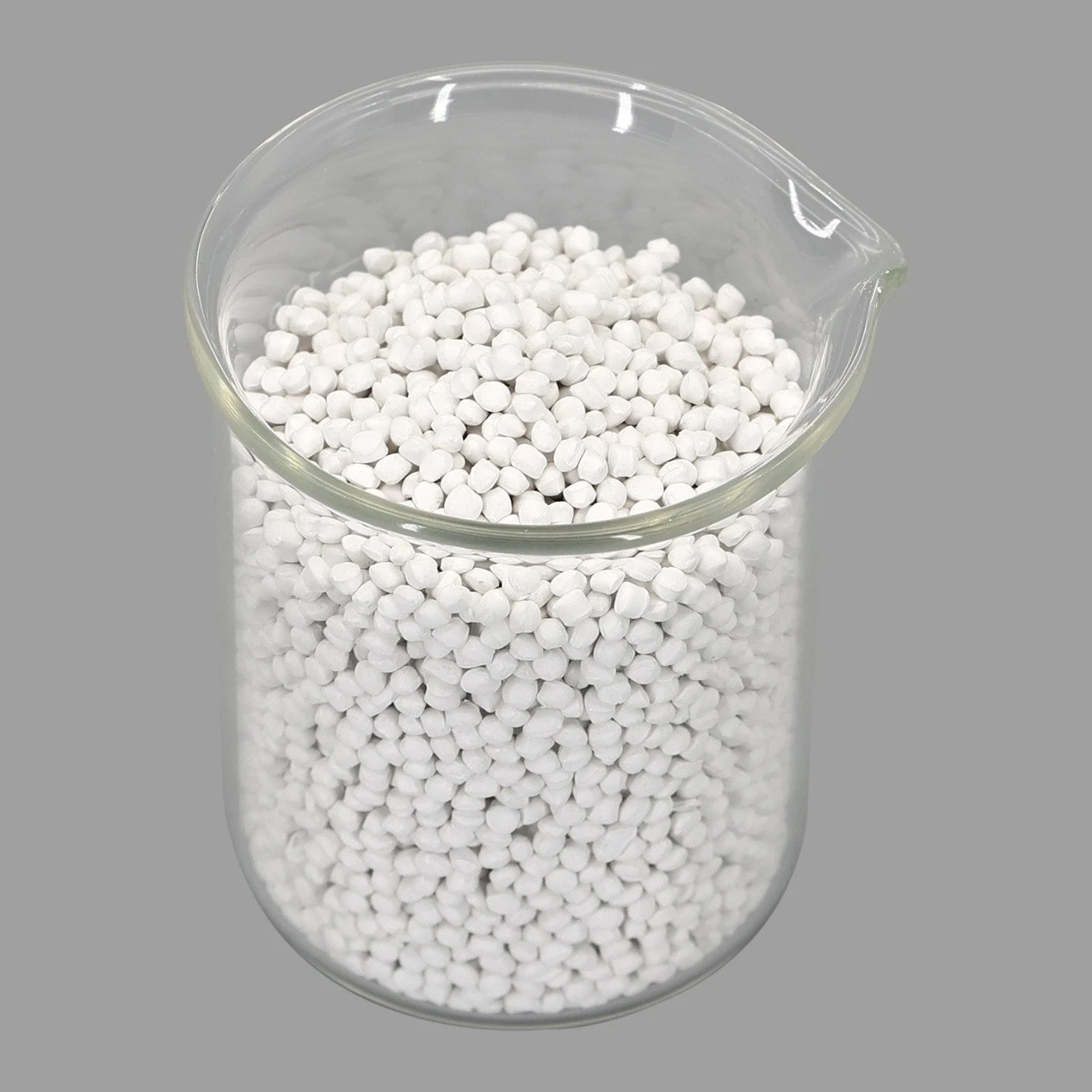
| Physical form | Thermoplastic resin, usually pellets |
| Key performance trait | High elongation, good tear resistance, film-forming ability |
| Typical melt temperature | About 110–120 °C |
| Typical role | Flexible films, compostable blends, mulch films |
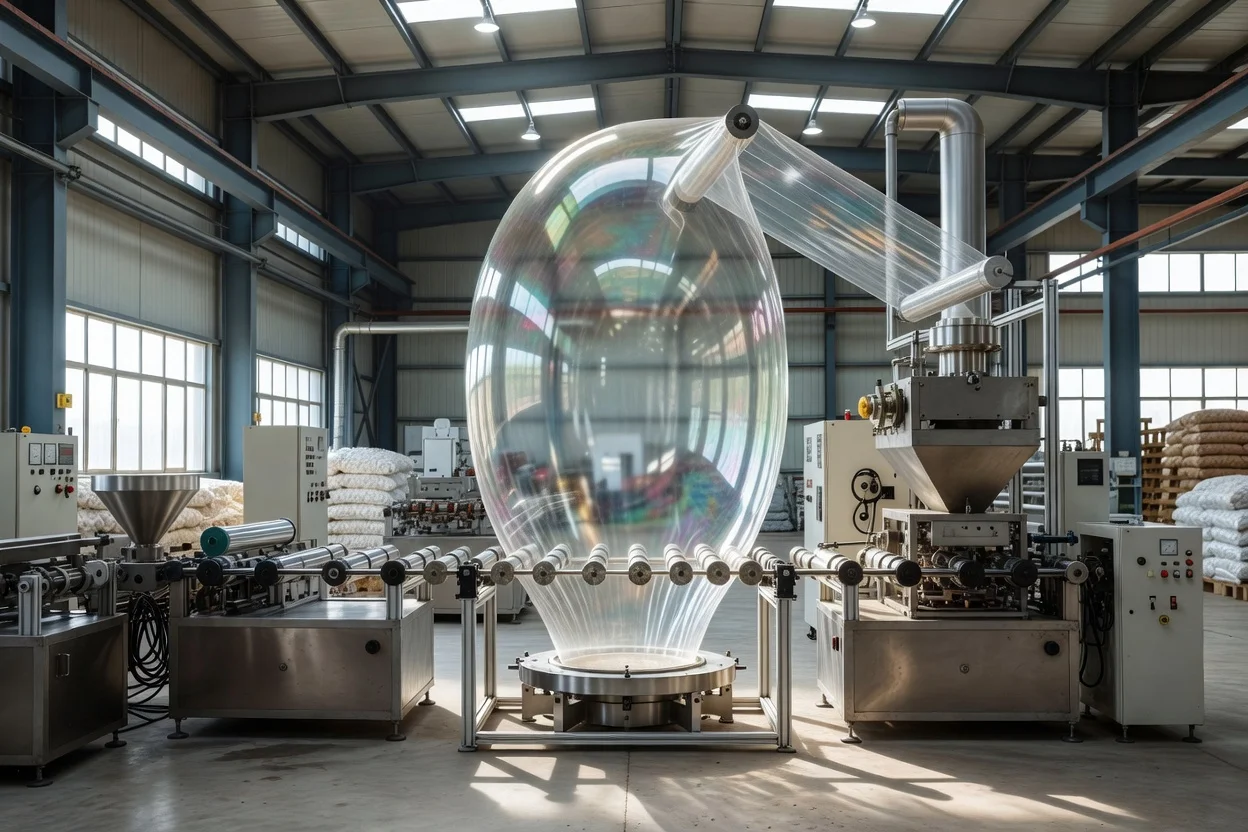
PBAT’s main advantages are its high elongation at break, good tear resistance, and excellent film extrusion behavior, which together make it attractive for blown film applications. Its mechanical properties are often described as similar to LDPE, particularly in flexibility and toughness.
Real limitations are important for practical use:
- Low oxygen barrier → caused by its relatively open, flexible polyester structure → workaround: use multilayer structures, barrier coatings, or blend with higher-barrier polymers.
- High water-vapor permeability → caused by low crystallinity and flexible chain mobility → workaround: use blending, thicker gauges, or barrier additives in packaging films.
- Lower stiffness than many engineering plastics → caused by the predominance of flexible aliphatic segments → workaround: reinforce with fillers, fibers, or blend with stiffer biopolymers.
- Biodegradation is condition-dependent → caused by the need for microbial activity, heat, moisture, and oxygen in composting systems → workaround: direct applications to certified composting streams rather than open-environment use.
Mechanistically, the adipate-rich segments accelerate hydrolysis and microbial attack, while terephthalate units help preserve tensile integrity long enough for processing and service. This tunability is central to PBAT’s commercial value.
Production Processes and Raw Feedstocks
PBAT is industrially produced by polycondensation using petrochemical or increasingly bio-based monomers. The conventional route uses:
- 1,4-butanediol (BDO) as the diol component
- Adipic acid as the flexible aliphatic diacid component
- Terephthalic acid (PTA) or dimethyl terephthalate (DMT) as the aromatic diacid component
A typical manufacturing route involves esterification or transesterification followed by polycondensation under reduced pressure, a process similar to standard polyester production technology. This industrial compatibility is one reason PBAT scaled relatively quickly compared with some other biodegradable polymers.
Raw feedstock economics matter significantly. PBAT remains largely fossil-based today, though bio-based BDO, bio-based succinic routes, and renewable aromatic intermediates are under active investigation. These pathways could reduce life-cycle emissions, but they must still meet requirements for monomer purity, cost, and large-scale supply reliability.
Where relevant, global industrial activity has been concentrated in Asia, especially China, where capacity growth has been linked to compostable packaging demand and agricultural film applications. Large-scale market interest also reflects compatibility with existing polyester production assets, which lowers barrier to entry for established resin producers.
Applications and End-Use Markets
PBAT is used primarily in flexible, compostable, and blend-based applications. Its best-fit markets are those where elasticity, tear resistance, and film processability matter more than high-temperature resistance or strong gas barrier performance.
| End-use sector | Typical PBAT grade/use | Processing route | Why PBAT fits |
|---|---|---|---|
| Flexible packaging | Film grades, often blended with PLA or starch | Blown film, cast film | Toughness, sealability, compostability |
| Compostable bags | High-elongation film grades | Blown film | Tear resistance and flexibility |
| Agricultural mulch films | Film grades with controlled degradation | Blown film | Soil incorporation after use |
| Food service items | Rigidified blends or coated materials | Thermoforming, extrusion | Compostability and good handling |
| Hygiene and refuse products | Flexible films | Film extrusion | Softness and durability |
| Industrial and consumer sacks | Blend formulations | Blown film | Easy processing and ductility |
| Biomedical and specialty uses | Specialty grades or composites | Extrusion, molding | Biodegradation and flexibility |
A poor-fit use is high-barrier packaging for oxygen-sensitive foods, because PBAT on its own does not provide strong gas barrier performance. In such cases, multilayer design or alternate materials are required.
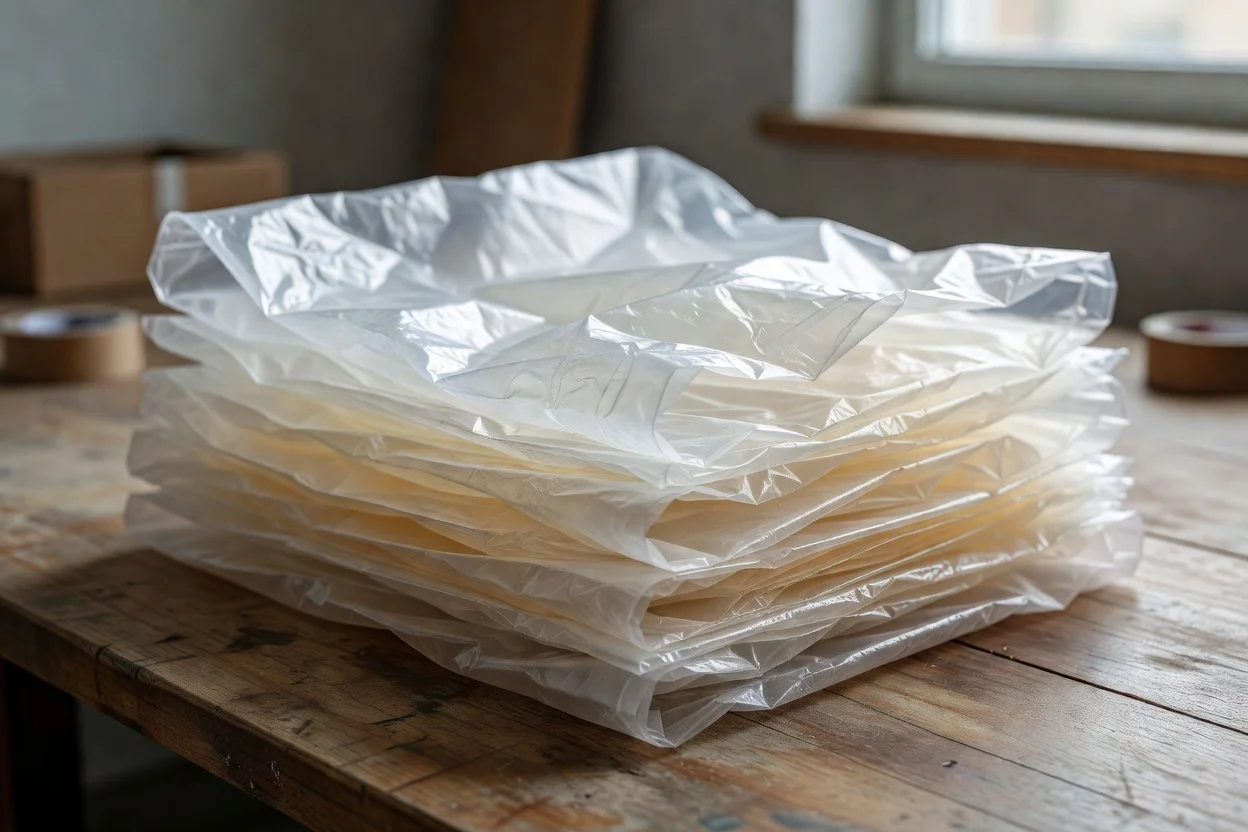
The strongest commercial application remains flexible films, especially compostable shopping bags, produce bags, refuse bags, and mulch films. PBAT is also used as a toughening modifier in PLA/starch blends, where it improves impact resistance and reduces brittleness. In practice, that role may be more economically important than using neat PBAT by itself.
Typical formulation examples include:
- PLA/PBAT blends at roughly 60/40 or 70/30 ratios in flexible film systems; PBAT improves ductility by interrupting brittle PLA crystallization and absorbing strain.
- Starch/PBAT blends in compostable carrier bags; PBAT functions as the continuous flexible phase, while starch lowers cost and increases bio-content.
Environmental and Sustainability Aspects
PBAT is often described as biodegradable and sometimes compostable, but those terms require careful qualification. Its biodegradation is typically demonstrated under industrial composting conditions, where elevated temperature, moisture, oxygen, and microbial activity accelerate hydrolysis and mineralization.
Its environmental profile has several distinct dimensions:
- End-of-life: PBAT can biodegrade into carbon dioxide, water, and biomass under appropriate composting conditions.
- Recyclability: mechanical recycling is possible in principle, but contamination of conventional recycling streams is a major concern because PBAT can interfere with the quality and sorting of PE and PET streams.
- Bio-based alternatives: bio-based PBAT variants are under development, but many commercial grades still rely on fossil-derived monomers.
- Carbon footprint: life-cycle impact depends heavily on monomer sourcing, process energy, transport, and whether the material is actually collected for composting rather than discarded in mixed waste.
A central sustainability issue is that biodegradable does not mean degradable everywhere. PBAT is not intended to disappear quickly in marine or open-soil environments, and the environmental benefit is greatest when the material is used in applications that are realistically collected for composting, such as food-soiled bags, compost liners, and mulch films with controlled end-of-life pathways.
PBAT also has strategic value in reducing contamination from food-soiled flexible packaging that is difficult to recycle mechanically. In these cases, compostability can be a practical waste-management advantage even when the resin itself is fossil-derived.
Economic and Global Market Impact
PBAT has become one of the most commercially important biodegradable polyesters because it serves a large addressable market in films and bags. Demand growth has been driven by regulation on single-use plastics, retailer commitments, compostable packaging programs, and the agricultural sector’s interest in mulch films that can be tilled into soil.
The market is shaped by three factors:
- Feedstock pricing, especially for BDO, adipic acid, and PTA
- Competition with PLA, PBS, and starch-based blends
- Policy and certification, especially compostability standards and procurement rules
Leading capacity has been concentrated among producers in China and other Asian markets, reflecting strong domestic demand and faster buildout of biodegradable resin infrastructure. Global chemical and packaging companies continue to invest in PBAT-compatible compounding and film conversion, because the material integrates relatively well with existing flexible-packaging equipment.
PBAT also benefits from being a platform material rather than a standalone resin: its value rises when used in formulations, where compounders tailor stiffness, seal strength, and compostability to specific applications.
Current Challenges and Innovations
The main technical challenge for PBAT is to improve performance without undermining its compostability. Key areas of innovation include:
- Strength enhancement through nanofillers, fiber reinforcement, and hydrogen-bonding additives.
- Barrier improvement for food packaging, especially oxygen and moisture control.
- Bio-based monomers to reduce fossil dependence and improve carbon footprint.
- Chemical recycling and monomer recovery, which could complement composting and reduce waste losses.
- Blend compatibility with PLA, PBS, and starch for better mechanical and processing balance.
A practical formulation example is the use of chain extenders or reactive compatibilizers at low loadings, often below a few percent, to increase melt strength in film extrusion and reduce tear failure during processing. These additives work by linking chains or improving interfacial adhesion in blends, which raises extensional viscosity and stabilizes the bubble in blown-film operations.
Another innovation direction is bio-based multiple hydrogen-bonding systems, which can substantially improve toughness while preserving biodegradability in designed formulations. This is important because PBAT’s commercial role increasingly depends on balancing compostability with the performance demanded by converters and brand owners.
Future Outlook
PBAT is likely to remain a core material in compostable flexible packaging and agricultural films, especially where collection and controlled biodegradation are feasible. Its future will probably depend less on neat resin growth and more on its role in engineered blends, multilayer structures, and circular systems.
The most consequential developments to watch are:
- Lower-carbon feedstocks, especially bio-based BDO and acid intermediates
- Improved barrier and mechanical performance in compostable film systems
- Better end-of-life infrastructure, including certified composting and sorting
- Closed-loop polymer recovery, potentially via chemical recycling or monomer reclamation
In strategic terms, PBAT is well positioned as a bridge material: it is not a universal replacement for conventional plastics, but it is one of the most important enablers of high-performance compostable films currently available.
References
- •
Latest technical innovations... (2024, October 28). https://eureka.patsnap.com/blog/material-tech-resources/what-is-pbat/Link
- •
Polybutylene adipate terephthalate. (2007, October 17). Wikipedia. https://en.wikipedia.org/wiki/Polybutylene_adipate_terephthalateLink
- •
Poly (butylene adipate-co-terephthalate) (PBAT). (2024, December 1). https://onlinelibrary.wiley.com/doi/full/10.1002/mame.202400179Link
- •
A study on the synthesis, modification and current market status of PBAT. (n.d.). https://www.e3s-conferences.org/articles/e3sconf/pdf/2023/22/e3sconf_isesce2023_04007.pdfLink
- •
Recent advances in poly(butylene adipate-co-terephthalate) (PBAT). (2026, July 28). https://www.frontiersin.org/journals/chemistry/articles/10.3389/fchem.2026.1862076/fullLink
- •
PBAT is biodegradable but what about the toxicity of its degradation intermediates? (2024, July 18). PMC. https://pmc.ncbi.nlm.nih.gov/articles/PMC11258070/Link
- •
PBAT based composites. (n.d.). https://2024.sci-hub.se/6865/5ed1b53796b26e4a53e53181caeddf76/ferreira2017.pdfLink
- •
Formulations, processing, and application of poly(butylene adipate-co-terephthalate) (PBAT). (2025, May 23). PMC. https://pmc.ncbi.nlm.nih.gov/articles/PMC12158065/Link
- •
Recent advances in PBAT (nano) composite materials for food packaging applications. (2025, July 20). https://onlinelibrary.wiley.com/doi/10.1002/app.57163Link
- •
PBAT: Flexible biodegradable plastic for packaging. (2024, October 28). https://eureka.patsnap.com/blog/what-is-pbat/Link
- •
Polybutylene adipate terephthalate (PBAT): Flexible and compostable. (2026, July 8). https://www.vegeplast.com/en/blog/pbat-polybutylene-adipate-terephtalate-biodegradableLink
- •
What is PBAT (polybutylene adipate terephthalate)? (2025, November 14). https://www.usmasterbatch.com/news/what-is-pbat-polybutylene-adipate-terephthalate.htmlLink
- •
The biodegradable polymer PBAT is hitting the big time. (2021, September 19). C&EN. https://cen.acs.org/business/biobased-chemicals/biodegradable-polymer-PBAT-hitting-big/99/i34Link
- •
Poly(butylenadipat-co-terephthalat). (2016, April 30). Wikipedia. https://de.wikipedia.org/wiki/Poly(butylenadipat-co-terephthalat)Link
- •
WO2017152597A1 - Pbat resin composition. (2016, August 30). Google Patents. https://patents.google.com/patent/WO2017152597A1/enLink
- •
Biodegradable poly(butylene adipate-co-terephthalate) (PBAT). (2023, August 1). https://pure.psu.edu/en/publications/biodegradable-polybutylene-adipate-co-terephthalate-pbat/Link
- •
Polybutyrate - An overview. (n.d.). ScienceDirect. https://www.sciencedirect.com/topics/materials-science/polybutyrateLink
- •
What is PBAT plastic? Pros and cons of PBAT. (2023, February 9). EuroPlas. https://europlas.com.vn/en-US/blog-1/what-is-pbat-plastic-pros-and-cons-of-pbatLink
- •
Complete biodegradable plastics compared: PHA, PHB, PBAT, PLA, PBS, PCL and TPS. (2025, July 2). https://specialty-polymer.com/biodegradable-compared-pha-phb-pbat-pla-pbs-pcl-and-tps/Link
- •
What is PBAT plastic? Properties, uses & benefits guide. (2026, April 24). https://salesplastics.com/what-is-pbat-plastic/Link
- •
Microorganisms and enzymes involved in polybutylene adipate-co-terephthalate degradation. (2025, October 7). PMC. https://pmc.ncbi.nlm.nih.gov/articles/PMC12504347/Link
- •
Techno-economic analysis and life cycle assessment of the production of PBAT. (n.d.). OSTI. https://www.osti.gov/servlets/purl/2406960Link
- •
Closing the loop for poly(butylene-adipate-co-terephthalate) (PBAT). (2024, April 2). RSC. https://pubs.rsc.org/en/content/articlehtml/2024/gc/d3gc04728hLink
- •
Recent progress in PBAT-based films and food packaging applications. (2023, August 1). PubMed. https://pubmed.ncbi.nlm.nih.gov/37897823/Link
- •
Based biodegradable polymer during compost storage. (2023, March 24). PMC. https://pmc.ncbi.nlm.nih.gov/articles/PMC10097148/Link
- •
The biodegradable polymer PBAT is hitting the big time. (2021, September 19). C&EN. https://cen.acs.org/business/biobased-hemicals/biodegradable-polymer-PBAT-hitting-big/99/i34Link
- •
Towards sustainable production of polybutylene adipate terephthalate (PBAT). (2024, September 4). NIH. https://pmc.ncbi.nlm.nih.gov/articles/PMC11632578/Link
- •
Highly enhanced mechanical strength and toughness of biodegradable PBAT plastics through a biobased multiple hydrogen bonding strategy. (2024, July 22). ACS. https://pubs.acs.org/doi/10.1021/acs.macromol.4c01153Link
- •
Obtention and characterization of bio-based composite PBAT/PLA. (2026, March 9). PMC. https://pmc.ncbi.nlm.nih.gov/articles/PMC12986860/Link
- •
Understanding PBAT: A key component in compostable film. (2024, August 13). https://www.ecopackables.com/blogs/news/understanding-pbat-a-key-component-in-compostable-filmLink
- •
Properties of biodegradable films based on poly(butylene succinate) and poly(butylene adipate-co-terephthalate). (2020, October 10). PMC. https://pmc.ncbi.nlm.nih.gov/articles/PMC7600530/Link
- •
From plastic to PBAT packaging: How retail giants like Walmart... (2025, December 23). https://naturepoly.com/pbat-packaging-retails-shift-compostable-packaging/Link
- •
Properties and degradability of poly(butylene adipate-co-terephthalate) (PBAT). (2022, January 26). PMC. https://pmc.ncbi.nlm.nih.gov/articles/PMC8838338/Link
- •
An overview on synthesis, properties and applications of poly(butylene adipate-co-terephthalate). (n.d.). ScienceDirect. https://www.sciencedirect.com/science/article/pii/S2542504820300014Link