
Introduction
Biobased additives are functional ingredients derived wholly or partly from renewable biological resources and used to modify the processing, performance, appearance, stability, or end-of-life behavior of plastics and related materials. In the plastics value chain, they increasingly serve as drop-in substitutes for fossil-based additives or as new-function ingredients that enable lower-carbon formulations, improved compatibility with biopolymers, and, in some cases, additional functionalities such as antimicrobial, UV-protective, antistatic, or flame-retardant performance.
The category is broad rather than a single chemical class. It includes biobased plasticizers, lubricants, stabilizers, surfactants, flame retardants, antimicrobial agents, antistatic agents, antifogging agents, and specialty rheology modifiers, among others. Commercial and research activity has expanded rapidly in packaging, coatings, adhesives, lubricants, personal care, construction, automotive, and medical-related applications, with packaging commonly cited as the largest demand segment. Sustainability is a central driver, but performance, cost, certification, and end-of-life compatibility remain decisive in adoption.
History and Development
The development of biobased additives has closely followed the broader evolution of bio-based chemistry and sustainable materials. Early commercialization focused on relatively mature substitution pathways, especially vegetable-oil-derived plasticizers and lubricants, because these chemistries could fit existing manufacturing lines with limited process changes.
Over time, research moved beyond simple renewable sourcing toward functional design. Recent work has emphasized additives derived from lignin, phytic acid, cellulose, starch, chitosan, plant oils, and secondary plant substances, with some formulations combining multiple functions, such as flame retardancy plus antioxidant stabilization or mechanical reinforcement. This shift is important because it moves biobased additives from a sustainability label into a performance platform.
Industrial suppliers have also introduced higher-biogenic-content or partially renewable additive lines in coatings and polymer systems. BASF, for example, reported a transition of its Rheovis range to bio-based ethyl acrylate feedstock, with up to 35% biogenic content and up to 30% lower product carbon footprint versus fossil-based versions. Such launches illustrate a broader pattern: the market is increasingly using renewable carbon not only to replace petrochemical content, but also to support product-carbon-footprint reduction targets.
Chemical Structure and Key Properties
Biobased additives are defined more by origin and function than by one molecular structure. They may be small molecules, oligomers, polymeric modifiers, or bio-derived processing aids. Common feedstocks include vegetable oils, animal fats, starch, cellulose, lignin, castor oil derivatives, and other biomass fractions.
Major functional classes
| Class | Typical role in plastics | Common bio-based sources |
|---|---|---|
| Plasticizers | Increase flexibility and lower glass-transition behavior | Vegetable oils, citrates, epoxidized oils, bio-derived esters |
| Lubricants and processing aids | Reduce friction, improve flow, lower melt pressure | Vegetable oils, waxes, fatty acid derivatives |
| Stabilizers | Improve thermal and oxidative resistance | Lignin derivatives, plant polyphenols, antioxidant-rich extracts |
| Flame retardants | Reduce flammability or smoke formation | Phosphorylated lignin, phytic acid derivatives, bio-based phosphorus systems |
| Antimicrobial agents | Suppress microbial growth | Chitosan, plant extracts, secondary plant substances |
| Antistatic agents | Reduce surface charge accumulation | Bio-derived surfactant-like molecules, ionic bio-derivatives |
A key technical advantage is that many biobased additives are chemically compatible with conventional polymer processing, so they can often be introduced through standard compounding, masterbatching, extrusion, coating, or adhesive formulation routes. This compatibility reduces adoption barriers for converters.
Representative limitations and workarounds
- Volatility or migration → smaller bio-based plasticizer molecules can migrate out of the matrix or be lost during processing → use higher-molecular-weight esters, polymeric plasticizers, reactive plasticizers, or partial grafting to reduce mobility.
- Oxidative instability → unsaturated bio-derived oils can oxidize during storage or service → epoxidation, hydrogenation, antioxidant co-addition, or encapsulation is used to improve stability.
- Thermal sensitivity → some natural compounds degrade at compounding temperatures → lower processing temperatures, reactive compounding, or chemically modified derivatives are used to widen the processing window.
- Performance trade-off versus mineral fillers → some bio-based fillers or modifiers may underperform in stiffness, barrier, or heat resistance versus mined minerals → hybrid formulations, surface treatment, or nanoscale reinforcement are used to recover properties.
For plastics in particular, biobased additives often function as performance-balancing tools: they can improve flexibility, processing, or sustainability metrics, but formulators still need to manage durability, odor, odor carryover, and long-term stability.
Production Processes and Raw Feedstocks
Biobased additives are produced through a mix of agricultural extraction, biorefinery processing, fermentation, enzymatic conversion, and green-chemistry modification.
Main production routes
- Direct extraction from biomass
- Chemical modification of natural oils, sugars, lignin, or cellulose
- Fermentation-based synthesis using microorganisms
- Biorefinery co-production from side streams or residues
- Surface functionalization to improve dispersion, reactivity, or stability
Common raw feedstocks
- Vegetable oils such as soybean, rapeseed, sunflower, palm, and castor oils
- Lignin from pulp and paper or biorefinery streams
- Cellulose and starch from wood and agricultural crops
- Chitosan from shellfish or fungal biomass
- Phytic acid and polyphenols from plant-derived sources
- Secondary plant substances used in functional additives for stabilization or protection.
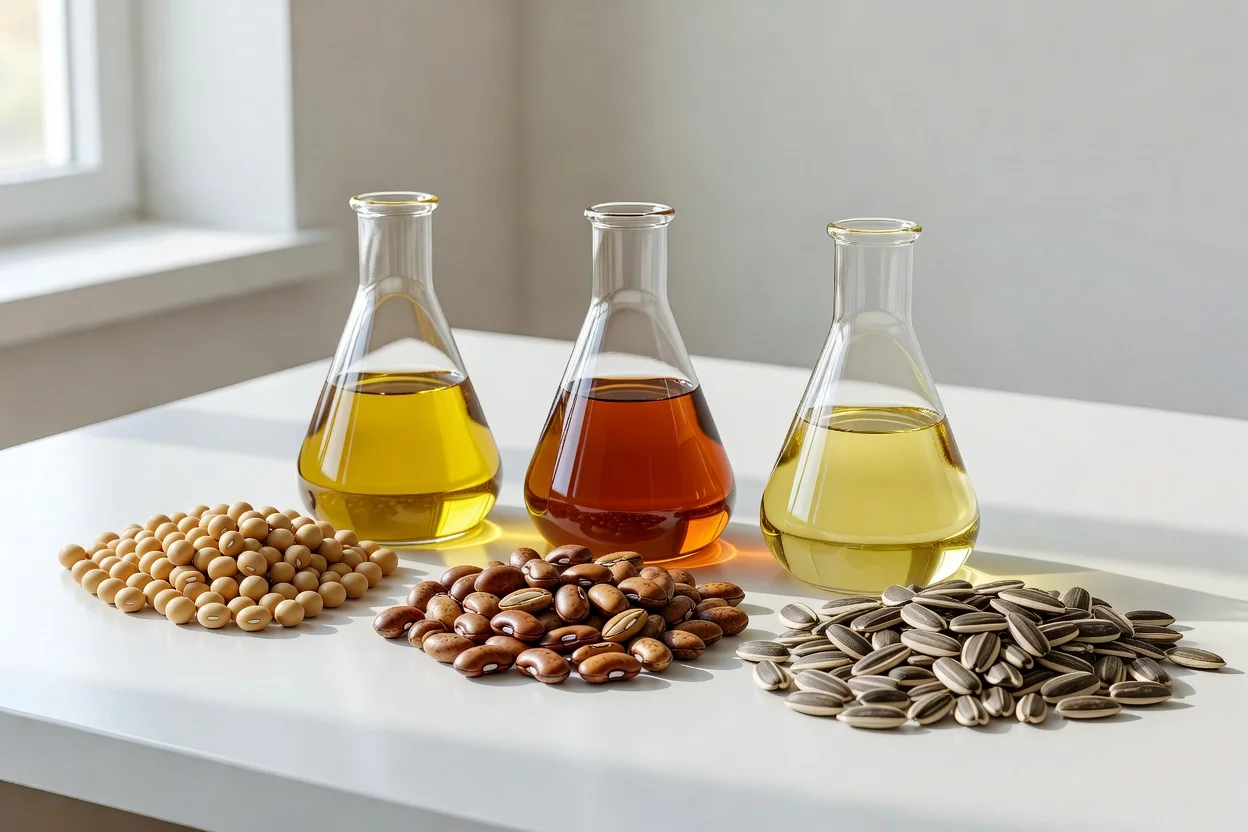
Castor oil is especially important in specialized bio-based polymer chemistry because it supports the production of monomers and intermediates for polyamide 11 and related materials, illustrating how additive and polymer feedstock innovation often overlap in the bioeconomy.
Applications and End-Use Markets
Biobased additives are used wherever formulators need renewable content, lower toxicity, or new functionality without redesigning the entire polymer system.
| End-use sector | Usual biobased additive types | Usual process or product form |
|---|---|---|
| Packaging | Antimicrobials, antioxidants, antifogging agents, slip/anti-block aids, plasticizers | Films, coatings, laminates, paperboard coatings |
| Coatings and paints | Rheology modifiers, wetting agents, UV-protection additives, biocides | Waterborne coatings, varnishes, paper coatings |
| Adhesives and sealants | Plasticizers, tackifiers, rheology modifiers | PSA systems, hot-melt and waterborne adhesives |
| Lubricants and greases | Antiwear agents, antioxidants, friction modifiers | Industrial lubricants, marine and agricultural lubricants |
| Plastics and bioplastics | Plasticizers, lubricants, stabilizers, antistatic agents | Compounded pellets, masterbatch, extrusion |
| Construction | Flame retardants, plasticizers, coatings additives | Flooring, insulation, sealants, building products |
| Personal care and household | Surfactants, rheology modifiers, antimicrobial ingredients | Emulsions, creams, cleaning products |
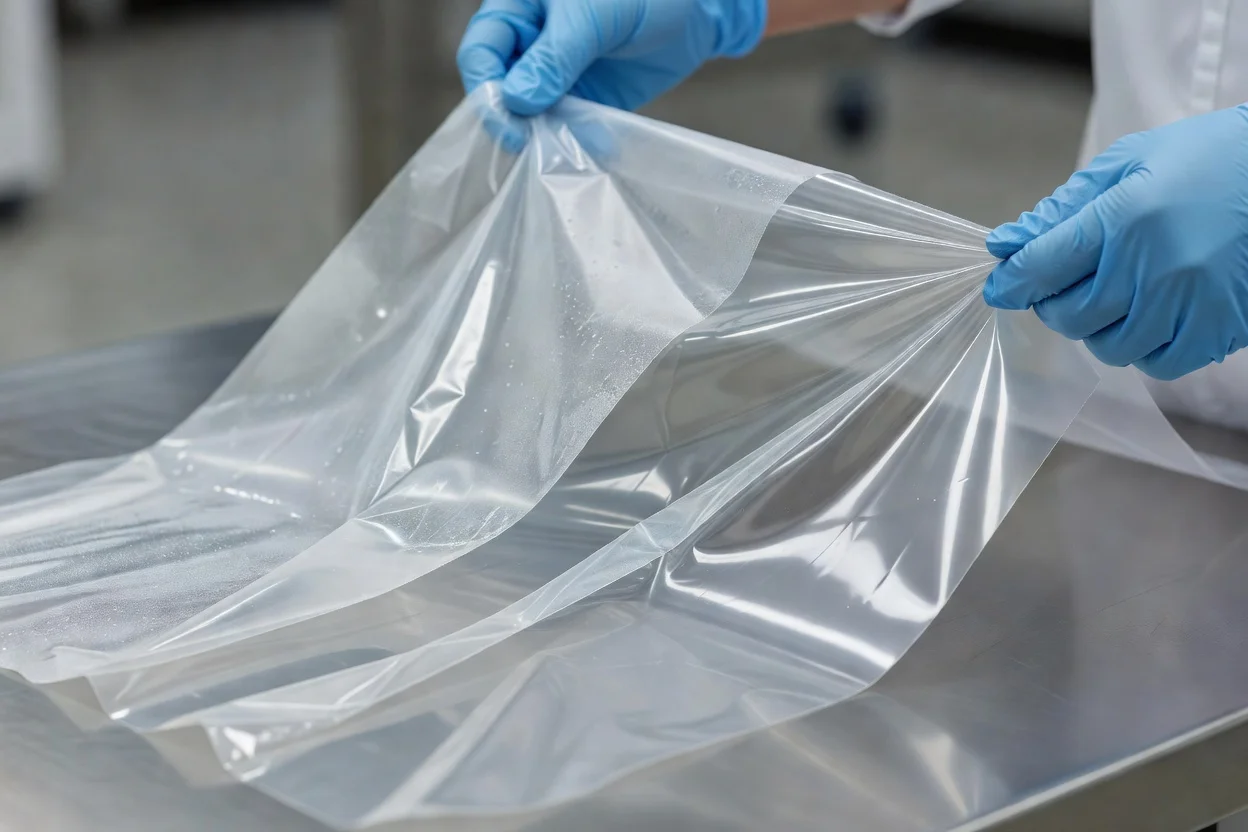
Packaging remains especially important because additive selection can directly affect shelf life, printability, moisture response, and food-contact compliance. In biodegradable packaging, natural polysaccharides such as chitosan, starch, and alginate are valued for film formation, moisture management, and antimicrobial activity, although barrier and mechanical performance still require careful formulation.
In plastics compounding, biobased additives are widely used in flexible materials, including biopolymer films and PVC-type systems, where plasticization, lubrication, and stabilization are critical. Common examples include:
- Bio-based plasticizers in flexible packaging, wire and cable jacketing, flooring, toys, and medical or consumer products.
- Bio-based slip, anti-block, anti-scratch, and antistatic additives for biopolymer processing and film handling.
- Bio-based rheology modifiers for coatings and adhesives, including renewable-content acrylic systems.
One poor-fit use is high-temperature engineering plastics that require very high thermal stability and extremely low additive volatility. In those applications, some natural or lightly modified biobased additives may need additional chemical upgrading before they can match conventional fossil-based specialties.
Environmental and Sustainability Aspects
The sustainability case for biobased additives rests on renewable sourcing, potential greenhouse-gas reduction, and the possibility of improved health and safety profiles compared with some legacy fossil-based or hazardous additives.
Key environmental advantages
- Reduced dependence on fossil feedstocks
- Potential lower product carbon footprint
- Compatibility with bio-based and biodegradable polymer systems
- Opportunity to use renewable side streams and residues
- Potentially lower toxicity in some formulations, depending on chemistry and purity.
At the same time, “biobased” does not automatically mean “low impact.” Land use, agricultural inputs, transport, purification energy, and end-of-life behavior all matter. A renewable additive may still have a significant footprint if it is derived from high-input feedstocks or requires intensive processing. In addition, some biobased additives are renewable but not biodegradable, and some biodegradable additives may not be fully compatible with recycling streams.
Recyclability and circularity
Biobased additives can support circularity when they are designed to:
- maintain polymer performance during multiple processing cycles
- avoid contaminating recycling streams
- enable lower-temperature processing
- replace hazardous ingredients that complicate recycling or disposal.
However, they can also create challenges when they migrate, volatilize, or alter melt behavior in ways that reduce recyclate quality. For this reason, the strongest circular-economy case is usually made for drop-in renewable additives or additives that are compatible with the intended recycling route.
Economic and Global Market Impact
Commercial interest in biobased additives is rising because they address multiple purchasing criteria at once: sustainability targets, regulatory pressure, consumer preference, and product differentiation.
Recent industry analyses indicate that the global biobased additives market is expanding at a solid mid-single-digit to high-single-digit growth rate, with one 2026 market estimate placing it at USD 1.8 billion in 2025 and forecasting USD 3.7 billion by 2035. Packaging is frequently identified as the largest demand pool, while automotive, construction, lubricants, and coatings are important growth sectors.
Market dynamics
- Packaging is the main volume driver because it combines high polymer use with strong demand for renewable-content solutions.
- Coatings and adhesives are attractive because renewable rheology modifiers and functional additives can be inserted into existing formulations with limited capital expenditure.
- Lubricants are important because leakage and disposal concerns make renewable and biodegradable additive packages commercially meaningful.
- Medical, hygiene, and consumer goods favor additives with cleaner labels or lower toxicological concern, provided regulatory requirements are met.
Industry leadership
Leading suppliers and innovators include:
- BASF, which has commercialized renewable-content additive and coating ingredients and reported up to 35% biogenic content in its Rheovis transition.
- Fraunhofer-linked research programs, which have highlighted bio-based polymers and additives as a strategic area for industrial development.
- Cargill, which has publicized bio-based additive packages for biopolymer performance enhancement, particularly in film and packaging contexts.
- Clariant, which has emphasized bio-based additives for packaging, electrical and electronic equipment, hygiene, consumer goods, and automotive applications.
- Materia Nova and other applied research centers, which are developing multifunctional bio-additives for coatings, antimicrobial performance, and flame retardancy.
Current Challenges and Innovations
The central technical challenge is not renewable content alone, but achieving drop-in performance at acceptable cost and consistent quality.
Main challenges
- Price competitiveness versus petrochemical additives
- Feedstock variability due to seasonality and agricultural differences
- Performance parity in thermal stability, barrier control, and long-term durability
- Compatibility with recycling and composting schemes
- Regulatory and certification complexity, especially for food contact, medical, and hygiene applications.
Key innovations
- Multifunctional additives that combine antioxidant, flame-retardant, and reinforcement functions in one molecule or hybrid system.
- Phosphorylated lignin and phytic-acid-based systems for improved flame retardancy and stabilization.
- Bio-based rheology modifiers and thickeners for coatings with reduced fossil content and improved carbon profiles.
- Bio-based additive masterbatches that simplify compounding and handling for converters.
- Nano-enabled bio-additives, including cellulose nanocrystals and lignin-derived carbon structures, for improved mechanical or functional performance in advanced applications.
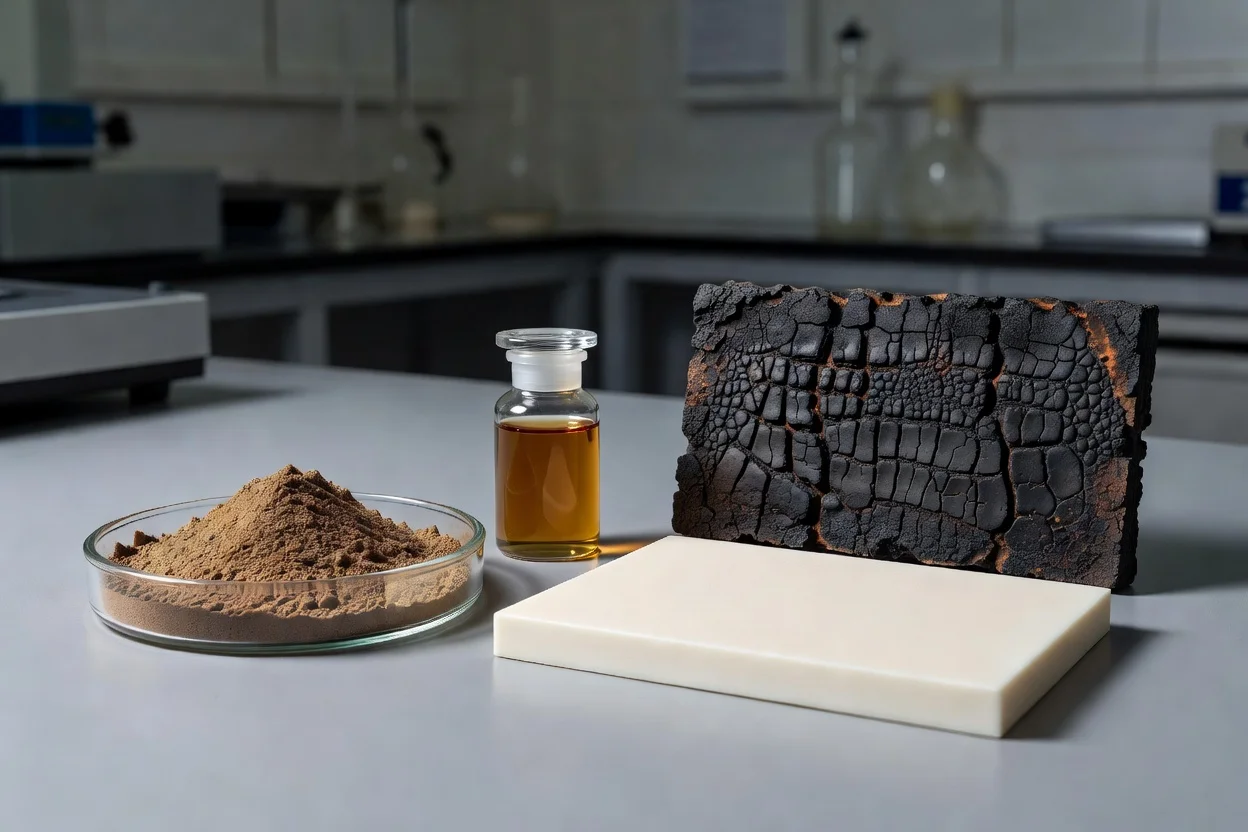
Concrete formulation examples illustrate the direction of travel:
- Phytic-acid-derived flame retardants can be added at relatively low loading levels in biopolymers to improve char formation and reduce heat release, often by promoting phosphate-based dehydration and protective residue formation.
- Bio-based plasticizers are commonly used in PVC and biodegradable polyester systems to improve flexibility and processability while replacing some fossil-derived plasticizer content.
Future Outlook
The future of biobased additives is likely to be shaped by three converging trends: higher performance, better traceability, and tighter integration with circular-economy design.
Likely directions include:
- Higher-functionality additives that provide multiple benefits in one formulation
- Greater use of residues and side streams rather than food-crop feedstocks
- Certification-driven market segmentation, especially for renewable carbon content and mass balance claims
- Design-for-recycling formulations that preserve value in mechanical and chemical recycling systems
- Expansion into advanced applications such as electronics, biomedical materials, smart packaging, and additive manufacturing.
The most competitive products are likely to be those that deliver measurable carbon-footprint reduction without sacrificing processing robustness or end-use durability. In other words, the market is moving from “bio-based” as a label to bio-based as an engineered performance attribute.
Summary
Biobased additives are a fast-evolving class of renewable functional ingredients used to improve plastics, coatings, lubricants, adhesives, and related materials. Their importance lies in the combination of sustainability potential and technical utility: they can replace fossil-derived additives, enable lower-carbon formulations, and in some cases provide new functions that conventional chemistry does not deliver as efficiently.
Their adoption is strongest where performance requirements align with renewable chemistry, especially in packaging, coatings, lubricants, and flexible plastics. Continued progress will depend on better feedstock systems, more robust multifunctional molecules, and formulations designed from the outset for durability, recyclability, and verified carbon reduction.
References
- •
Table 4. (2026, January 1). https://pmc.ncbi.nlm.nih.gov/articles/PMC12845592/table/polymers-18-00301-t004/Link
- •
Biobased additives from secondary plant substances (SPS). (2026, April 21). https://www.ivv.fraunhofer.de/en/recycling-environment/bio-based-additives.htmlLink
- •
Application of biodegradable polymers in food packaging industry: A comprehensive review. (n.d.). https://doi.org/10.1007/s41783-018-0049-yLink
- •
Functional bio-based additives for sustainable polymers - PMC. (2026, April 22). https://pmc.ncbi.nlm.nih.gov/articles/PMC13108088/Link
- •
Chapter 8_Biobased functional additives.docx - CNR-IRIS. (n.d.). https://iris.cnr.it/retrieve/a0597611-e7ee-4009-b2c1-e23bd4309fe1/Chapter%208_Biobased%20functional%20additives.docxLink
- •
Bio-based additives for thermoplastics. (2019, June 10). https://www.scielo.br/j/po/a/qzhWnLfcg6djwHWGLNKXtjm/Link
- •
Biobased polymer additives competitor insights: Trends and ... (2026, April 2). https://www.marketreportanalytics.com/reports/biobased-polymer-additives-161477Link
- •
Sustainable bio-based functional additives for adhesives and coatings. (n.d.). https://publica-rest.fraunhofer.de/server/api/core/bitstreams/d93e03b5-29a1-466e-8392-4881aec858f6/contentLink
- •
Functional (bio-additives) - Materia Nova - innovation center. (2024, August 1). https://www.materianova.be/en/our-solutions/environmentally-friendly-materials-and-processes/biobased-materials/functional-bio-additives/Link
- •
What is bio-based additives? Uses, how it works & top companies ... (2025, October 5). https://www.linkedin.com/pulse/what-bio-based-additives-uses-how-works-top-companies-zdqmfLink
- •
Recent advances in bio-based functional additives for ... (2025, September 21). https://repository.soilwise-he.eu/cat/collections/metadata:main/items/10.1016/j.pmatsci.2023.101186Link
- •
Additives with biorenewable content - BASF. (2024, December 5). https://www.basf.com/us/en/products/General-Business-Topics/dispersions/Products/biorenewable-contentLink
- •
BASF's Rheovis® range transitions to bio-based ethyl ... (2025, July 15). https://www.basf.com/global/en/media/news-releases/2025/06/p-25-121Link
- •
BIO-BASED ADDITIVES TO IMPROVE THE ... (2023, May 16). https://www.slideshare.net/slideshow/biobased-additives-to-improve-the-performance-processing-of-biopolymers/257855144Link
- •
Biobased food additives: A sustainable choice. (2025, August 4). https://bioeco.alfa-chemistry.com/biobased-food-additives-sustainable-solutions-for-the-future-of-food.htmlLink
- •
Biobased products news review - Alder BioInsights. (n.d.). https://www.alderbioinsights.co.uk/wp-content/uploads/2026/04/Alder_BioInsights_News_Reviews_Biobased_products_April_2026.pdfLink
- •
Recent insights into the research of (bio)active additives for ... (2025, November 26). https://pmc.ncbi.nlm.nih.gov/articles/PMC12693786/Link
- •
Bio-based additives: Expanding the potential and reach of ... (2020, September 21). https://www.clariant.com/en/Corporate/Blog/2020-Blog-Posts/09/Bio-based-additivesLink
- •
Biobased polymers and additives - Fraunhofer-Gesellschaft. (2026, March 27). https://www.igb.fraunhofer.de/en/research/innovative-synthesis-processes/biobased-polymers-and-additives.htmlLink
- •
Biobased additives. (n.d.). https://www.vanhornmetz.com/wp-content/uploads/2023/07/fp-biobased-mar2023-1.pdfLink
- •
Sustainable bio-based functional additives for adhesives ... (n.d.). https://www.sciencedirect.com/science/article/pii/S2949823625000546Link
- •
Media relations. (n.d.). https://www.basf.com/dam/jcr:79201909-3656-44e0-bfdb-3c0e1c12866e/basf/www/global/documents/en/news-and-media/news-releases/2025/06/P121e_BASF_Rheovis_range_transitions_to_bio-based_Ethyl_Acrylate.pdfLink
- •
Utilization of bio-polymeric additives for a sustainable ... (n.d.). https://www.sciencedirect.com/science/article/pii/S2666893921000189Link
- •
The role of bio-based constituents in additive manufacturing ... (2026, January 6). https://pubs.rsc.org/en/content/articlehtml/2026/ma/d5ma00585jLink
- •
Biobased additive advancements in lubricating products. (2020, January 1). https://www.stle.org/files/TLTArchives/2025/01_January/Feature.aspxLink
- •
Biocoatings and additives as promising candidates for ... (2021, April 3). https://www.tandfonline.com/doi/abs/10.1080/17518253.2021.1921286Link
- •
Resin additives - The move towards sustainable bio-based materials. (n.d.). https://heartland.io/sustainability-news/additives-the-move-towards-sustainable-bio-based-materials/Link
- •
Bio-additives - The green wave in the lubricant industry. (2025, July 10). http://vichem.vn/en/bio-additives-the-green-wave-in-the-lubricant-industry/Link
- •
Biobased additives market accelerates with growing demand. (2026, June 10). https://www.openpr.com/news/4545370/biobased-additives-market-accelerates-with-growing-demandLink
- •
What do you know about the bio-based additives industry - ECHEMI.com. (2022, March 17). https://www.echemi.com/cms/538359.htmlLink
- •
Vegetable additives in food packaging polymeric materials. (2019, December 22). https://pmc.ncbi.nlm.nih.gov/articles/PMC7023556/Link
- •
Environmental impact of using bio-based additive ... (2024, October 4). https://lifelinetechnologies.in/environmental-impact-of-using-bio-based-additive-masterbatchLink
- •
Biobased polymers for advanced applications: Towards a ... (n.d.). https://www.sciencedirect.com/science/article/pii/S0079670025000139Link
- •
Eco-friendly additives for biodegradable polyesters. (n.d.). https://www.sciencedirect.com/science/article/pii/S2214993725001630Link
- •
Lubricants: With biobased additives, scientists 'just say no!' to ... (2026, March 23). https://www.sciencedaily.com/releases/2009/10/091002104341.htmLink
- •
Global biobased additives market forecast 2035 | plasticizers. (2026, April 27). https://www.openpr.com/news/4490008/global-biobased-additives-market-forecast-2035-plasticizersLink
- •
The use of bioadditives as plasticizers in recycled polyethylene ... (2026, February 2). https://pmc.ncbi.nlm.nih.gov/articles/PMC12897606/Link
- •
Sustainable functional additives in paperboard packaging. (2024, September 16). https://signicent.com/bio-based-additives-for-paperboard-packaging/Link
- •
Polimer yang dapat terurai secara hayati. (2025, July 18). https://pmc.ncbi.nlm.nih.gov/articles/PMC12298952/Link
- •
Natural food additives: Sustainable development of bio- ... (2022, November 7). https://www.frontiersin.org/research-topics/26576/natural-food-additives-sustainable-development-of-bio-based-molecules/magazineLink