
Introduction
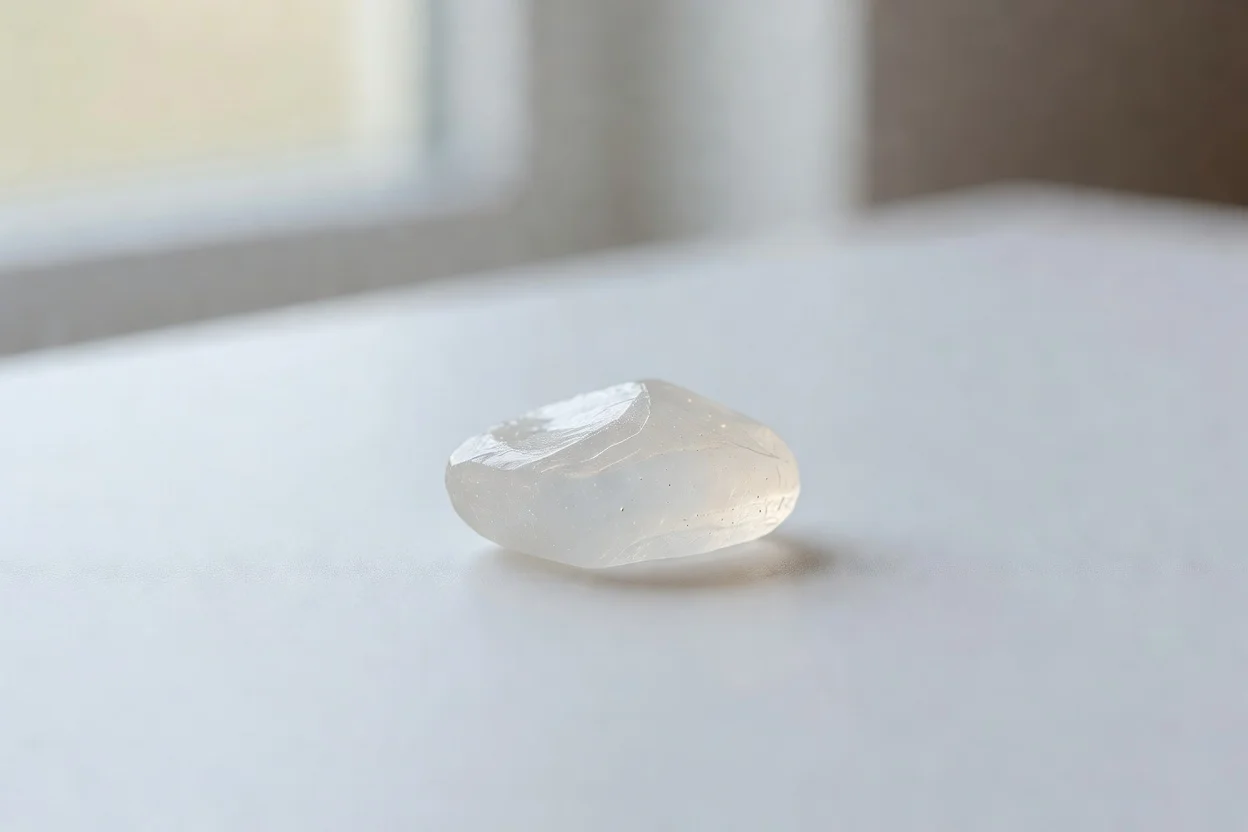
Polyhydroxyalkanoate (PHA) is a family of bio-based, biodegradable polyesters produced by microorganisms as intracellular carbon and energy storage materials. In plastics and auxiliaries, PHA is significant because it offers a thermoplastic performance profile that can be tailored from rigid to flexible grades while also providing non-fossil origin and environmental degradability options that are difficult to achieve simultaneously with conventional polymers.
PHAs are not a single resin but a broad materials platform that includes short-chain-length, medium-chain-length, and copolymer variants such as PHB, PHBV, and PHBHHx, each with different crystallinity, stiffness, toughness, and degradation behavior. Their development has moved from microbiological discovery to industrial fermentation, with current interest centered on packaging, agriculture, medical devices, and specialty applications where compostability, biocompatibility, or controlled end-of-life behavior are strategic advantages.
The principal trade-off is economic and processing complexity: PHA production still depends on fermentation, feedstock preparation, downstream recovery, and compounding steps that are typically more expensive than petrochemical polymer routes. Recent innovation is therefore focused on low-cost waste feedstocks, mixed-culture processes, strain engineering, solvent reduction, and integrated biorefineries that improve yields and reduce carbon intensity.
History and Development
PHA was first identified in the early twentieth century when intracellular polymer granules were observed in bacteria, establishing the concept of a naturally synthesized polyester reserve material. Since then, the field has expanded from a scientific curiosity into a commercially relevant biopolymer class, supported by advances in microbial genetics, fermentation engineering, and polymer characterization.
Development has followed three broad production routes: microbial fermentation, enzymatic synthesis, and, in some research pathways, plant-based biosynthesis. Among these, bacterial fermentation remains the dominant industrial route because it is the most established for producing PHB and related copolymers at scale.
Industrial progress has been shaped by two parallel trends. One is the improvement of strains and pathways for higher intracellular accumulation and more controllable monomer composition; the other is the search for cheaper and more diverse carbon sources, including sugars, plant oils, waste lipids, and organic residues. These developments have broadened PHA from a niche biopolymer into a platform material for circular-economy plastics.
Chemical Structure and Key Properties
PHAs are aliphatic polyesters composed of hydroxyalkanoate monomers linked by ester bonds. Their properties depend strongly on monomer chain length and composition, which influence crystallinity, melting behavior, elasticity, barrier performance, and biodegradation rate.
| Property | Typical implication for PHA |
|---|---|
| High crystallinity in some grades | Greater stiffness, but often more brittleness |
| Copolymerization | Improved flexibility and toughness |
| Biodegradable ester backbone | Enables microbial degradation in many environments |
| Bio-based origin | Reduces reliance on fossil feedstocks |
| Thermoplastic behavior | Allows extrusion, injection molding, and film processing |
A central advantage of PHA is that its properties are tunable by monomer composition, microbial strain, substrate choice, and process conditions. This means that the same broad family can be engineered for rigid packaging, soft medical materials, or flexible films.
Two important practical limits are well recognized in the broader PHA family:
- Limit: brittleness in highly crystalline grades → caused by a high fraction of PHB-like sequences and rapid crystallization → workaround: use copolymer grades such as PHBV or PHBHHx, plasticization, or blending.
- Limit: narrow thermal processing window → caused by relatively low thermal stability near melting for some grades → workaround: lower residence time, optimized compounding, stabilizer packages, and selection of copolymer grades with improved processability.
- Limit: high cost relative to PE, PP, or PET → caused by fermentation, sterilization, substrate pretreatment, and recovery costs → workaround: waste-derived feedstocks, mixed-culture systems, solvent-minimized extraction, and process intensification.
For plastics applications, barrier performance is important. PHA generally offers better moisture and oxygen barrier performance than many commodity polyolefins, which supports packaging use, but exact performance depends on grade and morphology. In addition, PHA is compatible with many standard thermoplastic processing methods, including film extrusion, injection molding, thermoforming, and fiber spinning, although process optimization is often required.
Production Processes and Raw Feedstocks
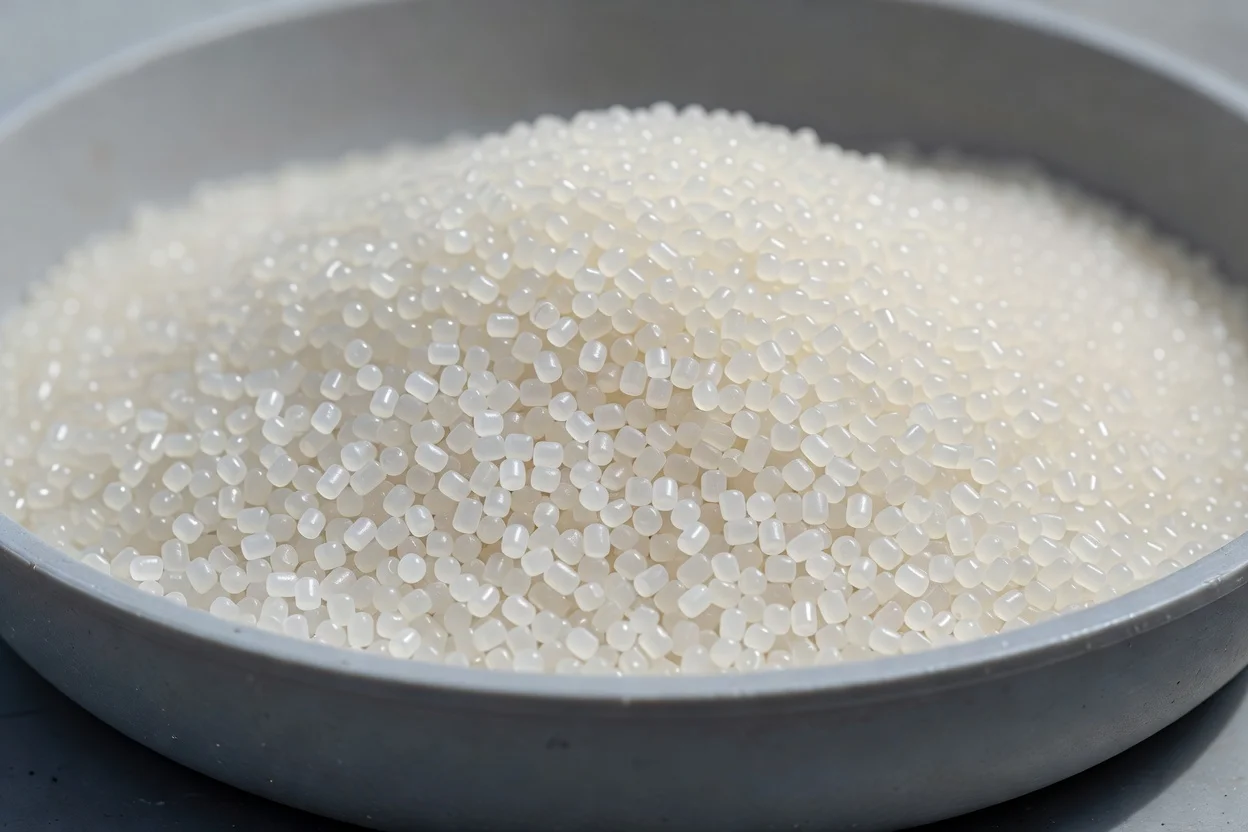
Industrial PHA production generally involves substrate preparation, microbial cultivation, polymer accumulation, cell harvesting, recovery, purification, drying, and pelletizing. The core biosynthesis routes use acetyl-CoA-related metabolism, β-oxidation, or de novo fatty-acid synthesis, depending on the organism and the desired monomer profile.
Major raw feedstocks include:
- Sugars from cane, corn, molasses, or hydrolysates
- Vegetable oils and lipid-rich substrates
- Waste oils and fats
- Organic waste streams, including food waste and wastewater-derived volatile fatty acids
- Agricultural residues after pretreatment and hydrolysis
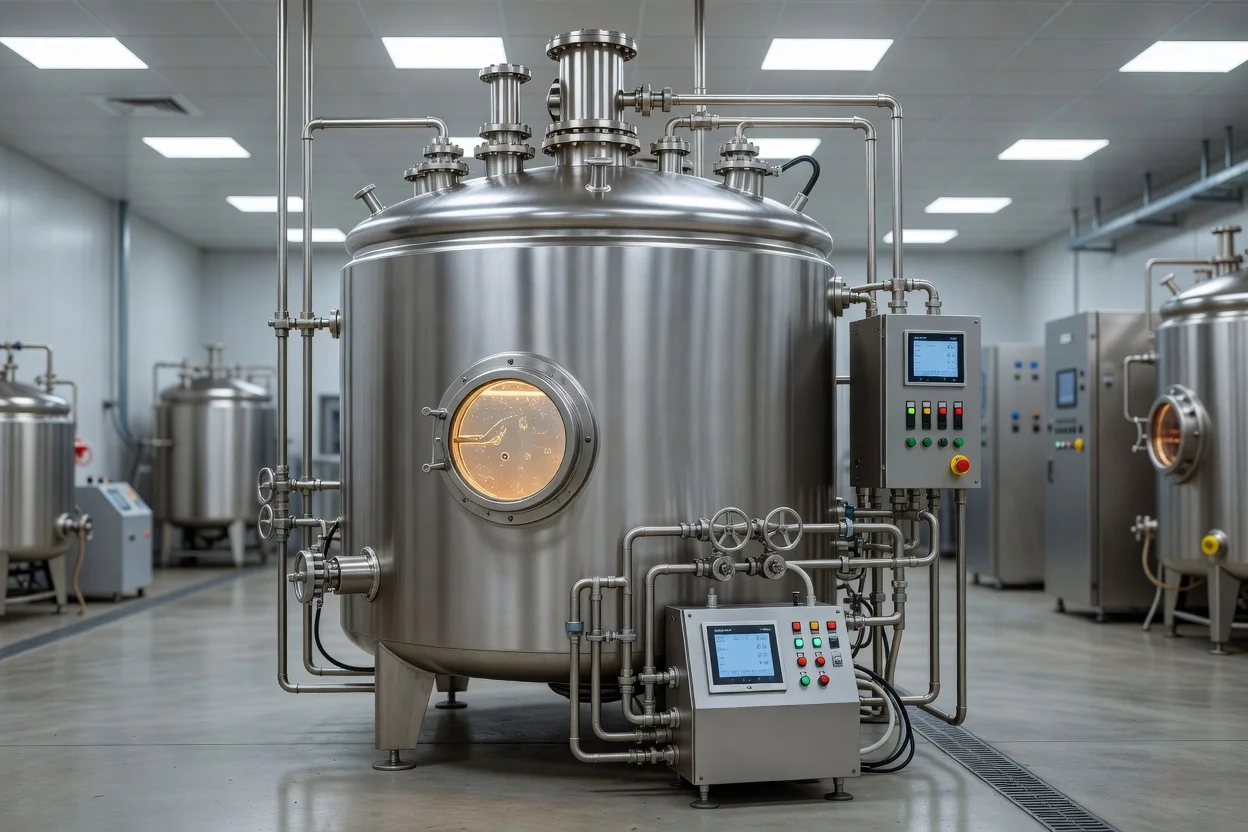
Fermentation is commonly run in batch, fed-batch, or continuous modes, with fed-batch often favored for balancing productivity and polymer content. Some mixed-culture processes use a three-stage approach: waste acidification, culture enrichment under feast-famine conditions, and polymer accumulation from volatile fatty acids.
Downstream recovery remains one of the major cost and sustainability bottlenecks. Common separation approaches include mechanical disruption, centrifugation, precipitation, solvent extraction, evaporation, and other biochemical or hybrid recovery methods. Because downstream purification can dominate both cost and environmental burden, process innovation in this area is especially important.
Leading industrial and technology developers in PHA have historically included specialized biopolymer companies and fermentation licensors, while larger chemical players have increasingly entered adjacent bioplastics and circular-materials strategies. Market leadership shifts frequently because capacity, feedstock agreements, and offtake contracts are still developing relative to mature polymers.
Applications and End-Use Markets
PHA is used where biodegradability, bio-based content, and thermoplastic processability provide distinct value. Its applications are broad, but they are most competitive in sectors that can tolerate higher material cost in exchange for sustainability or functional differentiation.
| End-use sector | Typical PHA grade or form | Usual process | Why PHA fits |
|---|---|---|---|
| Flexible packaging | PHBV, PHBHHx blends | Film extrusion, lamination, coating | Compostability, barrier performance, bio-based content |
| Rigid packaging | PHB, copolymers | Injection molding, thermoforming | Stiffness, food-contact potential |
| Medical devices | High-purity PHB, PHBV, PHBHHx | Casting, electrospinning, molding | Biocompatibility, absorbability, tissue support |
| Agriculture | Blend and film grades | Film blowing, mulch film extrusion | Soil biodegradation, reduced retrieval burden |
| Nonwovens and fibers | Copolymers and blends | Spinning, web formation | Tunable flexibility and degradation |
| Specialty molded goods | PHB, PHBV | Injection molding | Compostable consumer items |
| Additive and coatings uses | Fine-particle or blend formulations | Compounding, coating, dispersion | Functional biodegradability and bio-based content |
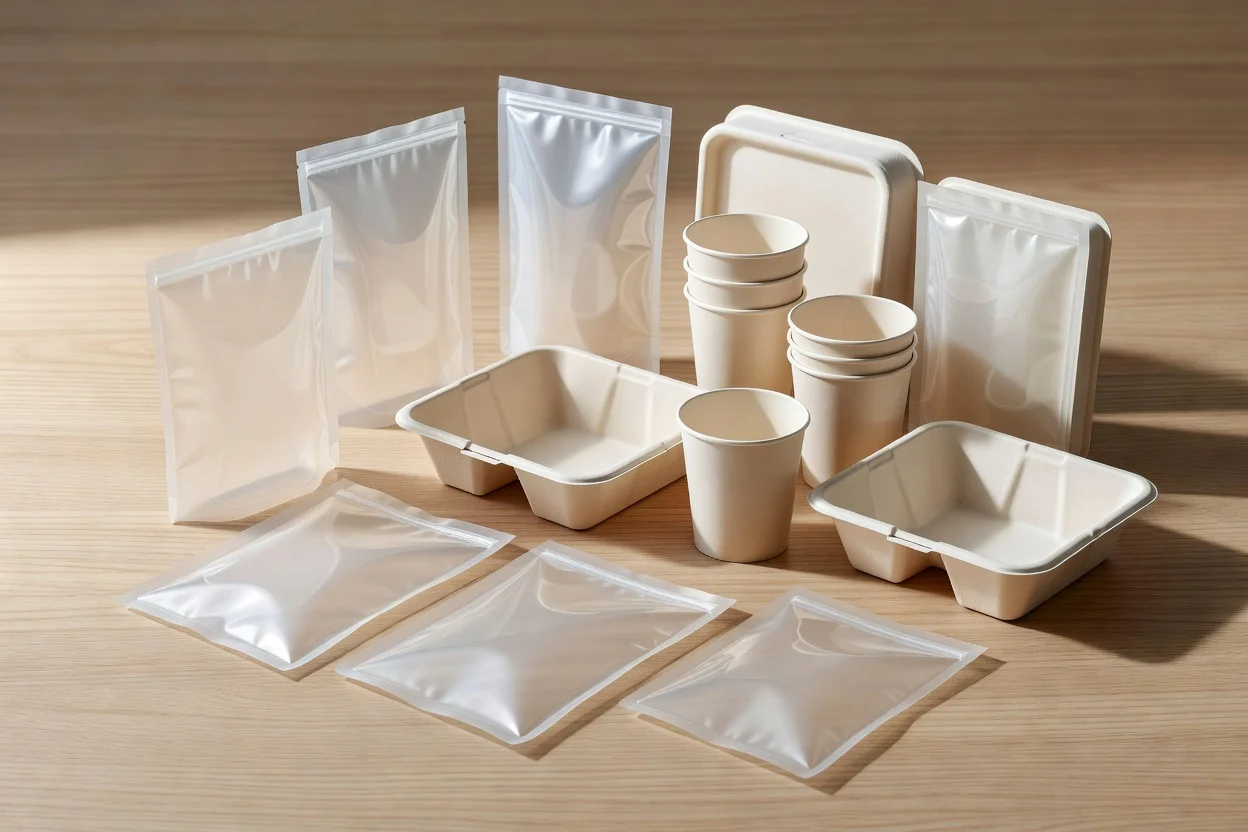
In packaging, PHAs are used for films, liners, bottles, cups, trays, and paper coatings, especially where compostability or organic-waste compatibility is valued. They can also serve in disposable foodservice items such as straws, cutlery, and containers.
In agriculture, mulch films and controlled-degradation articles are a strong fit because removal and disposal of conventional plastic films are costly and labor-intensive. PHA is also investigated for fibers, coatings, and soil-contact materials where degradation after use is desirable.
In medicine, PHAs have been studied for sutures, wound dressings, tissue scaffolds, vascular grafts, heart valves, nerve conduits, stents, and drug-delivery systems. Medical use typically requires high-purity material, tight control of residuals, and extensive biocompatibility validation, which makes this a high-value but technically demanding market.
One poor-fit use is high-heat engineering parts that require long-term thermal resistance near or above the upper service limits of common PHA grades. In such cases, engineering thermoplastics or heat-stable polyesters are usually more suitable because many PHA grades have a relatively narrow processing and service window.
Environmental and Sustainability Aspects
PHA is often described as a promising alternative to fossil-based plastics because it is bio-based and can biodegrade under a wide range of biological conditions, depending on grade and environment. This makes it especially relevant to applications where leakage into soil or marine environments is a concern, or where post-use collection is difficult.
Recyclability is more limited and more nuanced than for major commodity plastics. Mechanical recycling is possible in principle for clean, single-polymer streams, but real-world collection and contamination challenges often make composting, anaerobic digestion compatibility, or controlled biodegradation more central to end-of-life planning. In some systems, residual biomass from production can also be valorized, improving overall circularity.
Bio-based does not automatically mean low-impact. The carbon footprint depends heavily on feedstock source, fertilizer and land-use impacts, fermentation energy, downstream solvent use, and logistics. For that reason, waste-derived feedstocks and integrated biorefinery concepts are increasingly important to improving life-cycle performance.
A practical sustainability opportunity is the use of organic waste or volatile fatty acids as feedstock, which can lower dependence on virgin crops and enhance circularity. Another is the development of solvent-reduced recovery systems, since polymer isolation can be one of the most resource-intensive steps.
Economic and Global Market Impact
PHA remains a premium material in the global plastics market, and cost is the chief barrier to mass substitution of commodity plastics. Industrial competitiveness depends on feedstock price, fermentation yield, polymer content in biomass, downstream recovery efficiency, and final compounding economics.
According to recent industry analyses and review literature, the most commercially attractive PHA segments are not broad replacement markets for PE or PP, but targeted uses in packaging, agriculture, and medical products where sustainability or biodegradability has direct economic value. In practice, the market is still relatively small compared with conventional polyolefins, but it is strategically important because it connects plastics demand to renewable carbon and circular processing.
Global market leadership is concentrated among companies with access to low-cost feedstock, fermentation expertise, and established downstream conversion partnerships. The broader competitive landscape is also influenced by governments, brand owners, and packaging converters that are setting compostability or recycled-content strategies and shaping demand for alternative resins.
Current Challenges and Innovations
The main technical and commercial challenges are:
- High production cost
- Downstream purification expense
- Batch-to-batch variability
- Thermal processing sensitivity
- Limited large-scale supply relative to demand
- Need for clearer end-of-life infrastructure
Innovation is moving along several fronts:
- Strain engineering to increase intracellular accumulation and monomer control
- Low-cost feedstocks such as waste oils, residues, and mixed organics
- Mixed microbial culture systems that reduce sterilization burden and improve waste valorization
- Advanced downstream recovery using hybrid biochemical-mechanical routes and reduced solvent use
- Blending and compounding with other biopolymers or additives to improve toughness, heat resistance, and processability
A representative formulation approach is the use of plasticizers or compatibilizers at low to moderate loadings to reduce brittleness and widen the processing window. In practice, such additives work by increasing chain mobility and reducing intermolecular packing, which can improve elongation at break while lowering stiffness; the exact additive package depends on the PHA grade and the target application.
Future Outlook
The future of PHA will likely be shaped by three factors: feedstock diversification, cost reduction, and application targeting. The strongest near-term opportunities are in uses where the end-of-life value proposition matters as much as the mechanical performance, particularly compostable packaging, agricultural films, and selected medical products.
Longer term, broader adoption will depend on whether producers can move from niche, premium applications to more integrated manufacturing models using waste carbon, improved extraction, and higher-yield strains. If these advances continue, PHA could become one of the most important examples of a plastics raw material that combines performance, renewability, and controlled degradability in a single materials platform.
Summary
PHA is a microbially produced polyester family with tunable properties, strong biodegradability credentials, and growing relevance in packaging, agriculture, and medical markets. Its main constraints remain cost and process complexity, but innovation in feedstocks, fermentation, and downstream recovery continues to improve its commercial and environmental profile.
References
- •
What is PHA? (n.d.). GoPHA. https://www.gopha.org/what-is-phaLink
- •
Polyhydroxyalkanoate - an overview. (2016, October 9). ScienceDirect. https://www.sciencedirect.com/topics/chemistry/polyhydroxyalkanoateLink
- •
Polyhydroxyalkanoates. (2005, June 4). Wikipedia. http://en.wikipedia.org/wiki/PolyhydroxyalkanoatesLink
- •
Waste to wealth: Polyhydroxyalkanoates (PHA) production. (2024, October 10). PMC. https://pmc.ncbi.nlm.nih.gov/articles/PMC11532435/Link
- •
Natural Polyhydroxyalkanoates—An Overview of Bacterial. (2024, May 13). PMC. https://pmc.ncbi.nlm.nih.gov/articles/PMC11124392/Link
- •
A Review on Biological Synthesis of the Biodegradable Polymers Polyhydroxyalkanoates and the Development of Multiple Applications. (2022, March 11). MDPI. https://www.mdpi.com/2073-4344/12/3/319Link
- •
What Is PHA? The Complete Guide to. (2026, March 17). PlantSwitch. https://www.plantswitch.com/blog/what-is-pha-polyhydroxyalkanoate-bioplastics-guideLink
- •
Polyhydroxyalkanoate – Wikipedia. (2004, November 25). Wikipedia. https://de.wikipedia.org/wiki/PolyhydroxyalkanoateLink
- •
Poly(hydroxyalkanoates) (PHAs): Production, Applications and End. (n.d.). A*STAR. https://oar.a-star.edu.sg/storage/2/2rj5opk2y7/pha-sustainability-and-lca.pdfLink
- •
Separation and purification technologies in polyhydroxyalkanoate (PHA) manufacturing: A review. (2025, February 12). EEER. https://www.eeer.org/journal/view.php?number=1649Link
- •
Polyhydroxyalkanoates: Medical Applications and Potential for. (2024, November 6). PMC. https://pmc.ncbi.nlm.nih.gov/articles/PMC11595952/Link
- •
Polyhydroxyalkanoate and its efficient production: an eco-friendly. (2020, November 24). PMC. https://pmc.ncbi.nlm.nih.gov/articles/PMC7686412/Link
- •
A review on polyhydroxyalkanoate (PHA) production through. (n.d.). RSC. https://pubs.rsc.org/en/content/articlepdf/2023/su/d3su00126aLink
- •
Life cycle design of polyhydroxyalkanoates (PHA) - PMC - NIH. (2025, November 21). PMC. https://pmc.ncbi.nlm.nih.gov/articles/PMC12721391/Link
- •
Emergent Approaches to Efficient and Sustainable Polyhydroxyalkanoate Production. (2021, June 7). MDPI. https://www.mdpi.com/1420-3049/26/11/3463Link
- •
Separation and purification technologies in polyhydroxyalkanoate. (n.d.). EEER. http://www.eeer.org/upload/eer-2024-710.pdfLink
- •
A review on polyhydroxyalkanoate (PHA) production through the. (2023, November 30). RSC. https://pubs.rsc.org/en/content/articlehtml/2023/su/d3su00126aLink
- •
Polyhydroxyalkanoate. (2025, January 16). ScienceDirect. https://www.sciencedirect.com/topics/engineering/polyhydroxyalkanoateLink
- •
Polyhydroxyalkanoates: Their importance and future. (n.d.). BioResources. https://bioresources.cnr.ncsu.edu/resources/polyhydroxyalkanoates-their-importance-and-future/Link
- •
Polyhydroxyalcanoate — Wikipédia. (2006, December 17). Wikipedia. https://fr.wikipedia.org/wiki/PolyhydroxyalcanoateLink
- •
Biomedical Applications of Polyhydroxyalkanoate in Tissue. (2022, May 24). PMC. https://pmc.ncbi.nlm.nih.gov/articles/PMC9182786/Link
- •
Recent advances in polyhydroxyalkanoate production from. (2025, October 17). PMC. https://pmc.ncbi.nlm.nih.gov/articles/PMC12576708/Link
- •
Polyhydroxyalkanoates (PHA) - The Ecobiomaterial Laboratory. (2020, June 30). Ecobiomaterial. https://www.ecobiomaterial.com/pha/Link
- •
Recent Advances in Polyhydroxyalkanoate Production by Mixed Aerobic Cultures: From the Substrate to the Final Product. (n.d.). Wiley. https://onlinelibrary.wiley.com/doi/10.1002/mabi.200600112Link
- •
Polyhydroxyalkanoates: opening doors for a sustainable. (2016, April 22). Nature. https://www.nature.com/articles/am201648Link
- •
Novel Production Methods of Polyhydroxyalkanoates and Their Innovative Uses in Biomedicine and Industry. (2022, November 30). MDPI. https://www.mdpi.com/1420-3049/27/23/8351Link
- •
Production, isolation, optimization, and characterization of microbial PHA from Bacillus australimaris. (2025, March 11). Nature. https://www.nature.com/articles/s41598-025-92146-xLink
- •
Polyhydroxyalkanoáty – Wikipedie. (2020, October 21). Wikipedia. https://cs.wikipedia.org/wiki/Polyhydroxyalkano%C3%A1tyLink
- •
Guide to PHA Bioplastic aka Polyhydroxyalkanoates. (2026, August 25). Good Start Packaging. https://www.goodstartpackaging.com/guide-to-pha-bioplastic-polyhydroxyalkanoates/Link
- •
Review Sustainable applications of polyhydroxyalkanoates. (2022, November 30). ScienceDirect. https://www.sciencedirect.com/science/article/abs/pii/S0141813022020293Link
- •
Biodegradable and Biocompatible Polyhydroxy-alkanoates. (2018, February 8). PMC. https://pmc.ncbi.nlm.nih.gov/articles/PMC6017587/Link
- •
Poly(lactic acid) (PLA) and polyhydroxyalkanoates (PHAs), green. (2021, May 10). PMC. https://pmc.ncbi.nlm.nih.gov/articles/PMC9033233/Link
- •
Review of technologies for PHA production. (2020, July 2). Food Packaging Forum. https://foodpackagingforum.org/news/review-of-technologies-for-pha-productionLink
- •
Microbial PolyHydroxyAlkanoate (PHA) Biopolymers—Intrinsically. (2023, July 19). PMC. https://pmc.ncbi.nlm.nih.gov/articles/PMC10376151/Link
- •
Polyhydroxyalkanoic Acid - an overview. (n.d.). ScienceDirect. https://www.sciencedirect.com/topics/medicine-and-dentistry/polyhydroxyalkanoic-acidLink
- •
Application of Polyhydroxyalkanoates in Medicine and the. (n.d.). PMC. https://pmc.ncbi.nlm.nih.gov/articles/PMC6643351/Link
- •
Polyhydroxyalkanoates. (2026, April 15). AOCS. https://www.aocs.org/resource/polyhydroxyalkanoates/Link
- •
Production of polyhydroxyalkanoate (PHA) biopolymer. (2025, April 15). PMC. https://pmc.ncbi.nlm.nih.gov/articles/PMC11998090/Link
- •
The Role of Bacterial Polyhydroalkanoate (PHA) in a. (2023, February 8). PMC. https://pmc.ncbi.nlm.nih.gov/articles/PMC9957297/Link
- •
Polyhydroxyalkanoates, bacterially synthesized polymers. (2021, September 18). PMC. https://pmc.ncbi.nlm.nih.gov/articles/PMC8502142/Link
- •
Production of polyhydroxyalkanoates (PHAs) by Bacillus. (2021, June 11). PMC. https://pmc.ncbi.nlm.nih.gov/articles/PMC8806590/Link
- •
Polyhydroxyalkanoates (PHAs): How to select the right grade? (2026, April 22). SpecialChem. https://www.specialchem.com/plastics/guide/polyhydroxyalkanoate-phaLink
- •
Polyhydroxyalkanoate - an overview. (n.d.). ScienceDirect. https://www.sciencedirect.com/topics/agricultural-and-biological-sciences/polyhydroxyalkanoateLink
- •
A Review of Polyhydroxyalkanoates: Characterization. (2024, October 8). PMC. https://pmc.ncbi.nlm.nih.gov/articles/PMC11510099/Link
- •
Polyhydroxyalkanoates for sustainable food packaging. (n.d.). ScienceDirect. https://www.sciencedirect.com/science/article/abs/pii/S0924224425004303Link
- •
The Synthesis, Characterization and Applications of. (2021, September 27). PMC. https://pmc.ncbi.nlm.nih.gov/articles/PMC8512352/Link
- •
Polyhydroxyalkanoates as biomaterials. (2017, June 27). PMC. https://pmc.ncbi.nlm.nih.gov/articles/PMC6084198/Link
- •
Biodegradability of polyhydroxyalkanoate (PHA) biopolyesters. (2025, August 11). PMC. https://pmc.ncbi.nlm.nih.gov/articles/PMC12339601/Link
- •
Polyhydroxyalkanoates production from laboratory to industrial scale: A review. (n.d.). ScienceDirect. https://www.sciencedirect.com/science/article/pii/S0141813025038073Link
- •
The production of PHA. (2025, June 5). PHA Sourcing. https://pha-sourcing.com/pha-production/Link