
Introduction
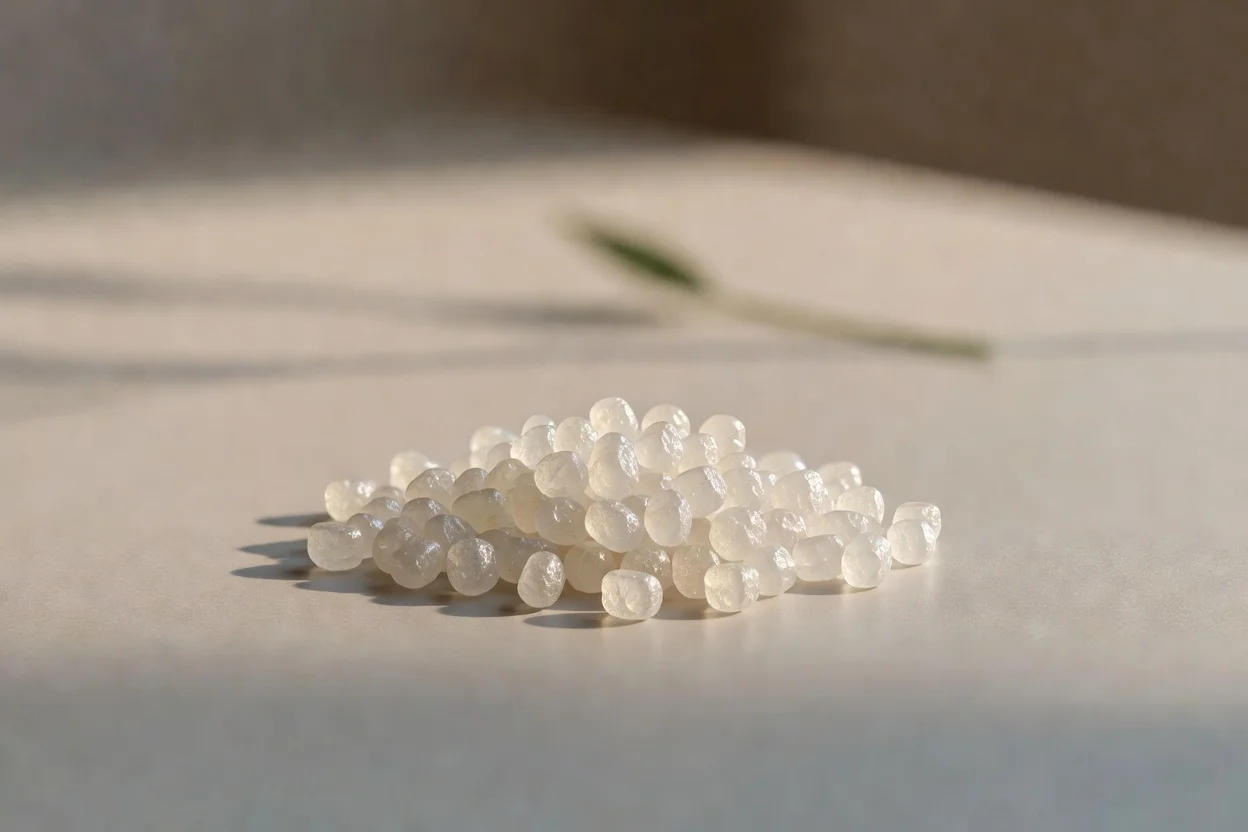
Biobased polypropylene (bio-PP) is a polypropylene whose carbon originates wholly or partly from renewable feedstocks rather than fossil resources, while the polymer itself remains polypropylene in structure and performance. In practice, bio-PP is treated as a drop-in material: it is designed to run in the same equipment, meet many of the same specifications, and serve many of the same markets as conventional PP, especially packaging, automotive, textiles, and molded consumer goods.
Bio-PP is part of the broader family of biobased plastics, but it should not be confused with biodegradable plastics. Like fossil-based polypropylene, it is generally not biodegradable; its sustainability value lies mainly in renewable carbon sourcing, potential greenhouse-gas reduction, and compatibility with existing PP recycling systems. Current commercial and near-commercial routes include bioethanol-to-propylene pathways, mass-balance attribution from bio-based or waste-derived feedstocks, and other catalytic or thermochemical conversion schemes.
History and Development
The idea of replacing fossil propylene with renewable carbon emerged from the wider development of first-generation bioplastics in the late 20th and early 21st centuries. Early commercial progress was easier for polymers that could be made through fermentation-derived intermediates and then converted into conventional monomers, because this preserved the familiar PP value chain and avoided the need for entirely new polymer architectures.
Industrial attention accelerated as brand owners and converters sought materials with lower fossil content but unchanged processability. Mass-balance supply chains became especially important, allowing certified renewable or waste-derived feedstocks to be assigned to specific PP outputs without physically separating every molecule in the production chain. This approach has been used to expand availability while conventional propylene infrastructure and downstream PP processing remain largely unchanged.
Chemical Structure and Key Properties
Bio-PP is chemically polypropylene; the distinguishing feature is the origin of the carbon, not the repeat-unit chemistry. Most commercial grades are isotactic PP, meaning the methyl groups are arranged in a regular stereochemical pattern that promotes crystallinity, stiffness, and useful thermal and mechanical performance.
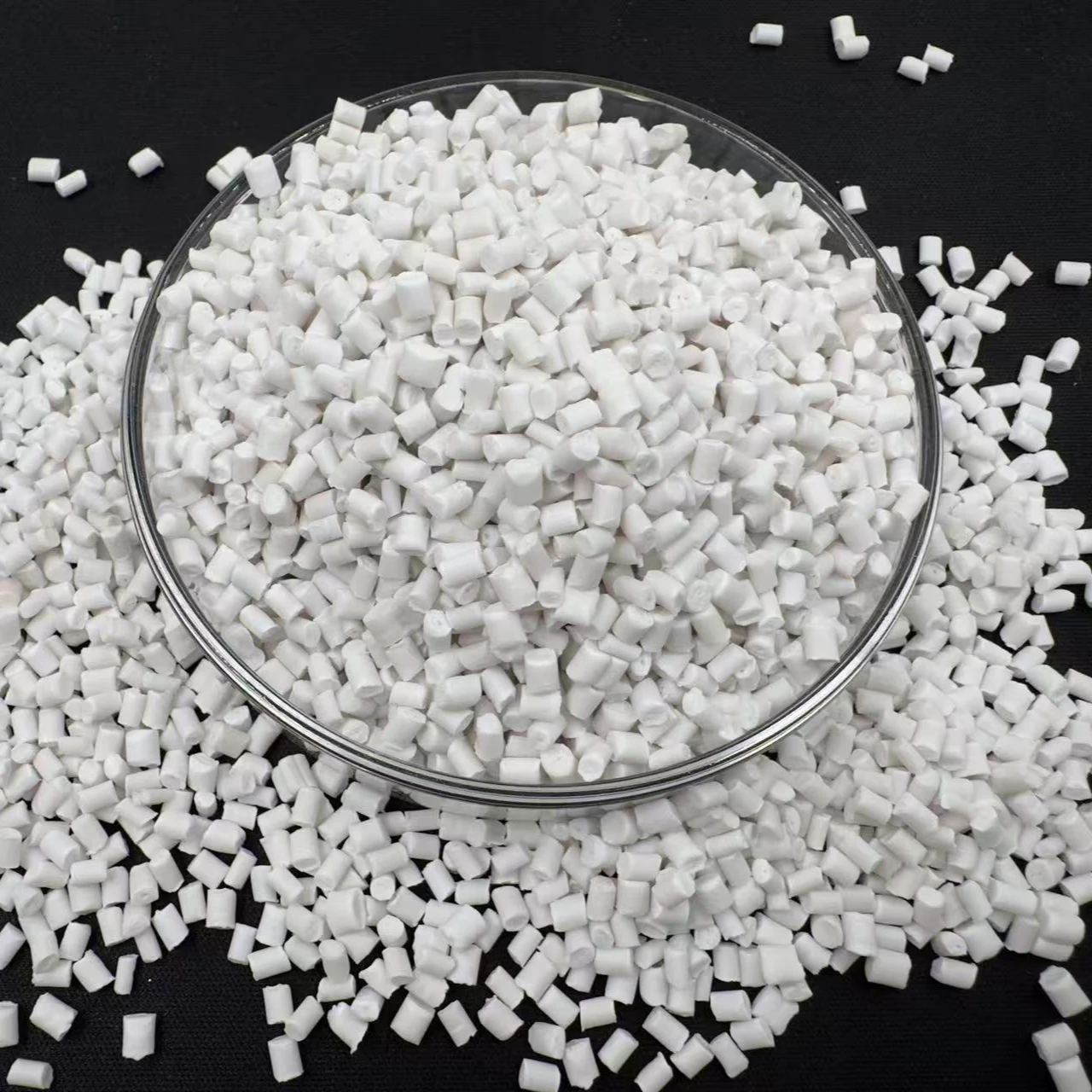
Because the polymer backbone is unchanged, bio-PP generally retains the core PP property set:
- Low density, which supports lightweight design in packaging and transportation.
- Good chemical resistance, especially to many acids, bases, and aqueous media.
- Good fatigue resistance, which is useful in living hinges and repeated flexing applications.
- Moderate-to-good heat resistance, depending on crystallinity and formulation.
Typical limits of PP, including bio-PP, remain important in design:
- Poor oxygen and grease barrier → caused by its nonpolar hydrocarbon structure and relatively open crystalline morphology → workaround: metallization, barrier coatings, multilayer structures, or blending with barrier layers for food packaging.
- Low surface energy before treatment → caused by the chemically inert, nonpolar surface → workaround: corona, plasma, flame treatment, or primers to improve printability, adhesion, and coating performance.
- Limited low-temperature impact performance in some grades → caused by PP crystallinity and chain mobility constraints → workaround: impact modifiers, copolymer grades, or formulation with elastomers and nucleating agents.
- Not inherently biodegradable → caused by the stable polypropylene backbone → workaround: design for mechanical recycling, chemical recycling, reuse, or substitution only where biodegradation is not required.
A useful way to view bio-PP is that it can reproduce the performance of fossil PP, but not necessarily all its limitations or sustainability outcomes. Those depend on feedstock, energy mix, additives, product design, and end-of-life route.
Production Processes and Raw Feedstocks
Bio-PP can be produced through several pathways, but all must ultimately supply bio-based propylene or an equivalent attributed propylene stream for polymerization.
Common routes include:
- Biochemical route: biomass is fermented to bioethanol or related intermediates, which are converted to propylene via dehydration and subsequent catalytic steps.
- Renewable hydrocarbon route: bioethanol or bio-oils are upgraded to propylene-containing streams, then polymerized in conventional PP units.
- Mass-balance route: renewable or waste-derived feedstocks such as bio-naphtha, used cooking oil, or hydrogenated vegetable oils are introduced into integrated refinery/petrochemical systems, and certified renewable content is allocated to the final PP product.
Feedstocks mentioned in current industry and technical sources include sugarcane, corn-derived ethanol, vegetable oils, used cooking oil, and other biomass-derived carbon sources. Bio-based propylene is notable because it does not occur naturally in useful quantities and must be created through chemical transformation.
In polymerization, the production of bio-PP is generally the same as conventional PP: propylene is polymerized using established catalyst systems to make homopolymer or copolymer grades. The industrial significance of this is high, because it allows renewable-carbon PP to be introduced without redesigning converting lines, molds, fibers, films, or recycling infrastructure.
Applications and End-Use Markets
Bio-PP is used where conventional PP is already valued for its balance of stiffness, low density, chemical resistance, and processability. The most important applications follow the same grade logic as fossil PP.
| Application | Typical bio-PP grade or format | Usual process | Notes |
|---|---|---|---|
| Flexible packaging film | Film grade, often with BOPP conversion | Cast film, blown film, orientation | Favored for branding and renewable content claims; barrier often needs additional layers. |
| Rigid packaging | Injection or thermoforming grades | Injection molding, thermoforming | Used for tubs, caps, closures, trays, and containers. |
| Bottles and lightweight containers | Blow-molding grades | Blow molding | Less common than PE/PET in many bottle segments, but used where PP performance is desired. |
| Automotive interiors | High-stiffness or filled grades | Injection molding | Door panels, trims, dashboards, and interior components are common targets. |
| Textiles and fibers | Fiber grades | Spunbond, staple fiber, nonwovens | Used in carpets, bags, and technical textiles. |
| Electrical and consumer goods | General-purpose injection grades | Injection molding | Housings, appliance parts, and cable-related components. |
| Medical and pharmaceutical packaging | High-purity or controlled grades | Injection molding | Sterile containers, disposable devices, and packaging components. |
| Geotextiles and construction auxiliaries | Stabilized or toughened grades | Extrusion, nonwoven formation | Used for durable, lightweight infrastructure products. |
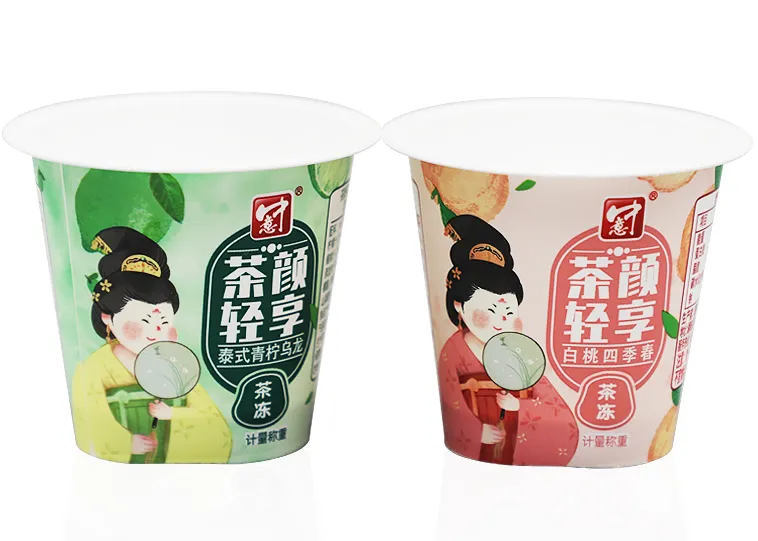
A poor-fit use is high-barrier food packaging as a single-material structure, because PP’s intrinsic gas barrier is weaker than that of PET or barrier multilayers; bio-PP solves the renewable-content issue, not the barrier limitation.
One point of commercial interest is that bio-PP can match conventional PP closely enough to support identical technical performance in many converting environments, including label films and flexible packaging, when sourced through certified mass-balance systems.
Environmental and Sustainability Aspects
Bio-PP is often positioned as a lower-carbon alternative to fossil PP, but the sustainability picture depends strongly on feedstock and production route.
Key environmental considerations include:
- Renewable carbon sourcing can reduce dependence on fossil propylene and improve corporate renewable-content accounting.
- Life-cycle emissions may be lower than fossil PP, especially when waste oils or other low-impact feedstocks are used, though results vary by methodology and system boundary.
- Biogenic carbon uptake during biomass growth can improve reported climate performance, but land use, agricultural inputs, transport, and process energy must be included for a fair comparison.
- Recyclability is one of bio-PP’s strongest advantages: because it is chemically PP, it can in principle enter existing polyolefin recycling streams when it is not contaminated by incompatible additives or multilayer structures.
- Bio-based does not mean biodegradable: bio-PP is still persistent plastic waste if it is discarded improperly.
Carbon-footprint studies cited by industry and sustainability assessments indicate that bio-PP can achieve meaningful reductions relative to fossil PP, with larger gains possible when produced from waste oils and when indirect land-use change is avoided. At the same time, broader polymer sustainability analyses caution that biomass-derived polymers do not automatically outperform petrochemical polymers across all environmental indicators.
In circular-economy terms, bio-PP is most compelling when paired with:
- recyclable product design,
- reduced material intensity,
- recycled-content strategies,
- and feedstocks that avoid direct competition with food or high-biodiversity land.
Economic and Global Market Impact
Bio-PP remains a niche compared with global fossil PP, but it has gained strategic value because it allows brands to claim renewable content without losing PP performance. Commercial activity is visible in packaging, automotive, and specialty consumer goods, with certified mass-balance products and physically segregated bio-based PP projects both appearing in the market.
Recent market analyses describe bio-PP as a fast-growing but still relatively small segment, driven by sustainability targets, regulatory pressure, and brand-owner demand for lower-carbon materials. Reported leadership varies by supply-chain model: some producers rely on sugarcane-based value chains, while others use waste oils, bio-naphtha, or certified mass-balance systems integrated into existing polyolefin assets.
A notable competitive advantage is compatibility with existing PP converting and recycling ecosystems, which reduces adoption friction compared with more disruptive biopolymers.
Current Challenges and Innovations
The main challenges are not about making PP-like polymer, but about making it sustainably and scalably:
- Feedstock scalability remains constrained by biomass availability, competing uses, and certification requirements.
- Cost competitiveness can be difficult when fossil propylene prices are low or when renewable feedstocks are premium-priced.
- Verification and attribution are complex in mass-balance systems, requiring credible certification and transparent chain-of-custody practices.
- End-of-life clarity is still needed, because consumers may assume “bio” means compostable, which is incorrect for bio-PP.
Innovations are focusing on:
- Waste-based feedstocks, including used cooking oil and other residue streams.
- Catalytic route improvements for propylene synthesis from bio-intermediates.
- Compounds and biocomposites, where bio-PP is combined with fillers, fibers, or additives to tune stiffness, heat resistance, and sustainability claims.
- Existing-stream recyclability, including designs that preserve compatibility with standard polyolefin recovery systems.
A practical formulation example is the use of nucleating agents at low loadings, often around 0.05 to 0.3 wt%, to accelerate crystallization and improve stiffness or cycle time in injection molding; the mechanism is heterogeneous nucleation, which increases crystal nuclei density and raises crystallization rate. Another common example is impact modifiers at several percent loading, used to improve low-temperature toughness by creating energy-absorbing dispersed phases.
Future Outlook
Bio-PP is likely to expand most where customers value both drop-in performance and documented lower fossil content. Packaging, automotive interiors, and technical textiles are expected to remain the leading demand sectors, particularly where large-volume PP parts can absorb modest cost premiums in exchange for sustainability benefits.
Longer term, the most important developments are likely to be:
- wider use of waste and residue feedstocks,
- more precise carbon accounting and certification,
- improved process economics through integration with existing refineries and olefin assets,
- and better alignment with mechanical recycling and product-design-for-recycling strategies.
Bio-PP is unlikely to replace fossil PP entirely in the near term, but it is increasingly positioned as a transitional material that reduces fossil dependence while preserving the functionality that made polypropylene one of the world’s most important plastics.
Summary
Biobased polypropylene is a renewable-carbon version of polypropylene, not a different polymer class. Its value lies in combining PP’s familiar processing and performance with lower fossil dependence, potential greenhouse-gas reduction, and compatibility with established manufacturing and recycling systems.
Its most important strengths are drop-in use, broad convertibility, and strong suitability for packaging, automotive, textiles, and molded goods. Its main limitations are the same as conventional PP in many respects, especially barrier performance and non-biodegradability, while sustainability depends heavily on feedstock choice, certification, and end-of-life pathway.
References
- •
Bio-polyethylene (Bio-PE), bio-polypropylene (Bio-PP) and bio-poly(ethylene terephthalate) (Bio-PET): Recent developments in bio-based polymers analogous to petroleum-derived ones for packaging and engineering applications. (2020, July 23). PMC. https://pmc.ncbi.nlm.nih.gov/articles/PMC7465145/Link
- •
Biobased polypropylene (Bio-PP). (2025, November 12). TK Group. https://taminkalatak.com/product/bio-pp-biobased-polypropylene/Link
- •
PP loaded with vegetable materials. (2024, August 12). Snetor. https://www.snetor.com/en/produit/pp-plant-material-loads/Link
- •
Bio-PP. (n.d.). Biokunststofftool. https://biokunststofftool.de/materials/bio-pp/?lang=enLink
- •
โครงการเพิ่มศักยภาพฐานข้อมูลอุตสาหกรรมฐานชีวภาพ. (n.d.). http://asp.plastics.or.th:8001/files/article_file/20180624234604u.pdfLink
- •
Bio-based polypropylene: Multiple synthetic routes under investigation. (2013, April 30). Polymer Innovation Blog. https://polymerinnovationblog.com/bio-based-polypropylene-multiple-synthetic-routes-under-investigation/Link
- •
Il biobased polypropylene (Bio-PP). (2025, December 28). TK Group. https://it.taminkalatak.com/product/bio-pp-biobased-polypropylene/Link
- •
BioPP films. (2026, July 23). Taghleef Industries. https://www.ti-films.com/brands/biopp/Link
- •
Bio-attributed polypropylene. (2024, September 16). bioplastics MAGAZINE. https://www.bioplasticsmagazine.com/en/news/meldungen/20240916-PP.phpLink
- •
Thermal stability and.... (n.d.). Eureka PatSnap. https://eureka.patsnap.com/materials/bio-based-polypropyleneLink
- •
M·BIOBASE® – Biobased plastics. (2024, September 19). BIO-FED. https://bio-fed.com/en/bioplastics/mbiobaseLink
- •
Bio-based polypropylene market. (2025, February 25). PW Consulting Chemical & Energy Research Center. https://pmarketresearch.com/chemi/bio-based-polypropylene-market/Link
- •
Bio‐polypropylene and polypropylene‐based biocomposites: Solutions for a sustainable future. (n.d.). Wiley Online Library. https://onlinelibrary.wiley.com/doi/10.1002/asia.202200972Link
- •
Braskem announces project to evaluate production of bio-.... (2026, February 9). Braskem. https://www.braskem.com.br/usa/news-detail/braskem-announces-project-to-evaluate-production-of-bio-based-polypropyleneLink
- •
Non-biodegradable biobased plastics and their sustainabil. (n.d.). LUTPub. https://lutpub.lut.fi/bitstream/handle/10024/169691/Bachelorsthesis_Kipkemboi_Moses.pdf?sequence=1&isAllowed=yLink
- •
Biobased polypropylene (PP) 2025-2033 trends: Unveiling growth opportunities and competitor dynamics. (2024, July 13). Pro Market Reports. https://www.promarketreports.com/reports/biobased-polypropylene-pp-94062Link
- •
Bio-based polypropylene market is expected to grow at a CAGR of 7.68%. (2024, November 27). Knowledge Sourcing. https://www.knowledge-sourcing.com/resources/press-releases/bio-based-polypropylene-market/Link
- •
PACCOR launches ‘100% Bio-PP’ products. (n.d.). Packaging Europe. https://packagingeurope.com/paccor-launches-100-bio-pp-products/3262.articleLink
- •
Bio propylene production business. (2025, January 1). Niir Project Consultancy Services. https://www.niir.org/blog-archive/blog.php?id=1027Link
- •
Bio-based polypropylene market forecast 2031. (2026, April 27). DataM Intelligence. https://www.datamintelligence.com/research-report/bio-based-polypropylene-marketLink
- •
Bio polypropylene manufacturers: Renewable feedstock.... (2026, May 17). CBRHK Global. https://cbrhkglobal.com/bio-polypropylene-manufacturers-renewable-feedstock-sources-driving-the-future-of-sustainable-plastics/Link
- •
[PDF] based alternatives in polymer production. (n.d.). IJFMR. https://www.ijfmr.com/papers/2023/6/11286.pdfLink
- •
Sustainability of biobased plastics. (n.d.). CE Delft. https://cedelft.eu/wp-content/uploads/sites/2/2023/04/CE_Delft_22021_Sustainability_of_Biobased_Plastics_FINAL.pdfLink
- •
Polymer sustainability metrics compared. (2011, October 27). C&EN. https://cen.acs.org/articles/88/i40/Polymer-Sustainability-Metrics-Compared.htmlLink
- •
Bio based polypropylene market: - Industry. (n.d.). IndustryARC. https://www.industryarc.com/research/bio-based-polypropylene-market-research-v2-507206Link
- •
Frontiers | The sustainability debate on plastics: Cradle to grave life cycle assessment and techno-economical analysis of PP and PLA polymers with a “polluter pays principle” perspective. (2022, September 16). Frontiers. https://www.frontiersin.org/journals/sustainability/articles/10.3389/frsus.2022.931417/fullLink
- •
Pathways to sustainable plastics. (n.d.). TNO. https://publications.tno.nl/publication/34643657/nscrew0P/ruiter-2025-pathways.pdfLink
- •
Bio-based polypropylene market size & share. (n.d.). Fortune Business Insights. https://www.fortunebusinessinsights.com/bio-based-polypropylene-market-102758Link
- •
Bio-PP's impact on automotive sustainability. (2024, June 22). Plastics Engineering. https://www.plasticsengineering.org/2024/06/bio-pps-impact-on-automotive-sustainability-005404/Link
- •
Explore the global biobased polypropylene PP size market. (2026, April 11). Future Market Insights. https://www.futuremarketinsights.com/reports/biobased-polypropylene-pp-size-marketLink
- •
Bio-polyethylene (Bio-PE), bio-polypropylene (Bio-PP) and bio-poly(ethylene terephthalate) (Bio-PET): Recent developments in bio-based polymers analogous to petroleum-derived ones for packaging and engineering applications. (2022, December 1). OUCI. https://ouci.dntb.gov.ua/en/works/7pxVBej7/Link
- •
Sustainability assessments of bio-based polymers. (n.d.). ScienceDirect. https://www.sciencedirect.com/science/article/abs/pii/S0141391013001870Link
- •
Life cycle design of polyhydroxyalkanoates (PHA). (2025, November 10). Oxford Academic. https://academic.oup.com/nsr/article/12/12/nwaf517/8339695Link
- •
Bio-polypropylene market report 2025-2029 [200.... (n.d.). MarketsandMarkets. https://www.marketsandmarkets.com/Market-Reports/bio-polypropylene-market-245671454.htmlLink
- •
Biobased PP compound for injection molding - Terralene®. (n.d.). FKuR. https://fkur.com/en/bioplastics/terralene/terralene-pp-3509/Link
- •
Effect of biobased and mineral additives on the properties of.... (2025, August 30). PMC. https://pmc.ncbi.nlm.nih.gov/articles/PMC12431612/Link
- •
[PDF] Environmental impacts of end-of-life options of biobased and.... (n.d.). WUR Edepot. https://edepot.wur.nl/578893Link
- •
Bio based polypropylene market size & revenue growth.... (2026, September 15). Persistence Market Research. https://www.persistencemarketresearch.com/market-research/bio-based-polypropylene-market.aspLink
- •
Studies on durability of sustainable biobased composites: A review. (2020, May 13). RSC Publishing. https://pubs.rsc.org/en/content/articlehtml/2020/ra/c9ra09554cLink
- •
A literature review on sustainability of bio-based and.... (2022, May 23). Tech Science Press. https://www.techscience.com/energy/v119n4/47889/htmlLink
- •
Polypropylene: How to select the right grade? (2025, July 18). SpecialChem. https://www.specialchem.com/plastics/guide/polypropylene-pp-plasticLink
- •
Bio-based PP a solid option for sustainability in the auto.... (2025, January 27). PlasticsToday. https://www.plasticstoday.com/automotive-mobility/bio-based-pp-a-solid-option-for-sustainability-in-the-auto-sectorLink
- •
[PDF] Sustainability of bio‐based polyethylene. (n.d.). TU Delft Repository. https://repository.tudelft.nl/file/File_b4c0beaa-29fc-4195-9bc4-6450d98d8ba7Link
- •
Biobased plastics in a sustainable future. (2026, April 17). TNO. https://www.tno.nl/en/sustainable/industry/circular-feedstock-processes/circular-plastics/biobased-plastics/Link
- •
The sustainability and recycling of polypropylene. (2024, August 12). PolyPVC. https://www.polypvc.com/news/The-Sustainability-and-Recycling-of-Polypropylene.htmlLink