
Introduction
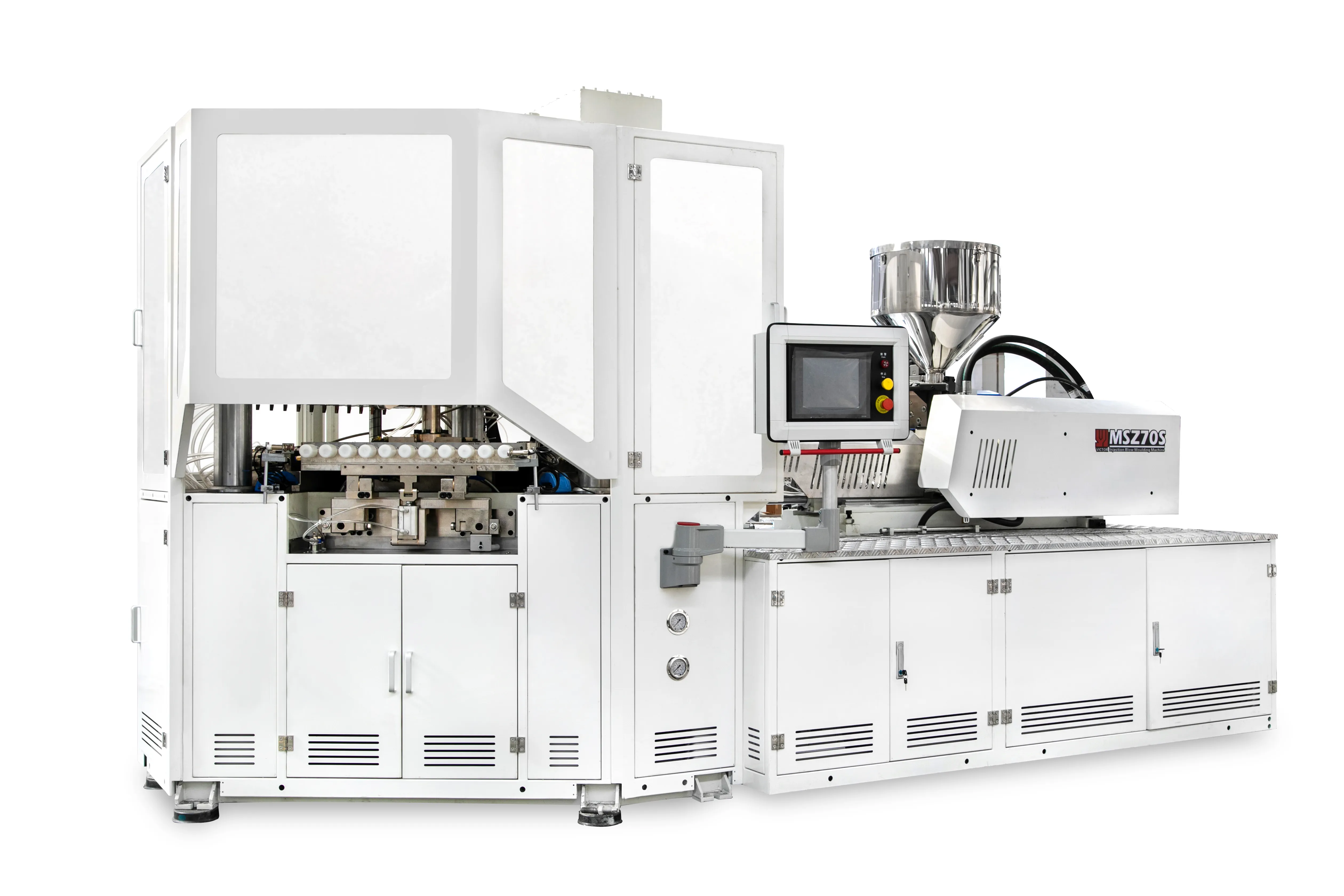
Injection blow molding machines are specialized plastics processing systems that combine injection molding and blow molding in a coordinated cycle to produce hollow thermoplastic containers with accurate neck finishes, tight dimensional tolerances, and high surface quality. They are used most prominently for small to medium containers in pharmaceuticals, cosmetics, food, household chemicals, and laboratory packaging, where finish precision, clarity, and cleanliness matter more than extremely large part size.
Unlike extrusion blow molding, which forms a continuous parison, injection blow molding creates a discrete preform by injecting molten polymer around a core rod or blow pin and then transfers that hot preform to a blow station for inflation and cooling. The process is therefore especially well suited to products that require molded-in neck threads, low flash, and minimal trimming, and it is often configured as a three-station rotary machine with injection, blow, and ejection or stripping stations.
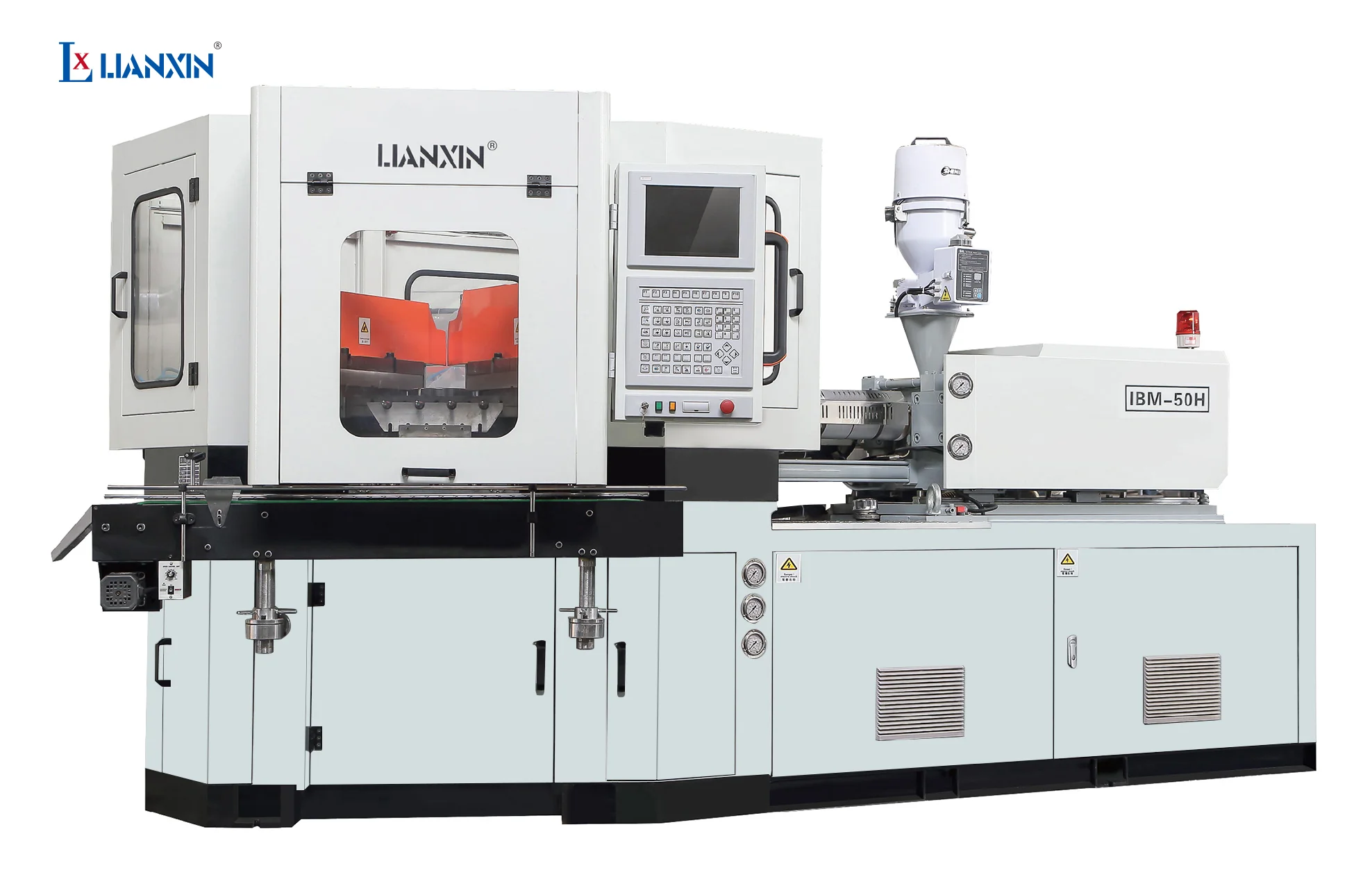
The technology has evolved from mechanically indexed three-station systems toward servo-hydraulic, hybrid, and all-electric platforms, with tighter process control, better energy efficiency, and more automation for transfer, inspection, and ejection. Current development trends include lower specific energy use, improved cavity balancing for multi-cavity tooling, integration with vision inspection and leak testing, and compatibility with circular-economy requirements such as lightweighting and controlled use of regrind where quality allows.
History and Development
Injection blow molding emerged as a response to the need for more accurate neck finishes and better cosmetic quality than many conventional hollow-part processes could deliver. Its central innovation was to separate preform formation from final inflation, allowing the injection stage to define the finish geometry precisely before blow expansion.
Several milestones shaped modern machines:
- Adoption of the three-step cycle: formation of the preform, expansion in the blow cavity, and ejection/stripping became the standard operational sequence for IBM machines.
- Rotary indexing and multi-station layouts: commercial systems commonly adopted rotary tables or transfer mechanisms that move core rods through injection, blow, and ejection stations, improving throughput and consistency.
- Advanced drive and control systems: contemporary machines increasingly use hydraulic, hybrid, or all-electric architectures, with variable-delivery pumps and servo control to reduce energy use and stabilize cycle timing.
The process has remained important because it bridges the strengths of injection molding and blow molding: the former provides precision at the neck and closure interface, while the latter forms a lightweight hollow body with controlled wall distribution.
Technical Overview
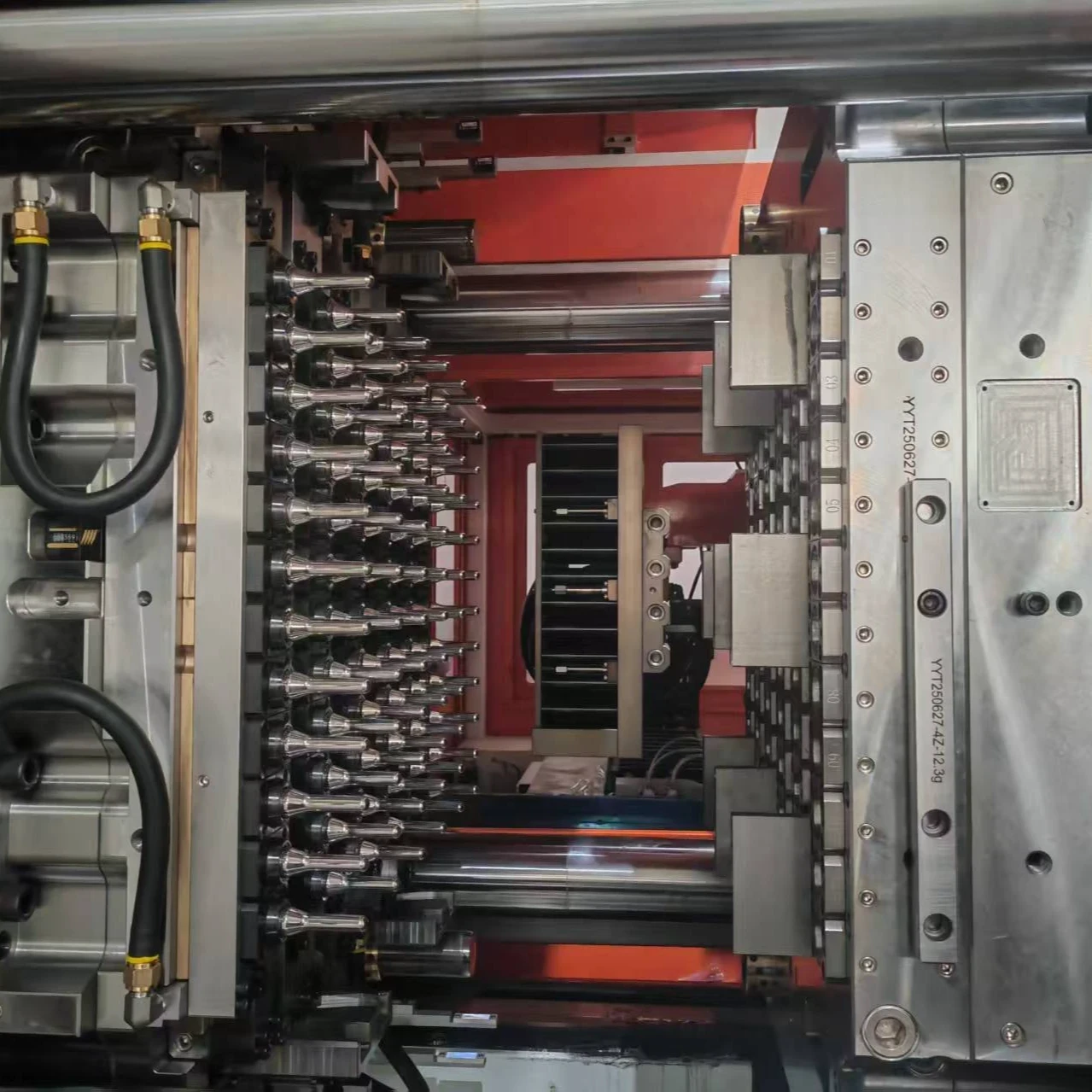
Injection blow molding machines operate on a closed-loop, indexed sequence in which a polymer melt is injected into a preform cavity around a core rod, transferred while still hot, inflated in a blow mold, cooled, and then stripped from the core. A typical machine includes the injection unit, preform mold, rotary or linear transfer mechanism, blow mold, core rods, cooling circuits, and ejection system.
Process sequence
- The mold closes around a core pin or blow pin at the injection station.
- Molten thermoplastic is injected to form a test-tube-shaped preform or parison with the neck finish already defined.
- The preform is indexed to the blow station on the core rod or mandrel.
- Compressed air expands the hot preform against the cooled blow mold cavity.
- The part cools, the mold opens, and an ejector or stripper removes the finished container.
Engineering characteristics
The machine design is optimized for repeatable neck finish accuracy, which is one of the main reasons IBM is favored for pharmaceutical and cosmetic bottles. Because the neck is formed by injection rather than stretched from an extruded tube, the thread profile, sealing land, and tamper-evident features can be held to tight tolerances.
Typical process and machine benchmarks reported in industry materials include:
- Air pressure for blowing commonly in the range of 20 to 40 bar in some technical descriptions, or about 85 to 120 psi in others, depending on machine and product design.
- Typical product capacity around 0.1 to 10 L for many machine families, with smaller systems often focused on bottles in the 5 ml to 300 ml range.
- Cavity counts from 1 to 16 cavities in some commercial machine ranges.
- Clamp forces in one commercial series from 70 to 180 tons.
- Injection volume examples in one machine line from 86 cm³ to 223 cm³.
For material condition, the preform is usually processed while still sufficiently hot to minimize reheating, although some systems use controlled conditioning before blowing. Compared with stretch blow molding, IBM generally does not impose axial stretching, so wall orientation is lower and the process is better suited to non-PET materials and precision containers rather than high-orientation beverage bottles.
Quantitative performance notes
Industry descriptions commonly emphasize high dimensional precision rather than very large throughput. Reported capacities vary widely by cavity count and container size, with commercial references indicating outputs from 20 to 65 kg/h in some machine categories and broad application ranges for small precision containers. In practice, cycle time is governed by injection fill, cooling, index transfer, blowing, and ejection, with cooling often being the dominant constraint for wall quality and part stability.
Specific energy consumption is not standardized across all sources, but the move to servo-hydraulic and all-electric drives is widely associated with lower energy use, reduced hydraulic losses, and better repeatability than older constant-speed hydraulic systems. In industrial terms, the energy benefit typically comes from shorter idle losses, more efficient clamping and screw recovery, and tighter cycle synchronization rather than from the blow step alone.
Types and Variations
IBM machines are commonly classified by station count, drive architecture, and product orientation strategy.
| Type | Main feature | Typical strength | Typical limitation |
|---|---|---|---|
| Three-station rotary IBM | Separate injection, blow, and ejection stations | High repeatability and efficient continuous indexing | More complex tooling and synchronization |
| One-step integrated IBM | Injection and blowing combined in a compact sequence | Lower handling risk and smaller footprint | Less flexible for large cavity layouts |
| Hydraulic IBM | Conventional hydraulic drive system | Robust and well established | Higher energy loss than newer drive types |
| Hybrid IBM | Hydraulic power with servo control | Better efficiency and control balance | More complex than standard hydraulics |
| All-electric IBM | Electric actuators for key motions | High precision and lower maintenance | Higher initial capital cost |
The principal process distinction is between standard IBM and injection stretch blow molding (ISBM). Standard IBM forms the final bottle shape by air inflation only, while ISBM adds axial stretching to improve molecular orientation and mechanical properties, especially for PET beverage containers.
Applications and Uses
IBM is most strongly associated with small, precise, high-value containers where finish quality and sealing integrity are critical.
- Pharmaceutical packaging: medicine bottles, oral-liquid containers, dropper bottles, reagent bottles, and laboratory vials, where dimensional accuracy and cleanliness are essential.
- Cosmetics and personal care: perfume sample bottles, lotion containers, and premium cosmetic packaging that benefits from smooth surfaces and controlled neck geometry.
- Food and beverage: seasoning containers, small sauce bottles, and specialty bottles requiring leak resistance and clean closure interfaces.
- Household and chemical packaging: sanitizer bottles, disinfectant containers, and small chemical bottles that need chemical resistance and reliable sealing.
- Medical and laboratory uses: wash bottles, specimen containers, and related precision packaging products.
A poor-fit application is large, low-cost, high-volume commodity packaging such as very large milk jugs or fuel tanks, which are usually better served by extrusion blow molding because that process is more suitable for very large hollow bodies and continuous production economics.
Materials and Product Design
IBM machines are commonly used with thermoplastics such as PE, PP, PC, and PS in commercial product families. Material choice depends on the required balance of stiffness, clarity, chemical resistance, and barrier performance.
Key design considerations include:
- Neck finish design: because the finish is injection molded, thread form and sealing surfaces can be highly precise.
- Wall distribution: inflation quality depends on preform temperature uniformity, blow pressure, mold cooling, and timing.
- Part clarity and cosmetics: the process is valued for smooth surfaces and low flash, which reduce downstream finishing.
- Chemical compatibility: especially important for pharmaceutical, cosmetic, and cleaning-product containers.
Technological Innovations and Automation
Modern IBM systems increasingly incorporate servo-driven indexing, variable-speed pumps, recipe-based controls, and data logging for repeatability and diagnostics. Automation is also used for part removal, transfer to downstream leak testing, and in some cases vision inspection for neck defects or surface contamination.
Common modernization features include:
- Servo-hydraulic pumping for reduced energy consumption and better motion control.
- Multi-cavity tooling to improve output while preserving dimensional consistency.
- Automated stripping and handling to reduce contamination risk in medical and packaging applications.
- Process monitoring for core rod temperature, blow timing, and cavity pressure, which strongly affect finish quality and wall uniformity.
The trade-off is that greater automation increases capital cost and process complexity, but it usually improves consistency, cleanliness, and labor productivity in regulated or premium packaging segments.
Environmental and Sustainability Aspects
Injection blow molding supports sustainability primarily through precision material use and reduced post-molding trimming. Because the neck and finish are molded directly to specification, the process can reduce reject rates and secondary finishing compared with less precise hollow-forming routes.
Environmental performance is influenced by several factors:
- Energy efficiency: newer hybrid and all-electric machines can lower electricity demand relative to older hydraulic platforms.
- Material efficiency: precise preform control can reduce overpacking and scrap.
- Lightweighting: better wall control allows container mass reduction while preserving function.
- Circularity constraints: use of regrind or recycled resin depends on product specifications, contamination tolerance, and regulatory requirements, especially in pharmaceuticals and food contact packaging.
The sustainability case is strongest where IBM replaces heavier packaging or reduces reject rates, but it is weaker if process complexity leads to excessive downtime, energy loss, or quality scrap.
Economic and Global Market Impact
IBM occupies a specialized but important niche in the global plastics machinery market, particularly in high-value packaging and regulated container production. Its economic value comes from enabling production of containers that require high finish precision and consistent appearance, often in markets where product integrity is linked directly to brand reputation and regulatory compliance.
Commercial machine suppliers emphasize production of billions of containers annually across the sector, reflecting the scale of demand in packaging, pharmaceuticals, and cosmetics. Market demand is supported by:
- growth in branded personal care and pharmaceutical packaging,
- demand for cleaner, more precisely sealed containers,
- expansion of automated filling lines that favor uniform bottle geometry,
- and ongoing replacement of older, less efficient machines with servo-controlled systems.
Current Challenges and Innovations
The main technical challenges in IBM are cycle control, thermal management, and consistency across cavities. If the preform temperature is uneven or timing drifts, defects such as ovality, sink marks, finish distortion, or wall-thickness variation can occur.
Current innovation priorities include:
- improved core-rod temperature control,
- more stable multi-cavity filling,
- reduced energy use in clamping and transfer motions,
- cleaner automation for pharmaceutical packaging,
- and better integration with downstream inspection and leak testing.
Another challenge is the limited suitability of IBM for very large or highly oriented products, which means the technology must compete with extrusion blow molding and injection stretch blow molding rather than replace them.
Future Outlook
The future of injection blow molding machines is likely to be shaped by precision automation, energy-efficient drive systems, and higher regulatory expectations in packaging. Demand should remain strongest where container quality, neck accuracy, and cleanliness are more important than maximum part size or lowest possible tooling cost.
Likely development directions include:
- broader adoption of all-electric and hybrid platforms,
- smarter closed-loop control of injection, blow, and cooling stages,
- expanded use of robotics for sterile or contamination-sensitive packaging,
- and more data-rich machine monitoring for traceability and preventive maintenance.
As packaging markets continue to emphasize product protection, material efficiency, and manufacturing consistency, IBM is expected to remain a technically specialized but strategically important machine class within hollow-part processing.
References
- •
Injection Blow Molding Machine Working Principle: Everything You Need to Know. (2026, March 4). https://www.aibim-china.com/industry-news/injection-blow-molding-machine-working-principle-everything-you-need-to-know/Link
- •
Blow molding basics. (n.d.). http://www.leaktesters.co.uk/documents/Blow%20molding%20basics.pdfLink
- •
Blow moulding. (n.d.). https://espace.curtin.edu.au/bitstream/handle/20.500.11937/5192/167375_167375.pdf?sequence=2Link
- •
Injection Blow Molding Machine. (2026, June 10). https://www.wanplas.com/products/molding-machine/injection-blow-molding-machine/Link
- •
Injection Blow Molding Machines. (2025, January 1). https://www.prm-taiwan.com/category/Injection-Blow-Molding-Machines.phpLink
- •
Blow molding. (2005, June 12). Wikipedia. https://en.wikipedia.org/wiki/Blow_moldingLink
- •
Injection & Blow Molding Machines. (2016, August 11). https://www.makiane.com/injection-blow-molding-machines/Link
- •
The Complete Guide to Injection Blow Molding Machine Parts. (2025, December 23). https://mdplastics.com/feeds/blog/injection-blow-molding-machine-partsLink
- •
MSZ30 Injection Blow Molding Machine. (2018, March 2). https://www.victorcn.com/products/injection-blow-molding-machine/msz30-injection-blow-molding-machine/Link
- •
Injection Blow Molding. (2018, September 14). Jomar Corporation. https://jomarcorp.com/injection-blow-moldingLink
- •
Injection Blow Molds. (n.d.). http://5.imimg.com/data5/SELLER/Doc/2024/2/389832481/QC/SI/MI/257994/injection-blow-molds.pdfLink
- •
Products - Injection Blow Molding Machine. (1999, January 1). http://www.cn-keli.com/en/ProductView.Asp?SortID=1&ID=6Link
- •
Blow Molding. (n.d.). https://encyclopedia.che.engin.umich.edu/blow-molding/Link
- •
Versatile Applications of Injection Blow Molding Machines. (n.d.). https://smp.parker-global.com/en/application/injection-blow-molding-series/Link
- •
Injection Blow Molding Machine. (2024, November 1). https://www.blowtech.com.tw/en/products/One_Stage_Injection_Stretch_Blow_Molding_Machine.htmlLink
- •
Injection Blow Molding Process Guide Comparison and .... (2026, March 9). https://jinoplastics.com/injection-blow-molding/Link
- •
Beginner's Guide to Using a One Step Injection Blow Molding Machine. (n.d.). https://isbmmachine.net/beginners-guide-to-using-a-one-step-injection-blow-molding-machine/Link
- •
Injection Blow Moulding - for plastic bottle. (2025, October 28). https://www.meccanoplastica-group.com/injection-blow-moulding-ibm/Link
- •
Uib injection blow mold machine specifications. (n.d.). https://www.uniloy.com/injection/Link
- •
Global Leading Blow Molding Manufacturer. (2019, August 13). https://www.parker-global.com/product/injection-blow-molding-machine.htmlLink
- •
Plastic Injection Blow Molding Machine. (n.d.). https://www.petallmfg.com/pages/products/plastic-injection-blow-molding-machineLink
- •
Injection Blow Molding Machine, Plastic Extruder for Sale. (2025, July 2). https://en.victorpm.com/products/Link
- •
Injection Blow Molding Machine. (n.d.). https://isbmmachine.net/injection-blow-molding-machine/Link
- •
Jomar Corporation - Injection Blow Molding Machines. (2019, August 12). https://jomarcorp.com/Link
- •
Injection Blow Molding Machines. (2013, January 1). https://www.arlingtonmachinery.com/blow-molding/pl.c.1013.0/injection-blow-molding-machines/Link
- •
Injection Blow Molding. (n.d.). https://edtechbooks.s3.us-west-2.amazonaws.com/pdfs/544/11121.pdfLink
- •
Injection Blow Molding Applications. (n.d.). https://www.moldingmachinetepai.com/resources/injection-blow-molding-applications.htmlLink
- •
Three-Station Injection Blow Molding Machine Process | IBM Guide. (2025, April 3). https://www.victorcn.com/how-three-station-injection-blow-molding-machines-work-process-benefits/Link
- •
Injection Blow Molding Machines: The Precision Engineering .... (2025, August 13). https://zjgshengrong.com/injection-blow-molding-machines-for-container/Link
- •
Injection Blow Molding Machine Manufacturer | Precision OEM. (2026, June 25). https://blowpacker.com/products/blow-molding-machines/injection-blow-molding-machine/Link
- •
Industries and Products Made with Injection Blow Molding .... (2025, July 31). https://isbmmachine.net/industries-and-products-made-with-injection-blow-molding-machine/Link
- •
Injection molding: The complete guide to precision plastic manufacturing. (2025, July 8). https://www.specialchem.com/plastics/guide/injection-moldingLink
- •
Injection Blow Moulding Machine. (2022, July 13). https://www.starsplas.com/injection-blow-moulding-machine/Link
- •
Blow Molding vs. Injection Molding: Differences and .... (2022, March 22). https://www.xometry.com/resources/injection-molding/blow-molding-vs-injection-molding/Link
- •
Blow Molding Machines — Extrusion, Injection & Stretch Blow Molding Systems. (n.d.). https://knavi.us/catalog/blow-molding-machinesLink
- •
Injection Blow Mold in the Real World: 5 Uses You'll .... (2025, October 2). https://www.linkedin.com/pulse/injection-blow-mold-real-world-5-uses-youll-actually-k1lceLink
- •
Exploring the Power of Injection Blow Moulding Machine. (2023, September 16). https://www.daobenmachinery.com/power-of-injection-blow-moulding-machine/Link
- •
Injection Blow Molding Solutions. (2026, March 6). https://axiumpackaging.com/news/capabilities/injection-blow-molding/Link
- •
Here Is Everything You Need to Know About Blow Molding. (2019, March 26). https://maycointernational.com/here-is-everything-you-need-to-know-about-blow-molding/Link
- •
Guide to Blow Molding. (n.d.). https://formlabs.com/blog/blow-molding/Link
- •
Top 6 Extrusion Blow Molding Examples. (2020, September 18). https://www.full-shine.com/news-top-6-examples-by-extrusion-blow-moldingLink