
Introduction
Polymer processing aids (PPAs) are specialty auxiliaries added in very low concentrations to improve melt flow, reduce extrusion defects, and increase throughput during plastics processing. They are used primarily in extrusion-based operations, where they help suppress melt fracture, reduce die build-up, and improve surface finish without materially changing the bulk identity of the host polymer.
In industrial practice, the term PPA is used in two related ways: it can refer to processing aids for polymers in a broad sense, and more specifically to fluoropolymer- or fluoroelastomer-based extrusion aids that migrate to metal surfaces and create a low-friction boundary layer. More recently, the category has also expanded to include PFAS-free alternatives for applications where fluorinated chemistries are being phased down or re-evaluated.
PPAs are especially important in polyolefin conversion, including LLDPE, mLLDPE, HDPE, LDPE, PP, and recycled polyolefins, but they are also used in selected engineering-polymer and specialty processes such as PEX, PET, PBT, PA, wire and cable, pipe, fiber, and blow molding.
History and Development
The modern PPA category emerged from the need to solve persistent extrusion instability in high-output film and pipe production, especially with linear low-density polyethylene and high molecular weight resins. Early commercial systems were dominated by fluoropolymer-based aids because of their high thermal stability and strong anti-adhesion performance at the die wall.
As processing lines became faster and resin formulations became more demanding, PPAs developed from a niche defect-control additive into a productivity tool. Their use expanded from blown film into cast film, wire and cable, sheet, pipe, monofilament, and recycled resin processing. In parallel, regulatory and supply-chain pressure on PFAS chemistry has accelerated the development of non-fluorinated and PFAS-free processing aids.
Chemical Structure and Key Properties
PPAs are not a single chemical family but a functional class. The most established systems are fluoropolymer or fluoroelastomer based; other types include acrylic processing aids, silicone-based systems, fatty-acid amides, and solid-lubricant approaches such as hexagonal boron nitride in some formulations.
Their core function is interfacial: during processing, the additive migrates or becomes concentrated at the metal-polymer interface, where it lowers adhesion and friction. In fluoropolymer-based systems, this creates a thin coating on die lips and other metal surfaces, which reduces shear stress and suppresses melt fracture.
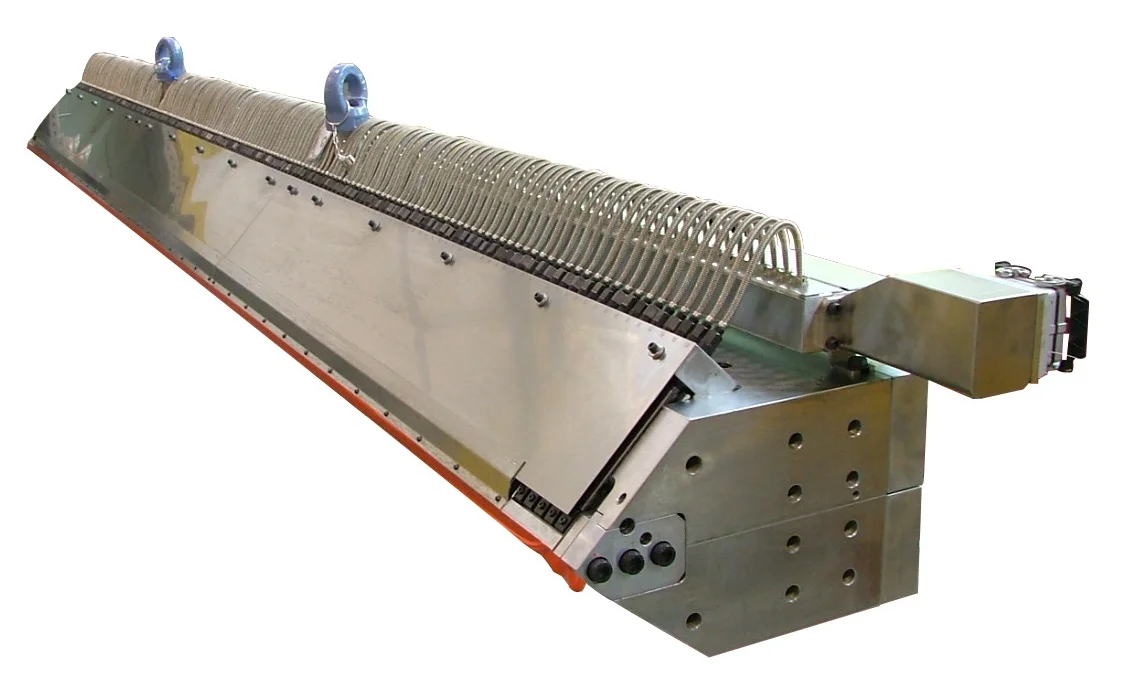
Typical performance traits include:
- Reduced melt fracture, especially sharkskin and related surface instabilities.
- Lower die build-up, which extends run length between cleaning stops.
- Improved output rate, often by allowing higher line speeds at stable pressure.
- Better surface finish and transparency in film and sheet.
- Lower apparent melt viscosity and extrusion pressure in many formulations.
A few practical limits are important:
- Compatibility limit → cause → workaround: PPAs are most effective when the additive can migrate properly and form a boundary film; overly incompatible or poorly dispersed systems can delay activation or give inconsistent performance → use a masterbatch, optimize dosage, and match the chemistry to the host resin and die conditions.
- Regulatory limit → cause → workaround: fluorinated PPAs may face PFAS scrutiny in some markets → use PFAS-free alternatives such as non-fluorinated PPA chemistries where the application and performance window permit.
- Application limit → cause → workaround: PPAs are strongest in extrusion and less universally useful in non-extrusion processes → select other auxiliaries such as mold-release agents, lubricants, or flow modifiers for injection molding when the main issue is not die-wall friction.
Production Processes and Raw Feedstocks
Commercial PPAs are commonly supplied as masterbatches, concentrates, or free-flowing granular products that are let down into the base resin during compounding or direct extrusion.
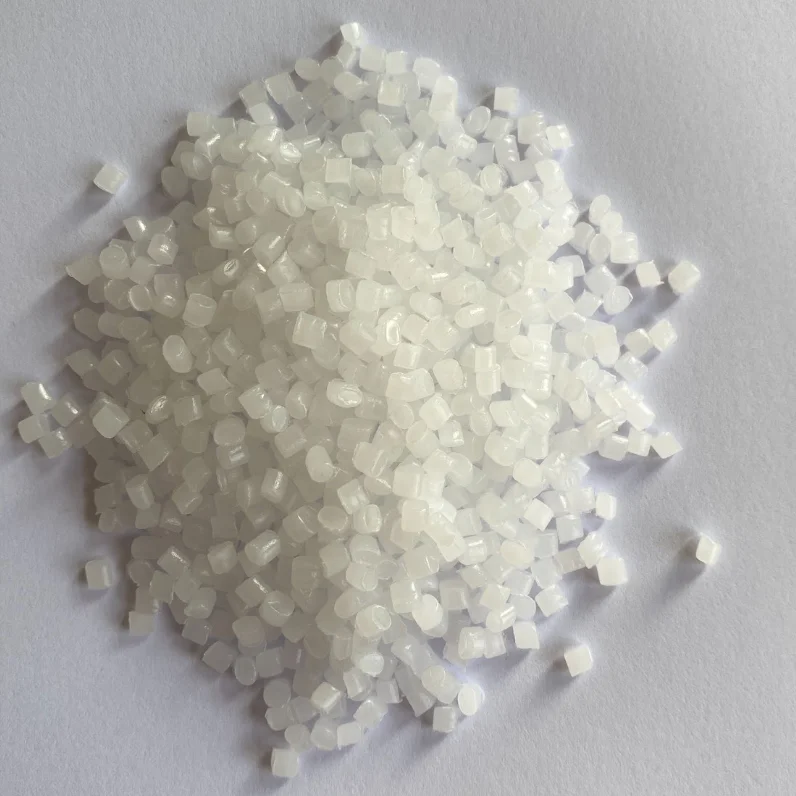
The raw-feedstock picture depends on chemistry:
- Fluoropolymer-based PPAs rely on fluorinated precursor chemistry and high-performance polymerization routes.
- Acrylic PPAs are generally used in PVC and some special-formulation systems, where they can assist fusion and melt elasticity.
- Silicone, amide, and solid-lubricant systems are produced from organosilicone, fatty-acid, or inorganic feedstocks tailored to specific interfacial behaviors.
Typical dosage ranges are very low for fluoropolymer-type PPAs, commonly in the 200–1000 ppm range, with some products marketed in the 200–800 ppm band. The mechanism is not bulk plasticization; rather, the additive modifies interfacial conditions at the die wall and near-surface melt layer.
Applications and End-Use Markets
PPAs are used where stable extrusion, surface quality, and uptime matter more than broad property modification.

| End-use sector | Usual grade/process | Main function | Notes |
|---|---|---|---|
| Blown film | LLDPE, mLLDPE, HDPE, LDPE | Eliminate melt fracture, improve clarity | Core PPA market. |
| Cast film | Polyolefin film extrusion | Reduce die build-up, improve surface | Common in packaging films. |
| Pipe and tubing | HDPE, PEX, PP, selected engineering resins | Improve flow stability and surface quality | Important in pressure pipe and tubing. |
| Wire and cable | Polyolefins and specialty compounds | Reduce friction and extrusion defects | Used in insulation and jacketing. |
| Fiber and monofilament | Polyolefin and specialty fiber grades | Improve runnability and filament quality | Used in fibers and nonwovens. |
| Blow molding | Polyolefins and selected resins | Improve surface finish and consistency | Less dominant than film but well established. |
| Recycled polyolefins | Mechanical recycling streams | Stabilize processing and reduce defects | A growing use case. |
A poor-fit use is general-purpose injection molding, where the principal bottlenecks are usually not die-wall melt fracture or extrusion pressure; in such cases, other auxiliaries often deliver better value than a classic extrusion-oriented PPA.
Environmental and Sustainability Aspects
PPAs can support sustainability indirectly by reducing scrap, lowering energy use, and enabling higher run efficiency. Industry literature reports benefits such as reduced extrusion pressure, lower energy consumption, increased output, and better processing of recycled polyolefins.
Sustainability considerations are mixed:
- Positive impact: less off-spec scrap, less downtime, and higher yield per unit of resin processed.
- Recycling support: PPAs can improve the mechanical recycling of polyolefins by helping contaminated or variable feedstocks process more consistently.
- Chemistry concern: fluorinated PPAs are increasingly scrutinized in relation to PFAS policy and product stewardship.
- Substitution trend: PFAS-free PPAs are gaining attention, especially in packaging and consumer-facing applications.
Bio-based or non-fluorinated alternatives may reduce concern in certain markets, but performance equivalence is not universal; processors typically trade off maximal anti-melt-fracture performance against regulatory simplicity and brand or customer requirements.
Economic and Global Market Impact
PPAs are a small additive category by tonnage but a high-leverage category by value because they can affect line speed, downtime, and reject rate far more than their dosage would suggest. Their economic value is highest in high-output film, pipe, and cable operations where small improvements in uptime and surface quality translate into large annual savings.
Leading commercial suppliers include Daikin and Arkema, with additional presence from Evonik, Clariant, and a broad base of masterbatch and compound producers serving regional extrusion markets. The market is also being reshaped by the shift toward PFAS-free portfolios and by increasing demand for processing aids that can tolerate recycled-content feedstocks.
Current Challenges and Innovations
Current technical and commercial challenges include:
- PFAS regulation and customer pressure, which is accelerating product redesign.
- Activation consistency, especially across different resin grades, die geometries, and line conditions.
- Compatibility with recycled streams, which can vary in contaminants, gels, and additive carryover.
- Balancing processability with downstream requirements, such as adhesion, printability, sealing, and surface treatment.
Innovation is focused on:
- PFAS-free PPA chemistries for polyolefins and packaging.
- Hybrid masterbatches that combine slip, antiblock, processing aid, and stabilization functions.
- Recycling-oriented formulations that stabilize melt behavior in variable feedstocks.
- Application-specific low-dose systems designed to preserve film optics, sealability, and print performance while reducing defects.
Future Outlook
PPAs are likely to remain essential in extrusion-intensive segments because the underlying need they address—stable, high-quality melt processing at higher speeds—has not diminished. The category is expected to evolve toward lower-regulatory-risk chemistries, broader use in recycled and circular feedstocks, and more tightly engineered formulations for specific resin-line combinations.
The most important strategic shift is the move from “one additive solves one defect” toward multifunctional processing packages that integrate flow control, surface quality, sustainability compliance, and cost efficiency. In that sense, PPAs are becoming less of a niche extrusion aid and more of a process-enabling technology for modern plastics manufacturing.
Summary
PPAs are low-dose but high-impact plastics auxiliaries that improve processability, reduce extrusion defects, and raise productivity. Their strongest historical role has been in polyolefin film extrusion, but they now serve broader markets including pipe, cable, fiber, blow molding, and recycled resin processing. The category is in transition, with PFAS-free innovation and recycling compatibility shaping its next phase.
References
- •
DAIKIN PPA polymer processing aids | Fluorochemicals. (n.d.). Daikin Chemicals. https://www.daikinchemicals.com/solutions/products/polymer-additives/daikin-ppa-polymer-processing-aids.htmlLink
- •
What is polymer processing aid masterbatch? (2025, October 16). Charming MB. https://www.charmingmb.com/2025/10/16/what-is-polymer-processing-aid-masterbatch/Link
- •
POLYMER PROCESSING AIDS. (n.d.). Arkema. https://hpp.arkema.com/files/live/sites/shared_arkema/files/downloads/HPP/market-brochures/chemical-general-industry/2022-01-kynar-polymer-processing-aids-optimized.pdfLink
- •
Polymer processing aid (PPA) masterbatches. (n.d.). Royal Polymers. https://royalpolymerss.com/Home/ProductDetails/20250040Link
- •
PFAS-free polymer processing aids – Why use them and where? (2023, August 21). SpecialChem. https://www.specialchem.com/polymer-additives/guide/pfas-free-polymer-processing-aidsLink
- •
Polymer processing aid (PPA). (2016, January 1). Tan Hung Co Masterbatch & Compound. https://www.thcmasterbatch.com/ppa-masterbatchLink
- •
Polymer processing aids. (2025, May 19). Daikin. https://www.daikinchem.de/product/fluoroplastics/polymer-processing-aids/Link
- •
AddWorks™ novel PPA – PFAS-free polymer processing aids. (2026, May 8). Clariant. https://www.clariant.com/en/Business-Units/Additives-and-Adsorbents/Performance-Additives/Packaging/Polymer-Processing-AidsLink
- •
Process aids give PE a high-performance punch. (2023, November 10). PlasticsToday. https://www.plasticstoday.com/plastics-processing/process-aids-give-pe-a-high-performance-punchLink
- •
POLYMER PROCESSING AIDS. (n.d.). Evonik. https://products.evonik.com/assets/25/64/P240323_EN_Flyer_A4_Polymer_Processing_Aids_ak_Web_EN_Asset_2522564.pdfLink
- •
¿Qué es PPA y cuál es su función? (2023, August 24). Crest Polymer. https://es.crestpolymer.com/info/what-is-ppa-and-what-is-the-function-87608213.htmlLink
- •
Polymer processing aids. (2022, April 18). Arkema. https://hpp.arkema.com/en/markets-and-applications/polymer-processing-aids/Link
- •
Polymer processing aids (PPA) 5911. (2023, May 1). Additives for Polymer. https://www.additivesforpolymer.com/portfolio/bx-ppa-5911/Link
- •
The main functions of processing aids you should know. (2024, December 26). EuroPlas. https://europlas.com.vn/en-US/blog-1/the-main-functions-of-processing-aids-you-should-knowLink
- •
The-use-of-ppas-to-improve-melt-processing-of-m-lldpe ... (n.d.). 3M. https://multimedia.3m.com/mws/media/991387O/the-use-of-ppas-to-improve-melt-processing-of-m-lldpe-extrusion.pdfLink
- •
Processing aids. (2026, January 21). Ingenia Polymers. https://www.ingeniapolymers.com/products/processing-aids/Link
- •
Catalysts, additives and auxiliaries for polymers. (2025, May 30). SD LookChem. https://www.sdlookchem.com/catalysts-additives-and-auxiliaries-for-polymers.htmlLink
- •
Polymer processing aid masterbatch- By Kandui. (n.d.). Kandui. https://www.kandui.in/products/additive-masterbatches/polymer-processing-aid-masterbatchesLink
- •
Polymer additives. (2022, August 4). BOC Sciences. https://polymer.bocsci.com/products/polymer-additives-4194.htmlLink
- •
Streamlining production - The critical role of polymer processing aids in high-quality plastic manufacturing. (2024, December 19). Masterbatch Global. https://masterbatchglobal.com/articles/the-role-of-polymer-processing-aids-in-production/Link
- •
Polymeric processing aid additives (PPA). (2025, May 1). Behin Polymer. https://behinpolymerco.com/en/ppa/Link
- •
Polymers processing aid. (n.d.). Sonali Group. https://sonaligroup.in/sonali-product-ppa-additive-singleLink
- •
5 high-performance examples of polymer processing aid (PPA) in modern extrusion. (2026, May 21). Charming MB. https://www.charmingmb.com/2026/05/21/5-high-performance-examples-of-polymer-processing-aid-ppa-in-modern-extrusion/Link
- •
Polymer processing aids (PPA). (2023, May 1). Additives for Polymer. https://www.additivesforpolymer.com/ppa/Link
- •
Processing aids for polyolefins: Reducing extrusion defects. (2026, June 3). Safic-Alcan. https://www.safic-alcan.com/en-fr/industry-articles/processing-aids-polyolefins/Link
- •
Mastering polymer rheology with processing aids. (2025, June 18). Number Analytics. https://www.numberanalytics.com/blog/ultimate-guide-processing-aids-polymer-rheologyLink
- •
Plastic auxiliary agents: The role of foaming agents in polymer processing. (2025, August 29). Nbinno. https://www.nbinno.com/article/foaming-agents/plastic-auxiliary-agents-role-foaming-agents-polymer-processing-fyLink
- •
The common auxiliaries agent for plastic processing. (2019, March 7). RJC Mold. https://rjcmold.com/the-common-auxiliaries-agent-for-plastic-processing/Link
- •
Polymer processing aid: The secret condiment for quality plastics. (2024, March 12). Shine Polymer. https://en.shinepolymer.com/news/blog/polymer-processing-aid-the-secret-condiment-for-quality-plastics/Link
- •
Role of processing aids in the extrusion of molten polymers. (n.d.). SciSpace. https://scispace.com/pdf/role-of-processing-aids-in-the-extrusion-of-molten-polymers-11zyifjz6f.pdfLink
- •
The role of processing aids in modern polymer production. (2025, May 30). Number Analytics. https://www.numberanalytics.com/blog/role-of-processing-aids-in-polymer-productionLink
- •
Additives. (2026, February 2). Scribd. https://www.scribd.com/document/974546697/AdditivesLink
- •
Processing aids for plastic compounds: Overview. (2025, June 26). SpecialChem. https://www.specialchem.com/polymer-additives/pf-processing-aidsLink
- •
What are polymer processing additives? (2025, July 2). CFI Carbon Products. https://www.cficarbonproducts.com/polymer-processing-additives/Link
- •
Superior polymer processing with Viton™ FreeFlow. (n.d.). Viton. https://www.viton.com/en/applications/superior-polymer-processingLink