
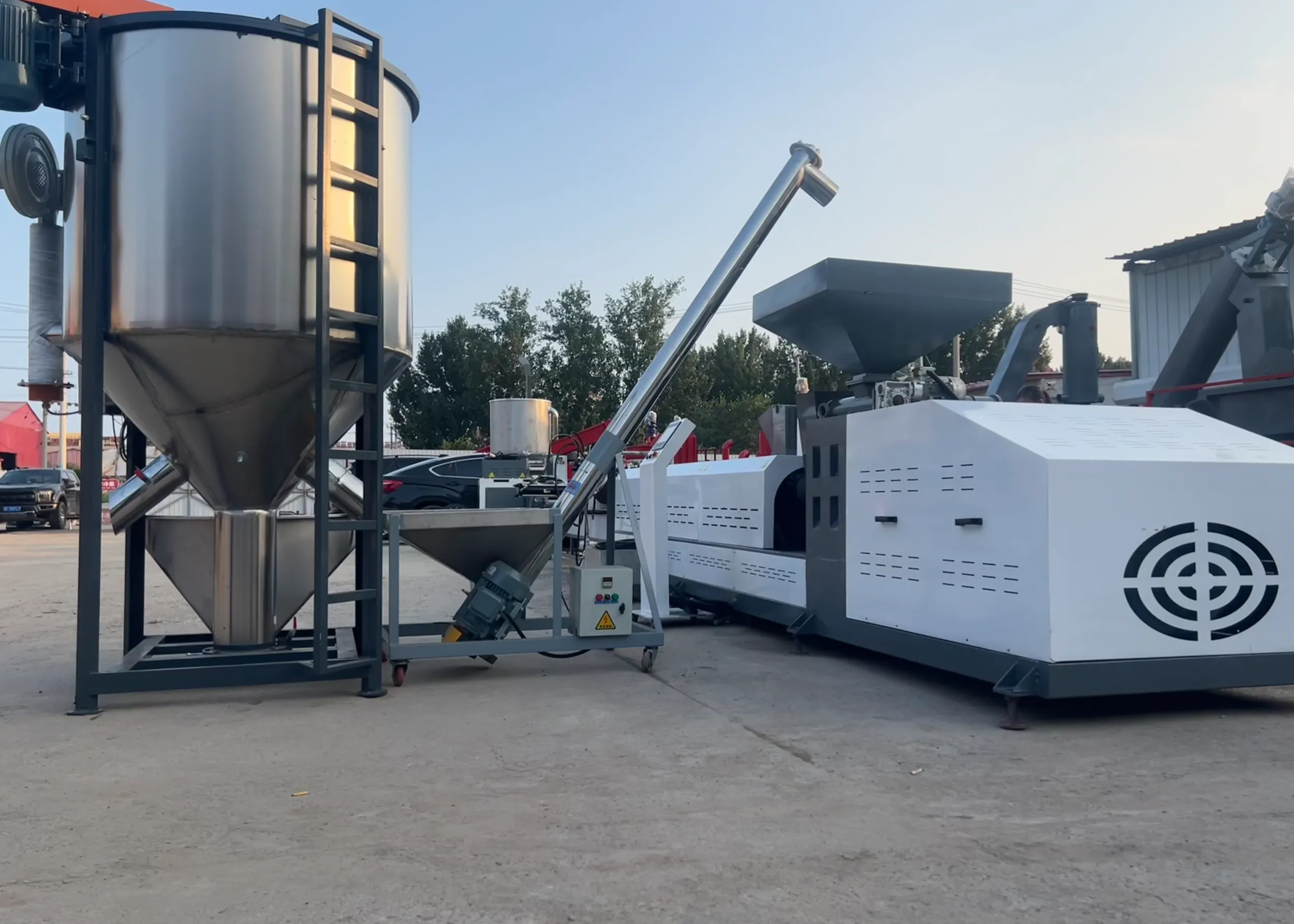
Introduction
Size reduction equipment in plastics processing refers to machines that mechanically break down scrap, off-spec product, and bulky polymer feedstocks into smaller, more manageable particles for reuse, washing, densification, or downstream reprocessing. In the plastics industry, the main machine families are shredders, granulators (often called crushers in some plant vocabularies), and, for finer applications, pulverizers/mills; they are typically arranged in staged systems so that coarse reduction, uniform flake production, and fine grinding occur in sequence.
The distinction between these machines is primarily functional: shredders handle bulky, irregular, or difficult-to-feed material at low speed and high torque, while granulators produce more uniform regrind or flakes using high-speed cutting and a sizing screen. Crushers occupy a somewhat broader and sometimes ambiguous position in industry usage, but in plastics they are commonly used for rigid scrap and thick-walled parts where controlled particle size is needed before washing or re-extrusion.
This equipment is central to plastics recycling, in-house rework, and waste minimization, and its design increasingly reflects priorities such as energy efficiency, dust control, automation, wear resistance, and compatibility with circular-economy processing lines. Future development is being shaped by higher-throughput recycling systems, better knife and rotor metallurgy, more precise particle-size control, and tighter integration with washing, drying, conveying, and sorting technologies.
History and Development
The broader engineering concept of size reduction long predates plastics processing and has been formalized in materials engineering as a family of unit operations including crushers, grinders, ultrafine grinders, and cutting machines. As plastics became a major industrial material in the mid-20th century, the same mechanical principles were adapted to polymer scrap, but with blade-based cutting geometry, lower contamination sensitivity, and discharge screens suited to flakes rather than powders.
A major milestone was the widespread adoption of high-speed granulators for converting sprues, runners, and molding scrap into uniform regrind suitable for direct return to processing lines. A second milestone was the emergence of low-speed, high-torque shredders for bulky post-consumer and industrial scrap such as pipes, drums, film rolls, and molded housings, which could not be fed efficiently into granulators. A third development has been the use of staged lines combining shredding, granulation, washing, dewatering, and sometimes pulverization, especially in PET, HDPE, and mixed-rigid recycling systems.
Key Characteristics and Technical Overview
Size reduction systems in plastics are distinguished by cutting mode, rotational speed, torque, screening method, and target particle size. These parameters determine whether the machine is best suited to primary breakup, flake production, or fine milling.
Working principles
- Shredders use shear and tearing forces from rotating shafts with knives or cutters, typically operating at low speed and high torque.
- Granulators use high-speed rotating knives against fixed bed knives, and the material remains in the cutting chamber until it is small enough to pass through a perforated screen.
- Crushers in plastics are often used as a bridge stage for rigid scrap, applying cutting and impact-like breakage to reduce size before final granulation or washing.
Typical operating ranges
- Shredders commonly run at about 15–120 rpm and are selected for rough, primary size reduction.
- Granulators commonly run at about 300–600 rpm, with many industrial machines around 500 rpm.
- Output from a shredder is often in the range of 20–80 mm, while granulators commonly produce 3–25 mm material depending on screen size and feedstock.
- Some commercial systems cite shredder output in the 30–60 mm or 40–150 mm range and granulator output around 8–15 mm for rigid plastics.
Particle quality and process effects
- Granulators are valued for producing relatively uniform flakes with less variation in size than shredders.
- Shredders produce irregular chips or strips that improve feeding of bulky items but are usually not the final desired regrind shape.
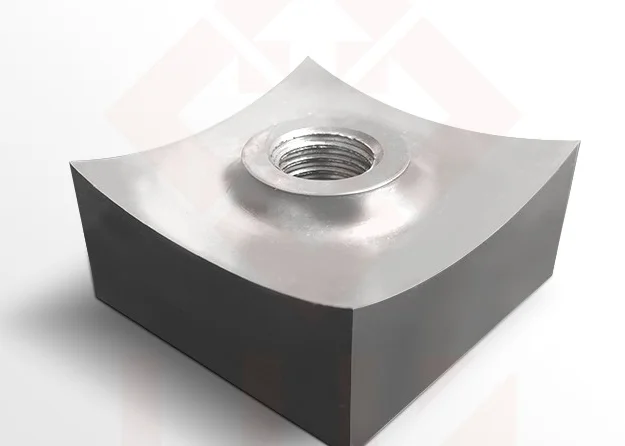
- Screen aperture is a major determinant of final granule size, while rotor knife geometry affects cutting efficiency, noise, fines generation, and energy use.
Quantitative performance notes
- Industrial granulation lines are commonly described as operating at throughputs up to about 3 t/h in suitable applications.
- In plastics recycling, downstream washing and dewatering systems often target low residual moisture, and centrifugal dewatering is typically expected to reduce surface moisture to a low single-digit percentage range before thermal drying, although the exact value depends strongly on flake geometry and polymer type.
- Specific energy consumption varies widely with material, contamination, and machine type; in practice, shredders generally consume less power per unit throughput in primary breakup, while granulators may require more energy per kilogram because they deliver a finer, more controlled product.
Types and Variations
Shredders
Shredders are the preferred choice for bulky, dense, or irregular scrap such as pipe sections, hollow containers, baled plastic, large sprues, and industrial purge lumps. They are often configured as:
- Single-shaft shredders for controlled primary reduction
- Dual-shaft shredders for high-torque, coarse breakup
- Four-shaft systems for more uniform pre-processing in demanding recycling lines
Granulators
Granulators are high-speed knife cutting machines designed to convert feedstock into uniform flakes or regrind. Common subtypes include:
- Beside-the-press granulators for molding and extrusion scrap
- Central granulators for plant-wide recycling systems
- Wet granulators for film, PET, and washing-line integration
- Heavy-duty granulators for rigid plastics and thicker wall sections
Crushers
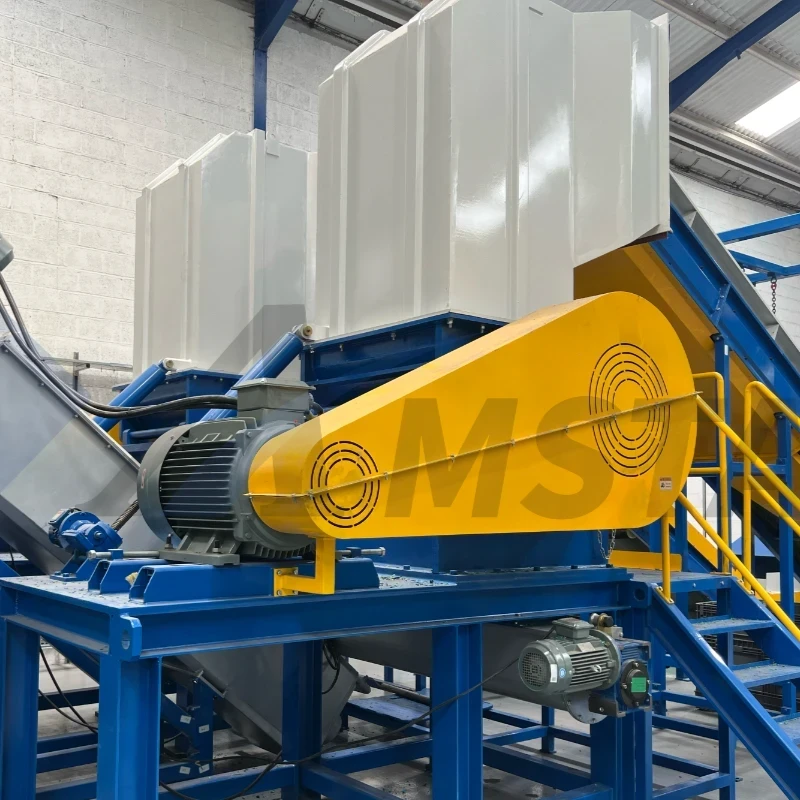
In plastics processing, crushers are often used for intermediate reduction of rigid scrap such as profiles, runners, and heavy-wall parts. In some markets the term is used interchangeably with granulator, but technically the distinction is often one of feed size, output uniformity, and operating severity.
Pulverizers and mills
Pulverizers are used when the target is fine powder rather than flake, particularly for PVC, additives, masterbatch, and specialty applications where a controlled mesh size is needed. These machines are less common in general recycling than shredders and granulators, but they are important in compounding and reclaim operations.
Applications and Uses
- Injection molding: regrinding sprues, runners, and rejected parts for internal reuse, usually with granulators.
- Blow molding: size reduction of purge, neck trim, and rejected containers; shredders are often used first for large hollow parts.
- Extrusion and pipe recycling: shredding and granulation of startup scrap, off-spec pipe, and profiles, often with heavy-duty cutters.
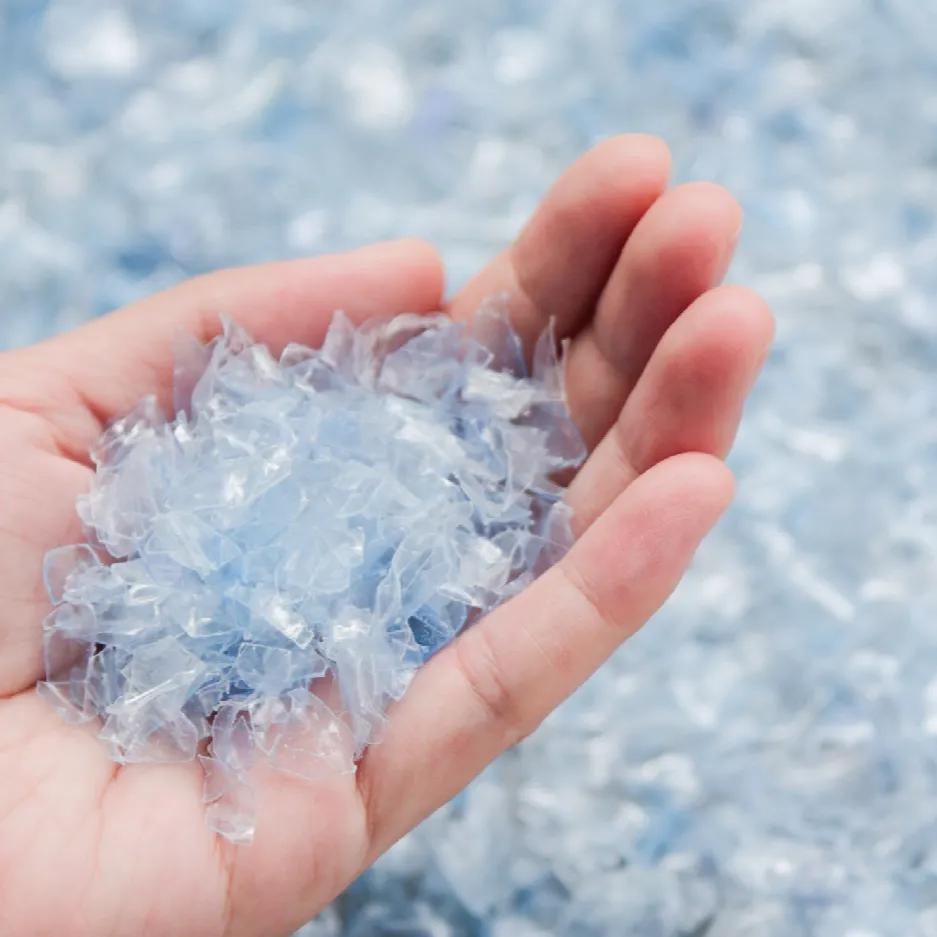
- PET and rigid packaging recycling: shredding of bottles and containers followed by granulation and washing to produce flake.
- Film and flexible packaging recycling: shredders are favored where baled or contaminated film must be opened before further processing.
- Automotive and durable goods recycling: shredders handle bumpers, housings, instrument panels, and mixed plastic assemblies.
- Electronic and appliance waste: shredders provide the first breakup stage before separation and material recovery.
A poor-fit use is fine powder production from elastomeric or highly elastic plastics in a standard granulator, because flexible materials can wrap around rotors and resist clean cutting; such applications often require different cutters, temperature control, or specialized mills.
Technological Innovations and Automation
Recent innovation has focused on improving feeding stability, screen changeovers, blade life, energy efficiency, and integration with downstream processes. Important advances include:
- Variable-speed drives for tuning rotor behavior to material type
- Automated overload protection and reverse functions in shredders
- Hydraulic or assisted feeding systems for bulky scrap
- Wear-resistant knife materials and coatings for abrasive or contaminated feedstock
- Noise and dust suppression in enclosed cutting chambers
- Inline conveyors, dewatering units, and separators for continuous recycling lines
Automation is particularly valuable because size reduction quality affects subsequent washing, separation, pelletizing, and part performance. Poorly controlled flake size can reduce washing efficiency, increase fines, and complicate extrusion feeding.
Environmental and Sustainability Aspects
Size reduction equipment is a core enabler of material circularity, because it turns production scrap and post-consumer waste into feedstock that can re-enter manufacturing. Its sustainability impact depends on how efficiently the system balances throughput, particle quality, power use, and contamination removal.
Key sustainability benefits include:
- Reduced landfill disposal
- Higher recycled-content potential
- Lower transportation volumes after compaction and size reduction
- Better wash-line performance through more uniform flake geometry
- Improved in-house scrap recovery in molding and extrusion plants
At the same time, the equipment can be energy-intensive, and the best environmental outcome depends on matching machine type to the material stream. For example, using a high-speed granulator on feed that should first be shredded can increase wear, fines, and energy demand without improving overall recovery.
Economic and Global Market Impact
Size reduction equipment supports several economically important segments of the plastics industry: in-plant scrap recovery, recycling facilities, compounders, and waste-management operators. The market is shaped by demand for recycled polymers, regulation on waste diversion, and the need to process an increasingly diverse mix of post-industrial and post-consumer feedstocks.
Commercial suppliers emphasize modular lines ranging from compact beside-the-press granulators to heavy-duty shredders and integrated washing systems. The equipment is also a strategic asset for processors because it reduces raw-material losses and can improve internal resin economics when regrind quality is stable.
Current Challenges and Innovations
Several technical challenges remain prominent:
- Contamination: labels, metal inserts, dirt, and moisture can accelerate wear and reduce output quality.
- Material diversity: modern waste streams include multilayer structures, filled polymers, and fiber-reinforced plastics that are harder to size-reduce consistently.
- Knife wear and maintenance: cutting performance declines as blades dull, affecting particle consistency and energy consumption.
- Noise and dust: especially in high-speed granulation systems.
- Feed variability: bulky, thin, brittle, and elastic plastics often require different machine configurations.
Innovation is concentrated on better rotor designs, more durable alloys, improved screen management, predictive maintenance, and tighter line integration so that size reduction is no longer a standalone operation but part of a broader recycling and material-recovery workflow.
Future Outlook
The future of size reduction equipment in plastics is likely to be defined by higher selectivity, more automation, and greater compatibility with circular manufacturing systems. Recycling lines will increasingly require machines that can adapt quickly to mixed feedstocks, produce narrowly controlled flake geometries, and maintain low operating costs under fluctuating contamination levels.
Likely directions include:
- More sensor-based monitoring of load, vibration, and blade condition
- More energy-optimized drive systems
- Better wet-processing integration for PET and rigid recycling
- Greater use of modular, staged lines combining shredding, granulation, washing, and drying
- Improved ability to process multi-material and post-consumer waste
As recycled-content targets and material-recovery requirements continue to expand, size reduction equipment will remain a foundational technology linking scrap generation to useful secondary raw material.
Summary
Granulators, crushers, and shredders form the core size reduction family in plastics processing, each serving a distinct role in preparing scrap for reuse or recycling. Shredders perform primary breakup of bulky material, granulators produce uniform flakes or regrind, and crushers bridge the gap for rigid or thick-walled scrap, while pulverizers extend the system into fine powder applications.
References
- •
Size reduction equipment: Types, uses and benefits. (2026, August 26). IQS Directory. https://www.iqsdirectory.com/articles/size-reduction-equipment.htmlLink
- •
Size reduction technology innovations & news. (2026, September 8). Recycling Inside. https://recyclinginside.com/technology/size-reduction/Link
- •
Mechanical unit operation. (n.d.). PSG College of Arts & Science. http://elearn.psgcas.ac.in/nptel/courses/video/103103155/lec8.pdfLink
- •
Size reduction. (n.d.). University of Michigan. https://encyclopedia.che.engin.umich.edu/size-reduction/Link
- •
Size reduction equipment overview. (2026, March 27). Scribd. https://www.scribd.com/presentation/355439307/Presentation-1Link
- •
Compare 6 types of size reduction equipment side by side. (n.d.). Munson Machinery. https://www.munsonmachinery.com/Compare/compare-size-reduction.phpLink
- •
Size reduction equipments. (2018, April 3). SlideShare. https://www.slideshare.net/slideshow/size-reduction-equipments-92737003/92737003Link
- •
2. Size reduction – Aqueous pathways (DRAFT). (n.d.). BCcampus. https://pressbooks.bccampus.ca/hydrometallurgy/chapter/size-reduction/Link
- •
Jacobson. (n.d.). Carter Day. https://carterday.com/jacobson/Link
- •
Types of size reduction equipment: Crushers, grinders, ... (2026, March 16). Agriculture Institute. https://agriculture.institute/food-processing-and-engineering-i/size-reduction-equipment-crushers-grinders-cutting-machines/Link
- •
Types of size reduction equipment - Retsch. (n.d.). Retsch. https://www.retsch.com/de/produkte/size-reduction-equipment/Link
- •
Granulation & recycling - Wensui. (n.d.). Wensui. https://www.wensuimachinery.com/granulation-and-recyclingLink
- •
How does a plastic granulator machine compare to ... (2025, August 29). BoxinPM. https://www.boxinpm.com/news/industry-news/how-does-a-plastic-granulator-machine-compare-to-a-shredder-or-crusher.htmlLink
- •
Machines for crushing, grinding, washing and agglomeration. (2015, May 6). Herbold. https://www.herbold.com/en/machines/Link
- •
Typical plastic recycling... (2026, July 30). Energycle. https://www.energycle.com/shredder-vs-granulator-vs-pelletizer-selection-rules/Link
- •
Size reduction equipment. (n.d.). Birla Institute of Technology, Mesra. https://bitmesra.ac.in/UploadedDocuments/admince/files/PCMO_Module-II%20Size%20reduction%20equipment.pdfLink
- •
Lecture no. 9 equipment for size reduction – grinders. (n.d.). PSG College of Arts & Science. http://elearn.psgcas.ac.in/nptel/courses/video/103103155/lec9.pdfLink
- •
Review on the technology of size reduction equipment. (n.d.). Sphinxsai. https://www.sphinxsai.com/2020/ch_vol13_no1/1/(48-54)V13N1CT.pdfLink
- •
A review on the technology of size reduction equipment. (n.d.). IJARSCT. https://www.ijarsct.co.in/Paper22748.pdfLink
- •
Indian institute of technology roorkee. (n.d.). PSG College of Arts & Science. http://elearn.psgcas.ac.in/nptel/courses/video/103107123/lec14.pdfLink
- •
Equipment introduction. (n.d.). 3E Recycling. http://www.3e-recycling.com/product_three/show/12.htmlLink
- •
Size reduction equipment - Shredding technology. (2021, October 19). Wiscon Tech. https://www.wiscon-tech.com/size-reduction-equipment/Link
- •
Plastic recycling machine: Complete buyer & selection ... (2026, August 27). Energycle. https://www.energycle.com/what-is-a-plastic-recycling-machine/Link
- •
Plastic granulator guide: Types, specs, selection - Energycle. (2026, June 11). Energycle. https://www.energycle.com/plastic-granulator-guide/Link
- •
Particle size reduction equipment manufacturer. (n.d.). Stedman Machine. https://www.stedman-machine.com/particle-size-reduction.htmlLink
- •
Size reduction equipment - Food tech notes. (2020, July 11). Food Tech Notes. https://foodtechnotes.com/2020/07/11/size-reduction-equipment/Link
- •
Intro to size reduction. (n.d.). HubSpot. https://cdn2.hubspot.net/hub/23878/file-303383112-pdf/docs/intro_to_size_reduction.pdfLink
- •
Industrial shredders: Types and designs | IQS directory. (n.d.). IQS Directory. https://www.iqsdirectory.com/articles/shredder/industrial-shredder.htmlLink
- •
Size reduction equipment manufacturers and companies. (n.d.). IQS Directory. https://www.iqsdirectory.com/size-reduction-equipment/Link
- •
What is size reduction equipment and why it matters in ... (2025, July 28). CPEG. https://cpeg.com/blog/what-is-size-reduction-equipment-and-why-it-matters-in-industrial-processing/Link
- •
Size reduction | İnan Tech. (n.d.). Inan Plastics. https://www.inanplastics.com/en/size-reductionLink
- •
Pulverizers: Types, uses & industrial applications - IQS directory. (2026, May 14). IQS Directory. https://www.iqsdirectory.com/articles/pulverizers.htmlLink
- •
Williams patent crusher & pulverizer company | Machinery manufacturing. (n.d.). LinkedIn. https://www.linkedin.com/company/williamscrusherLink
- •
Size reduction equipment manufacturers suppliers | IQS directory. (2000, January 1). IQS Directory. https://www.iqsdirectory.com/size-reduction-equipment/size-reduction-equipment-2/Link
- •
Complete guide to HDPE recycling machines & lines. (2026, June 23). Energycle. https://www.energycle.com/hdpe-recycling-equipment-guide/Link
- •
Plastic size reduction at a brief. (2020, December 3). Wiscon Tech. https://www.wiscon-tech.com/plastic-size-reduction-at-a-brief/Link
- •
Plastics granulators vs. plastics shredders: Characteristics | Conair. (2021, October 4). Conair. https://www.conairgroup.com/resources/resource/the-characteristics-of-plastics-granulators-and-plastics-shredders/Link
- •
Granulator vs. shredder: Choosing the right plastic ... (n.d.). Applied Machinery. https://www.appliedmachinery.com.au/knowledgebase/granulator-vs-shredder-choosing-the-right-machine-for-your-plastic-processing-needsLink
- •
Plastic granulator & crusher machines | Wet, rigid, PET. (n.d.). Energycle. https://www.energycle.com/plastic-granulators/Link
- •
What is a plastic granulator? A complete industrial buyer's guide ... (2026, March 27). Kitech Recycling. https://kitech-recycling.com/blog/plastic-granulatorLink
- •
Size reduction equipment (granulators, crushers, shredders). (2026, September 14). China Plas Online. https://www.chinaplasonline.com/eMarketplace/allexhibitors/eng?SearchType=all&SearchBy=Prod&page=1&Products=97&SProds=97&Keyword=Sustainable%20&%20High%20Value-added%20AdditivesLink
- •
Industrial shredder: Working principles, types & applications. (2026, February 2). Energycle. https://www.energycle.com/industrial-shredders-principles-and-application/Link
- •
The working principle of plastic granulator - Wiscon envirotech. (2020, December 18). Wiscon Tech. https://www.wiscon-tech.com/the-working-principle-of-plastic-granulator/Link
- •
Size reduction equipment manufacturers and suppliers in the USA ... (2015, January 1). ThomasNet. https://www.thomasnet.com/suppliers/usa/size-reduction-equipment-75700302Link
- •
Understanding granulators and the granulation process | A ... (2024, November 4). Loyal Machine. https://loyal-machine.com/blog/what-is-a-granulator/Link
- •
A guide to plastic recycling machines. (2026, February 16). Torontech. https://www.torontech.com/articles/explained-plastic-recycling-equipment/Link
- •
The real difference between granulators and shredders. (2026, May 25). Recycling Product News. https://www.recyclingproductnews.com/article/44616/the-real-difference-between-granulators-and-shreddersLink
- •
From production waste to... (n.d.). Weima. https://weima.com/us/granulators/Link
- •
Types of size reduction equipment | PDF | Home & garden. (n.d.). Scribd. https://www.scribd.com/doc/294718580/SIze-Reduction-EquipmentLink