
Introduction
Degassing systems are process equipment designed to remove dissolved gases, entrained air, and volatile vapors from liquids, pastes, and, in some plastics applications, viscous polymer melts and compounded materials. In the plastics-processing context, they are most often associated with vacuum venting on extruders, devolatilization of resins and compounds, and vacuum chambers for bubble-free resins, adhesives, and molding materials; more broadly, the same engineering principle is used in water treatment, chemicals, pharmaceuticals, and thermal systems.
Their importance in plastics manufacturing lies in product quality and process stability: removing gas reduces voids, foaming, surface defects, odor, and residual volatiles, while improving melt uniformity and downstream consistency. The main technologies include vacuum degassing, membrane degassing, and thermal or pressure-based degassing, with machine selection determined by material viscosity, volatile content, throughput, and purity requirements.
Historically, degassing evolved from simple open-vessel air release to engineered vacuum and stripping systems, then to continuous inline modules and high-purity membrane-based units. In modern plants, these systems are increasingly integrated with automation, instrumentation, and energy-management controls to reduce waste, limit emissions, and support circular-processing routes that reuse regrind, recycled polymers, and devolatilized compounds more reliably.
History and Development
Early degassing in process industries relied on settling tanks, heating, and venting, which removed only the most obvious entrained air and was poorly suited to high-viscosity or high-purity materials. The move to vacuum-assisted degassing made it possible to lower the partial pressure above a liquid or melt, accelerating the release of dissolved gases and volatile components according to Henry’s law.
A second milestone was the industrialization of continuous degassing equipment with pumps, valves, vessel internals, and control systems that allowed stable operation rather than batch-only processing. This was especially important in chemical and plastics operations, where process interruptions can cause material loss or inconsistent product quality.
A third development has been the growth of membrane degassing and compact inline modules, which remove gases continuously without large open chambers and are well suited to high-purity fluids, analytical systems, and certain specialty-process streams. In parallel, extruder devolatilization and vacuum venting became standard in compounding and reactive processing where low residual monomer, solvent, moisture, or odor is required.
Technical Overview
At its core, degassing reduces the gas content of a process medium by shifting the equilibrium between dissolved and gaseous phases. In vacuum systems, pressure reduction lowers gas solubility and encourages bubble nucleation and growth, after which gases are removed by a pump or vent line. In membrane systems, a gas-permeable barrier separates the process fluid from a vacuum or stripping side, allowing dissolved gases to diffuse out of the liquid.
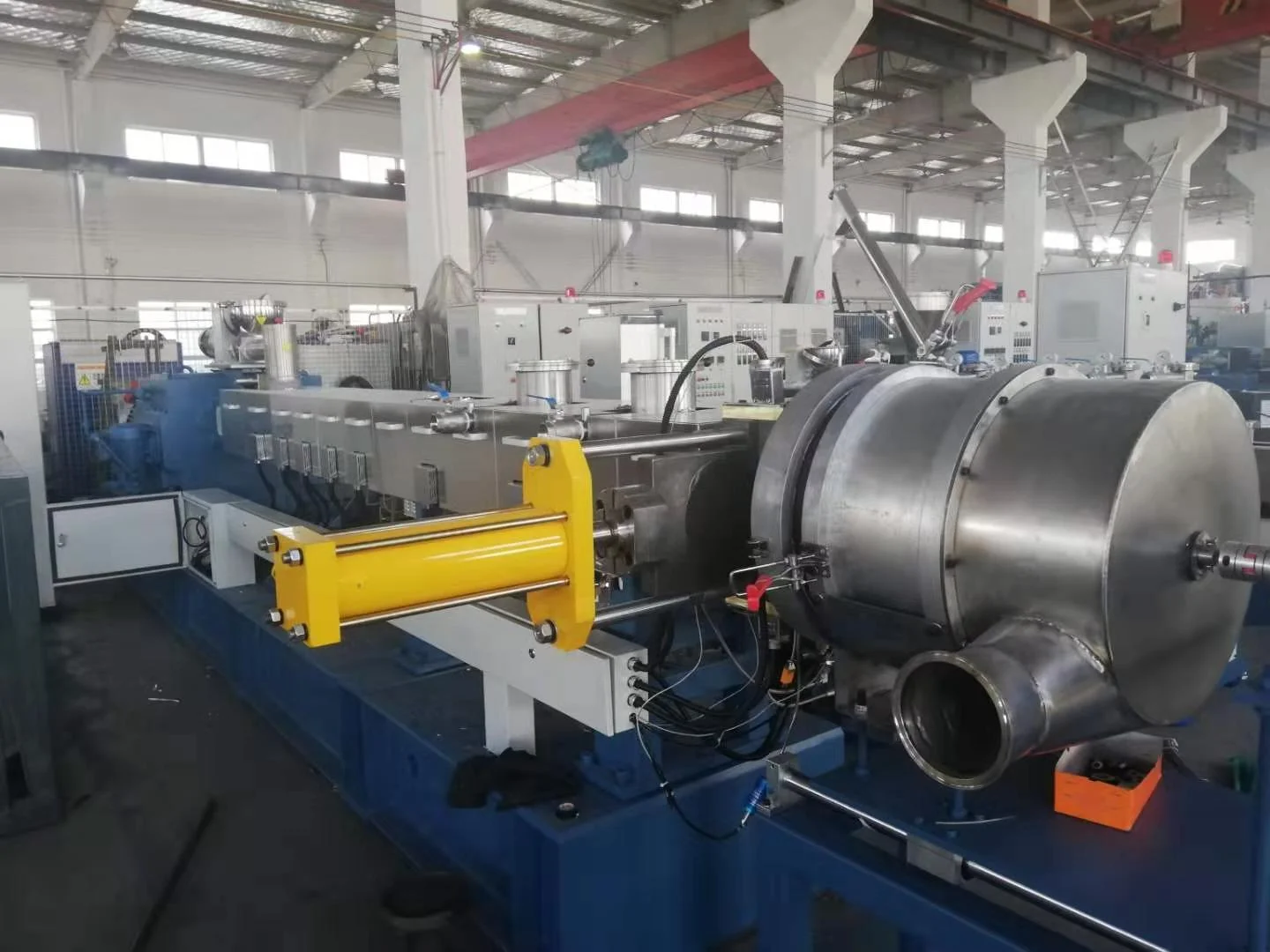
For plastics machinery, the most relevant configurations are vacuum vented extruders, devolatilizing reactors, and vacuum chambers for liquid resins, silicones, adhesives, and casting compounds. These systems are often installed after melting or mixing, when trapped air, moisture, solvent, or unreacted low-molecular species can otherwise create defects.
Typical technical benchmarks include the following:
- Vacuum level in plastics devolatilization commonly ranges from moderate vacuum down to deep vacuum, depending on material and process objective; high-purity or difficult devolatilization duties may require substantially lower absolute pressures than simple air removal.
- Extruder degassing zones are usually located after melt homogenization and before final pressure-building sections, where the melt has sufficient fluidity for volatile escape but still retains enough residence time for separation.
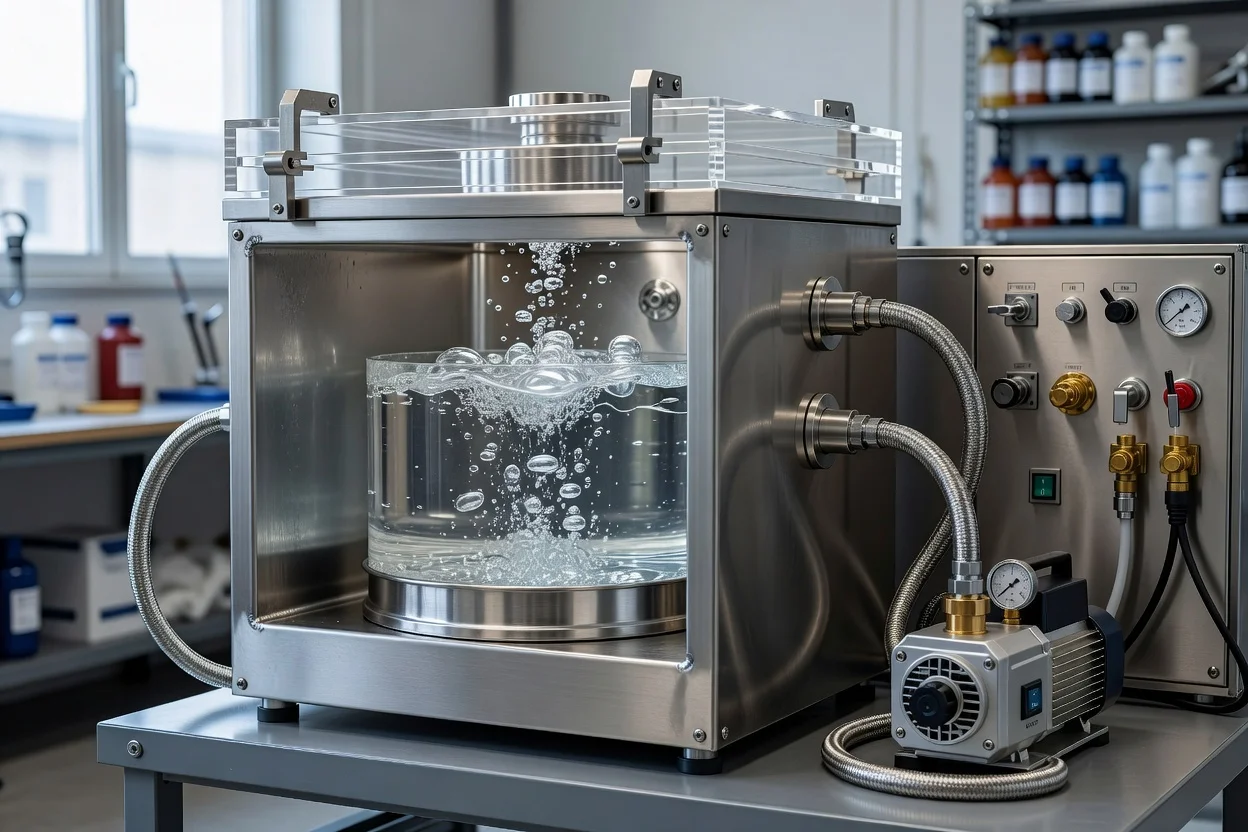
- Vacuum chamber systems for resin and compound degassing are often built as sealed vessels with a vacuum pump, valves, and lid sealing to prevent re-entrainment of air.
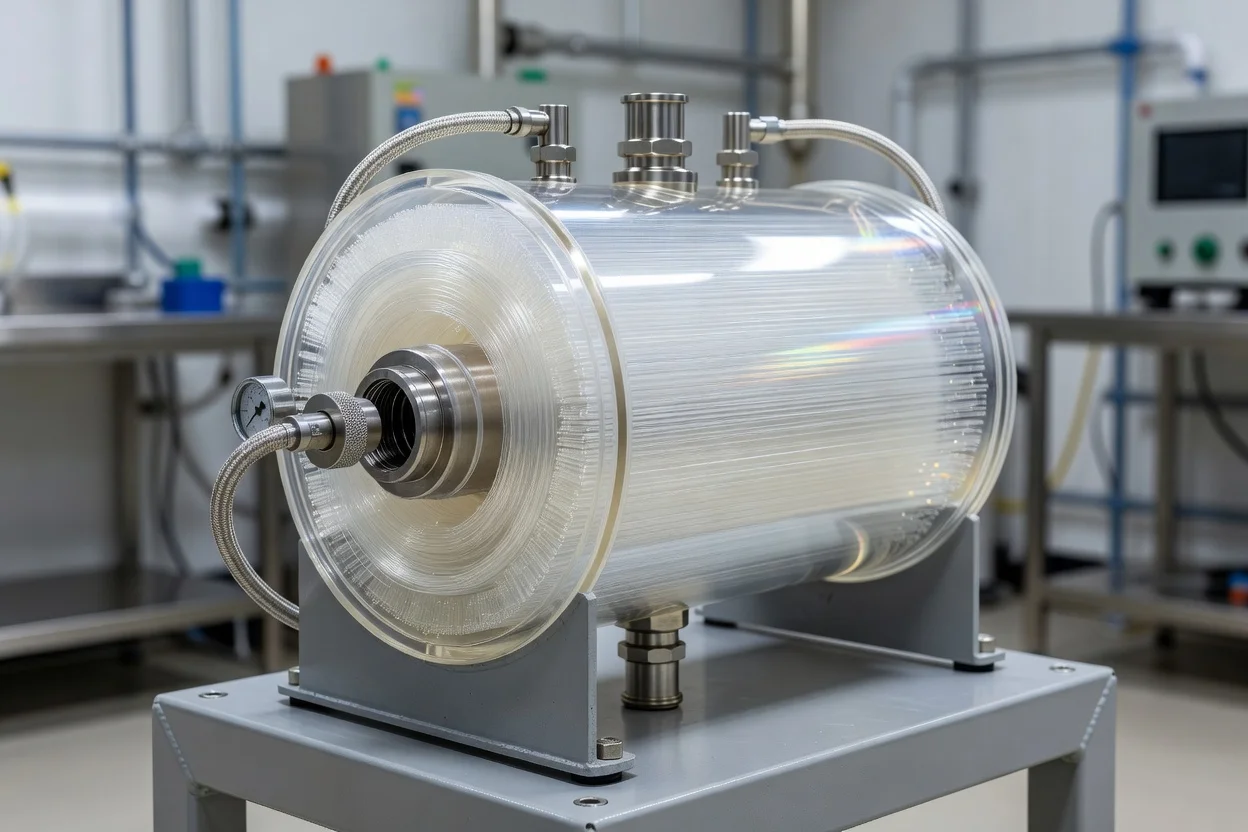
- Membrane degassers use gas-permeable tubing or hollow-fiber modules and are commonly selected when compactness and continuous operation are important.
- Thermal or pressure degassing can be used when heating lowers gas solubility, but it is usually less selective than vacuum or membrane methods and may be less suitable for heat-sensitive polymers and additives.
Performance depends strongly on fluid viscosity, surface renewal, temperature, and residence time. For polymer melts, higher melt temperatures generally improve volatile release but must be balanced against degradation risk, color shift, and additive loss.
Types and Variations
| Type | Operating principle | Typical plastics use | Strengths | Limitations |
|---|---|---|---|---|
| Vacuum degassing | Pressure is reduced so dissolved gases and bubbles expand and leave the material | Extruders, resins, adhesives, casting compounds | Strong volatile removal, widely used | Requires vacuum hardware and good sealing |
| Membrane degassing | Gases diffuse through a permeable membrane into vacuum or sweep gas | High-purity liquids, specialty additives, laboratory and inline feeds | Compact, continuous, low contamination risk | Lower capacity for highly viscous media |
| Thermal degassing | Heating reduces gas solubility | Water-based or heat-tolerant streams | Simple and effective for some media | Not ideal for heat-sensitive polymers |
| Pressure or flash degassing | Pressure drop releases dissolved gases | Process liquids, some monomers and formulations | Simple and fast | May be less controllable than vacuum systems |
| Vacuum chamber degassing | Batch material is placed in a sealed vessel under vacuum | Silicone, epoxy, polyurethane, casting resins | Effective for batch work and small-scale production | Batch cycle time can limit throughput |
Applications and Uses
In plastics processing, degassing systems are used wherever gases, moisture, or volatile components would degrade product quality or process stability.
- Polymer compounding and masterbatch production: Vacuum venting removes moisture, residual monomer, plasticizer vapor, and entrained air, improving pellet quality and reducing porosity.
- Reactive extrusion and devolatilization: Degassing helps strip reaction by-products, solvent, or unreacted monomers from polymer melts before pelletizing.
- Resin and adhesive manufacturing: Vacuum chambers and inline degassers eliminate bubbles that would otherwise weaken castings, coatings, or bonding layers.
- Thermoplastic recycling and reclaim processing: Degassing can reduce odors and volatiles in recycled streams, particularly when the feedstock contains moisture or contaminants.
- High-purity applications: Specialty plastics, optical materials, electronics-related process liquids, and laboratory formulations use degassing to avoid defects and contamination.
A poor-fit use is very low-viscosity, gas-free utility water already near equilibrium, where a dedicated degassing system may add cost without meaningful benefit unless corrosion control or precision process requirements justify it.
Engineering Details and Machine Design
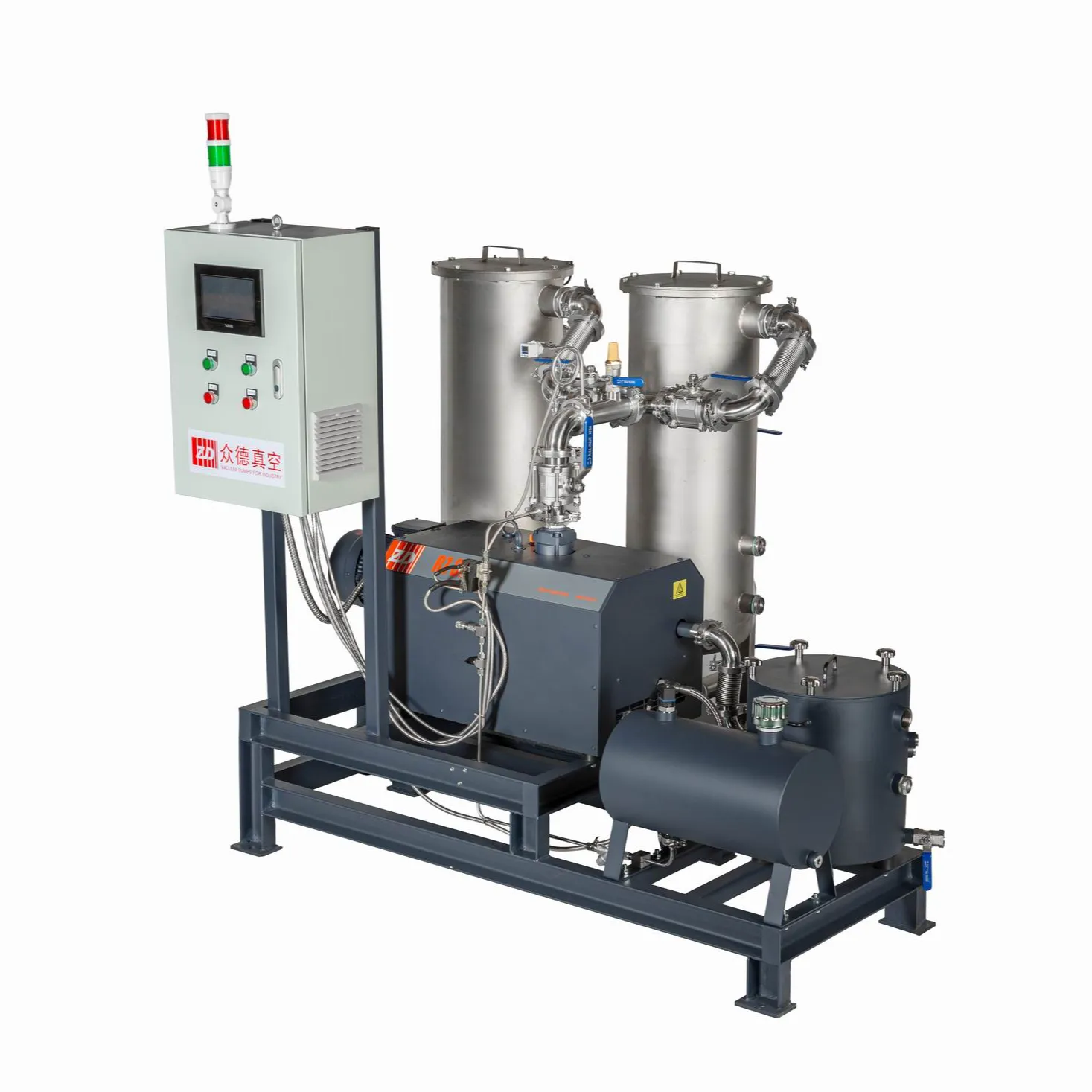
A plastics degassing system usually includes a feed section, vacuum or membrane separation stage, gas removal line, control instrumentation, and in many cases a vacuum pump package. In larger installations, auxiliary equipment may include a condensate trap, foam breaker, temperature control, and pressure sensors to maintain stable devolatilization conditions.
For extrusion, the design of the venting section is critical. The screw must expose a renewed melt surface to the vacuum zone while preventing melt carryover into the vent port. This is why devolatilizing screws often include barrier sections, mixing elements, and vent stubs positioned to encourage surface renewal without flooding.
For batch vacuum chambers, performance depends on chamber volume, pump capacity, leak-tightness, and the viscosity of the material being treated. Thick resins and filled compounds often require slower pump-down and a staged vacuum profile to avoid excessive foaming and overflow.
Key Performance Considerations
- Throughput: Small batch systems are used for laboratory and specialty production, while industrial devolatilizing extruders can run at much higher continuous throughputs, with capacity governed by melt viscosity, screw design, and vacuum load.
- Residual gas content: Effective systems can markedly reduce entrained air and volatile content, but the achievable level depends on diffusion rate, residence time, and surface area renewal rather than vacuum alone.
- Moisture removal: In hygroscopic polymers, degassing is often paired with drying; degassing alone may not achieve sufficiently low moisture for sensitive applications.
- Specific energy consumption: Vacuum pumps, heaters, and control systems add energy demand, but the energy penalty is often offset by reduced scrap, fewer defects, and higher stable output.
- Process stability: Poorly tuned degassing can cause surging, vent flooding, or polymer degradation, so control of temperature, screw fill, and vacuum level is essential.
Technological Innovations and Automation
Modern degassing systems increasingly use closed-loop control, pressure transducers, vacuum regulation, and PLC-based recipe management to keep the process stable under changing feed conditions. This is especially useful in plastics plants that switch between virgin resin, regrind, and recycled feedstocks.
Inline systems are also benefiting from improved membrane materials, compact vacuum packages, and modular skids that simplify installation and maintenance. In extrusion and compounding, sensor integration helps detect vent flooding, unstable melt behavior, or excessive volatile load before quality losses occur.
Environmental and Sustainability Aspects
Degassing supports sustainability by reducing scrap, rework, and off-spec product, especially in compounding and recycling where incoming feed quality varies. It also helps make recycled or reclaimed polymers more usable by removing odor and residual volatiles that can limit end-market acceptance.
At the same time, degassing systems consume energy through vacuum generation and sometimes heating, so their environmental value depends on process efficiency and utilization rate. Systems designed with optimized pump sizing, leak control, heat recovery, and automation can reduce operating burden while preserving product quality.
In circular-processing applications, degassing is often a key enabling step because recycled polymers commonly carry moisture, entrained air, and low-molecular contaminants that would otherwise impair melt quality or downstream appearance.
Economic and Global Market Impact
The market impact of degassing systems is tied to the broader demand for higher purity, better yield, and process reliability in plastics and adjacent industries. Demand is strongest where product defects are expensive: engineering plastics, electronic materials, medical and pharmaceutical-related materials, specialty adhesives, and recycled compounds.
From an investment perspective, degassing equipment is often justified not by direct output increase alone but by the reduction of hidden costs such as bubbles, surface defects, odor complaints, premature maintenance, and customer returns. Compact systems also lower the barrier for smaller processors that need batch degassing without full-scale devolatilization infrastructure.
Current Challenges and Innovations
One major challenge is handling variable feedstocks, especially in recycling and compound production, where moisture, volatiles, and contamination can fluctuate widely. Another is preventing vent flooding or unstable foaming in high-viscosity melts, which can reduce separation efficiency and contaminate the vacuum line.
Current innovation is focused on:
- Better screw and vent design for more stable melt surface renewal.
- More efficient vacuum pumps with lower maintenance burden.
- Improved membrane modules for compact continuous degassing.
- Smarter process diagnostics for early warning of foaming, leakage, and vent overload.
Future Outlook
Degassing systems are likely to become more tightly integrated with digital process control, energy optimization, and recycling-oriented compounding lines. In plastics, future growth will be shaped by tighter quality requirements, wider use of post-consumer and post-industrial recyclate, and greater demand for low-odor, low-void, high-appearance materials.
The most important technical direction is not simply stronger vacuum, but better matching of degassing method to material behavior: batch vacuum chambers for specialty materials, inline membrane systems for high-purity streams, and optimized extruder venting for continuous polymer processing.
References
- •
Degassing chamber and systems, an overview. (2025, February 21). https://www.sanatron.com/articles/degassing-chamber-and-systems-an-overview.phpLink
- •
What are degassing systems? Water treatment explained. (2025, March 13). https://advancees.com/what-are-degassing-systems/Link
- •
Degassing unit. (2025). https://www.purplan.com/en/plants/bulk-storage/degassing-unitLink
- •
Degassing water (degasification) system & methods. (2020, August 6). https://www.veoliawatertech.com/en/solutions/technologies/whittier-filtration-separation/degasificationLink
- •
Processes for degassing. (n.d.). https://www.hydrogroup.biz/fileadmin/redakteur/pdf/product-manual/processes-for-degassing-r4i1-en.pdfLink
- •
Sulfatech_en | Degassing system. (n.d.). http://www.ulfatech.com/home/en/pro2_2/Link
- •
Pressure degassing systems. (n.d.). https://www.hydrogroup.biz/fileadmin/redakteur/pdf/product-manual/pressure-degassing-systems-r4i2-en.pdfLink
- •
Degassing pumps. (n.d.). https://www.fluidotech.it/en/technical-support/technical-insights/degassing-pumps/Link
- •
IMI Pneumatex degasser pressurization and degassing system. (2025, August 25). https://www.sentroxtechnics.com/post/imi-pneumatex-degasser-pressurization-degassing-systemLink
- •
Degassing systems. (n.d.). https://www.pyrotek.com/primary-solutions/aluminium/foundry/show/ProductLine/degassing-systemsLink
- •
Degassing. (2005, May 26). https://en.wikipedia.org/wiki/DegassingLink
- •
Degassing modules in the real world: 5 uses you'll actually see. (2025, October 2). https://www.linkedin.com/pulse/degassing-modules-real-world-5-uses-youll-actually-yvyxcLink
- •
What is the degassing process? Pipeline & tank. (2021, September 27). https://www.airclear.net/what-is-degassing/Link
- •
How degassing system works — In one simple flow (2025). (2025, October 15). https://www.linkedin.com/pulse/how-degassing-system-works-one-simple-flow-um30fLink
- •
Degassing pumps in the real world: 5 uses you'll actually. (2025, October 3). https://www.linkedin.com/pulse/degassing-pumps-real-world-5-uses-youll-actually-xwhdfLink
- •
What is degassing in chemical processing? (2026, July 15). https://dgchemtech.com/what-is-degassing.htmlLink
- •
Pressurisation + vacuum degassing in one unit. (n.d.). https://www.smartpressure.co.uk/pressurisation-and-degassing-in-one-unit.htmlLink
- •
Degassing vacuum pumps for pharmaceutical. (2000). https://www.nashpumps.com/en-nam/industries/pharmaceutical/vacuum-degassing/Link
- •
Degassing and pressurisation in plant rooms. (2026, April 30). https://agmservice.co.uk/articles/maintenance/degassing-and-pressurisation-in-plant-rooms/Link
- •
Mobile-phase degassing: What, why, and how. (2020, November 12). https://www.chromatographyonline.com/view/mobile-phase-degassing-what-why-and-howLink
- •
Degassing systems. (2000). https://www.pyrotek.com/products/foundry/show/ProductLine/degassing-systemsLink
- •
Vacuum degassing applications. (n.d.). https://knf.com/fileadmin/Local_files/USA/Downloads/OEM_Process_downloads/application_note/Application_Note_Degassing.pdfLink
- •
Deaerators and vacuum degassers for heating. (n.d.). https://storage.googleapis.com/wzukusers/user-24156127/documents/5cf9fd723f1b1hWYYzd5/ZMR%20SPIROTECH%20SPIROVENT.pdfLink
- •
Steel degassing. (2025, May 2). https://www.scribd.com/document/201122387/Steel-DegassingLink
- •
Compact vacuum D-GASSER. (n.d.). https://zhseparation.com/wp-content/uploads/2022/08/MI-SWACO-Compact-Degasser.pdfLink
- •
Vacuum degassers. (2024, April 3). https://coalprepsolutions.com/vacuum-degassers/Link
- •
Vacuum degassing. (2025, June 19). https://wintek-corp.com/primary-applications/vacuum-degassing/Link
- •
Vacuum degassing systems. (2025, June 1). https://lacotech.com/laco-category/vacuum-degassing-systems/Link
- •
Degassing - An overview. (n.d.). https://www.sciencedirect.com/topics/chemical-engineering/degassingLink
- •
Global degassing system market overview 2026-2033. (2026, August 8). https://www.linkedin.com/pulse/global-degassing-system-market-overview-2026-2033-k6fqeLink