
Introduction
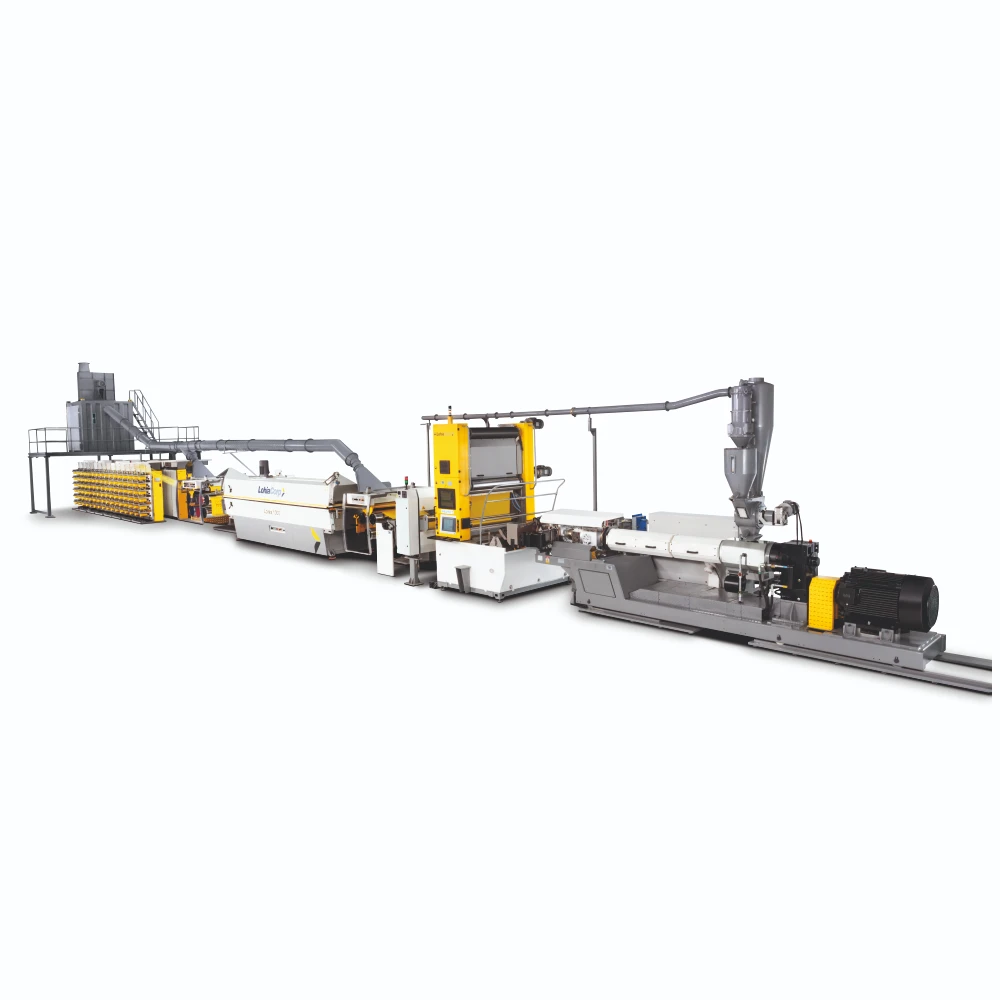
Extrusion lines for mono- and multifilaments are continuous melt-spinning systems used to convert thermoplastic polymers into single-strand monofilaments or bundles of continuous filaments for technical, industrial, and textile applications. In industrial practice, monofilament lines are typically optimized for diameter control, orientation, and abrasion resistance, while multifilament lines emphasize finer filament counts, yarn integrity, and downstream textile performance.
These lines occupy an important position in the broader plastics processing industry because they sit between polymer compounding and finished fiber or cord production. Their core process chain—melting, metering, extrusion through a die or spinneret, quenching, drawing, heat-setting, and winding—has been refined for decades and now includes options for mono-component and bi-component spinning, pilot-scale development, and increasingly automated process control.
Typical feedstocks include PP, HDPE, PA, PET, and in more specialized cases PBT, PEEK, PPS, and other engineering thermoplastics, depending on the thermal window and end-use requirements. Major applications range from brush bristles, fishing line, ropes, and agricultural nets to high-tenacity yarns, medical yarns, filter media, and engineered textile structures.
Sustainability is becoming more important in this segment. Manufacturers are developing lines that handle recycled polymers, reduce scrap through tighter melt control, and improve energy efficiency through better drive systems, metering precision, and optimized cooling and drawing. The future of the technology is tied to automation, material circularity, and specialty yarns with tailored mechanical and surface properties.
History and Development
The underlying melt-spinning principle predates many modern plastics applications: polymer melt is forced through a shaped die, cooled, drawn to orient molecular chains, and wound into usable filaments. As thermoplastics became industrially available, this principle was adapted to produce polymer monofilaments and multifilament yarns for replacing natural fibers and metal wire in selected uses.
Several development milestones shaped the modern machine class:
- Standardized monofilament production emerged with the adoption of water-bath quenching, gear-pump melt delivery, and multi-stage drawing and annealing, enabling stable round filaments with reproducible diameter and strength.
- Multifilament pilot and production systems expanded the technology from single-hole filament making to multi-hole spinnerets and high-filament-count yarn lines, supporting textile-like flexibility and broader performance tuning.
- Bi-component and specialty spinning introduced more complex cross-sections and property combinations, including sheath/core and side-by-side structures, which are now used in development laboratories and advanced production environments.
Today, the segment spans both commodity-oriented production lines for ropes, twines, and bristles and high-precision systems for engineered fibers, medical yarns, and laboratory development.
Technical Overview
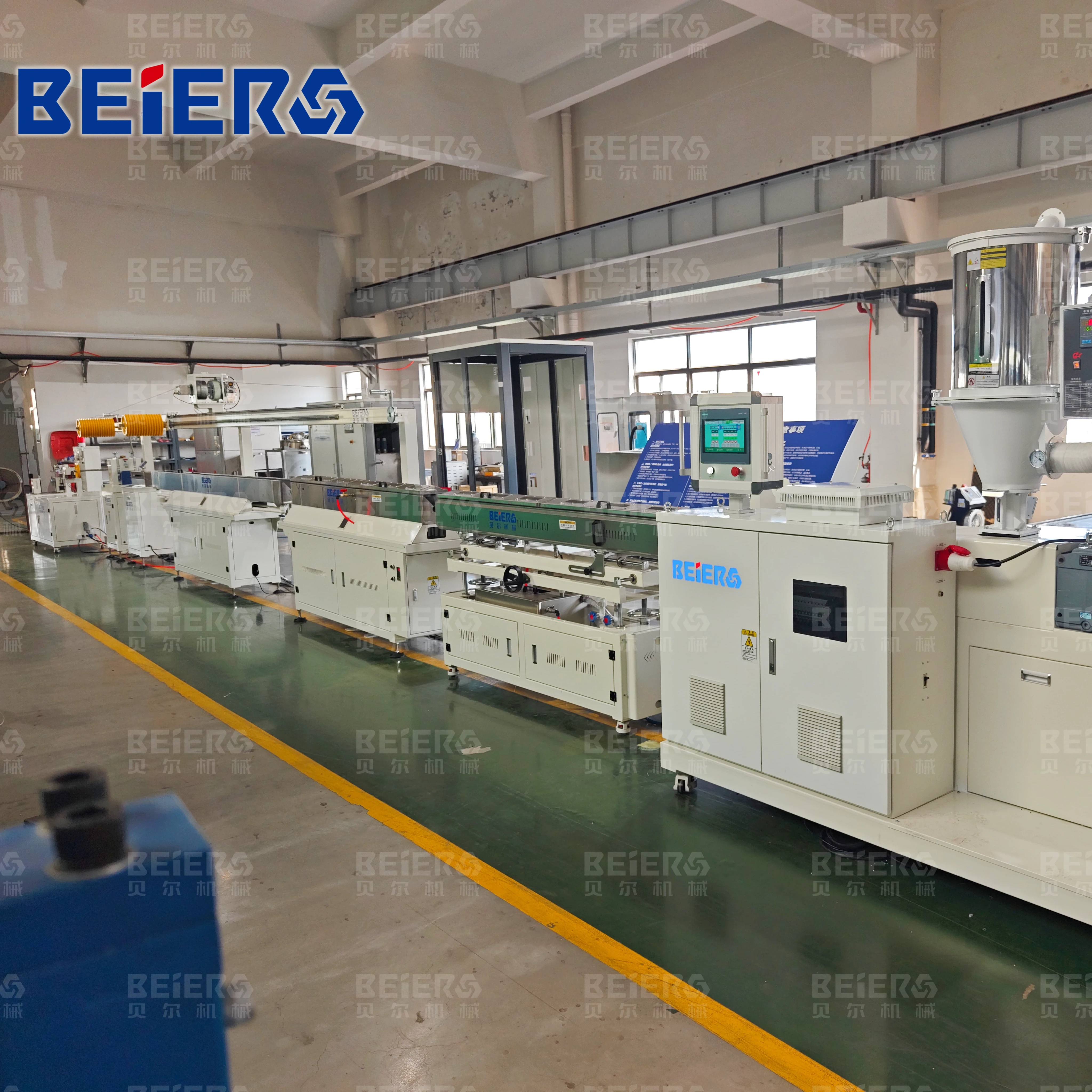
A mono- and multifilament extrusion line is best understood as a coordinated system rather than a single machine. Each section controls a different part of the final filament structure, from melt homogeneity to orientation and winding stability.
Main process stages
- Material preparation: drying and feeding of pellets or chips, especially important for hygroscopic polymers such as PA and PET.
- Plasticizing and metering: a single-screw or specialized extruder melts the polymer and conveys it at stable pressure; gear pumps are often used for finer flow control.
- Filament formation: monofilament lines use one or a small number of orifices, while multifilament lines use multi-hole spinnerets to produce many filaments simultaneously.
- Quenching: water baths, spin baths, or controlled air/quench chambers solidify the filament and influence crystallization and surface quality.
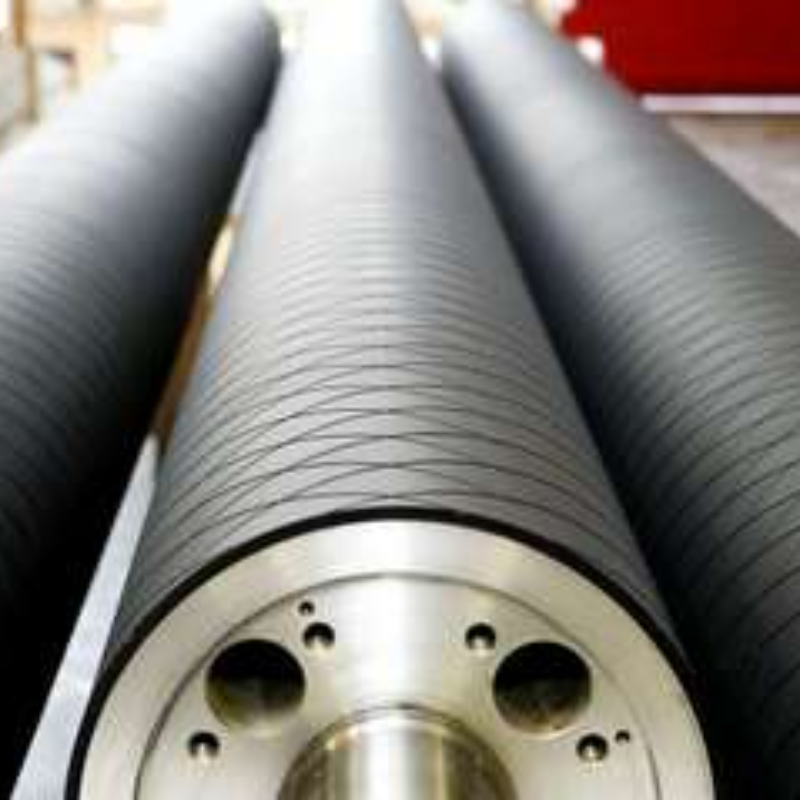
- Drawing and orientation: godets or draw rolls stretch the filament to align macromolecules, increasing tensile strength and controlling elongation.
- Heat-setting or annealing: thermal stabilization reduces shrinkage and locks in mechanical properties.
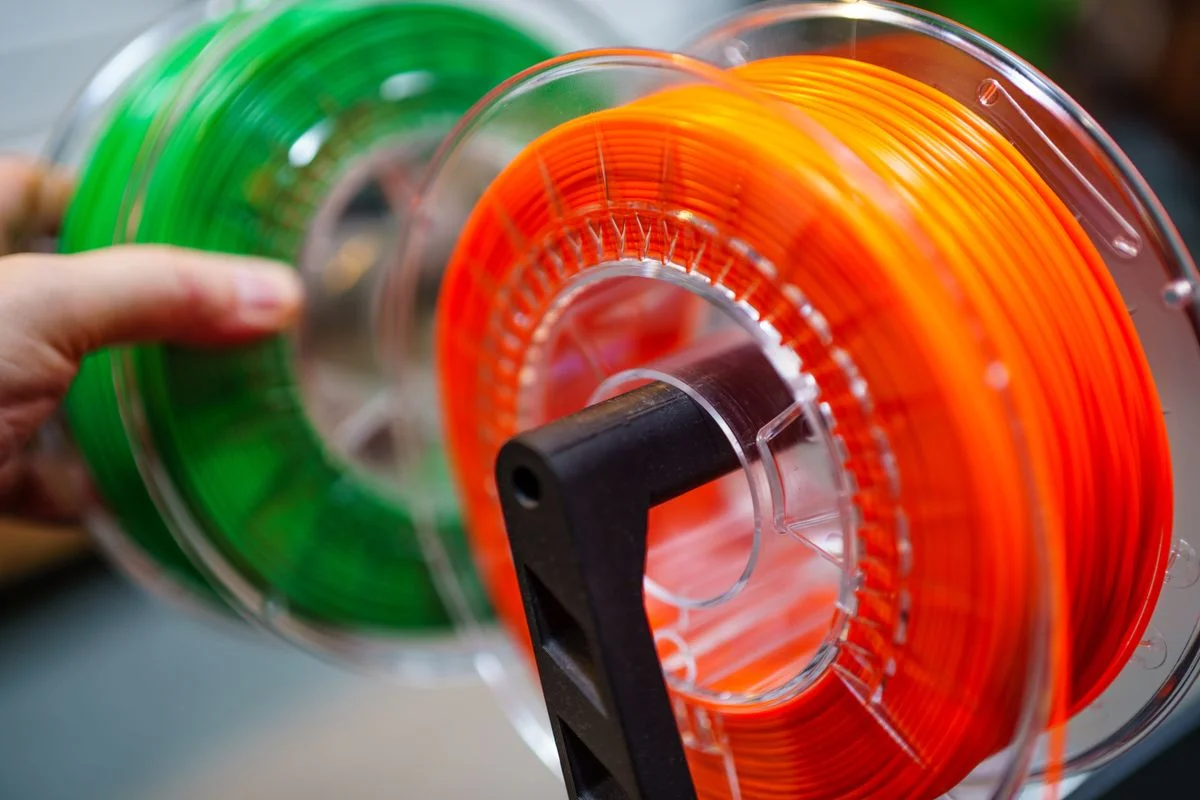
- Winding: precision spooling or package winding maintains tension and lay consistency for downstream use.
Typical technical ranges
- Monofilament diameter: industrial systems commonly cover roughly 0.10 mm to 5.00 mm, depending on machine design and application; some lines are aimed at very thin technical filaments, while others produce heavier brush or industrial filament grades.
- Filament count: laboratory and pilot multifilament systems may produce configurations up to 72, 144, or 288 filaments, and some development systems support even higher counts.
- Throughput: commercial monofilament lines are commonly cited in the range of 40 to 200 kg/h, with some configurations reaching about 180 kg/h or more depending on screw diameter, polymer, and filament count.
- Production speed: line speeds around 120 m/min are cited for certain PP/HDPE monofilament systems, though actual speed depends on diameter, draw ratio, and cooling conditions.
- Draw ratio: for thermoplastic melt-spun filaments, stretch ratios can reach several hundred percent; one technical source notes hot drawing up to 500% in suitable polymer systems.
- Residual moisture after dewatering: in filament-adjacent polymer handling, centrifugal dewatering and drying systems commonly target low residual moisture; in practice, well below 1% is typical after centrifugal drying for wet filament products, while hygroscopic resin drying targets are often far lower before extrusion. The exact value depends on polymer and line design; published line brochures rarely standardize this figure for mono- and multifilament systems, so plant specification is normally polymer-specific.
- Specific energy consumption: this varies strongly with polymer, line speed, and drawing/heat-setting intensity. For modern melt-spinning and filament lines, energy use is typically driven more by heating, drying, and winding than by the extrusion screw alone; exact numbers are usually disclosed only by machine class or plant audit rather than in public brochures.
Engineering features
- Gear pump dosing improves pressure stability and filament uniformity.
- Multi-stage drawing is used where higher orientation or tighter property control is required.
- Single-stage drawing and heat-setting is common in some monofilament systems when the product specification is simpler or the filament diameter is relatively robust.
- Clean-room or controlled-environment operation is used for sensitive mono-component yarns, especially in medical or high-purity applications.
Monofilament vs. Multifilament Systems
| Aspect | Monofilament lines | Multifilament lines |
|---|---|---|
| Product form | One continuous solid strand | Many fine continuous filaments bundled into yarn |
| Typical priority | Diameter precision, stiffness, abrasion resistance | Flexibility, softness, textile hand, bundle integrity |
| Die/spinneret | Single or low-hole-count die | Multi-hole spinneret |
| Common polymers | PP, HDPE, PA, PET | PP, PA, PET, specialty thermoplastics |
| Typical end uses | Bristles, fishing line, trimmer line, ropes, nets | Industrial yarns, textile yarns, sacks, cords, technical fabrics |
| Process emphasis | Quenching, drawing, heat-setting, winding | Filament uniformity, bundle control, interlacing, winding |
| Development variants | Single-component, bi-component, crimped/custom profiles | Mono-, bi-, and tri-component, laboratory and pilot systems |
Types and Variations
Monofilament extrusion lines
These lines produce a single solid filament with controlled diameter and roundness. They are widely used for PP and HDPE, and also for PA and PET when higher thermal or mechanical performance is required.
Common variants include:
- Standard monofilament lines for general industrial products such as brush filament and rope reinforcement.
- High-tenacity lines for agricultural and marine uses, where tensile strength and abrasion resistance are critical.
- Precision or medical-grade lines for controlled, small-batch production, often under inert or clean-room conditions.
- Bi-component monofilament systems for specialized cross-sections or performance combinations.
Multifilament extrusion lines
These systems are designed to produce multiple fine filaments that are combined into a yarn. They are used where flexibility, drape, and textile behavior matter more than the stiffness of a single strand.
Common variants include:
- Pilot and laboratory multifilament lines for process development and material screening.
- Industrial multifilament yarn lines for ropes, sacks, industrial textiles, and specialty technical yarns.
- Bi-component and tri-component systems for engineered fiber architectures and advanced textile properties.
Material-based variants
- PP and HDPE lines are common for cost-sensitive, moisture-resistant applications such as nets, ropes, and brush bristles.
- PA lines are favored where toughness, abrasion resistance, and resilience are important.
- PET and PBT lines serve applications needing dimensional stability or higher thermal performance.
- High-temperature engineering polymer lines are used in niche sectors such as medical, aerospace-adjacent, and specialty industrial products.
Applications and Uses
- Agriculture: monofilament lines supply shade nets, raschel nets, agrotextiles, and netting structures that must balance strength, weather resistance, and cost.
- Fishing and marine: both monofilament and specialized high-tenacity filament lines are used for fishing line, nets, and marine cordage.
- Brushes and brooms: stiff monofilaments are widely used for bristles due to their wear resistance and shape retention.
- Ropes, twines, and cords: multifilament yarns and some heavier monofilaments feed rope and twine production where flexibility and tensile load distribution are important.
- Industrial filtration: technical monofilaments and multifilaments are used in filter webs, screening structures, and filter-support fabrics.
- Packaging and consumer goods: filaments appear in strapping-related auxiliary products, twines, and consumer technical products such as zipper or artificial-hair filaments.
- Medical and specialty uses: small-batch extrusion supports medical yarns and precision products when strict dimensional and purity requirements apply.
- Poor-fit use: these lines are generally a poor match for products requiring random fiber mats or nonwoven bulk structures, because the process is designed for continuous, oriented filaments rather than short-fiber webs.
Technological Innovations and Automation
Modern mono- and multifilament lines increasingly integrate:
- Closed-loop temperature and pressure control for melt stability.
- Servo-driven winding and draw systems for tension consistency and reduced package defects.
- Recipe-based automation for quick changeover between polymers, filament counts, and diameter targets.
- Bi-component spinning capability for advanced cross-sections and property gradients.
- Pilot-scale modular platforms for R&D and product development before industrial scale-up.
Automation improves consistency, but it also raises engineering demands. The tighter the tolerances on diameter, roundness, and draw ratio, the more important sensor calibration, melt filtration, and thermal uniformity become.
Environmental and Sustainability Aspects
Sustainability performance depends heavily on polymer choice, line efficiency, and scrap management.
- Material efficiency: stable melt delivery and drawing reduce filament breaks and off-spec waste.
- Energy use: the major loads are typically heating, drying, quenching, and winding rather than extrusion alone; efficient heat management is therefore a central design concern.
- Recycled polymers: some lines can be configured for recycled PP, PET, or other compatible feedstocks, although contamination control and melt filtration become more critical.
- Circularity: monofilaments can be easier to classify and recycle than complex composites, but performance requirements often limit recycled content in demanding uses.
- Durability trade-off: long service life in nets, ropes, and industrial filament products can offset material intensity by reducing replacement frequency.
The strongest sustainability gains generally come from better process stability, lower scrap rates, and polymer-specific line design rather than from extrusion hardware alone.
Economic and Global Market Impact
The market for filament extrusion lines is supported by agriculture, packaging-adjacent products, industrial textiles, fishing, and technical consumer goods. Demand is especially strong where low-cost thermoplastic filaments can replace metal wire, natural fibers, or more expensive engineered materials.
Several factors shape economic value:
- Regional specialization: some manufacturers are strong in PP/HDPE monofilament lines, while others focus on high-performance multifilament or pilot-scale systems.
- Customization: line value rises when a supplier can tailor filament count, draw ratio, die geometry, and winding architecture to a specific end-use.
- Capital intensity: the economics depend on throughput, changeover frequency, and defect rates; a well-tuned line may outperform a nominally larger one if its scrap level is lower.
- Testing and R&D: pilot systems and laboratory lines have gained importance because they reduce scale-up risk for specialty polymers and new filament architectures.
Current Challenges and Innovations
- Diameter stability: small variations in melt pressure, cooling, or draw tension can produce significant property drift in monofilaments.
- Polymer sensitivity: PET, PA, and high-performance polymers require tighter drying and thermal control than PP or HDPE.
- Product diversity: buyers increasingly want the same line platform to handle multiple resins and filament specifications.
- Quality assurance: online monitoring of diameter, tension, and package build is becoming more important as tolerances tighten.
- Specialty materials: medical and high-temperature filaments require cleaner processing environments and more precise thermal management.
Innovation is concentrated in modular line design, digital process supervision, higher-precision melt metering, and multi-component spinning capabilities.
Future Outlook
The next generation of mono- and multifilament extrusion lines is likely to focus on:
- Greater automation for recipe control, diagnostics, and reduced operator intervention.
- Broader polymer compatibility including recycled and bio-based feedstocks where performance permits.
- Higher precision in filament diameter, cross-section, and surface engineering.
- More pilot-to-production continuity so laboratory lines can transfer process parameters more reliably to industrial systems.
- Specialty yarn growth in medical, filtration, technical textile, and high-durability outdoor applications.
The technology will remain central to industrial filament production because it combines polymer processing, orientation science, and winding engineering in a single integrated system.
References
- •
Extrusion Technologies - ITVP Denkendorf EN. (n.d.). https://www.itvp-denkendorf.de/en/technologies/extrusion-technologies/Link
- •
Technologies. (2016, April 11). https://sima-ds.com/en/technologies/extrusion-lines/Link
- •
Monofilament Extrusion Lines - SAN CHYI MACHINERY. (n.d.). https://www.sanchyi.com/catalog/index.php?index_m1_id=23Link
- •
Extrusion lines for monofilaments, strapping tapes & raffia. (n.d.). https://www.ice.it/en/my-home/repository/vetrine/230132/1646480083.0435.pdfLink
- •
EXTRUSION. (2024, January 1). https://www.omgm.net/en/sectors/extrusion.htmlLink
- •
General Industrial Monofilament Extrusion Lines. (2020, April 28). https://leapmono.com/product/general-industrial-monofilament-extrusion-linesLink
- •
Download Centre - SML extrusion. (n.d.). https://www.sml.at/download-centreLink
- •
PP/HDPE Monofilament Extrusion Line for Processing PP/HDPE Materials. (2020, July 8). http://www.konarkplastomech.com/products/pp-hdpe-monofilament-extrusion-line/Link
- •
[PDF] Engineering Excellence in Extrusion. (n.d.). http://5.imimg.com/data5/SELLER/Doc/2026/5/609477210/XS/BW/JS/8884010/cast-film-extrusion-line.pdfLink
- •
[PDF] MONOTEC - MONOFILAMENT EXTRUSION LINES - Lohia Corp. (n.d.). https://www.lohiagroup.com/storage/app/media/DIGITAL_OMGM_Monotec.pdfLink
- •
Plasco Engineering Inc. - PP / HDPE Monofilament Extrusion Line. (2025, October 10). https://techtextil.messefrankfurt.com/frankfurt/en/exhibitor-search.detail.html/plasco-engineering-inc/mf_1_0052560548_3673961_10000008202401.htmlLink
- •
Members. (n.d.). https://www.amaplast.org/en/soci/macgi-srlLink
- •
Monofilament Extrusion Lines. (n.d.). https://www.prm-taiwan.com/category/Monofilament-Extrusion-Lines.phpLink
- •
PP/HDPE Monofilament Extruding Line. (n.d.). https://cosmicmachines.com/?tag=products&p=p10Link
- •
SIMA srl | Machines Italia. (2002, February 1). https://machinesitalia.org/company/sima-srlLink
- •
Used Extrusion Lines For Monofilaments machines Other ... (2018, March 1). https://www.machinepoint.com/machinepoint/inventory.nsf/web2utreetype?openform&catarbol=_other&mt=mt00000007&ln=enLink
- •
Mono- and Multi-Filament Lines. (2024, October 23). https://www.collin-solutions.com/en/product/mono-and-multi-filament-lines/Link
- •
Home. (2026, September 2). https://nlyextruder.com/Link
- •
SC-MFP PP/HDPE Monofilament Extrusion Line. (n.d.). https://www.sanchyi.com/catalog/ins.php?index_id=17Link
- •
Used Extrusion Lines For Multifilaments machines Other Types - MachinePoint. (2025, July 9). https://www.machinepoint.com/machinepoint/inventory.nsf/web2utreetype?openform&catarbol=_other&mt=mt00000008&ln=enLink
- •
Filament Extrusion Lines - PP HDPE PET/PBT Monofilament Plant. (2021, February 6). http://www.konarkplastomech.com/products/filament-extrusion-lines/Link
- •
Bespoke pilot and laboratory melt spinning extrusion lines ... (2000, January 1). https://www.fetuk.com/multifilament-extrusion-lines-laboratory/Link
- •
Monofilament Extrusion Line. (2019, June 1). https://www.plasco.com.tw/en/products_sub_F03.htmlLink
- •
Extrusion Lines For Filaments and Yarn. (2025, January 1). https://www.prm-taiwan.com/category/Extrusion-Lines-For-Filaments-and-Yarn.phpLink
- •
PET/PBT Monofilament Extrusion Line - Blown Film Plant. (2023, December 8). http://www.konarkplastomech.com/products/pet-pbt-monofilament-extrusion-line/Link
- •
Monofilament Extrusion Equipment -Complete Production Lines. (n.d.). https://www.monofilamentextruder.com/news//news/jiamei-monofilament-extrusion-equipment/.htmlLink
- •
Filament and Textile Technology Lab. (2026, June 9). https://textiles.ncsu.edu/industry/labs-and-facilities/filament-and-textile-technology-lab/Link
- •
What Is the Difference Between Filament and Monofilament ... (2026, August 4). https://nlyextruder.com/what-is-the-difference-between-filament-and-monofilament-a-technical-guide-for-industrial-manufacturers/Link
- •
PLA GIKEN|IPF Japan|The Plastic Show. (2023, June 30). https://www.ipfjapan.jp/2023/search_en/?exh=1aa998dba9c0e327f04942f5987c1d9fLink
- •
The Dynisco Extrusion Processors Handbook. (n.d.). https://www.dynisco.com/userfiles/files/27429_Legacy_Txt.pdfLink
- •
Mono-filament extrusion line - All industrial manufacturers. (2025, January 1). https://www.directindustry.com/industrial-manufacturer/mono-filament-extrusion-line-82973.htmlLink
- •
Yarn Extrusion Capabilities - Quantum Materials. (2026, June 22). https://quantummaterialsllc.com/manufacturing-capabilities/monofilament-multifilament-yarn-extrusion-capabilities/Link
- •
Heaven Extrusions Nava Naroda, Ahmedabad, Gujarat. (2018, March 17). https://www.exportersindia.com/heaven-extrusions/other-products.htmLink
- •
Bi-component high-temperature melt spinning technology - TITK. (2025, January 1). https://www.titk.de/en/research/functional-polymer-systems/synthesis-chemistry/bi-component-high-temperature-melt-spinning-technology/Link
- •
Polymer melt spinning - COUSIN®. (2025, November 7). https://www.cousin-group.com/en/specific-product/filage-de-polymeres/Link
- •
Extruded Monofilament and Multifilament Thermoplastic Stitching Yarns. (n.d.). https://pure.ulster.ac.uk/ws/portalfiles/portal/77040622/Archer_76464459_Pub_version.pdfLink
- •
Fiber Spinning – Precision Medical Yarn Manufacturing. (n.d.). https://ita-medical.de/TECHNOLOGIES/Fiber-Spinning/Link
- •
Helping you build the future of green chemistry - Chemport. (2026, January 22). https://www.chemport.eu/media/nieuws/new-pilot-plant-for-polymer-research/Link
- •
What Is the Monofilament Extrusion Process? (2026, June 29). https://nlyextruder.com/what-is-the-monofilament-extrusion-process/Link
- •
Fiber Extrusion Equipment for Rapid Melt Spinning - Karlville. (2025, October 15). https://www.karlville.com/product/fiber-production/Link
- •
How can extrusion rise to the challenge of medical grade polymers? (2023, October 20). https://www.medica-tradefair.com/en/Media_News/Spheres_of_MEDICA_-_Magazine/Company_News/How_can_extrusion_rise_to_the_challenge_of_medical_grade_polymersLink
- •
FET melt spinning technology for monofilament processing. (n.d.). https://www.fetuk.com/monofilament-extrusion-lines/Link
- •
Figure 24 – uploaded by Ovidiu Iordache. (2025, February 2). https://www.academia.edu/figures/14136965/figure-1-melt-spinning-device-and-pcl-multifilaments-solidLink
- •
Figure 24 – uploaded by Ayça Gürarda. (2025, January 1). https://www.academia.edu/figures/8326104/figure-1-melt-spinning-device-and-pcl-multifilaments-solidLink
- •
Monofilament Meaning: A Practical Definition for Manufacturers. (2026, July 10). https://nlyextruder.com/monofilament-meaning-a-practical-definition-for-manufacturers/Link
- •
FET – Specialists for the extrusion of ultra-thin filaments. (2026, February 18). https://www.extrusion-world.com/en/detail-view/fet-specialists-for-the-extrusion-of-ultra-thin-filaments/Link
- •
[PPT] MONOFILAMENT EXTRUSION PROCESS. (n.d.). https://alokrj.weebly.com/uploads/6/0/5/7/60576155/g._monofilament_extrusion_process..pptLink
- •
Monofilament process | PPTX. (2017, October 1). https://www.slideshare.net/slideshow/monofilament-process/80341061Link