
Introduction
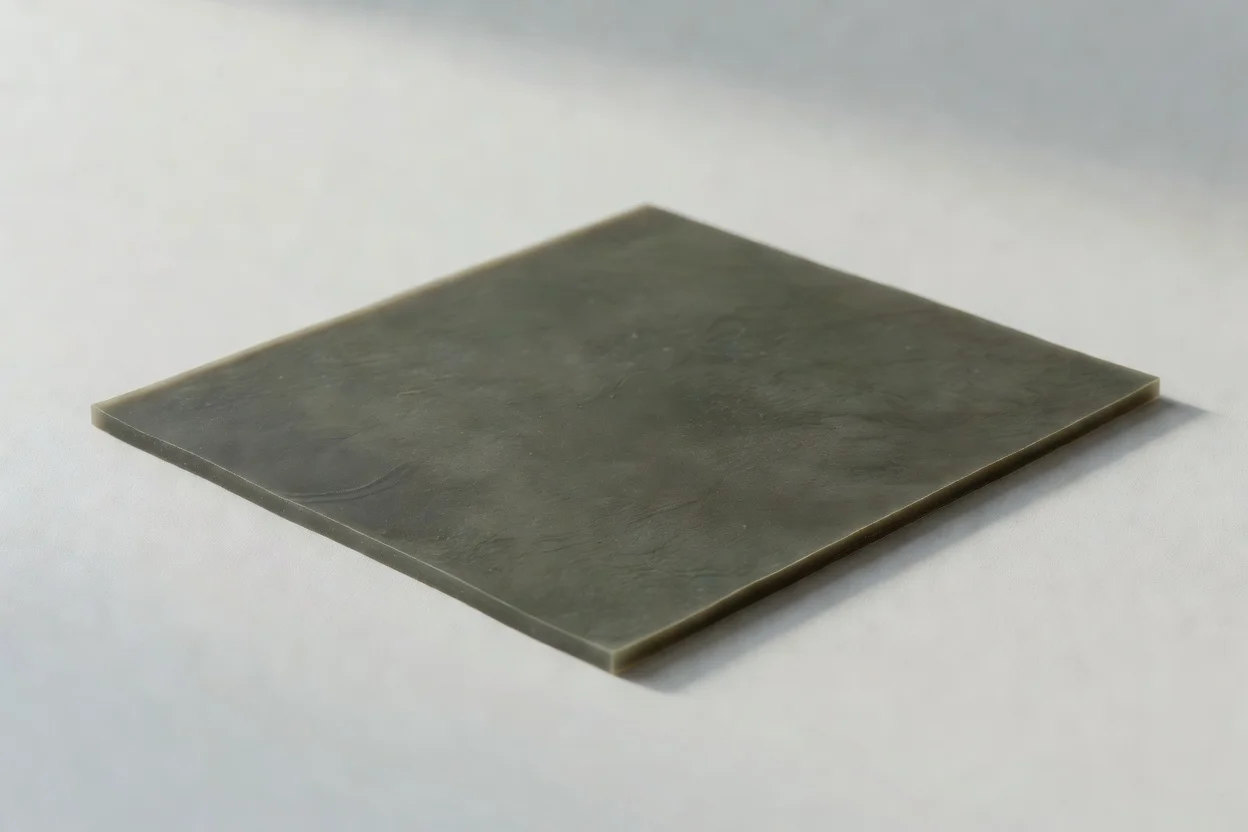
Butyl rubber is a synthetic elastomer, formally known as isobutylene-isoprene rubber (IIR), valued for its exceptionally low gas permeability, strong weathering and ozone resistance, and useful vibration-damping behavior. It occupies an important niche in the plastics and elastomers ecosystem as a sealing, barrier, and energy-absorbing material, with major roles in tire innerliners, pharmaceutical closures, membranes, and industrial sealing systems.
Historically, butyl rubber became commercially important in the 1940s, when industry began exploiting its combination of airtightness and durability for demanding applications such as tire tubes and linings. Its core chemistry is based on a mostly saturated polyisobutylene backbone with a small amount of isoprene-derived unsaturation, a structure that explains both its excellent resistance to ozone and oxidation and its need for carefully designed curing systems.
In commercial practice, the material family includes standard IIR and halogenated variants such as chlorobutyl and bromobutyl, which improve cure speed, compatibility with other rubbers, and certain heat-related performance characteristics. These variants have become especially important in modern tire technology and high-reliability sealing applications.
At the same time, butyl rubber reflects several broader industry trends: low-permeation materials for energy efficiency, specialty elastomers for medical and automotive safety, and growing interest in recycling, reclaim, and lower-carbon production routes. Its future is likely to be shaped by tighter performance requirements in mobility, packaging, and healthcare, alongside pressure to improve circularity and reduce the environmental footprint of synthetic elastomers.
History and Development
Butyl rubber was one of the early industrial successes of synthetic elastomer chemistry, developed to meet the need for materials that retained air far better than natural rubber. Its industrial significance increased as vehicle tires, inflation products, and protective linings required stronger barriers against gas loss and environmental aging.
The commercial breakthrough came from combining isobutylene with a small amount of isoprene, which introduced just enough unsaturation to permit vulcanization while keeping the polymer chain largely saturated. This balance proved decisive: it delivered the impermeability of a highly saturated hydrocarbon polymer while preserving rubber-like elasticity and processability.
Later development expanded the family to halobutyl grades, especially bromobutyl and chlorobutyl, which are widely used where faster curing, better co-vulcanization, or improved tire performance is required. In practice, this evolution moved IIR from a single-purpose barrier elastomer into a broader platform material for tires, closures, damping components, and industrial seals.
Chemical Structure and Key Properties
IIR is a copolymer of isobutylene with a small amount of isoprene. The isobutylene-rich backbone is highly saturated and relatively stiff at the molecular level, while the sparse isoprene units provide the double bonds needed for sulfur or resin vulcanization.
A useful way to understand its performance is through structure-property relationships:
| Structural feature | Effect on property | Practical consequence |
|---|---|---|
| Mostly saturated backbone | Low susceptibility to oxidation and ozone attack | Excellent weathering durability |
| Tight chain packing and low molecular mobility | Low gas diffusion | Strong air-retention performance |
| Small amount of unsaturation | Enables curing | Usable as an elastomer rather than a plastic-like barrier |
| Low resilience | High energy dissipation | Good damping and shock absorption |
A key limitation is that oil and fuel resistance is poor → the non-polar hydrocarbon structure swells in many petroleum-based media → compounding or material substitution is required when exposure to fuels, mineral oils, or aromatic solvents is expected. Another important limitation is low surface energy before treatment → adhesion to many substrates can be difficult without primers, surface activation, or adhesion-promoting compounds → surface preparation or bonding systems are commonly used in fabrication.
Typical reported property ranges include hardness from about 40 to 90 Shore A, elongation often around 300% to 850% or higher, and very strong resistance to ozone and weathering. The material is also valued for electrical insulation and broad service-temperature capability, although exact limits vary by formulation and source.
Production Processes and Raw Feedstocks
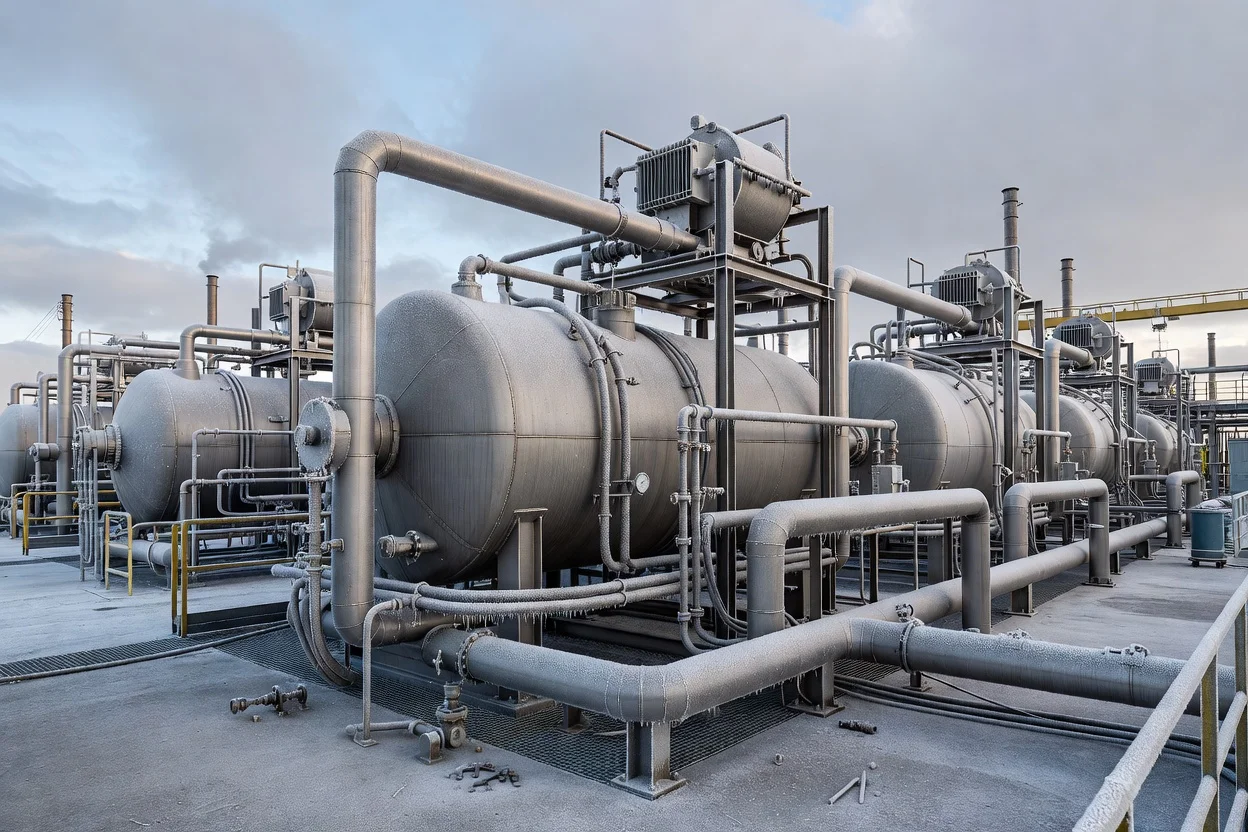
Butyl rubber is produced by cationic copolymerization of isobutylene with a small proportion of isoprene, typically at very low temperatures. Industrial descriptions commonly note the use of methyl chloride as a reaction diluent and Friedel-Crafts-type catalysts such as aluminum chloride, with temperatures often below minus 90 °C or around minus 100 °C depending on the process design.
The basic process sequence generally includes:
- Feed purification of monomers and solvent.
- Low-temperature polymerization.
- Recovery of unreacted monomers and solvent.
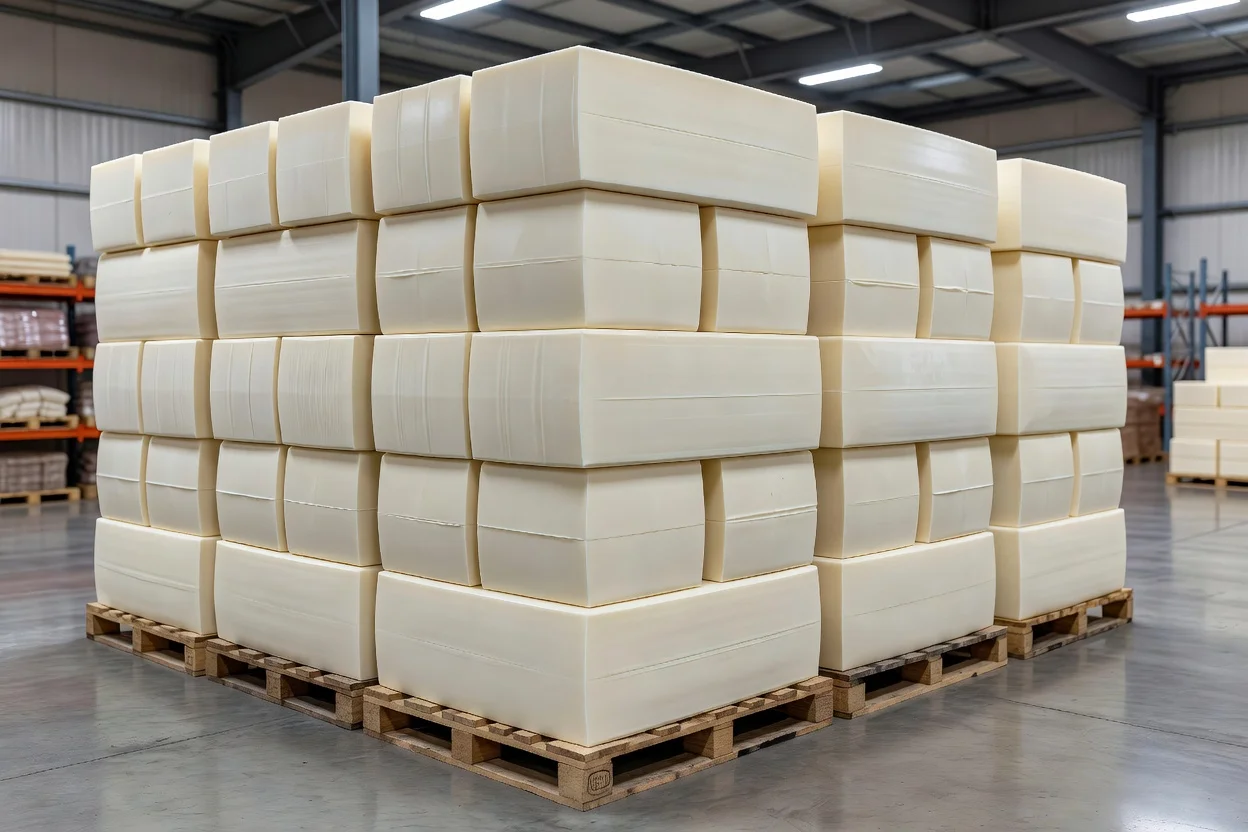
- Finishing, dewatering, drying, and bale packaging.
A practical mechanism point is that polymer molecular weight and final viscosity are controlled by the balance between initiation and chain transfer during cationic polymerization. In manufacturing terms, this means small process changes can significantly alter processing behavior, cure response, and end-use properties.
Halogenated butyl rubbers are made by modifying the base polymer to introduce bromine or chlorine functionality, which improves reactivity in curing and broadens formulation latitude. This is especially valuable for tire innerliners, curing bladders, and pharmaceutical closures.
Applications and End-Use Markets
Butyl rubber is selected when airtightness, chemical stability, damping, and weatherability matter more than oil resistance or high resilience.
| End use | Typical grade | Why it is used |
|---|---|---|
| Tire innerliners | IIR, bromobutyl, chlorobutyl | Low air permeability and aging resistance |
| Tire curing bladders | Halobutyl | Heat resistance and process durability |
| Pharmaceutical stoppers and closures | Halobutyl, selected IIR compounds | Low extractables, sealing reliability, sterilization compatibility |
| Wire and cable insulation | IIR | Electrical insulation and weather resistance |
| Sealant tapes, gaskets, sealings | IIR, halobutyl | Compression resistance and barrier performance |
| Bladders for sports balls and pneumatic devices | IIR | Gas retention and elasticity |
| Adhesives, caulks, and construction sealants | IIR compounds | Flexibility and aging resistance |
| Vibration mounts, engine mounts, bridge bearings | IIR compounds | Damping and shock absorption |
| Chewing gum base and specialty sheets | Selected IIR grades | Cohesiveness and processability |
A poor-fit use is petroleum-fuel exposure → standard IIR is not well suited to oils, greases, and fuels → nitrile rubber, fluororubber, or other oil-resistant elastomers are normally preferred.
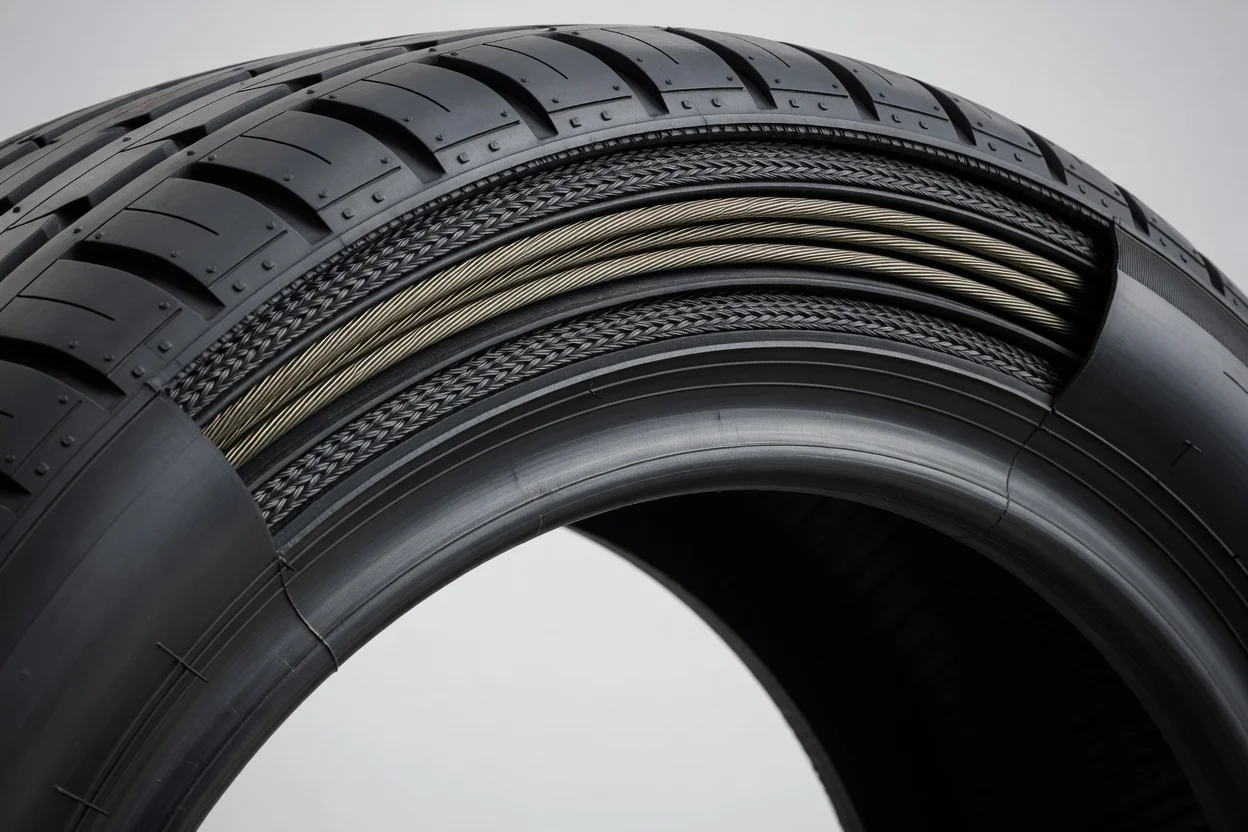
In tire systems, the most strategically important application is the innerliner, where low permeability helps preserve inflation pressure and can contribute to rolling efficiency over time. In medical and pharmaceutical closures, its value lies in maintaining a reliable seal under storage and sterilization conditions, although formulation control is critical.
Environmental and Sustainability Aspects
Butyl rubber’s sustainability profile is mixed. On the positive side, its long service life, air-retention capability, and weather durability can reduce replacement frequency and improve functional efficiency in tires and seals. In tire applications, better air retention can support pressure maintenance, which is relevant to performance and energy use over the product life cycle.
However, IIR remains a fossil-derived synthetic polymer in most commercial supply chains, and its production depends on petrochemical feedstocks such as isobutylene and isoprene. Manufacturing also involves low-temperature, solvent-intensive chemistry, which raises energy and solvent-recovery considerations.
Recycling is technically possible in several forms, including:
- mechanical grinding and reuse in compounded products,
- devulcanization or reclaim routes for selected waste streams,
- reuse in lower-value rubber goods where property retention is less demanding.
The main constraint is that vulcanized elastomers, once crosslinked, are difficult to depolymerize cleanly at scale. This means end-of-life management is usually more challenging than for thermoplastics, and material circularity depends heavily on collection, sorting, and compound design.
Bio-based or lower-carbon feedstocks remain an active area of interest, but large-scale replacement of petrochemical isobutylene and isoprene is still limited by economics and scale. As a result, near-term sustainability gains are more likely to come from process efficiency, solvent recovery, durable-product design, and expanded recycling than from immediate feedstock substitution.
Economic and Global Market Impact
Butyl rubber is a specialty elastomer market rather than a commodity resin market, but it has outsized industrial importance because it supports critical applications in mobility, healthcare, and industrial sealing. Demand is closely tied to tire production, automotive maintenance, pharmaceutical packaging, and infrastructure sealing systems.
Publicly available industry and supplier sources identify major producers and product families in Asia, Europe, and North America, with companies such as ExxonMobil, ENEOS Materials, and other established synthetic rubber manufacturers active in the segment. Competitive differentiation typically depends on purity, molecular weight control, halogenated-grade performance, consistency, and compounding support rather than on raw tonnage alone.
Market value is also influenced by:
- feedstock prices for petrochemical intermediates,
- energy costs in low-temperature polymerization,
- demand from premium tire and medical markets,
- tighter quality requirements for pharmaceutical and food-contact uses.
Current Challenges and Innovations
The principal technical challenge for IIR is balancing barrier performance with processability and cure behavior. Very low permeability is highly desirable, but the same molecular structure can make the material relatively low in resilience and poor in oil resistance.
Current innovation themes include:
- improved halobutyl formulations for faster and more efficient tire curing,
- high-purity grades for pharmaceutical closures and medical applications,
- compound designs that improve adhesion to textiles, metals, or other elastomers,
- recyclability-oriented formulations that support reclaim or devulcanization,
- barrier-enhancement strategies in tires to reduce inflation loss over service life.
Mechanistically, many formulation advances focus on the cure network: adjusting halogen content, filler loading, and crosslink chemistry can change heat resistance, compression set, and dynamic damping without sacrificing impermeability. Typical compounding levels for reinforcing carbon black or silica can be substantial in tire and sealing compounds, with the filler network used to tune modulus, wear, and tear resistance while maintaining the seal function.
Future Outlook
Butyl rubber is likely to remain strategically important wherever airtightness, damping, and weather durability are essential. The strongest long-term demand signals are in tire innerliners, high-performance closures, vibration isolation, and specialized sealing systems for infrastructure and healthcare.
Future development is likely to center on:
- lower-emission and more energy-efficient production,
- improved circularity for vulcanized scrap,
- more sophisticated halobutyl grades,
- hybrid compounds that combine IIR with other elastomers for targeted performance,
- continued optimization for regulatory-sensitive applications such as medical packaging.
Summary
IIR butyl rubber is a low-permeation, weather-resistant synthetic elastomer built around a mostly saturated isobutylene backbone with limited unsaturation for cure. Its defining advantages are airtightness, ozone resistance, damping, and durability, while its main weaknesses are poor oil/fuel resistance and limited inherent surface adhesion.
These characteristics explain its central role in tire innerliners, closures, sealants, insulation, and vibration-control components. As the plastics and elastomers industry moves toward greater efficiency and circularity, butyl rubber will remain important not because it is universal, but because it performs exceptionally well in the narrow set of applications where gas retention and long-term stability are decisive.
References
- •
IIR - Butyl Rubber. (2017, July 12). https://rahco-rubber.com/materials/iir-butyl-rubber/Link
- •
Butyl rubber (IIR) - Properties, chemical structure and .... (2026, May 18). https://www.gume.de/en/iir-isobutene-isoprene-rubber/Link
- •
Butyl rubber (IIR). (2009, July 22). https://www.britannica.com/science/butyl-rubberLink
- •
IIR: Butyl rubber. (n.d.). https://www.gume.de/en/glossary/iir/Link
- •
Butyl Rubber (IIR) - Properties. (n.d.). https://matmake.com/materials-data/butyl-rubber-properties.htmlLink
- •
How Butyl Rubber (IIR) Is Made – Step-by-Step Process. (2025, August 2). https://www.npcsblog.com/butyl-rubber-iir-production/Link
- •
1. (n.d.). https://www.jstage.jst.go.jp/article/gomu/88/12/88_473/_pdfLink
- •
Butyl Rubber - IIR - Techno Ad. (2023, September 24). https://www.technoad.com/engineering/materials/iirbutil/Link
- •
ExxonMobil Butyl Rubber Process. (n.d.). https://cdn.ihs.com/www/pdf/RW2016-04-toc.pdfLink
- •
What is Butyl Rubber and Its Most Common Types. (2025, August 18). https://elastecjsc.com/en/news/butyl-rubber/Link
- •
Butyl rubber. (2016, May 23). http://www.wcsrubber.com/supportview.asp?id=580Link
- •
Butyl rubber. (2005, June 29). https://en.wikipedia.org/wiki/Butyl_rubberLink
- •
What is Butyl Rubber (IIR) - Properties & Specifications. (2026, January 1). https://www.jtc-corporation.com/knowledge/information/what-is-butyl-rubber-iir-products-properties-structure-specifications-hs-code-molecular-property-formula-specific-density-flakes-solid-powder-pearls-liquidcrystal-liter-solution-material-molecular-property-formula-specific-density-safe-hazarous-harmful-chemical-raw-materials.htmlLink
- •
[PDF] Butyl Rubber (IIR). (n.d.). https://5.imimg.com/data5/SELLER/Doc/2023/3/II/MB/HU/64283154/pbr-1220.pdfLink
- •
Butyl Rubber: Structure and Properties | PDF | Cross Link. (2025, June 16). https://www.scribd.com/document/698582255/Butyl-Rubber-IIRLink
- •
All About Butyl Rubber – Properties, Applications, and Uses. (2025, October 10). https://www.thomasnet.com/articles/plastics-rubber/all-about-butyl-rubber/Link
- •
Butyl Rubber – Properties and Applications. (2021, October 8). https://www.rct-online.de/magazin/en/butyl-rubber-properties-and-applications/Link
- •
Butyl rubber IIR. (n.d.). https://powerrubber.com/en/butyl-rubber-iir-butyl-rubberLink
- •
IIR Rubber | HEXPOL Rubber Compounding. (2020, November 2). https://www.hexpol.com/rubber/hexpol-rubber-compounding/advanced-rubber-compounds/polymers/iir-rubber-2/Link
- •
Butyl Rubber / IIR | Special Synthetic Rubber. (n.d.). https://www.eneos-materials.com/english/products/s_rubber/iir/Link
- •
What Is Butyl Rubber (IIR)? The Complete 2026 Guide - News - Gnee. (2026, May 12). https://www.gneechemicals.com/news/what-is-butyl-rubber-iir-the-complete-85531854.htmlLink
- •
Butyl rubber. (2022, November 1). https://www.elastomer-polymer.com/rubbercompound/compounding/iir-butyl-rubber/Link
- •
Butyl (IIR) | Synthetic Rubber for Construction and Outdoor Use. (2019, October 18). https://passaic.com/product/butyl-rubber/Link
- •
Synergistic Development of Natural Rubber/Butyl ... - PMC. (2024, March 13). https://pmc.ncbi.nlm.nih.gov/articles/PMC10975628/Link
- •
BUTYL RUBBER - Ataman Kimya. (2010, January 1). https://www.atamanchemicals.com/butyl-rubber_u27414/Link
- •
Butyl Rubber (IIR) - Polymer Products. (2025, February 19). https://www.arpmaterials.com/products/polymers/butyl-rubber-iir/Link
- •
IIR Sheet (Isobutene-isoprene rubber : Butyl rubber). (n.d.). https://www.tiger-poly.com/products/sheets/detail/5Link
- •
Butyl Rubber (IIR) - Lavelle Industries. (n.d.). https://www.lavelle.com/materials/butyl-rubber-iirLink
- •
Butyl Rubber - Chemical Market Analytics By OPIS, a Dow .... (2026, January 12). https://chemicalmarketanalytics.com/chemical/butyl-rubber/Link
- •
IIR butyl | FluidHandling - Trelleborg. (n.d.). https://www.trelleborg.com/en/fluidhandling/products-and-solutions/rubber-sheeting-and-matting/sheeting/iir-butylLink
- •
Butyl Rubber (IIR) Production | PPTX. (2018, October 11). https://www.slideshare.net/slideshow/butyl-rubber-iir-production/119110715Link
- •
New process for butyl rubber production. (2000, December 20). https://patents.google.com/patent/WO1993021241A1/enLink
- •
All about Butyl Rubber | PPTX - Slideshare. (2021, May 2). https://www.slideshare.net/slideshow/all-about-butyl-rubber/247502972Link
- •
butyl & chloroprene 2003. (2025, June 16). https://www.scribd.com/presentation/686325374/butyl-chloroprene-2003Link
- •
Butyl Rubber - an overview | ScienceDirect Topics. (2020, October 24). https://www.sciencedirect.com/topics/engineering/butyl-rubberLink
- •
Butyl-type rubber with high viscosity. (2004, November 2). https://patents.google.com/patent/WO2005042595A1/enLink
- •
RU2209213C1 - Butyl rubber production process. (2002, April 1). https://patents.google.com/patent/RU2209213C1/enLink
- •
USA IRR Rubber Manufacturer | Synthetic Butyl Rubber Molding. (n.d.). https://www.redco1.com/rubber-materials/butyl-rubberLink