
Introduction
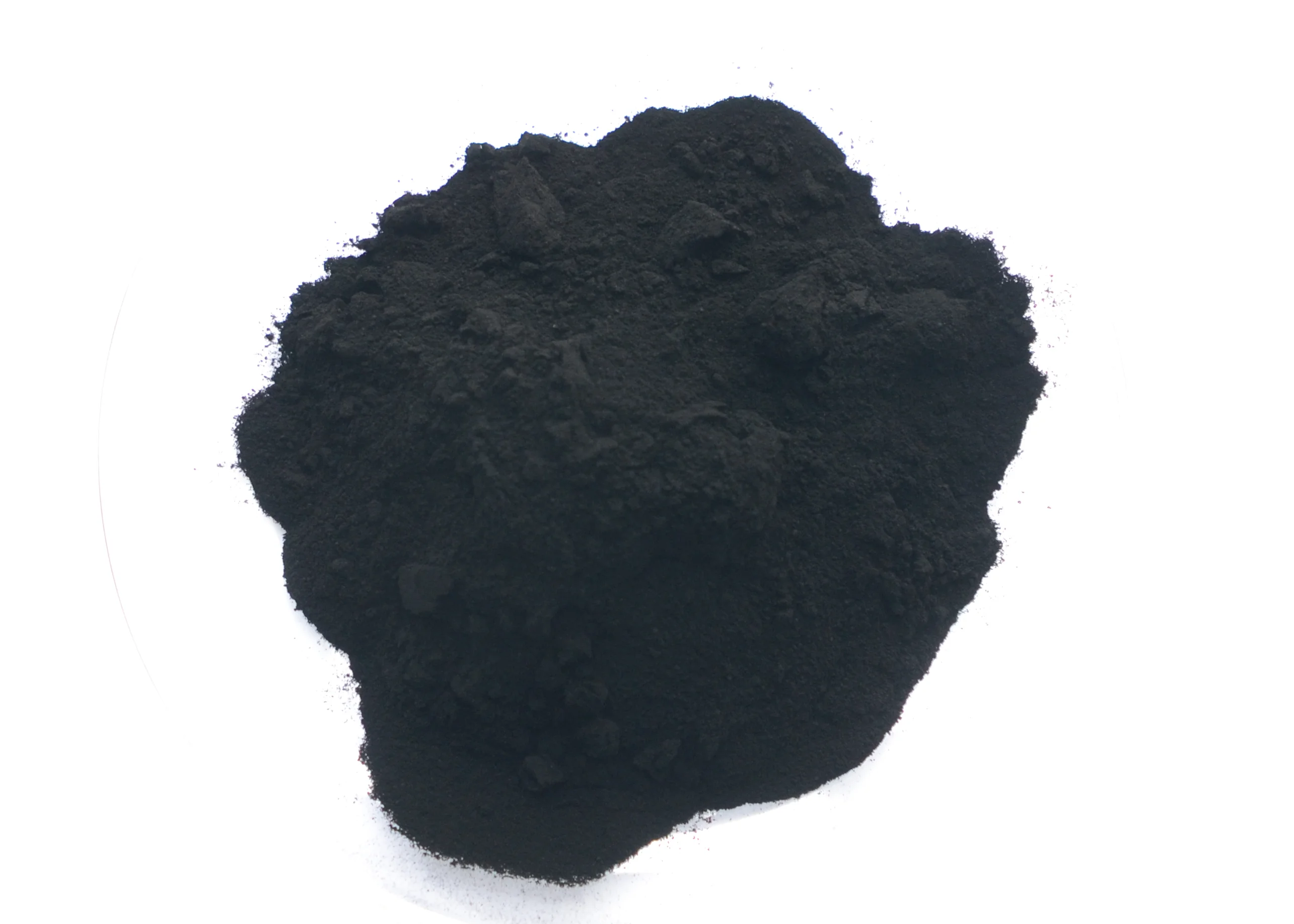
Carbon black is a fine, engineered form of nearly pure elemental carbon used primarily as a reinforcing filler, black pigment, and functional conductive additive in plastics, rubber, inks, coatings, and energy-related materials. In the plastics value chain, its most important roles are ultraviolet stabilization, deep black coloration, electrical conductivity, and property modification through particle networking and interfacial interactions with polymers.
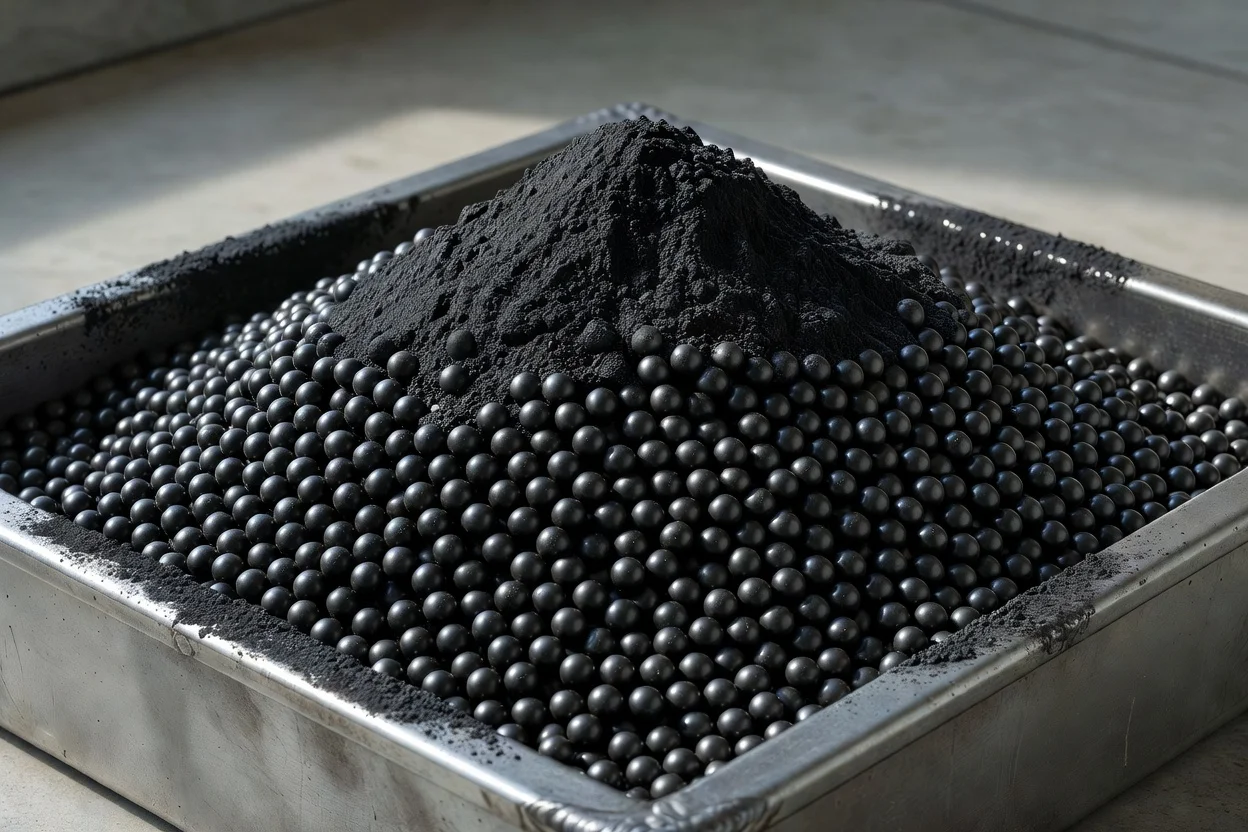
Commercial carbon black has been produced for more than a century, and its modern industrial significance is tied overwhelmingly to the furnace-black process, which accounts for the majority of global output. Although it is often discussed in relation to tires, carbon black is also central to black masterbatches, pipe compounds, cable jackets, geomembranes, technical plastics, conductive packaging, batteries, and specialty polymer systems.
Sustainability has become a defining issue for carbon black because conventional production is energy-intensive and historically dependent on fossil hydrocarbon feedstocks. At the same time, the material is being re-evaluated through lower-carbon feedstocks, circular feedstock recovery, and new applications in electrification and energy storage.
History and Development
Early forms of carbon black were made by charring organic materials and collecting soot from incomplete combustion, including lamp black and other soot-derived pigments. Industrial production expanded with the growth of the rubber and printing industries, especially once controlled furnace and thermal processes made quality more uniform and scalable.
Over time, carbon black evolved from a simple black colorant into a highly engineered family of materials. Particle size, aggregate structure, surface chemistry, and porosity became controllable parameters, allowing producers to tailor products for reinforcement, tint strength, conductivity, and weatherability.
The plastics industry benefited from this evolution when carbon black moved from simple pigmentation into specialized polymer compounding. Black masterbatches, UV-stable pipe grades, cable compounds, and conductive plastics emerged as major downstream categories as polymer processing became more sophisticated.
Chemical Structure and Key Properties
Carbon black is not a single substance but a family of nanostructured carbon materials composed of fused primary particles arranged in aggregates and agglomerates. It is generally described as mostly elemental carbon with a graphitic or turbostratic internal structure, though surface chemistry can vary depending on process conditions and post-treatment.
Key property drivers include:
- Primary particle size, which strongly influences tinting strength, reinforcement, and electrical percolation.
- Structure, meaning the degree of branching and aggregation, which affects viscosity, modulus, and conductivity.
- Surface area, which correlates with reinforcement intensity and pigment performance.
- Surface chemistry, which affects dispersion, polymer interaction, and weathering behavior.
Important real-world limits and workarounds include:
- Poor oxygen and grease barrier performance → carbon black does not create a true barrier layer in most polymers; it mainly improves UV resistance and color stability → workaround: use multilayer structures, barrier polymers, or coatings when gas or grease barrier is needed.
- Low surface energy in unmodified plastics → pigments and fillers can disperse poorly or limit adhesion on untreated polyolefins → workaround: corona, flame, plasma, or primer treatment, or use compatibilized masterbatches and coupling strategies.
- High loading can raise viscosity and stiffness excessively → strong particle networking improves conductivity or reinforcement but can reduce processability → workaround: select a lower-structure grade, optimize loading, or use masterbatch dilution to control dispersion.
A practical comparison is shown below:
| Carbon black type | Typical strength | Main plastic-function use | Typical trade-off |
|---|---|---|---|
| High-structure furnace black | Strong reinforcement and conductivity | Conductive compounds, cable shielding | Higher viscosity |
| Low-structure furnace black | Good color and processing balance | Black masterbatch, films, molded parts | Lower conductivity |
| Specialty conductive black | Percolation at lower loading | ESD, EMI shielding, battery components | Higher cost |
| Thermal black | Coarser, less reinforcing | Some rubber and specialty uses | Lower tint and reinforcement |
Production Processes and Raw Feedstocks
Industrial carbon black is produced mainly by the furnace black and thermal black processes. In furnace black production, heavy aromatic oils or similar hydrocarbon feedstocks are injected into a high-temperature reactor with a limited supply of air, causing incomplete combustion and pyrolysis that forms fine carbon particles. EPA material describes temperatures on the order of 1320 to 1540 C for this type of process.

The principal feedstocks include:
- Heavy aromatic petroleum fractions
- FCC tar and ethylene cracking tar
- Coal-tar-derived oils
- Natural gas in thermal black production
- Acetylene in specialty acetylene black production
The production sequence typically includes:
- Feedstock atomization and vaporization
- Thermal decomposition and particle nucleation
- Aggregate growth under controlled residence time
- Quenching to stop further growth
- Collection in bag filters
- Pelletizing and screening for transport and compounding
Furnace black dominates because it offers high throughput, product flexibility, and good control over particle morphology. Thermal black is less common and typically associated with different particle characteristics and lower reinforcement intensity.
Applications and End-Use Markets
Carbon black’s plastics applications fall into three broad functions: color, protection, and conductivity.
Plastics and polymer compounds
- Black masterbatch and molded parts: Carbon black is widely used to color thermoplastics such as polyolefins, engineering plastics, and films.
- UV-stabilized outdoor plastics: It absorbs ultraviolet radiation and protects polymers used outdoors, especially pipe, geomembrane, and agricultural films.
- Conductive plastics: At higher or specially selected loadings, it creates conductive pathways for antistatic, ESD, or shielding applications.
Major sector applications
- Film: Typically uses well-dispersed low-to-medium structure grades for deep color and UV protection; common in agricultural films and packaging.
- Pipe: High-performance polyolefin pipes use carbon black for long-term UV resistance, especially in outdoor service.
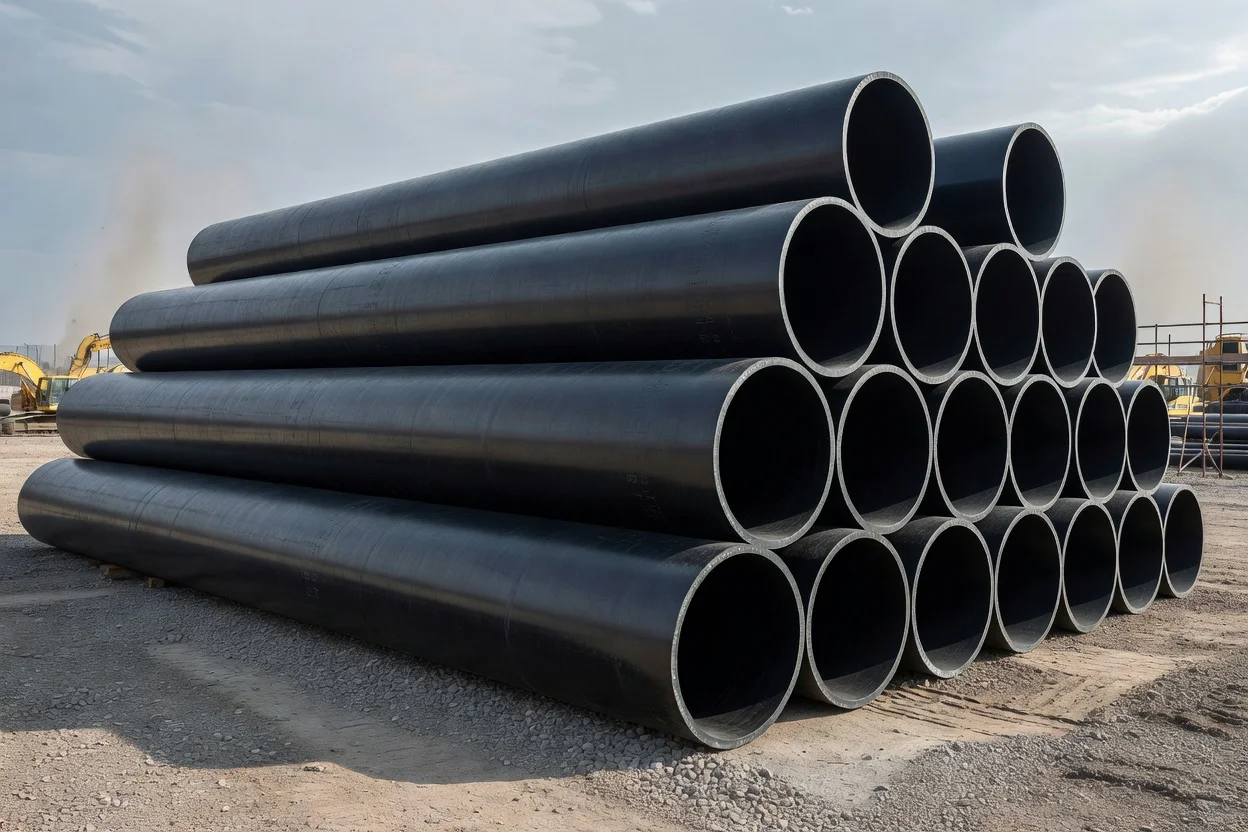
- Cable: Cable jackets and sheaths use carbon black for weatherability, color consistency, and in some designs electrical functionality.
- Agriculture: Mulch films, silage wrap, and irrigation-related plastics use carbon black to resist sunlight degradation.
- Geomembrane: Landfill and containment liners often rely on carbon black for UV durability in exposed installations.
- Rotomolding: Rotomolded tanks, containers, and outdoor parts use carbon black for weather resistance and deep coloration.
- UHMWPE wear and medical: Specialty grades can be used in wear-resistant components and selected biomedical polymer systems, though purity and dispersion requirements are demanding.
- PEX: Crosslinked polyethylene systems may incorporate carbon black in certain formulations for UV protection and service durability.
Poor-fit use
- Transparent packaging is a poor fit for carbon black because even low loadings make the material black and opaque, eliminating transparency and often limiting optical inspection.
Carbon black is also important beyond plastics:
- Tires and rubber goods remain the largest application by volume.
- Printing inks and coatings use it for tint strength and blackness.
- Batteries and electronics use conductive grades in electrodes, shielding materials, and related components.
Environmental and Sustainability Aspects
Carbon black has a significant environmental profile because conventional production depends on hydrocarbon feedstocks and high-temperature thermal processing. This gives the material a meaningful carbon footprint, and decarbonization pressure is increasing across the supply chain.
Key sustainability themes include:
- Recyclability: Carbon black in plastics usually does not prevent mechanical recycling, but it can complicate optical sorting because black articles are difficult for some near-infrared systems to detect.
- Biobased alternatives: Research has explored biomass-derived and renewable carbon sources, though industrial scale, consistency, and cost remain limiting factors.
- Recovered-carbon routes: Emerging interest in recovered carbon black from end-of-life tires and other waste streams reflects circular-economy pressure, although performance consistency and contaminant control remain major hurdles.
- Lower-emission production: Process efficiency, energy integration, and alternative feedstocks are central levers for emissions reduction.
In plastics, carbon black has a notable environmental benefit when it substantially extends product life. Outdoor pipe, cable, and geomembrane service life can be prolonged by UV stabilization, reducing replacement frequency and material throughput.
Economic and Global Market Impact
Carbon black is a globally traded industrial material with large demand concentrations in tires, rubber goods, and polymer compounds. According to recent industry analyses, furnace black remains the dominant product route, and Asia is the largest manufacturing and consumption center due to its tire, plastics, and industrial production base.
The leading market drivers are:
- Automotive tires and replacement demand
- Infrastructure plastics such as pipe and cable
- Packaging and molded black masterbatches
- Electrification-related conductive materials
- Export-oriented rubber and polymer compound chains
Major producers vary by region, but the sector includes large multinational carbon black companies with integrated feedstock and logistics networks, as well as regional specialists serving tire and plastics markets.
Current Challenges and Innovations
Current technical challenges include:
- Dispersion control: Agglomeration can cause poor color uniformity, higher viscosity, and inconsistent conductivity.
- Purity management: Specialized applications such as medical, battery, and electronics grades require tighter impurity limits.
- Energy and emissions intensity: Conventional production faces pressure to reduce greenhouse-gas emissions and air pollutants.
- Recycling compatibility: Black coloration can reduce sortability in plastic recycling streams.
Innovation is active in several directions:
- Advanced surface engineering to improve dispersion and tailor interfacial behavior.
- Conductive specialty grades with optimized structure for lower loading in ESD and EMI applications.
- Recovered and renewable carbon black from waste or biomass feedstocks.
- Application-specific masterbatches that simplify dosing and improve compounding consistency.
A useful formulation example is 1 to 3 wt% carbon black in some outdoor polyolefin compounds for UV stabilization, where the mechanism is absorption of UV light and suppression of polymer photooxidation. In conductive plastics, loadings are often much lower or more carefully tuned for percolation, where particle-to-particle contact creates an electrical network rather than merely coloration.
Future Outlook
Carbon black is likely to remain indispensable in plastics where black coloration, UV durability, and conductivity are needed at cost-effective levels. The strongest growth opportunities are expected in conductive materials, infrastructure polymers, energy storage, and more circular feedstock pathways.
The most important long-term shift is likely to be not disappearance, but re-engineering: lower-emission production, better dispersion technology, more specialty grades, and integration with recycling and alternative-carbon systems. In plastics, that means carbon black will continue to serve both as a mature commodity additive and as a high-value functional material in advanced formulations.
Summary
Carbon black is a multifunctional carbon material that combines pigment, reinforcement, UV protection, and conductivity in one industrial additive. Its central role in plastics comes from its ability to extend service life, create deep black coloration, and enable electrically functional compounds, while its main challenge is the environmental footprint of fossil-based, high-temperature production.
References
- •
Carbon black - Wikipedia. (2004, July 27). https://en.wikipedia.org/wiki/Carbon_blackLink
- •
What is Carbon Black? | Carbon Black 101. (2025, August 4). https://www.birlacarbon.com/whats-trending/carbon-black/Link
- •
What is Carbon Black? — ICBA. (n.d.). https://www.carbon-black.org/new-page-2Link
- •
Carbon black | Nanoparticles, Polymers & Pigments | Britannica. (1998, July 20). https://www.britannica.com/science/carbon-blackLink
- •
Carbon Black Definition Properties Uses - Chemistry. (2025, September 29). https://www.vedantu.com/chemistry/carbon-blackLink
- •
Definition of CARBON BLACK. (2026, March 22). https://www.merriam-webster.com/dictionary/carbon%20blackLink
- •
How is Carbon Black Produced? (n.d.). https://www.carbon-black.org/is-carbon-black-safeLink
- •
6.1 Carbon Black [PDF]. (n.d.). https://www.epa.gov/sites/default/files/2020-10/documents/c06s01.pdfLink
- •
Application Examples of Carbon Black. (2006). http://www.carbonblack.jp/en/cb/youto.htmlLink
- •
How to Make Carbon Black: Key Production Methods. (2026, March 19). https://scienceinsights.org/how-to-make-carbon-black-key-production-methods/Link
- •
CARBON BLACK Definition & Meaning. (n.d.). https://www.dictionary.com/browse/carbon-blackLink
- •
The Use and Application of Carbon Black - Pulva. (2024, April 12). https://www.pulva.com/blog/the-use-and-application-of-carbon-blackLink
- •
Carbon Black: Comprehensive Analysis Of Production, Properties ... (n.d.). https://eureka.patsnap.com/materials/carbon-black-production-propertiesLink
- •
Carbon black - MFA Cameo. (2026, March 1). https://cameo.mfa.org/wiki/Carbon_blackLink
- •
Applications - Planimpex. (2023, May 23). https://planimpex.de/en/applications/Link
- •
Carbon black production, properties, price, markets, applications. (2022, October 27). https://tuball.com/articles/carbon-black-and-considering-analoguesLink
- •
Carbon Black: Advanced Production Technologies ... (n.d.). https://eureka.patsnap.com/materials/carbon-black-production-techLink
- •
Application. (n.d.). https://www.asahicarbon.co.jp/global_site/cb/use.htmlLink
- •
▷ Wiki | PentaCarbon GmbH. (2023, October 18). https://pentacarbon.de/en/wiki/Link
- •
Carbon Black - an overview. (n.d.). https://www.sciencedirect.com/topics/chemical-engineering/carbon-blackLink
- •
Carbon Black - an overview. (2023, October 15). https://www.sciencedirect.com/topics/chemistry/carbon-blackLink
- •
carbon black - Wiktionary, the free dictionary. (2022, January 1). https://en.wiktionary.org/wiki/carbon_blackLink
- •
Carbon Black Produced by the Pyrolysis of Coal [PDF]. (n.d.). https://stacks.cdc.gov/view/cdc/220092/cdc_220092_DS1.pdfLink
- •
Carbon Black Industrial Applications: Comprehensive Analysis Of ... (n.d.). https://eureka.patsnap.com/materials/carbon-black-industrial-applicationsLink
- •
カーボンブラック - Wikipedia. (2005, November 24). https://ja.wikipedia.org/wiki/%E3%82%AB%E3%83%BC%E3%83%9C%E3%83%B3%E3%83%96%E3%83%A9%E3%83%83%E3%82%AFLink
- •
Adventures in Carbon Black. (2022, May 19). https://www.mccrone.com/mm/adventures-carbon-black/Link
- •
Carbon Black: A Strategic View on an Essential Industrial Material. (2025, April 28). https://www.flowcarbon.com/knowcarbon/carbon-black-a-strategic-view-on-an-essential-industrial-materialLink
- •
What Is Carbon Black Used For Key Industrial Applications. (2026, March 2). https://yuanhengtec.com/what-is-carbon-black-used-for/Link
- •
carbon black | Definition and example sentences. (2024, January 1). https://dictionary.cambridge.org/us/dictionary/english/carbon-blackLink
- •
Heating of carbon black - Efficiency Finder. (2016, August 17). http://wiki.zero-emissions.at/index.php?title=Heating_of_carbon_blackLink
- •
Manufacturing Process of Carbon Black. (2006). http://www.carbonblack.jp/en/cb/seizou.htmlLink
- •
Versatile Carbon Black Products | CFI Carbon Products. (2024, July 2). https://www.cficarbonproducts.com/sb/the-versatile-world-of-carbon-black-products/Link
- •
Electroconductive carbon black - Wikipedia. (2019, February 8). https://en.wikipedia.org/wiki/Electroconductive_carbon_blackLink
- •
Carbon Black in the Real World: 5 Uses You'll Actually See ... (2025, September 20). https://www.linkedin.com/pulse/carbon-black-real-world-5-uses-youll-actually-urhdcLink
- •
Source Assessment: Carbon Black Manufacture - epa nepis. (2020). https://nepis.epa.gov/Exe/ZyPURL.cgi?Dockey=91016QLH.TXTLink
- •
Carbon Black Reborn: Structure and Chemistry for Renewable ... [PDF]. (n.d.). https://cronfa.swan.ac.uk/Record/cronfa53847/Download/53847__16997__f730063dbed444699d578f1086878742.pdfLink
- •
Carbon Black | Wisconsin Department of Health Services. (2018, January 2). https://www.dhs.wisconsin.gov/chemical/carblack.htmLink
- •
Carbon Black Applications: what is used for | BKT. (n.d.). https://www.bkt-carbon.com/applicationsLink
- •
Black Carbon. (2021, October 17). https://www.sciencedirect.com/topics/engineering/black-carbonLink
- •
Uses of Carbon Black — ICBA. (n.d.). https://www.carbon-black.org/uses-of-carbon-blackLink
- •
Carbon Black Production Technology - Making.com. (2024, October 14). https://making.com/carbon-blackLink
- •
More than Meets the Eye - Carbon Black Pigment. (2024, June 12). https://www.ulprospector.com/knowledge/17258/pc-more-than-meets-the-eye-carbon-black-pigment/Link