
Introduction
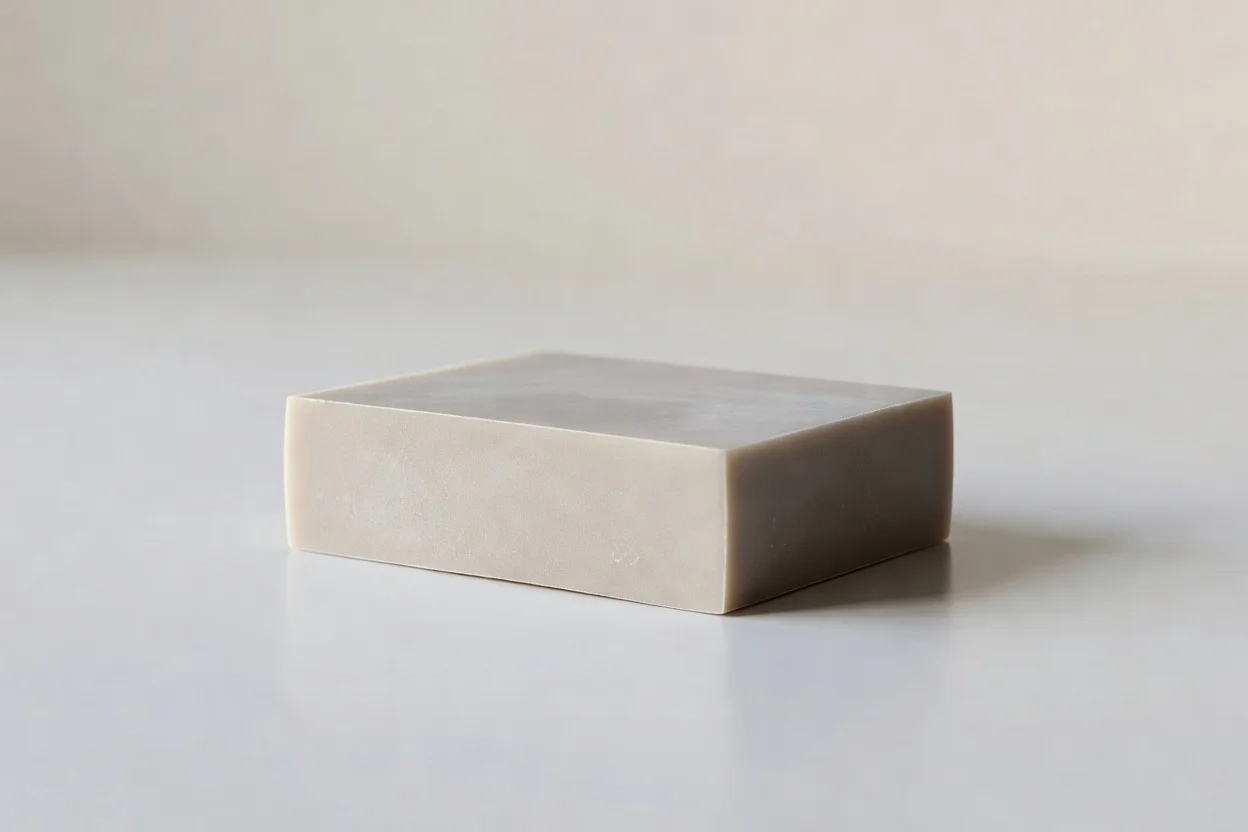
Butadiene rubber (BR) is a synthetic elastomer based on polymerised butadiene, best known for its high abrasion resistance, low hysteresis, and excellent low-temperature flexibility. It is widely used in tire tread compounds and other dynamic rubber goods, and it also serves as an impact modifier in engineering plastics such as ABS and high-impact polystyrene, where it improves toughness and crack resistance.
In industry, BR is usually understood as polybutadiene, especially high-cis polybutadiene, although different microstructures can be produced to balance resilience, processability, and wear performance. Its development is closely tied to the growth of the synthetic rubber sector and the tire industry, which remain the dominant outlets for BR, while newer demand is emerging in plastics modification and high-performance consumer goods.
The material occupies a distinctive position in the plastics and elastomers value chain because its performance is strongly linked to molecular architecture, especially cis content and chain regularity, which influence rolling resistance, rebound, and cold-weather behavior. At the same time, BR faces increasing scrutiny over petrochemical feedstocks, end-of-life recovery, and the need for more circular tire and polymer systems, making sustainability and recycling innovation central to its future.
History and Development
Butadiene rubber emerged as part of the broader mid-20th-century expansion of synthetic rubbers, driven by the need for consistent performance, scalable supply, and reduced dependence on natural rubber. Its industrial importance rose with the growth of automobile production, particularly as tire formulations increasingly relied on blends of BR, styrene-butadiene rubber, natural rubber, and carbon black to optimize wear and energy loss.
Over time, advances in solution polymerization and catalyst systems improved control over microstructure, allowing producers to increase cis content and tailor molecular weight distribution for specific applications. This evolution helped establish BR as a high-performance component in tires, sporting goods, and impact-modified plastics.
Chemical Structure and Key Properties
BR is a homopolymer of 1,3-butadiene, and its properties depend strongly on the arrangement of double bonds and the proportion of cis, trans, and vinyl units in the polymer chain. High-cis grades generally provide the best combination of rebound resilience, wear resistance, and low-temperature flexibility, which explains their prominence in tire tread and golf ball applications.
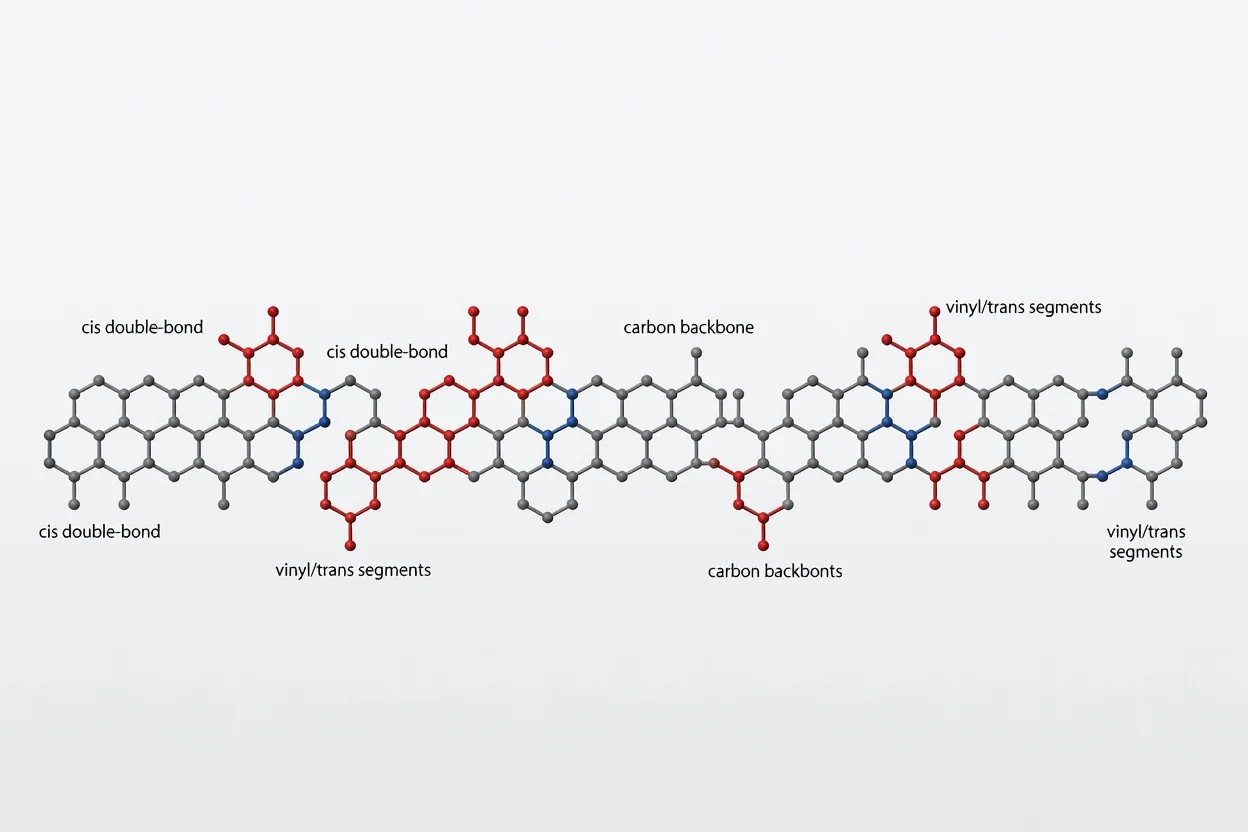
A concise property profile is shown below:
| Property | Typical significance |
|---|---|
| High abrasion resistance | Supports long service life in tires, belts, and wear-prone parts |
| Low hysteresis | Reduces heat buildup and can support lower rolling resistance in tire compounds |
| Excellent cold flexibility | Maintains elasticity at low temperatures, useful in winter and cold-climate service |
| High rebound resilience | Important for golf balls and dynamic mechanical applications |
| Low surface polarity | Limits compatibility with some polar fillers and requires compound design adjustments; workaround: blending with NR/SBR and reinforcement with carbon black or silica-based systems |
BR has several practical limitations. Wet traction can be relatively poor because very low glass-transition temperature improves rolling performance and cold flexibility but can reduce grip on wet surfaces; the usual workaround is to blend BR with natural rubber or SBR and tune the tread compound architecture. A second limitation is that BR is often not used alone in demanding goods because its tensile strength and process balance are usually improved by compounding with reinforcing fillers and other elastomers.
Mechanistically, carbon black or silica reinforcement improves strength by creating a filler network that restricts chain mobility, while the BR fraction contributes resilience and low heat buildup during repeated deformation. In tire tread formulations, this combination helps reconcile durability with energy efficiency.
Production Processes and Raw Feedstocks
BR is produced from 1,3-butadiene, a petrochemical monomer obtained through steam cracking and related refinery-petrochemical routes. The dominant industrial route is solution polymerization, which enables tighter control over microstructure and molecular weight than older processes.
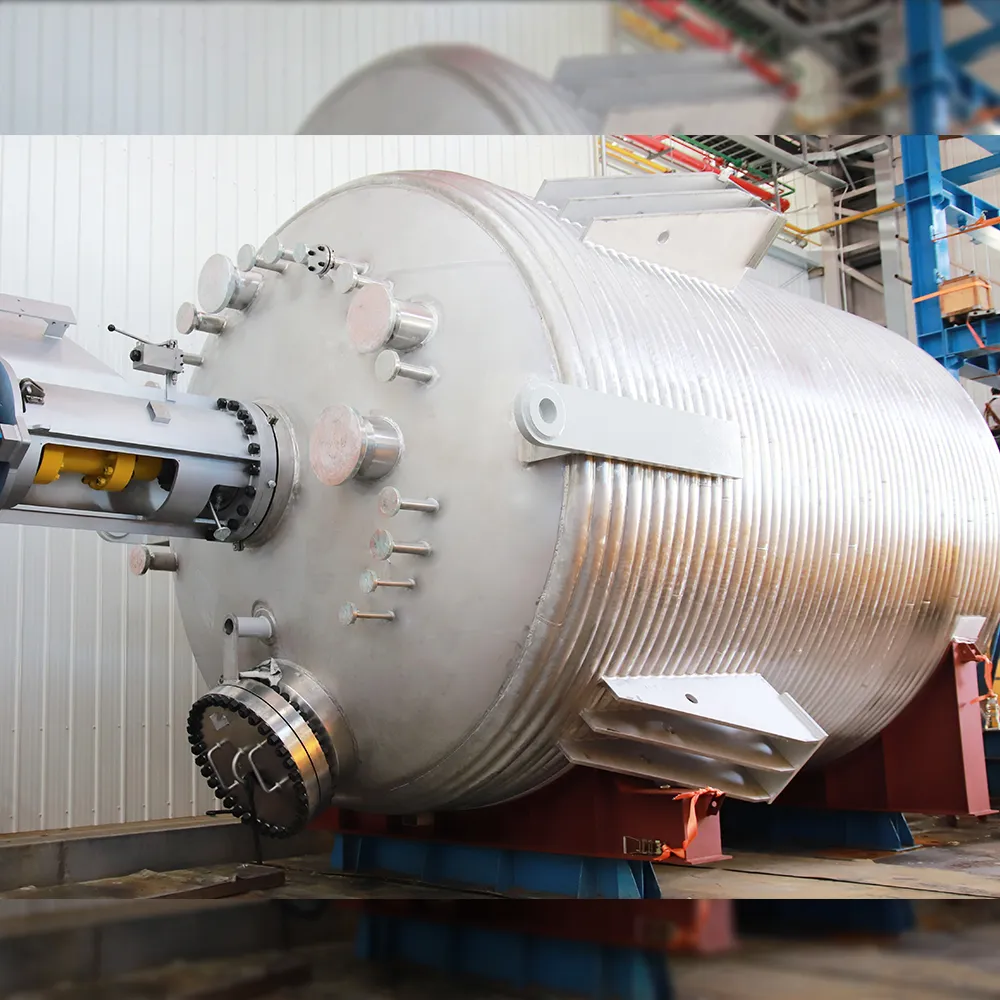
The main process features are:
- Feedstock preparation: purification of butadiene to remove inhibitors and impurities that can interfere with polymerization.
- Polymerization: catalyst-driven chain growth in solution, enabling high-cis or other targeted microstructures.
- Recovery and finishing: removal of solvent, devolatilization, compounding, and pellet or bale formation for downstream use.
Different catalyst systems and process conditions produce grades with distinct performance profiles. High-cis BR is favored where rebound and abrasion resistance are critical, while other grades may be selected for processing ease or blending behavior.
Applications and End-Use Markets
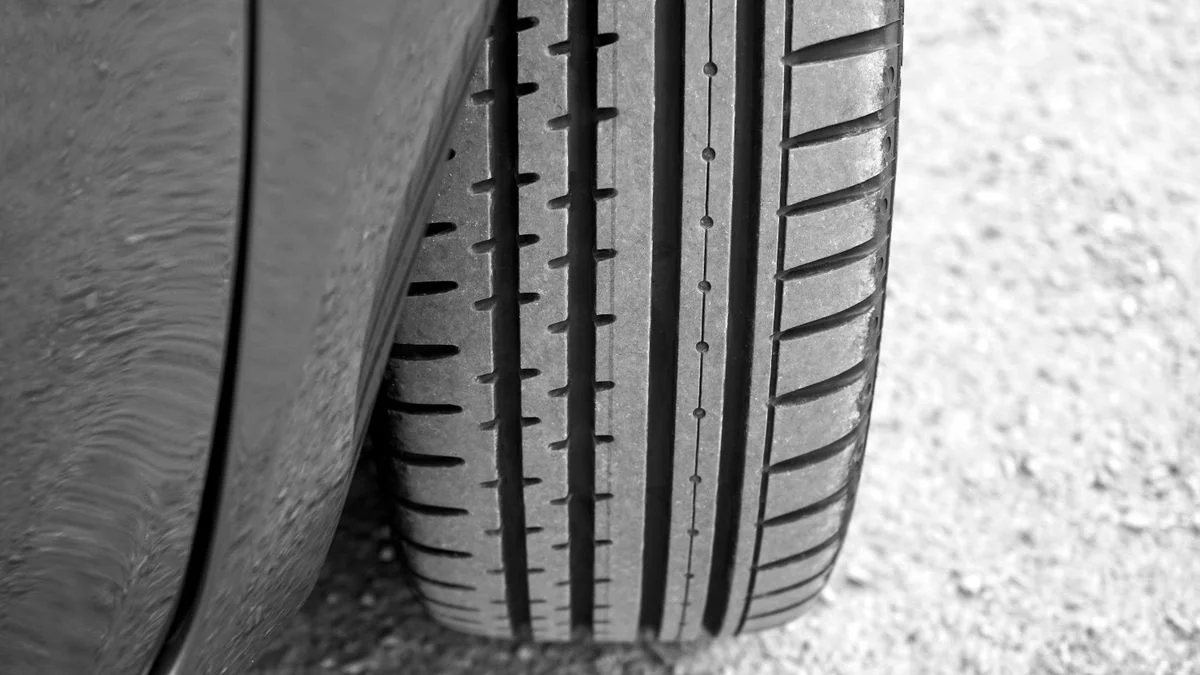
The largest application for BR is tire manufacturing, where it is used mainly in tread compounds and, in some formulations, sidewalls and carcass-related blends. Industry analyses cited in the search results indicate that tires account for about 73% of global BR demand.
| End use | Typical BR grade or role | Main function |
|---|---|---|
| Tire treads | High-cis BR blended with NR/SBR | Wear resistance, low heat buildup, rolling resistance control |
| Passenger and truck tires | Compounding ingredient in tread and sidewall systems | Durability and fatigue resistance |
| Golf ball cores | High-cis BR | High rebound and energy return |
| Footwear soles and outsoles | BR compounds or blends | Abrasion resistance and flexibility |
| Conveyor belts, hoses, seals, vibration parts | Compounded BR | Dynamic durability and cold flexibility |
| Impact-modified plastics | BR-based modifier in ABS and HIPS | Increased toughness and crack resistance |
BR is also important in engineering plastics modification, especially for ABS and polystyrene, where dispersed rubber domains absorb impact energy and suppress brittle fracture. This segment is smaller than tires but is often described as one of the faster-growing outlets for BR.
A notable poor-fit application is in situations requiring strong wet grip without blending, because BR’s low-Tg profile can compromise traction characteristics if compound design is not adjusted. For that reason, BR is rarely selected as a stand-alone elastomer for demanding traction-critical products.
Environmental and Sustainability Aspects
BR is a petrochemical-derived material, so its climate and resource profile is tied to butadiene production, energy intensity, and the broader carbon footprint of synthetic rubber manufacturing. In tire applications, sustainability debate often centers on balancing longer tread life and lower rolling resistance against the challenges of fossil feedstock dependence and end-of-life management.
Key sustainability issues include:
- Recyclability: cured BR in tires is difficult to recycle mechanically because vulcanization creates a crosslinked network that resists remelting and reprocessing.
- Circularity efforts: tire pyrolysis, devulcanization, and reclaimed rubber strategies are being developed, but their performance and economics vary by feedstock quality and contamination.
- Bio-based alternatives: bio-based butadiene and mass-balance approaches are under development, but they are not yet a full-scale replacement for conventional supply.
- Compound optimization: reducing hysteresis and extending service life can lower lifetime material intensity in tire use, even when the base polymer remains petrochemical.
In plastics modification, the sustainability picture is mixed: BR can improve impact performance and durability, but its incorporation into mixed polymer systems can complicate recycling streams if compatibilization is not carefully managed.
Economic and Global Market Impact
BR is a globally traded commodity elastomer with demand closely linked to tire production, automotive output, and industrial rubber goods. Market studies in the search results highlight the tire segment as the dominant demand center and identify plastics modification as a smaller but faster-growing use case.
Major producers mentioned in the search results include LG Chem, SABIC, ARLANXEO, SIBUR, and other large petrochemical-rubber suppliers. In practice, market strength is shaped by access to butadiene feedstock, integration with steam-cracker operations, and the ability to supply specialized grades for tire and technical rubber customers.
Current Challenges and Innovations
The main technical challenge for BR is to preserve its wear and rebound advantages while improving wet grip, processability, and sustainability performance in end uses such as tires. Another challenge is supply volatility in butadiene, which can affect margins and production planning because BR is downstream of petrochemical cracking economics.
Current innovation directions include:
- Advanced catalyst systems for tighter control of cis content, molecular weight, and branching.
- Tire compound design using BR with silica, silanes, and hybrid elastomer blends to improve rolling resistance and traction balance.
- Circular feedstocks such as recycled monomers, depolymerized intermediates, and mass-balance certified raw materials.
- Plastics toughening optimization for ABS and HIPS with more efficient rubber dispersion and reduced additive loading.
A practical dosage example is the use of carbon black at substantial reinforcement levels in tire compounds, where the filler network strengthens the matrix and BR contributes low heat build-up and resilience; the exact loading depends on tread target, processing route, and wear/traction requirements. In plastics modification, BR-type impact modifiers are typically dispersed at lower levels than the host polymer, with the mechanism relying on rubber-particle cavitation and shear yielding to absorb impact energy.
Future Outlook
BR is likely to remain a core elastomer for tires because its material profile aligns well with the continuing need for abrasion resistance, rolling efficiency, and cold-weather performance. The most important future shifts are expected in three areas: decarbonized feedstocks, higher-performance tire compounds, and more circular end-of-life systems.
Growth beyond tires is likely to continue in engineering plastics modification, sports goods, and technical rubber products, but these markets will probably remain secondary to tires in absolute volume. Over the longer term, BR’s strategic relevance will depend on whether the industry can combine microstructure control, lower-carbon production, and scalable recycling pathways without sacrificing the performance advantages that made the material successful in the first place.
Summary
BR is a high-performance synthetic rubber derived from butadiene, valued for wear resistance, low hysteresis, and cold flexibility. Its main market is tires, but it also plays an important role in golf balls, footwear, industrial goods, and plastics impact modification, while sustainability efforts are increasingly focused on circular feedstocks, recycling, and lower-carbon production.
References
- •
Butadiene rubbers (BR). (n.d.). Arlanxeo.Link
- •
Butadiene rubber. (2026, July 15). Britannica.Link
- •
Polybutadiene. (2005, July 4). Wikipedia.Link
- •
BR - Butadiene rubber for the production of rubber parts. (2026, May 20). Gume.Link
- •
Butadiene rubber properties and key industrial uses. (2026, August 3). Yuanhengtec.Link
- •
Butadiene rubber: Properties and uses. (2025, June 6). Scribd.Link
- •
What is butadiene rubber (BR)? (2026, August 21). Circular Rubber Platform.Link
- •
Popular science knowledge: Butadiene rubber. (2022, December 5). Gz-best.Link
- •
Butadiene rubber BR: Properties and applications. (n.d.). Chembroad.Link
- •
BR. (2026, July 2). Walle Global.Link
- •
BR rubber - Butadiene rubber - Properties. (n.d.). Power Rubber.Link
- •
BR - Butadiene rubber. (2024, December 18). Clwyd Compounders.Link
- •
Butadiene rubber (BR) grade BR-1203 Ti (polybutadiene). (n.d.). Sibur.Link
- •
Butadiene rubber. (2025, February 20). Britannica.Link
- •
Reliability+. (n.d.). Sabic.Link
- •
BR butadiene rubber: Uses and properties. (2024, January 20). Chembroad.Link
- •
Butadiene rubber - An overview. (n.d.). ScienceDirect.Link
- •
Market study: Butadiene rubber (BR). (n.d.). Ceresana.Link
- •
Version: 2.1. (n.d.). Sibur.Link
- •
Synthetic butadiene rubber (BR). (2018, November 26). Vss.asia.Link
- •
Styrene-butadiene rubber - An overview. (n.d.). ScienceDirect.Link
- •
Styrene butadiene rubber definition structure uses. (2025, September 4). Vedantu.Link
- •
Rare international corp. (n.d.). Rarerubber.Link
- •
Butadiene rubber (BR) market report. (2024, August 16). Ceresana.Link
- •
Butadiene / polybutadiene (BR) rubbers. (2025, May 8). Specialchem.Link
- •
Polybutadiene rubber- styrene butadiene rubber. (2024, July 17). Zumrut-int.Link
- •
BR. (n.d.). LG Chem.Link
- •
Polybutadiene rubber. (2025, October 25). Scribd.Link
- •
Polybutadiene (BR). (n.d.). Vankempen-rubber.Link
- •
Styrene-butadiene. (2004, June 24). Wikipedia.Link
- •
Polybutadiene - An overview. (n.d.). ScienceDirect.Link
- •
Butadiene. (2004, February 11). Wikipedia.Link
- •
Polybutadiene rubbers. (2025, January 1). Ter-as.Link
- •
Polybutadiene rubber: Fueling the synthetic rubber revolution. (2024, November 14). Mcgroup.Link
- •
Unlock the secrets of butadiene rubber testing techniques. (n.d.). Analyzing-testing.netzsch.Link
- •
Comprehensive overview of butadiene rubber: Properties, manufacturing and applications. (2026, May 2). Slideshare.Link
- •
Butadiene synthetic rubber material. (n.d.). Eureka.patsnap.Link
- •
Styrene butadiene rubber uses: Everything you need to know. (2025, July 28). Gbgummi.Link