
Introduction
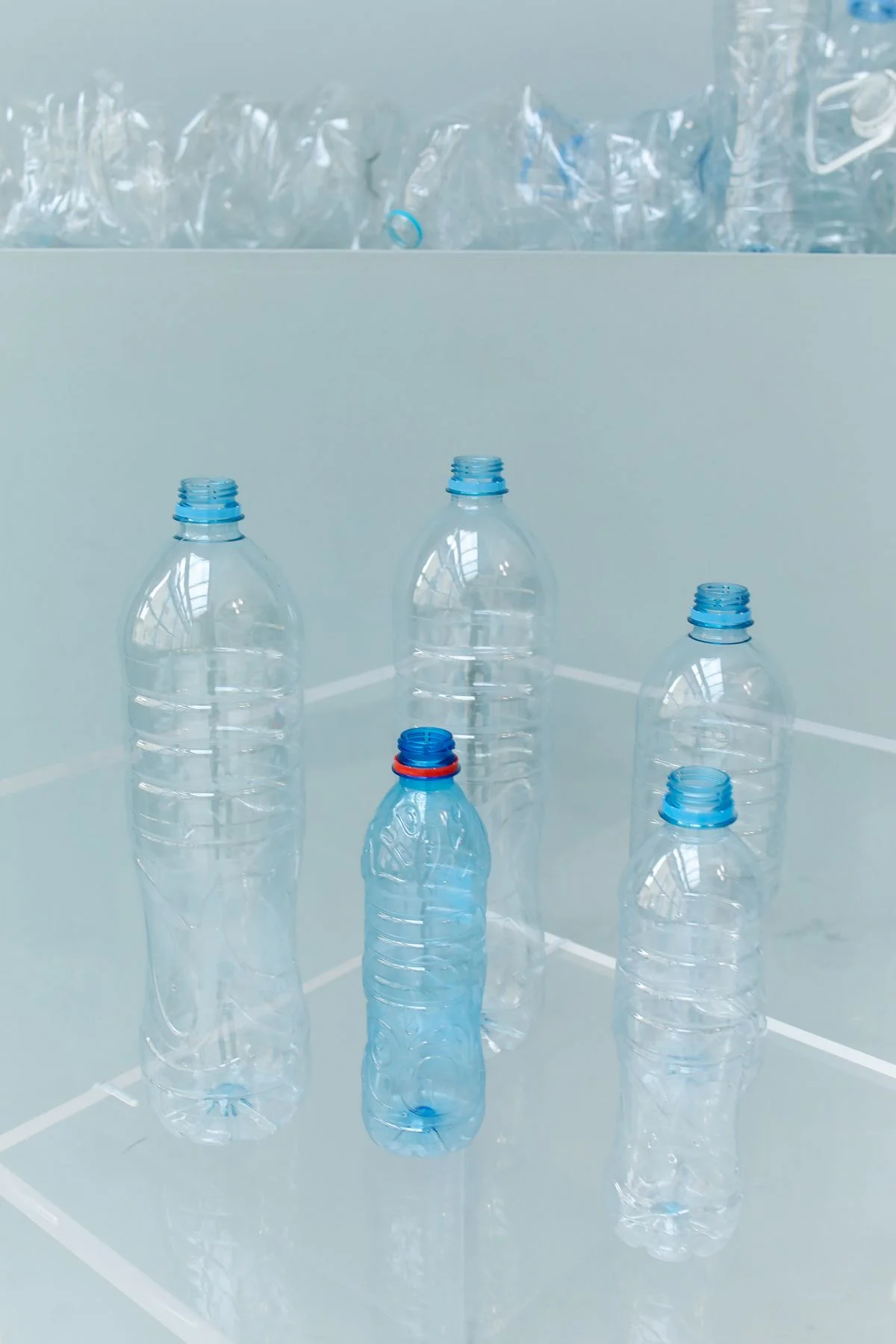
Extrusion stretch blow molding machines are specialized hollow-part manufacturing systems that combine extrusion, stretching, and blow molding to form containers and technical parts with improved strength, clarity, and material efficiency. In the plastics industry, the term is used somewhat broadly: in many technical discussions it refers to stretch blow molding in which the preform or parison is produced by extrusion, while in packaging practice it is more often associated with stretching a heated tubular preform before inflation to create a biaxially oriented part.
These machines occupy an important place between conventional extrusion blow molding and injection stretch blow molding. They are valued for producing lightweight hollow articles with controlled wall distribution, good impact resistance, and strong barrier or aesthetic performance when paired with the correct polymer and mold design. Their use is most associated with bottles and containers, but the process family also extends to selected industrial hollow parts where stretch orientation and extrusion-based preform formation are advantageous.
The technology has evolved alongside improvements in parison control, servo-hydraulic and all-electric drives, multi-layer co-extrusion, and automated handling systems, all of which have raised output stability and reduced scrap. Current development is also shaped by sustainability demands, especially the need to lower energy use, support rPET and other recycled feedstocks, and improve material efficiency without sacrificing product consistency. Future progress is likely to focus on tighter process control, higher recycled-content compatibility, and more integrated digital monitoring of melt, stretch, and cooling behavior.
History and Development
The modern extrusion-based stretch blow molding family grew out of earlier extrusion blow molding, in which a molten parison is inflated inside a cooled mold to form a hollow part. The key innovation was the addition of a stretching step, which improved molecular orientation and thus stiffness, clarity, and top-load performance in suitable polymers.
Several practical milestones shaped the segment:
- Adoption of biaxial stretching for PET packaging: PET became the dominant clear bottle material because stretching during blow molding improved transparency and mechanical performance compared with unstretched hollow parts.
- Development of single-stage and two-stage production concepts: Industry sources distinguish machines that form and blow in one integrated cycle from systems that produce a preform and then reheat and blow it later, allowing different throughput and quality trade-offs.
- Automation and servo drive integration: Modern systems increasingly use servo-hybrid or fully electric architectures, improving repeatability, energy efficiency, and changeover flexibility.
Key Characteristics and Technical Overview
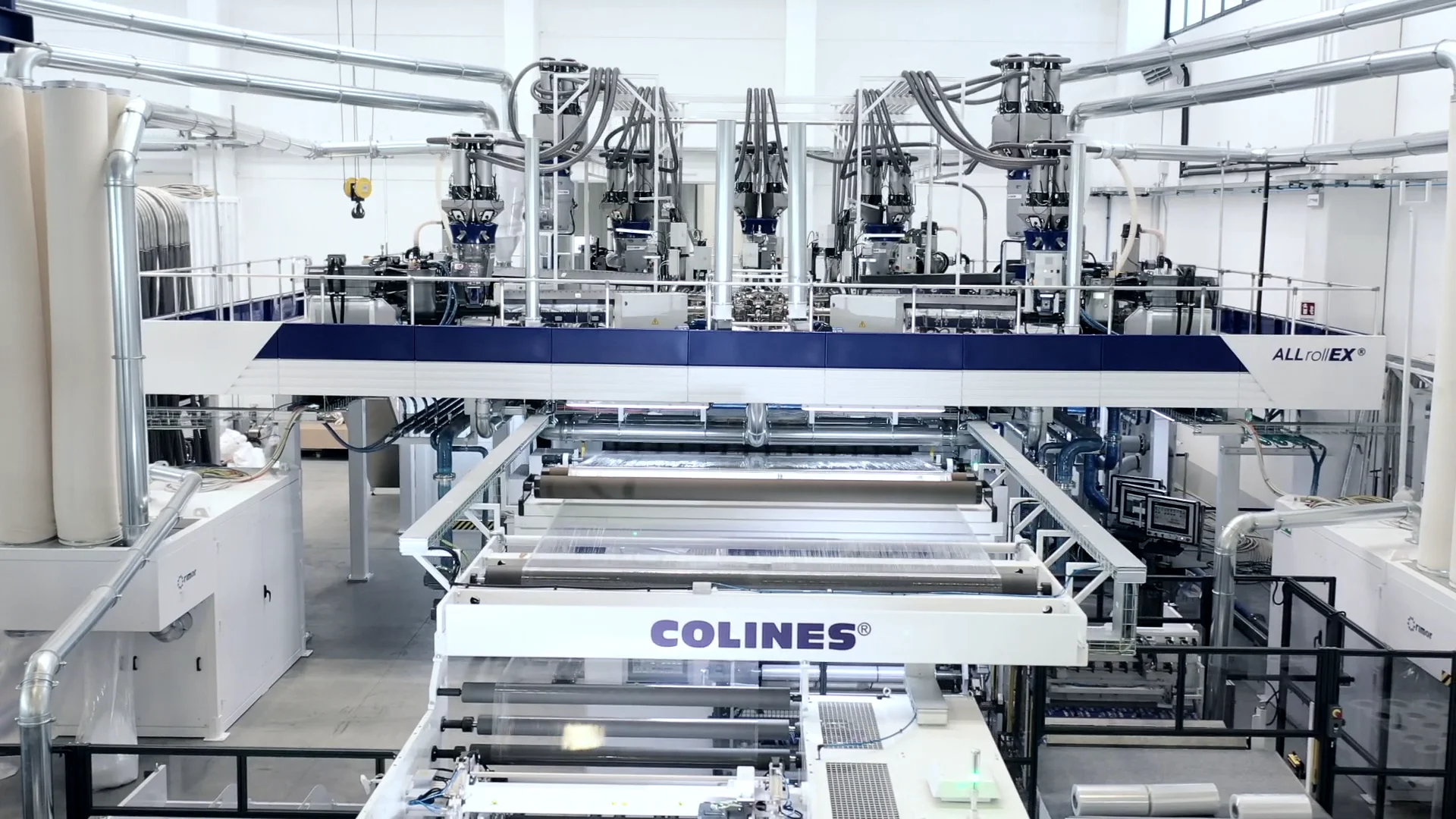
An extrusion stretch blow molding machine usually includes an extruder, die head or preform-forming section, stretch rod or stretch mechanism, blow mold, clamping unit, cooling circuit, and part take-out or transfer system. In operation, molten polymer is formed into a tubular or preform geometry, then mechanically stretched and inflated against the mold wall under compressed air.
Working principle
- Polymer pellets are plasticized in an extruder barrel and conveyed toward the forming head.
- A molten parison or preform is formed with controlled length and wall profile.
- The parison/preform is captured in the mold, and a stretch rod or other axial stretching device elongates the material.
- High-pressure air inflates the stretched material radially against the cooled cavity wall.
- The part is cooled, solidified, and ejected.
Typical engineering characteristics
- Material orientation: Stretching increases molecular alignment, especially in PET-based containers, improving clarity and strength.
- Wall-thickness control: Parison programming and die-head control are central to uniformity and to reducing overweight sections.
- Cooling performance: Mold temperature control strongly affects cycle time, crystallization behavior, and dimensional stability.
- Cavity count: Commercial systems may be single-cavity or multi-cavity, depending on article size and output target.
- Drive technology: Servo-hybrid and full-electric versions are used to improve motion accuracy and reduce energy demand.
Practical performance benchmarks
Published manufacturer and industry descriptions indicate the following typical ranges for related blow molding equipment:
- Bottle volumes: about 200 ml to 5,000 ml for many stretch blow applications, with some systems extended beyond this range for specialty containers.
- Output: fully automatic systems are advertised at up to 4,000 bottles/hour in some product families, depending on cavity count and container size.
- Mold clamping power: extrusion blow molding machines in the same family are offered with about 6 to 30 tons of clamping force for certain double-station systems.
- Resin compatibility: stretch blow systems are especially associated with PET and rPET, while extrusion-based blow systems more broadly handle HDPE, PP, PETG, and barrier blends depending on the product class.
Because the exact configuration varies widely, any quoted throughput or volume should be treated as machine- and part-specific rather than universal.
Types and Variations
By process architecture
| Type | Main sequence | Typical strength | Typical limitation |
|---|---|---|---|
| Single-stage stretch blow | Preform formation, reheating, stretching, and blowing in one integrated machine | Compact handling; fewer transfers | Less flexible for very high-volume bottle lines |
| Two-stage stretch blow | Preforms are produced separately, then reheated and blown later | Better logistics for large-scale production | Requires preform storage and reheating management |
| Extrusion-based stretch blow | Extruded tubular preform or parison is stretched and inflated | Good for some specialty hollow parts | Less common for premium clear PET beverage bottles than injection-based systems |
By machine configuration
- Semi-automatic machines for lower output, development work, or smaller packaging runs.
- Fully automatic machines for high-volume bottle lines and repeatable industrial production.
- Single-cavity systems for larger or more complex parts.
- Multi-cavity systems for small bottles and beverage formats.
By application orientation
- Packaging-oriented machines for water, carbonated drinks, edible oils, detergents, cosmetics, and pharmaceuticals.
- Industrial hollow-part machines for selected containers and technical products where stretch orientation or light weighting is useful.
Applications and Uses
Extrusion stretch blow molding machines are most strongly associated with rigid packaging, where biaxial orientation improves appearance and mechanical performance.

Major application sectors
- Food and beverage: Water bottles, juice containers, edible oil bottles, and related packaging formats.
- Household and personal care: Shampoo, lotion, detergent, and cleaning-agent containers.
- Pharmaceutical and healthcare packaging: Selected sterile solution and hygiene-related containers, depending on regulatory and material requirements.
- Industrial and chemical packaging: Containers for lubricants, detergents, agrochemicals, and other liquid products.
- Consumer goods and specialty containers: Clear or tinted shaped packs, custom bottles, and heat-set containers.
One poor-fit use
A poor-fit application is very large-volume industrial hollow parts such as hundreds-of-liter chemical tanks or large water storage vessels, which are more typically produced on conventional extrusion blow molding systems rather than stretch-oriented bottle machines.
Material Compatibility and Product Quality
Material selection is central to process success. PET is the most important resin family for stretch blow applications because it responds well to axial and radial orientation, producing strong, clear containers. rPET is increasingly relevant, but it introduces viscosity variation, contamination risk, and drying sensitivity that must be managed carefully.

For extrusion-based blow systems in the wider family, common resins include HDPE, LDPE, PP, PETG, and barrier blends; however, the best stretch performance is still associated with PET-type materials.
Key quality outcomes include:
- Improved stiffness-to-weight ratio through molecular orientation.
- Better optical clarity in PET bottles when process conditions are well controlled.
- Top-load and drop resistance that depend on stretch ratio, wall distribution, and cooling profile.
- Barrier and chemical resistance that depend on resin choice and whether co-extrusion or multilayer structures are used.
Technological Innovations and Automation
Current machine development emphasizes precision motion control, digital monitoring, and integration with upstream and downstream automation. Common innovations include:
- Servo-driven clamping and transfer motion for lower energy consumption and improved repeatability.
- Automatic preform or parison handling to reduce labor and contamination risk.
- Co-extrusion capability for barrier or functional-layer containers.
- Process control software for parison programming, heating profiles, and mold timing.
- Inline inspection and reject control to support packaging consistency.
Automation is not universally beneficial in every context: higher system complexity can raise capital cost and maintenance requirements, so machine choice often depends on batch size, labor cost, and quality targets.
Environmental and Sustainability Aspects
Sustainability has become a central design criterion for blow molding equipment. The main advantages of extrusion stretch blow molding include lightweighting, which lowers resin use per container, and the potential to run recycled PET when drying, filtration, and contamination control are sufficient.
Important sustainability factors include:
- Material efficiency: Stretch orientation often allows thinner walls for a given performance target.
- Energy efficiency: Servo-hybrid and full-electric machine architectures can reduce power demand compared with older hydraulic systems.
- Waste reduction: Better parison control reduces trim, overweight sections, and rejected parts.
- Circular economy compatibility: PET bottle systems are increasingly designed for rPET integration, though feedstock variability remains a constraint.
At the same time, sustainability trade-offs remain: reheating preforms, compressed-air use, and mold cooling all carry energy penalties, so total environmental performance depends on line design, cycle time, and scrap rate as much as on resin choice.
Economic and Global Market Impact
Extrusion stretch blow molding machines are part of the larger global market for blow molding equipment, which serves food and beverage packaging, household chemicals, personal care, and selected industrial segments. Demand is driven by container lightweighting, brand differentiation, and the continued expansion of packaged liquids in emerging markets.
From an economic standpoint, the process is attractive because it combines:
- high production rates,
- competitive unit cost at scale,
- design flexibility,
- and strong compatibility with automated filling and packaging lines.
The market is also shaped by regional manufacturing specialization. Suppliers in Asia, Europe, and other industrial regions offer machines ranging from semi-automatic entry systems to high-output automated lines.
Current Challenges and Innovations
The segment faces several persistent technical challenges:
- Uniform wall distribution: Especially difficult in complex bottle geometries and high-speed operation.
- rPET processing stability: Recycled feedstocks can vary in moisture, viscosity, and contamination level.
- Cycle-time reduction without quality loss: Faster cooling and faster motion must not degrade orientation or dimensional accuracy.
- Neck finish and dimensional precision: Critical for closure performance and leak resistance in beverage and chemical packaging.
- Process synchronization: Stretch timing, inflation timing, and mold temperature must remain tightly coordinated.
Recent innovations address these issues through better servo control, improved die-head design, automated inspection, and more robust material-conditioning systems.
Future Outlook
Future extrusion stretch blow molding machines are likely to become more energy efficient, more data-driven, and more adaptable to recycled and bio-based polymers where performance requirements permit. Continued development in digital twins, closed-loop parison control, and inline quality monitoring should improve repeatability and reduce trial-and-error setup.
In packaging, the strongest growth themes are expected to be:
- greater use of lightweight PET and rPET containers,
- wider deployment of automation and predictive maintenance,
- tighter integration with filling and labeling lines,
- and improved compatibility with circular-economy material streams.
Summary
Extrusion stretch blow molding machines are specialized hollow-forming systems that combine extrusion, axial stretching, and air inflation to produce lightweight, strong, and often clear containers. They are most important in packaging, especially PET-based bottles and related containers, and their evolution is being driven by automation, energy efficiency, and recycled-material compatibility.
References
- •
Versatile applications of extrusion blow molding technology. (n.d.). https://smp.parker-global.com/en/application/extrusion-blow-molding-series/Link
- •
Fax. (2023, December 18). https://akei.com.cn/en/nf36.htmlLink
- •
Blow molding - An overview. (n.d.). https://www.sciencedirect.com/topics/engineering/blow-moldingLink
- •
AKEI 50SN-TS-DH-PP.PE. (2025, March 7). https://www.machinetools.com/en/for-sale/machines/type/blow-molding-machinesLink
- •
Industry applications of blow molding machinery. (n.d.). https://smp.parker-global.com/en/application/Link
- •
Extrusion blow molding machines: Unleash unmatched efficiency in... (2025, April 29). https://zjgshengrong.com/extrusion-blow-molding-machines/Link
- •
What is extrusion blow molding. (2023, July 7). https://www.moldingmachinetepai.com/resources/what-is-extrusion-blow-molding.htmlLink
- •
Top 6 extrusion blow molding examples - Full Shine. (2020, September 18). https://www.full-shine.com/news-top-6-examples-by-extrusion-blow-moldingLink
- •
Plastics processes. (2022, January 1). https://www.bpf.co.uk/plastipedia/processes/Default.aspxLink
- •
The fundamentals of extrusion blow molding for bottle... (2026, April 21). https://www.cm-pet.com/the-fundamentals-of-extrusion-blow-molding-for-bottle-productionLink
- •
Exploring the different types of blow molding processes | OneMonroe. (2020, February 7). https://monroeengineering.com/blog/exploring-the-different-types-of-blow-molding-processes/Link
- •
Molding technologies | Comar. (2023, October 19). https://www.comar.com/packaging-solutions/capabilities/molding-technologies/Link
- •
Stretch blow molding 101. (2026, January 14). https://www.oberk.com/packaging-crash-course/stretch-blow-molding-101Link
- •
Guide to blow molding - Formlabs. (n.d.). https://formlabs.com/blog/blow-molding/Link
- •
Processes and materials of blow molding - IQS Directory. (2026, August 21). https://www.iqsdirectory.com/articles/blow-molding.htmlLink
- •
Injection blow molding vs extrusion blow molding. (2021, November 30). https://e2global.com/blog/injection-blow-molding-vs-extrusion-blow-molding/Link
- •
Blow Molding Machines — Extrusion, Injection & Stretch Blow Molding Systems | KNAVI GROUP. (n.d.). https://knavi.us/catalog/blow-molding-machinesLink
- •
Extrusion blow molding - An overview. (2025, January 15). https://www.sciencedirect.com/topics/engineering/extrusion-blow-moldingLink
- •
Everything you should know about extrusion stretch blow molding... (2025, August 28). https://isbmmachine.net/everything-you-should-know-about-extrusion-stretch-blow-molding-in-2025/Link
- •
Global leading blow molding manufacturer - Parker Plastic Machinery. (2019, August 13). https://www.parker-global.com/e-catalog.htmlLink
- •
Blow molding machines manufacturer | EBM, PET & injection... (2026, June 23). https://blowpacker.com/products/blow-molding-machines/Link
- •
Products. (2024, January 1). https://www.sinotechmachine.com/products.htmlLink
- •
Blow molding. (n.d.). https://encyclopedia.che.engin.umich.edu/blow-molding/Link
- •
Home. (2025, January 25). https://www.yashasviindustriesmumbai.com/Link
- •
ALL PRODUCT LIST | FULL SHINE PLASTIC MACHINERY CO., LTD. (2022, March 25). https://www.cens.com/censv1/en/product_list.jsp?SUP_ID=6338&CAT_ID=Link
- •
Full Shine Plastic Machinery Co., Ltd.: Production machines. (n.d.). https://www.directindustry.com/prod/full-shine-plastic-machinery-co-ltd-72806.htmlLink
- •
HE Series: Extrusion blow moulding machines. (2025, July 8). https://www.meccanoplastica-group.com/extrusion-blow-moulding-he-series/Link
- •
Full Shine Plastic Machinery Co., Ltd. Products. (2024, November 1). https://www.asiamachinery.net/supplier/products.asp?SupID=1199Link
- •
HANGZHOU ZHONGYA MACHINERY CO., LTD. (2011, August 1). https://www.cccme.cn/shop/cccme6453/product.aspxLink
- •
Types of plastic blow molding: Choosing the right process. (n.d.). https://jwellanhui.com/types-of-blow-molding-machine-guide-to-technology-and-applications/Link
- •
Extrusion blow molding by Thielen M. (2025, August 9). https://www.scribd.com/document/597926123/Extrusion-Blow-Molding-by-Thielen-MLink
- •
Everything you need to know about stretch blow molding... (2023, April 7). https://www.yelkenciler.com/everything-you-need-to-know-about-stretch-blow-molding-and-its-many-benefits/Link
- •
Blow molding. (2005, June 12). In Wikipedia. https://en.wikipedia.org/wiki/Blow_moldingLink
- •
CONVERSION TECHNOLOGIES FOR PLASTICS - 4: EXTRUSION-BLOW MOLDING - 2Mila srl. (n.d.). https://www.2milasrl.it/en/conversion-technologies-extrusion-blow-molding/Link
- •
Types of blow molding machines | Aman Plastic Mould. (2024, July 29). https://www.amanmachine.com/types-of-blow-molding-machines/Link
- •
Extrusion blow molding machine. (2025, August 9). https://www.scribd.com/document/307018146/Extrusion-Blow-Molding-MachineLink
- •
Zhangjiagang Lvhuan Machinery Co., Ltd. (2001, April 27). https://lvhuanmachine.en.made-in-china.com/Link
- •
Blow molding equipment currently available. (n.d.). https://cdn.thomasnet.com/ccp/30124946/48163.pdfLink
- •
Performance stretch blow molding machines for PET. (n.d.). https://www.parker-global.com/product/stretch-blow-molding-machine.htmlLink
- •
Extrusion blow moulding machines. (2025, August 25). https://www.linusplastics.com/keywords/extrusion-blow-moulding-machinesLink
- •
PET stretch blow molding machines by Parker. (n.d.). https://www.parker-global.com/application/stretch-blow-molding-machine.htmlLink
- •
Plastic bottle blowing equipment_SOLUTION_Hangzhou Zhongya... (n.d.). https://en.zhongyagroup.com/product/9/Link