
Introduction
Plastics deodorants is a broad, non-standard keyword most plausibly interpreted as deodorant products, deodorant packaging, or deodorant formulations in which plastics play a functional role. In practice, plastics appear in deodorants both as packaging materials and, in some products, as polymeric ingredients used for thickening, film formation, stabilization, or sensory control. The topic sits at the intersection of personal care chemistry, polymer packaging, and sustainability, because deodorants are sold in high volumes, often in multi-part plastic formats that are difficult to recycle, while also serving as a useful case study in how brands are redesigning products for refillability, recyclability, and reduced material intensity.
Historically, deodorants followed the broader personal-care shift toward mass-market convenience packaging, with hard plastic sticks, roll-ons, and aerosol systems becoming dominant for durability, low cost, and manufacturing efficiency. Today, the category includes conventional stick deodorants, roll-ons, creams, sprays, refills, and plastic-free alternatives packaged in paperboard, metal, glass, or reusable cases. The modern market therefore spans both conventional petrochemical-based plastics and emerging low-plastic or plastic-free designs, with sustainability debates focused on recyclability, material mix, product performance, and the life-cycle impacts of packaging and ingredients.
Chemical Structure and Key Properties
In the deodorant sector, plastics serve two distinct roles. In packaging, polymers such as polypropylene, polyethylene, high-density polyethylene, low-density polyethylene, polyethylene terephthalate, and occasional bio-based or recycled resins are used for tubes, caps, wheels, pumps, inserts, and refill components. In formulation, polymeric or polymer-like materials such as acrylates copolymers, PEG derivatives, dimethicone, and related structuring agents may contribute to viscosity control, slip, film formation, and product stability.
Key properties that make plastics attractive for deodorant applications include:
- Low cost, supporting mass-market pricing and large-scale production.
- Light weight, reducing transport mass compared with glass or metal systems.
- Processability, enabling injection molding, extrusion, and multi-component assembly.
- Moisture resistance, important for bathroom storage and product shelf life.
- Design flexibility, allowing stick mechanisms, roll-on balls, snap caps, and refill formats.
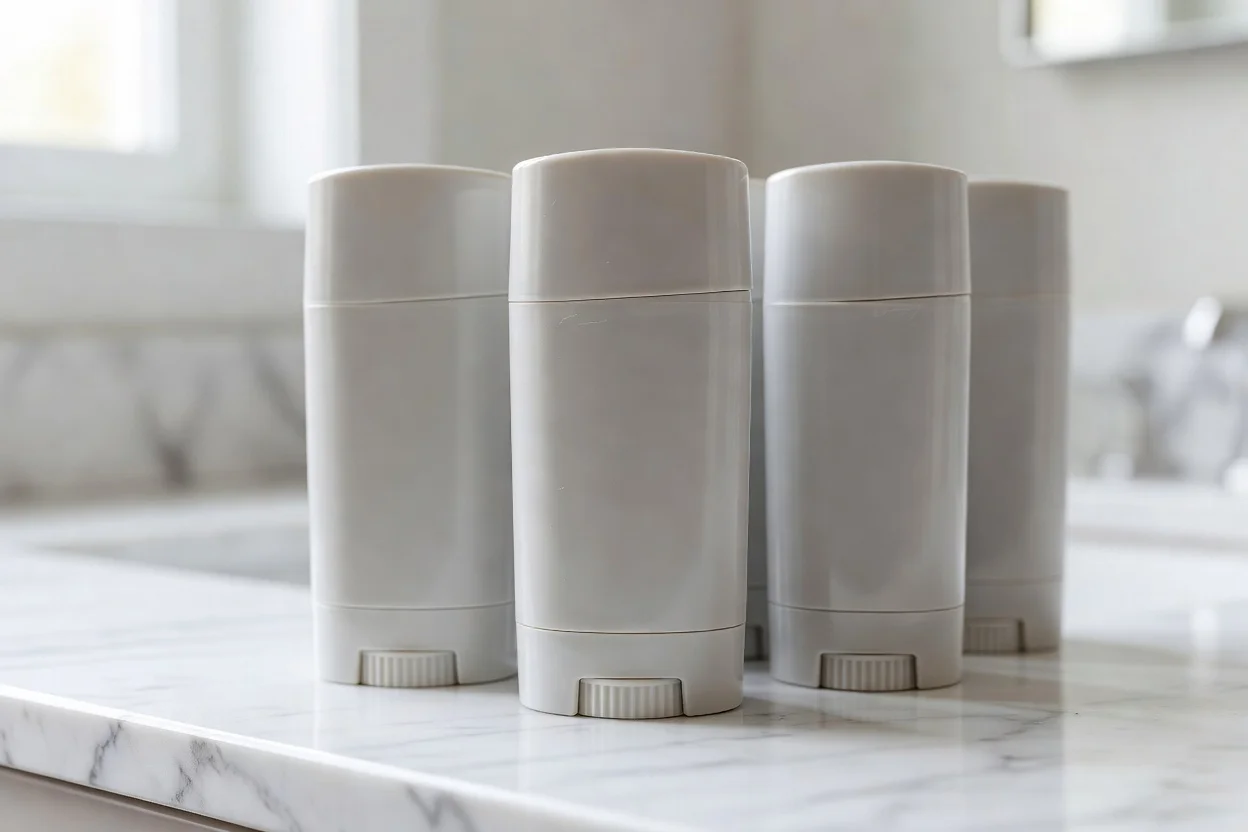
Real-world limits remain significant:
- Poor recyclability of multi-material packs → cause: mixed resins, small components, labels, springs, adhesives, and contamination with product residue → workaround: mono-material redesign, refill systems, or paperboard/metal alternatives.
- Low market acceptance of some refill or paper formats → cause: humidity sensitivity, mechanical deformation, or unfamiliar dispensing behavior → workaround: reinforced paperboard, reusable shells, or hybrid refill architectures.
- Potential ingredient-related plastic associations in formulas → cause: polymeric film formers or synthetic rheology modifiers may be perceived as “microplastic-like” by consumers and activists → workaround: reformulation with alternative structuring systems and clearer ingredient communication.
For deodorant ingredients, some commonly flagged “plastic-related” materials are not packaging plastics in the strict sense but polymeric excipients or silicones used to improve glide, consistency, and stability. Typical examples discussed in consumer and technical sources include acrylates copolymer and dimethicone, both of which can function as film-formers or slip agents that influence product feel and residue.
History and Development
The deodorant category expanded alongside the rise of modern consumer plastics in the mid-20th century, when inexpensive molded polymer packaging enabled compact sticks, roll-ons, and aerosol formats to be distributed at scale. Plastic replaced heavier or more fragile alternatives because it was durable, inexpensive, and suited to automated high-volume manufacturing.
Over time, the category diversified into:
- Stick deodorants, typically using twist-up plastic tubes with internal platforms and caps.
- Roll-ons, often using plastic bottles and applicators.
- Aerosols, which combine a metal can with plastic actuator parts and propellants, creating additional air-emission concerns.
- Refillable systems, which retain an outer case and replace only the inner charge or cartridge.
- Plastic-free deodorants, using cardboard push-up tubes, tins, jars, or reusable metal cases.
Sustainability pressure intensified as consumers, brands, and regulators increasingly scrutinized single-use packaging, microplastics, and fossil-derived materials in personal care products. This has pushed the market toward redesign rather than simple substitution, especially where the product must remain hygienic, stable, and easy to use.
Production Processes and Raw Feedstocks
Conventional deodorant packaging is typically produced from petrochemical feedstocks through polymerization and compounding, followed by shaping and assembly. The most common materials in mainstream packaging are polypropylene and polyethylene, chosen for their balance of stiffness, toughness, and chemical resistance.
Typical production chain:
- Feedstock extraction and cracking
- Polymerization and compounding
- Base resins are blended with stabilizers, colorants, slip agents, and processing aids to meet performance and aesthetics targets.
- Conversion
- Injection molding, extrusion, blow molding, and assembly produce caps, bodies, wheels, inserts, and refill components.
- Filling and sealing
- The package is charged with solid or semi-solid deodorant, then closed, labeled, and distributed.
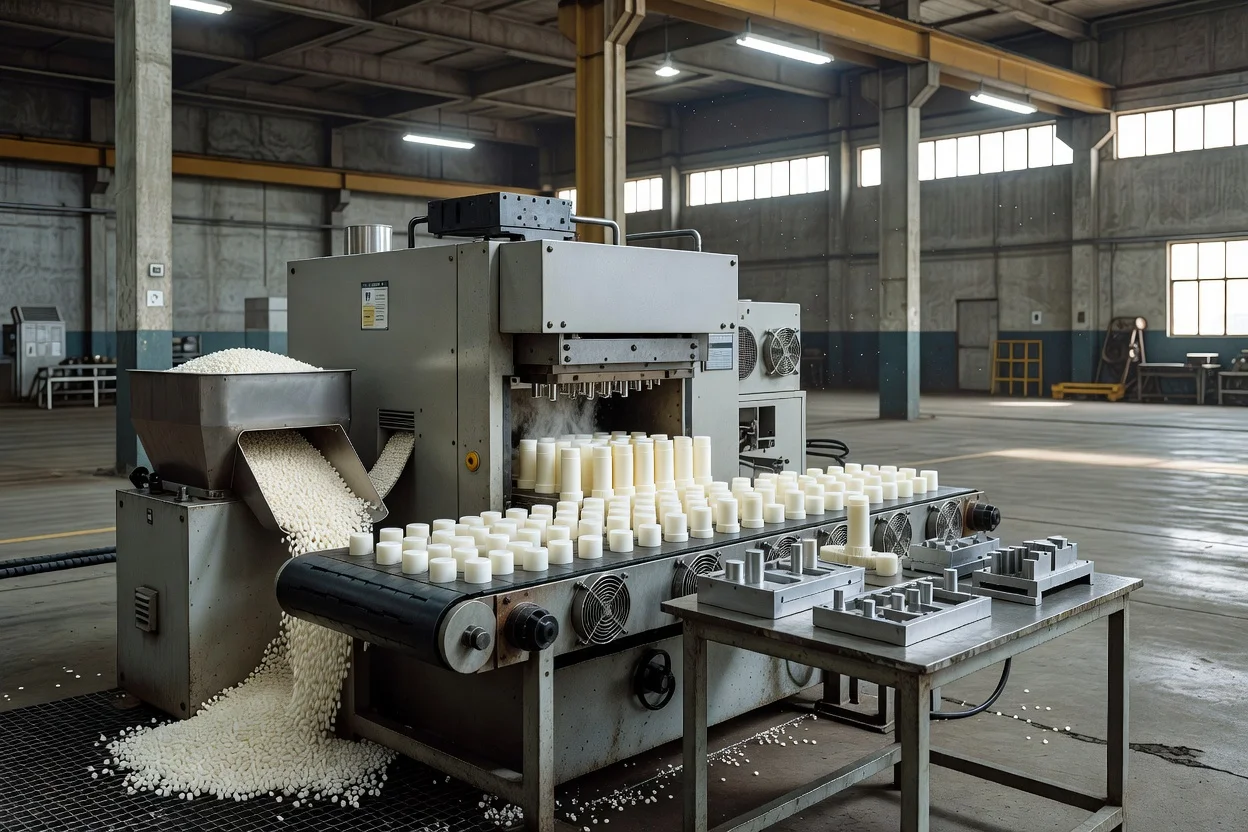
For refillable or plastic-reduced products, raw feedstocks may include:
- Recycled polypropylene or polyethylene, when food- or cosmetics-grade supply and color consistency are available.
- Paperboard, often used for compostable push-up tubes or sleeves.
- Aluminum or stainless steel, used for reusable outer cases or tins.
- Bio-based plastics or biocomposites, such as sugarcane-based or starch-based materials, although these still require careful end-of-life management.
A practical formulation example is a deodorant stick that uses a small amount of polymeric structuring aid to maintain shape and glide, while a packaging redesign may replace a multi-part PP stick with a paperboard push-up tube. In the latter case, the mechanism is primarily material substitution at the package level, not a change in deodorant chemistry, but it can dramatically reduce plastic mass.
Applications and End-Use Markets
Deodorant plastics are mainly used in personal care packaging, but some polymeric materials also appear inside the product as functional ingredients. The main end-use formats are shown below.
| End use | Typical plastics or polymeric materials | Usual process | Market logic |
|---|---|---|---|
| Stick deodorant tube | PP, PE, sometimes recycled PP | Injection molding, assembly | Low cost, twist mechanism, durable consumer use |
| Roll-on bottle and head | PE, PP, PET, mixed plastics | Blow molding, molding, assembly | Liquid application, high-volume mass market |
| Aerosol deodorant | Metal can plus plastic actuator and valve parts | Can forming, component molding | Fine spray, convenience, but more environmental scrutiny |
| Refillable case | Aluminum, stainless steel, durable plastics | Precision molding, machining, assembly | Higher-value, repeated-use premium format |
| Plastic-free stick or balm | Paperboard, tin, glass jar | Paper conversion, metal forming, filling | Zero- or low-plastic positioning |
| Formulation excipients | Acrylates copolymer, PEG derivatives, dimethicone | Ingredient blending | Texture, film formation, sensory control |
Major sectors and grade-match patterns include:
- Mass-market deodorant sticks use standard PP or PE grades optimized for stiffness, moldability, and low unit cost.
- Premium refill systems use higher-durability shells, often aluminum or thick-walled engineering plastics, to support repeated opening and closing.
- Natural or zero-waste brands often use paperboard or tins to signal lower material intensity and improved end-of-life options.
- Poor-fit use: fully recyclable, all-plastic deodorant sticks remain difficult to implement when the product has multiple small parts made from different resins, because the resulting assemblies are usually not captured by curbside recycling systems.
Environmental and Sustainability Aspects
Environmental impact in this category is driven more by packaging design than by the deodorant base itself. Traditional deodorant containers are often made from several plastics and small components, which reduces recyclability and increases the likelihood of disposal in mixed waste streams.
Main sustainability issues:
- Virgin plastic demand from high-volume single-use packaging.
- Low recycling rates because of mixed materials, residue contamination, and small part size.
- Fossil-carbon footprint associated with polymer production and transport.
- Microplastic persistence from plastic waste fragmentation in the environment.
- Aerosol emissions, where propellants and volatile fragrance compounds can contribute to air-quality concerns.
Common mitigation pathways include:
- Refillable systems, which can reduce plastic consumption substantially by keeping the outer case in use and replacing only the inner charge.
- Paperboard push-up tubes, which reduce or eliminate conventional plastic packaging.
- Mono-material design, improving sortability and recycling feasibility.
- Recycled content, especially recycled polypropylene where quality and supply allow.
- Packaging minimization, by removing unnecessary caps, inserts, or decorative layers.
Claims about “plastic-free” deodorants require nuance. A paperboard tube may eliminate conventional plastic packaging, but performance, moisture resistance, and liner design still matter, and some refill systems use small plastic components even when the outer shell is reusable. Likewise, “bioplastic” is not automatically circular; it may be bio-based, compostable, recyclable, or none of these depending on the resin and local infrastructure.
Economic and Global Market Impact
Deodorant plastics are economically significant because deodorant is a high-frequency purchase in a competitive, low-margin consumer category. Packaging choice can therefore affect cost, shelf appeal, logistics, and brand positioning as much as environmental profile.
Market dynamics currently favor:
- PP and PE for mainstream sticks and closures because they are cheap, moldable, and supply-chain familiar.
- Refillable premium systems for brands seeking differentiation and lower packaging mass per use.
- Paperboard and aluminum alternatives for sustainability-led brands.
According to recent industry and brand disclosures, major deodorant producers are actively reducing packaging plastic, improving recycled content, and testing refill models, but reliable recycled polypropylene supply remains a constraint for some applications. Large consumer goods companies and specialized personal-care brands are among the most visible actors in this transition.
Current Challenges and Innovations
Current challenges are concentrated in the interface between consumer convenience and circular design.
- Challenge: recycling incompatibility
- Innovation: mono-material sticks, easier-to-separate parts, and fewer decorative elements.
- Challenge: product performance in low-plastic formats
- Innovation: reinforced paperboard, improved internal liners, and better moisture-control design.
- Challenge: refill adoption
- Innovation: premium reusable cases, subscription refills, and simplified cartridge systems.
- Challenge: ingredient scrutiny
- Innovation: alternative rheology systems and reformulation to reduce consumer concern around polymeric ingredients.
- Challenge: aerosol emissions and propellants
- Innovation: non-aerosol formats and lower-impact delivery systems.
Where deodorant ingredients are concerned, one practical formulation strategy is to replace a higher-load polymeric thickener with a more minimalist structuring system, reducing the perceived “plasticity” of the formula while preserving stability. The mechanism is usually network optimization: less reliance on synthetic film formers, more on waxes, salts, or plant-derived structuring agents, depending on the product type.
Future Outlook
The future of plastics in deodorants is likely to be shaped by three converging forces: recycling policy, consumer sustainability expectations, and performance requirements. Conventional plastic sticks will remain important because they are cheap and effective, but their design is expected to shift toward simpler structures, more recycled content, and better compatibility with established recycling streams.
Growth is also likely in:
- Refillable systems, especially where consumers accept a higher initial purchase price in exchange for lower ongoing waste.
- Paperboard and fiber-based packaging, if moisture resistance and usability can be maintained.
- Bio-based or hybrid materials, although these will need clearer end-of-life pathways to avoid greenwashing.
- Ingredient transparency, as consumers increasingly distinguish between packaging plastics and polymeric cosmetic ingredients.
The most credible long-term direction is not a complete disappearance of plastics, but a more selective use of polymers where they provide clear functional value, combined with aggressive reduction of unnecessary material, improved recyclability, and expanded reuse models.
Summary
Plastics deodorants is best understood as the deodorant category’s use of plastics in both packaging and, in some cases, formulation. Conventional products rely heavily on PP and PE because they are low-cost and easy to manufacture, but their multi-part designs often complicate recycling and increase waste. The strongest sustainability responses are refillable formats, paperboard or metal alternatives, mono-material redesign, and selective use of recycled or bio-based materials where performance and infrastructure allow.
References
- •
Microplastics in deodorant: Brands ranked (Native, Dove ...). (2026, June 20). https://microplasticsapp.com/blog/microplastics-in-deodorant-brands-rankedLink
- •
10 best zero waste & plastic-free deodorants to try today. (2025, May 1). https://zerowastestore.com/blogs/sustainable-living/best-plastic-free-deodorantsLink
- •
Deodorant: Waarom plastics, aluminium en parabenen te vermijden? (2023, February 20). https://klooker.nl/2019-deodorant/Link
- •
The environmental impact of deodorant: Understanding .... (2024, May 7). https://www.earthconscious.co.uk/blogs/the-earth-conscious-way/the-environmental-impact-of-deodorant-understanding-the-stenchLink
- •
What makes a deodorant sustainable? (2025, February 10). https://shiftinggaia.com/en-us/blogs/us-articles/what-makes-a-deodorant-sustainableLink
- •
The beauty industry generates a lot of plastic waste. Can it change? (2019, April 18). https://www.nationalgeographic.com/environment/article/beauty-personal-care-industry-plasticLink
- •
Understanding the problem: The impact of traditional deodorant packaging. (2025, May 27). https://crackuppuns.com/understanding-the-problem-the-impact-of-traditional-deodorant-packaging/Link
- •
Plastic free deodorant: 15 zero waste options. (2026, March 25). https://www.implasticfree.com/plastic-free-deodorant/Link
- •
Suave deodorant lifecycle & social hotspot analysis. (n.d.). https://serve-learn-sustain.gatech.edu/sites/default/files/documents/telenko_post1_deodorant.pdfLink
- •
Our commitment to reduce plastic waste - Dove. (2023, December 6). https://www.dove.com/us/en/stories/about-dove/plastics-commitment.htmlLink
- •
10 deodorant brands with no plastic packaging whatsoever. (2022, May 10). https://daybring.com/stories/deodorant-with-no-plastic/Link
- •
4 plastic-free deodorants this zero waste store approves. (n.d.). https://thetareshop.com/en-us/blogs/news/4-plastic-free-deodorants-this-zero-waste-store-approvesLink
- •
14 best plastic-free deodorants (2024). (n.d.). https://www.almostzerowaste.com/zero-waste-deodorants/Link
- •
9 plastic-free deodorants for zero waste & zero BO. (2025, October 29). https://www.sustainablejungle.com/plastic-free-deodorant/Link
- •
ENV 401 thesis: The environmental impact of deodorants explored. (2024, May 13). https://www.studocu.com/en-au/document/university-of-new-south-wales/business-economics/deoderant-thesis/93930255Link
- •
Plastic-free personal care swaps: Your complete guide (2025). (2025, October 25). https://plasticfreeeverything.org/plastic-free-personal-care-swaps-your-complete-guide-2025/Link
- •
5 ways deodorant can be bought plastic free. (2022, October 7). https://www.reusablenation.com/zero-waste-living/5-plastic-free-deodorant-optionsLink
- •
The surprising environmental impact of deodorant packaging: What you N. (2024, February 18). https://naturallywyld.ca/blogs/natural-deodorants/the-surprising-environmental-impact-of-deodorant-packaging-what-you-need-to-knowLink
- •
Why are deodorants bad for the environment? (2025, April 25). https://ecohomelife.co.uk/why-are-deodorants-bad-for-the-environment/Link
- •
How much plastic waste do refillable deodorants eliminate? (2025, December 27). https://rebel.care/blog/how-much-plastic-waste-do-refillable-deodorants-eliminate/Link
- •
The best plastic free deodorants that actually work. (2025, November 15). https://plasticfreeeverything.org/the-best-plastic-free-deodorants-that-actually-work/Link
- •
Plastic-free deodorant: DIY & all natural ones that work. (2019, July 18). https://www.reusablenation.com/zero-waste-living/plastic-free-armpits-do-diy-all-natural-deodorants-workLink
- •
Plastic-free natural deodorants to pack for your next trip. (2025, August 19). https://planetlyvegan.com/plastic-free-natural-deodorants/Link
- •
Plastic free deodorant bars that actually work. (n.d.). https://ethique.com/collections/deodorantLink
- •
Rethinking deodorant: The environmental impact of your daily routine. (2024, September 5). https://rollingout.com/2024/09/05/rethinking-deodorant-the-impact/Link
- •
Deodorant packaging explained: Material grades .... (2025, November 8). https://www.alibaba.com/product-insights/deodorant-packaging.htmlLink
- •
What’s in your bathroom? The hidden plastics in your beauty products. (n.d.). https://www.unep.org/news-and-stories/story/whats-your-bathroom-hidden-plastics-your-beauty-productsLink
- •
4 ways to make sure your deodorant is eco-friendly. (n.d.). https://www.vogue.in/wellness/content/4-ways-to-make-sure-your-deodorant-is-eco-friendlyLink
- •
Is there a deodorant with minimal packaging waste? (2013, February 2). https://sustainability.stackexchange.com/questions/247/is-there-a-deodorant-with-minimal-packaging-wasteLink
- •
1. (n.d.). https://publicacoes.fatecjaboticabal.edu.br/citec/article/download/292/258/2126Link
- •
NORMAL deodorants in zero waste packaging? (2026, June 3). https://www.reddit.com/r/ZeroWaste/comments/1t7lr7g/normal_deodorants_in_zero_waste_packaging/Link
- •
What materials are used in refillable deodorant containers? (2026, January 8). https://rebel.care/blog/what-materials-are-used-in-refillable-deodorant-containers/Link
- •
Native gave its deodorant an environmentally friendly makeover. (2020, June 23). https://www.nylon.com/beauty/native-deodorant-now-comes-in-plastic-free-packagingLink
- •
Zero-waste vegan & cruelty-free deodorants. (2025, April 26). https://worldvegantravel.com/blog/zero-waste-vegan-and-cruelty-free-deodorants/Link
- •
Is deodorant bad for the environment? (Spray, aerosol & ...). (2020, May 11). https://islanddeodorant.com/blogs/news/why-deodorants-are-bad-for-the-environmentLink
- •
Deodorant and plastic. (2026, August 16). https://health4earth.com/2026/08/16/deodorant-and-plastic/Link
- •
[PDF] Understanding the environmental distribution and potential health .... (n.d.). https://www.e3s-conferences.org/articles/e3sconf/pdf/2023/65/e3sconf_ri2c2023_02015.pdfLink
- •
Deodorant. (n.d.). https://tiny-waste.com/deodorant.htmlLink
- •
All natural plastic free deodorant - Zero waste store. (2026, March 18). https://zerowastestore.com/collections/zero-waste-deodorantLink
- •
Any plastic-free/zero-waste antiperspirant options? (n.d.). https://www.reddit.com/r/ZeroWaste/comments/1bg0n3r/any_plasticfreezerowaste_antiperspirant_options/Link
- •
Plastic free deodorant that actually WORKS? (n.d.). https://www.reddit.com/r/ZeroWaste/comments/1bg7voq/plastic_free_deodorant_that_actually_works/Link
- •
Recycling mystery: Deodorant tubes. (2025, October 9). https://earth911.com/health/recycling-deodorant-tubes/Link
- •
What is bioplastic deodorant packaging? (2025, August 27). https://rebel.care/blog/what-is-bioplastic-deodorant-packaging/Link
- •
Sustainable deodorant packaging you need to know about. (2020, November 12). https://blog.lebermuth.com/sustainable-deodorant-packaging-you-need-to-know-aboutLink
- •
What plastic free natural deodorant do you use and recommend? (2025, May 26). https://www.reddit.com/r/ZeroWaste/comments/1kw7t0b/what_plastic_free_natural_deodorant_do_you_use/Link
- •
Refillable deodorant systems reduce plastic — Take five with packaging world. (2021, September 3). https://www.packworld.com/leaders-new/business-drivers-specialty/sustainability/video/21648213/refillable-deodorant-systems-reduce-plastic-take-five-with-packaging-worldLink
- •
Plastics and microplastic in the cosmetic industry. (2022, October 28). https://pmc.ncbi.nlm.nih.gov/articles/PMC9657586/Link
- •
Deodorant that doesn’t come in a plastic stick. (2024, September 25). https://www.reddit.com/r/ZeroWaste/comments/1fp72c6/deodorant_that_doesnt_come_in_a_plastic_stick/Link
- •
A complete guide to deodorants applicator. (2026, February 7). https://www.alibaba.com/product-insights/deodorants-applicator.htmlLink
- •
Natural deodorant alternatives for happy, healthy pits. (2021, January 28). https://www.healthline.com/health/deodorant-alternativesLink
- •
Are there any plastic free *antiperspirants*? (Not just deodorant). (n.d.). https://www.reddit.com/r/ZeroWaste/comments/pan4aa/are_there_any_plastic_free_antiperspirants_not/Link