
Introduction
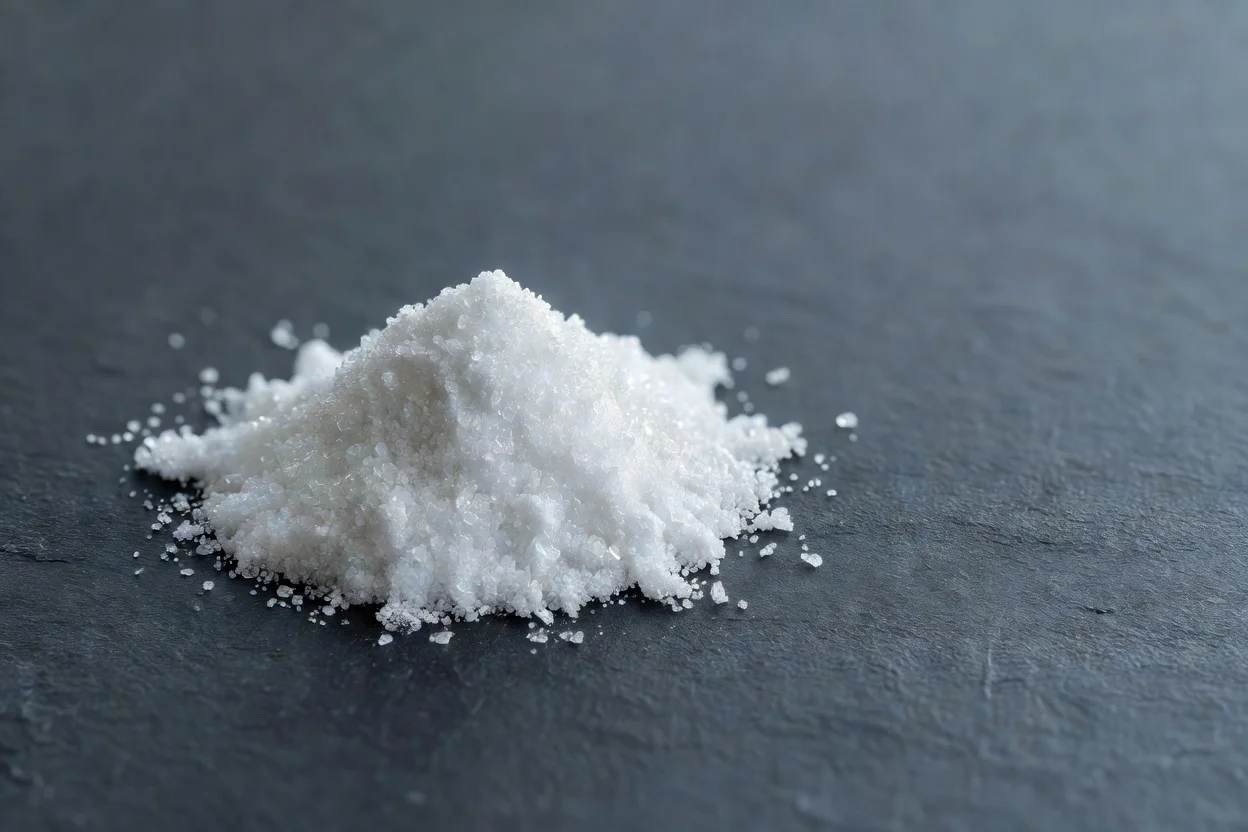
Non-halogen organic flame retardants are a class of flame-retardant additives based on organic chemistries that do not contain bromine or chlorine and are used to reduce ignitability, slow flame spread, and lower smoke generation in plastics and other organic materials. In practice, the category is dominated by phosphorus-, nitrogen-, and phosphorus-nitrogen-based systems, including additive and reactive grades, as well as intumescent formulations that build a protective char during fire exposure.
These materials are increasingly important because they provide a route to meet fire-safety requirements while avoiding the corrosive and toxic combustion byproducts associated with many halogenated systems. Their development has been driven by electronics, transportation, construction, textiles, and cable applications, where regulatory pressure, recycling concerns, and OEM specifications have steadily favored halogen-free solutions.
At the same time, non-halogen organic flame retardants are not a single chemistry but a family of technologies with different trade-offs. Phosphorus-based products can be highly efficient but may face issues such as moisture sensitivity, compatibility limits, volatility, or processing constraints depending on the structure and host polymer. Nitrogen-rich systems, intumescent packages, and hybrid organic-inorganic designs often improve smoke performance and char formation, but may require careful formulation to preserve mechanical properties and processability.
The broader market is therefore shaped by a balance between performance, cost, regulatory compliance, and sustainability. Recent technical and industry literature shows that non-halogen systems can match or outperform brominated alternatives in many applications, especially when formulation is optimized, while also supporting lower smoke, reduced corrosion, and improved recycling compatibility. Future innovation is moving toward higher-efficiency phosphorus chemistry, bio-based feedstocks, hybrid systems, and safer-by-design additives that maintain fire performance with lower environmental impact.
History and Development
Early flame-retardant practice relied heavily on halogenated additives because they were effective at relatively low loadings and easy to incorporate into polymer formulations. However, concerns over smoke toxicity, corrosive gases, persistence, and end-of-life management accelerated interest in non-halogen alternatives, particularly from the late 20th century onward.
Industry and regulatory attention helped establish the modern halogen-free market. Research and technical reviews identified phosphorus-containing compounds, mineral hydroxides, and intumescent systems as viable substitutes for brominated flame retardants in a growing number of polymers and products. Over time, commercial adoption broadened from specialty uses into mainstream segments such as wire and cable, housings for electrical equipment, interior automotive parts, foams, and building products.
A second phase of development focused on improving the efficiency gap versus halogenated systems. This led to the expansion of organophosphorus chemistry, melamine-based nitrogen systems, synergists, and hybrid formulations that promote condensed-phase char formation and, in some cases, gas-phase radical quenching. More recent work has added bio-based and nanostructured approaches, reflecting the industry’s effort to combine fire safety with lower environmental burden.
Chemical Structure and Key Properties
Non-halogen organic flame retardants are defined more by function than by one molecular class. Their structures commonly contain phosphorus esters, phosphinates, phosphonates, phosphazenes, triazine-based nitrogen groups, melamine derivatives, or related intumescent precursor systems.
Key properties include:
- Fire inhibition efficiency, often measured by UL-94, LOI, cone calorimetry, or related test methods.
- Char-forming tendency, especially for phosphorus-rich and intumescent systems.
- Smoke suppression, typically better than many halogenated systems in fire scenarios.
- Compatibility with the polymer matrix, which strongly affects mechanical retention and migration resistance.
- Thermal stability, which must exceed processing temperature and storage conditions.
Common performance limits are important in formulation design:
- Higher loading requirement → many inorganic or less efficient organic systems need high use levels to reach target ratings → workaround: use synergistic intumescent packages, reactive grades, or more efficient phosphorus chemistries.
- Compatibility or migration issues → some additives may bloom, exude, or reduce toughness when poorly matched to the polymer → workaround: choose reactive FRs, surface-treated grades, or masterbatch-based dispersion systems.
- Moisture sensitivity or volatility → certain phosphorus systems can absorb water or volatilize during processing → workaround: use stabilized, encapsulated, or higher-molecular-weight analogues.
Representative chemical mechanisms include:
- Condensed-phase char formation: phosphorus promotes dehydration and crosslinking of the polymer surface, creating an insulating barrier that limits heat and oxygen transfer.
- Intumescence: an acid source, carbon source, and blowing agent expand to form a foamed char layer that shields the substrate from heat and oxygen.
- Gas-phase dilution or radical effects: nitrogen-containing systems may release inert or low-combustion-support gases, while some organophosphorus chemistries reduce flame propagation in the gas phase.
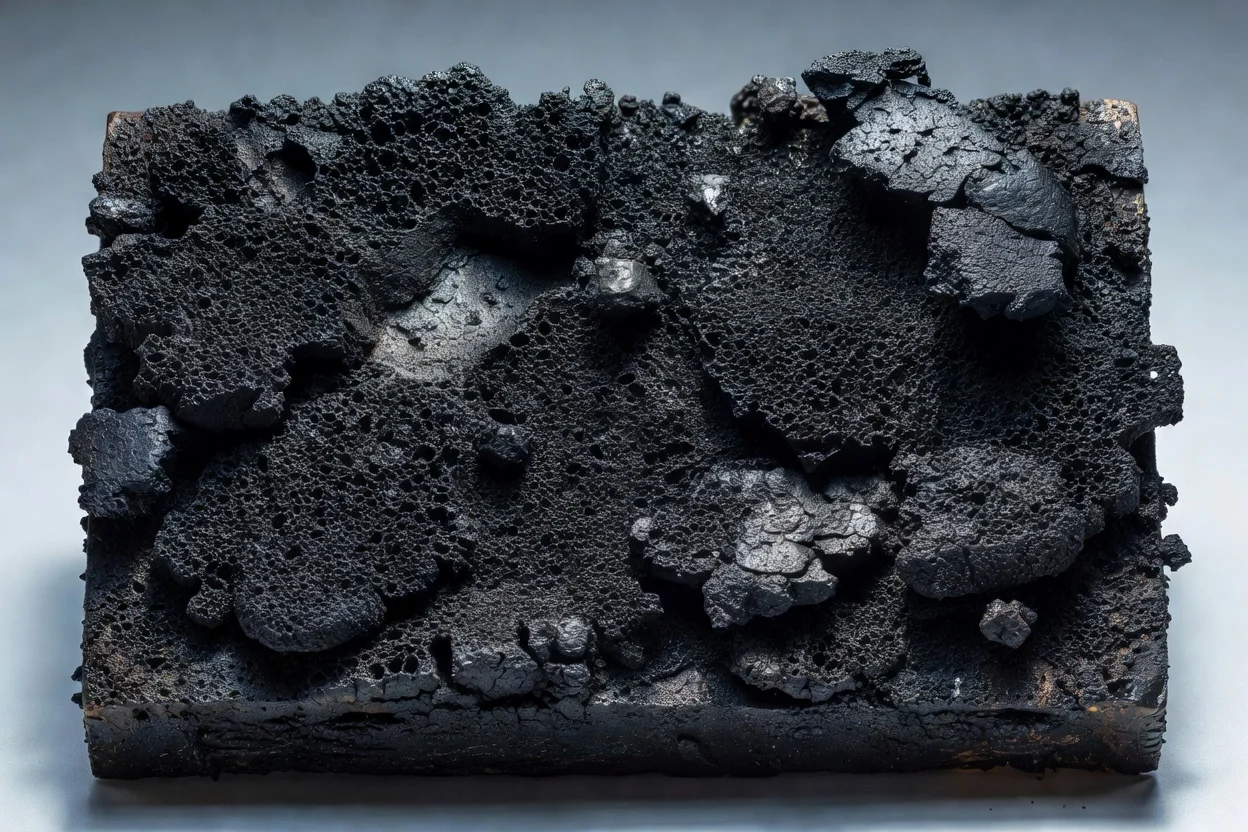
Typical formulation examples include:
- Ammonium polyphosphate at roughly 15–30% in intumescent systems, usually combined with a carbon source and a blowing agent; the mechanism is char expansion and barrier formation.
- Melamine cyanurate or related melamine salts in polyamides, commonly used to improve flame resistance through nitrogen release and condensed-phase support, often with lower smoke than many legacy systems.
Production Processes and Raw Feedstocks
Production depends on the chemistry class.
- Organophosphorus flame retardants are commonly synthesized from phosphorus oxychloride, phosphoric acid derivatives, or phosphine-based intermediates, followed by esterification, phosphorylation, or salt formation.
- Nitrogen-based systems are often built from melamine, triazines, ureas, or related heterocycles, then modified to improve thermal stability and compatibility.
- Intumescent systems are usually formulated rather than synthesized as a single molecule, combining an acid source, carbon donor, and blowing agent in a designed package.
- Hybrid bio-based systems may use renewable polyols, lignin-derived carbons, or bio-derived phosphorus precursors to reduce fossil feedstock dependence.
Raw feedstocks therefore include phosphorus chemicals, nitrogen heterocycles, alcohols, acids, catalysts, and, in many commercial products, surface-treatment agents or encapsulants that improve dispersion and moisture resistance.
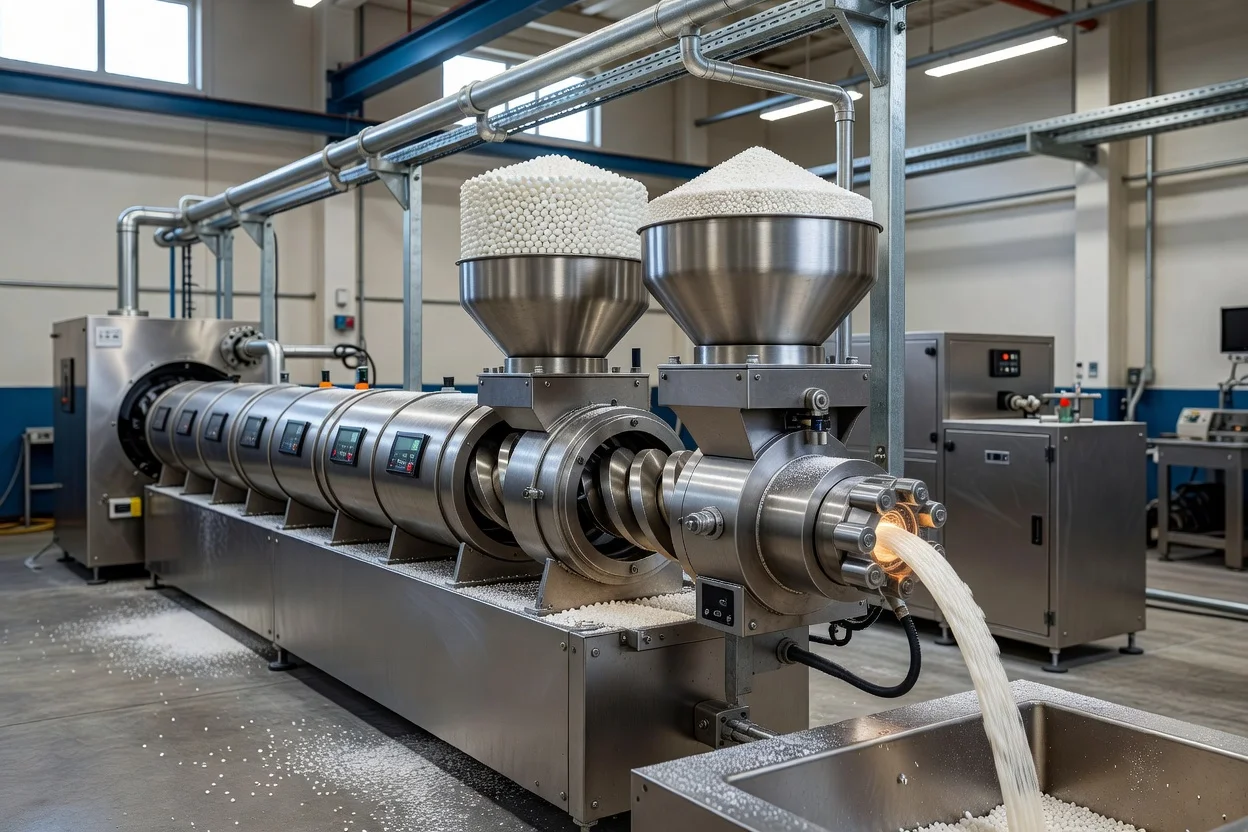
Processing routes in plastics typically include:
- Compounding in twin-screw extruders for masterbatch or direct-addition formulations.
- Reactive incorporation into thermosets, where the flame-retardant moiety becomes part of the polymer network.
- Coating or impregnation for textiles, foams, wood composites, and cable coverings.
Applications and End-Use Markets
Non-halogen organic flame retardants are used across many polymer sectors where smoke, toxicity, or regulatory compliance matter as much as flame rating.
| End-use sector | Typical polymers/materials | Common non-halogen FR chemistry | Usual processing route |
|---|---|---|---|
| Electrical and electronics | Polyamide, PBT, PET, PC, epoxy | Phosphorus compounds, melamine systems, reactive nitrogen-phosphorus chemistry | Compounding, reactive curing |
| Wire and cable | Polyolefin insulation and jacketing | Intumescent packages, phosphorus systems, mineral hybrids | Extrusion |
| Construction | Rigid PU foam, insulation, panels, coatings | Organophosphorus, intumescent systems, hybrid organic-inorganic | Foam formulation, coating, compounding |
| Transportation | Interior plastics, foams, textiles, composites | Phosphorus-nitrogen systems, melamine derivatives, reactive polyols | Compounding, foam formulation, textile treatment |
| Textiles and furnishings | Cotton, polyester, upholstery, carpets | Phosphorus treatments, melamine derivatives, intumescent coatings | Pad-dry-cure, coating |
| Packaging and consumer goods | Selected engineered plastics | Lower-smoke phosphorus systems | Compounding |
Major application trends include:
- Electronics: housings, connectors, and encapsulation compounds increasingly use halogen-free phosphorus systems to reduce corrosive smoke and satisfy OEM material restrictions.
- Wire and cable: halogen-free flame-retardant cables are widely used where low smoke and low toxic emissions are critical in enclosed spaces, transport, and buildings.
- Construction: rigid polyurethane foams, insulation products, and building composites use halogen-free packages to improve fire performance while supporting safer smoke behavior.
- Transportation: lightweight interiors, seating foams, cable harnesses, and textile components are major markets because vehicle safety and smoke toxicity are tightly controlled.
- Textiles: furniture, curtains, and protective clothing often use reactive phosphorus or durable finishing systems to provide fire resistance without halogen content.
One poor-fit use is very high-temperature engineering applications with aggressive thermal and mechanical demands, where some halogen-free organic systems may not survive processing or may require so much loading that material properties are compromised.
Environmental and Sustainability Aspects
The environmental appeal of non-halogen organic flame retardants is mainly tied to combustion behavior and regulatory compatibility. Compared with many halogenated systems, they generally produce less corrosive smoke and avoid halogen acid gases, which is important for human exposure, electronics protection, and post-fire cleanup.
However, “halogen-free” does not automatically mean environmentally benign. Recent literature notes that some organophosphate ester flame retardants have raised concerns about persistence, exposure, and human health, showing that replacement chemistry can create new risk questions if not selected carefully. This has encouraged a shift toward safer-by-design molecules, improved exposure control, and greater scrutiny of mobility, bioaccumulation, and lifecycle fate.
Recyclability is another key issue. Halogen-free formulations are generally easier to integrate into recycling streams than brominated systems because they reduce the risk of forming hazardous halogenated contaminants during reprocessing or thermal recovery. Even so, high-additive formulations can still complicate recycling through ash content, property loss, or contamination of mixed-polymer streams.
Bio-based alternatives are emerging as a promising route. Recent research and technology programs describe renewable flame retardants that rely on bio-derived carbon sources or bio-based precursor chemistry while still acting through char formation and gas-phase dilution mechanisms. These options remain earlier in commercialization than conventional phosphorus products, but they represent a strong innovation pathway for lower-carbon materials.
Economic and Global Market Impact
The market for non-halogen organic flame retardants is expanding because it aligns with fire-safety regulations, electronics OEM policies, and sustainability commitments. In many applications, the direct additive cost is higher than that of legacy halogenated chemistries, but the total value proposition can be better when compliance, recycling, smoke performance, and brand requirements are considered.
Leading commercial suppliers include major additives companies with organophosphorus portfolios, alongside specialized flame-retardant producers focused on cable, electronics, and construction grades. Market growth is strongest in:
- Asia, where electronics, wire and cable, and construction demand are large.
- Europe, where halogen restrictions and circular-economy policies are particularly influential.
- North America, where building, transportation, and electronics standards support adoption.
Pricing remains sensitive to phosphorus raw materials, specialty synthesis costs, and formulation complexity. As a result, product differentiation increasingly depends on performance efficiency, low-smoke behavior, low migration, and processing convenience rather than on additive price alone.
Current Challenges and Innovations
Current technical challenges include:
- Performance versus loading: higher loadings can reduce tensile strength, elongation, impact resistance, and processability.
- Moisture and migration control: especially relevant for phosphorus-based additives and humid-service products.
- Smoke and toxicity optimization: halogen-free does not always guarantee low-toxicity smoke, so formulation must be evaluated case by case.
- Compatibility with recycled polymers: recycled streams often vary in contamination, melt history, and additive carryover.
Innovation is advancing in several directions:
- Reactive flame retardants that chemically bond into the polymer, lowering migration and improving durability.
- Intumescent hybrid systems that combine phosphorus, nitrogen, and carbon sources for more efficient char formation.
- Nanocomposites and synergists that improve barrier formation at lower loadings.
- Bio-based formulations designed to reduce fossil carbon intensity and improve sustainability credentials.
- Safer substitution frameworks that evaluate persistence, exposure, and end-of-life impacts alongside flame performance.
A useful formulation principle is that flame retardancy often improves when the additive is designed for the specific polymer and processing window, rather than selected only by chemistry class.
Future Outlook
Non-halogen organic flame retardants are likely to remain central to the plastics industry because they solve a practical problem that will not disappear: materials must meet fire-safety targets while also complying with environmental, occupational, and recycling expectations.
The strongest future growth is expected in:
- Electrical and electronic materials, especially low-smoke halogen-free grades.
- Transport interiors and cables, where toxic smoke reduction is valuable in confined spaces.
- Construction foams and insulation, where building codes continue to tighten.
- Bio-based and circular formulations, where low-carbon chemistry can offer a strategic advantage.
The next generation of products will likely emphasize higher efficiency at lower loading, better recyclability, lower exposure risk, and stronger compatibility with recycled and bio-based polymers. Progress will depend less on the broad label “halogen-free” and more on the precise molecular design, formulation architecture, and lifecycle profile of each product.
Summary
Non-halogen organic flame retardants are a strategically important class of plastic additives that deliver fire resistance without bromine or chlorine, most often through phosphorus-, nitrogen-, and intumescent chemistries. Their main strengths are lower smoke, reduced corrosive combustion products, and better alignment with modern regulatory and recycling goals, while their main limitations are cost, loading requirements, and formulation complexity.
As the plastics industry shifts toward safer, more recyclable, and lower-carbon materials, these additives are moving from substitute technologies to core enablers of high-performance polymer systems across electronics, transportation, construction, and textiles.
References
- •
Life cycle assessment of environment-compatible flame.... (2013, May 28). CORDIS. https://cordis.europa.eu/project/id/226563/reportingLink
- •
Halogenated vs. Non-Halogenated Flame Retardants. (2025, July 24). Techmer PM. https://www.techmerpm.com/halogenated-vs-non-halogenated-flame-retardants/Link
- •
A review of non-halogenated flame retardant. (n.d.). The Pharma Journal. https://www.thepharmajournal.com/archives/2018/vol7issue5/PartF/7-5-63-716.pdfLink
- •
Non-halogenated flame retardants. (2021, May 17). ChemPoint. https://www.chempoint.com/insights/non-halogenated-flame-retardantsLink
- •
Non halogenated flame retardants. (2024, November 5). Sage Journals. https://journals.sagepub.com/doi/10.1177/02670844241296887Link
- •
Overview of non-halogenated flame retardants. (2015, November 5). Society of Chemical Industry. https://www.soci.org/-/media/files/conference-downloads/2015/bromine-flame-retardants-life-savers-or-eco-villains_2015/fmg_2015_adrian_beard.ashxLink
- •
Preparation of a halogen-free flame retardant and its effect.... (n.d.). ScienceDirect. https://www.sciencedirect.com/science/article/abs/pii/S0032386121006509Link
- •
Halogen-free flame retardants in commercial materials. (n.d.). Danish Environmental Protection Agency. https://www2.mst.dk/udgiv/publications/1999/87-7909-416-3/html/tab0901.htmLink
- •
Non halogenated flame retardants. (2024, September 6). Sage Journals. https://journals.sagepub.com/doi/10.1177/02670844241296887?int.sj-abstract.similar-articles.3Link
- •
Advances in halogen-free flame retardants. (n.d.). Lupine Publishers. https://lupinepublishers.com/fashion-technology-textile-engineering/pdf/LTTFD.MS.ID.000117.pdfLink
- •
Alternative flame retardants. (1998, January 1). Danish Environmental Protection Agency. https://www2.mst.dk/udgiv/publications/1999/87-7909-416-3/html/kap08_eng.htmLink
- •
L-2372511-e947b46d1a.pdf. (n.d.). https://content.e-bookshelf.de/media/reading/L-2372511-e947b46d1a.pdfLink
- •
Organic phosphorus nitrogen ionic liquid halogen-free flame retardant. (2024, January 1). Liside. https://en.liside.com/products_details/30.htmlLink
- •
24. (n.d.). https://www.flameretardants-online.com/images/itempics/4/5/1/item_18154_pdf_1.pdfLink
- •
Bio-based flame retardants. (2024, August 19). Oak Ridge National Laboratory. https://www.ornl.gov/technology/202405623Link
- •
Halogen-free flame retardant materials 2026 guide. (2026, April 22). Patsnap. https://www.patsnap.com/fr/resources/blog/articles/halogen-free-flame-retardant-materials-2026-guide/Link
- •
Choosing the right flame retardant plastics: A comprehensive.... (2024, May 27). Boyan Manufacturing. https://boyanmfg.com/explore-flame-retardant-plastics/Link
- •
Innovative and sustainable. (n.d.). PINFA. https://www.pinfa.eu/wp-content/uploads/2018/05/PINFA_Transportation_Brochure_2010_Final_Version.pdfLink
- •
Exolit™ OP flame retardants for polymer materials. (2026, May 5). Clariant. https://www.clariant.com/en/Business-Units/Additives-and-Adsorbents/Flame-Retardants/Product-Line-Overview/Exolit-OPLink
- •
Organophosphate ester flame retardants: Are they a regrettable.... (2019, October 21). PMC. https://pmc.ncbi.nlm.nih.gov/articles/PMC7269169/Link
- •
Halogen vs non-halogen flame retardants: Some inconvenient truths! (n.d.). Society of Chemical Industry. https://www.soci.org/-/media/files/conference-downloads/2015/bromine-flame-retardants-life-savers-or-eco-villains_2015/fmg_2015_dick_horrocks.ashxLink
- •
Retardateur de flammes sans halogène. (n.d.). Jinghua. https://talc-powder.fr/2-halogen-free-flame-retardant.htmlLink
- •
Non halogenated flame retardants in the real world. (2025, October 19). LinkedIn. https://www.linkedin.com/pulse/non-halogenated-flame-retardants-real-world-5-uses-ivv2eLink
- •
Halogen-free flame retardants. (n.d.). ScienceDirect. https://www.sciencedirect.com/science/article/abs/pii/B9781845692629500054Link
- •
Other non‐halogenated flame retardants and future fire protection concepts & needs. (n.d.). Wiley. https://onlinelibrary.wiley.com/doi/10.1002/9781119752240.ch10Link
- •
New families of highly efficient, halogen-free flame.... (n.d.). SciSpace. https://scispace.com/pdf/new-families-of-highly-efficient-halogen-free-flame-ywmkr6dt9e.pdfLink
- •
Halogen-free flame retardant materials. (n.d.). CTC-N. https://www.ctc-n.org/products/halogen-free-flame-retardant-materialsLink
- •
Recent advances in halogen-free flame retardants for polyolefin.... (2022, July 15). PMC. https://pmc.ncbi.nlm.nih.gov/articles/PMC9322620/Link
- •
Other non‐halogenated flame retardant chemistries and future flame retardant solutions. (n.d.). Wiley. https://onlinelibrary.wiley.com/doi/10.1002/9781118939239.ch9Link
- •
Halogen-free instinct flame-retardant waterborne polyurethanes.... (n.d.). RSC Publishing. https://pubs.rsc.org/en/content/articlehtml/2022/ra/d2ra01822eLink
- •
Flame retardant. (2004, July 10). Wikipedia. https://en.wikipedia.org/wiki/Flame_retardantLink
- •
Recent developments in halogen free flame retardants for epoxy.... (2010, August 11). PMC. https://pmc.ncbi.nlm.nih.gov/articles/PMC5445825/Link
- •
Halogen-free flame-retardant compounds. Thermal decomposition and flammability behavior for alternative polyethylene grades. (2019, September 10). PMC. https://pmc.ncbi.nlm.nih.gov/articles/PMC6780580/Link
- •
The development and application of contemporary phosphorus.... (2025, April 3). Frontiers. https://www.frontiersin.org/journals/materials/articles/10.3389/fmats.2025.1508000/fullLink
- •
7-5-63-716. (n.d.). Scribd. https://www.scribd.com/document/495487145/7-5-63-716Link
- •
1,2,<scp>3‐triazole</scp> rich polymers for flame retardant application: A review. (n.d.). Wiley. https://onlinelibrary.wiley.com/doi/full/10.1002/app.52771Link
- •
Flame retardants of plastic - mechanism, types, & applications. (2025, June 30). SpecialChem. https://www.specialchem.com/polymer-additives/guide/flame-retardantsLink
- •
Halogenated vs halogen-free flame retardant: Key differences. (2026, March 25). FavorChem. https://www.favorchem.cn/blog/halogenated-vs-halogen-free-flame-retardant-pros-cons-cost-comparison.htmlLink
- •
Advantages and disadvantages of commonly used flame retardants. (2022, April 23). LinkedIn. https://www.linkedin.com/pulse/advantages-disadvantages-commonly-used-flame-retardants-leon-liuLink
- •
Halogen-free flame retardant. (n.d.). LUH GmbH. https://www.luh.de/en/halogenfree-flame-retardant/Link
- •
Environmentally friendly hybrid organic–inorganic halogen-free coatings for wood fire-retardant applications. (2022, November 16). PMC. https://pmc.ncbi.nlm.nih.gov/articles/PMC9693554/Link
- •
Halogen-free flame retardants - The future of safe and sustainable plastics. (2025, November 20). US Masterbatch. https://usmasterbatch.com/news/halogen-free-flame-retardants-the-future-of-safe-and-sustainable-plastics.htmlLink
- •
Innovative and sustainable flame retardants in building.... (n.d.). PINFA. https://www.pinfa.eu/wp-content/uploads/2024/09/pinfa_BC_edit-2017-web.pdfLink
- •
Flame retardants of the future. (2024, November 1). PMC. https://pmc.ncbi.nlm.nih.gov/articles/PMC11564728/Link
- •
Halogen-free solid flame retardant mixture and use thereof. (2015, January 19). Google Patents. https://patents.google.com/patent/WO2015113740A1/enLink
- •
Advantages and disadvantages of inorganic flame retardants. (n.d.). Taifeng FR. https://www.taifengfr.com/news/advantages-and-disadvantages-of-inorganic-flame-retardants/Link
- •
Understanding HFFR: The advantages and applications of halogen.... (2023, November 10). https://www.flameretardantys.com/Understanding-HFFR-The-Advantages-And-Applications-of-Halogen-Free-Flame-Retardant-Materials-id64744607.htmlLink
- •
Halogen flame retardant. (2022, May 19). Alfa Chemistry. https://flame-retardant.alfa-chemistry.com/halogen-flame-retardant.htmlLink