
Introduction
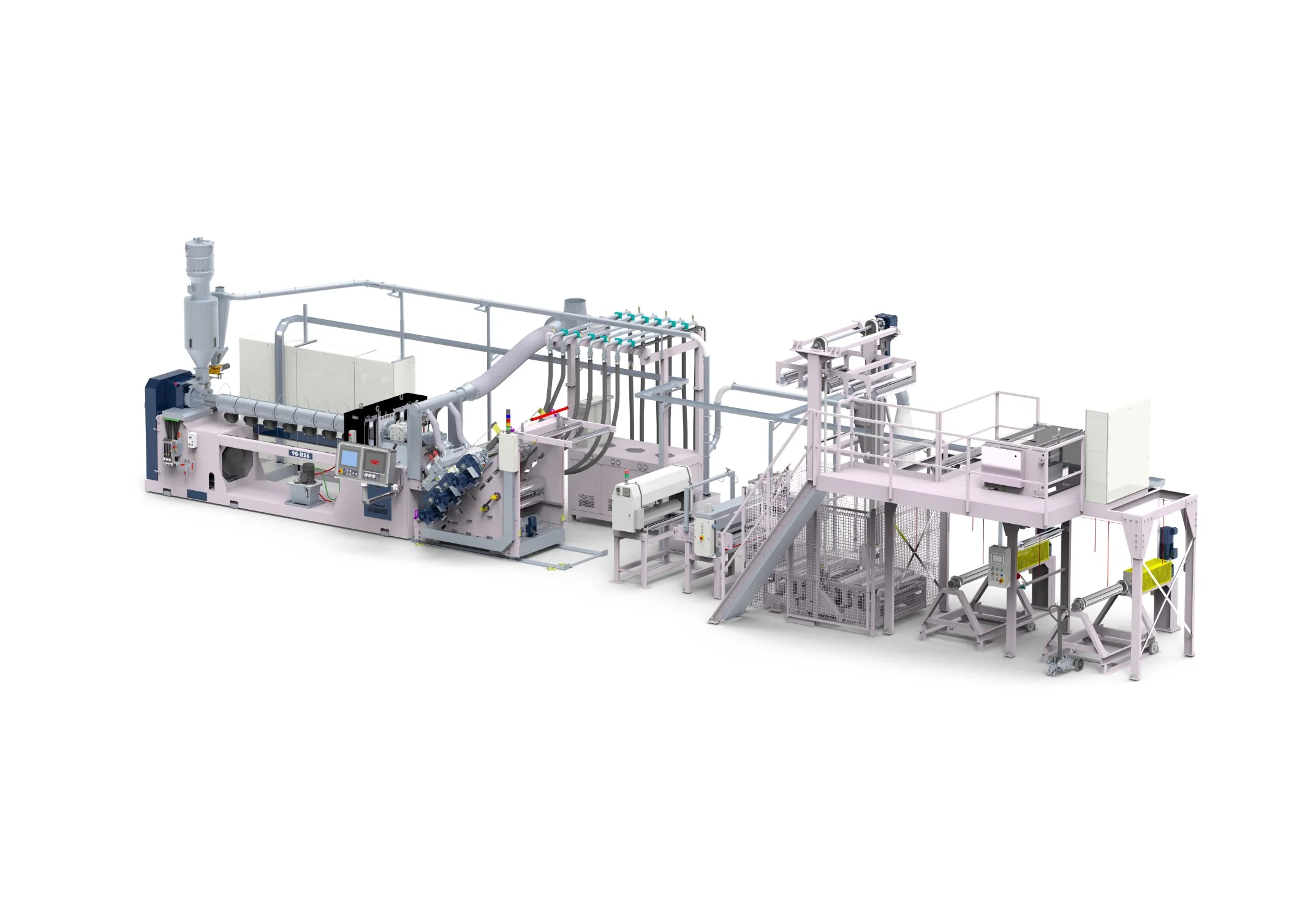
Sheet casting machines are industrial systems used to produce continuous polymer, elastomeric, or specialty-material sheets by delivering a molten, softened, or solution-based material onto a controlled casting surface and then solidifying it into a flat product. In plastics processing, the term most commonly refers to sheet extrusion and cast-sheet lines used for packaging, thermoforming, medical, technical, and industrial sheet, while in membrane and advanced materials manufacturing it also covers flat-sheet casting equipment for porous films and functional layers. These machines are valued for their ability to produce tight thickness tolerances, smooth surfaces, and stable width control, and they sit at the intersection of polymer rheology, heat transfer, calendering, edge trimming, and automated winding.
The technology has developed from early flat-film and calendering systems into highly integrated lines combining extrusion, die design, chill rolls, vacuum boxes, thickness gauges, automation, and inline quality inspection. In parallel, adjacent casting technologies such as twin-belt strip casting in metals and membrane casting in advanced separations have reinforced the importance of controlled solidification, steady-state thermal management, and precise web handling. Current development priorities include energy efficiency, recycled-content processing, digital control, and reduced scrap, with future systems increasingly oriented toward Industry 4.0 diagnostics and circular-economy compatibility.
History and Development
Early sheet casting grew out of calendar rolling and roll-coating practices, where material was progressively flattened between rollers to achieve uniform gauge. As polymer extrusion matured, cast-sheet production became a distinct process in which a molten polymer was delivered through a sheet die onto a chilled roll stack or casting table, enabling better control of width, gloss, and thickness than many older forming routes.
Three practical milestones shaped modern sheet casting:
- The transition from mechanical flattening to continuous extrusion casting, which made long-run sheet production economically viable for thermoplastics such as PP, PS, PET, ABS, and PVC.
- The adoption of chill-roll and three-roll calender systems, which improved cooling rate, surface replication, and gauge stability for transparent and technical sheet.
- The integration of online thickness measurement, automated die-lip control, and closed-loop winding, which reduced operator dependence and improved consistency in high-output lines.
In specialty materials, membrane casting equipment introduced another important development path. Laboratory and pilot flat-sheet machines were designed to deposit a uniform polymer film on a substrate and then solidify it through controlled phase inversion, enabling research and production of filtration membranes for water treatment, gas separation, and bioprocessing. The same basic principle of controlled layer formation later influenced precision coating and advanced materials processing in electronics and battery-related applications.
Key Characteristics and Technical Overview
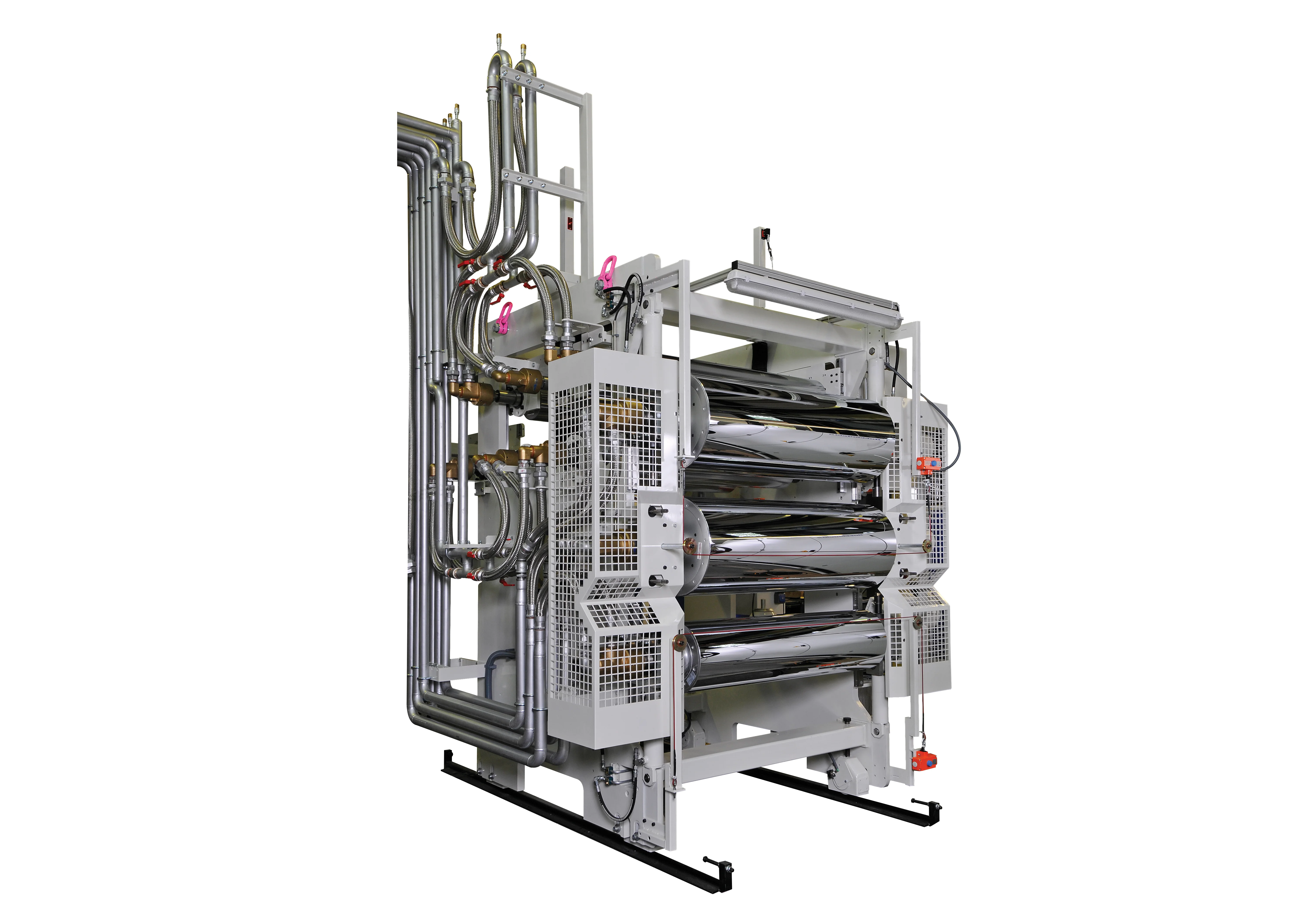
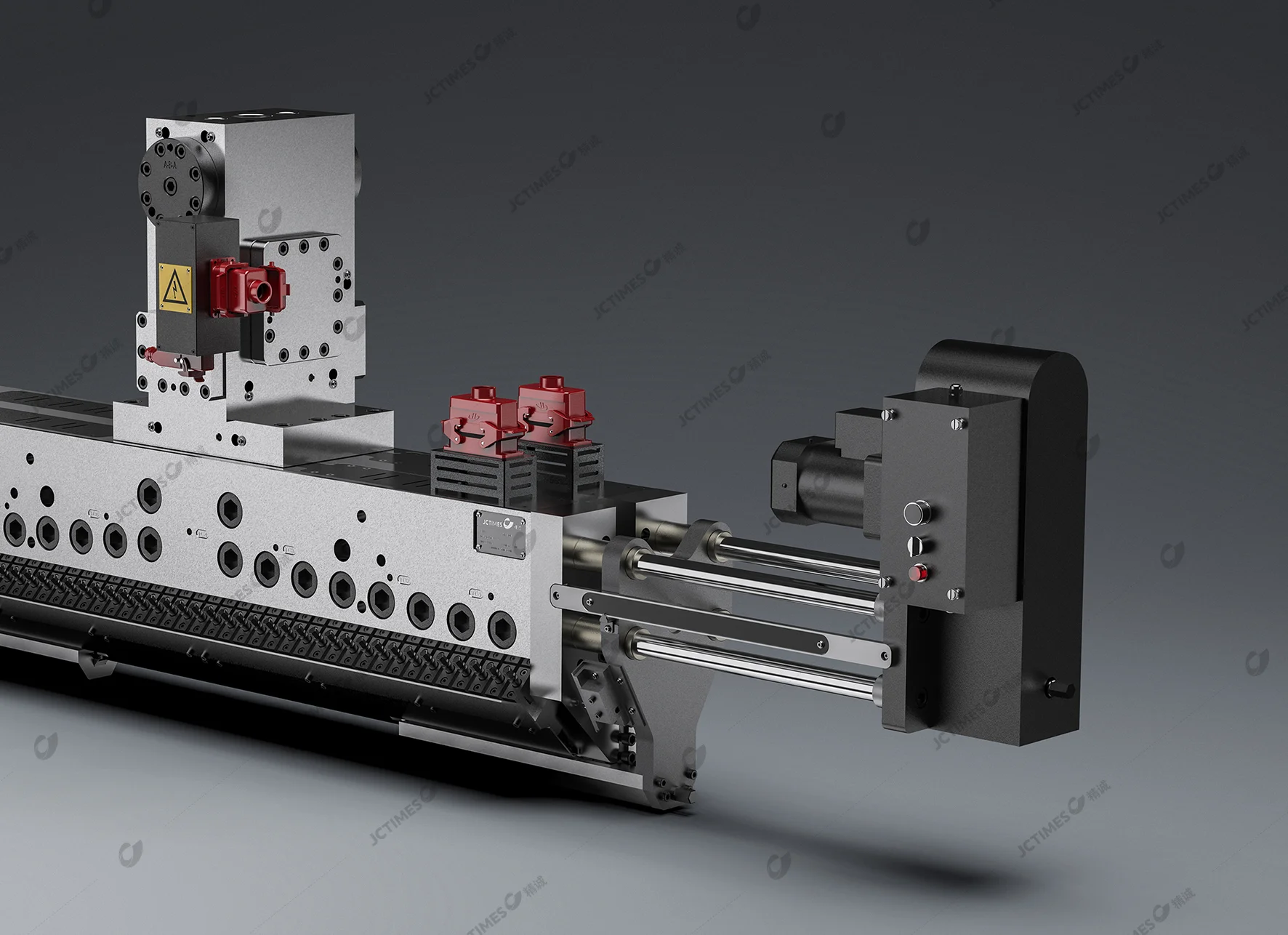
A sheet casting machine is typically built around five functional zones: feeding and plasticizing, forming and metering, cooling and solidification, edge finishing, and take-off/winding. In polymer sheet lines, the extruder plastifies pellets or regrind, a gear pump or melt metering system stabilizes flow, and a flat die distributes the melt across the web width. The sheet is then quenched on a polished chill roll, a multi-roll stack, or a controlled casting surface, after which it is trimmed and wound.
Core engineering parameters
| Parameter | Typical industrial range |
|---|---|
| Sheet thickness | About 0.2 mm to several mm, depending on product class |
| Cast web width | Commonly hundreds of mm to several meters |
| Line speed | Roughly 5 to 100+ m/min, depending on thickness and polymer |
| Melt temperature | Polymer-dependent, often 180 °C to 300+ °C |
| Chill roll temperature | Commonly 5 °C to 60 °C depending on material and gloss target |
| Thickness tolerance | Often targeted in the single-digit percent range or better for quality sheet |
| Specific energy consumption | Typically dominated by extrusion and cooling; optimized lines reduce energy through efficient motors, heat recovery, and better thermal control |
For membrane casting, the web is often deposited as a liquid polymer solution or dope and then phase-inverted in a coagulation or evaporation-controlled environment. Flat-sheet membrane casting machines are described as depositing a uniform polymer film onto a moving substrate, followed by controlled solidification through phase inversion. These systems are used where pore structure, selective permeability, and defect control matter more than conventional sheet stiffness.
For metal sheet casting, the concept is different but mechanically related. Twin-roll or twin-belt casting systems solidify molten metal directly into sheet or strip, with notable industrial emphasis on high throughput and energy savings. In plastics, the analogous advantages are reduced downstream forming, faster solidification, and better surface control.
Typical process sequence
- Polymer pellets or formulation components are fed into the extruder.
- The melt is filtered, stabilized, and distributed through a flat die.
- The sheet contacts a chill surface or roll stack for rapid cooling.
- Thickness is adjusted by die-lip settings, roll gaps, draw ratio, and vacuum/air control.
- The web is trimmed, edge-recycled, and wound or cut to length.
Performance and quality indicators
Important quality metrics include:
- Thickness uniformity
- Surface gloss or matte finish
- Optical clarity
- Residual internal stress
- Edge stability
- Gels, streaks, and contamination level
- Winding tension and roll set quality
In membrane production, additional indicators include flux, rejection rate, pore size distribution, and mechanical integrity. In packaging and thermoforming sheet, stiffness, drawability, and sag behavior are often decisive.
Types and Variations
Sheet casting machines are not a single machine class but a family of related systems.
| Type | Principal use | Distinguishing feature |
|---|---|---|
| Extrusion cast-sheet line | Packaging, thermoforming, technical sheet | Melt extrusion through a flat die onto chill rolls |
| Three-roll calender line | PVC sheet, vinyl flooring, coated sheet | Compression between heated/cooled rolls |
| Cast film / thin-sheet line | Lidding, hygiene, specialty films | Narrower thickness and higher clarity demands |
| Flat-sheet membrane casting machine | Water treatment, gas separation, bioprocessing | Solution casting and phase inversion control |
| Pilot or lab casting machine | R&D and formulation development | Precise small-batch parameter control |
| Advanced materials casting line | Electronics, battery, ceramic tapes | Fine coating and drying control |
Membrane-oriented systems are often described as automatic, semi-automatic, or lab-scale, with configurations for flat-sheet and sometimes hollow-fiber development, depending on the target product family. For plastics manufacturing, the most common industrial form remains the cast-sheet extrusion line.
Applications and Uses
Sheet casting machines are used wherever a manufacturer needs a flat, consistent, wide-format polymer sheet or functional cast layer.
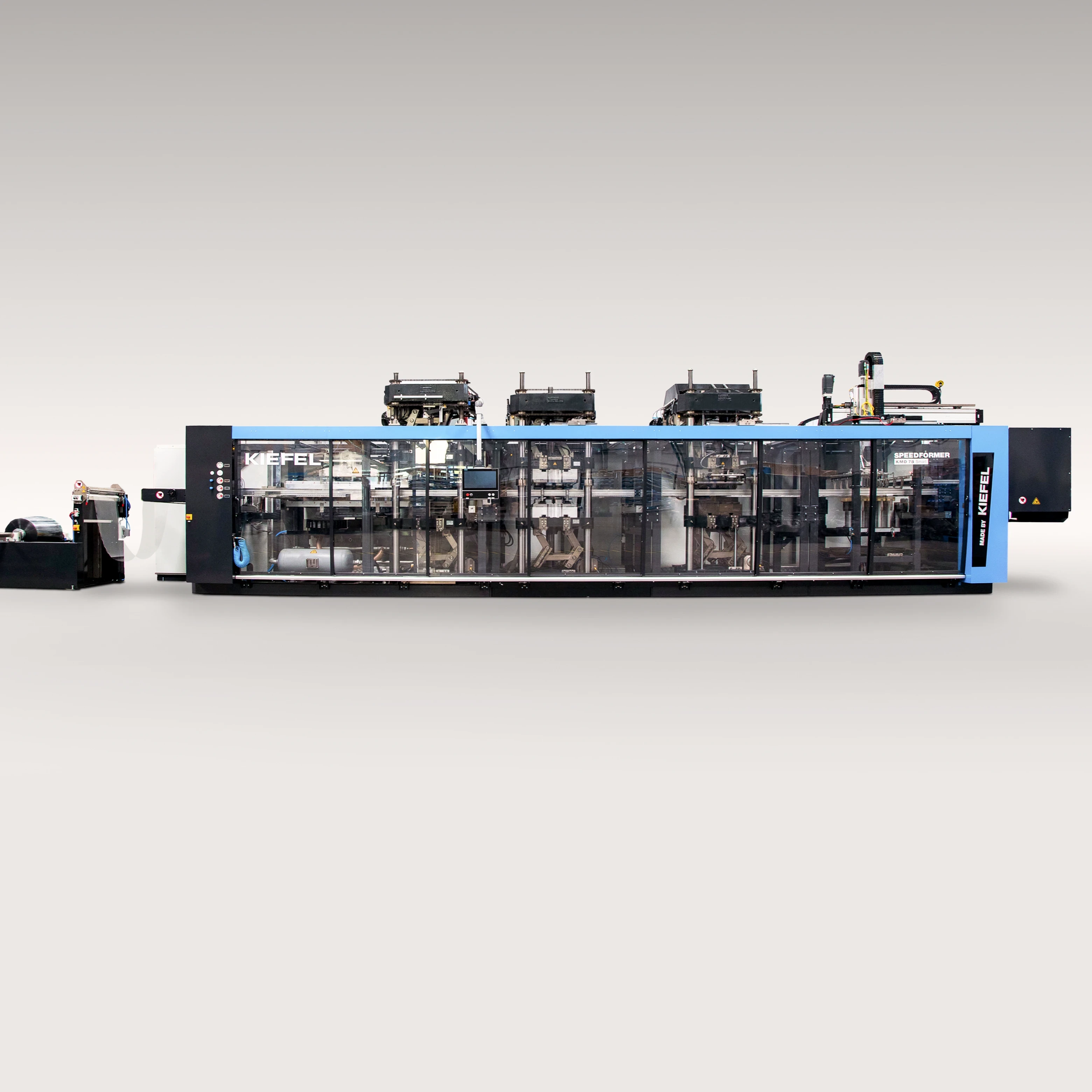
- Packaging and thermoforming: PET, PP, PS, and multilayer sheet for trays, lids, cups, blister packs, and formed containers.
- Medical and healthcare: Transparent and clean-sheet grades for device packaging, diagnostic components, and sterile packaging structures.
- Construction and interiors: PVC sheet, decorative sheet, wall panels, and floor-sheet substrates.
- Automotive: Interior trim substrates, thermoformed panels, and technical sheet for subsequent forming.
- Industrial and consumer goods: Appliance liners, machine guards, signage, and enclosure materials.
- Water treatment and separations: Flat-sheet membranes for MBR systems, desalination pretreatment, and industrial wastewater treatment.
- Electronics and advanced materials: Functional tapes, dielectric layers, and precision films.
A poor-fit application is high-load structural metal replacement parts, because sheet casting is generally optimized for flat polymer webs or thin functional layers rather than load-bearing three-dimensional structures.
Technological Innovations and Automation
Recent sheet casting systems increasingly incorporate closed-loop automation for melt pressure, roll temperature, web tension, and gauge control. Inline sensors can measure thickness, defects, temperature, and winding quality, while servo-driven drives improve stability and repeatability. In high-end lines, automatic die-lip adjustment compensates for thermal drift across the width, which is especially important for wide sheet.
Key innovations include:
- Automatic thickness profiling across the web width
- Recipe-based control systems for quick grade changes
- Inline vision inspection for gels, streaks, and contamination
- Servo winding and tension control to prevent roll defects
- Digital twins and predictive maintenance for uptime optimization
In membrane casting, automation is also used to stabilize film deposition, solvent evaporation, and phase inversion timing, because small changes can alter pore structure and performance. In broader sheet production, the same automation logic reduces scrap and improves startup efficiency.
Environmental and Sustainability Aspects
Sheet casting machines are increasingly evaluated on energy efficiency, scrap reduction, and recycled-content compatibility. Cast-sheet lines can be designed to process post-consumer or post-industrial regrind, provided contamination, melt filtration, and odor control are properly managed. For thermoforming sheet, better gauge control reduces trim waste and can improve yield.
Sustainability priorities include:
- Lower specific energy consumption through efficient motors, optimized barrel heating, and improved chill-roll systems
- Edge trim reintroduction into controlled recycle loops
- Reduced startup scrap through faster thermal stabilization
- Compatibility with recycled polymers such as recycled PET and polyolefin blends
- Lower solvent emissions in advanced membrane and coating systems through process optimization
Adjacent continuous casting technologies in metals are often cited for energy advantages and lower emissions relative to more indirect routes, highlighting the broader industrial trend toward direct shaping and reduced thermal steps. In plastics, the analogous goal is fewer remelts, fewer conversions, and better material utilization.
Economic and Global Market Impact
Sheet casting equipment is strategically important because sheet is a high-volume intermediate product feeding packaging, consumer goods, medical supplies, construction, and industrial fabrication. Demand is closely linked to thermoforming, food packaging, hygiene products, infrastructure, and membrane-based water treatment. Manufacturers compete on line speed, thickness precision, maintenance interval, and energy consumption rather than on machine count alone.
Market dynamics are shaped by:
- Growth in thermoformed packaging and lightweight food-service formats
- Expansion of water-treatment membranes and industrial filtration
- Rising use of recycled plastics in sheet applications
- Demand for automation and labor reduction in mature manufacturing regions
- Preference for high-output, low-scrap lines in large-scale converters
Suppliers with notable roles include machine builders focused on extrusion sheet lines, and specialists in membrane casting equipment for R&D and pilot-scale production. In advanced materials, manufacturers of tape-casting and sheet-to-sheet coating systems also participate in adjacent markets.
Current Challenges and Innovations
The main technical challenges are:
- Thickness variation across wide webs
- Thermal nonuniformity during quenching and solidification
- Edge bead formation and trim loss
- Die build-up, contamination, and gels
- Winding defects such as telescoping, blocking, and edge damage
- Material sensitivity in recycled or multilayer feedstocks
Innovations are addressing these problems through:
- Better flow-distribution dies
- More precise thermal zoning
- High-response servo controls
- Improved polymer filtration
- Inline analytics for defect detection
- Enhanced process windows for recycled and bio-based polymers
In membrane casting, the challenge is even more demanding because microscopic pore structure must remain stable across the full sheet. That has driven a move toward more rigid machine frames, controlled atmospheres, and tighter solution-handling protocols.
Future Outlook
Future sheet casting machines are likely to become more connected, energy-efficient, and materials-flexible. The strongest growth areas will probably include:
- Recycled-content sheet lines
- High-barrier packaging structures
- Membrane systems for water reuse and industrial separations
- Battery and electronics-related casting equipment
- AI-assisted process control and predictive quality assurance
The long-term direction of the technology favors machines that can process multiple resin families, switch grades rapidly, and operate with lower specific energy and lower scrap. As manufacturers seek both cost control and sustainability compliance, sheet casting equipment will remain a central platform for converting polymers into high-value flat products.
References
- •
Trustech. (2025, November 28). Flat sheet membrane casting machine. https://www.xtrustech.com/flat-sheet-membrane-casting-machine.htmlLink
- •
Ruijie. (2022, March 3). Plastic sheet machines. https://en.sinorj.com/category/plastic-sheet-machines/Link
- •
Indutherm. (n.d.). VCC 3000. https://indutherm.de/en/VCC-3000/CC.6Link
- •
Uppershell. (n.d.). LTCC & MLCC production equipment, advanced materials. https://www.uppershell.com/products/Link
- •
Hazelett Strip-Casting Corporation. (n.d.). Aluminum strip. https://www.hazelett.com/aluminumLink
- •
Behringer. (2026, July 15). Home. https://www.behringer.net/en/home.htmlLink
- •
Tech Inc. (n.d.). Flat sheet membrane roll casting machine H. https://www.techincresearch.com/flatsheet-membrane-rollcasting-machine-hLink
- •
MachineDeal UK. (n.d.). MachineDeal UK. https://www.machinedealuk.co.uk/en/Link
- •
Tech Inc. (n.d.). Lab flat sheet membrane casting machine [PDF]. https://5.imimg.com/data5/SELLER/Doc/2022/11/ZI/QB/UC/446053/membrane-casting-machine.pdfLink
- •
Think India Journal. (n.d.). Think India journal. https://thematicsjournals.org/index.php/think-india/article/download/19050/13972/Link
- •
Vahanvati Machine Tools. (n.d.). Vahanvati Machine Tools in Ahmedabad, Gujarat, India. https://www.tradeindia.com/vahanvati-machine-tools-5727398/Link
- •
Tech Inc. (n.d.). Lab flat sheet membrane casting machine. https://www.techincresearch.com/products/flat-sheet-membrane-making/lab-flat-sheet-castingLink
- •
N. B. Engineering Works. (n.d.). N. B. Engineering Works - Industrial machinery. https://www.exportersindia.com/nbengineering/industrial-machinery.htmLink
- •
Scribd. (2025, May 4). Overview of casting machines and techniques [PDF]. https://www.scribd.com/document/312588354/CASTING-MACHINESLink
- •
OpenPR.com. (2026, January 5). High-precision flat sheet membrane casting machine. https://www.openpr.com/news/4335284/high-precision-flat-sheet-membrane-casting-machineLink
- •
Marjan Polymer Industries. (2024, July 13). Membrane casting machine. https://marjanpolymer.com/product/membrane-casting-machine/Link
- •
MachineDeal. (n.d.). Metal forming. https://www.machinedeal.com/en/hcat/metal-forming/Link
- •
Me-Sep. (2026, May 7). Membrane manufacturing equipment. https://www.me-sep.com/our-offer/membrane-manufacturing-equipment/Link
- •
China Gwell Co., Ltd. (n.d.). China Gwell Co., Ltd. https://www.gwellmachine.com/Link
- •
Machineseeker. (n.d.). Used Reinhardt for sale (21). https://www.machineseeker.com/mss/reinhardtLink
- •
SSHL Machinery. (2025, May 17). How punch press works? https://www.sshlmachinery.com/how-punch-press-works.htmlLink
- •
Scribd. (2025, November 16). ME3301 press tool design [PDF]. https://www.scribd.com/document/367009931/ME3301-Press-Tool-DesignLink
- •
Alibaba. (2024, August 28). Maki rolling machine. https://www.alibaba.com/showroom/maki-rolling-machine.htmlLink
- •
Ollital. (2024, June 11). Lab cast stretch film manufacturing machine with single screw extrusion line. https://www.ollital.com/lab-cast-stretch-film-manufacturing-machine-with-single-screw-extrusion-line_p663.htmlLink
- •
Studocu. (2025, December 10). ME3393 manufacturing processes: Course overview and objectives. https://www.studocu.com/in/document/anna-university/manufacturing-processes/me3393-manufacturing-processes-course-overview-and-objectives/148435489Link
- •
Aoxuancnc. (2020, December 21). Motor driven plate guillotine shear cutting machine. https://aoxuancnc.en.made-in-china.com/product/LFbxaPfuJHch/China-1500mm-Electric-Mechanical-Sheet-Metal-Shearing-Cutter-Machine-Motor-Driven-Plate-Guillotine-Shear-Cutting-Machine.htmlLink
- •
Shenchong. (n.d.). How does three-roller plate bending machine work? https://www.shenchong.com/how-does-three-roller-plate-bending-machine-work.htmlLink
- •
Tech Inc. (2018, March 9). Flat sheet membrane casting machine. https://www.linkedin.com/pulse/flat-sheet-membrane-casting-machine-tech-incLink
- •
SC Machinery. (2024, June 21). What is a shearing machine? https://www.shen-chong.com/what-is-a-shearing-machine/Link
- •
Phillips Corp. (2023, May 26). Metal forming: Process, techniques and uses. https://www.phillipscorp.com/india/all-about-metal-forming-process-techniques-and-uses/Link
- •
Wikipedia. (2005, November 16). Continuous casting. https://en.wikipedia.org/wiki/Continuous_castingLink
- •
Daiichi Jitsugyo India Pvt. Ltd. (n.d.). Industrial machinery. https://djkindia.co.in/business/industrial-machinery/Link
- •
Trustech. (2026, August 13). Buy, research, quote hollow fiber membrane spinning. https://www.xtrustech.com/video.htmlLink
- •
IIT ISM. (n.d.). Course. https://people.iitism.ac.in/~academics/assets/course_structure/new/cat/mech/MEI102.pdfLink
- •
Dron. (2025, June 2). Best products supplier, factory. https://www.dron-tech.com/products/Link
- •
Aoxuancnc. (2025, July 2). Cutting plate 1.5mm*1500mm electric shearing machine with high efficiency reasonable price. https://aoxuancnc.en.made-in-china.com/product/NFfJZepCLlVP/China-Cutting-Plate-1-5mm-1500mm-Electric-Shearing-Machine-with-High-Efficiency-Reasonable-Price.htmlLink
- •
Chalmers University of Technology. (n.d.). Design for manufacturing. https://odr.chalmers.se/server/api/core/bitstreams/77af1534-455b-45d9-8e7f-c669bb5ce2fb/contentLink
- •
Trustech. (2025, November 28). Trustech: Hollow fiber membrane spinning machine manufacturer. https://www.xtrustech.com/Link
- •
Studocu. (2023, February 14). Mechanical 1: Rolling and forging processes explained. https://www.studocu.com/in/document/rajasthan-technical-university/fundamentals-of-mechanical-engg/mechanical-1/47134339?origin=related-documentLink
- •
Running Industry Co., Ltd. (n.d.). Running industry Co., Ltd [PDF]. https://img2.tradewheel.com/uploads/company/brochure/1329915/66f22da164d6d-attachment.pdfLink
- •
Unionfab. (2025, December 26). Metal rapid prototyping: The ultimate guide [+cost calculator]. https://www.unionfab.com/blog/2025/12/metal-rapid-prototypingLink
- •
Google Patents. (1995, February 14). Roll caster shell for use in a continuous sheet casting machine. https://patents.google.com/patent/EP0682998A2/enLink
- •
Gup.ugal.ro. (n.d.). The application of servo press machine to. https://www.gup.ugal.ro/ugaljournals/index.php/tmb/article/download/1925/1621Link
- •
Lanyu Machinery. (n.d.). Hydraulic semi-continuous casting machine. https://fslyjx.net/en/product/hydraulic-semi-continuous-casting-machine/Link
- •
CCC. (n.d.). Intro to continuous casting. https://ccc.illinois.edu/introduction/overview.htmlLink
- •
Studocu. (2025, November 11). Manufacturing processes 3: Overview of metal forming and joining techniques. https://www.studocu.com/in/document/university-of-delhi/mechanical-design/manufacturing-processes-3-overview-of-metal-forming-and-joining-techniques/145195519Link
- •
Scribd. (2025, May 19). Manufacturing of aluminium sheet and foi. https://www.scribd.com/document/790839108/Manufacturing-of-Aluminium-Sheet-and-FoiLink
- •
IITG. (n.d.). Metal casting processes [PDF]. https://www.iitg.ac.in/engfac/ganu/public_html/Metal%20casting%20processes_1.pdfLink
- •
Cameldie.com. (2021, July 27). Working principle of die casting mold. https://www.cameldie.com/post/working-principle-of-die-casting-moldLink
- •
Rekith Hydraulics. (2023, May 8). How die-casting machines use hydraulic systems. https://www.rekithhydraulics.com/die-casting-machine-hydraulic-system/Link
- •
ScienceDirect. (n.d.). Casting machine - An overview. https://www.sciencedirect.com/topics/engineering/casting-machineLink
- •
Erdemmakinaltd. (2024, May 9). Aluminum casting machine: Industrial uses and benefits. https://www.erdemmakinaltd.com/en/blog/aluminum-weaving-machine-industrial-use-and-benefits/Link
- •
Total Materia. (n.d.). Industrial casting applications. https://www.totalmateria.com/en-us/articles/industrial-casting-applications/Link
- •
Shibaura Machine. (n.d.). High pressure & cold chamber die casting machines. https://shibaura-machine.com/die-casting-machines/Link
- •
Global Energy Monitor. (n.d.). Casting machines. https://www.gem.wiki/Casting_MachinesLink
- •
Eko Industries. (2020, December 21). Applications of die casting. https://www.ekoindustries.com/blog/die-casting/die-casting-applicationsLink
- •
LS Manufacturing. (2024, November 13). What are the applications of metal casting? https://www.lsrpf.com/blog/what-are-the-applications-of-metal-castingLink
- •
Fictiv. (2025, February 3). What is die casting? Overview, materials, process, & ... https://www.fictiv.com/articles/what-is-die-casting-overview-materials-process-applicationLink