
Introduction
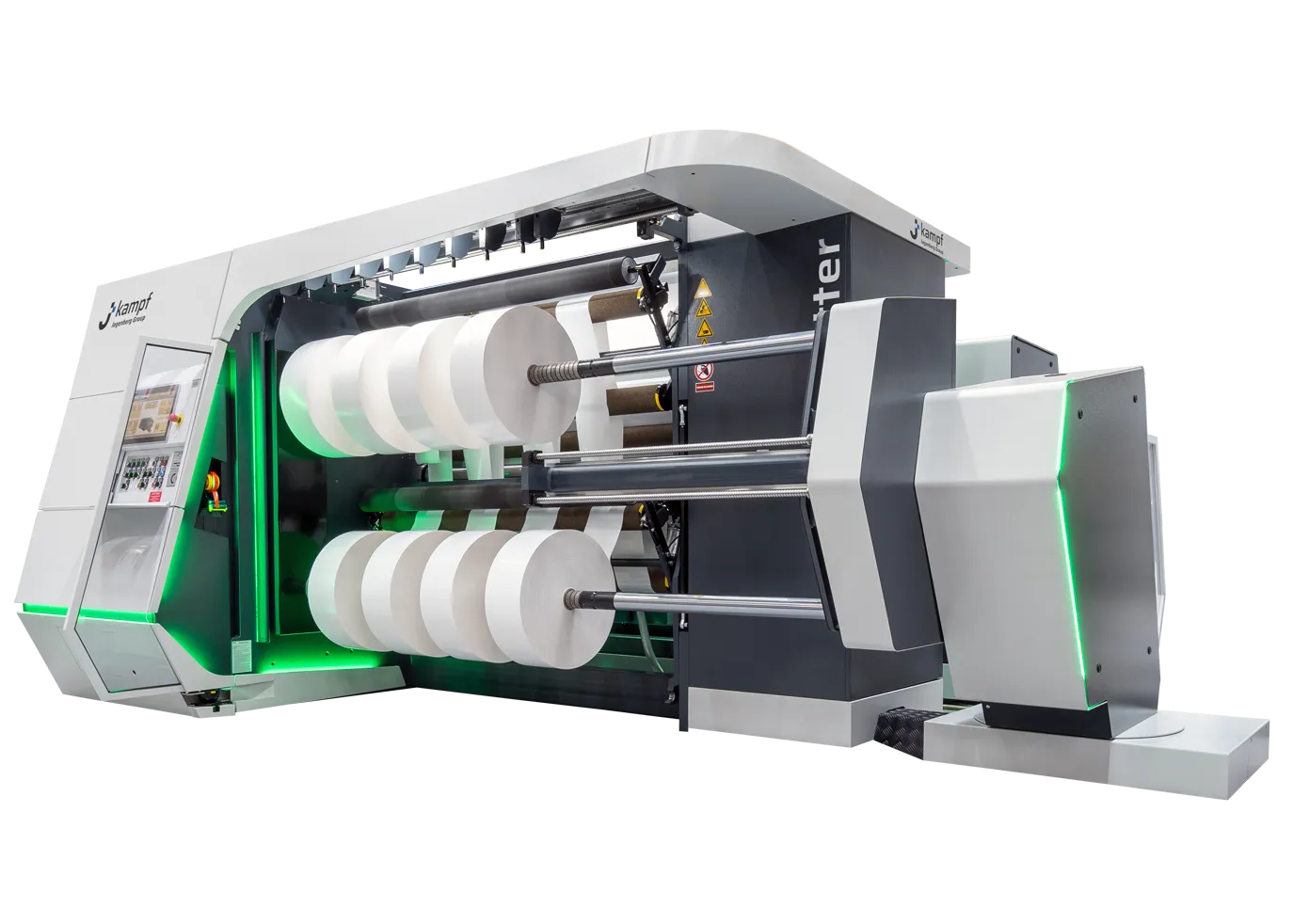
Slitter rewinders are converting machines that unwind a wide parent roll or master roll, slit it lengthwise into narrower webs, and rewind those webs into finished rolls with controlled tension and roll formation. In plastics processing, they are indispensable for converting films, laminates, foils, adhesive tapes, and some nonwoven or coated plastic substrates into application-specific widths for packaging, labeling, laminating, printing, and industrial use.
Although slitter rewinders are often discussed as general converting equipment rather than primary plastics machinery, they are strategically important to the plastics industry because they bridge polymer film production and downstream fabrication. Their evolution has been shaped by improvements in web handling, blade technology, tension control, automatic inspection, turret changeovers, and high-speed winding, with modern systems optimized for both productivity and roll quality.
History and Development
Slitting as a converting operation emerged from the need to turn economical large rolls into narrower customer-ready rolls, especially as paper and film production became more continuous and roll-based. The slitter rewinder became the standard machine architecture once industry began prioritizing continuous web processing over sheet conversion for flexible materials.
Key milestones in its development include:
- Mechanized rewind slitting: early industrial systems combined unwinding, slitting, and rewinding into one line to improve throughput and dimensional consistency.
- Blade diversification: the adoption of razor, shear, and score slitting expanded compatibility across thin films, coated webs, adhesives, and thicker or stiffer materials.
- High-speed tension-controlled winders: modern machines added load-cell feedback, dancer systems, programmable drives, and automated core handling to support faster production and tighter roll-quality control.
A commonly repeated claim in some trade sources is that the slitter rewinder was patented in 1980 by Frances Meisel of Boston; however, that statement is not consistently corroborated by authoritative industry references, so it should be treated cautiously.
Technical Overview
A slitter rewinder is best understood as a web-handling system rather than a simple cutting machine. Its performance depends on how well it controls the web from unwind through slitting to rewind, because film stretch, edge damage, telescoping, baggy edges, and dust generation can all originate from poor tension management.
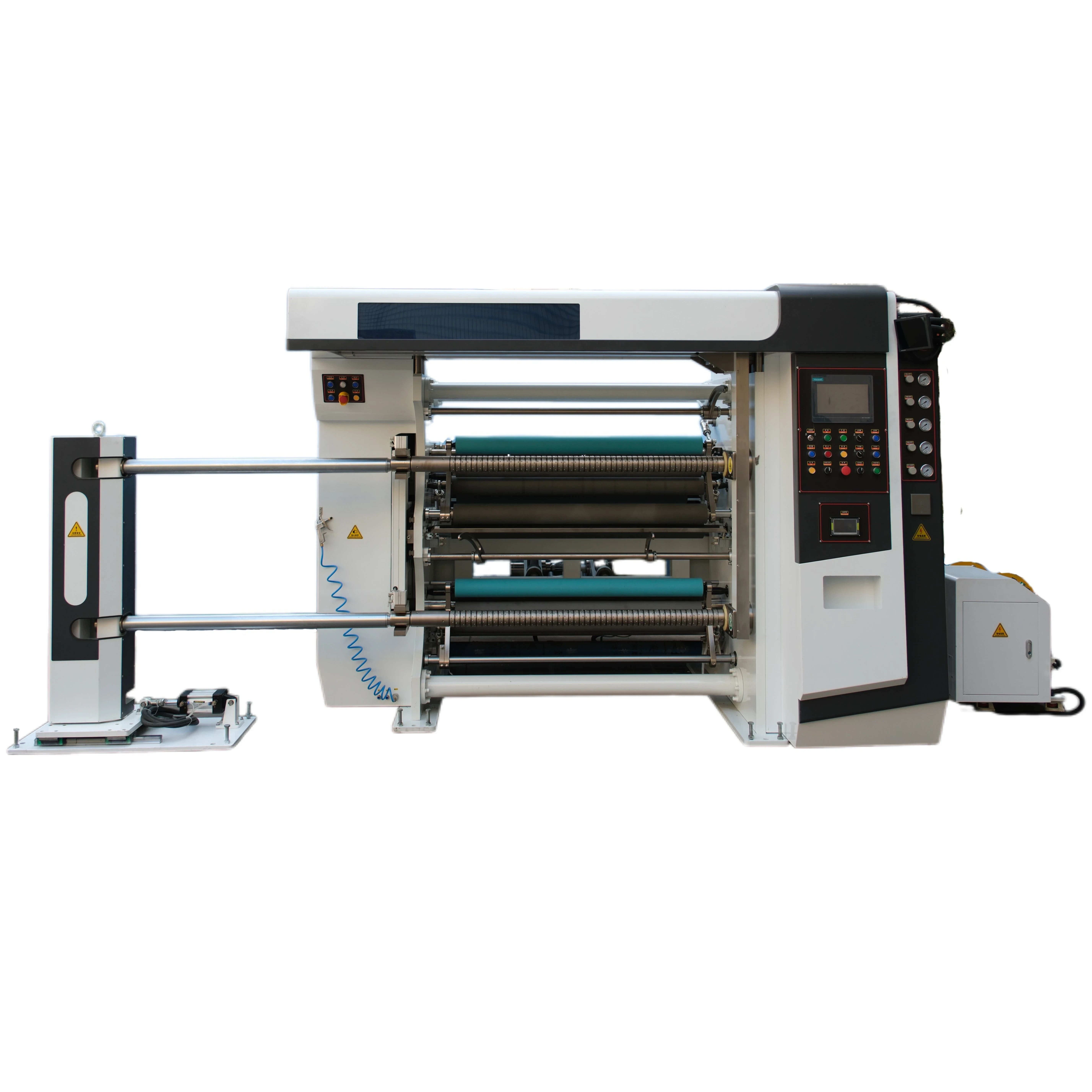
Main machine sections
- Unwind section: holds the parent roll and provides braking or driven feed control.
- Web guiding section: maintains edge or line tracking for slit accuracy.
- Slitting section: cuts the web into narrower strips.
- Rewind section: winds slit strips onto cores using center, surface, or center-surface winding.
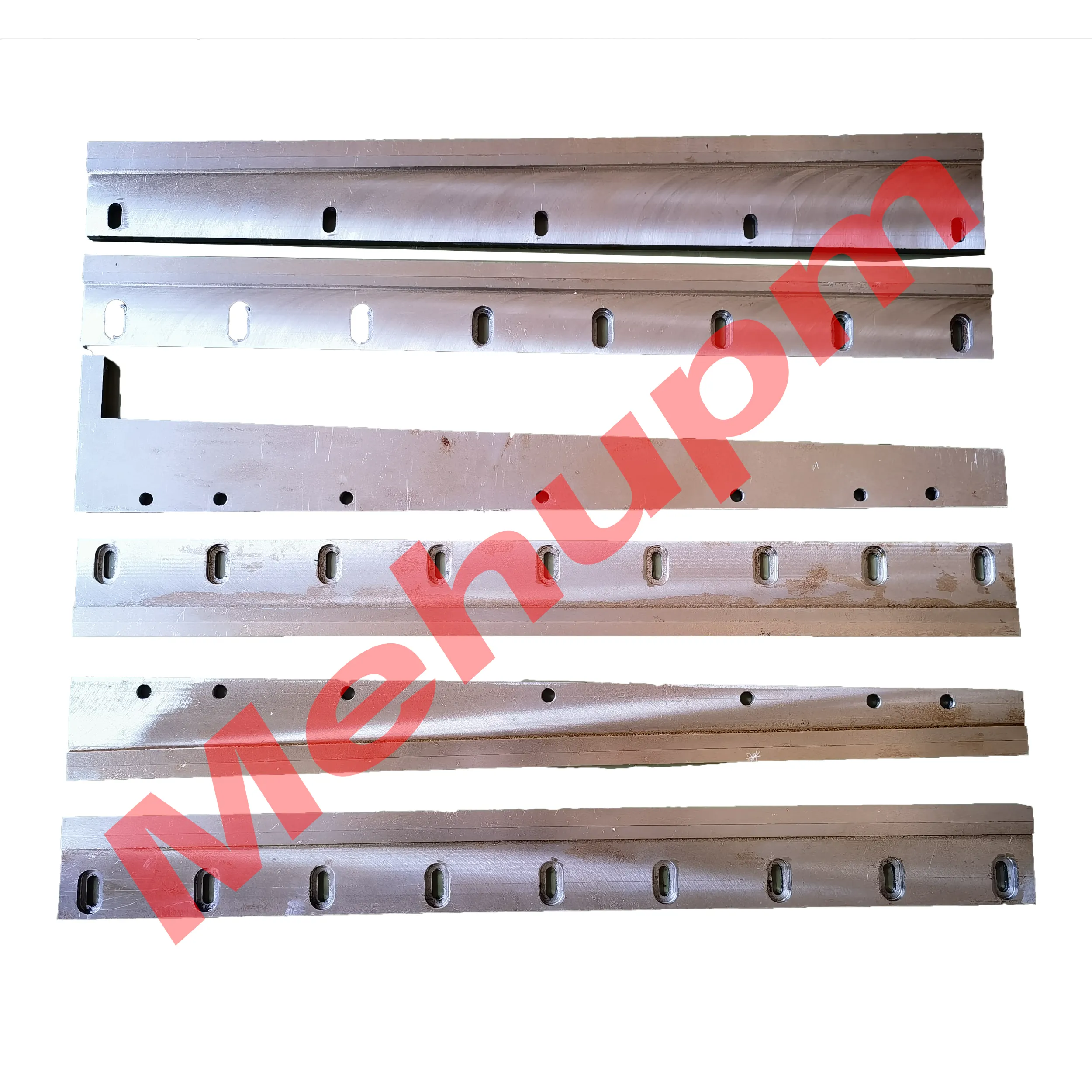
Common slitting methods
| Method | Mechanism | Typical use |
|---|---|---|
| Razor slitting | Blade cuts against a support surface | Thin films, light-duty webs |
| Shear slitting | Male/female circular knives create a scissor action | Films, laminates, coated webs, labels |
| Score slitting | Knife presses into a nip or anvil | Thicker, tougher, or less sensitive materials |
Winding architectures
- Center winding uses core-driven torque and is common for general-purpose converting.
- Center-surface winding combines core drive with a support drum for better control on delicate or narrow webs.
- Surface winding supports large, heavy rolls at high speed, especially for paper and nonwovens.
- Turret winding enables roll changes with reduced downtime, improving throughput in high-volume operations.
Typical performance ranges
Published machine-builder specifications indicate that industrial slitter rewinders commonly run at:
- Widths up to about 2,286 mm on some general-purpose systems, and in wider industrial configurations significantly beyond that.
- Speeds up to about 800 m/min on high-performance converting lines.
- Slit widths from about 25 mm down to 6 mm on specialized center-surface systems.
- Rewind diameters from about 1 m to 1.5 m depending on winding style and material.
For plastic-film converting, these figures matter because runnability depends not only on top speed but also on whether the line can maintain stable winding tension without wrinkling, blocking, or edge deformation.
Types and Variations
The main machine classes are usually defined by winding geometry and production objective.
| Type | Strengths | Typical applications |
|---|---|---|
| Center winder | Economical, flexible, good for general converting | Packaging films, standard laminates |
| Center-surface winder | Better tension control for sensitive webs | Labels, stretch-sensitive films, thin laminates |
| Surface winder | Best for large-diameter, heavy rolls | Paper, nonwovens, high-mass webs |
| Turret slitter rewinder | Fast changeovers, high uptime | Tape, label, and high-volume converting |
| Duplex systems | Alternating rewind positions, differential winding | Specialty webs and balanced roll output |
| Two-drum surface winder | Stable winding of heavy rolls at speed | Large industrial rolls and mill-scale output |
A practical selection rule used in the industry is that the more delicate, narrow, or tension-sensitive the plastic web, the more valuable precise winding geometry becomes; conversely, the larger and heavier the finished roll, the more attractive surface-supported winding becomes.
Applications and Uses
Slitter rewinders are used wherever wide flexible rolls must be transformed into narrower rolls for downstream production.
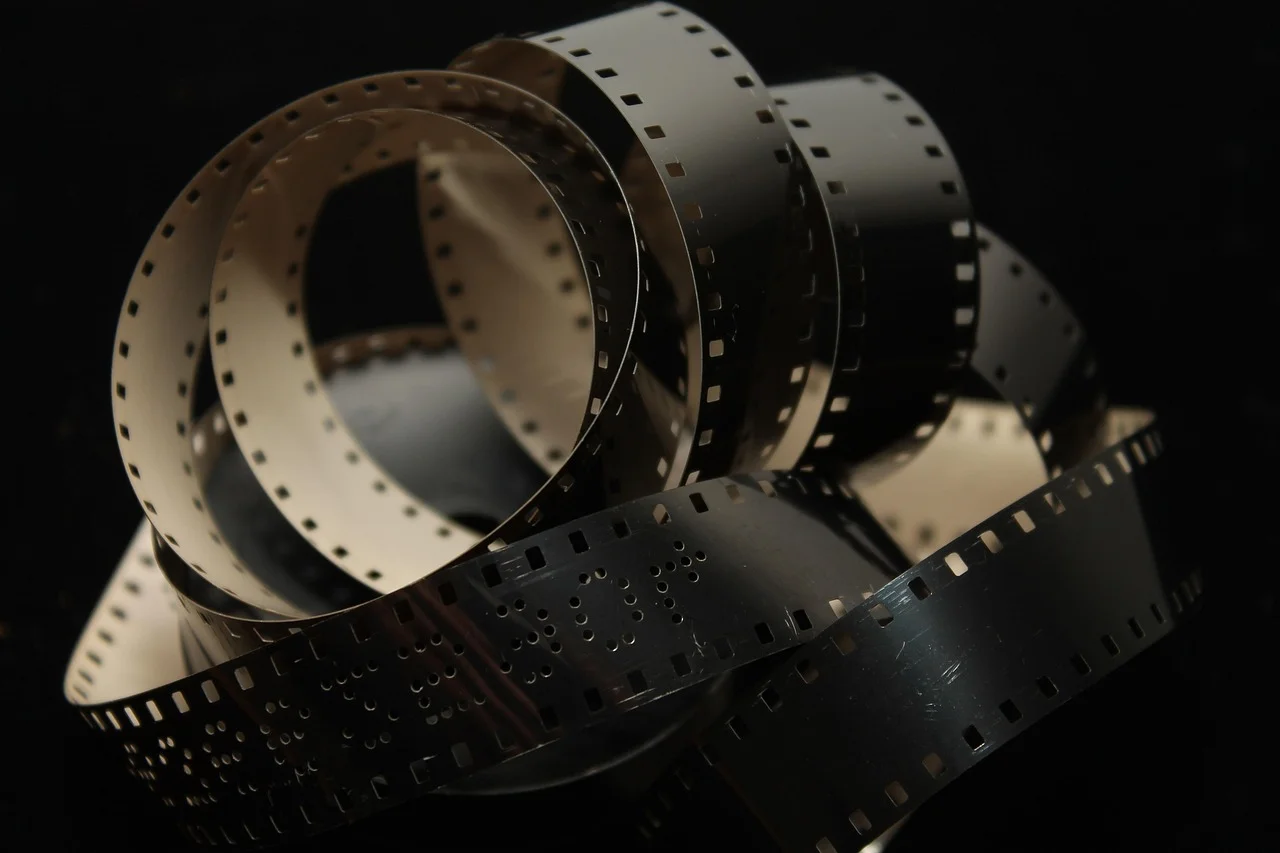
- Flexible packaging: slitting polyethylene, polypropylene, BOPP, PET, laminate structures, and aluminum-plastic composite webs into pouch, wrapper, and overwrap formats.
- Label stock and pressure-sensitive materials: producing narrow rolls for automatic labeling, adhesive tapes, and specialty graphics.
- Printing and lamination: preparing web widths suited to flexographic, gravure, or laminate converting lines.
- Nonwovens and hygiene materials: converting large rolls into widths for wipes, medical disposables, and absorbent products.
- Industrial films and technical webs: preparing barrier films, protective films, insulating laminates, and composites.
- Textiles and coated fabrics: converting synthetic textiles and technical cloths where controlled edge quality is required.
A poor-fit use is hard-sheet plastics such as thick rigid thermoplastic sheets, which are generally better processed by sheet cutting, sawing, trimming, or other rigid-substrate equipment rather than a web-based slitter rewinder.
Material Behavior and Roll Quality
In plastics converting, roll quality is often more important than mere width reduction. A well-set machine must preserve:
- Edge integrity without burrs, dust, or feathering
- Gauge stability across the web
- Low telescoping and starring in rewind rolls
- Consistent roll hardness
- Minimal wrinkles, bagginess, and air entrapment
This is why the slitter rewinder is closely tied to polymer film properties such as stiffness, coefficient of friction, thickness uniformity, shrink behavior, and surface treatment. For example, a thin BOPP film and a tacky adhesive laminate may require very different tension curves, knife types, and winding nip settings even when the target slit width is similar.
Technological Innovations and Automation
Modern slitter rewinders increasingly incorporate:
- Closed-loop tension control using load cells, dancer rolls, and servo drives
- Automatic knife positioning for faster format changeover
- Recipe management for repeat jobs and reduced operator dependence
- Web inspection and defect tracking to prevent converting faulty roll sections into finished product
- Turret automation for rapid roll unloading and re-cores
- Data connectivity for production logging and maintenance diagnostics
These features support Industry 4.0-style operation, but they also add engineering complexity. The trade-off is clear: greater automation can improve repeatability and throughput, yet it raises capital cost, integration requirements, and maintenance skill demands.
Environmental and Sustainability Aspects
Slitter rewinders contribute to sustainability mainly through material efficiency and roll utilization. By converting bulk parent rolls into application-specific widths, they help reduce unnecessary scrap during downstream processing and can support more efficient logistics by enabling bulk purchasing and narrower finished formats.
Sustainability-related considerations include:
- Trim waste reduction through precise web alignment and width control
- Energy efficiency from servo drives, optimized acceleration profiles, and reduced idle time
- Material recovery compatibility when lines are designed to handle recyclable mono-material films or recycled-content webs
- Lower transport intensity by moving large parent rolls instead of many small rolls
However, faster machines can also increase energy demand per hour, so the best environmental outcome depends on balancing throughput, scrap rate, and power consumption per unit of converted output.
Economic and Global Market Impact
Slitter rewinders are economically important because they add value at the conversion stage, where a single parent roll can be transformed into many saleable rolls of different widths and specifications. This supports flexible packaging supply chains, label converters, film processors, and specialty-web manufacturers across major industrial regions.
Their market relevance is reinforced by the fact that flexible packaging and label converting are highly specification-driven: small differences in roll quality can determine whether material runs efficiently on printing, laminating, bag-making, or form-fill-seal equipment. In that sense, slitter rewinders are a critical quality gateway between polymer film production and downstream commercialization.
Current Challenges and Innovations
The main technical challenges are:
- Slitting very thin or highly extensible films without edge damage
- Managing low-friction or tacky materials that block, slip, or telescope
- Maintaining uniform tension across multiple narrow webs
- Reducing setup time for short runs and frequent job changes
- Handling higher recycled-content variability, which can affect stiffness and winding behavior
Current innovation is focused on improved servo synchronization, faster recipe changes, better edge-guidance algorithms, and more stable winding of thin, recyclable structures. In plastics converting, one of the most important developments is the move toward mono-material flexible packaging structures, which may simplify recycling but can still be demanding to slit and rewind because film properties remain highly sensitive to orientation, thickness, and surface treatment.
Future Outlook
The future of slitter rewinders is likely to be defined by three trends:
- Greater automation for quick format changes and lower labor dependence
- Smarter quality control through sensors, inspection systems, and digital process analytics
- Compatibility with circular packaging materials such as recyclable mono-PE and mono-PP structures
In plastics processing, this means the slitter rewinder will remain a central converting machine, but its role will expand from width reduction to precision roll engineering: controlling how a film behaves not only during slitting, but also in downstream filling, printing, lamination, and consumer-packaging lines.
Summary
Slitter rewinders are essential converting machines that transform wide polymer web rolls into narrower finished rolls with controlled tension, accurate width, and usable roll structure. Their importance in plastics processing comes from their ability to connect film production with packaging, labeling, lamination, and other downstream operations, while ongoing advances in automation, winding control, and material efficiency continue to shape their development.
References
- •
What Are Slitter Rewinders Used For? (2023, April 25). Ashe. https://www.ashe.co.uk/en_us/what-are-slitter-rewinders-used-forLink
- •
Slitter Rewinder: What Is It & How Does It Work? (2023, July 21). Konetool. https://www.konetool.com/slitter-rewinder-what-is-it-how-does-it-work/Link
- •
What Is a Slitter Rewinder Machine? Complete Guide (2019, May 23). Elite Cameron. https://www.elitecameron.com/introduction-to-slitter-rewinder-machinesLink
- •
5 Basic Guides of Slitter Rewinder Machine (Part 1) (2023, July 14). Nicely Slitter. https://nicely-slitter.com/en/article/slitter-rewinder-guides.htmlLink
- •
Slitting Rewinding Machine Guide: Technology, Selection ... (2026, August 29). Gaobao Hightop. https://www.gaobao-hightop.com/blog/slitting-rewinding-machine-guide-technology-selection-applicationsLink
- •
Slitter Rewinder History: Evolution of Roll Slitting Machines (2026, March 13). Jota Machinery. https://www.jotamachinery.com/about-us/slitter-rewinder-history/Link
- •
How a Slitter Rewinder Works: From Parent Roll to Finished Roll (2026, July 20). Paper Dimensions LLC. https://www.paperdimensionsllc.com/resources/how-a-slitter-rewinder-worksLink
- •
5 Things to Know About a Slitter Rewinder (n.d.). BDC Magazine. https://bdcmagazine.com/2022/08/5-things-to-know-about-a-slitter-rewinder/Link
- •
What is a Slitter Rewinder? (n.d.). Slitting Machine Maker. https://www.slitting-machine-maker.com/informationclass_5/slitter-rewinder.shtmlLink
- •
What Is a Slitter Rewinder? (2026, August 15). Gaobao Hightop. https://www.gaobao-hightop.com/blog/what-is-a-slitter-rewinderLink
- •
What Does a Slitter Rewinder Do? (2026, August 23). MTED. https://www.mtdpack.com/what-does-a-slitter-rewinder-do/Link
- •
What is a Slitter Rewinder? (2024, November 3). Pinnacle Converting. https://pinnacleconverting.com/converting-blog/what-is-a-slitter-rewinder/Link
- •
What Is a Roll-to-Roll Slitting Machine? Working Principle & Uses (2025, November 13). Jota Machinery. https://www.jotamachinery.com/what-is-a-roll-to-roll-slitting-machine/Link
- •
Understanding Slitter Rewinders (2025, November 19). PennPac. https://www.pennpac.com/blog/understanding-slitter-rewinders-tension-control-web-handling-and-roll-quality-explained/Link
- •
What is a Slitter Rewinder? (2025, October 14). Honco Machinery. https://www.honcomachinery.com/industry-news/what-is-a-slitter-rewinderLink
- •
Slitter Rewinder Machines (2018, October 18). Elite Cameron. https://www.elitecameron.com/slitter-rewindersLink
- •
Slitter Glossary (2024, November 27). Universal Converting Equipment. https://www.universalconvertingequipment.com/slitter-glossaryLink
- •
What is a slitter rewinder (2025, April 1). Rhyguan. https://www.rhyguan.net/exhibition-news/what-is-a-slitter-rewinderLink
- •
Roll slitting (2008, April 21). Wikipedia. https://en.wikipedia.org/wiki/Roll_slittingLink
- •
Basic Guides Slitter Rewinders-GAOBAO Comprehensive Introduction (2024, March 26). Gaobao Hightop. https://www.gaobao-hightop.com/basic-guides-slitter-rewinders-gaobao-comprehensive-introduction.htmlLink
- •
What Is a Paper Slitter Rewinder (2025, May 23). Jota Machinery. https://www.jotamachinery.com/academy/what-is-a-paper-slitter-rewinder/Link
- •
What Is a Slitting System? Methods, Control, and Selection (2025, November 12). Jota Machinery. https://www.jotamachinery.com/what-is-a-slitting-system/Link
- •
Basic parameters to match best slitter to the application (2025, February 6). Converting Quarterly. https://convertingquarterly.com/basic-parameters-to-match-best-slitter-to-the-application/Link
- •
Slitter Rewinders (n.d.). Parkinson Technologies. https://parkinsontechnologies.com/products/dusenbery/slitter-rewindersLink
- •
The Role of Slitter Rewinders in Shaping Flexible Packaging (2023, November 7). Catbridge. https://www.catbridge.com/the-role-of-slitter-rewinders-in-shaping-flexible-packaging/Link
- •
A Complete Guide to Slitter Rewinder Machine Cash Register (2026, March 2). Alibaba.com. https://www.alibaba.com/product-insights/slitter-rewinder-machine-cash-register.htmlLink
- •
What Is a Slitter Rewinder Machine? (2025, July 3). Jota Machinery. https://www.jotamachinery.com/blog/what-is-a-slitter-rewinder-machine/Link
- •
Slitter Rewinder Machine Manufacturers (2026, May 21). Pinnacle Converting. https://pinnacleconverting.com/converting-equipment/slitter-rewinders/Link
- •
An In-Depth Guide to Adhesive Slitter Rewinder (2026, February 25). Alibaba.com. https://www.alibaba.com/product-insights/adhesive-slitter-rewinder.htmlLink
- •
Dusenbery Converting Systems brand of slitter rewinders (n.d.). Parkinson Technologies. https://parkinsontechnologies.com/technology/dusenbery/slitter-rewindersLink
- •
Selecting a Slitter/Rewinder: A Flexographer's Guide (2017, August 10). Flexography.org. https://www.flexography.org/uncategorized/slitter-rewinder-selecting/Link
- •
What Are Slitter Rewinders Used For? (2023, April 25). Ashe. https://www.ashe.co.uk/what-are-slitter-rewinders-used-forLink