
Introduction
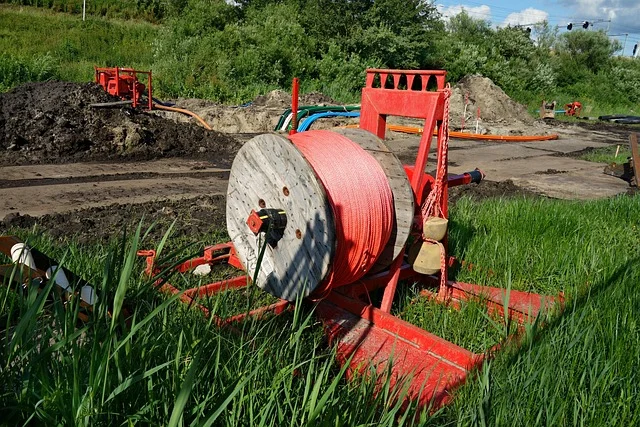
Winding equipment refers to machinery used to wind continuous or semi-continuous materials—such as wire, cable, film, foil, yarn, tape, or filament—onto a bobbin, spool, reel, drum, core, or similar carrier in a controlled and repeatable manner. In the plastics processing industry, the term most often applies to film, sheet, strip, tape, and nonwoven web winders used downstream of extrusion, calendering, laminating, slitting, and converting lines, where package quality directly affects storage, transport, and the performance of the finished product.
In industrial plastics operations, winding equipment is not simply a take-up device; it is a precision web-handling system that governs tension, alignment, layering, edge profile, roll hardness, and wound-pack stability. Modern systems range from simple single-station rewinders to fully automated turret winders with closed-loop tension control, traversing or center winding logic, automatic roll changeover, and defect-management functions.
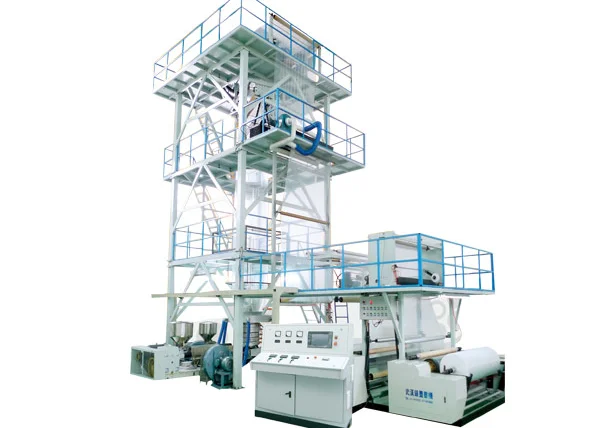
The technology has evolved from manually driven take-up reels to servo-controlled, sensor-rich systems designed for high line speeds, narrow process windows, and reduced scrap. Current development is shaped by three major pressures: higher productivity, more demanding roll quality in sensitive plastic films, and sustainability goals that favor energy-efficient drives, lower waste, and better compatibility with recycled and downgauged materials.
History and Development
Early winding systems were mechanically simple assemblies used to collect flexible materials into manageable packages for handling and sale. As plastics processing expanded in the 20th century, winding became integral to extrusion and converting lines, particularly for film, tape, and narrow web products that required consistent roll formation rather than mere storage.
Key milestones include:
- The transition from manual and mechanical rewinders to motor-driven industrial winders, which improved speed, repeatability, and package uniformity.
- The adoption of electronic tension control and traversing systems, enabling more stable roll geometry and better control of cross-wound or level-wound packages.
- The integration of automation, fault detection, and recipe-based control in modern winding systems, allowing quick product changeover and more consistent quality at higher line speeds.
In plastics converting, these advances paralleled the growth of thin-gauge films, barrier structures, laminated webs, and recycled-content materials, all of which place greater demands on winding precision than earlier commodity packaging applications.
Technical Overview
A winding system typically combines a drive unit, web path, tension-control subsystem, traversing or lay-on mechanism, core or shaft handling, and roll change or doffing equipment. The central engineering task is to maintain a stable balance between web tension, nip pressure, winding torque, and roll diameter growth so that the package remains uniform without telescoping, starring, blocking, wrinkling, or core crush.
Core operating principles
- Center winding uses the core as the primary torque input and is widely used where tension stability is critical.
- Surface winding applies drive force through a roll contact element and is useful for softer materials or when roll hardness must be controlled carefully.
- Combination winding blends center and surface principles to improve roll build quality across a wider diameter range.
- Traversing winding distributes material across the package width, which is essential for level-wound packages and many narrow web products.
Typical performance ranges
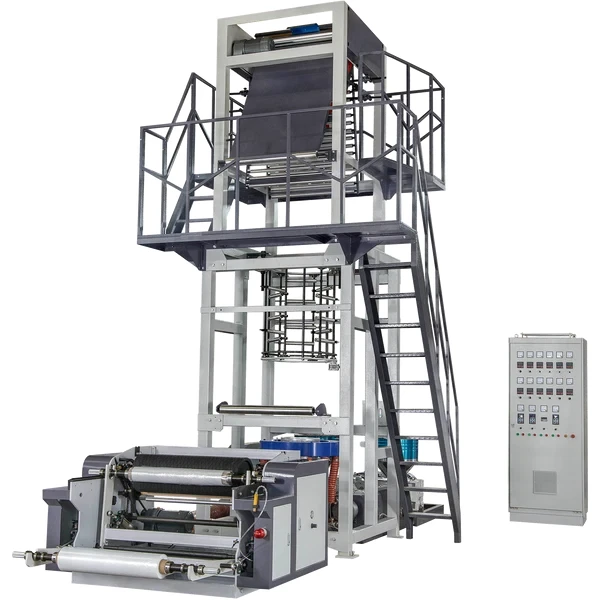
For plastics-related winding applications, commonly cited industrial ranges include:
- Throughput: from a few hundred kg/h on narrow converting lines to several t/h on large film, sheet, or pellet packaging systems, depending on web width and line speed.
- Line speed: often from tens of m/min in specialty film or laminate converting to several hundred m/min in high-volume packaging lines.
- Roll build accuracy: modern systems can maintain tight diameter and tension consistency through closed-loop feedback and dancer/load-cell control.
- Rotor or spindle speed: precision coil and specialty winding systems may use very high spindle speeds, while web winders typically regulate speed by line requirements rather than maximum spindle RPM alone.
Where winding is paired with plastic film extrusion or slitting, practical performance is often limited less by mechanical speed than by edge quality, web flatness, coefficient of friction, and residual stress in the wound roll.
Quality-related engineering variables
Important variables include:
- Web tension
- Nip pressure
- Lay-on force
- Roll hardness profile
- Edge alignment
- Traverse pitch
- Core stiffness and concentricity
- Static control and contamination management
These variables determine whether a roll remains stable during storage and unwinding, especially for thin films and multilayer structures that are sensitive to blocking, deformation, and edge damage.
Types and Variations
Winding equipment used in plastics processing can be grouped by roll-handling architecture and product format.
| Type | Main function | Typical plastics use |
|---|---|---|
| Center winders | Build rolls through core-driven torque | Film, tape, narrow web, slit roll packaging |
| Surface winders | Control roll build by surface contact | Soft films, foams, delicate webs |
| Center-surface winders | Combine torque and surface support | High-speed film and laminates |
| Turret winders | Enable non-stop roll changeover | Large-volume converting and packaging lines |
| Traversing winders | Distribute material evenly across width | Narrow web, filament, tape, yarn-like plastics products |
| Slitter-rewinders | Slit wide web into multiple rolls and rewind them | BOPP, PET, PE film, labelstock, laminates |
| Surface accumulators / winders | Buffer line speed variations | Extrusion and calendaring lines |
| Drum or reel winders | Wind onto large carriers | Heavy-gauge sheet, industrial web, technical films |
In plastics, the most common industrial configuration is the slitter-rewinder, because it combines width reduction, edge trimming, and final roll formation in one machine.
Applications and Uses
Winding equipment is used across many plastics-related processes where a continuous product must be converted into a sellable or process-ready package.
Major applications
- Plastic film extrusion
- Winding of blown, cast, biaxially oriented, shrink, barrier, and stretch films.
- Roll quality is critical for downstream printing, laminating, and bag making.
- Sheet and foam converting
- Slitting and rewinding
- Conversion of master rolls into customer-specific widths.
- Common in packaging, labels, medical films, and industrial films.
- Cable and tubing packaging
- Take-up of plastic tubing, hose, corrugated conduit, and cable sheathing.
- Often requires careful tension management to avoid ovality or deformation.
- Tape, ribbon, and narrow web products
- Requires precise traversing and edge control.
- Filament, fiber, and technical strand handling
- Used for thermoplastic filaments, reinforcement yarns, and specialty composites.
Poor-fit use
- Very brittle or highly structured products are often a poor fit for standard winding equipment because they may crack, crease, or delaminate under roll pressure; in such cases, alternative handling such as stacking, basket winding, or loose coiling may be more appropriate.
Key Characteristics and Engineering Considerations
For plastics machinery, the value of winding equipment lies in how well it preserves product integrity during packaging and storage.
Main engineering priorities
- Tension stability to prevent stretch, slack, or gauge distortion
- Roll hardness control to avoid telescoping and blocking
- Edge profile management to reduce edge waviness and roll defects
- Air entrainment control to reduce entrapped air in high-speed winding
- Static dissipation to improve safety and reduce contamination pickup
- Core compatibility for paper, plastic, composite, or metal cores
Typical roll defects
- Telescoping
- Starring
- Bagging
- Blocking
- Wrinkling
- Edge embossing
- Core slip
- Hard/soft roll bands
These defects matter in plastics because they can impair unwind stability, convertibility, optical quality, and final-package appearance.
Technological Innovations and Automation
Automation has become a defining feature of modern winding systems. Current platforms commonly include:
- Servo drives for precise speed and tension regulation
- Load-cell feedback for closed-loop tension control
- Dancer systems for transient buffer management
- Recipe-based control for product changeover
- Automatic knife positioning in slitter-rewinders
- Turret exchange systems for non-stop production
- Condition monitoring for vibration, bearing wear, and drive health
In advanced plastic film lines, winding software increasingly coordinates with extrusion, corona treatment, inspection, and slitting systems so that package formation is adjusted to material grade, thickness, and downstream use.
Environmental and Sustainability Aspects
Winding equipment contributes to sustainability primarily through material efficiency and energy efficiency.
Sustainability benefits
- Reduced scrap
- Better tension and edge control lower trim loss and roll rejection.
- Lower energy demand
- Servo-efficient drives and optimized line control can reduce unnecessary power consumption compared with older mechanically driven systems.
- Compatibility with recycled materials
- Winding systems tuned for variable friction and stiffness are better suited to films and webs containing recycled content.
- Support for downgauging
- As plastic films become thinner, winding precision becomes more important, because thin webs are more prone to wrinkle and break.
Sustainability trade-offs
- Highly automated, sensor-rich systems can raise capital cost and maintenance complexity.
- More sensitive control systems may require tighter operator training and process discipline.
- Running very high line speeds can improve productivity, but only if package quality and material yield remain stable.
Economic and Global Market Impact
Winding equipment is a foundational element in plastics converting, packaging, and downstream extrusion because it determines how efficiently continuous output becomes inventoryable product. In economic terms, its influence appears in:
- Line uptime
- Finished-roll quality
- Scrap rate
- Labor intensity
- Changeover time
- Downstream convertibility
Demand is strongest where plastics processing is concentrated: flexible packaging, labels, consumer goods films, industrial sheeting, medical films, technical laminates, and recycled-material reprocessing. As production shifts toward higher-value specialty films and tighter quality requirements, investment in advanced winding systems becomes more attractive despite higher initial cost.
Current Challenges and Innovations
The main technical challenges in winding plastics products are increasingly linked to material variability and product complexity.
Current challenges
- Variable friction in recycled-content films
- Thin-gauge webs with low stiffness
- Multilayer structures with different thermal and mechanical responses
- Residual stress that causes roll deformation over time
- Increased demand for defect-free appearance in premium packaging
- Balancing high speed with low tension and low damage
Active innovation areas
- Adaptive tension algorithms
- AI-assisted defect detection
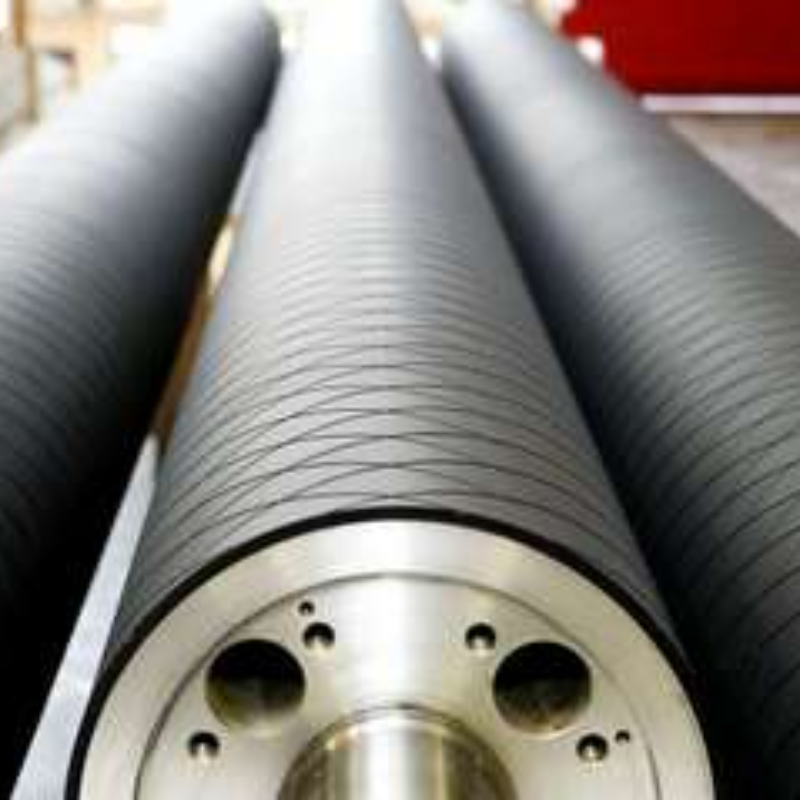
- Better roller coatings and surface materials
- Improved core and shaft designs
- Digital twin and simulation-based winding optimization
- Integration with Industry 4.0 monitoring systems
Future Outlook
Future winding equipment for plastics processing will likely emphasize adaptive control, lower-energy operation, and greater material tolerance. As recycled polymers, bio-based films, and ultrathin multilayer structures become more common, winding systems will need broader process windows and smarter control over roll build and web handling.
The strongest development trajectory is toward machines that can automatically adjust winding strategy to product type, roll diameter, and upstream variation while preserving package quality at industrial scale. In plastics manufacturing, that will make winding equipment even more central to productivity, sustainability, and product reliability.
References
- •
Winding machine. (2008, July 20). Wikipedia. https://en.wikipedia.org/wiki/Winding_machineLink
- •
Winding equipment. (2025, March 27). https://www.ismy.net/archive/winding-equipmentLink
- •
Winding machine. (n.d.). Supertek GmbH. https://www.winding-technology.com/eu-en/wiki/winding-machineLink
- •
What is winding equipment? Uses, how it works. (2025, October 4). LinkedIn. https://www.linkedin.com/pulse/what-winding-equipment-uses-how-works-pv0deLink
- •
What is a motor winding machine: Types and its calculation. (2023, August 11). https://en.cnhonest.com/news/210.htmlLink
- •
What are the common types of winding machines? (2025, September 16). Shenzhen XH Automatic. https://www.xhautomatic.com/en/news/what-are-the-common-types-of-winding-machines/Link
- •
Explore surface winders and what makes them different. (2024, May 21). Conversion Technologies. https://www.conversiontechnologies.com/surface-winders/Link
- •
What are the types of winding machine. (2023, February 16). Taizheng Machine. https://www.taizhengmachine.com/what-are-the-types-of-winding-machine.htmlLink
- •
Check out all the options before investing in winding machinery. (2017, August 11). Electronics For You. https://www.electronicsforyou.biz/important-sectors/electronics-manufacturing-equipment-consumables/check-options-investing-winding-machinery/Link
- •
Optimizing automation for winding applications. (n.d.). Lenze. https://www.lenze.com/fileadmin/lenze/documents/en-us/flyer/LAM-0037BR_Winding_Applications_Brochure_OCT2024-US_01.pdfLink
- •
What is a winding machine? (2025, August 10). Spiegato. https://spiegato.com/en/what-is-a-winding-machineLink
- •
Industrial winding machines in the real world: 5 uses you. (2025, October 3). LinkedIn. https://www.linkedin.com/pulse/industrial-winding-machines-real-world-5-uses-x0zifLink
- •
Manual & electrical winding machines. (2017, September 6). Acadamania. https://acadamania.wordpress.com/2017/09/06/manual-electrical-winding-machines/Link
- •
What is a winder? (n.d.). Winding Technology. https://www.winding-technology.com/eu-en/wiki/winderLink
- •
What equipment is used for winding? 2026. (2025, June 16). GR Winding. https://grwinding.com/what-equipment-is-used-for-winding/Link
- •
5 winding machine options for precision coil manufacturing. (2025, August 5). https://www.hjbrj.com/blog-news-12098/5-winding-machine-options-for-precision-coil-manufacturing-11927870.htmlLink
- •
What is a winder machine? Functions and types. (2025, August 12). Taining. https://www.taining.com.tw/what-is-a-winder-machine-functions-and-typesLink
- •
Introduction to the classification of transformer winding machines. (n.d.). http://en.nashengcn.com/wdgweb_content-64892.htmlLink
- •
What types of winding machines are there. (n.d.). Precisionext. https://www.precisionext.com/news/content_view_206.htmlLink
- •
Winders & applicators. (2024, October 10). Rosenthal Manufacturing. https://www.rosenthalmfg.com/winders-applicators/Link
- •
Complete guide to winding machines: What they are and types. (2024, July 13). Weavetech. https://www.weavetech.com/complete-guide-to-winding-machines-what-they-are-and-types/Link
- •
Winding machine in energy storage | Applications. (2025, August 22). GuangRi. https://www.grwinding.com/energy-storage/Link
- •
Automatic winding machine in the real world: 5 uses you'll actually. (2025, October 2). LinkedIn. https://www.linkedin.com/pulse/automatic-winding-machine-real-world-5-uses-youll-actually-t3uueLink
- •
An insight into different types of coil winders. (2018, March 8). LinkedIn. https://www.linkedin.com/pulse/insight-different-types-coil-winders-scott-heranLink
- •
Winding machines. (n.d.). ScienceDirect. https://www.sciencedirect.com/topics/engineering/winding-machinesLink
- •
Coil winding machine: Introduction, types, principle & manufacturer. (2021, December 24). Tesca Technologies. https://www.tescaglobal.com/blog/coil-winding-machine/Link
- •
Apa saja jenis mesin winding dan aplikasinya? (2025, September 29). https://www.gwcarbonfiber.com/id/blog/what-are-the-types-of-winding-machines-and-their-applicationsLink
- •
4.0 tools and equipment for winding job. (n.d.). FCT EMIS. https://fctemis.org/notes/18043_Winding%20tools%20and%20equipment.pdfLink
- •
Workflow and applications of precision winding machines. (2025, June 4). Rifa Textile. https://www.rifatextile.com/workflow-and-applications-of-precision-winding-machines.htmlLink
- •
Electrical coil winding machines selection guide. (2025, January 1). GlobalSpec. https://www.globalspec.com/learnmore/manufacturing_process_equipment/manufacturing_equipment_components/electrical_coil_winding_machinesLink
- •
O que é winding machine: Entenda sua importância. (n.d.). Minas Labor. https://www.minaslabor.com.br/glossario/o-que-e-winding-machine/Link
- •
Motor winding machine in the real world: 5 uses you'll actually. (2025, October 2). LinkedIn. https://www.linkedin.com/pulse/motor-winding-machine-real-world-5-uses-youll-actually-3h2dcLink
- •
17 winding machinery manufacturers in 2026. (n.d.). Metoree. https://us.metoree.com/categories/3241/Link
- •
Winding and winding machine: Types, functions and. (2021, January 25). Textile Learner. https://textilelearner.net/winding-and-winding-machine/Link
- •
Winding equipment market 2026 forecast to 2032. (n.d.). 24MarketReports. https://www.24marketreports.com/machines/global-winding-equipment-forecast-marketLink
- •
The automation of winding and unwinding applications in. (2026, January 14). KEB America. https://www.kebamerica.com/blog/the-automation-of-winding-and-unwinding-applications-in-industrial-machinery/Link
- •
Coil winding machines, coil winders, transformer. (n.d.). Armature Coil. https://www.armaturecoil.com/coil-winding-equipment/Link
- •
How can automatic coil winding machine increase. (2018, March 12). Armature Coil. https://www.armaturecoil.com/blog/can-automatic-coil-winding-machines-increase-work-efficiency/Link
- •
How to choose the best winding machine for your needs. (2025, November 20). SmartBuy. https://smartbuy.alibaba.com/buyingguides/winding-machineLink
- •
What is a motor winding? Types of motor winding and benefits. (2025, September 4). ITG Motor. https://itg-motor.com/what-is-a-motor-winding-types-of-motor-winding-and-benefits/Link
- •
Advanced machine and tool | Winders. (2023, November 14). AMT Corp. https://www.amt-corp.com/winding-equipment/stand-alone-machines/windersLink
- •
The basics of a winder. (2018, December 28). Premier Automation. https://info.premierautomation.com/blog/the-basics-of-a-winderLink
- •
What types of coils can be wound using coil winding. (2024, June 17). Itasca Auto Systems. https://itascaautosys.com/what-types-of-coils-can-be-wound-using-coil-winding-machines/Link
- •
Alliance winding equipment. (n.d.). https://www.alliance-winding.com/Link
- •
Automatic winding machine. (2024, September 24). Neware. https://www.neware.net/support/automatic-winding-machine-manufacturing-equipment-terminology/218/551.htmlLink