
Introduction
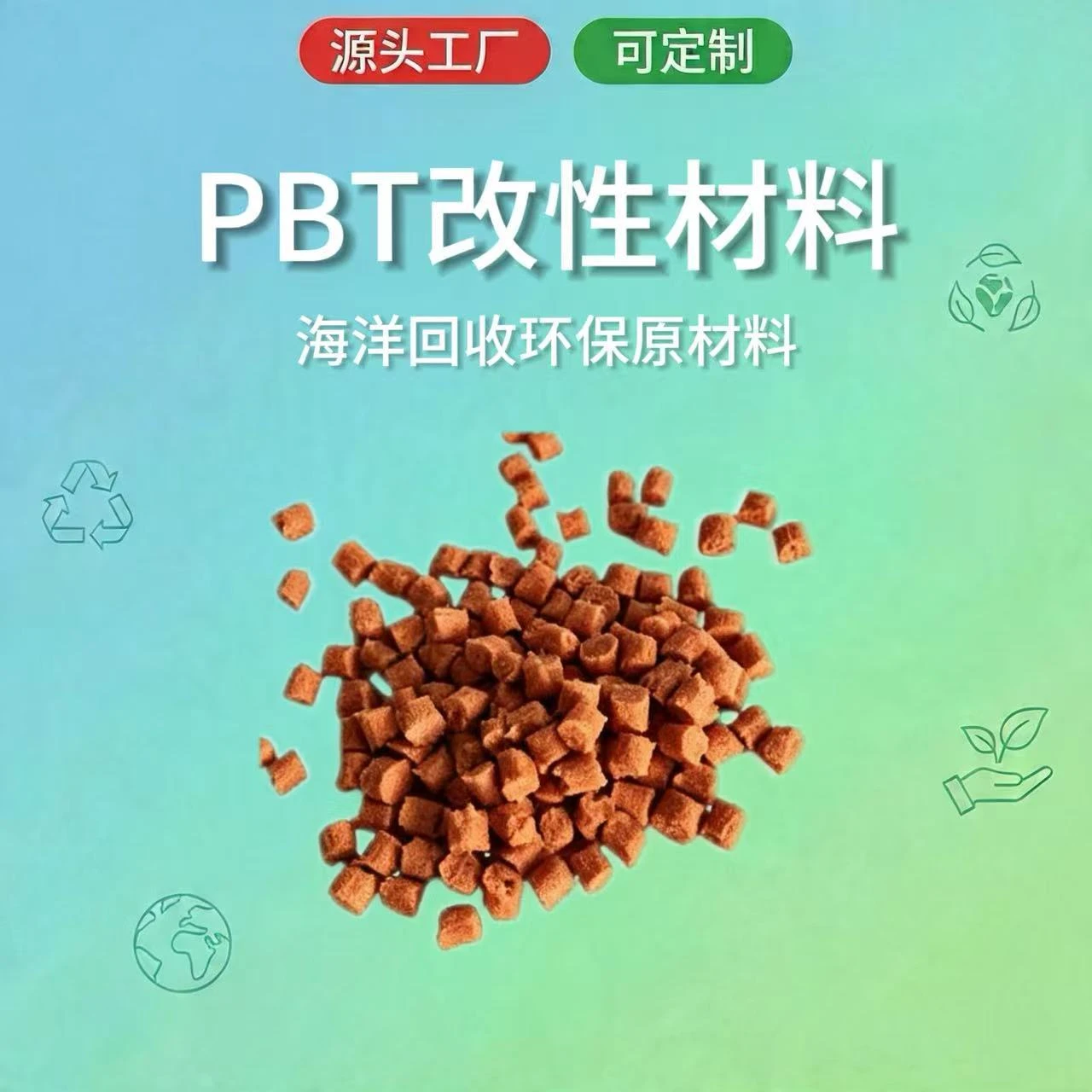
Recycled polybutylene terephthalate (rPBT) is a recycled engineering polyester derived from post-industrial or post-consumer PBT waste and, in some routes, from chemically recycled polyester streams that are repolymerized into PBT-equivalent material. It is used primarily as a lower-carbon substitute for virgin PBT in electrical and electronic parts, automotive components, and other injection-molded technical applications where dimensional stability, electrical insulation, and chemical resistance are important.
rPBT sits within the broader circular-economy effort to recover high-value engineering plastics rather than downcycle them into lower-performance uses. Current development work focuses on improving batch consistency, restoring molecular weight, and tailoring properties through compounding with additives, glass fiber, and compatibilizers so that recycled resin can approach virgin-grade performance. At the same time, sustainability claims for rPBT depend strongly on feedstock purity, recycling pathway, and end-use design, because contamination, thermal degradation, and repeated processing can reduce performance if the material is not carefully engineered.
History and Development
PBT itself became established as a high-performance thermoplastic because it combined good mechanical strength, low water absorption, electrical insulating behavior, and ease of injection molding. Recycling interest intensified as manufacturers sought to reduce waste from production scrap and end-of-life electrical, automotive, and appliance parts, especially where PBT already existed in relatively pure, identifiable streams.
Recent industrial and patent activity shows a shift from simple regrind use toward engineered rPBT grades with controlled intrinsic viscosity, melt flow rate, color, and reinforcement packages. Toray and Yazaki have publicly discussed recycled PBT resin development for automotive connectors, illustrating how Tier 1 and materials suppliers are aligning recycled content with demanding connector applications. In parallel, chemical-recycling research has expanded the design space beyond direct reprocessing, including depolymerization and repolymerization routes that can restore or even redesign polyester feedstocks.
Chemical Structure and Key Properties
PBT is an aromatic polyester with repeating terephthalate and butylene segments, and its recycled form retains the same underlying polymer family but with a thermal and processing history that can alter chain length, crystallinity, and impurity profile. Because rPBT is usually produced from previously processed material, its properties are more variable than those of virgin resin unless the feedstock is tightly sorted and the melt is stabilized during compounding.
| Property | Typical relevance for rPBT |
|---|---|
| Dimensional stability | Strong, due to low moisture uptake and good crystallization behavior |
| Electrical insulation | Well suited for connectors, switches, and housings |
| Chemical resistance | Good resistance to oils, fuels, dilute acids, and many solvents |
| Thermal performance | Suitable for moderate-to-high heat applications, especially when reinforced |
| Surface appearance | Can be good, but color control is more difficult than with virgin resin |
Typical limitations are important to define clearly:
- Impact and tensile loss → chain scission and molecular-weight reduction during prior processing → use chain extenders, solid-state polycondensation, or glass-fiber reinforcement to recover stiffness and strength.
- Batch-to-batch variability → mixed feedstocks, contamination, and prior thermal history → use feedstock sorting, washing, filtration, and standardized pelletization.
- Hydrolytic and thermal sensitivity during remelting → polyester ester bonds can degrade under moisture and heat → dry resin thoroughly and minimize residence time in the melt.
- Color and odor instability → residual pigments, additives, or degradation products from waste streams → use deodorization, decontamination, and masterbatch correction.
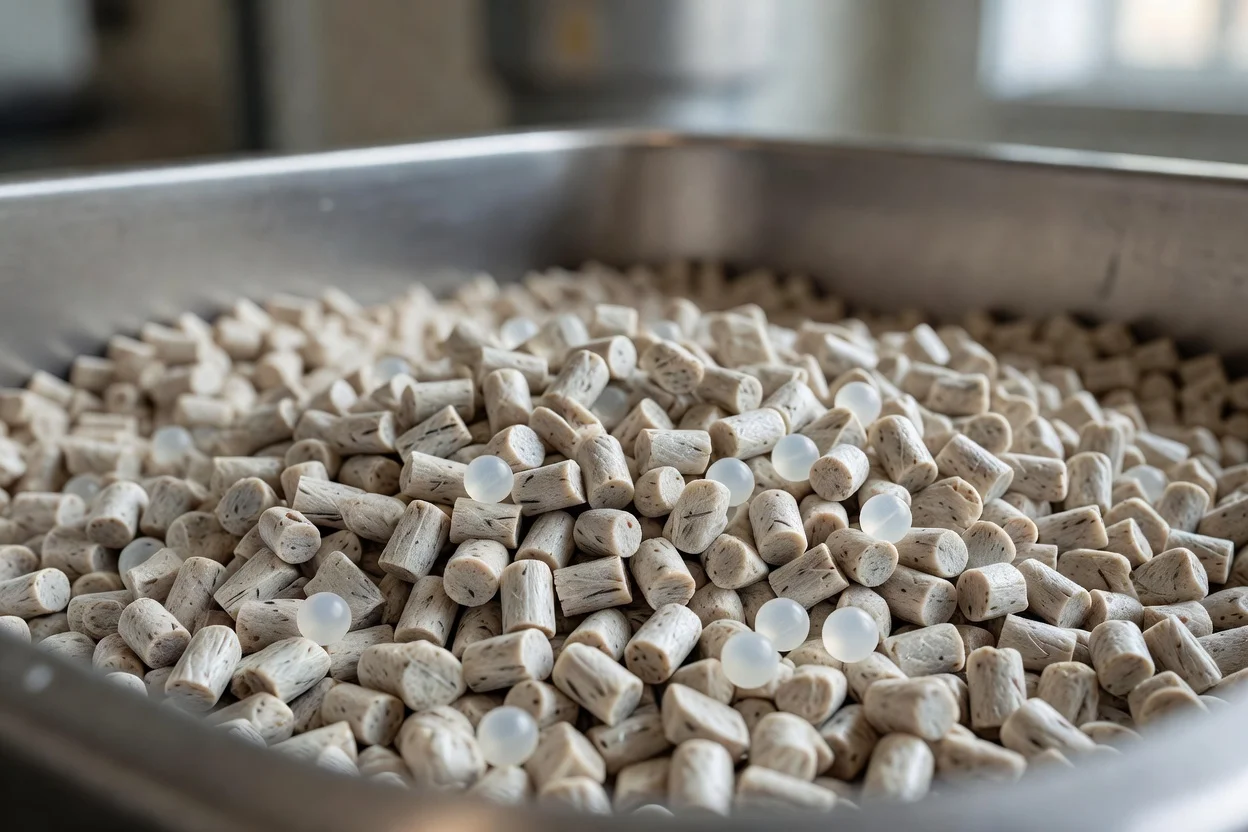
A common engineering approach is compounding rPBT with short glass fiber to recover stiffness and heat deflection temperature for connectors and housings, or adding chain extenders and stabilizers to rebuild molecular weight and reduce embrittlement. In high-recycled-content blends, formulators may also add reactive compatibilizers and processing aids to preserve impact strength and flow during injection molding.
Production Processes and Raw Feedstocks
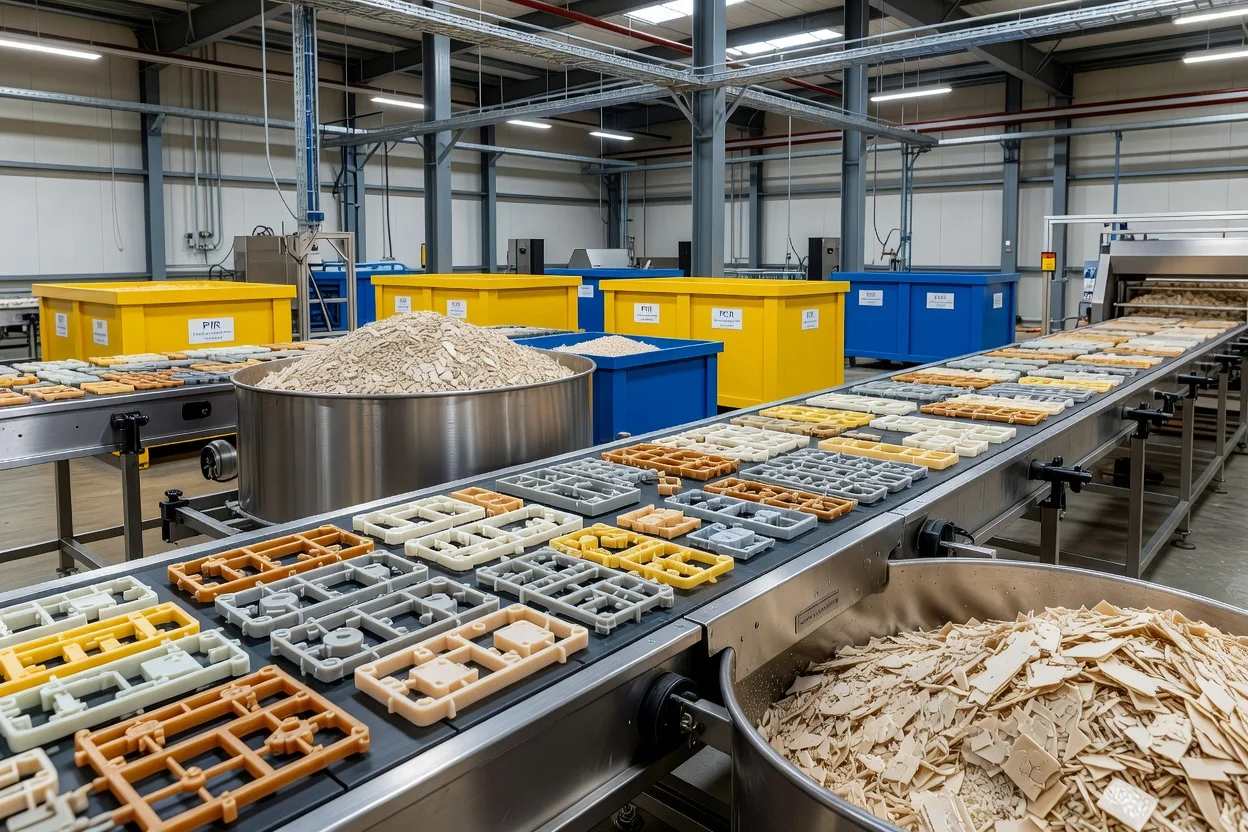
rPBT is produced from two main feedstock classes: post-industrial recycled (PIR) material from sprues, runners, off-spec parts, and manufacturing scrap, and post-consumer recycled (PCR) material from end-of-life electrical, automotive, and appliance components. PIR streams are generally cleaner and more consistent, while PCR streams offer greater circularity benefits but require more aggressive sorting and purification.
Typical production steps include:
- Collection and sorting of PBT-rich waste streams.
- Removal of labels, metals, dirt, and incompatible polymers.
- Washing, drying, and size reduction.
- Melt filtration and extrusion into pellets.
- Compounding with stabilizers, pigments, glass fiber, impact modifiers, or flame retardants.
- Quality control for intrinsic viscosity, melt flow, color, moisture, and contamination.
Some producers use chemical recycling routes in which recycled polyester is depolymerized and repolymerized, or converted through intermediate oligomers, to restore usable PBT properties. Patent literature and recent research indicate that such routes can improve yield and product consistency, although they remain more complex and capital-intensive than mechanical recycling.
Applications and End-Use Markets
rPBT is most valuable where the original PBT design logic still applies: parts that require stable dimensions, electrical safety, and resistance to heat and chemicals. The most common markets are electrical and electronic components, automotive parts, and durable consumer goods.
| End-use sector | Common rPBT grades or forms | Usual processing route | Typical examples |
|---|---|---|---|
| Electrical and electronics | Unfilled or glass-fiber reinforced rPBT | Injection molding | Connectors, switch housings, relay parts, coil bobbins |
| Automotive | Reinforced rPBT, often with stabilizers and impact modifiers | Injection molding | Connectors, sensor housings, trims, under-hood housings |
| Consumer appliances | General-purpose or filled rPBT | Injection molding | Motor covers, handles, appliance housings |
| Industrial components | High-stiffness rPBT compounds | Injection molding | Valves, manifolds, machine housings |
| Specialty technical parts | Chemical-recycled or highly purified rPBT | Injection molding, compounding | Precision connectors, branded recycled-content parts |
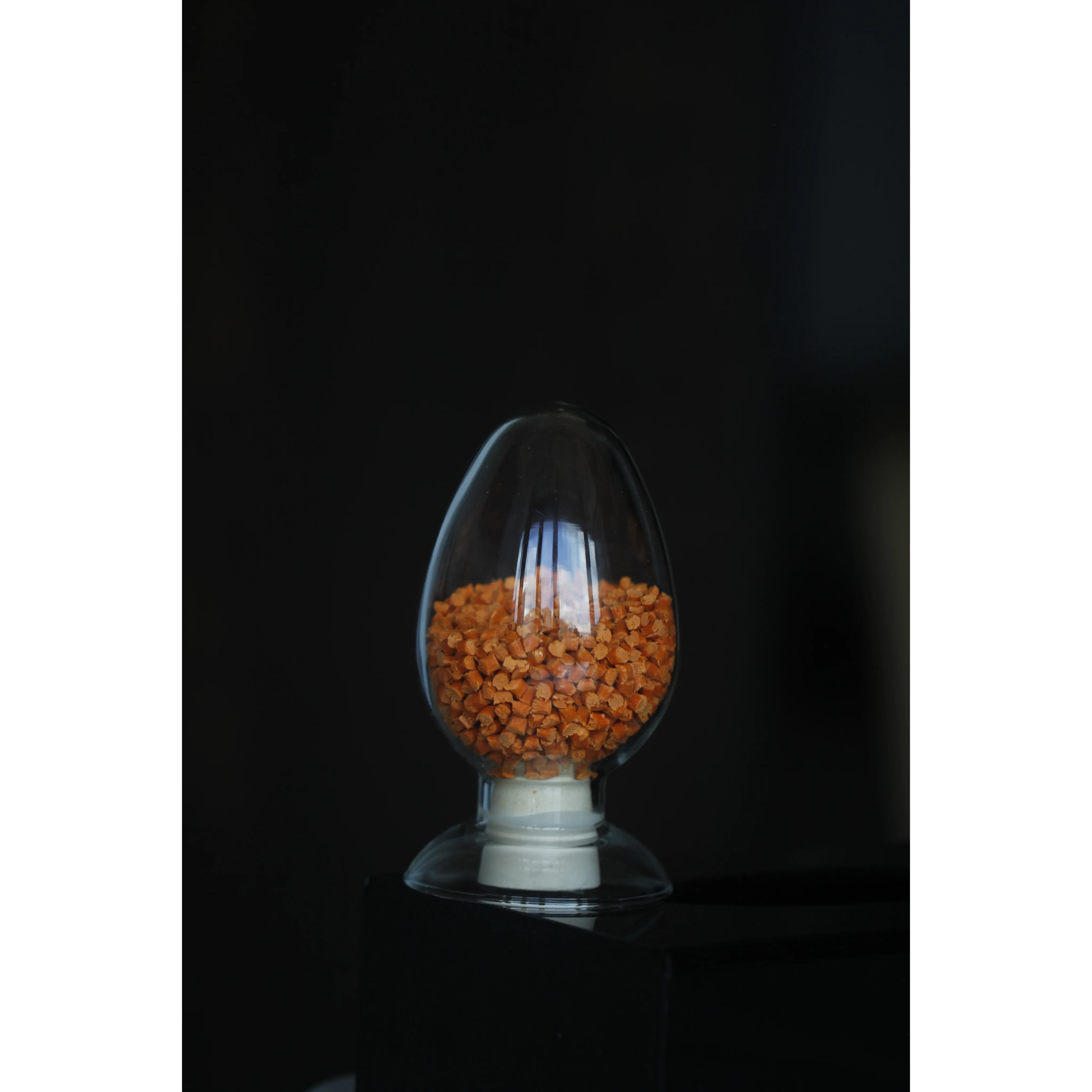
Industry sources and application guides consistently describe PBT as especially strong in connectors, switches, sensors, appliance parts, and other electrical components, and the same demand profile is the most logical fit for rPBT. Toray has expanded chemical-recycled PBT offerings, and recycled PBT grades have been reported for use in automotive connector programs, underscoring the material’s fit in electrically demanding components.
One poor-fit use is highly transparent optical parts, where rPBT is generally disadvantaged by residual color, haze, and contamination risk relative to materials designed for clarity.
Environmental and Sustainability Aspects
rPBT offers a straightforward material-efficiency benefit: it displaces virgin petrochemical feedstock and diverts engineering plastic waste from disposal or low-value downcycling. Its sustainability case is strongest when recycled content is sourced from clean internal scrap or well-sorted closed-loop streams, because transport, reprocessing, and purification can erode part of the environmental gain if the feedstock is heavily contaminated.
Recyclability is favorable in principle because PBT is a thermoplastic, but practical recycling is constrained by three issues:
- Thermal degradation during multiple melt cycles can reduce molecular weight and toughness.
- Moisture sensitivity can accelerate hydrolysis if drying is inadequate.
- Additive and filler complexity can make recovered streams harder to reuse in equivalent applications.
Bio-based and chemically recycled pathways may help reduce fossil-carbon intensity. Recent research has shown that chemically recycled PBT can serve as a platform for new copolyesters and other value-added materials, suggesting that recycled polyester feedstocks may support both circularity and materials innovation. However, the climate advantage depends on process energy, yield, and how much virgin monomer or polymer is displaced.
Economic and Global Market Impact
The rPBT market is tied to three demand centers: automotive electrification, electronic miniaturization, and corporate recycled-content procurement. Electrical connectors and compact housings are particularly important because they use engineering-grade resins in high volumes and often tolerate recycled-content substitution if mechanical and dielectric properties remain stable.
Leading producers and developers mentioned in industry reporting include Toray, which has expanded chemical-recycled PBT grades, and Yazaki, which has co-developed recycled PBT resin for connector applications. These companies matter because automotive and electronics supply chains typically require validated resin grades, stable supply, and documentation of recycled content, not merely generic recycled pellets.
Economically, rPBT is attractive when:
- clean feedstock is available at scale,
- compounding can restore performance efficiently,
- OEMs value recycled content in procurement,
- and regulatory or brand pressure rewards circular material sourcing.
Current Challenges and Innovations
The central technical challenge is that recycled PBT rarely behaves like virgin PBT unless its degradation history is corrected or compensated. This has led to several innovation pathways.
- Reactive compounding → chain extenders and compatibilizers rebuild melt strength and improve toughness.
- Reinforced rPBT compounds → glass fiber and mineral fillers recover stiffness and heat resistance for structural parts.
- Advanced sorting and decontamination → improves feedstock purity for PCR streams.
- Chemical recycling → depolymerization/repolymerization routes can restore quality and open higher-value loops.
- Standardization → emerging recycled-plastics standards help define naming, test methods, and technical requirements.
Recent research also suggests that one-pot or simplified chemical recycling routes may shorten processing time and improve recovery yield, while retaining toughness and thermal stability close to virgin material. That is significant because the commercial bottleneck for rPBT is often not chemistry alone, but the ability to deliver consistent, certifiable pellets at industrial scale.
Future Outlook
rPBT is likely to move from a niche sustainability option to a more mainstream engineering resin where supply chains are willing to qualify recycled grades for mission-critical parts. The strongest growth prospects are in automotive connectors, electrical housings, appliance components, and other injection-molded parts that can absorb moderate formulation adjustments without compromising function.
Three developments will shape the next phase:
- More closed-loop recovery from automotive and electronics manufacturing.
- Better property restoration through additives, solid-state polycondensation, and chemical recycling.
- Greater standardization of recycled PBT grades, test methods, and procurement criteria.
The long-term strategic opportunity is not simply to make rPBT cheaper than virgin PBT, but to make it reliably good enough for high-value technical parts while offering measurable circularity and carbon benefits.
References
- •
Recycled PBT: Can it match virgin PBT? (2026, August 19). https://www.itopcentral.com/recycled-pbt-vs-virgin-pbt/Link
- •
Recycled PBT pellets. (2026, February 6). https://www.zanpolymer.com/pcr-material/recycled-pbt-pellets/Link
- •
Recycled polybutylene terephthalate and method for production thereof. (2023, December 21). https://patents.google.com/patent/TW202525905A/enLink
- •
rPET, rPBT, rPTT, rPEN: An AI-driven polyester recycling revolution. (2026, June 23). https://matvenus.com/en/news/rpet-rpbt-rptt-rpenLink
- •
Recycled PC/PBT compounds. (2025, May 22). https://monchy.com/products/recycled-pc-pbt-compounds/Link
- •
r-PBT EN. (n.d.). https://www.sinox-polymers.com/en/plastic-recycled-pellets-pir-pbt-polybutylene-terephthalate.htmlLink
- •
China PCR recycled plastics RPBT. (n.d.). https://www.unibrom.com/pcr-recycled-plastics-rpbt-recycled-polybutylene-terephthalate-for-electrical-connectors-product/Link
- •
สมบัติเชิงกลและสมบัติทางความร้อนของพอลิเมอร์ผสม พอลิเอทิลีน เทเรฟแทเลตรีไซเคิล /พอลิบิวทิลีนเทเรฟแทเลต และโวลลาสต์โทไนต์ คอมพอสิต [Mechanical and thermal properties of recycled polyethylene terephthalate/polybutylene terephthalate and wollastonite composites]. (2020, December 23). http://www.repository.rmutt.ac.th/dspace/handle/123456789/3755Link
- •
Recycled PBT pellets – PuBiT® PCR polybutylene terephthalate. (n.d.). https://www.itopcentral.com/recycled-pbt-pellets/Link
- •
Characterization of recycled polycarbonate/polybutylene terephthalate blends. (2019, August 18). https://www.tandfonline.com/doi/full/10.1080/02533839.2019.1613929Link
- •
Study on recycling of poly(butylene terephthalate) and polypropylene. (n.d.). https://iopscience.iop.org/article/10.1088/1742-6596/2047/1/012005Link
- •
Unlocking the versatility of polybutylene terephthalate (PBT) across industries. (n.d.). https://www.chemanalyst.com/Blogs/unlocking-the-versatility-of-polybutylene-terephthalate-across-industries-60Link
- •
Chemical recycling of poly(butylene terephthalate) into poly(ethylene brassylate-co-butylene terephthalate) with tunable thermal, mechanical and biodegradable properties. (2024, June 10). ACS Applied Polymer Materials. https://pubs.acs.org/doi/10.1021/acsapm.4c00832Link
- •
BŞEÜ Fen Bilimleri Dergisi. (n.d.). https://dergipark.org.tr/tr/download/article-file/1890484Link
- •
کاربرد یادگیری عمیق در صنعت [Application of deep learning in industry]. (2023, September 29). https://www.novinilya.com/applications-of-deep-learning/industry/Link
- •
Yazaki and Toray jointly develops recycled PBT resin. (2024, May 13). https://www.toray.com/news/article.html?contentId=6on23o1qLink
- •
Synthesis and properties of biodegradable PBAT prepared from PBT chemically recycled resources. (2024, July 4). https://colab.ws/articles/10.1016%2Fj.polymer.2024.127326Link
- •
リサイクルポリブチレンテレフタレートの製造方法およびポリブチレンテレフタレート複合材料の製造方法 [Method for producing recycled polybutylene terephthalate and method for producing polybutylene terephthalate composite material]. (2024, March 29). https://patents.google.com/patent/WO2024204775A1/jaLink
- •
一文了解PBT的产品应用领域! [An article to understand the application fields of PBT products!]. (2023, August 14). https://www.sohu.com/a/711703381_120605003Link
- •
R Series TPEE | Sustainable recycling with PIR & PCR. (2025, March 5). https://www.hetroflex.com/r-series-pir-pcr/Link
- •
Enhanced impact properties of high-recycled content polycarbonate-polybutylene terephthalate blends. (2025, August 27). https://cris.vtt.fi/en/publications/enhanced-impact-properties-of-high-recycled-content-polycarbonate/Link
- •
Catalytic effect on simplified chemical recycling of poly(butylene terephthalate). (2026, July 28). https://pmc.ncbi.nlm.nih.gov/articles/PMC13411085/Link
- •
A study of recycled poly(butylene terephthalate) and low-density polyethylene blend. (n.d.). https://link.springer.com/article/10.1134/S0965545X21060080Link
- •
The effect of mechanical recycling on the thermal, mechanical, and chemical properties of poly(butylene adipate-co-terephthalate) (PBAT), poly(butylene succinate) (PBS), poly(lactic acid) (PLA), PBAT-PBS blend and PBAT-TPS biocomposite. (n.d.). https://link.springer.com/article/10.1007/s10924-023-03151-yLink
- •
Method for producing recycled polybutylene terephthalate and method for producing polybutylene terephthalate composite material. (2024, March 29). https://patents.google.com/patent/WO2024204775A1/enLink
- •
Polybutylene terephthalate. (2004, June 17). In Wikipedia. https://en.wikipedia.org/wiki/Polybutylene_terephthalateLink
- •
Polybutylene terephthalate (PBT) material guide & properties. (2026, April 22). https://www.specialchem.com/plastics/guide/polybutylene-terephthalate-pbt-plasticLink
- •
Relationship between structure and properties of polymers. (n.d.). https://www.sciencedirect.com/science/article/abs/pii/S0141391014001554Link
- •
PBT resins: Advantages and applications explained. (n.d.). https://www.midcontinentplastics.com/blog/pbt-resins-advantages-and-applications-explained/Link
- •
Enhancing poly(butylene terephthalate) (PBT) fiber. (n.d.). https://www.sciencedirect.com/science/article/abs/pii/S003238612500477XLink
- •
Toray expands eco-friendly PBT resin offerings. (n.d.). https://www.compositesworld.com/products/toray-expands-eco-friendly-pbt-resin-offeringsLink
- •
Ageing of PC/PBT blend: Mechanical properties and recycling possibility. (n.d.). https://www.sciencedirect.com/science/article/abs/pii/S0142941806002224Link
- •
PBT plastic recycling: A complete guide to recycled PBT materials. (2026, August 28). https://www.itopcentral.com/pbt-plastic-recycling-complete-guide/Link
- •
Reaction kinetics and application of polybutylene terephthalate alcoholysis for the preparation of recycled BHBT. (2025, May 16). https://www.sciencedirect.com/science/article/abs/pii/S0032386125003696Link
- •
Рентгеновское телевидение в промышленном неразрушающем контроле [X-ray television in industrial non-destructive testing]. (n.d.). https://www.locus.spb.ru/articles/rentgenovskoe-televidenie-v-promyshlennom-nerazrushayuwem-kontrole/Link
- •
Polybutylene terephthalate (PBT). (n.d.). https://www.technoform.com/en/material/polybutylene-terephthalate-pbtLink
- •
PBT (polybutylene terephthalate). (2019, February 27). https://dielectricmfg.com/resources/knowledge-base/pbt/Link
- •
What is polybutylene terephthalate: Characteristics, advantages. (2022, September 12). https://www.xometry.com/resources/materials/what-is-polybutylene-terephthalate/Link
- •
An overview of robot applications in automotive industry. (n.d.). https://www.sciencedirect.com/science/article/pii/S2352146521004543Link
- •
Recycled cellulosic natural fibers and their reinforced polymer composites: Processing methods, applications, challenges and future directions. (2026, March 4). https://www.mdpi.com/2071-1050/18/5/2500Link
- •
Recycled polybutylene terephthalate. (2024, September 27). https://www.polyestertime.com/recycled-polybutylene-terephthalate/Link
- •
What is polybutylene terephthalate (PBT)? (2023, November 13). https://www.asahi-kasei-plastics.com/en/column/10/Link
- •
Polybutylene terephthalate market to reach USD 3.41 billion. (2026, July 14). https://www.openpr.com/news/4576206/polybutylene-terephthalate-market-to-reach-usd-3-41-billionLink
- •
Polybutylene terephthalate (PBT) market forecast 2026-2033. (2026, June 23). https://www.datamintelligence.com/research-report/polybutylene-terephthalate-pbt-marketLink
- •
Top 12 industrial robot applications and uses. (2024, August 22). https://howtorobot.com/expert-insight/industrial-robot-applicationsLink
- •
Innovations and applications of industrial mobile robots. (2024, September 12). https://robotnik.eu/innovations-and-applications-of-industrial-mobile-robots/Link
- •
Top 10 applications of industrial robots. (2026, January 7). https://encycam.com/articles/top-10-applications-of-industrial-robots/Link
- •
Toray expands chemical-recycled PBT resin products. (2023, September 28). https://www.toray.com/news/article.html?contentId=ewn26y4pLink
- •
5 applications of robots that have revolutionized manufacturing. (2024, August 22). https://jhfoster.com/automation-blogs/5-applications-of-robots-that-have-revolutionized-manufacturing/Link
- •
Automotive robots: 5 common applications. (2019, July 3). https://www.automate.org/robotics/blogs/5-common-applications-of-automotive-robotsLink
- •
Robots in the manufacturing industry: Types and applications. (2023, May 4). https://www.wevolver.com/article/manufacturing-robotsLink