
Introduction
Polyarylate (PAR) is a high-performance aromatic polyester used primarily as an engineering thermoplastic where clarity, heat resistance, dimensional stability, and creep resistance are required together rather than in isolation. It is an amorphous resin in its common commercial forms, with a high glass-transition temperature, strong weatherability, and a property profile that often positions it between polycarbonate and other high-heat transparent plastics.
PAR is notable in the plastics industry because it combines optical transparency with high thermal endurance and good dielectric behavior, making it relevant to electrical and electronic parts, precision components, transparent high-heat housings, lenses, and specialty film and fiber applications. At the same time, the material is more expensive than commodity plastics, can be sensitive to certain solvents and strong acids or bases, and is therefore reserved for demanding niches rather than mass-market packaging or structural uses.
Historically, polyarylates emerged as one of the important families of heat-resistant engineering polymers developed through aromatic polyester chemistry, with early commercial development linked to Japanese innovation and subsequent technology transfer to other producers. Recent research and patent activity has also extended the PAR platform toward blends, modified grades, and even upcycling routes that convert waste polymers into polyarylate-like high-performance materials, suggesting a continuing role in both specialty performance and circularity-oriented innovation.
History and Development
Polyarylates belong to the broader class of aromatic polyesters developed to overcome the thermal limitations of aliphatic polyesters. Commercial development was strongly associated with Japanese polymer research, where PAR was introduced as an advanced transparent engineering resin and later transferred into other industrial channels for further product development.
The scientific literature shows that the chemistry of polyarylates has long attracted attention because aromatic backbone design can tune toughness, heat resistance, and optical behavior through monomer selection and copolymer composition. Patent literature also indicates sustained industrial interest in improving color, molecular weight, viscosity control, and processability through both melt and solution-based routes.
In parallel, PAR has expanded beyond bulk resin use into specialty fibers, blends, and membranes, reflecting the tendency of high-performance polymers to migrate into finely engineered downstream forms once the base resin reaches sufficient processability and purity.
Chemical Structure and Key Properties
Polyarylate is an aromatic polyester in which ester linkages connect aromatic units in the polymer backbone. The aromatic rings restrict chain mobility, raise thermal resistance, and contribute to stiffness and weatherability, while the amorphous morphology of common grades supports transparency and uniform shrinkage behavior.
Key property profile
| Property | Typical significance for PAR |
|---|---|
| Glass-transition temperature | Commonly around 180 to 193 C, supporting elevated-temperature service. |
| Heat deflection temperature | About 155 to 175 C in representative grades, depending on test load and formulation. |
| Transparency | Commercial amorphous grades can approach PC-like optical clarity, with reported light transmission near 87 to 90%. |
| Dimensional stability | Low moisture uptake and low thermal expansion support precision parts. |
| Weatherability | Aromatic structure and UV resistance make it suitable for outdoor exposure. |
| Electrical properties | High resistivity and stable dielectric behavior support insulation uses. |
| Chemical resistance | Good resistance to many oils and chemicals, but not universal resistance. |
Real limitations and practical workarounds
- Poor resistance to strong acids and alkalis → caused by ester-linkage hydrolysis under aggressive pH and heat → workaround is to select chemical-resistant grades, avoid prolonged exposure, or substitute another engineering resin in severe chemical service.
- Sensitivity to some ketones, esters, chlorinated solvents, and aromatic solvents → caused by solvent swelling or stress-assisted attack on the amorphous polyester matrix → workaround is solvent screening, annealing, redesign of seal/contact zones, or use of protective coatings.
- Lower melt process latitude than many commodity resins → caused by the high Tg and relatively specialized rheology of high-aromatic polymers → workaround is careful drying, optimized barrel temperatures, and use of extrusion or injection conditions tailored to the grade.
A useful molecular-level detail is that PAR’s performance depends on the rigid aromatic segments and the ester bonds together: the rings suppress chain motion, while the ester groups make the polymer processable and chemically tuneable. This balance is the reason PAR can be transparent and tough rather than simply rigid and brittle.
Production Processes and Raw Feedstocks
Polyarylate is generally produced by condensation polymerization of aromatic diols or bisphenols with aromatic dicarboxylic-acid derivatives. Two broad industrial routes are represented in the technical literature: acid-chloride based solution polycondensation and melt polycondensation using diesters or aromatic acids.
Main feedstocks
- Bisphenol A and related dihydric phenols are common monomer components in commercially relevant PAR systems.
- Terephthalic acid and isophthalic acid are used in melt-polymerized systems to build aromatic polyester character.
- Aromatic dicarboxylic acid chlorides may be used in solution processes for high molecular weight formation.
- Acetic anhydride, solvents, and catalysts or process aids are used in some routes to form diester intermediates and improve viscosity control.
Process routes
- Melt polycondensation
- Uses aromatic diols or their diesters with aromatic acids.
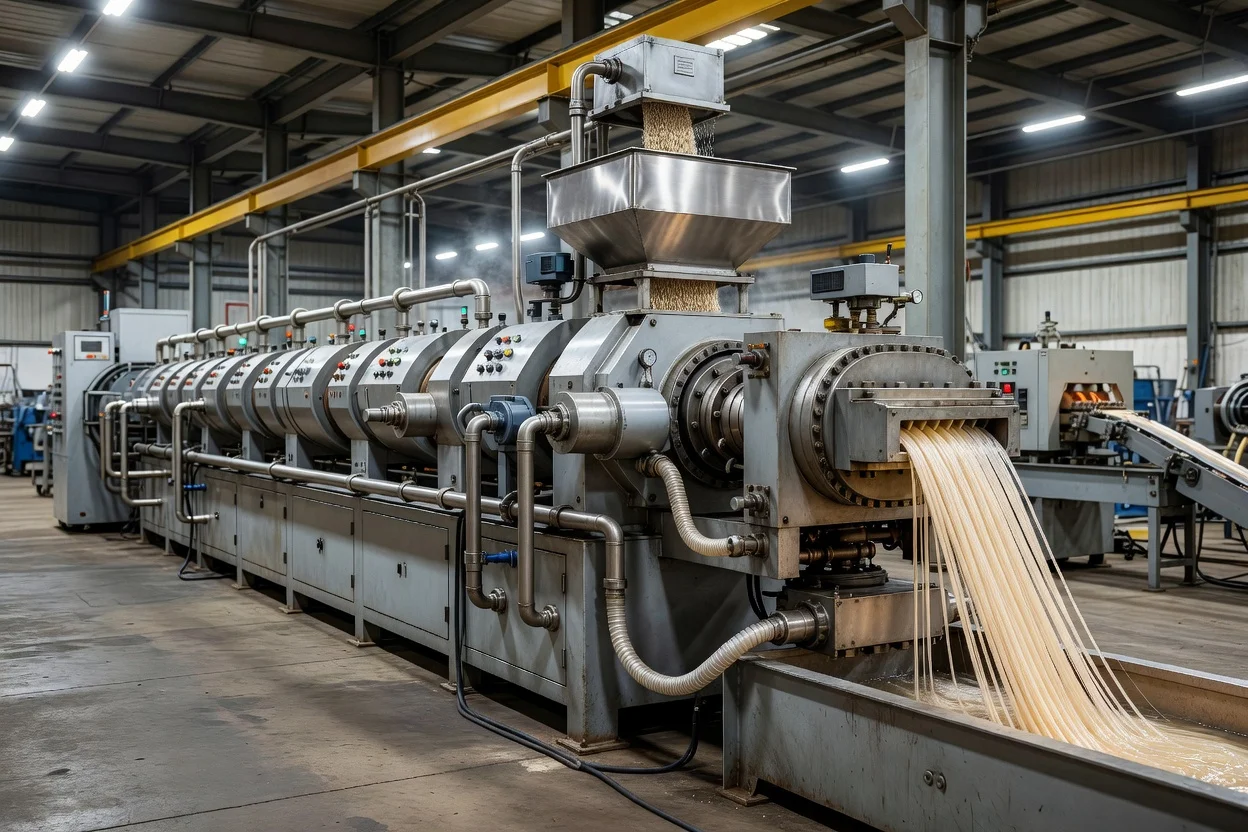
- Can be integrated with continuous devolatilization and twin-screw finishing.
- Is attractive for industrial scale when color and molecular weight can be controlled effectively.
- Solution or acid-chloride polycondensation
- Enables high reactivity and high molecular weight under milder thermal stress.
- Requires solvent handling and downstream removal, which can add cost and environmental burden.
- One-pot and reactive-distillation variants
- Patent and academic literature describe integrated sequences that remove acetic acid and other volatiles while polymerization proceeds, improving efficiency.
Industry leadership
Commercial PAR has historically been associated with a small number of specialized producers rather than a broad commodity base. Unichika is frequently identified as the original developer of the resin platform, while later industrial development and licensing extended into other companies and regional product lines. In practice, the market remains relatively concentrated because the chemistry, quality control, and end-use requirements are demanding and volume levels are modest compared with mainstream engineering plastics.
Applications and End-Use Markets
PAR is selected when designers need clear, stiff, heat-resistant, dimensionally stable parts that retain performance over time. The material is especially valuable in applications where repeated thermal cycling, UV exposure, or tight dimensional tolerances would challenge cheaper polymers.

| End-use sector | Typical PAR grade/form | Why PAR fits |
|---|---|---|
| Electrical and electronics | Injection-molding grade, often unfilled | High insulation, heat resistance, dimensional stability, flame resistance. |
| Optical and transparent housings | Clear amorphous grade | Transparency plus higher heat resistance than many clear plastics. |
| Automotive and transport | Heat-stable structural or decorative grades | Weatherability, UV resistance, creep resistance. |
| Precision mechanical parts | Molded engineering grade | Stable dimensions and wear resistance. |
| Medical and instrument housings | Specialty high-purity grades | Sterilization tolerance and mechanical integrity, where specified by formulation. |
| Fibers and reinforcement | Polyarylate fiber | High strength-to-weight and thermal endurance in composites and protective products. |
| Films and membranes | Film-forming grades | Transparency and high-temperature stability for specialty laminates and filtration media. |
Representative uses
- Connectors, insulators, and circuit components benefit from PAR’s dielectric stability and high heat deflection temperature.
- Transparent lenses, display covers, and optical parts use its clarity and higher-temperature endurance relative to many conventional transparent plastics.
- Outdoor components exploit inherent UV and weather resistance, especially where long-term appearance retention matters.
- Aerospace and high-performance composites use polyarylate fiber in lightweight reinforcement and specialized protective applications.
- Filtration and membrane structures use PAR when thermal and chemical robustness must be balanced with controlled pore formation.
A poor-fit use
PAR is generally a poor fit for low-cost, high-volume packaging such as disposable food containers or beverage bottles, because its cost, specialized processing window, and performance profile are far above what those markets require. Commodity polyolefins, PET, or multilayer packaging systems are usually more economical and easier to recycle at scale.
Environmental and Sustainability Aspects
PAR is not typically viewed as a mass-circular material in the same way as PET or PE, but sustainability discussions around it are becoming more nuanced. Its high service temperature and long lifetime can reduce replacement frequency in durable applications, which is a meaningful form of material efficiency even when the resin itself is energy-intensive to produce.
Recyclability
- Mechanical recycling is technically possible for clean PAR scrap, but actual infrastructure is limited because the material is niche and relatively low-volume.
- Chemical recycling and upcycling are emerging areas of interest, especially where waste polycarbonate and PET are converted into polyarylate-like materials through co-upcycling or repolymerization pathways.
- Design for disassembly is relevant in electronics and precision products because PAR’s value is highest when it can be recovered as relatively pure scrap.
Bio-based alternatives and feedstock pressure
There is no widely established bio-based PAR platform at the scale of mainstream bio-PET or bio-PE. In practice, the sustainability question for PAR is therefore more likely to involve:
- lower-emission aromatic feedstocks,
- solvent and energy reduction in synthesis,
- and circular use of recovered aromatic polymer streams.
Carbon footprint
Process data and emission-factor databases indicate that PAR manufacture can be resource intensive because it relies on aromatic monomers, controlled polymerization, and often solvent or acetic-anhydride handling. The environmental trade-off is that the material is typically used in long-life, high-value applications where performance gains can justify higher embodied impacts on a per-kilogram basis.
Economic and Global Market Impact
PAR is a specialty engineering resin market, not a commodity polymer market. Its economics are shaped by high monomer purity requirements, modest scale, and downstream applications that value performance more than resin price.
Market characteristics
- Demand is concentrated in electronics, transport, precision industrial parts, and specialty optical uses.
- Pricing is usually premium because of low-volume production and niche qualification costs.
- Supply chains are comparatively specialized, with limited producer diversity and strong dependence on technical support and grade qualification.
Strategic significance
PAR is economically important less because of tonnage and more because it enables:
- lighter or more compact components,
- thermal miniaturization in electronics,
- longer-life transparent parts,
- and premium replacement of glass or metal in selected designs.
That role gives PAR a disproportionate influence in applications where part failure is expensive or where design margins are tight.
Current Challenges and Innovations
Current challenges
- Cost competitiveness remains the main barrier to wider adoption.
- Hydrolytic and solvent sensitivity constrains use in harsh chemical environments.
- Processing complexity limits penetration into standard molding supply chains.
- Recycling infrastructure is underdeveloped because of low market volume and application dispersion.
Innovations
- Upcycling waste polymers into polyarylate is one of the most notable recent research directions, suggesting a possible bridge between waste management and high-performance resin creation.
- Membrane and porous-material engineering is expanding PAR into filtration and separation technologies, where controlled phase inversion can be used to tune morphology.
- Blend and copolymer development continues to improve processability, toughness, and color stability.
- Fiber and laminate development is broadening PAR beyond molded parts into reinforcement, protective materials, and specialty composites.
A practical formulation example is that specialty grades may incorporate small amounts of heat stabilizers, processing aids, or blending partners to improve color and flow, while maintaining the inherent high-Tg character of the backbone. In high-performance polymers, even modest formulation changes can alter crystallization, viscosity, and optical clarity, so additive packages are usually conservative rather than aggressive.
Future Outlook
PAR is likely to remain a specialty high-performance polymer rather than a volume resin, but its technical relevance should persist in high-value markets where transparency, heat resistance, and durability must coexist. The strongest growth opportunities are likely to come from:
- electronics miniaturization,
- high-temperature transparent parts,
- advanced fibers and laminates,
- and circular-economy projects that upgrade mixed waste streams into higher-value aromatic polymers.
Future industrial progress will probably focus on:
- lower-emission synthesis,
- improved processability and color,
- more robust solvent-resistant formulations,
- and better integration of recycled aromatic feedstocks into high-purity PAR chains.
Summary
Polyarylate is a high-performance aromatic polyester valued for transparency, heat resistance, dimensional stability, UV durability, and electrical insulation. Its strengths make it especially useful in electronics, precision parts, optical components, and specialty fiber or film applications, while its cost, solvent sensitivity, and limited recycling infrastructure keep it in the specialty category rather than the mainstream plastics market.
References
- •
Polyarylate (PAR) in the real world: 5 uses you'll actually see. (2025, October 11). https://www.linkedin.com/pulse/polyarylate-par-real-world-5-uses-youll-actually-see-oujsfLink
- •
Polyarylate. (2015, September 29). In Wikipédia. https://fr.wikipedia.org/wiki/PolyarylateLink
- •
Ardel® (polyarylate). (n.d.). https://precisionpunch.com/wp-content/pdf/par.pdfLink
- •
工業材料シリーズ 技術資料. (n.d.). https://sumibe.meclib.jp/library/books/industrialmaterialtsk/book/seo/0029.htmlLink
- •
Polyarylate fiber in the real world: 5 uses you'll actually see. (2025, October 23). https://www.linkedin.com/pulse/polyarylate-fiber-real-world-5-uses-youll-actually-see-2025-quick-plnxfLink
- •
ポリアリレート樹脂. (2025, February 6). https://evort.jp/presentations/unitika/polyarylateLink
- •
High heat resistance polyarylate resin in the real world. (2025, October 2). https://www.linkedin.com/pulse/high-heat-resistance-polyarylate-resin-real-world-5-zabqfLink
- •
Machining ARDEL® polyarylate: A plastics guide. (2021, February 16). https://aipprecision.com/machining-ardel-polyarylate-a-plastics-guide/Link
- •
Polyarylate. (n.d.). https://pallet.bumimulia.com/plastic-pallet/polyarylate/Link
- •
Polyarylates. Synthesis and properties. (n.d.). https://russchemrev.org/RCR121pdfLink
- •
Polyarylates. (n.d.). In Encyclopedia of polymer science and technology. http://nguyen.hong.hai.free.fr/EBOOKS/SCIENCE%20AND%20ENGINEERING/MECANIQUE/MATERIAUX/COMPOSITES/Encyclopedia%20of%20Polymer%20Science%20and%20Technology/Vol.07/Polyarylates.pdfLink
- •
PAR - polyarylate, a polymer with versatile properties. (2019, November 23). https://www.mueller-ahlhorn.com/en/par-polyarylate-a-polymer-with-versatile-properties/Link
- •
Polyarylate. (2009, July 28). In Britannica. https://www.britannica.com/science/polyarylateLink
- •
Similar to PC, but more advanced polymer: Polyarylate (PAR). (n.d.). https://www.ky-plastics.com/news/similar-to-pc-but-more-advanced-polymer-poly-49365791.htmlLink
- •
Polyarylate (PAR). (n.d.). https://www.makeitfrom.com/material-properties/Polyarylate-PARLink
- •
ポリアリレート - プラスチック素材辞典. (2026, June 9). https://plastics-material.com/par/Link
- •
Polyarylate (PAR). (2025, February 22). https://taminkalatak.com/product/par-polyarylate/Link
- •
Properties of polyarylate PAR. (2024, October 14). https://shenghetech.com/info-detail/properties-molding-modification-and-application-of-polyarylate-parLink
- •
JPH0510370B2. (2015, November 13). https://patents.google.com/patent/JPH0510370B2/en21Link
- •
非晶ポリアリレート. (2007, March 2). In Wikipedia. https://ja.wikipedia.org/wiki/%E9%9D%9E%E6%99%B6%E3%83%9D%E3%83%AA%E3%82%A2%E3%83%AA%E3%83%AC%E3%83%BC%E3%83%88Link
- •
Synthesis and properties of new polyarylates from 1,4-bis(4-carboxyphenoxy)naphthyl or 2,6-bis(4-carboxyphenoxy)naphthyl and various bisphenols. (n.d.). https://homepage.ntu.edu.tw/~gsliou/FPML/Paper/1999/JPS992.pdfLink
- •
Polyarylate resin market research report 2033. (2025, August 13). https://marketintelo.com/report/polyarylate-resin-marketLink
- •
What is polyarylate fiber? Uses, how it works & top companies. (2025, October 4). https://www.linkedin.com/pulse/what-polyarylate-fiber-uses-how-works-amp-top-companies-v6xmcLink
- •
Polyarylates. (n.d.). https://cameo.mfa.org/wiki/PolyarylatesLink
- •
PAR polymer: Properties, uses & cost guide. (2026, June 10). https://propprose.com/materials/par-polyarylate-u-polymer/Link
- •
Preparation and properties of polyarylates both from 2,2[prime]-bibenzoyl chloride and bisphenols and from biphenyl-2,2[prime]-diol and aromatic dicarboxylic acid chlorides. (n.d.). http://homepage.ntu.edu.tw/~gsliou/FPML/Paper/1992/JPSA%201992,%2030,%202195-2201.pdfLink
- •
Polyarylate market, industry size forecast. (2025, January 1). https://www.marketsandmarkets.com/Market-Reports/polyarylate-market-71403344.htmlLink
- •
Sodium polyacrylate. (2005, October 15). In Wikipedia. https://en.wikipedia.org/wiki/Sodium_polyacrylateLink
- •
反応蒸留重縮合法を適用したテレフタル酸/イソフタル酸,ビスフェノールA,無水酢酸系でのワンポット反応によるポリアリレートの合成. (2024, December 24). https://cir.nii.ac.jp/crid/1390282681500384640Link
- •
POLYARYLATE RESIN, FILM FORMED FROM SAME AND LAMINATE. (n.d.). European Patent Office. https://data.epo.org/publication-server/rest/v1.2/publication-dates/20190410/patents/EP3467003NWA1/document.pdfLink
- •
NASA/TMD2002-211382. (n.d.). https://ntrs.nasa.gov/api/citations/20020061297/downloads/20020061297.pdfLink
- •
Polyarylate containing blends. (n.d.). European Patent Office. https://data.epo.org/publication-server/rest/v1.2/patents/EP0069793NWB1/document.pdfLink
- •
Emission factor: Polyarylate (BPA-IPA-TPA) (made by melt polymerization). (n.d.). https://www.climatiq.io/data/emission-factor/1cc268fb-047d-808e-a413-e92f98efe0aeLink
- •
Stress-crack resistant polyarylates and process for the preparation. (1998, March 20). https://patents.google.com/patent/EP0015828B1/enLink
- •
T 0424/86 11-08-1988. (2011, August 1). https://www.epo.org/en/boards-of-appeal/decisions/t860424eu1Link
- •
US4374239A - Process for preparing polyarylates. (2000, March 3). https://patents.google.com/patent/US4374239A/enLink
- •
Global polyarylate resins market trends, applications forecast. (2026, June 26). https://www.linkedin.com/pulse/global-polyarylate-resins-market-trends-applications-forecast-sheueLink
- •
폴리아릴레이트의 제조 방법. (1995, December 22). https://patents.google.com/patent/KR910016786A/koLink
- •
Polyarylate compositions and articles therefrom. (2005, April 6). https://patents.justia.com/patent/20060229428Link
- •
エポキシ樹脂組成物の硬化物の製造方法. (2003, January 22). https://patents.google.com/patent/JP2004224890A/jaLink
- •
Production process and design of polyacrylamide. (2024, December 11). https://www.tanglianchem.com/portfolio/production-process-and-design-of-polyacrylamide/Link
- •
Process for preparing polyarylates in the presence of a cycloaliphatic compound. (2006, October 31). https://patents.google.com/patent/EP0026120A1/enLink
- •
Upcycling waste commodity polymers into high-performance polyarylate. (2025, March 12). https://pmc.ncbi.nlm.nih.gov/articles/PMC11903651/Link
- •
The manufacturing process of super absorbent polymer. (2022, August 30). https://www.socochem.com/manufacturing-process-super-absorbent-polymers.htmlLink
- •
Fabrication of polyarylate-based porous membranes from solution. (2022, December 29). https://pubs.acs.org/doi/10.1021/acsapm.2c01896Link
- •
There are two steps in the production of polyacrylamide. (2020, April 29). https://www.linkedin.com/pulse/two-steps-production-polyacrylamide-lily-jieLink
- •
신규한 폴리아릴레이트수지와 그 제조방법. (2004, September 15). https://patents.google.com/patent/KR940007320B1/koLink
- •
Polylactic acid. (2005, July 24). In Wikipedia. https://en.wikipedia.org/wiki/Polylactic_acidLink